Topanas Chania
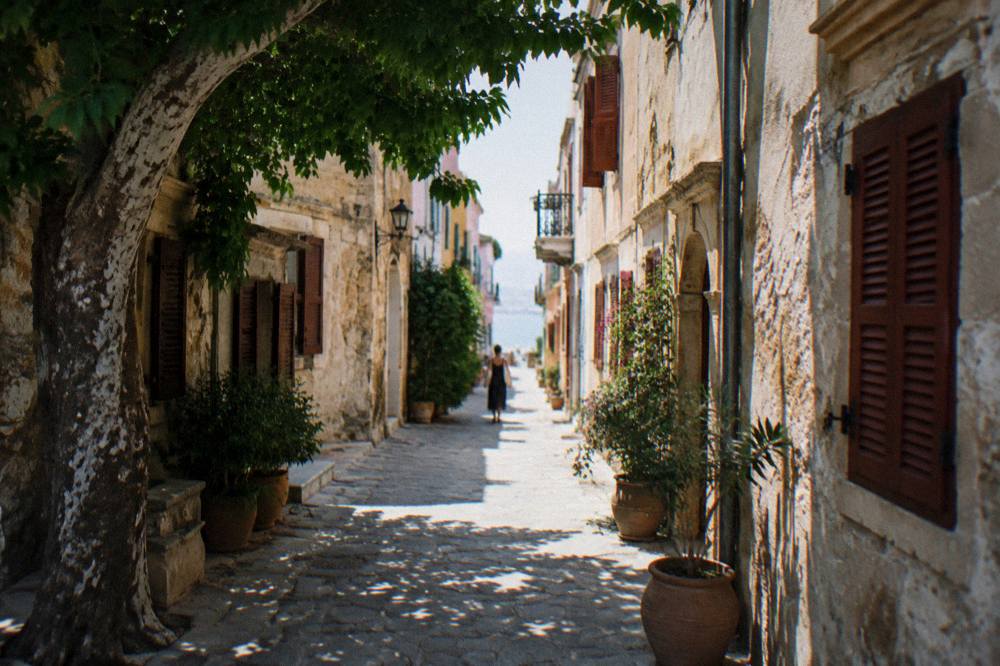
Topanas and Splantzia are the two historic quarters that flank Chania's Old Town on its western and eastern sides, and between them they hold the Venetian walls, the shipyards, the lighthouse seafront and the mosque. This guide lays out what each quarter contains, what the dated record says, and how to plan the walk.
Short answer
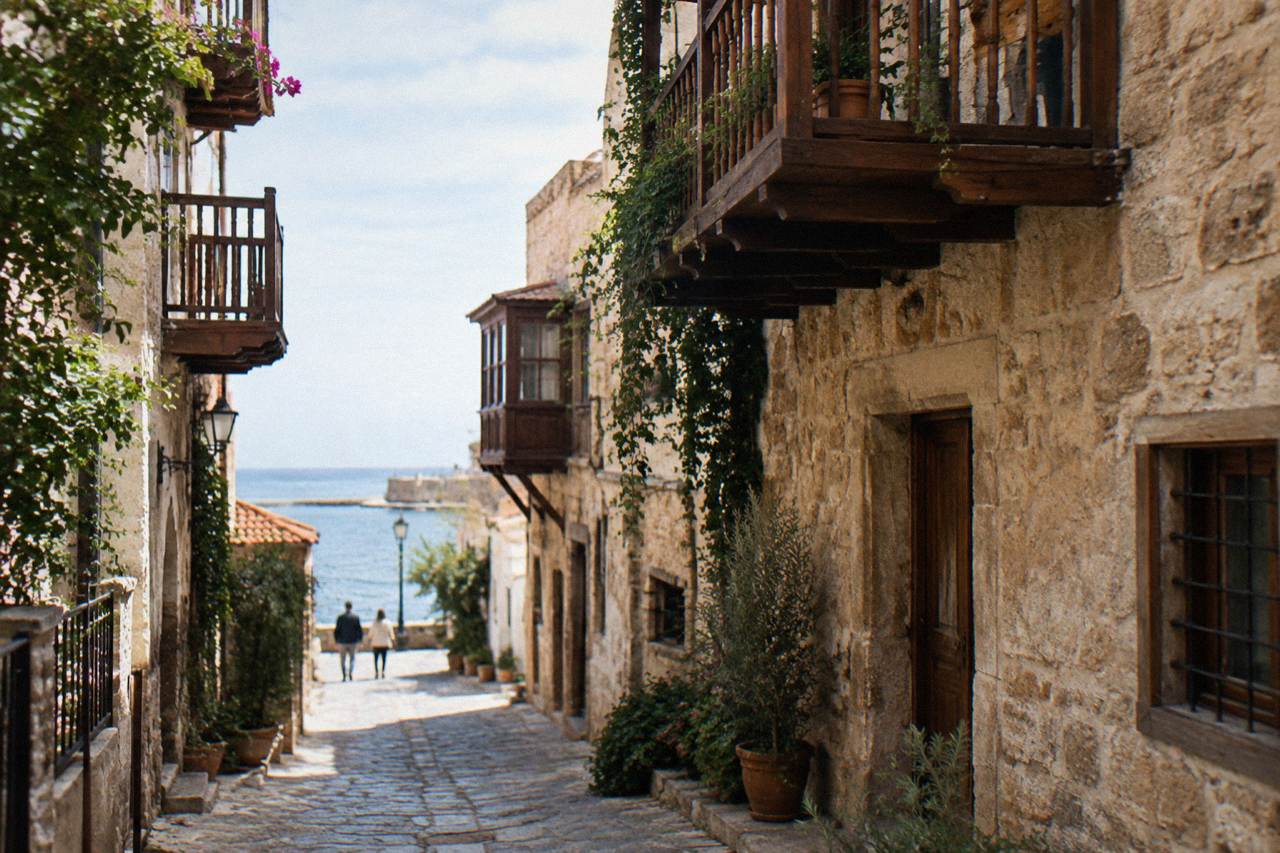
Topanas is the quiet north-western quarter of Chania Old Town between the Venetian Harbour and the Firka Fortress, and Splantzia is its livelier mirror on the east side around Agioi Anargyroi square. Walk Topanas for the sea walls, the lighthouse view and the historical architecture, and Splantzia for the evening tables, the mosque and the covered market end of the Old Town.
Topanas and Splantzia sit on opposite sides of Chania, the coastal city on the north-west coast of Crete in Greece that faces the Aegean, or Cretan Sea, from around its Venetian Harbour. Topanas occupies the north-western edge of the Old Town, between the harbour mole and the Firka Fortress. Splantzia spreads across the east, around its square and the former church that anchors it. The two quarters are the residential and historical halves of the old city, and walking from one to the other along the seafront passes almost every dated structure the record holds.
This guide is written from the published record: what the municipality states, what the museum's own pages list, and what the Hellenic National Meteorological Service station table shows. Where a figure is not on record, the page says so instead of guessing.
What Is Topanas Chania, And Where Does The Quarter Sit?
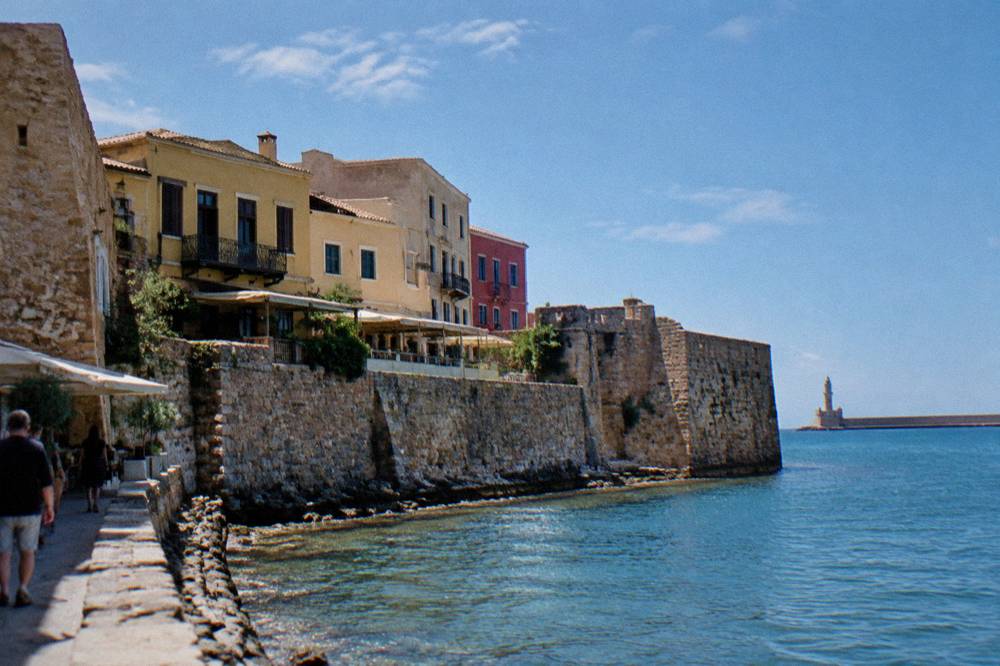
Topanas is the small north-western quarter of Chania Old Town, wedged between the inner Venetian Harbour and the Firka Fortress, and its name belongs to the period of Ottoman rule that began with the 1645 conquest of the city. The quarter's streets climb gently away from the water toward the line of the second Venetian walls, built from 1536 to a design by Michele Sanmicheli, and its sea edge is where the arsenal buildings of the harbour begin. It is compact and quiet by day.
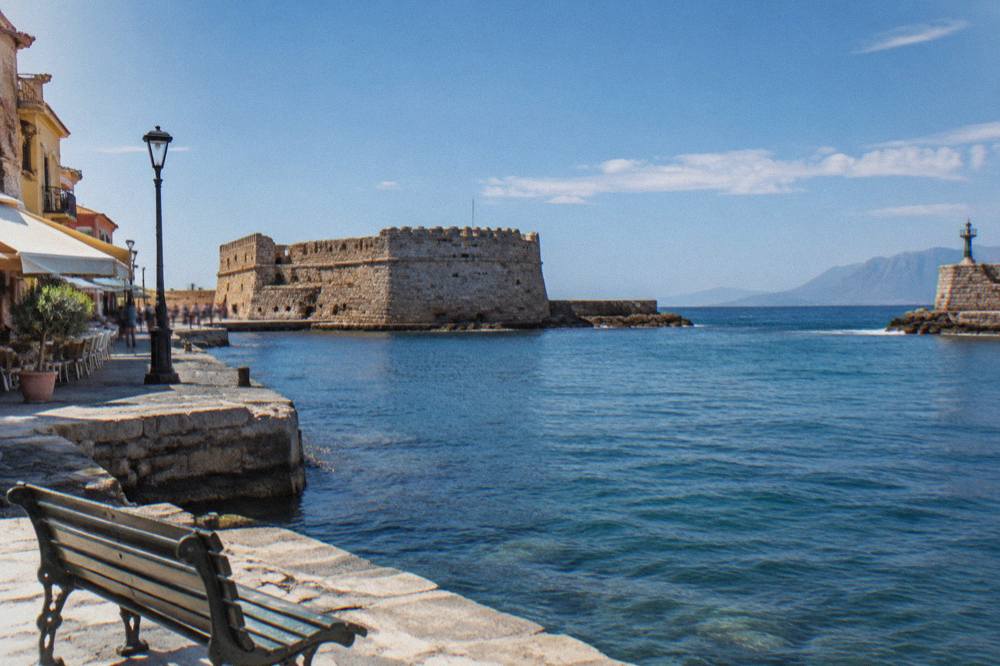
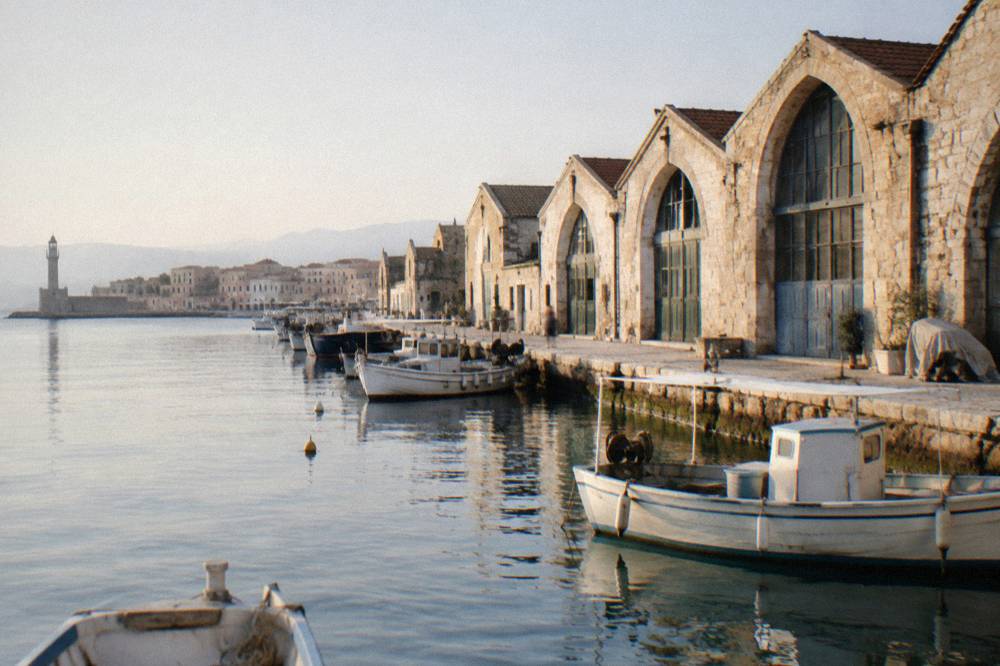
The Firka Fortress, built in 1620 by the Venetians, closes the western side of the harbour mouth, and its grounds are free to enter. The fortress is the anchor of the quarter, and the walk from its ramparts along the water toward the Neoria, the Venetian shipyards, crosses the whole of Topanas in a few minutes. The shipyards themselves are seven survivors of an original seventeen, built in the 15th to 16th century, and they run along the eastern side of the inner harbour basin, forming the architectural spine of the seafront.
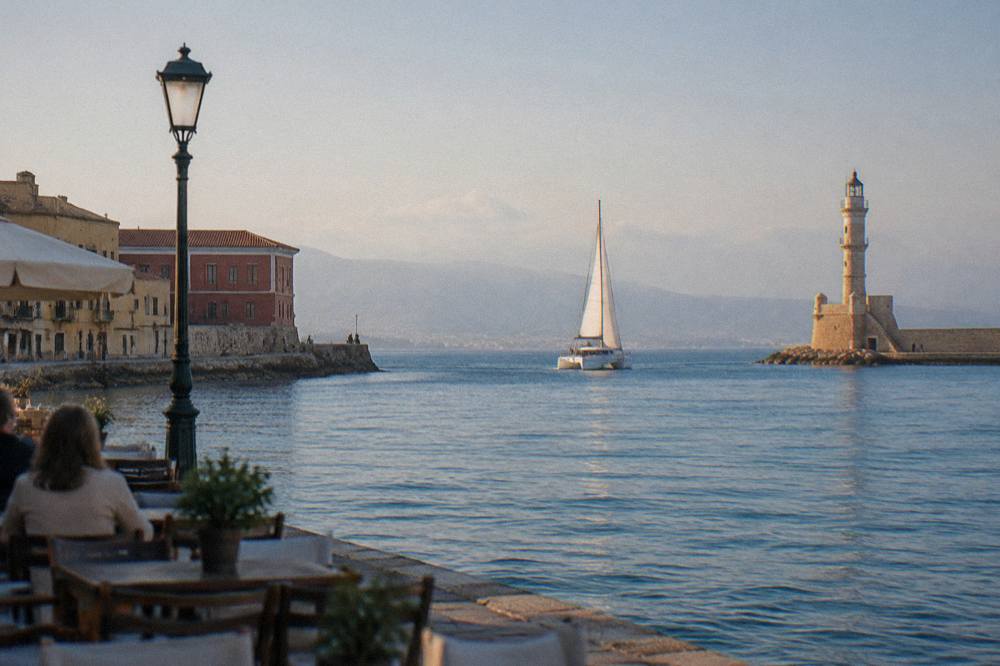
The Maritime Museum of Crete sits at the Firka end of the quarter. The museum publishes no price and no hours in the material this desk has, so visitors should confirm both on its own site before going. The lighthouse, the Faros, stands out on the harbour mole on its Venetian base: the Venetian lighthouse was built about 1595 to 1601, and it was restored during the Egyptian rule of 1830 to 1840, operating from 1839.
For the wider frame, the Chania Old Town guide covers the whole walled city, and the Venetian Harbour page details the water itself, first built between 1320 and 1356, with dredging and a wall recorded in 1515.
What Should You See In Topanas Chania First?
Start at the Firka Fortress, built in 1620, because its free grounds give the clearest single view of the harbour mouth, the lighthouse and the line of the sea wall, then walk east along the Neoria shipyard front toward the inner basin. That single stretch holds the fortress, the seven surviving shipyards of an original seventeen from the 15th to 16th century, and the base of the lighthouse built about 1595 to 1601. Everything else in Topanas sits a street or two uphill.
The maritime and military thread of the quarter is the reason it reads differently from the rest of the Old Town. The lighthouse of Chania page carries the full dated record of the Faros. The Archaeological Museum of Chania is not in Topanas at all: it stands at 15 Skra Street in Halepa, the consular quarter to the east, and its own visit page lists a full ticket at EUR 15 and a concession at EUR 8. Its hours carry a contradiction between published sources, so check the museum's visit page rather than any third-party summary, and note the museum asks visitors to leave 20 minutes before closing.
After the fortress and the shipyard front, the remaining Topanas sights are architectural rather than institutional: restored facades, small hotels in old buildings, and the streets that climb to the wall. The quarter has no museum of its own beyond the Maritime Museum at the Firka.
| Sight in Topanas | What the record states | Standing |
|---|---|---|
| Firka Fortress | Built 1620 by the Venetians | Grounds free to enter |
| Neoria shipyards | Seven survivors of an original seventeen, 15th to 16th century | Visible from the seafront |
| Lighthouse (Faros) | Built about 1595 to 1601, restored 1830 to 1840, operating 1839 | On the harbour mole, on its Venetian base |
| Maritime Museum of Crete | No price or hours published in the material on record | Confirm before visiting |
| Second city walls | From 1536, to Michele Sanmicheli's design | Fragment line above the quarter |
A walking tour with food tastings is one way to cover the Old Town streets with a local lead, and the trio below shows the three experiences this site rates most relevant to a Topanas base: a Samaria Gorge hike, a food tasting walk through the town, and a sunset catamaran cruise from the old port.
What Is There To Do In Splantzia?
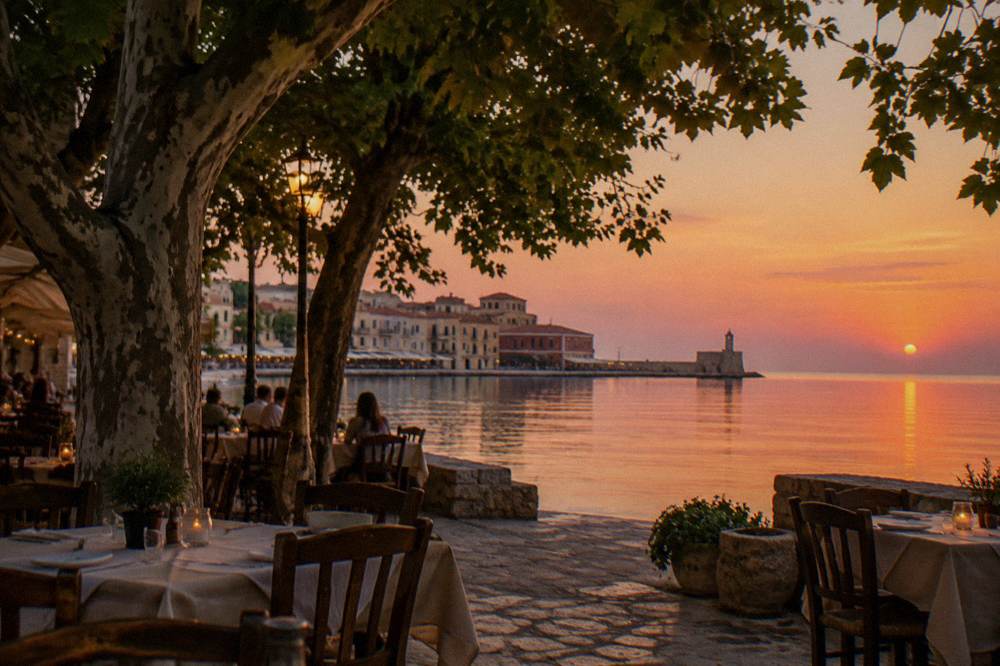
Splantzia is the eastern quarter of Chania Old Town, centred on its square and the former Agioi Anargyroi church with its campanile, and its everyday life is tables, tavernas and the plane trees rather than fortifications. The mosque of the Janissaries stands at the opposite, harbour end of the old city, and the quarter's square is where the evening crowd gathers once the day visitors have gone.
The quarter's role in the city is simple: it is where Chania eats late. The record holds no restaurant list and no review data this desk can print, so the practical advice is the check any visitor can make: look at the posted menu prices before sitting, and check that the bill is itemised at the end. The Chania restaurants page and the page on Cretan food in Chania carry the fuller food picture for the city as a whole.
Splantzia's position makes it the natural base for the morning routine: the Municipal Market sits on its western edge, between Splantzia and the harbour quarter, and the market's own operation is covered on its page. From Splantzia the whole Old Town is a flat walk, and the seafront at Nea Chora with its city beach is a short walk west past the Topanas end of town.
The name Splantzia belongs to the Ottoman centuries of the city, which ran from the 1645 conquest of Chania until the union of Crete with Greece in 1913. The mosque of the Janissaries, on the harbour front at the eastern edge of the old city, is the surviving religious building of that period; its own construction date is not on record, so no date is printed here.
Where Do The Two Quarters Meet The Rest Of The Old Town?
Topanas and Splantzia meet across the harbour quarter in the middle, so the standard loop runs Topanas along the seafront from the Firka, past the Neoria and the mosque to the inner basin, then cuts inland through the market streets to Splantzia square and back, a route that touches every layer of the city from the harbour works of 1320 to 1356 to the Ottoman period from 1645. The two quarters are the flanks of one walk, not two separate trips.
For visitors with one day, the Chania one day itinerary sequences this loop hour by hour, and the Chania two days version splits the Old Town from the beaches. Cruise passengers can use the Chania cruise port day plan, which starts from the terminal rather than a hotel.
The quarters also sit on the two main axes out of town. Westward from Topanas the road runs along the coast toward Nea Chora, Agia Marina and Platanias, covered in the Agia Marina and Platanias guide, and onward toward the Akrotiri peninsula. Eastward from Splantzia the streets run toward Halepa and its consular architecture, then on to Souda Bay.
| Direction from the quarters | Where it leads | Page on this site |
|---|---|---|
| West from Topanas | Nea Chora, Agia Marina, Platanias | /areas/nea-chora/ and /areas/agia-marina-and-platanias/ |
| East from Splantzia | Halepa, then Souda | /areas/halepa/ and /areas/souda/ |
| South-east by road | White Mountains, gorges, south coast | /day-trips/balos-lagoon-and-gramvousa/ |
| Far west by road | Kissamos, Balos boats | /areas/kissamos/ |
| Inward loop | The full walled Old Town | /areas/old-town/ |
What Is The History Behind Topanas And Splantzia?
The two quarters grew inside walls built in two campaigns, the first Venetian walls from 1336 to about 1356 and the second from 1536 to Michele Sanmicheli's design, and the harbour they flank was first built between 1320 and 1356 with dredging and a wall recorded in 1515. Ottoman rule began with the 1645 conquest of Chania and ended with the union of Crete with Greece in 1913, and both quarter names belong to that Ottoman period.
The Venetian century shaped what a walker sees. The Firka Fortress of 1620 guarded the harbour mouth. The Neoria, seventeen shipyards reduced by time to seven survivors, built the ships for the Venetian fleet in the 15th to 16th century. The lighthouse rose about 1595 to 1601. These are the only construction dates on record for the quarter's landmarks; architectural attributions and stylistic labels beyond Sanmicheli's design are not in the record, and this page does not add them.
The Egyptian interlude left the lighthouse as it stands today: restored on its Venetian base during the Egyptian rule of 1830 to 1840, and operating from 1839. After 1913 the quarters became the residential core of the modern city, whose municipality counted 111,375 permanent residents at the 2021 census across 356.12 km2.
| Date or period | Event on record |
|---|---|
| 1320 to 1356 | Venetian Harbour first built |
| 1336 to about 1356 | First Venetian city walls |
| 1515 | Harbour dredging and a wall recorded |
| 1536 | Second walls begun, Michele Sanmicheli's design |
| About 1595 to 1601 | Venetian lighthouse built |
| 1620 | Firka Fortress built by the Venetians |
| 1645 | Ottoman conquest of Chania |
| 1830 to 1840 | Lighthouse restored under Egyptian rule, operating 1839 |
| 1913 | Union of Crete with Greece |
| 2021 | Municipality census: 111,375 residents |
When Is The Best Time To Walk Topanas And Splantzia?
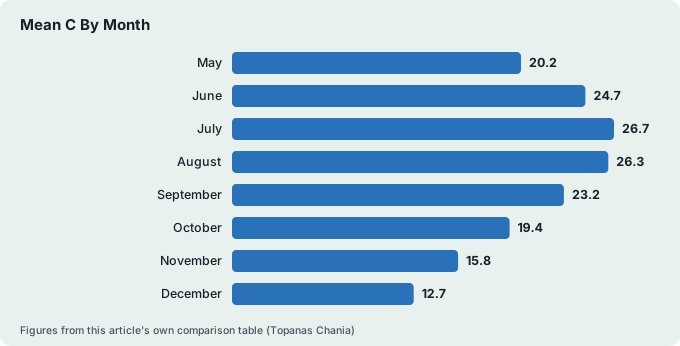
The HNMS Chania Souda station table for 1958 to 2010 shows the walking months are dry: May records a mean of 20.2 C with 13.5 mm of rain, June 24.7 C with 3.4 mm, July 26.7 C with 1.0 mm and August 26.3 C with 1.4 mm, while January, the wettest month, records 129.5 mm across 16.3 rain days, so the quarters are a comfortable walk from May through September and a damp one from October onward.
Rain starts to matter from October, which records 67.7 mm at the station, and November and December stay wet at 77.0 mm and 101.9 mm. None of that closes the Old Town: the streets, the fortress grounds and the museum are year-round features, and the Chania in winter page covers the quiet season. The Chania weather and best time to visit Chania pages carry the full tables.
July and August, the warmest months in the station table at 26.7 C and 26.3 C mean, push the day's walk toward morning and evening. That rhythm suits the quarters well: Topanas and the seafront before the heat, Splantzia and its tables after dark. The prevailing wind at the station is west, north-west in July and August, which is the direction the harbour front faces.
| Month | Mean C | Rain mm | Rain days |
|---|---|---|---|
| May | 20.2 | 13.5 | 4.2 |
| June | 24.7 | 3.4 | 1.2 |
| July | 26.7 | 1.0 | 0.4 |
| August | 26.3 | 1.4 | 0.6 |
| September | 23.2 | 15.4 | 3.2 |
| October | 19.4 | 67.7 | 9.3 |
| November | 15.8 | 77.0 | 11.2 |
| December | 12.7 | 101.9 | 16.1 |
Which Tours And Experiences Start Near Topanas And Splantzia?
The tours that fit a Topanas or Splantzia base fall into three groups: gorge hikes into the White Mountains to the south, food and tasting walks inside the Old Town itself, and boat trips and sunset cruises leaving from the harbour front between the two quarters. Day trips to Balos, Elafonisi and the south coast all collect from central Chania points within walking reach of both quarters.
The gorge option is the signature day out from the city. The Samaria Gorge hike from Chania with a professional hiking guide is this site's featured pick for a Topanas base, and Check availability before planning, because the gorge itself has conditions no tour listing can promise away. The gorge normally opens 1 May to 31 October, but it closes or delays when storms damage the path, as happened in late September and early October 2026, and the operator, the Natural Environment and Climate Change Agency, aims repair works at readiness in May 2027, so the NECCA status must be checked before any gorge day. The individual entrance ticket is EUR 10 via the NECCA e-ticket portal, free for EU residents under 18 and over 65, and tour prices exclude the separate entrance and ferry charges: the walk is one-way from Xyloskalo to Agia Roumeli, with boats from Agia Roumeli to Sougia or Chora Sfakion at about 17:30 and a KTEL bus back. The Samaria Gorge day trip page group of guides carries the full detail, and the Imbros Gorge page covers the shorter alternative.
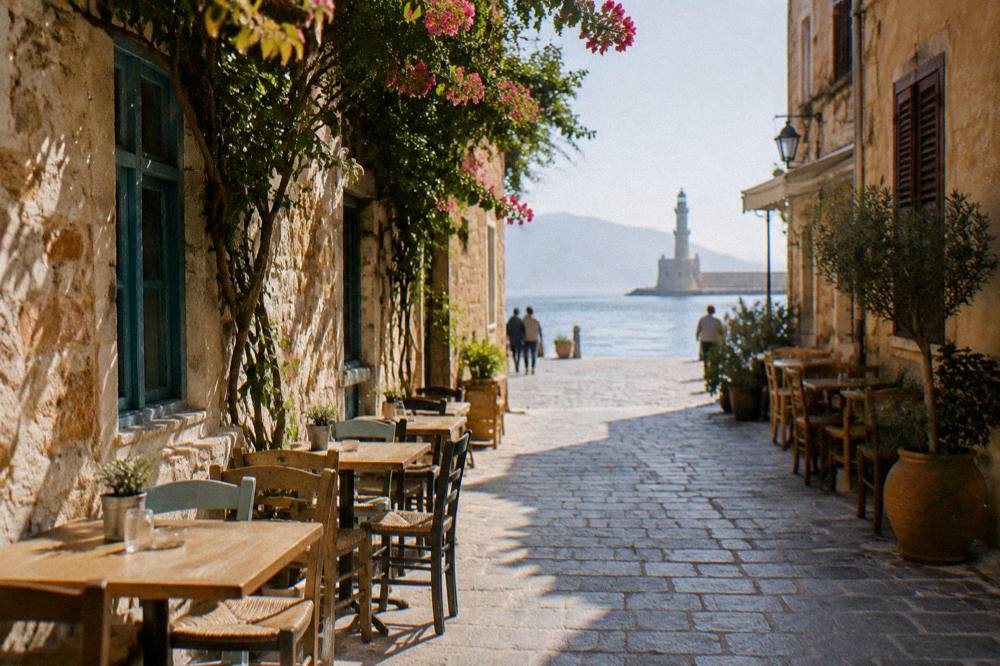
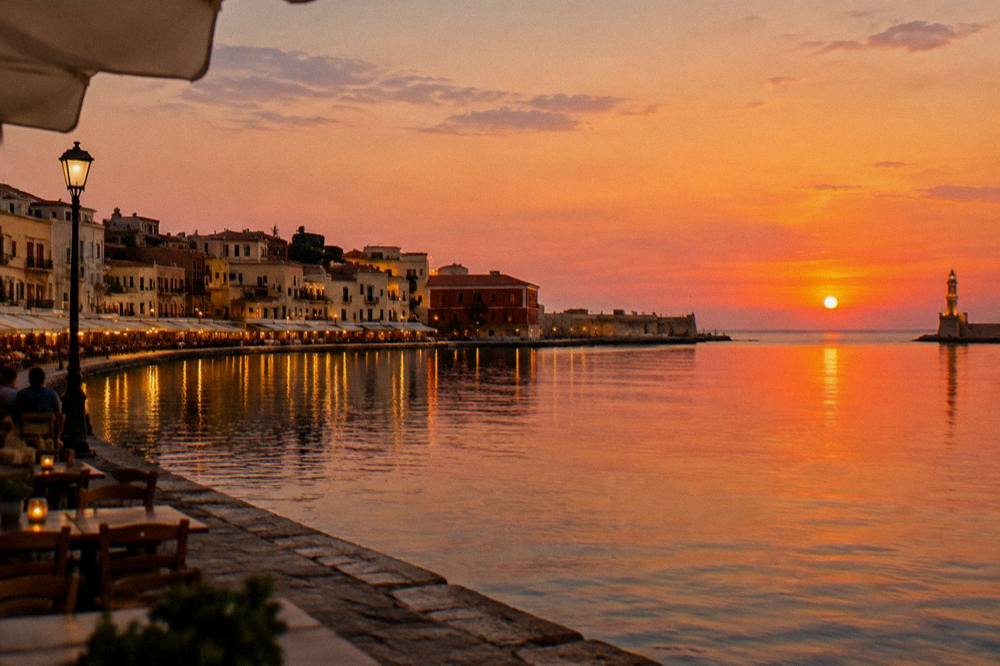
For the food thread, the solo pick above, the walking food tasting tour of the town, is the natural companion to Splantzia's evening tables, and the Chania cooking classes and Chania wine tours pages cover the deeper options. For the water, a sunset catamaran cruise from the old port puts the lighthouse and the Firka in their element, and the Chania boat trips page lists the full fleet of options, from short Lazaretta swim runs to full-day Balos cruises.
Is One Quarter Better To Stay In Than The Other?
Topanas suits visitors who want quiet stone streets, seafront light and the fortress end of the harbour at the door, while Splantzia suits visitors who want the square, the late tables and the market edge, and both sit inside the same walled area with the same flat walk to the water, so the choice is rhythm rather than distance. Accommodation collects a climate crisis resilience fee per room or apartment per night at seasonal rates, confirmed at booking.
Once you know which quarter fits you, book a hotel room here.
The full neighbourhood comparison, including the beaches at Nea Chora and Agia Marina and the suburban options west of the city, is on the where to stay in Chania page. For a first visit of any length, the Chania three days itinerary shows how an Old Town base in either quarter supports beach days, gorge days and a day in Rethymno or Heraklion and Knossos without moving hotels.
Two practical notes finish the picture. Chania International Airport "Ioannis Daskalogiannis", operated by Fraport Greece, is about 14 km from the city centre on the Akrotiri peninsula near Souda, and the airport's own page carries the public bus and taxi information; no fare is printed here because none is published on that page. The overnight Blue Star Ferries crossing to Piraeus leaves from Souda port, about 7 km east of the Old Town, with a departure at about 21:30 and a crossing of about 9 h 15 min per the operator's published timetable, never from the Venetian Harbour, which serves excursion boats.
| Choice | Quarter that fits | Why, from the record |
|---|---|---|
| Sea light and quiet evenings | Topanas | Sea wall, Firka Fortress grounds, shipyard front |
| Late tables and the square | Splantzia | Taverna life around the square, market on the edge |
| Shortest walk to boat departures | Either | The harbour front runs between the two |
| Gorge and mountain days | Either | Hike pickups collect from central Chania points |
| Beach-first stay | Neither, see Nea Chora | The city beach sits at Nea Chora, west of Topanas |
The second trio below restates the three experiences that pair best with these quarters: the guided gorge hike, the town food walk and the sunset catamaran.
Readers planning the whole region can continue with the Chania Crete Travel Guide root pages for day trips west to Kissamos and Balos, or south to Elafonisi.
Common Questions About Topanas And Splantzia In Chania
What Is Topanas Chania, And Where Does The Quarter Sit?
Topanas is the north-western quarter of Chania Old Town, between the Venetian Harbour and the Firka Fortress of 1620, under the line of the second Venetian walls built from 1536 to Michele Sanmicheli's design. The name belongs to the Ottoman period that began with the 1645 conquest of the city.
What Should You See In Topanas Chania First?
Start at the Firka Fortress, whose grounds are free, for the view over the harbour mouth and the lighthouse built about 1595 to 1601 and restored 1830 to 1840 under Egyptian rule, then walk the Neoria front, seven surviving shipyards of an original seventeen from the 15th to 16th century.
What Is There To Do In Splantzia?
Splantzia is the eastern quarter of the Old Town, built around its square and the former Agioi Anargyroi church, and its life is tables and tavernas rather than fortifications. The Municipal Market sits on its western edge, and the mosque of the Janissaries stands at the harbour end of the old city.
When Is The Best Time To Walk Topanas And Splantzia?
The HNMS Chania Souda station table for 1958 to 2010 shows May to September as the dry window, with July recording a mean of 26.7 C and 1.0 mm of rain, while October rises to 67.7 mm and January to 129.5 mm across 16.3 rain days, so the quarters are walked comfortably from May to September and with an umbrella from October onward.
Is One Quarter Better To Stay In Than The Other?
Topanas is quieter and sits against the sea wall and the fortress; Splantzia holds the square, the late tables and the market edge. Both are inside the same walled area with the same flat walk to the harbour, and accommodation in either collects the climate crisis resilience fee per room per night, with the amount confirmed at booking.
How Do You Get To Topanas And Splantzia From The Airport Or The Ferry?
Chania International Airport "Ioannis Daskalogiannis" is about 14 km from the city centre on the Akrotiri peninsula, and the airport's own page carries public bus and taxi information. The overnight ferry to and from Piraeus uses Souda port, about 7 km east of the Old Town, with departures at about 21:30 and a crossing of about 9 h 15 min per the operator's published timetable; the Venetian Harbour itself serves only excursion boats.