Chania Food
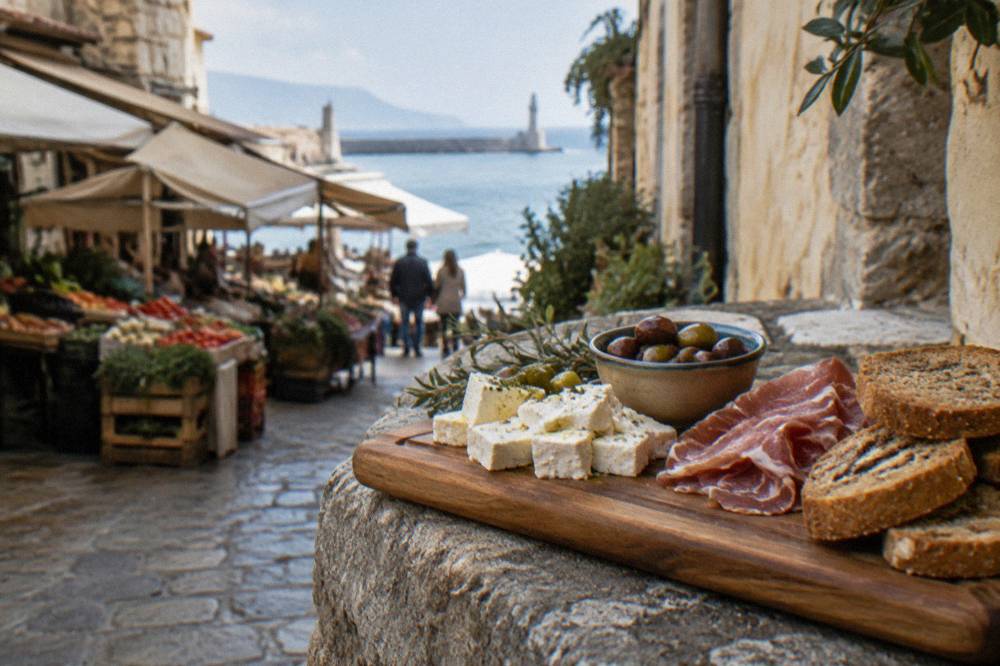
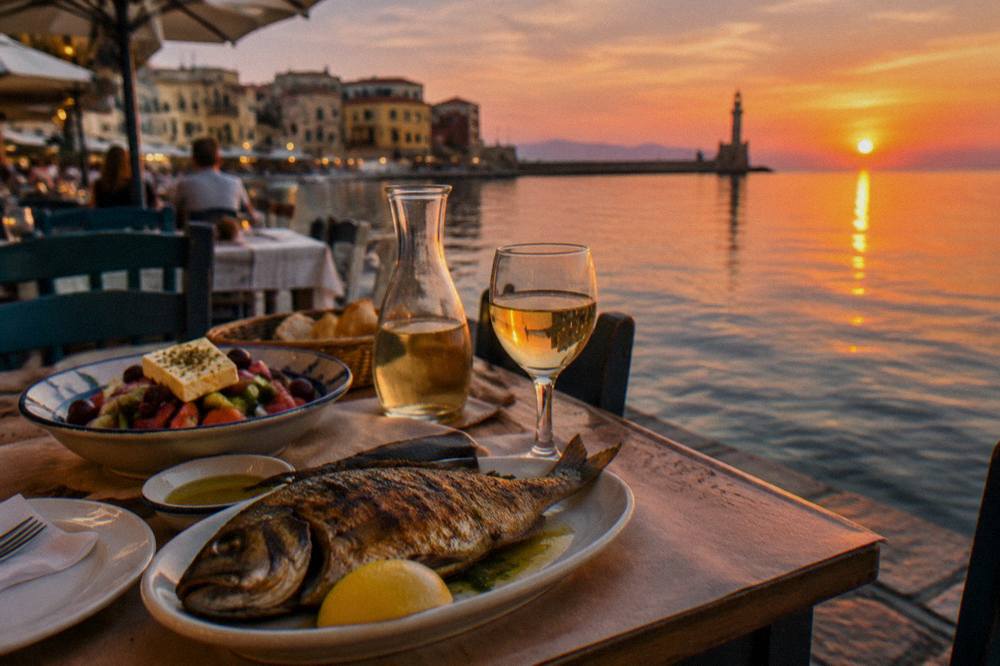
Chania food is Cretan cooking at street level: olive oil, wild greens, cheese, slow lamb and raki, eaten in an Old Town ringed by the Venetian Harbour.
Short answer
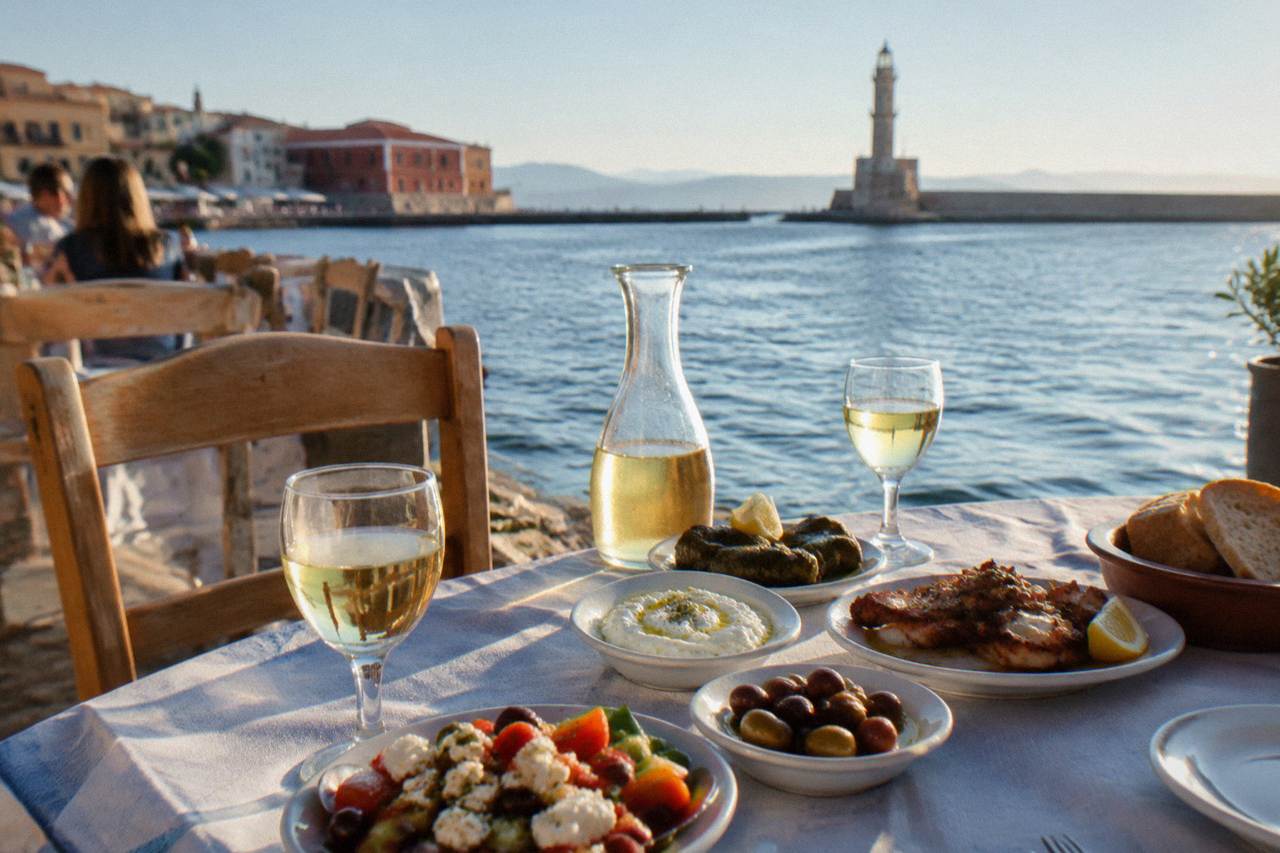
Chania's food is Cretan: olive oil in everything, wild horta greens, cheeses such as graviera and mizithra, dakos rusks, slow-cooked lamb and fresh fish around the Venetian Harbour, with bougatsa for breakfast and raki to close a meal.
Chania, the coastal city on the north-west coast of Crete, eats the way the island has always eaten: olive oil by the litre, greens picked from the hillsides, cheese made in the villages, lamb cooked slowly until it falls from the bone, and a small glass of raki when the plates are cleared. The Old Town around the Venetian Harbour, first built between 1320 and 1356, packs that whole tradition into a walkable quarter, and the mountains to the south send down the olive oil, the honey and the wine that make the cooking taste the way it does.
This page walks through the dishes, the districts and the food experiences that make Chania Crete Travel Guide worth reading before dinner. The short answer for anyone planning a trip: eat Cretan, eat where the menu is short, and save room for the region's dishes that only appear here. The answers page what food is Chania known for covers the quick list; this guide goes deeper into how the food fits the city and its day trips.
What Is Cretan Food, And Why Is Chania The Place To Eat It?
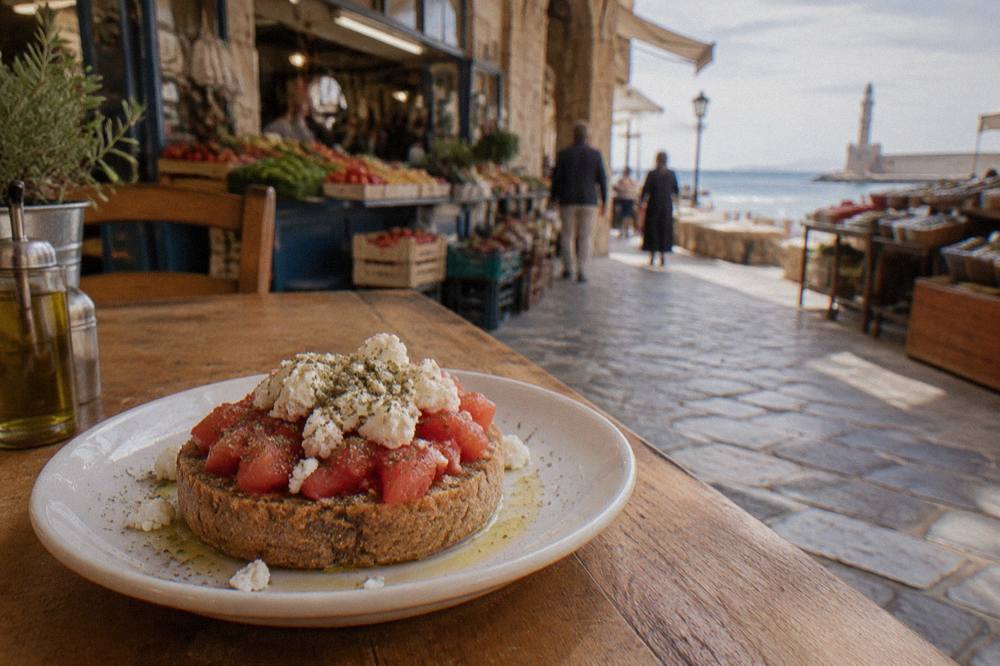
Cretan food is the island's own cooking, built on olive oil, wild greens, grains, cheese and small amounts of meat, and Chania is the city where it is most concentrated because the Old Town's tavernas, the weekly market and the villages of the White Mountains all sit within one bus or car ride of each other. The diet is famously tied to the land: horta, the wild greens that grow after the winter rains, appear boiled and dressed in oil and lemon. Rusks of barley, called dakos, are topped with tomato, mizithra cheese and oil. Lamb and goat come from the same mountains, and the fish comes off the boats that tie up a few streets from the restaurants.
Chania's position explains the plate. The city sits on the Cretan Sea with the White Mountains behind it, so a taverna here can serve mountain cheese, coastal fish and olive oil from the inland groves on one menu. The Venetian Harbour and the Ottoman period, from the 1645 conquest onward, left their marks on the sweets and the spices, but the base of the cooking is older than either.
The practical difference for a visitor is that the good food in Chania is not hidden. It is in the market on the edge of the Old Town, in the back streets of Splantzia, and in the villages a short drive south. The cooking class Chania Cooking Class, The Authentic takes visitors into exactly that world, teaching a full Cretan meal from raw ingredients to table.
Which Dishes Should You Actually Order In Chania?
Order dakos, horta, chochlioi bourbouristi, antikristo lamb, sfakian pie and kalitsounia: these are the plates that carry the island's cooking, and a taverna that lists them is cooking Cretan food rather than cooking for a passing crowd, so they work as a quick test of any menu before you sit down in Chania. Dakos is the starting point, a barley rusk softened with oil and topped with tomato and mizithra. Horta are the boiled wild greens, changing with the season. Chochlioi bourbouristi, snails fried with flour and vinegar or roasted with rosemary, are a Cretan speciality that surprises people who have not met them before.
Antikristo is lamb cooked beside, not over, the fire, a shepherd's method from the island's mountain districts. Sfakia pie, from Sfakia on the south coast, is a thin cheese-filled pastry eaten with honey. Kalitsounia are small sweet or savoury cheese pastries tied to Easter but served year round. Fresh fish is priced by the kilo and shown on ice; check the posted price before it is weighed.
| Dish | What It Is | Where It Fits The Day |
|---|---|---|
| Dakos | Barley rusk, tomato, mizithra cheese, olive oil | Lunch or meze |
| Horta | Boiled wild greens with oil and lemon | Side with any meal |
| Chochlioi bourbouristi | Fried or roasted snails | Meze with raki |
| Antikristo | Lamb cooked beside the fire | Dinner, order ahead |
| Sfakia pie | Cheese pastry eaten with honey | Dessert or breakfast |
| Kalitsounia | Small cheese pastries, sweet or savoury | Any time |
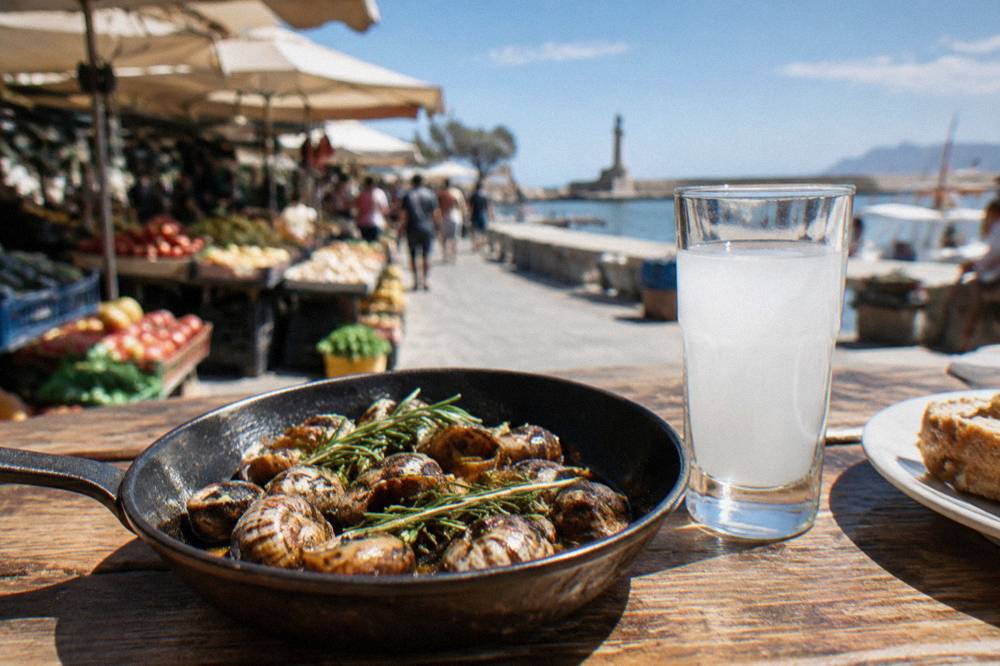
The restaurant guide on this site, Chania restaurants, lists where these dishes appear around the city. A short menu is a good sign in itself: a kitchen cooking five things well beats one offering twenty.
Where Should You Eat In Chania, District By District?
Eat breakfast in the Splantzia quarter, lunch near the Municipal Market, dinner in Topanas or Splantzia, and fish along the Venetian Harbour only after checking the posted prices, because each district of the Old Town does a different job and knowing which saves both money and disappointment. Splantzia, the old quarter behind the harbour's east side, holds the small tavernas and the bougatsa shops that open early. Topanas, at the harbour's west end below Firka Fortress, built in 1620, holds the quieter evening tables.
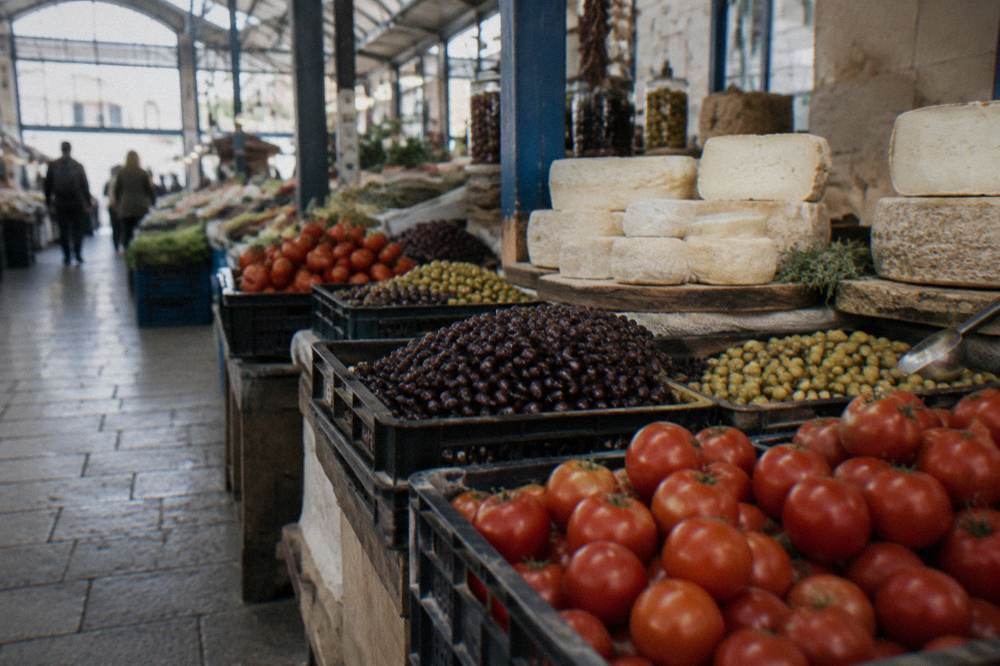
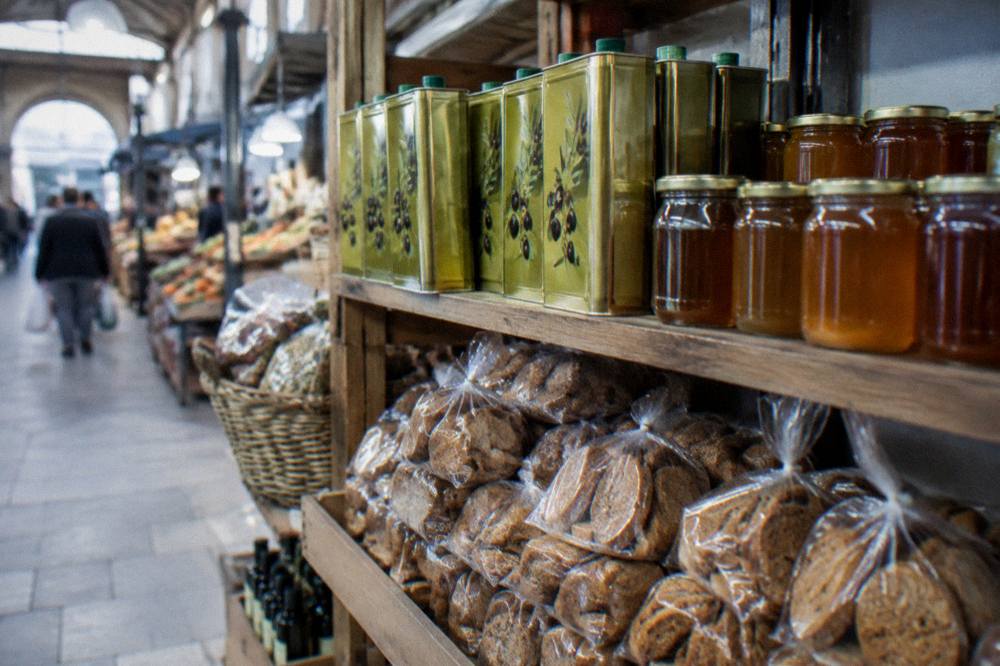
The Municipal Market building sits at the head of the Old Town's shopping streets, and its stalls carry the island's raw materials: barrels of olives, trays of mizithra and graviera, honey from the inland villages, raki in plastic bottles. It is the place to see what the restaurants are working with. The Old Town guide maps all of these quarters street by street.
The harbourfront itself is the postcard row: lanterns, water, and menus with photographs. Some of it is good, and prices are posted by law, so the check a reader can make is simple, read the menu board before sitting down. Three streets back, the same meal generally costs less and the kitchen generally cooks better. The desk avoids claiming any single address is "the best"; the where to stay in Chania guide explains which quarter suits which kind of visitor.
What Is Bougatsa, And Why Do Chania Locals Argue About It?
Bougatsa is a pie of thin hand-stretched pastry filled with sweet semolina cream, cut with a knife, dusted with cinnamon and sugar, and eaten warm in the morning, and in Chania it is a local institution with named shops competing for the title of the city's own. The pie is Greek in a wider sense, but Chania's version is tied to the city's morning routine, served fast, standing or sitting, with a coffee beside it. The pastry is stretched by hand until it is translucent, and the fillings run from the classic sweet cream to cheese.
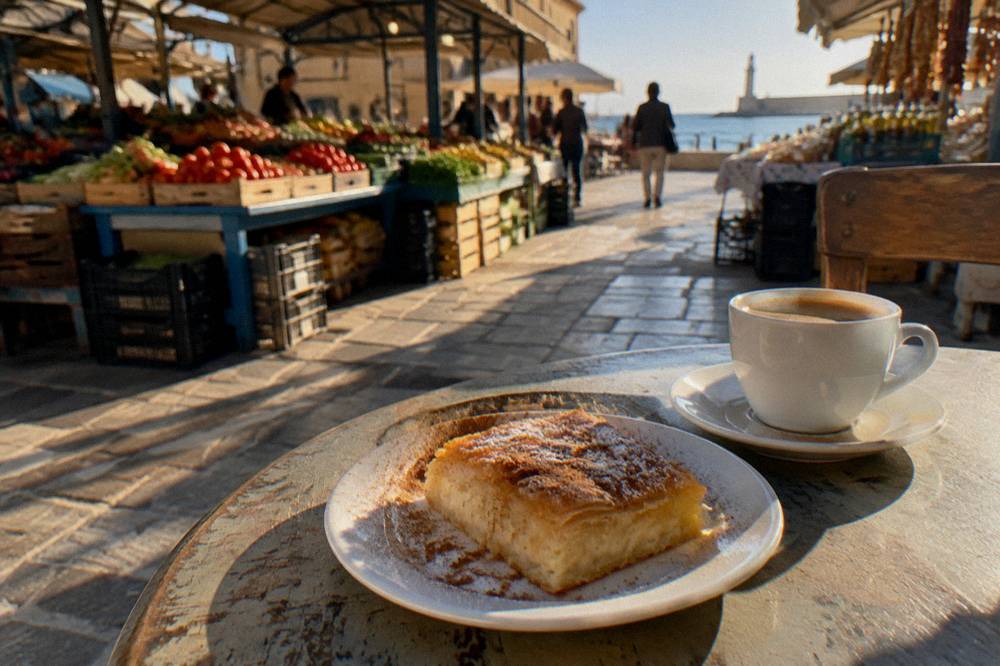
The dedicated page on this site, bougatsa in Chania, goes into the shops and the history in detail. The argument, as with all such arguments, is part of the pleasure: any shop that stretches its own pastry in the window is doing the real thing.
What Role Do Olive Oil, Wine And Raki Play In A Cretan Meal?
Olive oil is the base of nearly every Cretan dish, wine is the everyday drink of the villages, and raki, also called tsikoudari, is the grape-distilled spirit that closes the meal and marks hospitality, offered small, cold and often free at the end of a taverna dinner in Chania. The island's olive groves climb the foothills of the White Mountains behind Chania, and the oil that comes down them is used raw on greens, cheese and bread as much as it is used for cooking. An olive press visit or a tasting room is an easy half day from the city.
Wine in Crete runs on local grapes, and the vineyards around Chania pour reds and whites that rarely leave the island. The Chania wine tours guide covers the tasting options, including tours that combine wineries with olive oil mills. Raki is something else again: it is distilled after the grape harvest in the autumn, and each village's still has its following. It arrives unasked at the end of a meal, with a small sweet beside it, and refusing it outright is harder than drinking it.
| Product | How It Is Eaten | Where It Comes From |
|---|---|---|
| Olive oil | Raw on bread, greens and cheese, and in every pot | Groves on the White Mountains' foothills |
| Cretan wine | Everyday with lunch and dinner | Village vineyards around Chania |
| Raki, tsikoudia | Small cold glass after the meal | Distilled from grape must after harvest |
| Thyme honey | On cheese pastries and yoghurt | Hives of the western island |
| Graviera cheese | Table cheese and fried as saganaki | Dairies of the Chania region |
| Mizithra | On dakos and in kalitsounia | Fresh sheep and goat milk cheese |
When Is The Best Season For Food In Chania?
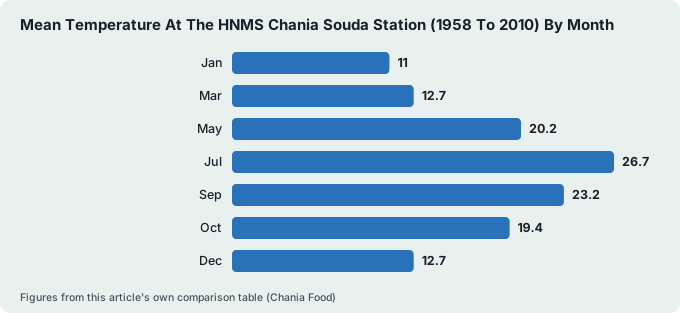
The best food seasons in Chania are late spring, when the wild greens and the first vegetables arrive and the tavernas cook outdoors, and autumn, when the grape harvest brings raki distillation and the October rain, an average of 67.7 mm across the month at the Chania Souda station, cools the city for slow cooking. The HNMS Chania Souda station records, covering 1958 to 2010, show what the kitchen works with: January, the wettest month at 129.5 mm, is the season of stifado and oven lamb; July, with 1 mm of rain and a mean of 26.7 C, is the season of tomatoes, cold dakos and fish by the water.
| Month | Mean Temperature At The HNMS Chania Souda Station (1958 To 2010) | Rainfall (mm) | What The Kitchen Does |
|---|---|---|---|
| Jan | 11.0 | 129.5 | Oven dishes, wild greens |
| Mar | 12.7 | 76.0 | Horta at their peak |
| May | 20.2 | 13.5 | Outdoor tables, first tomatoes |
| Jul | 26.7 | 1.0 | Cold dishes, fish by the water |
| Sep | 23.2 | 15.4 | Grape harvest begins |
| Oct | 19.4 | 67.7 | Raki distillation season |
| Dec | 12.7 | 101.9 | Slow lamb, holiday sweets |
The full breakdown, including the whole twelve-month table, sits on the Chania weather guide, and the best time to visit Chania page weighs food against beaches and crowds.
How Do Cooking Classes Work In Chania?
A cooking class in Chania usually means a small group driven to a village house under the White Mountains, where a local cook leads the preparation of a full Cretan meal, from phyllo stretched by hand to lamb or chicken in the oven, and everyone sits down together to eat what they made. Classes run from a few hours to a full day depending on the operator, and the listing for each one carries the exact price, duration and meeting point. Some center on a single meal; others add a cheese maker or a winery stop.
The class featured on this page, Chania Cooking Class, The Authentic, builds a traditional Cretan meal from start to finish and then serves it. It is the kind of experience that changes how a traveller reads a taverna menu afterwards, because the work behind a single tray of kalitsounia becomes obvious. The dedicated Chania cooking classes guide compares the options, and the class can also be checked directly: Check availability.
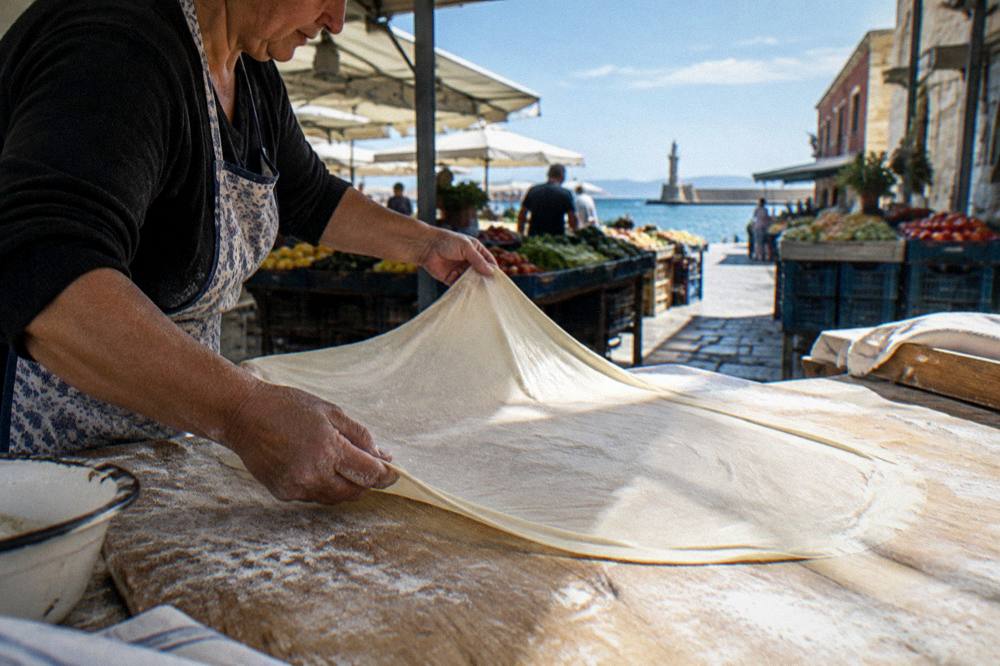
A mountain cooking class pairs well with the tasting tours, because one shows how the meal is built and the other shows what goes into it. The village kitchen also serves the dishes that tavernas in the Old Town rarely have room to cook, whole oven trays and slow braises that need hours and a wood fire.
Which Food Day Trips From Chania Are Worth The Drive?
The food day trips that earn their drive from Chania are the olive oil and wine tastings of the inland villages, the honey and wine stops on the route to Elafonisi, and the tavernas of the south coast villages such as Loutro and Sfakia, reached by boat or by road through the gorges. Western Crete is small enough that a lunch of mountain goat in a village square sits an hour from a swim at Elafonisi, the protected Natura 2000 beach on the island's south-west corner, where entry is free and taking sand, shells or plants is prohibited.
The Elafonisi trips often build the food into the day. One paired itinerary, the Elafonisi Beach Trip from Chania, runs a full day west, and the tasting version adds Elos honey and local wine between the coast and the mountains. On the hiking side, the Samaria Gorge hike from Chania ends with a boat from Agia Roumeli, where the tavernas grill fish a street from the water.
A word of caution on Samaria: the gorge normally opens 1 May to 31 October, but storms in late September and early October 2026 destroyed sections of the path, and no reopening decision was on record as this page was prepared, so the NECCA status page must be checked before any hike is planned. The individual ticket is EUR 10 through the NECCA e-ticket portal, free for EU residents under 18 and over 65, and tour prices exclude the entrance and the Agia Roumeli ferry.
| Day Trip Direction | Food Connection | Practical Note |
|---|---|---|
| Elafonisi, west | Elos honey, village wine, cheese stops | Entry to the beach free, sand collecting prohibited |
| Balos and Gramvousa, north-west | Fish tavernas at Kissamos port | Only confirmed charge is a EUR 1 municipal fee on boat tickets for over-13s |
| Samaria, south | Fish at Agia Roumeli after the walk | EUR 10 ticket, check NECCA status first |
| Apokoronas, east | Olive mills and village tavernas | Bus routes from Chania station on Kydonias street |
| Paleochora, south-west | Seafood on the Libyan Sea | Boats to Gavdos leave here in season |
The wider best tours from Chania page ranks all of these by kind, and things to do in Chania holds the full activity list for the city and its surroundings.
How Much Should You Budget For Eating In Chania?
A realistic eating day in Chania runs from a bougatsa and coffee in the morning, a market or taverna lunch at midday, and a taverna dinner with wine or raki at night, with fish the one variable that moves the bill sharply because it is sold by the kilo at posted prices the diner can read before ordering. This site does not print restaurant price ranges, because menu prices move with the season and the street; the check the reader can make is on the menu board outside every door, where by law each dish and each fish price per kilo is displayed before anyone sits down.
Accommodation adds a separate item: the climate crisis resilience fee is collected by hotels and rentals per room or apartment per night, with seasonal rates by category, and the amount is confirmed at booking rather than assumed. Beyond that, the honest budgeting advice is structural: eating where the menu is short and written in Greek, buying bread, cheese, fruit and honey from the market for lunches, and treating fish as a planned splurge rather than a default.
The Chania on a budget guide applies the same discipline to the whole trip, and the how many days in Chania page helps pace the food against the beaches and the gorges.
What Food Should You Bring Home From Chania?
The food worth carrying home from Chania is olive oil in tins, thyme honey, graviera and mizithra where customs allow, barley rusks for dakos, Cretan wine, and a bottle of raki, all bought at the Municipal Market or a village producer rather than an airport shelf. Oil travels best in sealed tins, honey in jars, and cheese keeps for the journey only if it is very fresh and the flight is short; travellers should check their home country's rules on dairy before buying. Rusks are the safe souvenir, close to indestructible, and they carry the island's pantry home better than anything else.
The market is the one-stop shop, and the villages on the food day trips sell the same products at the source, often from the family that made them. Wine bottles need padding in checked luggage; oil tins need a plastic bag around them regardless of how well they are sealed.
Common Questions About Chania Food
What food is Chania known for?
Chania is known for Cretan cooking: dakos, horta wild greens, chochlioi snails, antikristo lamb, sfakian pie with honey, bougatsa for breakfast, graviera and mizithra cheeses, and raki after the meal.
Where do locals eat in Chania?
Local tables cluster in Splantzia and the streets behind the Municipal Market, where menus are short and written for the neighbourhood. The answers page on what food is Chania known for lists the signature dishes to look for.
Is food expensive in Chania?
Eating in Chania covers a wide range depending on what you order, and fish sold by the kilo is the item that moves a bill the most. Menu boards outside every restaurant display prices before you sit down, so the comparison is easy to make on the street.
What is a typical Cretan breakfast?
A typical Cretan breakfast is bougatsa, warm sweet-cheese or semolina pie with coffee, or bread with olive oil, cheese, olives and honey. Village breakfasts add yoghurt with thyme honey and paximadi rusks.
What drink do you get after a meal in Chania?
Raki, also called tsikoudia, a strong grape spirit served cold in small glasses, often arrives unasked at the end of a taverna meal with a small sweet beside it. House wine is the everyday drink with the meal itself.
The pattern worth keeping is simple: shop where the market sets the standard, eat where the menu is short, drink what the village pours, and learn one dish well enough to cook it at home. Chania's food rewards that attention more than any other city on the island, because the harbour, the mountains and the market are all within reach of one long lunch. For everything beyond the table, the things to do in Chania page carries the full list of days out, and a week that mixes tavernas with the best tours from Chania is a week that feeds both appetites.