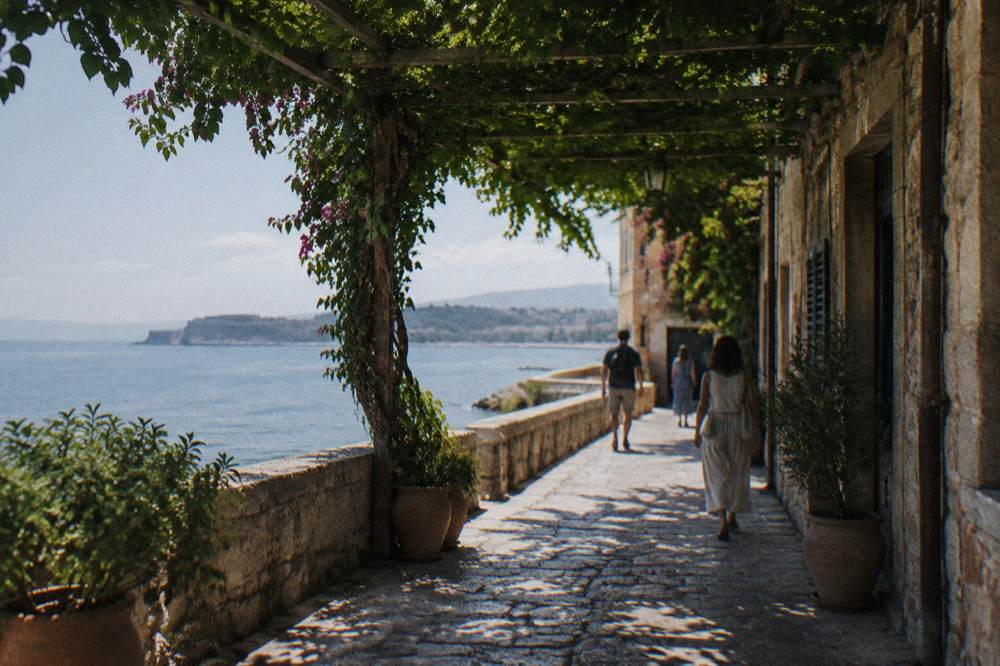
Rethymno Crete: The Day Trip From Chania, Planned Properly
Rethymno is the third city of Crete's north coast, reachable from Chania by the island's KTEL bus network, and it makes a straightforward day trip for anyone based in Chania who wants a second old town without changing hotels.
Short answer
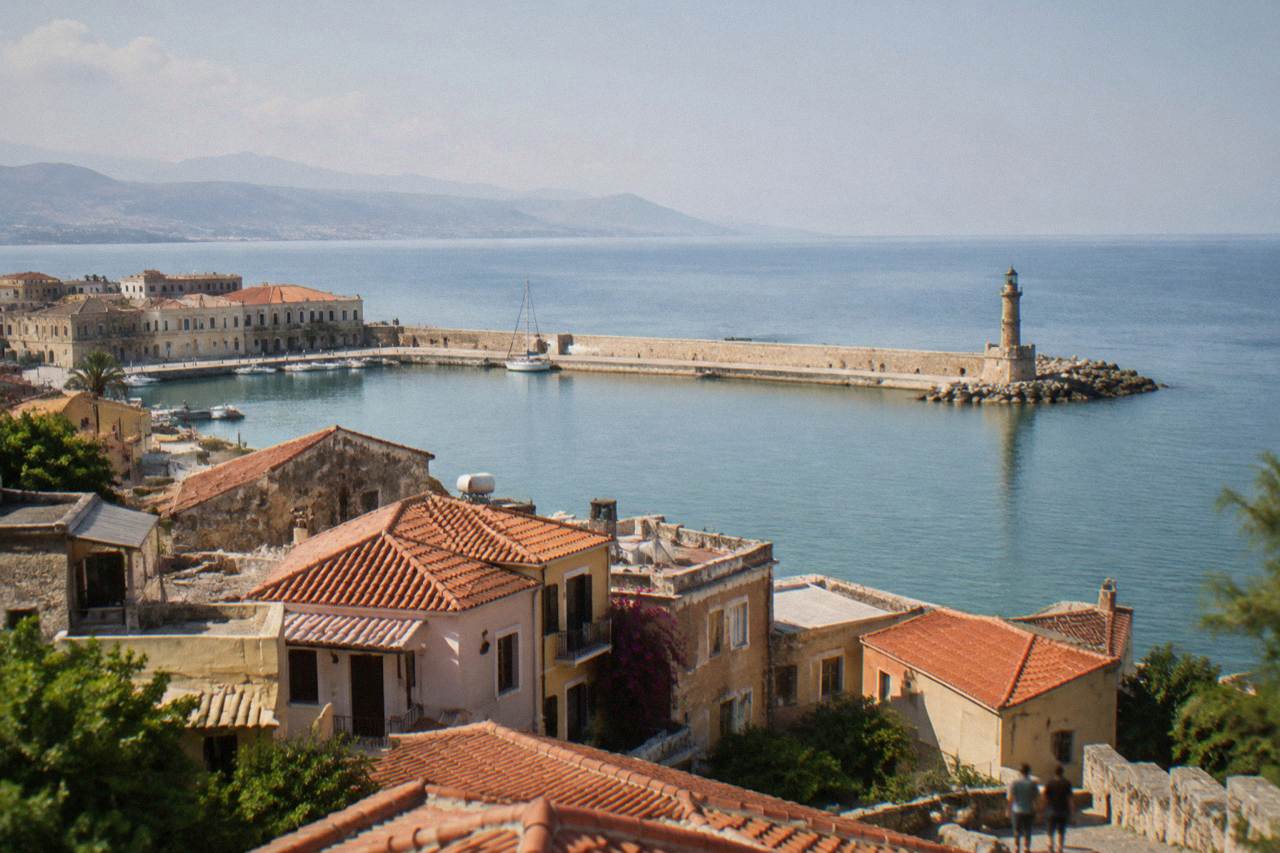
Rethymno sits on Crete's north coast between Chania and Heraklion, and the direct KTEL bus from Chania's long-distance station on Kydonias street is the standard way to reach it for a day.
Rethymno is a coastal city on Crete's north coast, roughly two-thirds of the way from Chania toward Heraklion, and it is one of the standard day trips for visitors based in Chania. The Chania long-distance bus station on Kydonias street lists Rethymno among its routes, alongside Heraklion, Kissamos, Paleochora, Omalos and, in summer, Elafonisi, which makes the bus the practical answer for a day when a hire car is not part of the plan. This page lays out what the trip involves, what Rethymno offers once the bus arrives, and how the day compares with staying in Chania or spending the same hours on one of the beach or gorge trips that leave from the same station.
How Do You Get From Chania To Rethymno Without A Car?
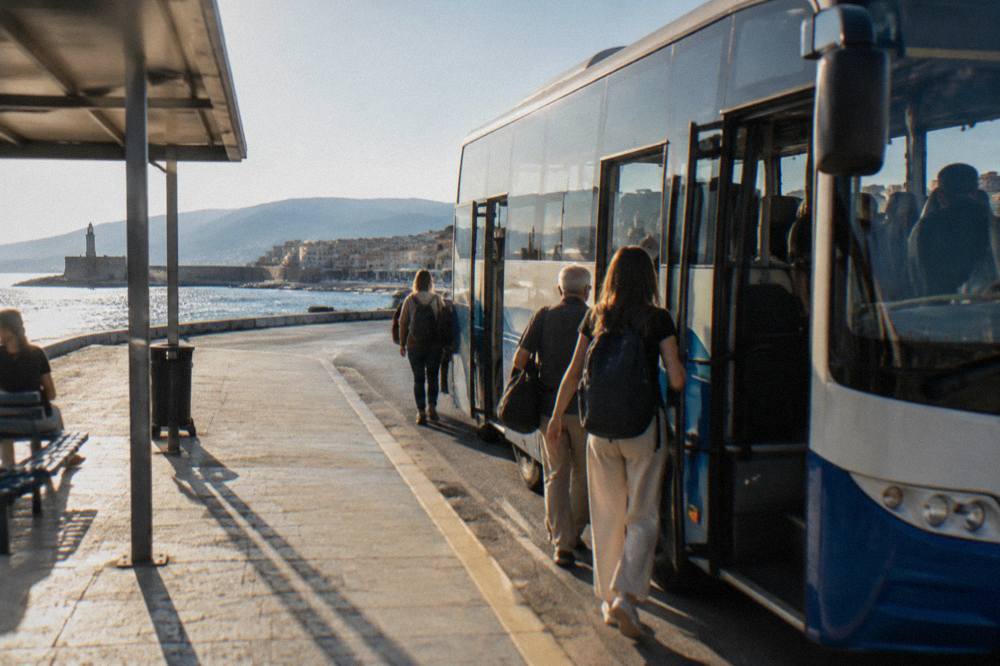
The standard route is the direct KTEL Chanion bus from Chania's long-distance station on Kydonias street, and the operator's own timetable at e-ktel.com is the place to confirm the departure and return times before the day is planned. The station's published route list includes Rethymno as a regular destination, and the same operator also runs summer service to Elafonisi and year-round service to Heraklion, Kissamos, Paleochora and Omalos. No fare is printed on this page because the operator's own site is the source that carries live fares and timetables. Anyone relying on a same-day return should check the last departure from Rethymno before committing to a late dinner.
The bus station's position on Kydonias street puts it within the built-up city, so the trip from the Old Town to the departure point is a short urban hop rather than a cross-island drive. The KTEL network covers the whole island's long-distance routes, and Crete has no railway, so bus, hire car or a guided transfer are the three realistic options. For a day trip, the bus removes parking entirely, which matters in a town whose old quarter was built for foot traffic.
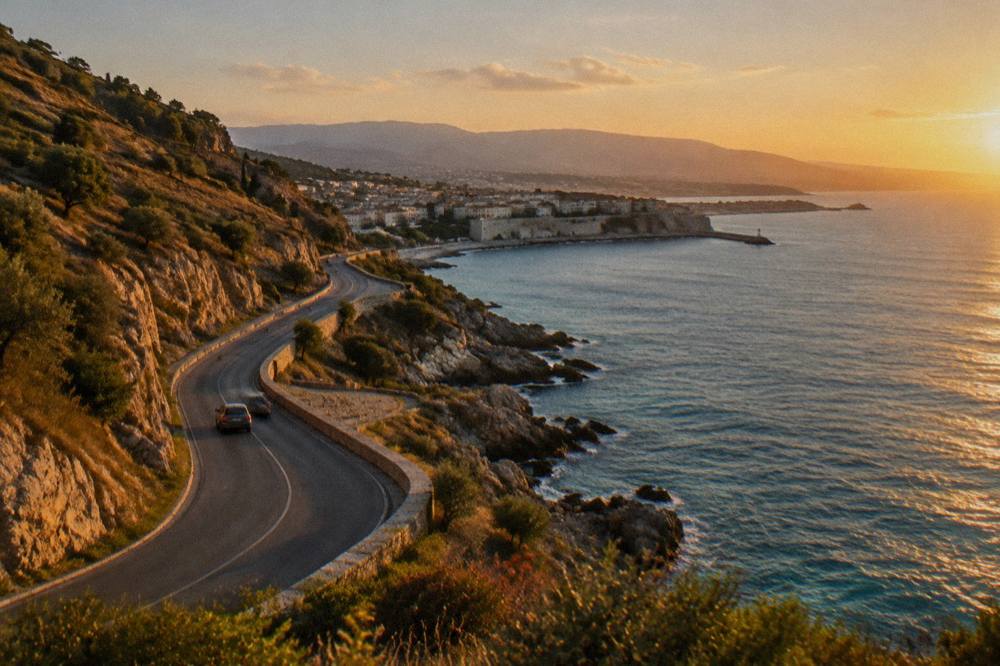
For comparison, drivers should treat the road between the two cities as the island's main west-east artery along the north coast. This page prints no driving time or distance, because no figure for that exact journey appears in the sources behind this site. The bus timetable's own running times, read on the operator's page, are the honest way to gauge the journey length.
Rather drive the coast road on your own schedule? Book a rental car here.
What Does Rethymno Offer That Chania Does Not Already Have?
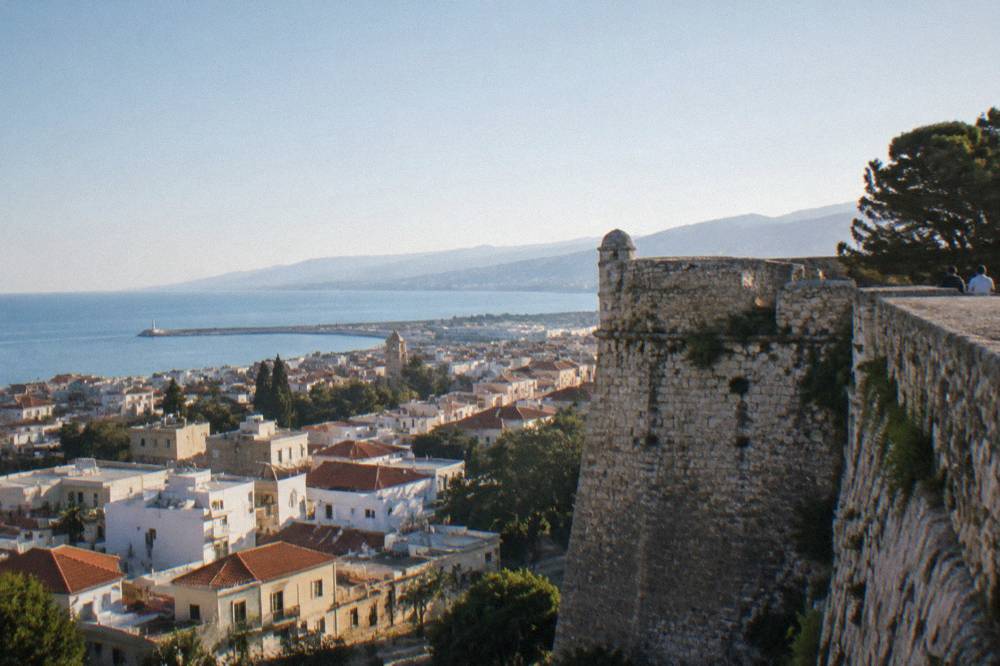
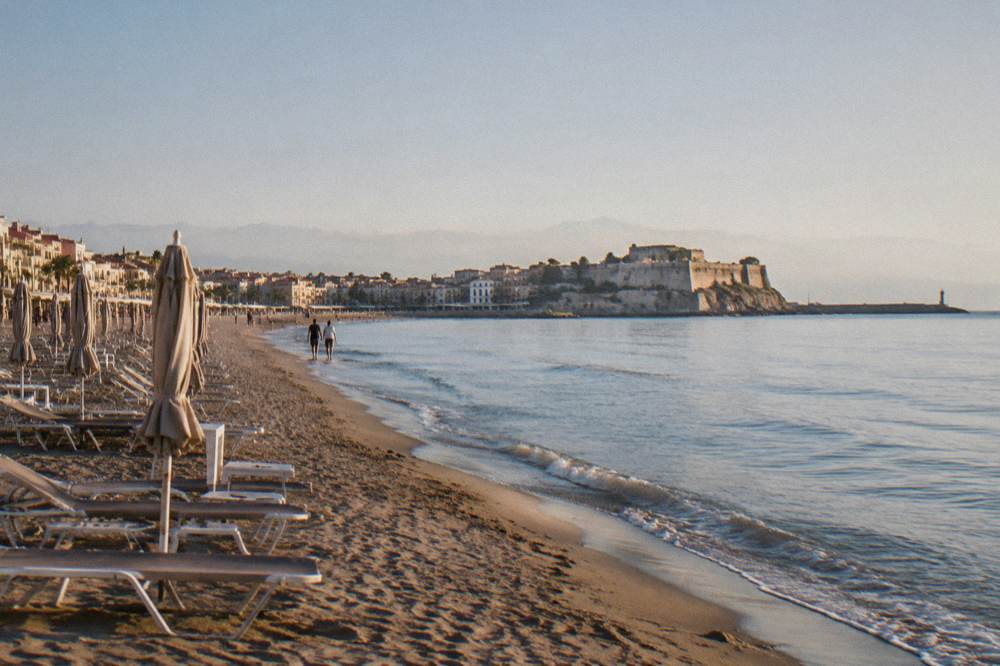
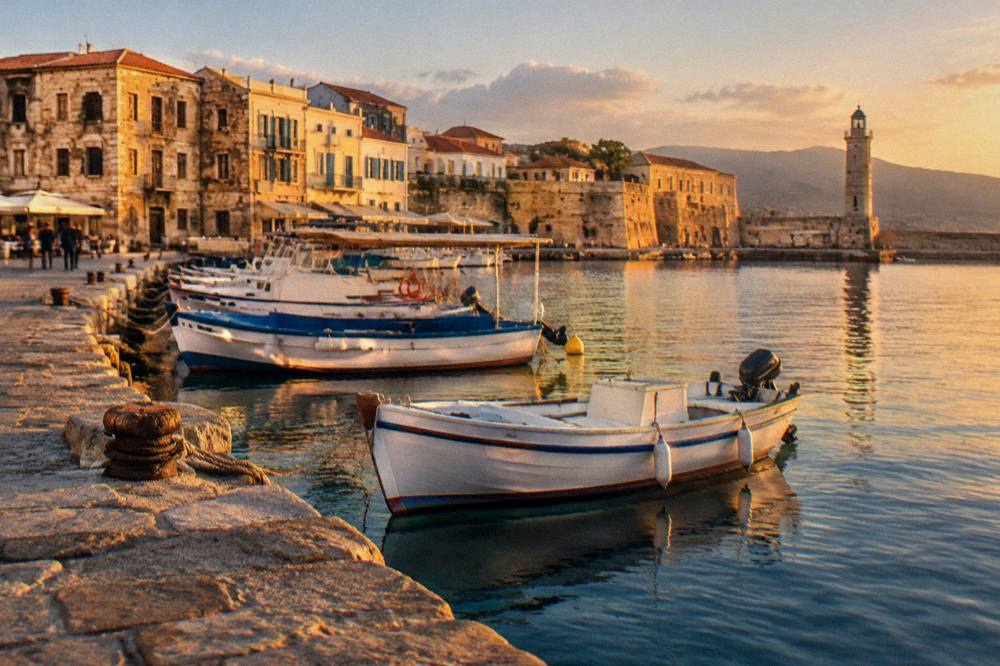
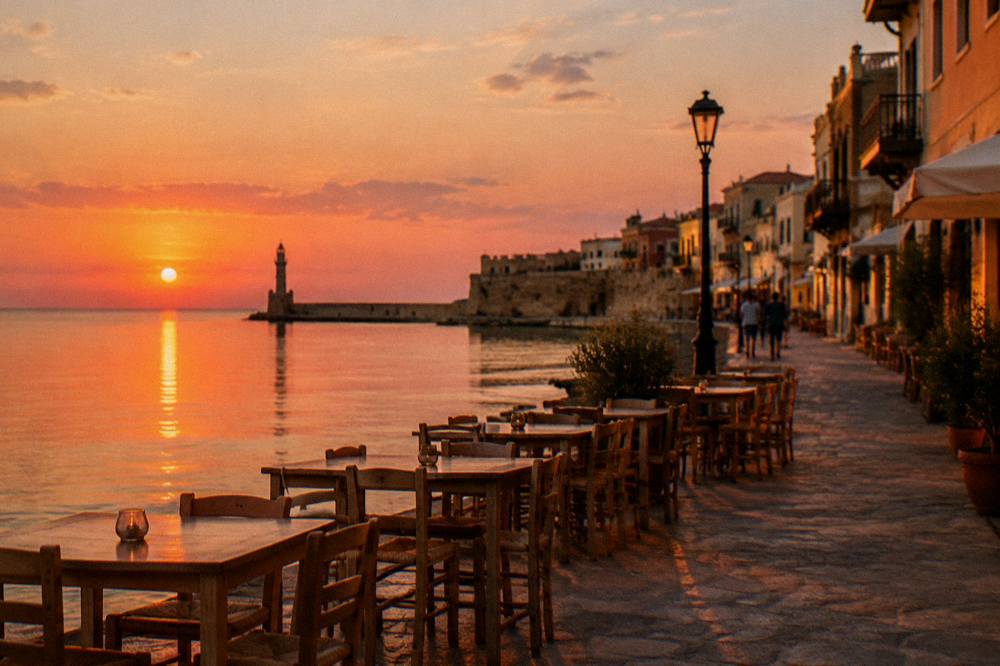
Rethymno's core offer is a second, smaller old town with its own Venetian-era harbour works and a long sandy beach that runs along the city edge, which is a combination Chania's Old Town does not match, since Chania's nearest swimming is a walk or short ride away at Nea Chora. Rethymno's old quarter sits between the sea and the slopes behind the city, and its fortress stands above the rooftops as the single most visible landmark. Chania's answer is the Venetian Harbour, first built between 1320 and 1356, with the lighthouse of about 1595 to 1601 on its mole and the Firka Fortress of 1620 at its mouth, a set of monuments concentrated in one walkable bowl.
The two cities share a history layer: Venetian rule, then Ottoman rule from 1645 in Chania's case, and union with Greece in 1913 for the island as a whole. The comparison matters for a day trip, because a visitor who has already walked Chania's harbour for two days may want the contrast of Rethymno's fortress hill and its different street grain, rather than another harbour of the same shape.
The honest planning point is that Rethymno rewards a slow day. A morning bus, hours in the old quarter, an afternoon on the town beach if the season allows, and an evening return is a full and reasonable shape. A rushed half-day risks reducing the trip to a bus ride plus a fortress photo. The dedicated comparison page, Chania Versus Rethymno, Compared For Visitors, works through the differences in detail for anyone choosing between the two as a base rather than a day out.
How Does A Rethymno Day Compare With The Gorge And Beach Trips From Chania?
A Rethymno day is a town day: low equipment, low physical demand and no entry ticket to worry about, whereas the competing trips from Chania, Samaria Gorge, Elafonisi, Balos and Falassarna, each carry an access condition, a fee or a seasonal window that has to be checked before the day is committed. Samaria Gorge is the clearest case: the park normally runs a season of 1 May to 31 October, but storms in late September and early October 2026 destroyed sections of the path, staff describe a 2026 reopening as extremely difficult, and works are aimed at readiness in May 2027, so the NECCA status page is the only honest answer on whether the gorge can be walked at all on any given date. The individual ticket is EUR 10 through the NECCA e-ticket portal, free for EU residents under 18 and over 65.
Elafonisi, by contrast, is a Natura 2000 protected area where entry is reported to be free and taking sand, shells or plants is prohibited. Balos carries only a EUR 1 Kissamos municipal fee collected on the boat ticket for over-13s, and the boat season from Kissamos ran daily departures to 31 October 2026 according to the operator. A time-slot visitor cap of about 1,200 people per three hours was proposed in August 2026 but was not in force, so no cap should be assumed.
The comparison table for a planner based in Chania:
| Day trip from Chania | Type of day | Access condition to check first |
|---|---|---|
| Rethymno | Town, fortress, town beach | KTEL return times |
| Heraklion and Knossos | Museum and archaeological site | KTEL times and site entry on site's own page |
| Samaria Gorge | One-way gorge hike | NECCA status and storm damage, EUR 10 entry |
| Elafonisi | Protected beach, Natura 2000 | Free entry reported, no sand or shells taken |
| Balos and Gramvousa | Boat cruise and lagoon | EUR 1 municipal fee on ticket, operator season dates |
| Falassarna | West-coast beach | Road access and seasonal services |
The trade-off is simple. Rethymno is the safest day to plan months ahead, because nothing about it depends on a seasonal gate. The gorge and beach days are the ones that need a check the week before travel, and the pages on Samaria Gorge, Elafonisi Beach and Balos Lagoon And Gramvousa carry the specific conditions for each.
What Does The Weather Mean For A Rethymno Day Trip?
The HNMS Chania Souda station table, covering station records from 1958 to 2010, shows the warm months of June to September with mean temperatures of 23.2 to 26.7 C and rainfall of 1.0 to 15.4 mm per month, which is the window in which a Rethymno day doubles as a beach day on the town's own sand. October, at 19.4 C mean and 67.7 mm of rain, is the month rain starts to matter again, and January, at 129.5 mm across 16.3 rain days, is the wettest month in the table. July, at 1.0 mm and 0.4 rain days, is the driest.
| Month | Mean C | Rain mm | Rain days |
|---|---|---|---|
| Jan | 11.0 | 129.5 | 16.3 |
| Feb | 11.0 | 104.0 | 14.5 |
| Mar | 12.7 | 76.0 | 11.5 |
| Apr | 15.9 | 31.5 | 7.7 |
| May | 20.2 | 13.5 | 4.2 |
| Jun | 24.7 | 3.4 | 1.2 |
| Jul | 26.7 | 1.0 | 0.4 |
| Aug | 26.3 | 1.4 | 0.6 |
| Sep | 23.2 | 15.4 | 3.2 |
| Oct | 19.4 | 67.7 | 9.3 |
| Nov | 15.8 | 77.0 | 11.2 |
| Dec | 12.7 | 101.9 | 16.1 |
These are station records for the Chania Souda site, 148 m inland of Souda Bay, published by the Hellenic National Meteorological Service for the period 1958 to 2010, and no newer official table exists for that station. Rethymno lies on the same north-coast plain, but this page does not claim the numbers describe Rethymno's own station; they describe the region's climate pattern a planner can reasonably expect along the north coast. The rest of the planning pages sit on Chania Crete Travel Guide.
The practical reading: May to September is the reliable band, with mean maxima of 24.5 to 30.7 C from May to August. From October onward the rain-day count climbs fast, 9.3 in October and 11.2 in November, so an autumn Rethymno day should carry a fallback, and Rethymno's indoor options, cafes, workshops and museums, are exactly what a wet afternoon needs. Humidity in the table runs from 50 percent in July to 73 percent in January, and the prevailing wind is west, turning north-west in July and August.
How Should A One-Day Rethymno Itinerary Be Shaped?
A workable shape is an early bus out, the fortress and old quarter in the cooler morning hours, lunch in the old town, the town beach or a seafront walk in the afternoon, and a return bus timed from the operator's evening timetable, with nothing booked that cannot survive a delay. The fortress hill is the one climb worth doing before the heat of midday in summer, given a July mean maximum of 30.7 C in the Chania Souda table. The old quarter below it works as a wandering area rather than a list of sights, and the harbour and seafront tie the two halves of the day together.
For anyone who prefers structure over wandering, a guided option covers the same ground with a plan attached. The site's Old Town walking and tasting options in Chania show what a guided town walk looks like in this region, and the equivalent logic applies in Rethymno even though this site's own products are based in and around Chania.
A sample shape, with the caveat that every timing is a planner's suggestion, not an operator's promise:
| Part of day | Suggested focus | Note |
|---|---|---|
| Early morning | Bus from Chania Kydonias station | Confirm times on the operator's page |
| Morning | Fortress hill and old-quarter streets | Climb before the midday heat |
| Midday | Lunch in the old town | Posted menus, itemised bill |
| Afternoon | Town beach or seafront walk | Swim gear May to September |
| Evening | Return bus to Chania | Check the last departure first |
Is Rethymno Worth The Day Compared With Staying In Chania?
Rethymno is worth the day for a visitor with four or more nights in Chania who has already covered the Venetian Harbour, the lighthouse and the Old Town's main quarters, and it is skippable on a shorter stay, when the gorge, Elafonisi or Balos deliver something Chania cannot rather than a second version of what it already has. The Chania Old Town already gives the Venetian Harbour of 1320 to 1356, the lighthouse on its mole, Firka Fortress from 1620 with free grounds, and the Neoria shipyards, seven survivors of an original seventeen from the 15th to 16th century. The Old Town area guide maps that set.
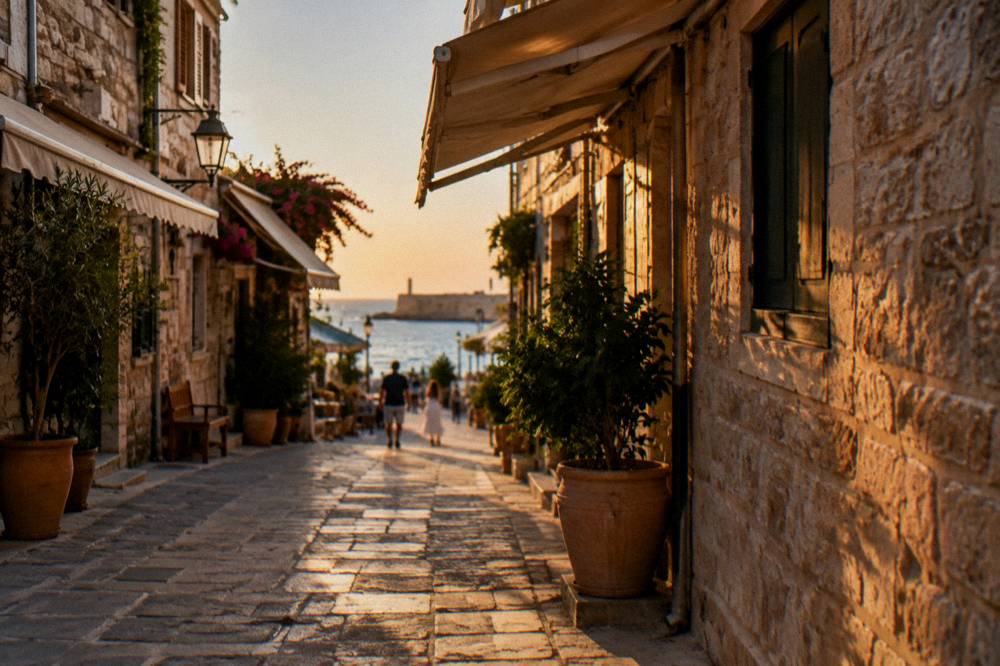
Rethymno's case rests on variety: a different fortress on a hill rather than at a harbour mouth, a town beach on the doorstep, and a street pattern that is not Chania's bowl around the water. For travellers who measure a trip in towns seen, it satisfies that goal cheaply by bus. For travellers who measure it in water and mountains, the same day spent on Preveli Beach, south of Rethymno on the Libyan Sea coast, or on a boat from Chania may serve better.
The Chania-or-Rethymno question also appears in a longer-horizon form, when the two compete as a base rather than a day trip. That is a different decision with different inputs, and the comparison guide Chania Versus Rethymno, Compared For Visitors handles it without repeating the day-trip arithmetic here.
Can A Rethymno Day Be Combined With Knossos Or Heraklion?
Combining Rethymno with Heraklion or Knossos in one bus day from Chania is not a realistic plan, because both are stops further east on the same north-coast corridor and the hours add up faster than a single day allows, so the honest choice is one destination per day. The KTEL route list runs Chania to both Rethymno and Heraklion as separate services, and the Knossos-and-Heraklion day trip from Chania is itself a full-day product on this site, which tells a planner what the eastern option costs in hours. The Heraklion And Knossos day-trip page lays out that eastern day.
A better combination pattern is Rethymno on one day and a gorge or beach day on another, alternating town and nature. A week based in Chania can carry Rethymno, one gorge day, one or two beach or boat days, and still leave room for the city's own harbour, museums and food, which is exactly the shape the site's itinerary pages describe starting from One Day In Chania and Two Days In Chania.
For visitors who want the south coast instead, boats to Gavdos run from Paleochora and Sougia in season, and the Paleochora and Loutro And Sfakia pages cover that coast. The point for this page is that Rethymno belongs in a west-north-coast plan, not bolted onto an eastern day.
What Should You Check Before Committing To A Rethymno Day?
The four checks are the KTEL return timetable on the operator's own page, the live weather forecast rather than the climate averages, whether the town beach suits the season, and the opening status of any specific Rethymno museum or fortress on its own page, none of which this site can state on the town's behalf. Climate averages describe a thirty-year pattern, not a Thursday, and the HNMS table here is a planning frame, not a forecast. The accommodation's climate crisis resilience fee, collected per room or apartment per night at seasonal rates, is a separate item settled at booking, and the amount is confirmed there.
A short pre-departure checklist:
| Check | Where | Why |
|---|---|---|
| Bus times out and back | Operator's own timetable page | No printed timetable here survives seasonal change |
| Forecast for the day | Any live forecast service | Averages are not a forecast |
| Fortress or museum status | The site's own page in Rethymno | Hours and fees are not in this site's verified sources |
| Beach season | Sea conditions on the day | No official monthly sea-temperature normal exists |
| Accommodation fee | At booking | Seasonal rates, amount confirmed by the accommodation |
Two traps worth naming. First, no ferry is involved: the Souda to Piraeus overnight ferry serves Athens from Souda port, about 7 km east of Chania's Old Town, with a published departure around 21:30 and a crossing of about 9 h 15 min, and it has nothing to do with a Rethymno day. Second, Chania airport is about 14 km from the city centre on the Akrotiri peninsula, so an arrival-day Rethymno sprint is a poor fit; the first day belongs to the city itself, as the Chania airport guide explains.
How Does Rethymno Fit Into A Wider Chania-Based Week?
In a week based in Chania, Rethymno works best as the single town day, slotted between a gorge day and a beach or boat day, with the sequence chosen around the gorge's status and the boat season rather than around fixed dates. The gorge's window is the fragile piece: the normal season is 1 May to 31 October, but the 2026 storm damage means the NECCA status check comes first, and works are aimed at readiness in May 2027. The Balos boat season from Kissamos ran daily departures to 31 October 2026 on the operator's schedule. Elafonisi entry is reported free year-round as a Natura 2000 area, though summer KTEL service to it is a seasonal route.
A balanced week could run: the Chania Old Town and Venetian Harbour on day one, following the harbour and lighthouse guides; a gorge day when the status allows; Elafonisi or Balos as the water day; Rethymno as the town day; and a final flexible day drawn from Everything Chania Itself Offers or from a south-coast option. The desk's view, from the sources rather than from a visit nobody on this desk has made, is that Rethymno earns its slot in exactly that position: the low-risk day that fills in whenever a weather or status check closes one of the outdoor options.
For food, the tasting and cooking options based in Chania cover the island's table more deeply than a single Rethymno lunch can, and the Cretan food pages on this site list them. The plan above is a frame, and every dated element in it should be rechecked against the operator, the NECCA portal or the accommodation before the week is booked.
Common Questions About A Rethymno Day Trip From Chania
How do you get from Chania to Rethymno?
The direct KTEL Chanion bus from the long-distance station on Kydonias street is the standard route, and the operator's own timetable page carries the live times and fares.
Is Rethymno worth a day trip from Chania?
Yes, for stays of four nights or more where Chania's own old town, harbour and fortress have already been covered, and less so on short stays when the gorge and beach trips deliver something the city does not.
Can you visit Rethymno and Knossos on the same day from Chania?
Not realistically by bus. Both sit on the same north-coast corridor with Knossos further east near Heraklion, so the honest plan is one destination per day.
What is there to see in Rethymno?
A fortress on the hill above the old quarter, a Venetian-era harbour and a long town beach along the seafront, a combination best explored slowly on foot.
When is the best time of year for a Rethymno day trip?
May to September, when the HNMS Chania Souda station table for 1958 to 2010 shows monthly rainfall of 1.0 to 13.5 mm and mean temperatures of 20.2 to 26.7 C, though the beach months need a live forecast on the day.