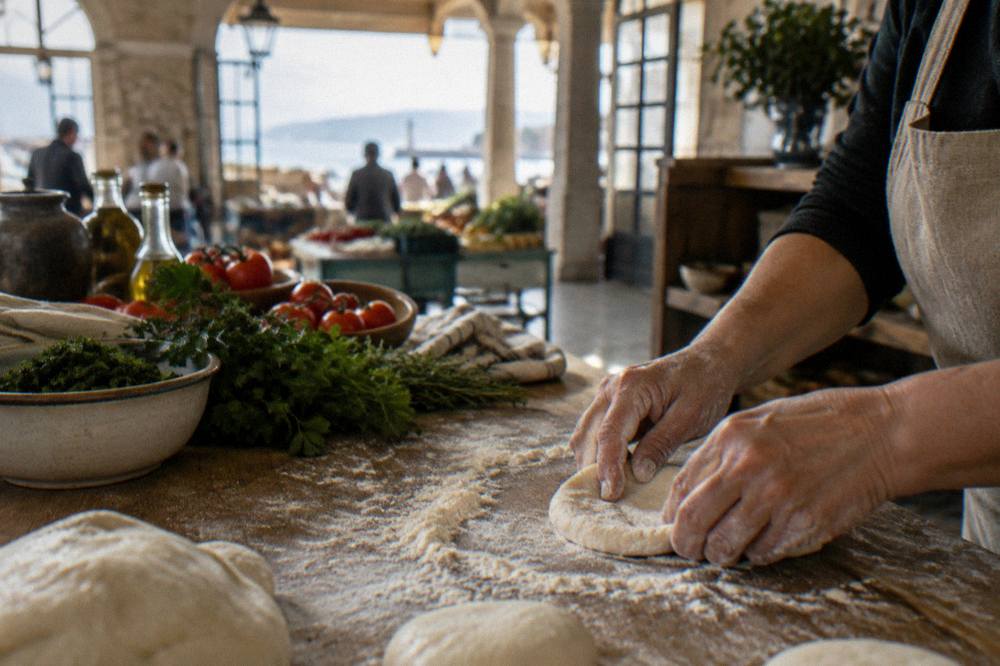
Old Chania Market
The Old Chania Market is the covered municipal market at the edge of Chania's Old Town in Crete, Greece, and this guide sets out what it is, what its stalls sell, and how to plan a visit around it using only verified local facts.
Short answer
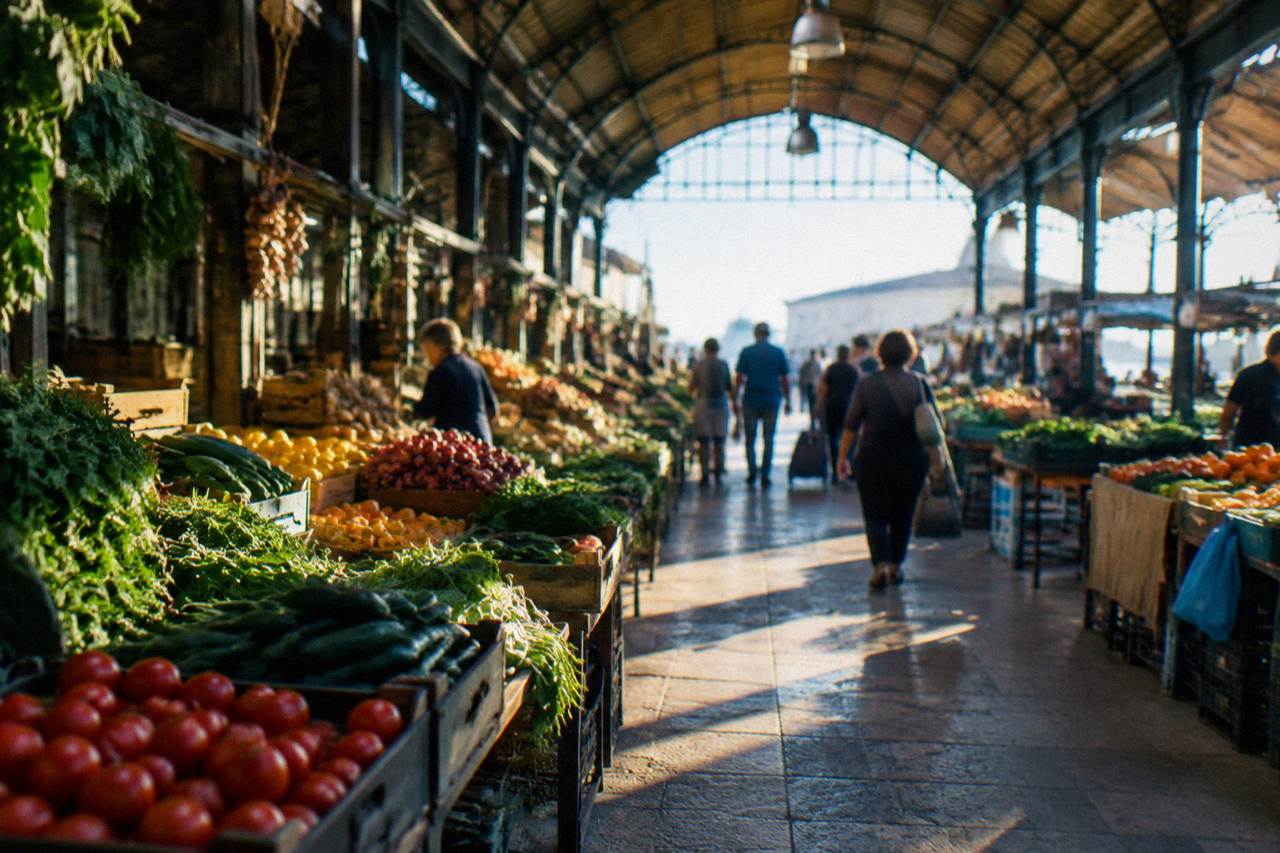
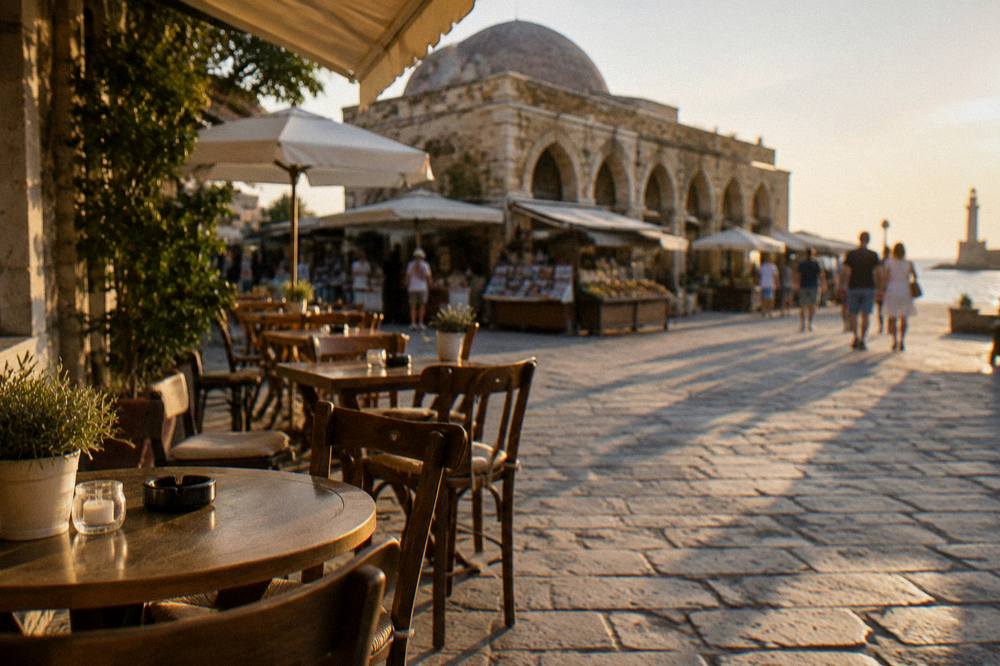
The Old Chania Market is Chania's covered municipal market, sitting at the border of the Old Town within walking distance of the Venetian Harbour. It is the city's central food shopping spot, surrounded by the harbour, Firka Fortress and the Archaeological Museum, and it pairs naturally with a food-focused guided walk.
Chania, on the north-west coast of Crete in Greece, wraps its Old Town around a Venetian Harbour that was first built between 1320 and 1356, and the Old Chania Market sits at the inland edge of that Old Town as the city's covered municipal market. Where a detail such as a stall schedule or an opening hour is not confirmed anywhere in the record, the page says so and points to where to check, rather than guessing.
What Is The Old Chania Market?
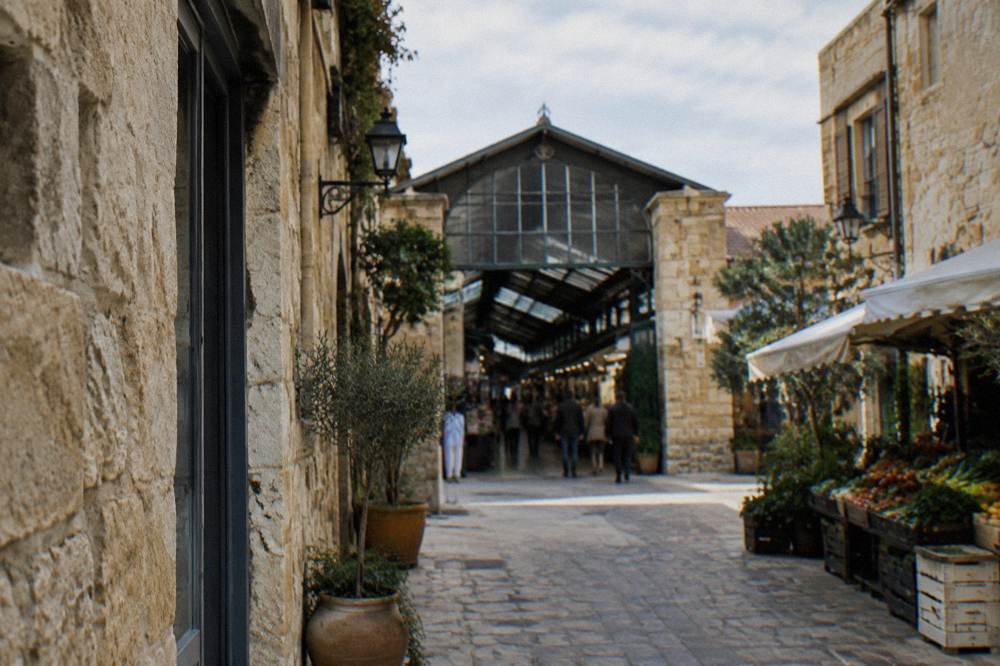
The Old Chania Market is Chania's covered municipal market, a single enclosed food hall standing at the boundary of the Old Town, where independent stalls sell produce, cheese, olives, herbs, honey, bread, meat and fish rather than branded goods, and it serves the city's own kitchens as much as its visitors. It functions as the city's working food market rather than a museum piece, and its position, within walking distance of the Venetian Harbour, makes it a natural first or last stop on any Old Town circuit. Stall schedules and hours are not fixed facts this page can print, so confirm them locally or through the city's information points before setting out.
The market belongs to a city of 111,375 permanent residents in its municipality, according to the 2021 census, which means the produce on sale is not staged purely for travel season: the fish counters, butchers and greengrocers serve local kitchens year round. That is the practical difference between this hall and a souvenir street. A shopper here is standing in the same commercial rhythm that stocks the tavernas of the Old Town and the villages of the White Mountains to the south.
The name matters for searchers. Visitors write "Old Chania Market", "Chania Agora" and "municipal market of Chania" and mean the same building, the covered market at the Old Town edge. This page uses "the market" throughout after this introduction, and it treats the market as a base for planning rather than as a destination in isolation, because its real value is what sits around it: the harbour first built 1320 to 1356, the lighthouse on its mole, and the food streets that run between them.
Where Is The Municipal Market In Chania And How Do You Reach It?
The market stands at the inland edge of Chania's Old Town, the historic district wrapped around the Venetian Harbour on the city's flat coastal plain, so it is reached on foot from the harbour, from the Old Town hotels, and from the bus station on Kydonias street that serves the whole region. The long-distance KTEL bus station sits on Kydonias street, with routes to Heraklion, Rethymno, Kissamos, Paleochora and Omalos, and to Elafonisi in summer, which makes the station a realistic arrival point for a market-first day. Walking time is left out here, since the exact route has no reliable measurement behind it.
Distances that are verified help frame the geography. Chania International Airport "Ioannis Daskalogiannis", operated by Fraport Greece, sits about 14 km from the city centre on the Akrotiri peninsula near Souda, and the airport's own site carries the public bus and taxi information for the transfer. The overnight Blue Star Ferries service to Piraeus leaves from Souda port, about 7 km east of the Old Town, with a departure around 21:30 and a crossing of about 9 hours 15 minutes on the operator's published timetable. The Venetian Harbour itself is for excursion boats, never for the Piraeus ferry.
| Arrival point | Verified distance or detail | What it means for the market day |
|---|---|---|
| Chania Airport (CHQ) | About 14 km from the city centre, Akrotiri peninsula | Bus and taxi information sits on the airport's own site |
| KTEL bus station, Kydonias street | Chania's long-distance station, regional routes | Closest major transit hub to the Old Town edge |
| Souda port | About 7 km east of the Old Town, Piraeus ferries | Overnight arrivals connect onward by local transport |
| Venetian Harbour | First built 1320 to 1356 | Excursion boats only, the walk core of the Old Town |
Within the Old Town itself the question changes from transport to walkability, and the answer is straightforward: the Old Town is compact and flat around the harbour, and the question of whether it works without a car is covered in detail on whether Chania Old Town is walkable. Staying inside the Old Town puts the market, the harbour and the beach question in the same conversation, and whether it is worth staying in Chania Old Town is the sibling page that works through the trade-offs.
For anyone weighing the market against a beach morning, the sea is closer than it looks from the harbour wall: whether you can walk to a beach from Chania Old Town covers the routes. Nea Chora beach, profiled on the Nea Chora beach page, is the nearest sandy stretch west of the harbour.
What Will You Find Inside The Old Chania Market?
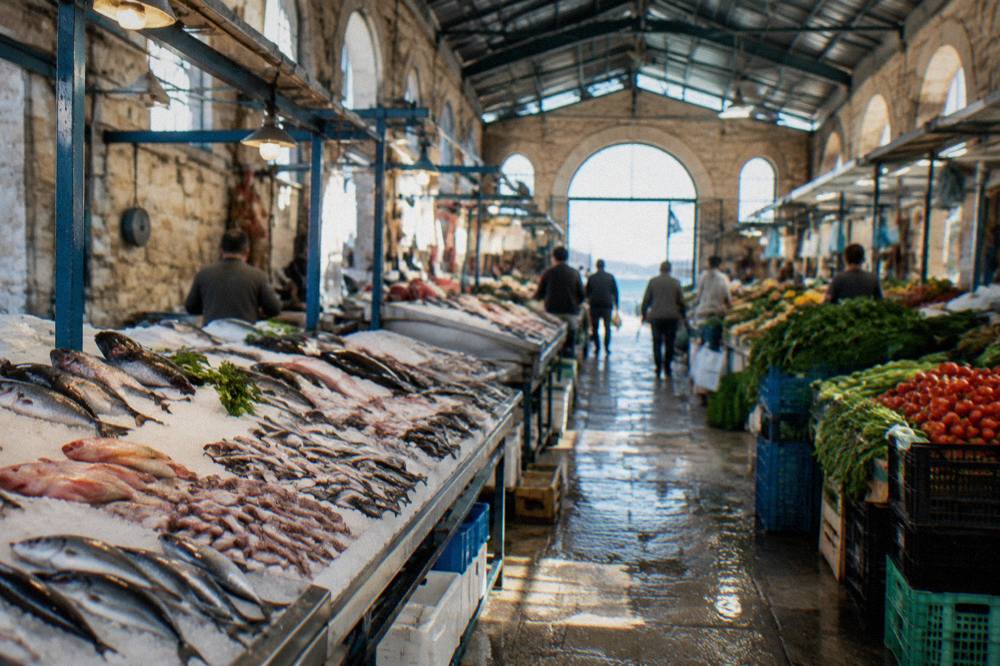
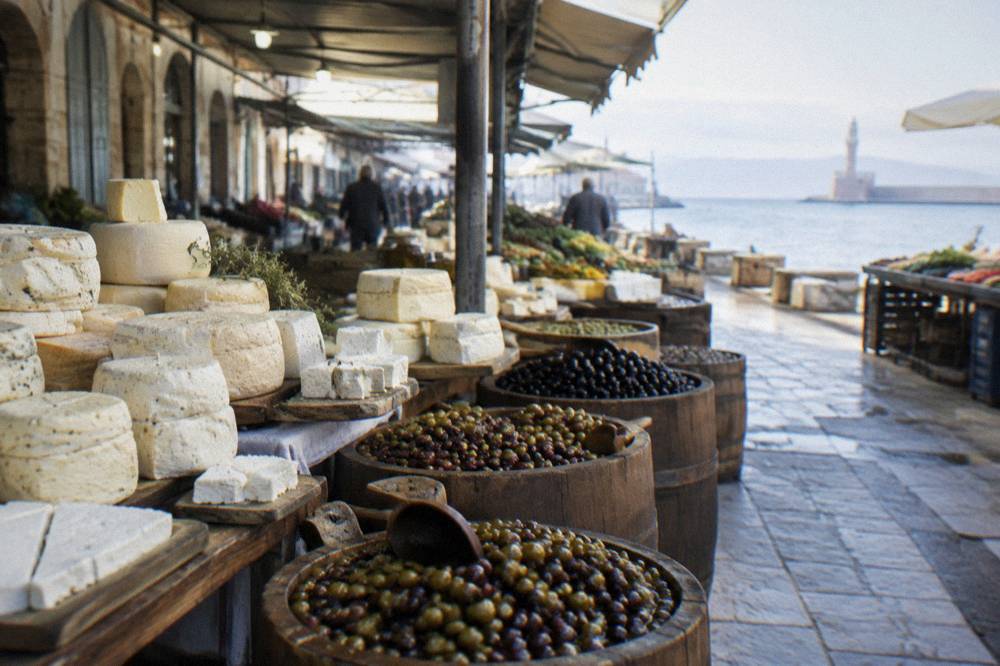
Inside the Old Chania Market the stalls are food stalls: greengrocers with seasonal Cretan vegetables and fruit, cheese counters, olive and olive-oil sellers, herb and honey stalls, bakeries, butchers and fishmongers, plus small shops selling wine, raki and packaged goods to carry home. The hall is a working market, so the mix shifts with the season and with what the island's producers are picking, pressing and catching. No stall list, count or floor plan is verified in the sources this site uses, so nothing of that kind is printed here.
What can be said with confidence is the shopping logic. Buy what Crete produces well and what travels: honey, olive oil, olives, dried herbs, wine and cheese, and ask at each stall how the item should be packed for a flight. Sellers in a covered municipal market deal with visitors daily and answer direct questions about what keeps and what does not. Prices at individual stalls are posted at the stall, and the practical check any shopper can make is the posted price and the itemised receipt, not a promised figure from a webpage.
| Stall type | What is typically sold | Travel note |
|---|---|---|
| Greengrocer | Seasonal vegetables and fruit | Best eaten on the island |
| Cheese counter | Cretan cheeses kept cool | Ask about packing for travel |
| Olive and oil seller | Table olives, olive oil | Oil seals and travels well |
| Herb and honey stall | Dried herbs, thyme honey | Light and sturdy in luggage |
| Bakery | Bread and phyllo pastries | Buy for the day, not the week |
| Fishmonger | Daily catch on ice | A look at the local sea, not a souvenir |
The market's food context is the city's food context. Chania's cooking reputation runs through olive oil, cheese, honey, herbs and seafood, and the food Chania is known for question is answered on its own page, including the practical detail of which day the market scene peaks, a fact that belongs to that page rather than being restated here without a source.
Two food walks on this site's roster use these same streets. The Old Town highlights guided tour with street food pairs the sights with tastings, and its live listing carries the current price and availability: Check availability. A town walk with food tastings covers similar ground in a shorter loop.
The guided options above differ in shape, and the difference matters when the market is the anchor of the day. The first walks the Old Town streets with tastings built in, the second takes the food day onto the water with a meal at sea, and the third heads west for a two-beach cruise with pickup. A reader who wants the market itself explained in context picks the first; a reader using the market morning as a warm-up for a bigger day picks either of the others.
What Nearby Sights Sit Within Walking Distance Of The Market?
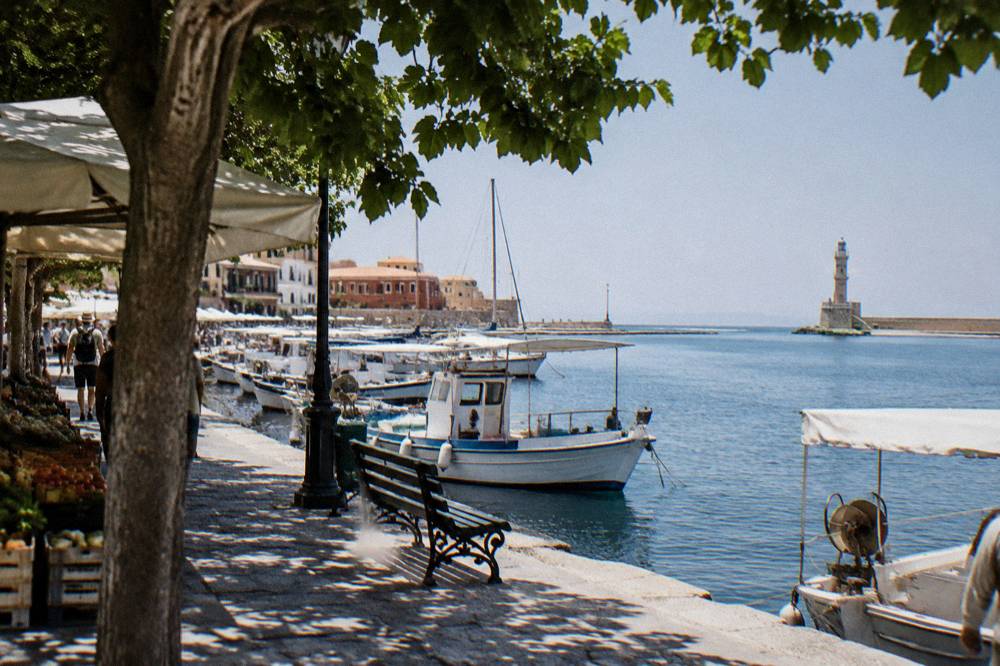
The market sits within the Old Town orbit of the Venetian Harbour, the lighthouse, Firka Fortress and the Splantzia and Topanas quarters, with the Archaeological Museum of Chania a short trip away in Halepa at 15 Skra Street, where the full ticket is EUR 15 and the concession EUR 8. Firka Fortress, built in 1620, has free grounds at the harbour mouth. The lighthouse on the mole was built about 1595 to 1601 and restored on its Venetian base during the Egyptian era of 1830 to 1840, operating from 1839.
The harbour walk is the spine that connects all of it. The Venetian Harbour was first built 1320 to 1356, with dredging and a wall recorded in 1515, and the Neoria shipyards on its eastern side count seven survivors of an original seventeen from the 15th to 16th century. The city's first Venetian walls went up from 1336 to about 1356, and the second circuit followed from 1536 on Michele Sanmicheli's design. Ottoman rule began with the conquest of Chania in 1645, and Crete's union with Greece came in 1913. That is the whole verified timeline, and every stop on the walk sits somewhere on it.
| Sight | Verified fact | Source detail |
|---|---|---|
| Venetian Harbour | First built 1320 to 1356 | Dredging and wall recorded 1515 |
| Lighthouse (Faros) | Built about 1595 to 1601 | Egyptian-era restoration 1830 to 1840, operating 1839 |
| Firka Fortress | Built 1620 | Grounds free to enter |
| Neoria shipyards | Seven survive of seventeen, 15th to 16th century | Line the harbour's east side |
| City walls | First walls 1336 to about 1356, second from 1536 | Second circuit to Sanmicheli's design |
| Archaeological Museum | 15 Skra Street, Halepa | EUR 15 full, EUR 8 concession, hours on the museum's visit page |
The museum deserves its own note. Its visit page lists the full ticket at EUR 15 and the concession at EUR 8, asks visitors to leave 20 minutes before closing, and carries the current hours, which this page does not restate because the published sources for them conflict. The Archaeological Museum of Chania profile covers the collection, and the Maritime Museum of Crete sits at the harbour's Firka end, with no price or hours stated for it anywhere this site can verify. The dedicated pages for the Venetian Harbour, the lighthouse of Chania and Firka Fortress carry each sight in depth, and the Old Town area page ties the walk together.
The single best shortcut for a first visit is the same guided walk that covers the market streets:
When Is The Best Time To Visit The Old Chania Market And Chania Itself?
The best months for a market-and-Old-Town day in Chania are May, June and September, when the HNMS Chania Souda station table for 1958 to 2010 shows mean temperatures of 20.2 C, 24.7 C and 23.2 C against rainfall of 13.5 mm, 3.4 mm and 15.4 mm, with July and August the driest months but also the warmest at 26.7 C and 26.3 C mean. Rain starts to matter from October, which averages 67.7 mm, and January is the wettest month at 129.5 mm. That is the whole arithmetic of timing, and it comes from the station table, not from anecdote.
Two cautions go with that table. First, the figures are station records for the period 1958 to 2010 from the Chania Souda station, which sits inland of Souda Bay at 148 m; the Hellenic National Meteorological Service publishes no newer table, so this is the official baseline, not a 1991 to 2020 normal. Second, no monthly sea-temperature normal exists in any official source, so this page prints none; a live reading is a live reading and nothing more.
| Month | Mean temperature (C) | Rainfall (mm) | Rain days |
|---|---|---|---|
| January | 11.0 | 129.5 | 16.3 |
| February | 11.0 | 104.0 | 14.5 |
| March | 12.7 | 76.0 | 11.5 |
| April | 15.9 | 31.5 | 7.7 |
| May | 20.2 | 13.5 | 4.2 |
| June | 24.7 | 3.4 | 1.2 |
| July | 26.7 | 1.0 | 0.4 |
| August | 26.3 | 1.4 | 0.6 |
| September | 23.2 | 15.4 | 3.2 |
| October | 19.4 | 67.7 | 9.3 |
| November | 15.8 | 77.0 | 11.2 |
| December | 12.7 | 101.9 | 16.1 |
Humidity in the same table runs from 50 percent in July to 73 percent in January, and the prevailing wind is west, turning north-west in July and August, the pattern known locally as the meltemi, for which no speeds or dates are printed because none are verified. Winter is a real season here, not a shut-down: the Chania in winter page covers what stays open, and the rainy-day options live on the Chania rainy day page, which is exactly where a wet market morning gets rescued. The fuller timing discussion, including the shoulder-season argument, sits on the best time to visit Chania page.
The market itself rewards a morning slot for the plain reason that a food market's produce, bread and fish are morning goods, but no verified stall hours exist to print, so the working advice is to treat late morning as the safe window and confirm locally. The market-day question, including which day the scene peaks, has its own dedicated answer page: what day is market day in Chania.
How Does The Old Chania Market Fit Into One Day In Chania?
The market works best as the first stop of a Chania day, before the harbour circuit and the afternoon beach or boat trip, because the food stalls are a morning operation and the harbour, Firka Fortress and lighthouse sit in an easy loop that finishes at the water. A realistic shape is market, Old Town lanes, harbour walk to the lighthouse mole, lunch in the Old Town, then either a beach afternoon at Nea Chora or a short boat departure from the harbour. The Chania one day itinerary runs this exact day hour by hour, and the Chania two days and Chania three days versions stretch it.
Cruise passengers get the tightest version of the day. Ships dock at the cruise port and the walkability question from there is answered on whether Chania is walkable from the cruise port, with the Chania cruise port day itinerary built around it. For a short port day, the market plus the harbour loop plus one museum stop is the realistic maximum, and the museum to choose is a matter of taste: the Archaeological Museum's EUR 15 full ticket against Firka's free grounds.
Longer stays convert the market from a stop into a habit. A week based in Chania can alternate market breakfast mornings with the day trips that fan out from the city: Balos and Gramvousa from Kissamos, Elafonisi to the south-west, the Samaria and Imbros gorges in the White Mountains, Falassarna, Rethymno, and Heraklion with Knossos. The things to do in Chania page is the root guide to all of it, and the best tours from Chania page ranks the options.
Two access notes follow the day trips, because this site's constraints file is blunt about them. Samaria Gorge normally runs 1 May to 31 October, but storms in late September and early October 2026 destroyed sections of the path, staff describe a 2026 reopening as extremely difficult, and works are aimed at readiness in May 2027; the individual ticket is EUR 10 through the NECCA e-ticket portal, free for EU residents under 18 and over 65, and no reopening promise is made anywhere on this site. At Balos the only confirmed charge is a EUR 1 Kissamos municipal fee collected on the boat ticket for over-13s, and a proposed time-slot cap of about 1,200 visitors per three hours was a proposal in August 2026, not a rule in force. The why is the Samaria Gorge closed page carries the full status story.
What Should You Buy At The Old Chania Market To Take Home?
The items that travel well from a Cretan market stall are olive oil, table olives, thyme honey, dried herbs, wine and raki, and sealed packets of rusks and sweets, while soft cheese, fresh fish and ripe fruit are for eating on the island, so the practical rule is to buy sealed, dry and sturdy for the suitcase and fresh goods for the same day. Ask at each stall how to pack oil and honey for a flight, and check the seal before leaving. Anything liquid goes in checked luggage under airline rules, not in cabin bags.
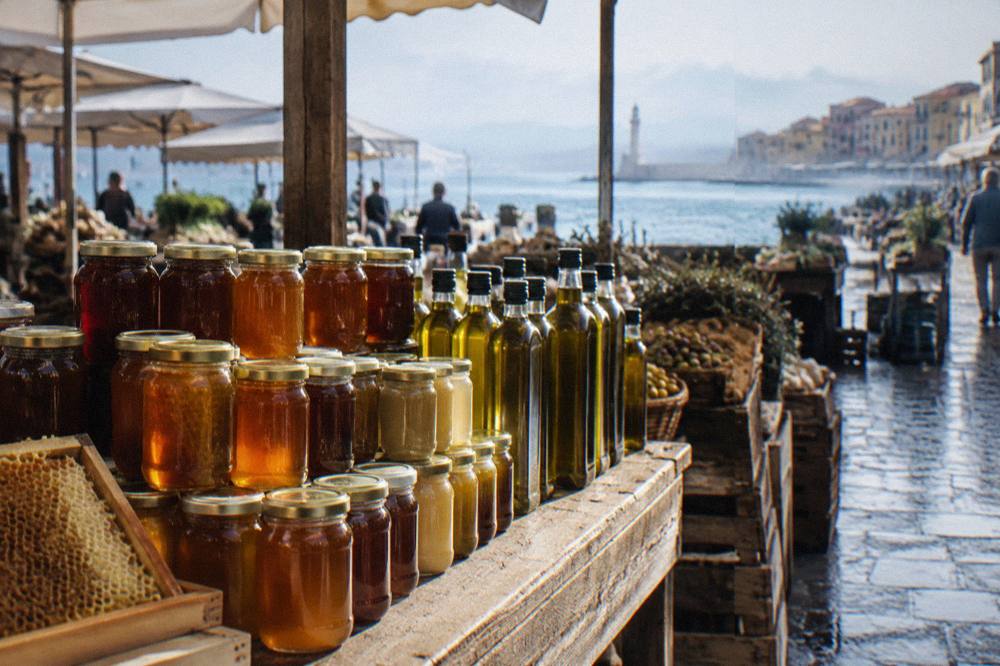
The island context explains the shelf. Crete's olive oil, honey and herb production is the backbone of the Cretan table, and the Cretan food in Chania guide maps which plates those ingredients become in the city's tavernas. The Chania restaurants page then picks where to eat them, and the bougatsa in Chania page covers the one pastry with a dedicated local following, best bought warm and eaten the same morning rather than carried home.
A cooking class turns the shopping into the meal. The roster on this site includes mountain-village and home-kitchen classes under Chania cooking classes, and wine-focussed days under Chania wine tours. A class plus a market morning is the fullest food day the city offers, and the class listings carry their own prices and durations.
How Does The Old Chania Market Compare With Other Market Experiences In Crete?
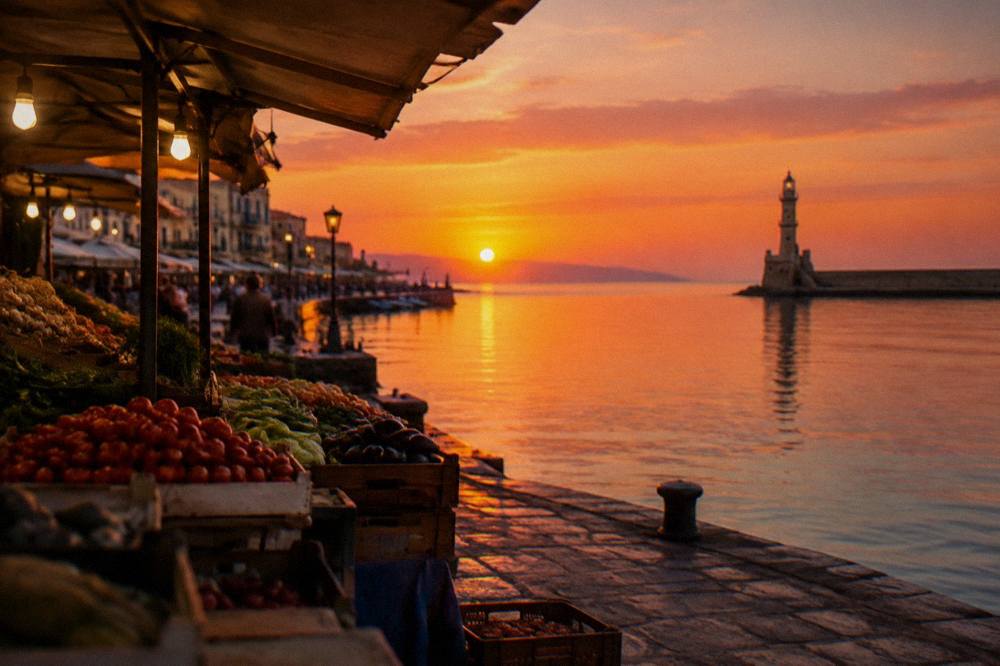
The Old Chania Market holds the island's strongest market-plus-Old-Town combination, because no other Cretan city pairs a covered municipal food market with a Venetian Harbour, a 1620 fortress and a working lighthouse in one walkable core, though Rethymno and Heraklion each offer their own old-quarter food scenes for visitors based there or day-tripping. Chania's advantage is density: the market, the harbour and the museums sit in a compact flat centre described across this site's Old Town coverage. Heraklion's pull is Knossos, and Rethymno's is its own old town, and both are covered as day trips on the Rethymno and Heraklion and Knossos pages.
The honest planning frame is the base-city choice, and this site answers it directly on the Chania vs Heraklion and Chania vs Rethymno pages, with is Chania worth visiting settling the base question and how many days in Chania sizing the stay. The short version, from the facts this site holds: Chania gives the west-crete day trips their shortest starts, with Kissamos, Omalos and the south-coast ports all reachable by the Kydonias street bus station's routes.
Money questions get the same treatment. The Chania on a budget page covers the cheap end of the city, and the is Chania expensive answer addresses costs directly. One charge every visitor does meet: the climate crisis resilience fee, collected by accommodation per room or apartment per night with seasonal rates, where the amount is confirmed at booking rather than printed here. No other country-level fee is verified, so none is stated.
Common Questions About The Old Chania Market
What Is The Old Chania Market?
The Old Chania Market is the covered municipal market at the edge of Chania's Old Town in Crete, Greece, where independent stalls sell produce, cheese, olives, oil, honey, herbs, bread, meat and fish. It is a working food market serving a municipality of 111,375 residents, and it sits within walking distance of the Venetian Harbour.
Where Is The Municipal Market In Chania?
It stands at the inland edge of the Old Town, the district wrapped around the Venetian Harbour on Chania's flat coastal plain. The KTEL long-distance bus station on Kydonias street is the nearest major transit hub, with regional routes to Heraklion, Rethymno, Kissamos, Paleochora, Omalos and, in summer, Elafonisi.
What Can You Buy At The Old Chania Market?
Olive oil, table olives, thyme honey, dried herbs, cheese, wine, raki, bread and pastries, plus fresh produce and fish. Sealed, dry goods such as oil, honey and herbs travel well in luggage; soft cheese, fish and ripe fruit are for eating on the island.
Is The Old Chania Market Open Every Day?
No verified stall schedule or opening hours exist in the sources this site uses, so the answer is to confirm locally or at the city's information points before going. The dedicated page on what day is market day in Chania carries the market-day detail.
How Far Is The Market From Chania's Main Sights?
The market sits in the same walkable Old Town core as the Venetian Harbour, first built 1320 to 1356, Firka Fortress from 1620 and the lighthouse built about 1595 to 1601. The Archaeological Museum of Chania sits farther out at 15 Skra Street in Halepa, with a EUR 15 full ticket and a EUR 8 concession.
When Is The Best Time To Visit The Old Chania Market?
May, June and September combine mean temperatures of 20.2 C, 24.7 C and 23.2 C with low rainfall, on the HNMS Chania Souda station table for 1958 to 2010. A morning slot suits a food market's goods best, with the exact stall hours confirmed locally.
The Old Chania Market rewards exactly the kind of slow, sourced planning this Chania Crete Travel Guide is built for: a morning among the stalls, a loop of the harbour whose first works were recorded between 1320 and 1356, and a table somewhere in the Old Town where the oil, cheese and honey from the morning's shopping reappear on a plate.