Chania Restaurants
Chania, on the north-west coast of Crete, eats around its Venetian Harbour and Old Town lanes: Cretan olive oil, small meze plates, fresh fish and village dishes, spread across harbourside tables, the Splantzia backstreets and the Nea Chora fishing quarter.
Short answer
Eat in the Old Town and Splantzia for Cretan meze and tavernas, at Nea Chora for fish beside the working harbour, and on the harbor front for the view at a price. Book ahead in summer, and check posted menus rather than trusting anyone's fixed price claim.
Chania, a coastal city of 111,375 permanent residents on the north-west coast of Crete, eats the way the island has always eaten: olive oil, wild greens, small plates, slow-cooked meat, cheese and whatever the boats brought in that morning. The restaurants cluster in a handful of walkable pockets around the Venetian Harbour, and the difference between a good meal and a forgettable one usually comes down to which pocket you sat down in, not which individual door you chose. This guide lays out the city's dining geography, the dishes worth ordering by name, the food tours that connect them, and the seasons that shape the whole scene, with the practical caveats the listings and official sources actually support.
What Food Is Chania Known For?
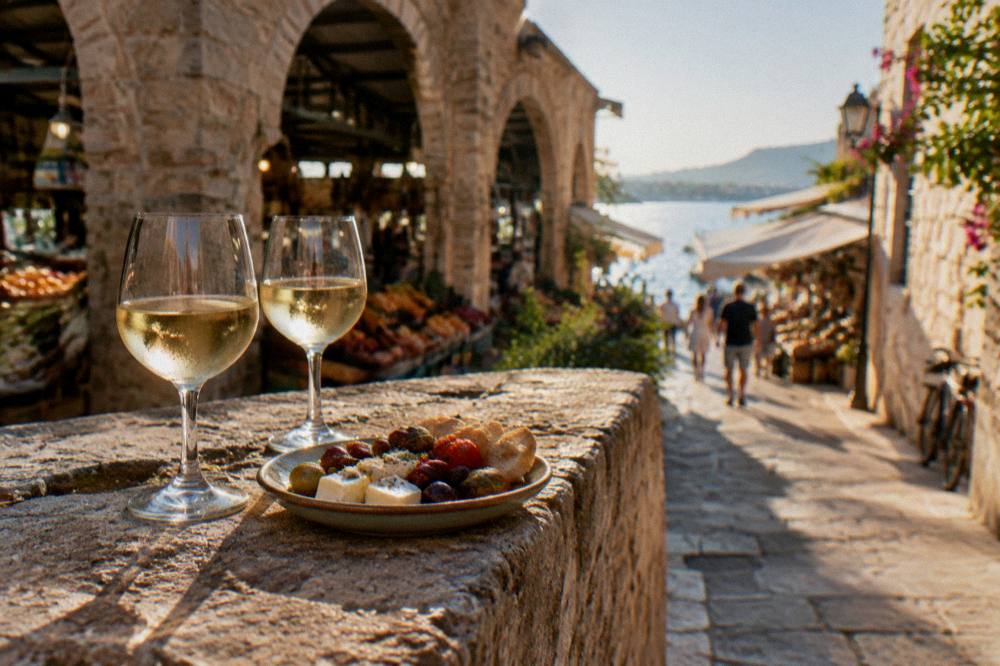
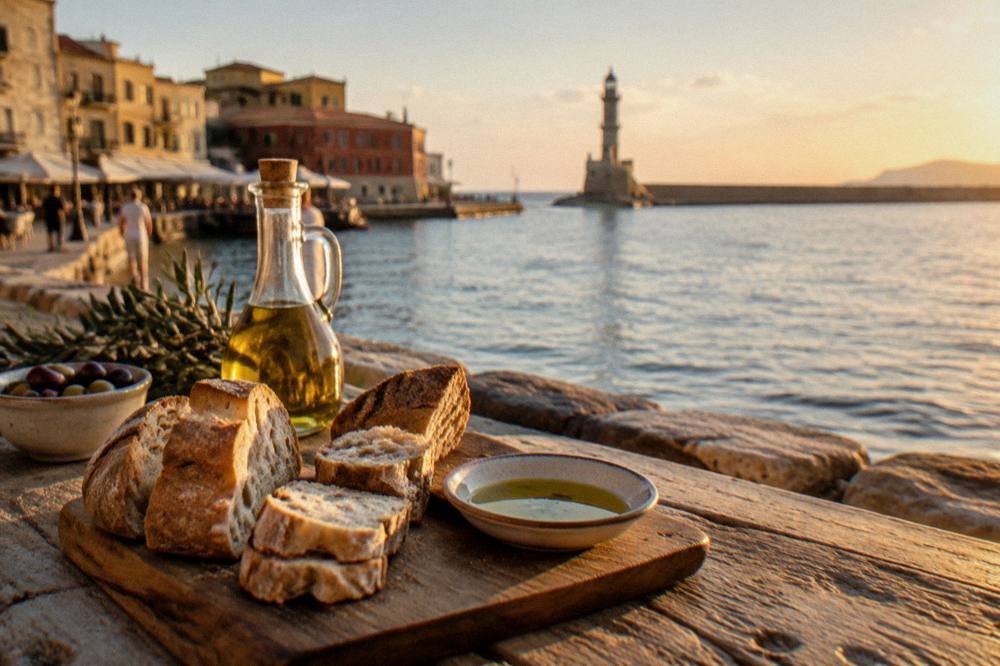
Chania is known for Cretan cooking rather than generic Greek restaurant food: dakos barley rusks with tomato and mizithra cheese, wild greens and pies, slow lamb and goat, small fried snails, fresh fish at the working harbour, olive oil pressed in the region, and cheese and honey combinations that show up at breakfast and dessert alike. The island's products drive the menu, and the best kitchens in the city treat them as the point of the plate rather than a garnish.
The backbone is the meze table. Instead of one large dish per person, a group orders several small plates that arrive as they are ready: cheese, greens, pies, snails, small fried fish, whatever the kitchen had that day. This is why the same taverna can feel cheap for two people and generous for five. It is also why reading the day's specials board matters more than reading the printed menu, because the printed menu is the standing repertoire and the board is what the market gave the cook that morning.
Bougatsa deserves its own sentence, because in Chania it is a morning institution rather than a dessert: a warm parcel of thin pastry filled with soft cheese, dusted with sugar and cinnamon, sold from specialist bakeries that sell little else. The city also takes its coffee seriously in the Turkish-style sense, with the kafeneio, the old men's coffee house, still functioning in corners of Splantzia and the side streets near the harbour.
For a fuller rundown of the island's dishes and where each one comes from, the site's guide to Cretan food in Chania goes dish by dish, and the answers page on Chania's best restaurants tackles the specific question of which doors to knock on.
Where Should You Eat In Chania?
The four dining pockets of Chania are the Venetian Harbour front, the Old Town lanes behind it, the Splantzia quarter on the east side, and the Nea Chora fishing quarter to the west, and each has a distinct character: view-first at the harbour, mixed and busy in the Old Town, local and late in Splantzia, and fish-focused at Nea Chora. Choosing the pocket first narrows the evening more than any single restaurant name will.
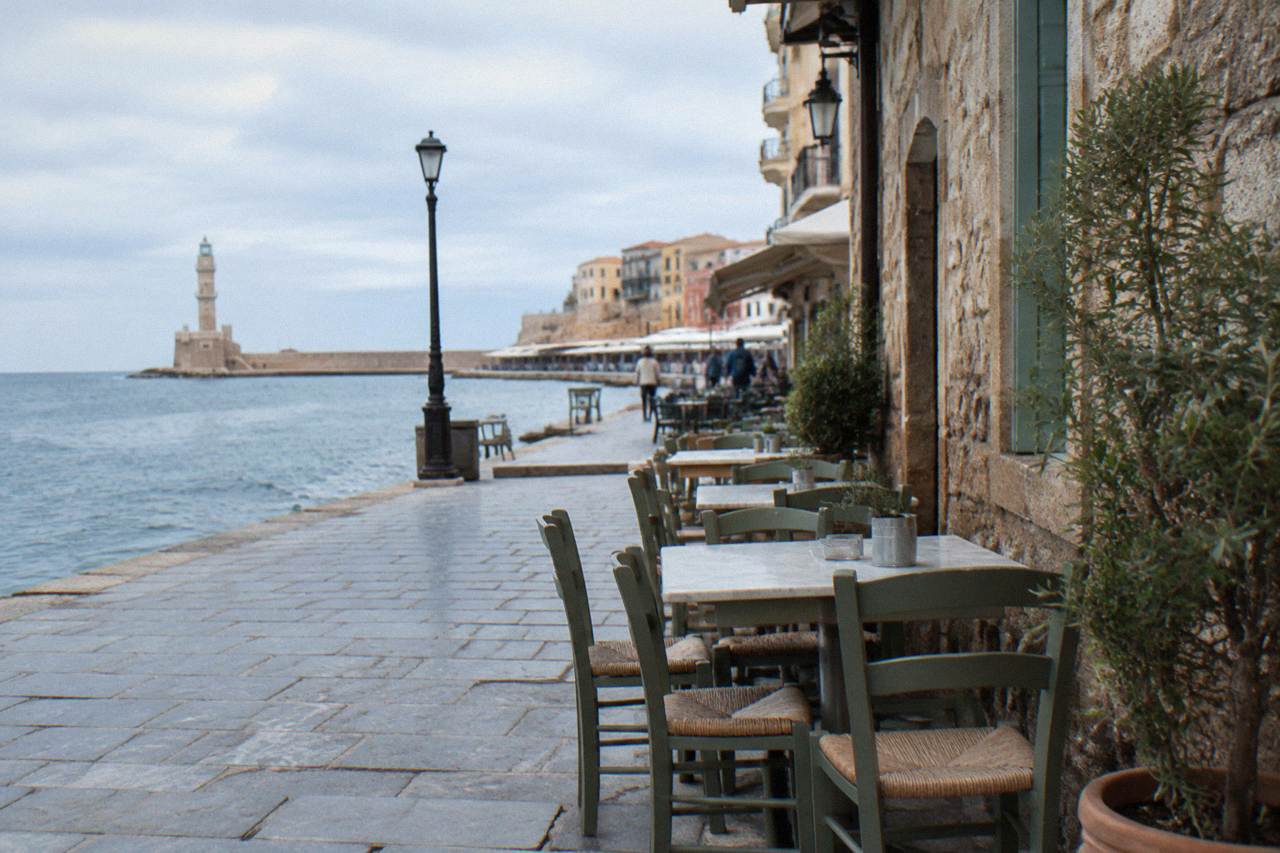
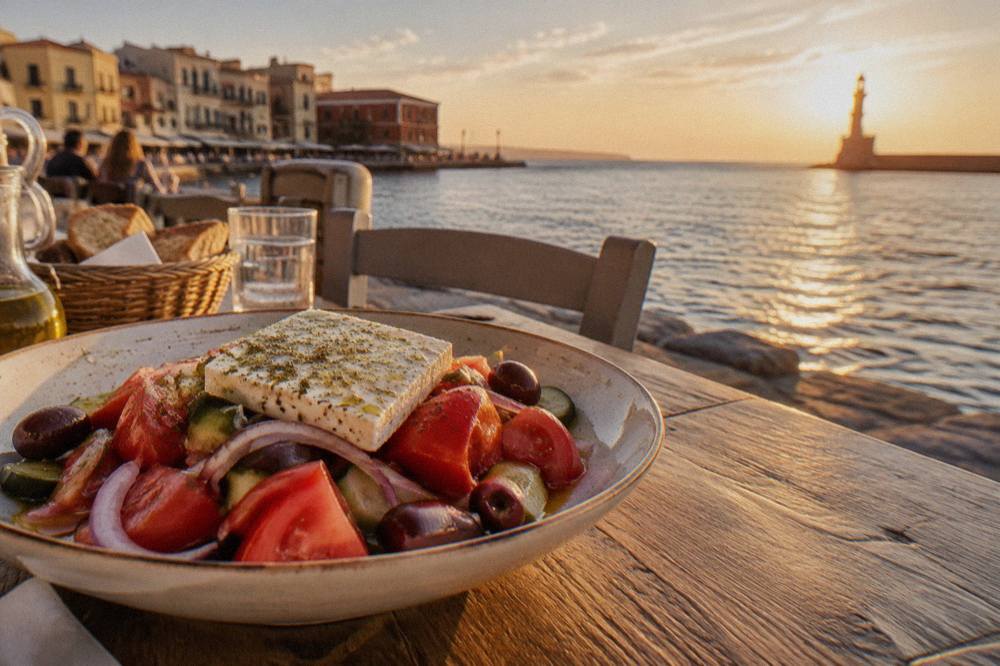
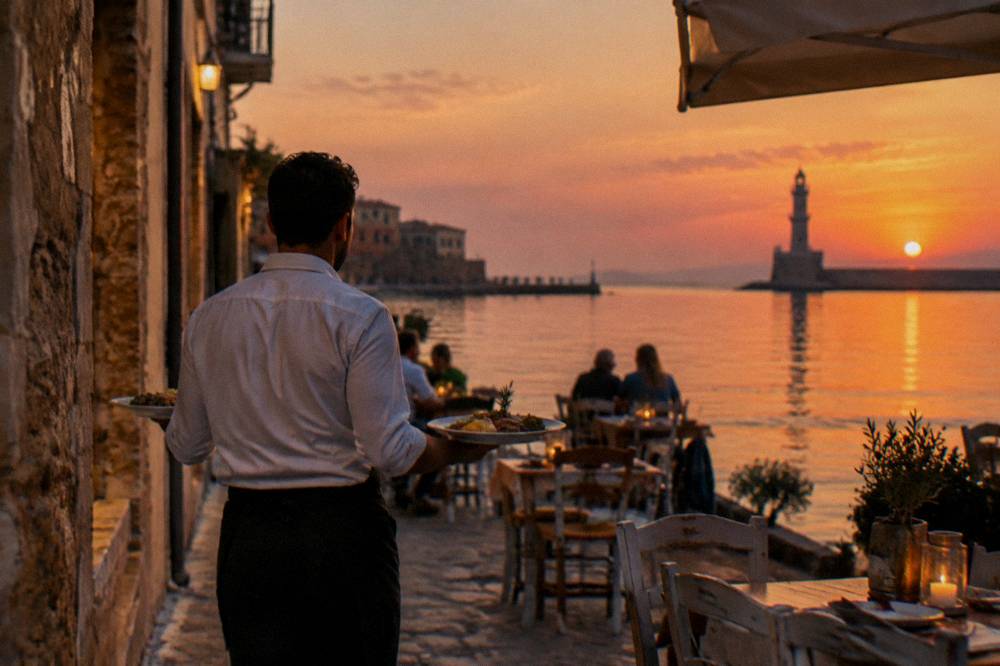
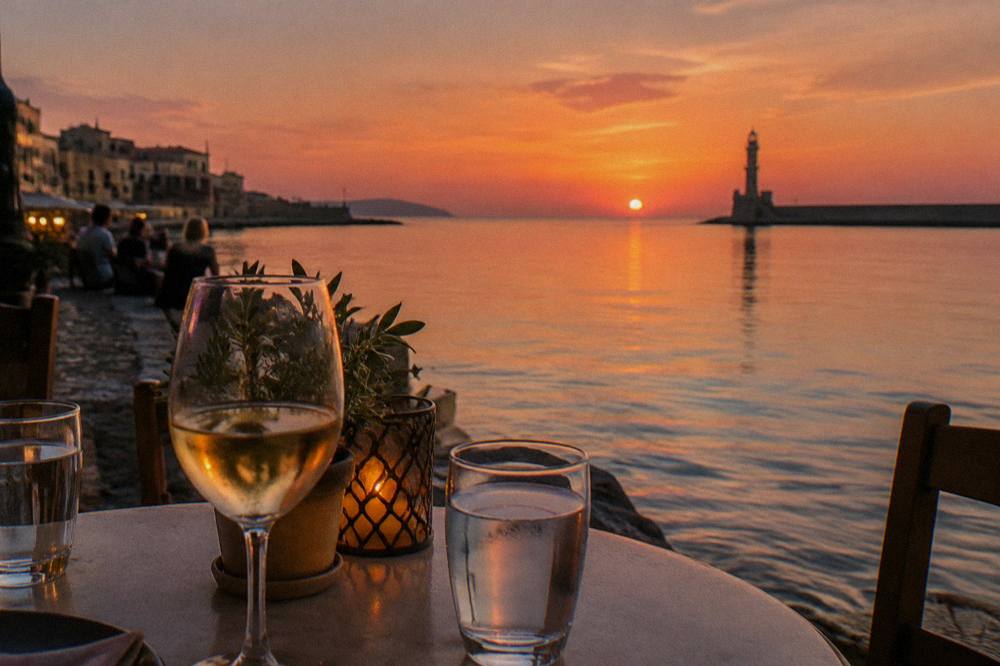
The harbour front is the postcard setting: tables facing the lighthouse and the shuttered Neoria shipyards, seven survivors of an original seventeen from the 15th to 16th century. You are paying partly for that view, and the honest way to handle it is to check the posted menu before sitting down, because a card with prices clearly displayed tells you what you need to know before the bill arrives. One drink at sunset on the harbour, then dinner two streets back, is a pattern that works in every port town in the Mediterranean.
Behind the front, the Old Town lanes around Skrydlof, the leather street, and the streets running inland from the Firká fortress hold the densest concentration of tavernas. Firka Fortress itself dates from 1620 and its grounds are free to walk, which makes the surrounding lanes a natural evening circuit: a walk along the moat wall, then dinner. Splantzia, east of the harbour around the square with the Mosque of the Janissaries, runs later and feels less arranged for visitors; the kafeneia and small meze bars here are where a Cretan night out actually starts. Nea Chora, the fishing quarter about fifteen minutes' walk west along the seafront, is the fish answer: tavernas in sight of the boats, with the catch on ice rather than on a photograph.
| Area | Dining Character | What To Order There |
|---|---|---|
| Venetian Harbour front | View-first tables facing the lighthouse and shipyards | A sunset drink, then a simple grilled dish |
| Old Town lanes | Dense mix of tavernas and meze rooms behind the front | Daily specials board, slow-cooked lamb or goat |
| Splantzia | Later, more local, small plates and kafeneia | Meze rounds, snails, raki with the bill |
| Nea Chora | Fish tavernas beside the working boats | Whatever is on the ice that day |
Where you sleep shapes where you eat, so the where to stay in Chania guide is worth reading alongside this one, and the broader things to do in Chania page shows how a food evening slots into a full day.
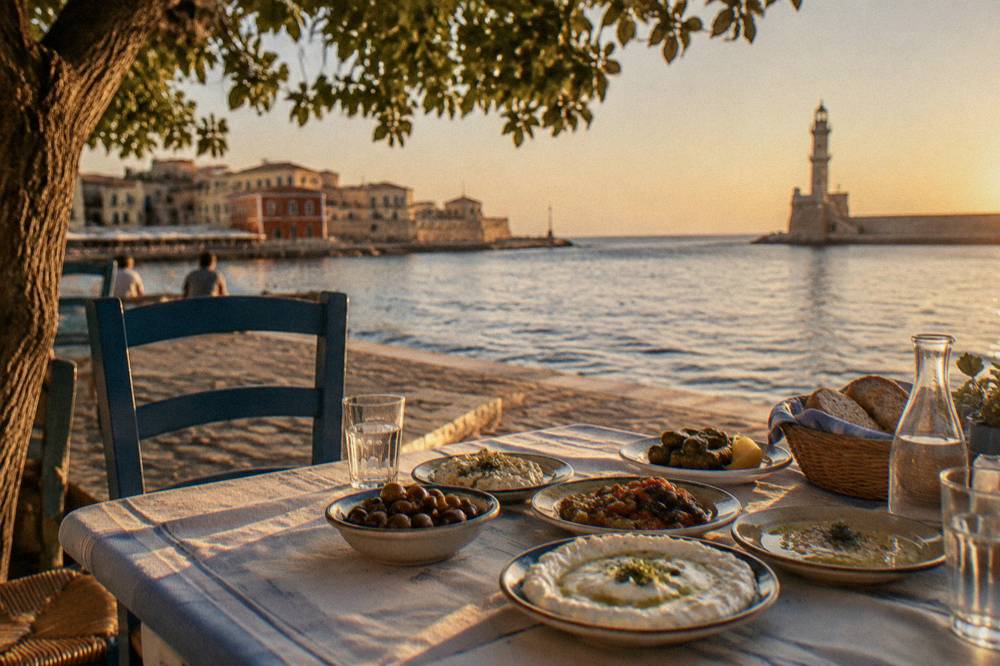
The fastest way to learn the edible geography is to walk it with someone who stops at the counters for you. The site's featured food walk is the Old Town Highlights Guided Tour with Street Food, which pairs the lanes and the harbour history with tastings along the way; Check availability for current dates and pricing.
What Should You Order By Name In Chania?
Order dakos, chyortopita or whatever pie is on the counter, chochlioi boubouristi snails, antikristo or slow lamb, sfakian pie with honey, anything with the region's olive oil, and the day's fish at Nea Chora, because these are the dishes that separate a Cretan kitchen from a generic tourist menu. Naming them to the waiter also signals that you came to eat the island's food, not a translated version of it.
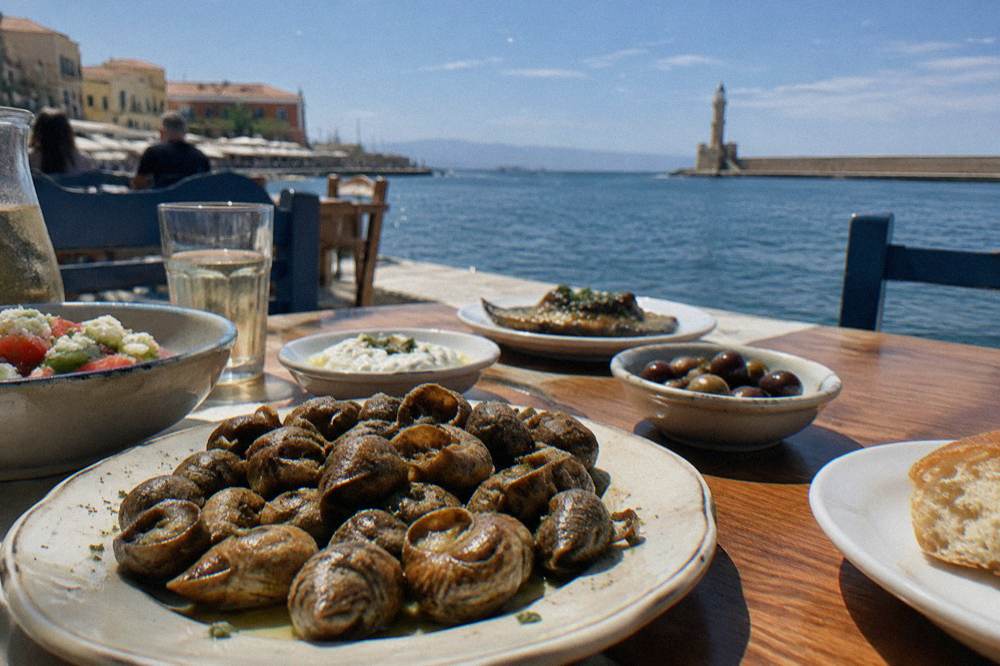
Dakos is the starting point: a hard barley rusk softened with olive oil and grated tomato, topped with mizithra, a soft fresh cheese. It is a salad, a bread course and a statement about the island's olive oil all at once, and a kitchen that gets dakos right tends to get everything else right too. The snails, chochlioi boubouristi, are fried with rosemary and vinegar, served in their shells, and they appear on menus across the city from spring onwards.
The pie family runs from chyortopita, wild greens pie, to sfakian pie, a cheese pie from the Sfakia region on the south coast that is served warm with honey drizzled over it. The south-coast connection is real: Sfakia and its villages supply the sheep cheese culture that the whole region draws on, and day-trip diners can taste it at the source via the Loutro and Sfakia guide.
| Dish | What It Is | When To Order It |
|---|---|---|
| Dakos | Barley rusk, tomato, mizithra cheese, olive oil | Any meal, any season |
| Chyortopita | Pie of wild Cretan greens | Spring, when the greens are fresh |
| Chochlioi boubouristi | Fried snails with rosemary and vinegar | Spring and summer menus |
| Antikristo | Lamb cooked beside the fire, turned as it roasts | Group dinners, celebrations |
| Sfakia pie | Warm cheese pie with honey | Dessert, or breakfast with coffee |
| Fresh fish | The day's catch, priced by weight | At Nea Chora, ask to see it |
Fish deserves a caveat: it is priced by the kilo, and the honest procedure is to look at the fish, agree the weight and the price before it is cooked, and expect the bill to reflect what you approved. Any taverna that will not show you the fish before cooking it has answered a different question for you.
How Do You Spot A Good Taverna And Avoid A Bad One?
Check three things before you sit down in Chania: a menu with prices posted at the door, a specials board written in Greek as well as English, and a room that is neither empty at peak hour nor staffed by someone waving you in from the street, because posted prices and a real specials board tell you the kitchen cooks for people who read them. None of this guarantees a great meal, but it removes the predictable failures.
The waving-in recruitment that happens on the harbour front is not a scam in itself, it is just a signal that the restaurant's competitive advantage is location rather than food. A taverna two streets inland with no recruiter outside has to earn its customers on cooking alone. The bill, when it comes, should be itemised; a handwritten total with no breakdown is worth querying politely on the spot, not after you have paid. Other pages covering the same trip are gathered on Chania Crete Travel Guide.
Reservation habits matter seasonally. In July and August the good Old Town rooms fill for dinner from about 20:30 onwards, Cretan dining hours running later than northern European ones, and a table booked for 19:00 is a table you will have to yourself. In the off-season, from November through March, hours shorten, some harbour-front rooms close entirely, and the eating moves to the lanes where the locals keep their standing tables. The Chania in winter pattern is worth knowing if your trip falls outside the summer peak.
Which Chania Food Tours Are Worth Booking?
The food tours worth booking in Chania are the guided walks that combine Old Town sights with street food and tastings, the dedicated food tasting walks, and the half-day tasting tours into the villages for olive oil, wine, cheese and honey, because each one buys access to kitchens and producers that a solo visitor would have to find one at a time. Prices, ratings and durations for each are on the operator's live listing.
The featured tour on this site is the Old Town Highlights Guided Tour with Street Food, a guided walk that covers the harbour, the lanes and the food in a single loop, which suits a first day in the city: it teaches the geography and feeds you at the same time.
Two alternatives cover different ground. A dedicated walking food tasting tour in the town of Chania skips the sightseeing and goes straight from counter to counter, which suits a second visit or a pure eating evening; Check availability for the current schedule. And the olive oil, wine, cheese and honey tasting tour from Chania heads out of the city to the producers themselves, which is the version to pick when you want to see where the olive oil on every table actually comes from; Check availability for dates.
For the wider field, including wine-focused days and cooking classes in the White Mountains, the site's cooking classes guide and wine tours guide list the options by type, and the best tours from Chania page ranks the day trips that pair well with a food-focused stay.
When Is The Best Season For Eating Out In Chania?
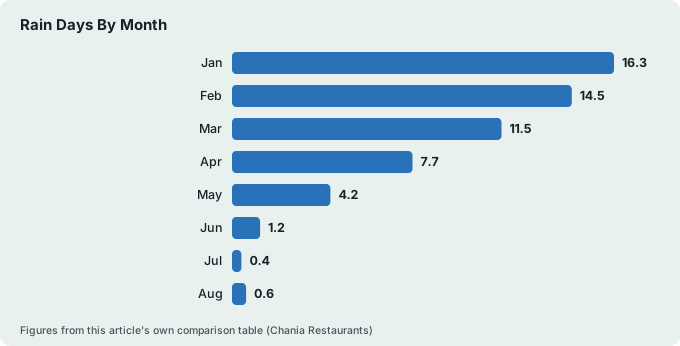
The HNMS Chania Souda station table for 1958 to 2010 shows May through September as the dry outdoor-dining season, with July at 1.0 mm of rain and 0.4 rain days, while from October rainfall jumps to 67.7 mm and January, at 129.5 mm over 16.3 rain days, is the wettest month, so terrace season runs roughly April to October and indoor taverna season takes over in winter. The same table puts July's mean at 26.7 C and January's at 11.0 C, which is dinner-on-the-terrace weather versus dinner-next-to-the-stove weather.
Cretan eating follows this curve. Spring brings the wild greens and the snails; summer pushes tables onto every street and fills the harbour front; autumn is the grape and raki season, when the distillation of tsikoudia begins in the villages and the tavernas pour the new raki with the bill; winter shortens menus to the standing repertoire and empties the harbour rooms. Mean maximums of 30.7 C in July and 30.4 C in August also explain the late Cretan dinner hour: nobody eats a full meal at 18:00 in that heat.
| Month | Mean C | Rain mm | Rain Days | Dining Pattern |
|---|---|---|---|---|
| Jan | 11.0 | 129.5 | 16.3 | Indoor, winter menu |
| Feb | 11.0 | 104.0 | 14.5 | Indoor, indoor lanes |
| Mar | 12.7 | 76.0 | 11.5 | First outdoor tables |
| Apr | 15.9 | 31.5 | 7.7 | Terrace season begins |
| May | 20.2 | 13.5 | 4.2 | Full terrace season |
| Jun | 24.7 | 3.4 | 1.2 | Late dinners outdoors |
| Jul | 26.7 | 1.0 | 0.4 | Peak season, book ahead |
| Aug | 26.3 | 1.4 | 0.6 | Peak season, book ahead |
| Sep | 23.2 | 15.4 | 3.2 | Raki season approaches |
| Oct | 19.4 | 67.7 | 9.3 | Rain returns, terraces thin |
| Nov | 15.8 | 77.0 | 11.2 | Indoor season resumes |
| Dec | 12.7 | 101.9 | 16.1 | Indoor, holiday menus |
The figures above are station records from the HNMS Chania Souda station for the period 1958 to 2010, the table the service publishes; they describe the long pattern, not any individual week. For planning a whole trip around them, the site's Chania weather and best time to visit Chania pages work through the same data month by month.
Can You Combine Eating With A Day Trip From Chania?
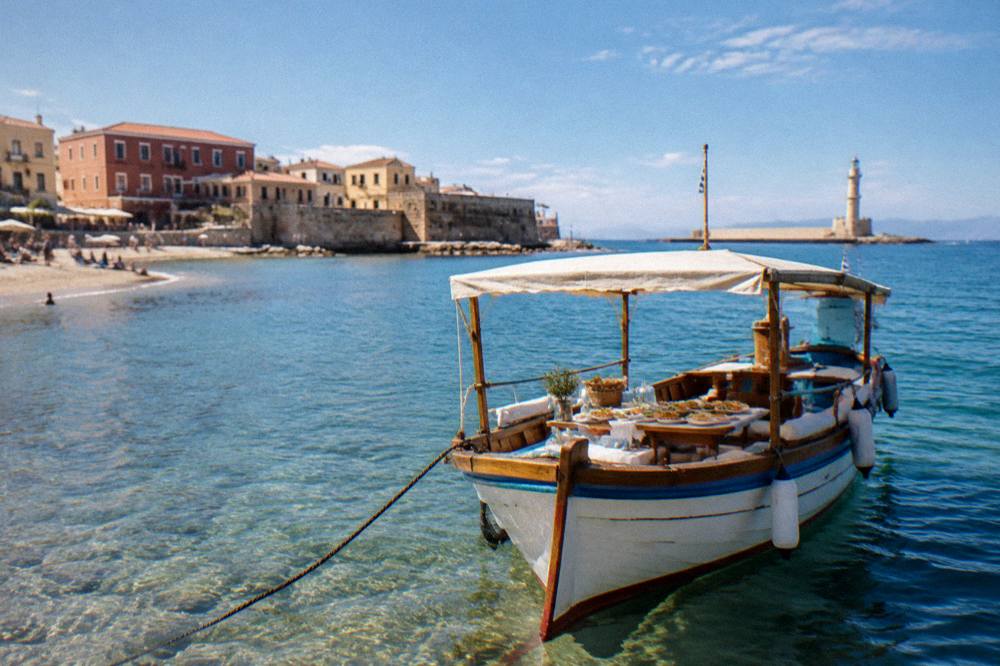
Yes, and the best combinations pair the table with the water: a small-group sailing trip with a meal on board, a Balos and Falassarna cruise with pickup and boat ticket included, or a village tasting tour into the White Mountains, each of which moves the meal out of the city while someone else handles the driving and the logistics. Tour prices, ratings and durations render from the listings, not from this page.
The logic is simple: Chania's restaurant scene is strong, but the region's food does not stop at the city line. The olive groves, the wineries and the mountain villages are where the raw materials come from, and several tours built around this site's coverage take the meal to the source.
Two caats apply. First, tours to Balos and Samaria exclude separate entrance, fee and ferry charges, so the listed price is not the whole cost of the day. Second, the Balos road access, an unpaved road from Kaliviani to a parking area followed by a walk down, is part of the experience for land-based versions; boat versions leave from Kissamos port. The Balos lagoon and Gramvousa guide covers the whole access picture.
Common Questions About Chania Restaurants
Where do locals eat in Chania?
The pattern the city itself follows is Splantzia and the lanes east of the harbour for late small-plate evenings, and Nea Chora for fish beside the working boats. The site's dedicated answers page on where locals eat covers this question in full.
Is it expensive to eat out in Chania?
No verified price table for the city's restaurants exists, so this guide prints no meal prices. The reliable method is to read the posted menu at the door before sitting, and to ask to see the fish and agree its price by weight before it is cooked.
Do I need to book restaurants in Chania?
In July and August, yes for the popular Old Town rooms at dinner, especially from 20:30 onward. In the shoulder months and winter, walk-in tables are normal, though hours shorten and some harbour-front rooms close in the off-season.
What time do people eat dinner in Chania?
Cretan dining runs late: with mean maximums above 30 C in July and August, the dining rooms fill from about 20:30 and stay busy well past 22:00. Booking 19:00 means an empty room and a kitchen still warming up.
Are there vegetarian options in Chania restaurants?
Cretan cooking is friendly to vegetarians without trying to be: dakos, wild greens pies, fava, boiled greens with olive oil and lemon, cheese plates and sfakian pie are all standard items, and olive oil is the cooking base rather than meat fat in these dishes.
Is a food tour in Chania worth it?
A guided food walk is the fastest way to learn the Old Town's edible geography on a first visit, and the tasting tours into the villages reach producers a day visitor would not find alone. Current prices, ratings and durations are on each operator's live listing.
Chania's restaurant scene rewards exactly the kind of slow, ordered eating the island has always practised: pick your pocket of the city, read the board before the menu, name the dishes worth naming, and let the raki arrive with the bill as it always does.