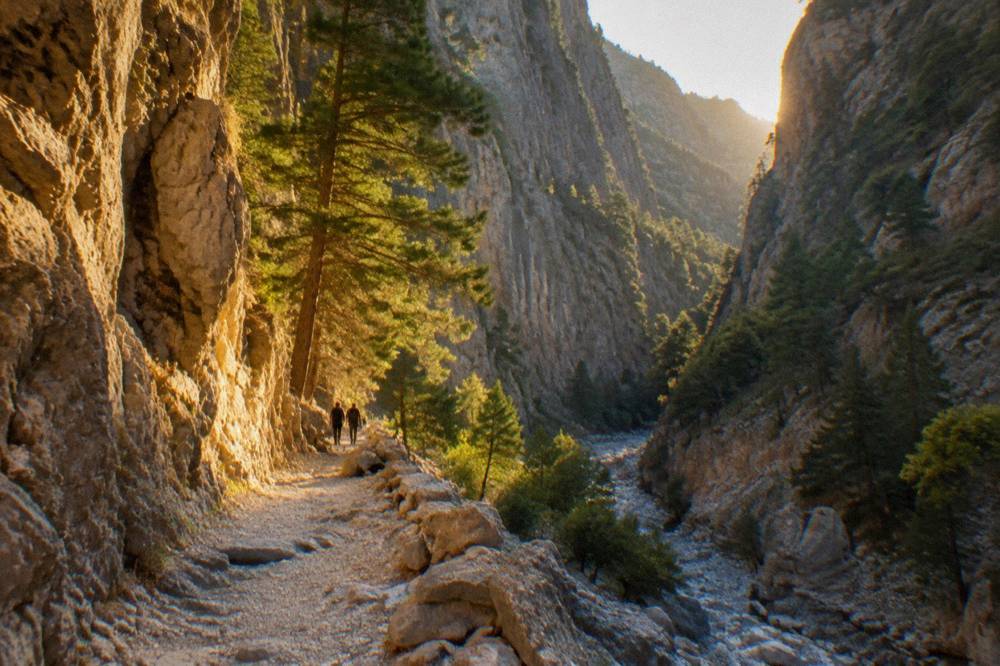
Samaria Gorge
Samaria Gorge is the long one-way walk from the Omalos plateau down to Agia Roumeli on Crete's south coast, reached from Chania by road. This guide sets out the route, the entry rules, the ticket, the boat back and what to check before committing to the day.
Short answer
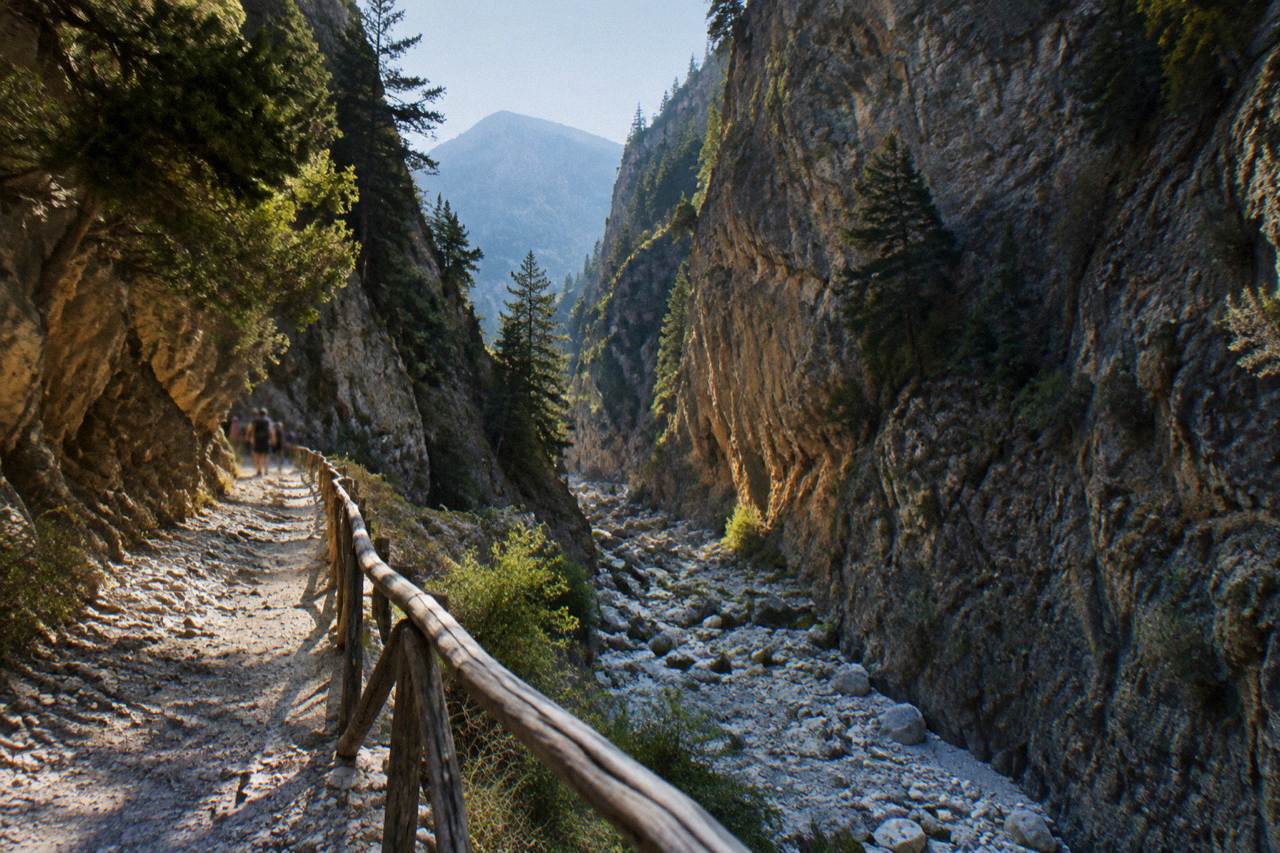
Samaria Gorge is a national park on the Omalos plateau south of Chania, walked one way from Xyloskalo to Agia Roumeli, with a EUR 10 entry ticket, boats from Agia Roumeli at about 17:30 and a bus back to Chania. Its normal season is 1 May to 31 October, but storm damage in late 2026 closed sections of the path, so the NECCA status page decides the day.
Samaria Gorge is the long, one-way gorge walk on the island of Crete, Greece, reached by road from the coastal city of Chania on the north-west of the island. The gorge cuts south through the White Mountains from Xyloskalo on the Omalos plateau down to Agia Roumeli, a village on the Libyan Sea coast that has no road in, and the walk ends with a boat ride east to a port where a bus finishes the loop back to Chania. It is managed as a national park by the Natural Environment and Climate Change Agency, known as NECCA, which sells the tickets, sets the entry hours and decides when the path is safe enough to open. That last point matters more than any other line in this guide: storms in late September and early October 2026 destroyed sections of the path, park staff have described a 2026 reopening as extremely difficult, and works are aimed at readiness in May 2027. The gorge normally runs 1 May to 31 October, but no reopening date should be treated as settled until the NECCA status page says so.
This page lays out the whole day as it is published by the sources that run it: the route, the ticket, the hours, the rules, the boat connection and the season. It also sets Samaria against Imbros Gorge, the shorter alternative to the east, and against the beach days at Balos and Elafonisi that compete for the same slot in a Chania week. For the wider picture of the region, start with the things to do in Chania overview and the Old Town area guide.
Where Is Samaria Gorge, And How Do You Get There From Chania?
Samaria Gorge sits on the Omalos plateau in the White Mountains, south of Chania, and the walk starts at Xyloskalo, a stepped entrance on the plateau's southern edge that drops into the gorge. The only practical way in from Chania is by road to Omalos, either on the KTEL public bus from the Chania long-distance station on Kydonias street or on an organised transfer, and the walk runs one way, south, ending at Agia Roumeli on the coast.
The KTEL Chania network runs a route to Omalos in the walking season, from the long-distance bus station on Kydonias street in Chania. The station is the same one that serves Heraklion, Rethymno, Kissamos, Paleochora, so a walker staying anywhere near the city centre reaches it on foot or by local bus. Timetables are seasonal and fares are confirmed at the ticket desk or on the operator's site, so nothing about the morning departure time belongs on a planning page written in advance.
The road itself climbs from sea level to the plateau, a winding mountain drive that finishes at the Xyloskalo entrance. Xyloskalo is the name of the stone stairway where the descent begins, and it is also where the ticket checkpoint sits. Arriving by organised transfer changes nothing about the entry: everyone buys or shows the same park ticket and passes the same gate, and everyone is subject to the same 07:00 to 13:00 entry window for the full walk and the requirement to be out of the park by 18:00.
The one-way geography is the thing to absorb early. A private car is a poor fit for Samaria unless a second driver commits to a very long detour, because Agia Roumeli has no road connection at all. The standard exit is the boat from Agia Roumeli to Sougia or Chora Sfakion at about 17:30, then a KTEL bus from that port back towards Chania. Walking it independently is entirely doable; it just means weaving the bus up, the walk down and the boat-and-bus return into one booked-or-timed chain. The guided option, Samaria Gorge Trek from Chania with a guide, exists to remove exactly that chain, and its tour price does not cover the separate park entrance ticket or the boat fee.
Is The Samaria Gorge Hike Difficult?
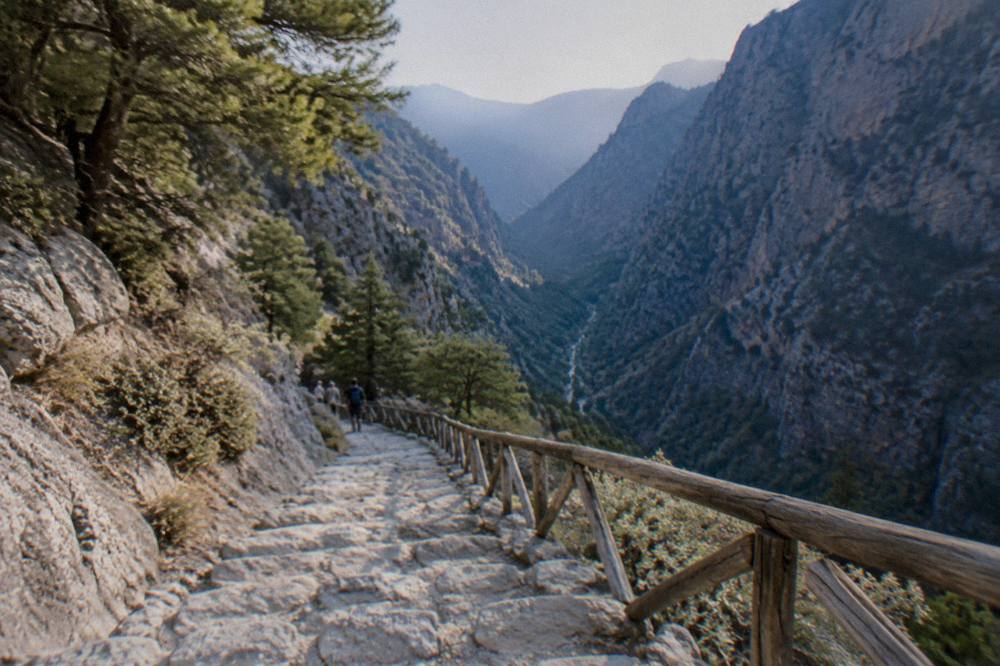
The walk is long, one directional and mostly downhill on rock, which makes it harder on knees and ankles than the distance alone suggests, and the park's own entry window, 07:00 to 13:00 for the full walk with everyone out by 18:00, signals a day that needs an early start. There is no lift, no shortcut and no road access inside the gorge, so the commitment is real from the moment the Xyloskalo steps are descended.
The full answer is on the dedicated Is The Samaria Gorge Hike Difficult page. In summary: the route drops from the plateau through the steep Xyloskalo steps, then follows the stream bed south through progressively narrower sections to the abandoned village of Samaria inside the park, and on to Agia Roumeli. The surface is rock, stone and stream crossings rather than trail path, and sturdy shoes matter more than fitness bravado. The famous narrow section, the Iron Gates, is where the walls close in dramatically, and it is also where the path is most exposed to damage from the storms that close the park.
Water is available at springs along the route as the park publishes it, but carrying a supply is standard practice on a walk of this length in Cretan summer heat, and the HNMS Chania Souda station table shows why: the mean maximum temperature in July is 30.7 C and in August 30.4 C, on a station inland of Souda Bay at 148 m, recording 1958 to 2010. The plateau and the gorge are different terrain again, and the July mean rainfall of 1.0 mm says nothing about the storms of late September and early October, which are exactly the events that have closed the path in 2026. Rain days jump from 3.2 in September to 9.3 in October on that same station table.
A walker with modest fitness but working knees can complete the walk; a walker with a knee that dislikes long descents should think honestly about Imbros Gorge instead, which the Imbros Gorge day trip page covers in full. There is no shame in the swap, and no way to bail out of Samaria once committed beyond the first kilometres, because the walls and the stream leave no exit road.
How Much Does Samaria Gorge Cost To Enter?
The individual entry ticket is EUR 10, sold through the NECCA e-ticket portal, and it is free for European Union residents under 18 and over 65, with other concession groups listed on the portal itself. Tour prices for guided treks exclude this ticket, and the boat from Agia Roumeli to Sougia or Chora Sfakion is a separate charge again, so a guided day carries three costs: the tour, the entrance and the boat.
The ticket system is run by NECCA, the Natural Environment and Climate Change Agency, whose Samaria National Park management unit operates the gorge. Buying ahead through the e-ticket portal is the published route, and the concession list beyond the two stated free groups sits on the portal rather than in any guide, so anyone claiming another free category should be checked against it. The desk's advice is blunt: buy the ticket from the portal or the gate, not from anyone reselling at a markup.
| Cost Item | What The Sources Say |
|---|---|
| Park entry ticket | EUR 10 individual, NECCA e-ticket portal |
| Free entry | EU residents under 18 and over 65 |
| Boat from Agia Roumeli | Separate fee, about 17:30 sailing to Sougia or Chora Sfakion |
| KTEL bus back to Chania | Separate ticket, bought at the port |
| Guided trek tours | Price excludes entrance and boat |
The reason the exclusions get repeated in every paragraph about tours is that the exclusion is where budgets go wrong. A trek listed at a headlining price still needs the EUR 10 ticket and the boat fare on top, and a family of four feels that quickly. The tour listing states what is and is not included, and the NECCA portal states the ticket side, so both should be read before the card comes out.
When Is Samaria Gorge Open, And Why Did It Close In 2026?
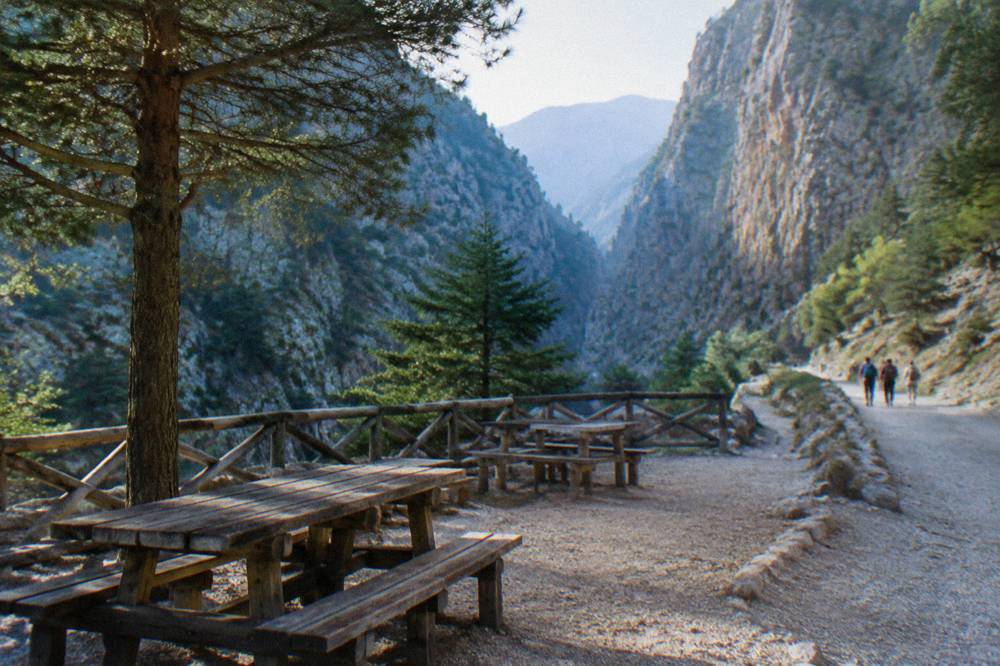
The gorge's normal season is 1 May to 31 October each year, with the park's own wording allowing that special circumstances change the dates, and in 2026 those circumstances arrived: storms in late September and early October destroyed sections of the path, park staff called a 2026 reopening extremely difficult, and works are aimed at readiness in May 2027. No reopening date should be printed, promised or assumed until the NECCA status page confirms it.
The fuller story, with the timeline, is on the Why Is The Samaria Gorge Closed page. The short version for planners: the gorge had already closed earlier in the 2026 season for storms, and the late September and early October events destroyed sections of the path, with eight workers trapped and rescued on 7 October during the response. The park's operating body has started works aimed at having the path ready in May 2027, and that phrase is a target, not a timetable.
What this means practically is that any 2027 plan should be built with a replacement day in reserve. The obvious substitutes from Chania are the Imbros Gorge walk, the boat day at Balos Lagoon and Gramvousa, the beach day at Elafonisi, or the coastal villages covered on the Loutro and Sfakia page, which share the same south-coast scenery that Samaria ends in. Booking a trek with a flexible operator matters for exactly this reason: the Samaria Gorge Trek from Chania and the professionally guided Samaria hiking tour both live or die by the park's status on the day.
For a replacement beach day at your own pace, book a rental car here.
What Is The Route From Xyloskalo To Agia Roumeli Like?
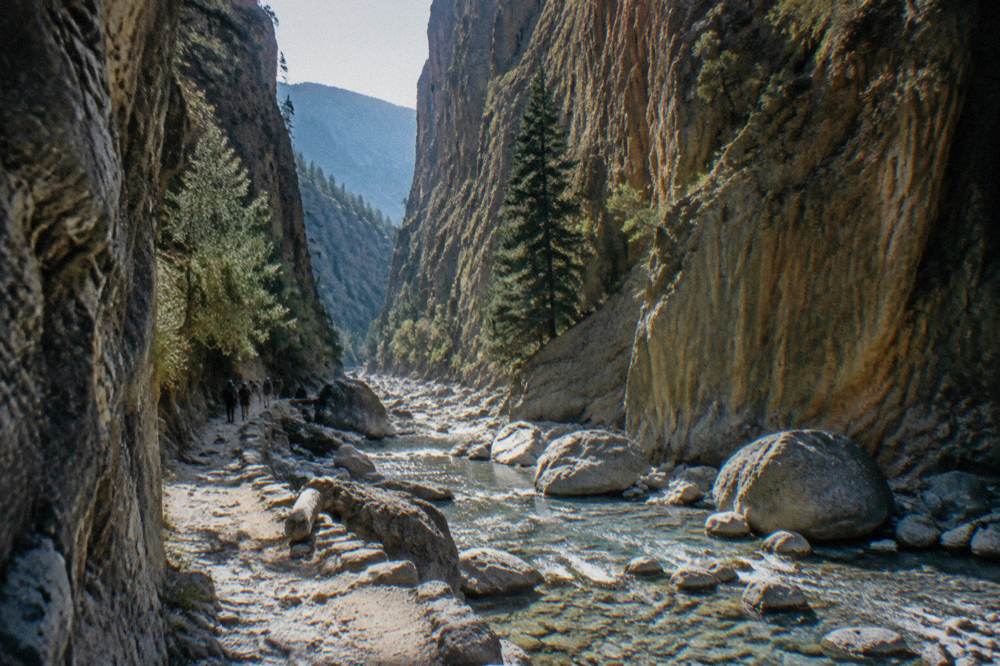
The route is one way, south, and downhill nearly throughout: from the Xyloskalo steps on the Omalos plateau it descends into the gorge, passes the abandoned Samaria village inside the park, threads the Iron Gates where the walls narrow, and finishes at Agia Roumeli on the Libyan Sea, from where the only exit that does not reverse the walk is the boat.
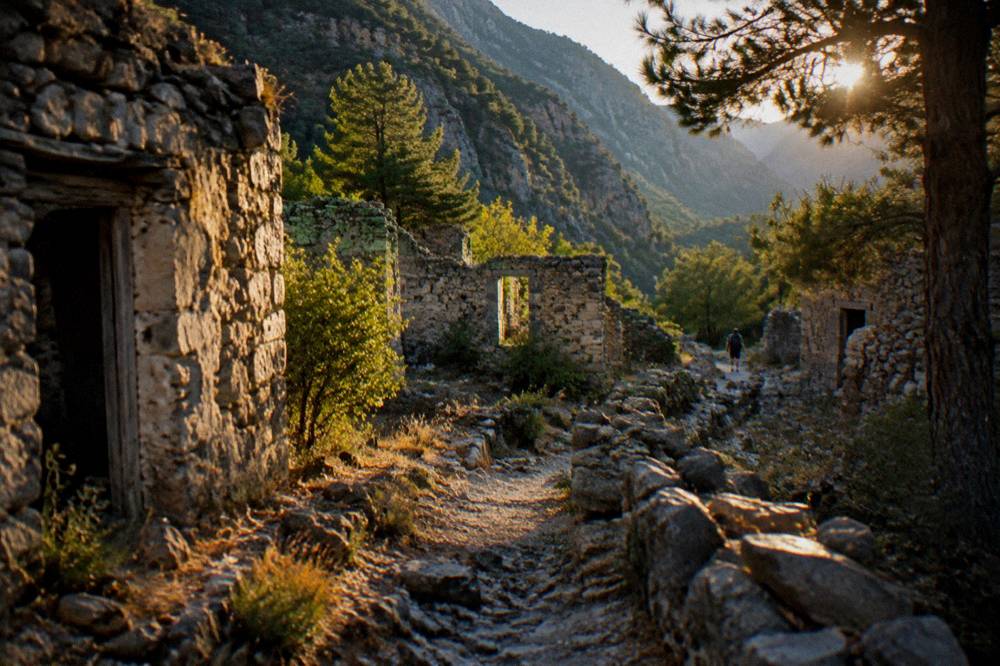
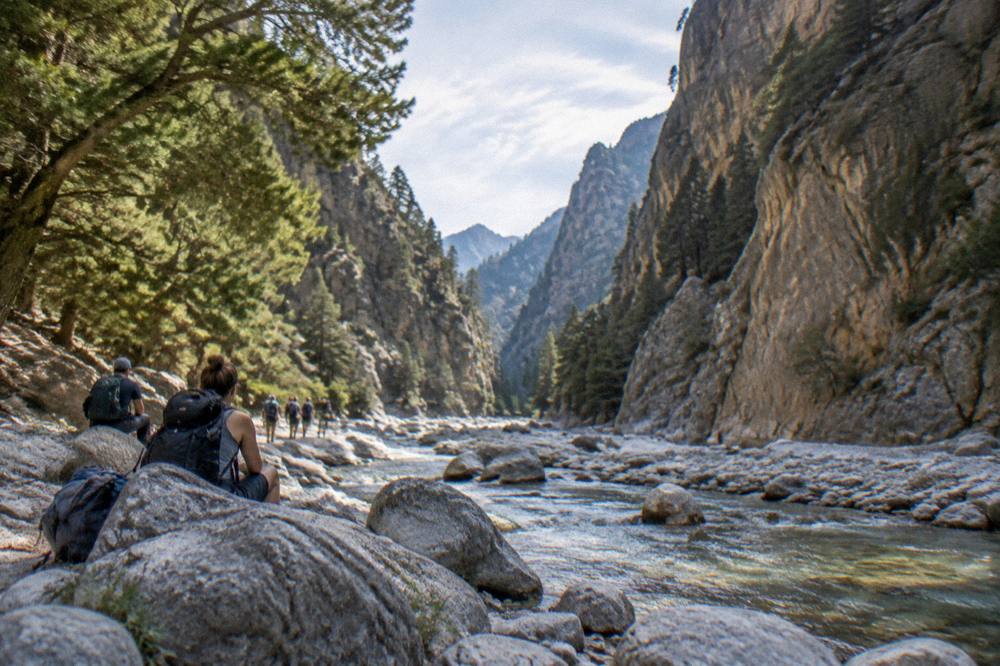
The walk is best understood in three parts. The first is the Xyloskalo descent, steep stone steps from the plateau edge down into the gorge's upper reaches, and this is the section that punishes knees and rewards early starts. The second is the long middle valley, following the stream past the abandoned village of Samaria, where the park ranger station sits and the terrain opens into a stony river world with plane trees and ruined houses. The third is the lower gorge, including the Iron Gates, the narrowest and most photographed passage, before the path widens towards the coast and the first buildings of Agia Roumeli.
The park's published rules frame the day. Entry for the full walk runs 07:00 to 13:00, and everyone must be out of the park by 18:00. Swimming is prohibited inside the park, and so is camping, which closes off the tempting idea of splitting the walk with a night in the gorge. The abandoned village inside the park is a resting point, not accommodation. No verified daily visitor cap exists in the sources this site reports, so none is stated here.
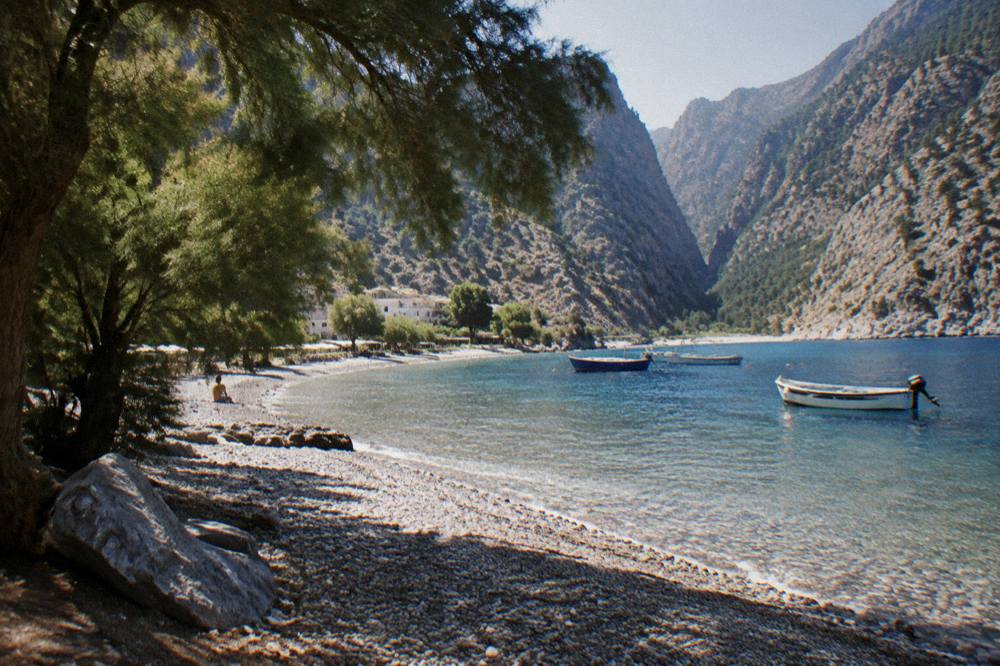
Agia Roumeli itself is a small coastal village that exists because of this walk and the boats. The published sailing time from Agia Roumeli to Sougia or Chora Sfakion is about 17:30, and from either port the KTEL bus runs back towards Chania. The boat times are operator-published and move with the season, so the day's plan should hold them loosely and confirm locally, especially late in the season when sailings thin out after the October close of the main summer schedules.
What Does The Weather Table Say About When To Walk It?
The HNMS Chania Souda station table, recording 1958 to 2010, shows the walkable window clearly: May to September is dry, with 13.5 mm of rain in May falling to 1.0 mm in July, while October jumps to 67.7 mm and 9.3 rain days, which is exactly the storm season that has closed the gorge in 2026. The table is a station record, not a forecast, and the gorge is mountain terrain that runs colder and wetter than the coast.
| Month | Mean C | Rain mm | Rain Days | Verdict For The Walk |
|---|---|---|---|---|
| May | 20.2 | 13.5 | 4.2 | Good: cool mornings, dry paths |
| Jun | 24.7 | 3.4 | 1.2 | Good: heat is the issue, start early |
| Jul | 26.7 | 1.0 | 0.4 | Hot: mean maximum 30.7 C |
| Aug | 26.3 | 1.4 | 0.6 | Hot: mean maximum 30.4 C |
| Sep | 23.2 | 15.4 | 3.2 | Good, with storm risk rising late |
| Oct | 19.4 | 67.7 | 9.3 | Storm season: closures likeliest |
The table comes from the Hellenic National Meteorological Service station at Chania Souda, 148 m up and inland of Souda Bay, and the period is 1958 to 2010, which is the station record the service publishes. It is not a 1991 to 2020 normal, and it says nothing about sea temperature, for which no official monthly normal exists. Within the table, January is the wettest month at 129.5 mm and July the driest at 1.0 mm, and humidity runs from 50 percent in July to 73 percent in January. Everything else covered here is indexed on Chania Crete Travel Guide.
For the gorge specifically, the numbers that matter are the autumn rain days. The storms that destroyed path sections in late 2026 arrived in the weeks when the station table shows rainfall stepping up from September's 15.4 mm to October's 67.7 mm. A May or June walk gets the dry path and the cool start; a July or August walk gets heat that makes the 07:00 entry window feel generous rather than restrictive; a late September or October walk sits inside the storm season and should be booked with the park status checked the day before.
Samaria Or Imbros: Which Gorge Should You Walk?
Samaria is the longer, deeper, one-way commitment with the boat exit, while Imbros Gorge is the shorter, gentler parallel option that also ends on the south coast, and the choice comes down to knees, time and appetite for the full-day chain. Imbros carries no printed fee or dates in the sources this site reports, and Samaria's status question in 2026 and 2027 has pushed many plans towards Imbros by default.
| Question | Samaria Gorge | Imbros Gorge |
|---|---|---|
| Direction | One way, south, boat exit | One way, south, road exit at Komitades |
| Ticket | EUR 10, NECCA portal | No fee printed in verified sources |
| Season wording | Normally 1 May to 31 Oct, storm dependent | No dates printed in verified sources |
| Terrain | Long descent, stream bed, Iron Gates | Shorter gorge, gentler gradient |
| Exit logistics | Boat about 17:30, then KTEL bus | Bus loop from the far end |
The dedicated comparison lives on the Samaria or Imbros page, and the guided Imbros options include a guided Imbros hike with a village visit. The honest summary: Samaria is the walk people travel to Crete for, and Imbros is the walk that still happens when Samaria's path is broken, the forecast is poor, or the party includes someone whose knees have opinions. Both finish within reach of the south coast villages covered on the Loutro and Sfakia page, so the scenery dividend of the Libyan Sea is not lost by choosing the shorter gorge.
What Should You Pack, And What Should You Check The Day Before?
Pack for a long rocky descent in mountain heat: sturdy shoes with grip, more water than feels reasonable, sun protection, layers for the plateau morning, and cash or card for the boat and bus. Check two things the day before: the NECCA park status page, and the boat sailing time from Agia Roumeli, because both can end the plan independently of the weather in Chania itself.
The checks are short and non-negotiable. First, the NECCA status: after the 2026 storm damage, the difference between a planned walk and a wasted 5 am start is one page. Second, the boat: the about 17:30 sailing from Agia Roumeli is operator-published and seasonal, and missing it means a very different evening. Third, the entry window: arriving at Xyloskalo after 13:00 means the full walk is not permitted, and everyone must be out by 18:00 regardless.
| Item | Why |
|---|---|
| Sturdy shoes with grip | Stream bed, stone steps, wet rock |
| Water beyond thirst | 30.7 C mean maximum in July on the station table |
| Sun hat and cover | The middle valley has long exposed stretches |
| Warm layer | The Omalos plateau morning is cooler than the coast |
| Ticket and ID | EUR 10 portal ticket; EU under-18 and over-65 free |
| Cash or card | Boat from Agia Roumeli and KTEL bus back |
Food is the quiet one. The park allows no camping and the walk takes the whole day, so breakfast before Xyloskalo and supplies carried along sustain the walker to Agia Roumeli, where tavernas serve the village's arrival wave. Water from the park's springs is published as available along the route, but a hot July day makes carrying a full supply the safer plan.
What Are The Rules Inside Samaria National Park?
The park's published rules are simple and enforced at the gate: entry for the full walk only between 07:00 and 13:00, everyone out by 18:00, no swimming anywhere in the park, and no camping, with the EUR 10 ticket checked at Xyloskalo and the route strictly one way from the plateau to the sea.
The rules exist because the gorge is a managed national park, not an open trail. The one-way rule is the structural one: there is no walking up from Agia Roumeli to Xyloskalo as a normal option, which protects both the path and the entry logistics. The no-swimming rule surprises people who finish hot at the lower end, and the no-camping rule removes the overnight idea cleanly. The abandoned village of Samaria inside the park is part of the protected area, and its buildings are there to be looked at, not occupied.
What the sources do show is a park that closes when weather damages the path, sometimes mid-season, and a management body that communicates through its own portal. Treating the NECCA page as the single source of truth for status, and the operator's listing as the single source of truth for what a guided trek includes, keeps the plan honest on both sides.
How Does A Samaria Day Fit Into A Week Based In Chania?
A Samaria day is the anchor of any Chania week that includes hiking, and it pairs naturally with a rest or boat day either side: the standard pattern is a gorge day, a harbour or Old Town recovery day, then a beach or boat day at Balos, Elafonisi or Falassarna, using Chania as the single base for all of them.
The city works as a base because everything radiates from it. The KTEL station on Kydonias street feeds the gorge, the beach day trips and the long routes to Rethymno and Heraklion alike, and the evening return lands walkers back in the Venetian Harbour for a late meal. A first-time week sketched from the sources looks like this: an Old Town day around the harbour and the museums, the Samaria walk early in the week while legs are fresh, a boat day to recover, then Elafonisi or Balos, and a final easy day at Nea Chora beach within reach of the city.
For the walks themselves, the decision tree is short. If the NECCA page says the path is open and the knees are willing, Samaria, booked as the guided trek or assembled independently with the KTEL bus and the portal ticket. If either answer is no, Imbros, or the boat days. A White Mountains Land Rover safari offers a different route into the same range for anyone who wants the mountains without the walk.
What Do Guides Actually Add On A Route That Is Signed?
A guided trek adds the logistics chain and the interpretive layer, not the navigation: the transfers from Chania to Xyloskalo and the return link from the port are the parts of the day that fail when self-planned, and a guide also reads the path, the water and the group's pace on terrain where the park's own window, 07:00 to 13:00 entry and 18:00 exit, does not bend for anyone.
The route is walked by thousands each season and the path is managed, so a map is not the reason to book a guide. The reasons are practical. The transfer chain, bus up, walk, boat at about 17:30, bus back, has three independent moving parts, and an operator holds them together as one product. The ticket exclusions still apply: the entrance fee and the boat are separate from the tour price on every listing this site carries, and that is worth repeating because it is the single most common surprise.
The two main guided products are the full-day Samaria trek with a guide, which this guide features, and the professional-guide hiking option. Both are subject to the park's status, and in a season like 2026 and into 2027 that status is the whole ballgame: a booking made months ahead is really a bet on the NECCA works schedule, so a cancellation-friendly operator is worth seeking out. Check availability once the season's status is clear.
The independent route remains fully legitimate, and the desk's reporting above already contains the whole recipe: the portal ticket, the KTEL bus from Kydonias street, the entry window, the boat, the return bus. What independence costs is the buffer: a missed boat or a path closure lands on the walker, not an operator.
Common Questions About Samaria Gorge
Is Samaria Gorge open?
The normal season is 1 May to 31 October, but the gorge is closed or delayed whenever storms damage the path, and storms in late 2026 destroyed sections with works targeting May 2027 readiness. Check the NECCA status page before planning any walk.
How much is the Samaria Gorge ticket?
The individual ticket is EUR 10 via the NECCA e-ticket portal, free for EU residents under 18 and over 65. Other concession groups, where they exist, are listed on the portal itself.
Can you swim in Samaria Gorge?
No. Swimming is prohibited throughout the national park, as is camping. The sea at Agia Roumeli sits outside the park boundary at the end of the walk.
How do you get back from Agia Roumeli?
Boats leave Agia Roumeli for Sougia or Chora Sfakion at about 17:30 as the operator publishes, and a KTEL bus runs from the port back towards Chania. There is no road into Agia Roumeli.
Do tour prices include the entrance fee?
No. Guided trek prices exclude the EUR 10 park entrance and the boat fee out of Agia Roumeli; both are paid separately. The listing for each tour states exactly what is covered.
Is Imbros Gorge a good alternative?
Yes. Imbros is the shorter, gentler gorge to the east with a road exit at the far end, and no fee or dates are printed for it in the verified sources. It shares the south-coast finish without the boat dependency.
The Samaria day is the biggest single commitment in a Chania week, and it deserves the planning habits of a big day: the status check the night before, the ticket sorted in advance, the early bus, and a replacement plan in the drawer. The Samaria Gorge Trek from Chania packages the logistics for anyone who would rather carry only a backpack, and the rest of the region, from the Venetian Harbour to the beaches of Elafonisi, waits either way.