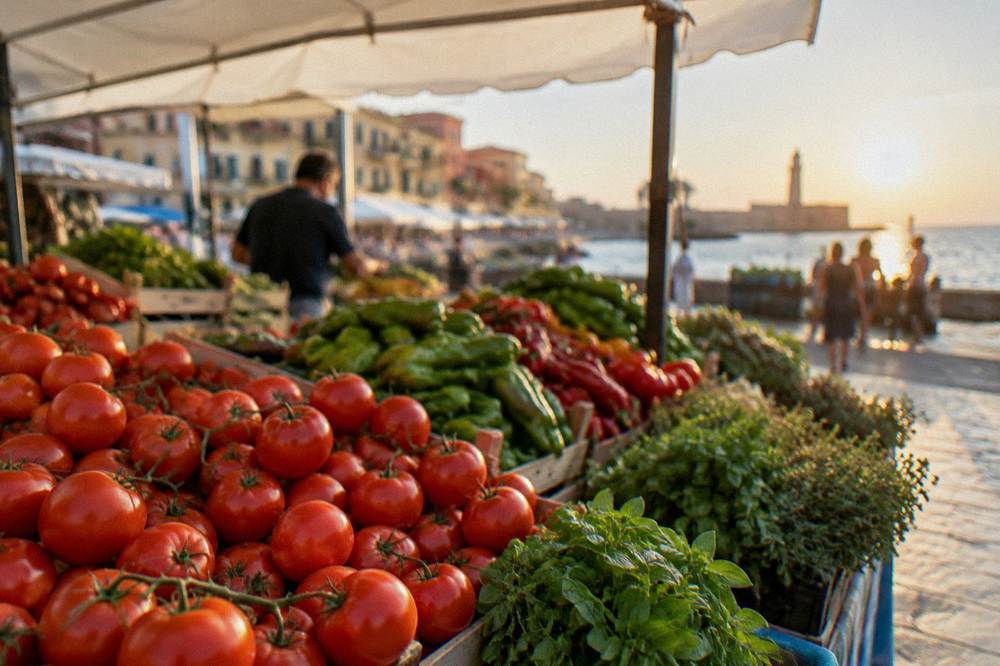
Chania Cooking Class
Chania, on the north-west coast of Crete, has a food tradition that cooking classes translate into a single hands-on afternoon. This guide explains the formats, the dishes and how to pick.
Short answer
A Chania cooking class typically covers a handful of Cretan staples, from dakos and tzatziki to a slow-cooked main and filo pastries, taught in a village kitchen or a town cookery room, with the White Mountains version run as a small-group day format.
Chania, a coastal city on the north-west coast of Crete in Greece, has built its reputation on a harbour, a lighthouse and a food culture that goes back well beyond the tourist era. A cooking class here is one of the few activities that turns that culture into something a visitor carries home, because the island's kitchen is built on a short list of ingredients, olive oil, wild herbs, cheese, bread and vegetables, treated with very specific techniques. This guide, from the Chania Crete Travel Guide editorial desk, sets out what a class in Chania actually involves, which formats exist, and how to choose between them using what the operators and local sources publish rather than vague promises.
What Is A Chania Cooking Class, And What Does One Cover?
A Chania cooking class is a hands-on session, usually small-group, in which a local cook walks participants through a set of Cretan dishes from raw ingredients to a shared meal, covering starters such as tzatziki and dakos, a main dish such as slow-cooked meat or a vegetable casserole, and a filo-based pastry, with the class ending around the table eating what was cooked. The format varies by venue: some classes run in a village house in the hills south of the city, others in a dedicated cookery room in town, and the listings describe menus, group sizes and inclusions such as wine or hotel transfers. The one constant the listings share is that participants cook, rather than watch, and that the meal at the end is the product of the session.
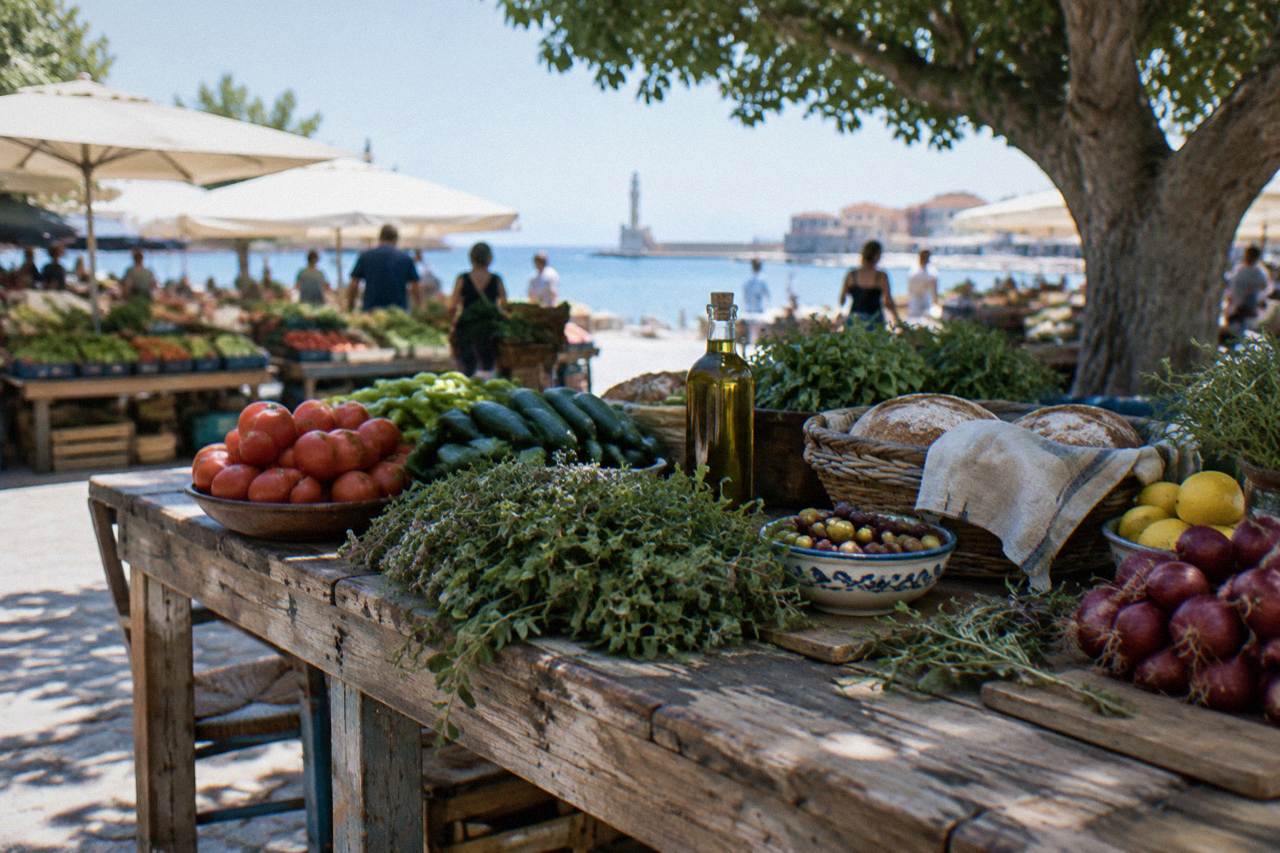
The reason the format works so well in this corner of Crete is the ingredient list itself. The Cretan kitchen runs on olive oil, barley rusks, tomatoes, wild greens, cheeses such as graviera and myzithra, and herbs that grow across the White Mountains to the south of the city. A class that teaches five dishes therefore teaches a whole approach: how oil is used as a cooking medium and a condiment, how vegetables are cooked slowly rather than crisply, and how bread and rusks carry a meal. The Cretan food guide on this site breaks those dishes down dish by dish for anyone who wants the background before booking.
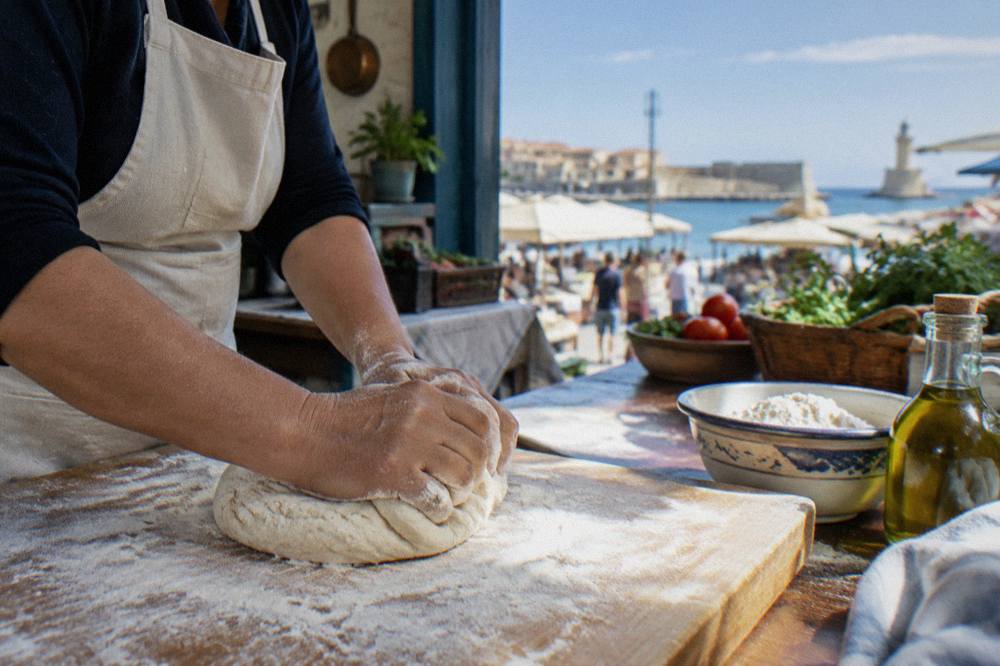
What a class does not usually cover is shopping, at least not in every format. Some listings include a market or village stop, others go straight to the kitchen, and the difference matters for anyone who wants the full chain from stall to stove. The listing for each class states what is included, and reading that section before booking answers half the questions people bring to the day. It also settles the venue question: a village kitchen an hour into the hills is a different day from a cookery room five streets from the harbour, even when the menu is the same, and travellers who book without noticing that difference are the ones who arrive surprised by the drive.
Which Dishes Do You Actually Cook In A Chania Class?
The core menu in a typical Chania class runs through five to seven preparations: tzatziki or another yoghurt dip, dakos, the barley rusk salad with tomato and cheese, a filo pastry such as cheese or greens pie, a main such as lamb with stamnagathi or a chicken and vegetable casserole, and a sweet such as kalitsounia or yoghurt with honey, with bread or rusks made or finished during the session. Every operator publishes its own menu, and the menus differ, but that set of dishes is the backbone of what the listings for Chania show. Nobody should expect to master all of Cretan cooking in one afternoon; the honest promise is a set of recipes that work at home.
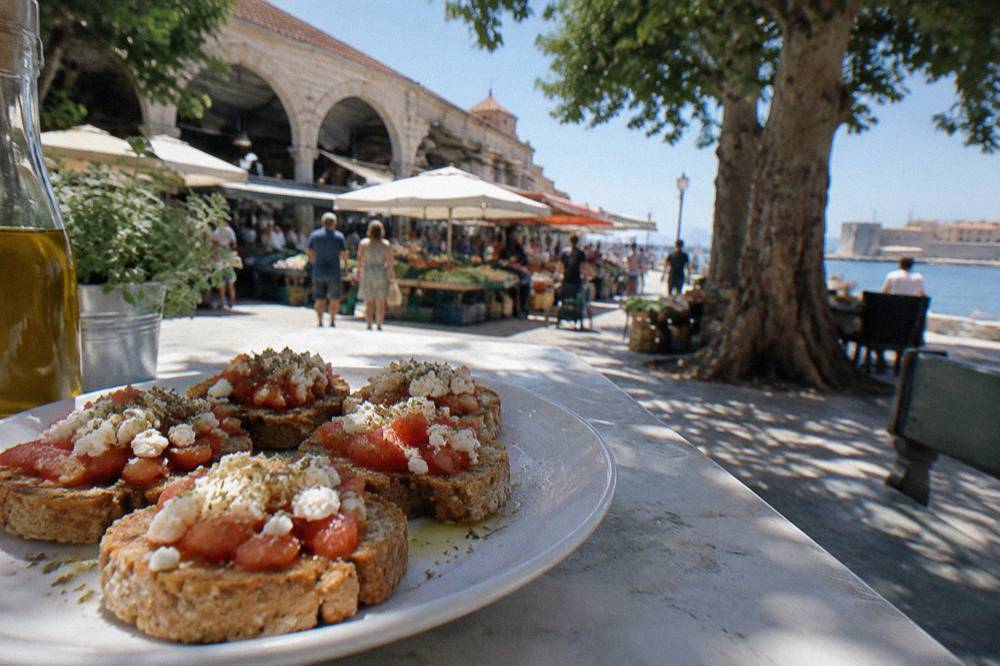
The table below maps the dishes that recur across Chania class menus to what each one teaches. It is a planning aid, not a menu promise: the class listing is the authority on what any single session cooks.
| Dish | What it is | What the class teaches |
|---|---|---|
| Dakos | Barley rusk soaked, topped with tomato, cheese and oil | Balancing oil, acid and salt on a dry base |
| Tzatziki | Yoghurt, cucumber, garlic, oil | Straining and resting a dip |
| Kalitsounia | Small cheese or greens pastries | Working filo or soft dough by hand |
| Stamnagathi with lamb | Wild greens boiled, served with slow-cooked meat | Boiling greens and slow meat cookery |
| Briam | Baked mixed vegetables | Layering and oven timing |
| Yoghurt with honey and walnuts | The standard simple sweet | Why Cretan sweets stay minimal |
The dishes themselves trace back to a rural kitchen rather than a restaurant one, and that shapes the teaching. Slow cooking, boiling rather than frying greens, and using oil generously are habits from villages where fuel and ingredients were limited and nothing was wasted. A class that explains those habits, and several in Chania do, gives the recipes a context that a written recipe does not. The same context explains why portion discipline is not part of the curriculum: the shared table at the end is a social institution on the island, and the meal runs until the conversation ends rather than until a plate is cleared.
Which Chania Cooking Class Format Fits Which Traveller?
Chania classes split into three formats: the mountain village class, run as a small-group day in a village house in the White Mountains with a full meal, the town class, a shorter session in a cookery room in or near the Old Town, and the combined tour, which pairs a cooking session with a winery or village visit, so the choice comes down to how much of the day the traveller wants to give and whether transfers matter. The village format is the one the listings on this site carry, and the flagship example is the Authentic Cooking Class in the White Mountains, which runs as a guided day out of the city into a village kitchen, with Check availability showing the current dates and inclusions on the operator's live listing.
The three formats suit three kinds of day. A traveller on a short stay who wants the Old Town around the session fits the town class. A traveller who wants the scenery of the White Mountains and does not mind a longer day fits the village class. A traveller who wants food and wine together fits the combined tour. The guide to Chania restaurants covers where to eat the same dishes cooked by professionals, which is a useful contrast the evening after a class.
The listings below show the three food formats this site carries, side by side, with what each one covers. Prices, ratings and durations render from the live listings and are not typed here.
A word on the third listing, which is not a cooking class at all: it is included because several travellers planning a food day in Crete are in fact planning a beach and lunch day, and the jeep tour with loungers and lunch serves that plan better than a kitchen does. Reading the trio together is the fastest way to see which of the three days fits.
How Does A Cooking Class Compare With A Food Tour In Chania?
A cooking class teaches technique and ends with a meal you cooked; a food tour walks the town and ends with a full stomach you did not earn, and in Chania the two overlap less than people assume, because the class happens in a kitchen, often outside the centre, while the tours concentrate on the Old Town and Splantzia streets where the bakeries and tavernas sit. The walking tours guide covers the guided side, and the food walk listings carry their own tastings, but neither substitutes for hands-on cooking. The choice is between learning dishes and tasting many of them.
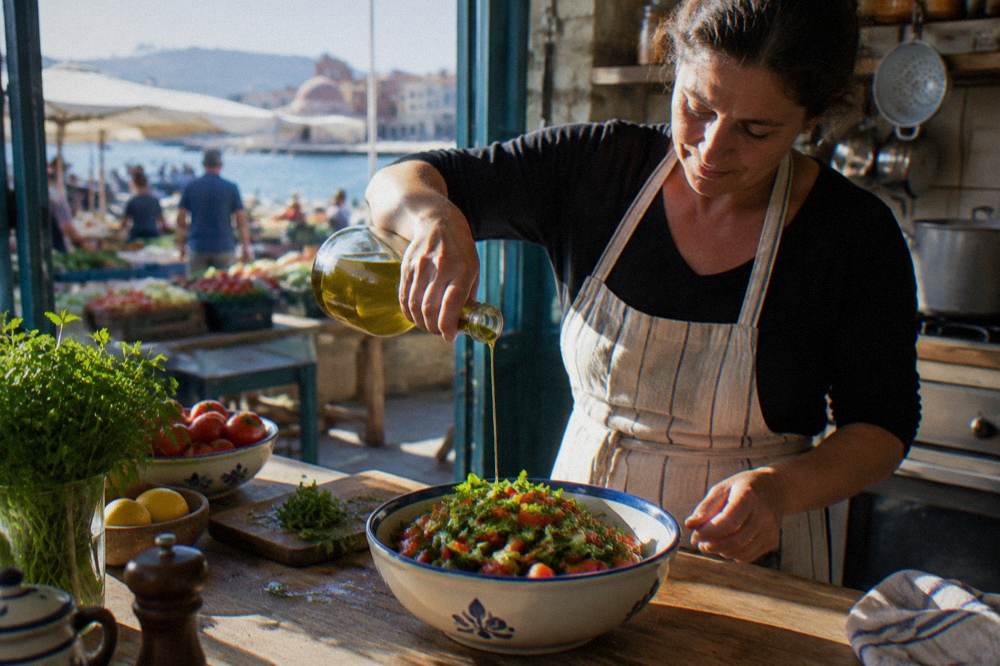
The tasting format has its own logic. A walk through the Old Town samples bougatsa, cheese pastries, olives, oil and raki in the space of a few streets, and the bougatsa guide explains why that one pastry alone deserves a stop. A cooking class, by contrast, samples nothing you did not make, and that is its strength: the recipes leave with the participant. Families with children often find the class format holds attention better, and the Chania with kids guide treats cooking classes as one of the reliable rain-or-shine options.
| Format | Where it happens | What you leave with | Best for |
|---|---|---|---|
| Mountain village cooking class | Village house in the White Mountains | Recipes and a full shared meal | A full-day food experience |
| Town cooking class | Cookery room in or near the Old Town | Recipes and a meal | Short stays, evening slots |
| Walking food tour | Old Town and Splantzia streets | A tasting map of the centre | First-time visitors |
| Wine and oil tasting tour | Wineries inland of Chania | Tasting notes, no cooking | Wine-first travellers |
The wine and olive oil tasting format deserves its own paragraph, because it pairs naturally with a cooking class on a longer stay. The Chania wine tours guide covers the winery side in detail; the tasting tour listing below is the one this site carries for the combined oil and wine format. Done back to back, the tasting day explains what the oil in the pan is doing and the class day explains what to do with it, and the two together give a fuller picture of Cretan food than either alone.
When Is The Best Season For A Cooking Class In Chania?
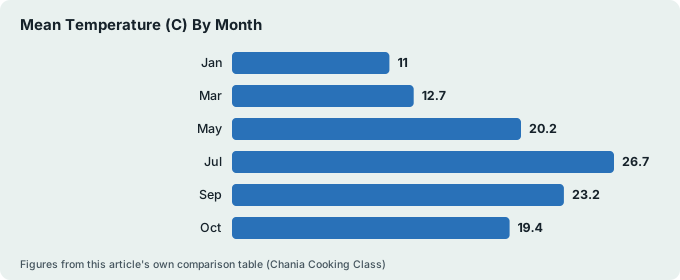
A cooking class in Chania works in every month of the year because it happens indoors, but the experience around it changes with the season: the HNMS Chania Souda station table, covering station records from 1958 to 2010, shows a mean of 11.0 C in January against 26.7 C in July, with rainfall of 129.5 mm in January against 1.0 mm in July, so a winter class pairs with wet streets and a summer class pairs with a beach morning beforehand. The class itself is the constant; the day around it is the variable. The Chania weather guide and the best time to visit guide carry the full monthly picture.
| Month | Mean temperature (C) | Rainfall (mm) | Rain days | Class-day note |
|---|---|---|---|---|
| Jan | 11.0 | 129.5 | 16.3 | A class day beats a beach day |
| Mar | 12.7 | 76.0 | 11.5 | Greens and herbs in season |
| May | 20.2 | 13.5 | 4.2 | Dry, warm, full menus |
| Jul | 26.7 | 1.0 | 0.4 | Class morning, beach afternoon |
| Sep | 23.2 | 15.4 | 3.2 | Tomato dishes at their peak |
| Oct | 19.4 | 67.7 | 9.3 | Olive harvest season begins |
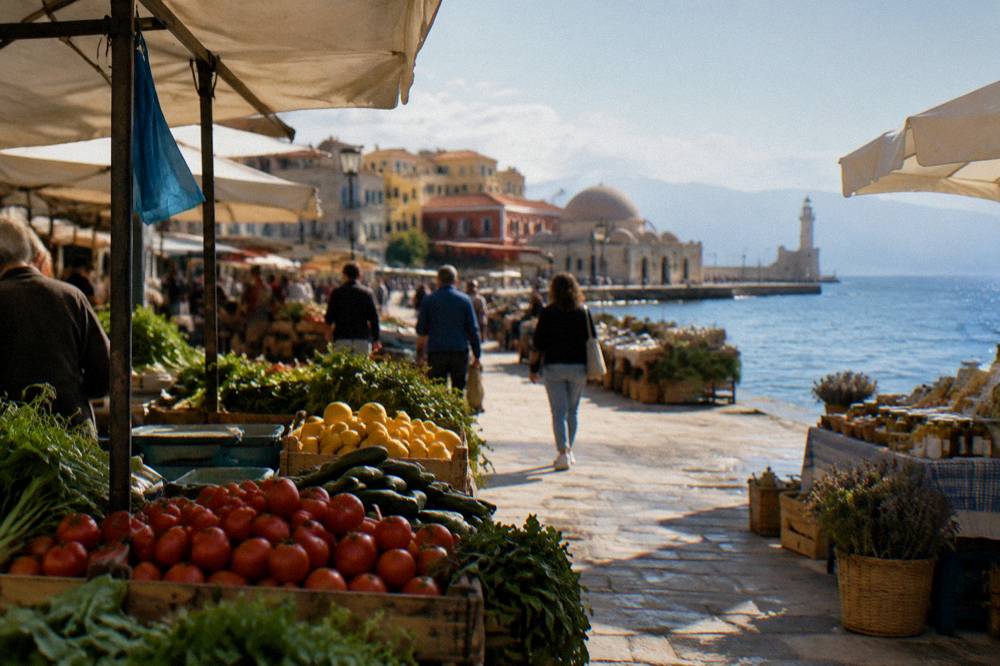
The seasonal point that matters for a food-focused trip is the ingredient calendar rather than the thermometer. Wild greens are a late-autumn and winter crop, tomatoes peak in late summer, and the olive harvest runs into the autumn months, so the same recipe tastes different, and is sometimes taught differently, depending on the month. Class menus in practice follow the market, and the market guide explains what the municipal market of Chania carries and when. The off-season has a quiet advantage too: November and December classes run with more space at the table and a kitchen that smells of whatever the hills are producing that week.
What Should You Know Before Booking A Chania Cooking Class?
Before booking a Chania cooking class, check four things on the operator's live listing: the menu and whether it changes with the season, the pickup point and whether transfers from Chania are included, the group size, and the cancellation terms, because the listings state all four and the differences between classes are larger than the price differences suggest. The listing is also where dietary requirements sit: several Chania operators state vegetarian options directly on the listing, and any allergy question is best asked through the listing's message channel before the day rather than on it.
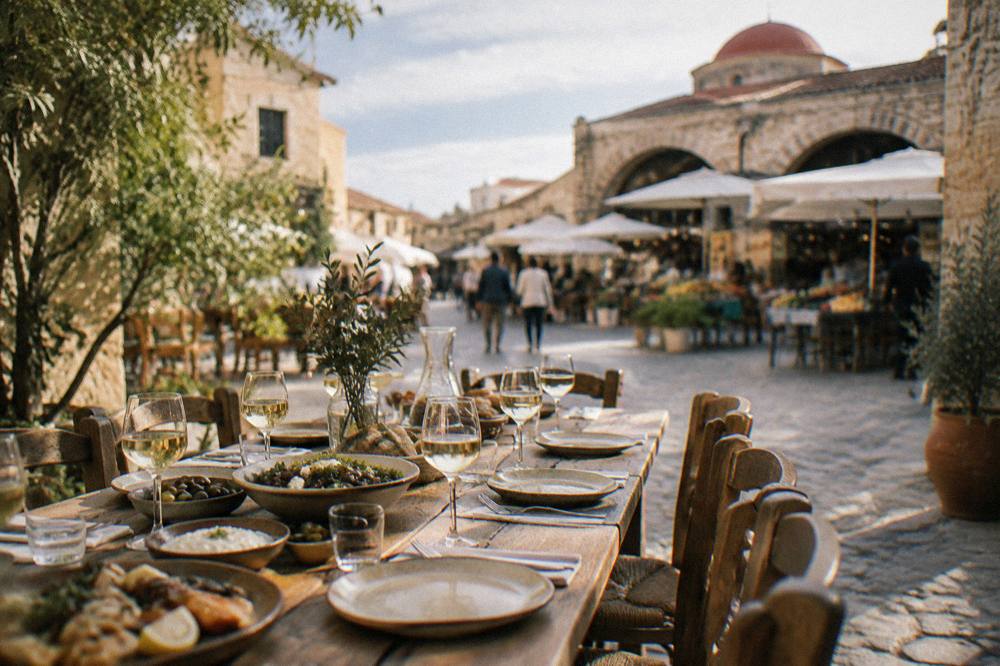
Logistics around the class day are simple in Chania. The village classes include transport out of the city by default in their listings, and the town classes sit within walking distance of the centre for anyone staying in the Old Town, which the Old Town guide maps. Anyone staying further out can check the getting around guide for the bus and driving picture, and the where to stay guide for the neighbourhoods closest to the cookery venues.
| Question to check | Why it matters | Where it is answered |
|---|---|---|
| Menu and seasonality | Winter greens differ from summer tomatoes | The operator's live listing |
| Pickup and transfers | Village classes sit outside the city | The listing's inclusions section |
| Group size | Small-group formats cook more | The listing's details |
| Dietary needs | Vegetarian options are common but stated per class | The listing before booking |
| Cancellation terms | Weather and travel plans change | The listing's policy line |
One practical note on the day itself: eat lightly beforehand. The listings for the full-day formats all end with a complete meal, and the shared table at the end is the point of the exercise rather than an afterthought. Raki, the island's distilled spirit, usually appears at that table, and pacing it is part of the etiquette. Comfortable shoes and a layer for the drive home are the only gear worth carrying; everything else, aprons included, comes with the class.
Can You Combine A Cooking Class With Other Chania Day Trips?
Yes, and the combination is the standard pattern on a stay of five days or more: one full day for a cooking class or food tour, one for a beach lagoon such as Balos or Elafonisi, one for a gorge or mountain day, and the remaining days for the Old Town and the nearest beaches, which is exactly the split the itinerary guides on this site lay out for one, two, three and five day stays. The how many days guide sets out the trade-off, and the best tours from Chania guide lists the full day-trip roster.
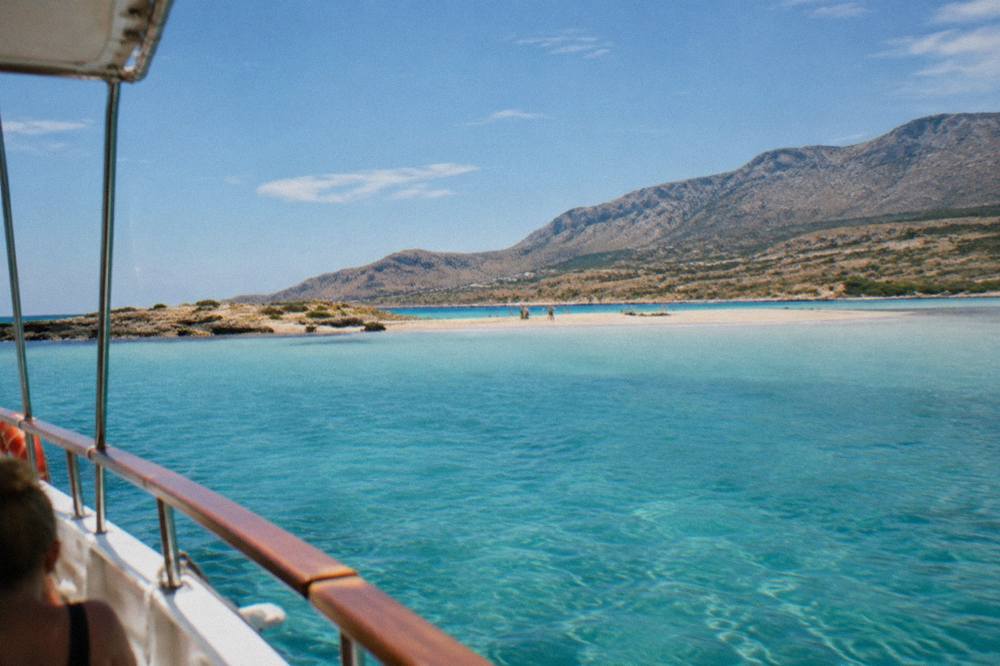
The beach half of that plan carries its own logistics. Balos lagoon is reached by boat from Kissamos port, with only a EUR 1 Kissamos municipal fee collected on the boat ticket for over-13s beyond the cruise price, and with an unpaved road alternative from Kaliviani followed by a walk down. Elafonisi, a Natura 2000 protected area with reported free entry, prohibits taking sand, shells or plants. Samaria Gorge normally runs 1 May to 31 October but closes or delays when storms damage the path, so the NECCA status must be checked before any gorge day. The Balos guide, the Elafonisi guide and the Samaria guide carry the detail.
For travellers who want food and beach in a single day rather than two, the jeep tour below is the one listing on this site that combines loungers, lunch and two beaches in one outing, and it is a frequent alternative when a cooking class day does not fit the calendar.
The second trio below places the three formats side by side one last time, at the decision point where readers land: one kitchen day, one tasting day, or one beach day.
Common Questions About Chania Cooking Classes
Are cooking classes in Chania suitable for beginners?
Yes. The listings describe the classes as hands-on but guided, with a local cook demonstrating each step, and the dishes taught, dips, rusks, filo pastries and slow-cooked mains, do not require prior technique. The operator's live listing states the level and the menu for each session.
How long does a Chania cooking class last?
Durations vary by format and are printed on each operator's live listing rather than stated here. The town formats run shorter sessions, and the White Mountains village class runs as a fuller day including travel out of the city and the shared meal at the end.
Do Chania cooking classes include wine or raki?
Several listings state that wine or raki accompanies the closing meal, and the exact inclusions sit on each operator's live listing. Anyone who prefers not to drink can say so on the day; the meal works either way.
Can vegetarians join a Chania cooking class?
Yes, in the formats whose listings state a vegetarian option, which several in Chania do. The Cretan kitchen carries many vegetable and cheese dishes, from briam to kalitsounia, so adaptation is straightforward, but the request is best made through the listing before the day.
Where do the village cooking classes take place?
The village formats run in houses in the hills south of the city, in the foothills of the White Mountains, with transport from Chania included in the listing's inclusions. The town formats run in cookery rooms in or near the Old Town.
Is a cooking class or a food tour better in Chania?
It depends on the goal. A class teaches recipes and ends with a meal you cooked; a food tour covers more ground in the Old Town and samples more things without any cooking. On a stay of several days, the two complement each other rather than compete.
A cooking class is the one Chania activity whose souvenir goes home in the traveller rather than in the luggage, and choosing between the village kitchen, the town cookery room and the tasting walk is the only hard decision involved.