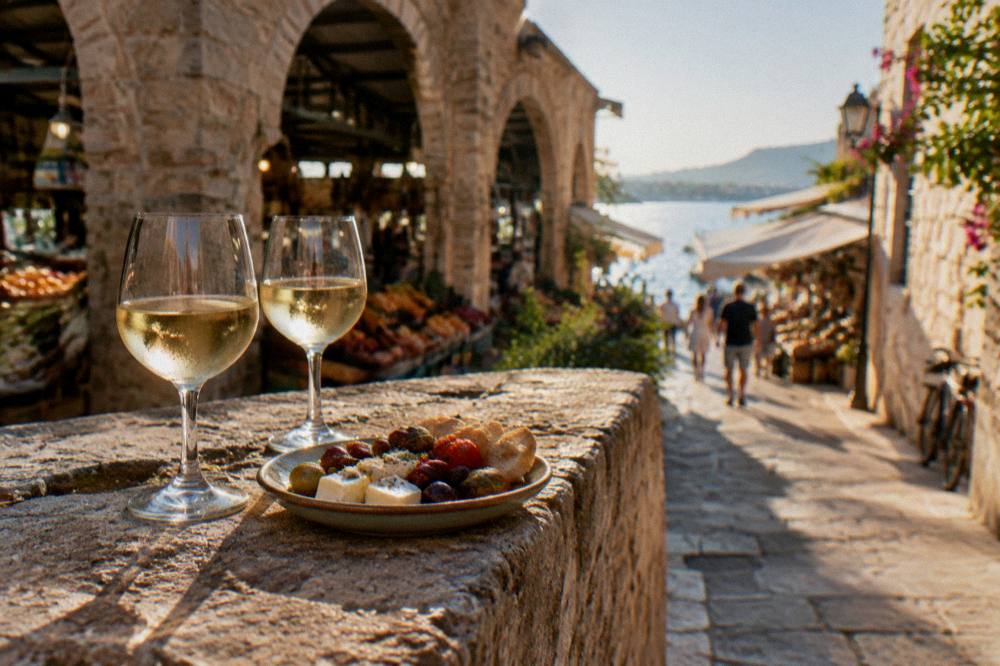
Chania In Winter
Chania in winter is a working city of about 111,375 residents around a harbour first built 1320 to 1356, with mild station-table temperatures, open museums and empty alleys in the Old Town.
Short answer
Chania in winter runs on mild, wetter weather: the HNMS Chania Souda station table gives a January mean of 11.0 C and 129.5 mm of rain. Museums stay open, the Old Town is quiet, and the south coast and village interiors are the day trips that still work.
Chania, the coastal city on the north-west coast of Crete in Greece, does not shut down when the summer crowds leave. The municipality counts 111,375 permanent residents in the 2021 census, and winter is when the city around the Venetian Harbour belongs to them: the harbour walls first built between 1320 and 1356 stay in place, the museums keep their posted hours, and the HNMS Chania Souda station table records what December to February actually feels like, at a January mean of 11.0 C and 129.5 mm of rain. This guide walks through the weather, the sights that stay open, the food, the transport and the day trips that still work, with every climate figure taken from that station table for the period 1958 to 2010.
What Is Chania Like In Winter?
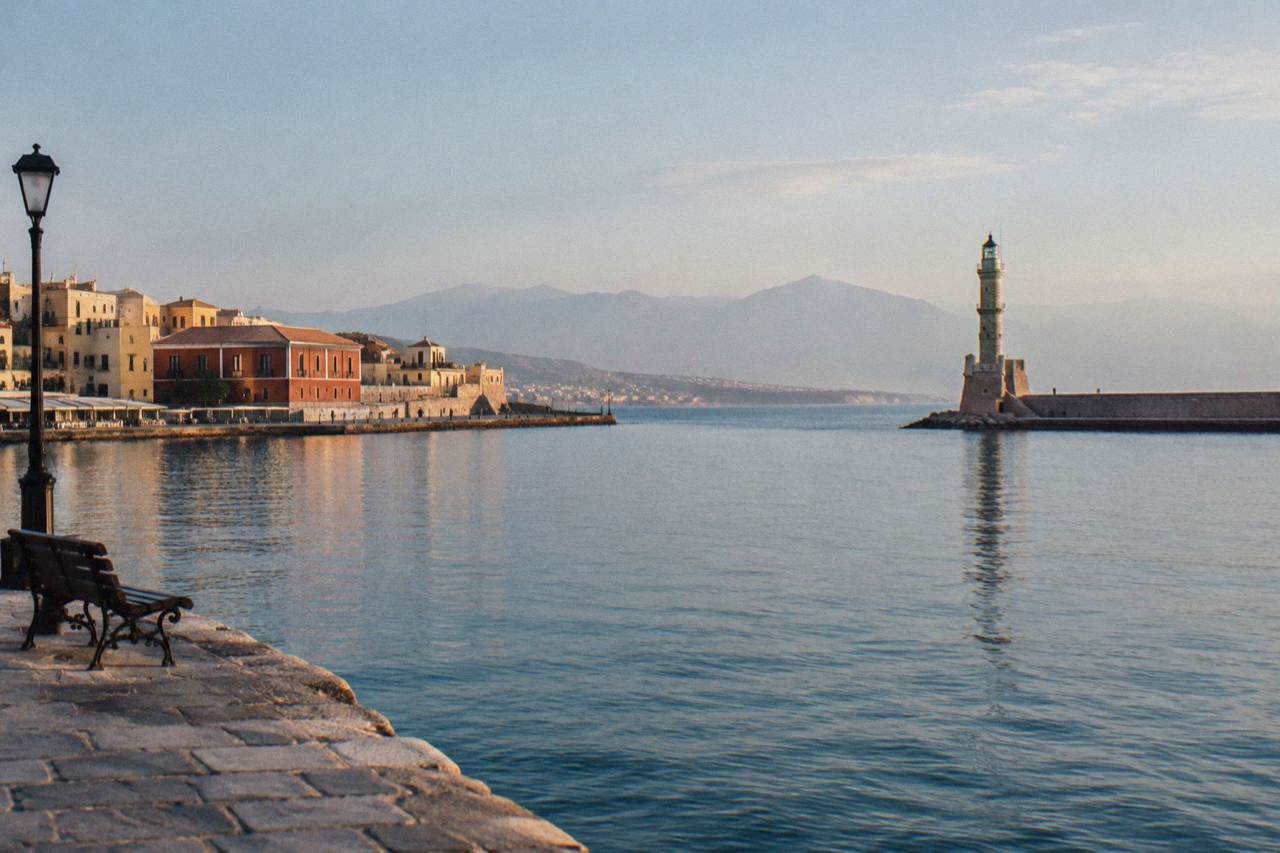
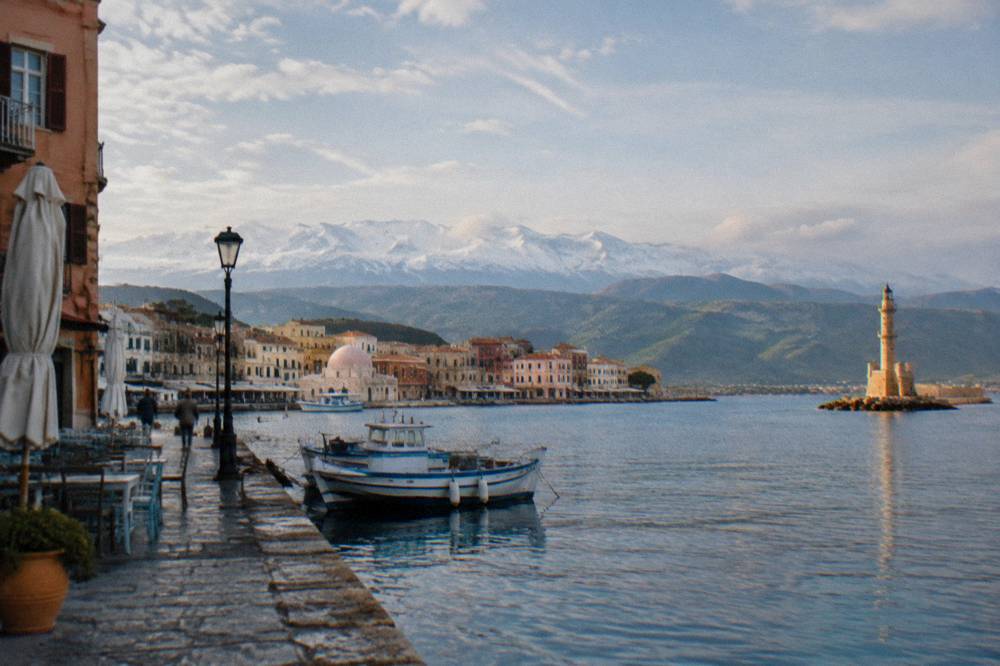
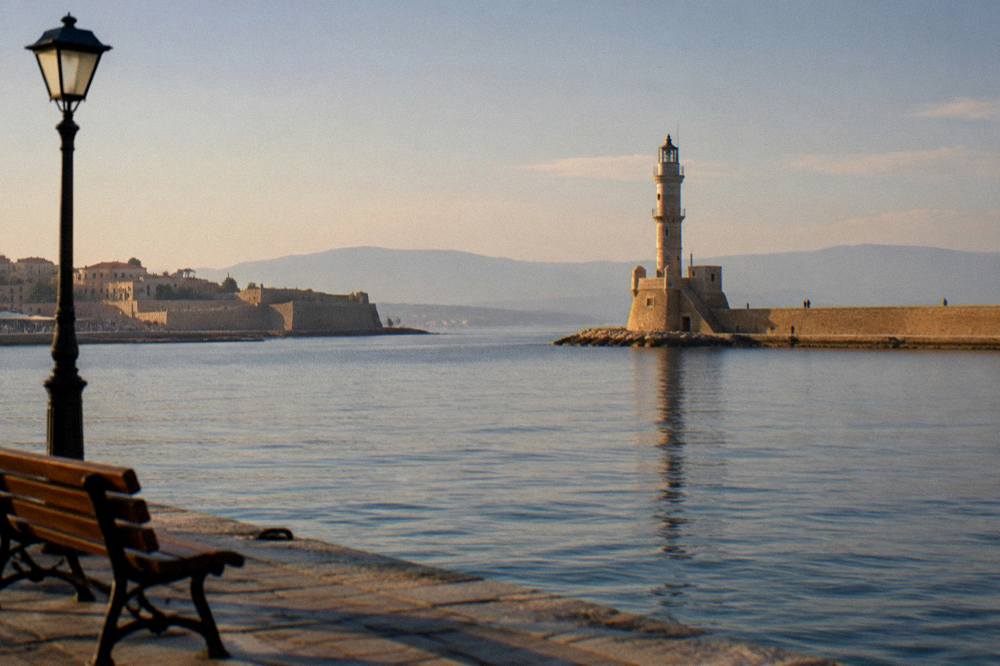
Chania in winter is a quiet, functioning city rather than a resort: the Old Town around the Venetian Harbour stays walkable, the harbour's seven surviving Neoria shipyards from the original seventeen of the 15th to 16th century remain standing, and the population of 111,375 residents keeps restaurants, bakeries and cafés open through the coldest months. The summer excursion boats stop crowding the mole, and the lighthouse, built about 1595 to 1601 on its Venetian base, stands over water that reflects whatever sky the season brings.
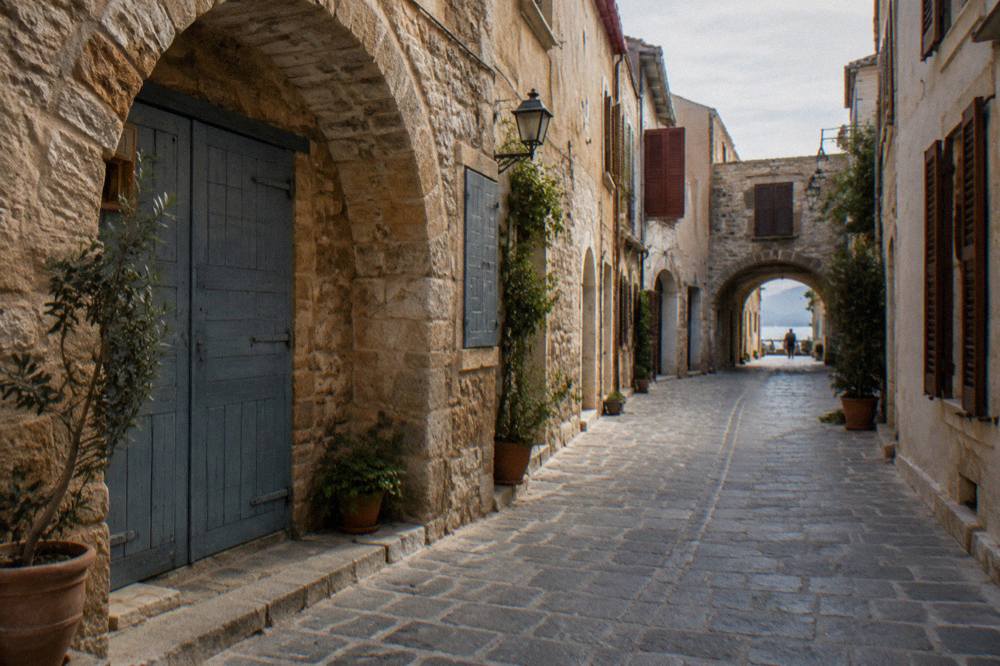
The rhythm changes rather than stops. Municipal services run at full schedule, schools are in session, and the streets of Splantzia and the Old Town fill with locals instead of visitors. The desk's read of the sources is straightforward: the sights that depend on good weather, the beach clubs and the boat departures to Balos, scale back or pause, while everything under a roof carries on.
What a winter visitor gets is space. The alleyways around the harbour, the streets of Halepa and the seafront at Nea Chora are quiet in a way the summer city never is. Rain arrives, on the station table 16.3 days of it in January, but it arrives between long mild spells, and the mean maximum in December still reaches 16.2 C.
Is Winter A Good Time To Visit Chania?
Winter suits a visitor whose priorities are the Old Town, the museums, the food and inland villages rather than beaches and boat trips: the HNMS Chania Souda station table gives December a mean of 12.7 C and February 11.0 C, mild against northern Europe, and the trade-off is 101.9 mm of December rain across 16.1 rain days. It is a city-break season, not a beach season, and the quiet streets are the reward.
The honest framing has two sides. On one side, hotel occupancy drops, tables are easy to find, and the archaeological and maritime collections can be seen without queues. On the other, the headliners of a Chania summer, the Balos cruise from Kissamos with daily departures only to 31 October 2026 per the operator, and the Samaria Gorge, normally open 1 May to 31 October, are off the table. Neither runs in deep winter.
Need a place to stay near the harbour? Book a hotel here.
The comparison with the peak season is set out in the site's own pages on the best time to visit Chania and on how many days in Chania makes sense for a first trip. Winter needs fewer days for the city itself and more flexibility for weather, and a car or the KTEL bus network widens what is reachable. The full picture for a first-time visit, including the summer draws, sits on the things to do in Chania page.
What Is The Weather Like In Chania In Winter?
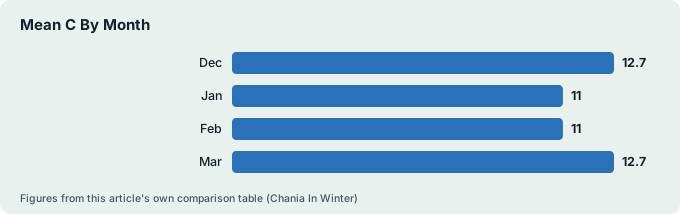
The HNMS Chania Souda station, whose published table covers station records from 1958 to 2010, gives winter as the wet and mild quarter: mean temperatures of 12.7 C in December, 11.0 C in January and 11.0 C in February, mean minimums of 9.7, 7.9 and 7.8 C, and rainfall of 101.9, 129.5 and 104.0 mm respectively, with January the wettest month in the table at 129.5 mm across 16.3 rain days. Humidity runs at its highest in January, 73 percent, and the prevailing wind is westerly, turning north-west only in July and August.
That table is the only official source for the city's climate, and it is a station record, not a 1991 to 2020 normal. The station sits inland of Souda Bay at 148 m, so the harbour front can feel a degree or two different from the printed mean, and no monthly sea-temperature normal exists to quote. A live sea reading is a live reading only, and none is printed here.
| Month | Mean C | Mean max C | Mean min C | Rain mm | Rain days |
|---|---|---|---|---|---|
| Dec | 12.7 | 16.2 | 9.7 | 101.9 | 16.1 |
| Jan | 11.0 | 14.4 | 7.9 | 129.5 | 16.3 |
| Feb | 11.0 | 14.7 | 7.8 | 104.0 | 14.5 |
| Mar | 12.7 | 16.6 | 9.0 | 76.0 | 11.5 |
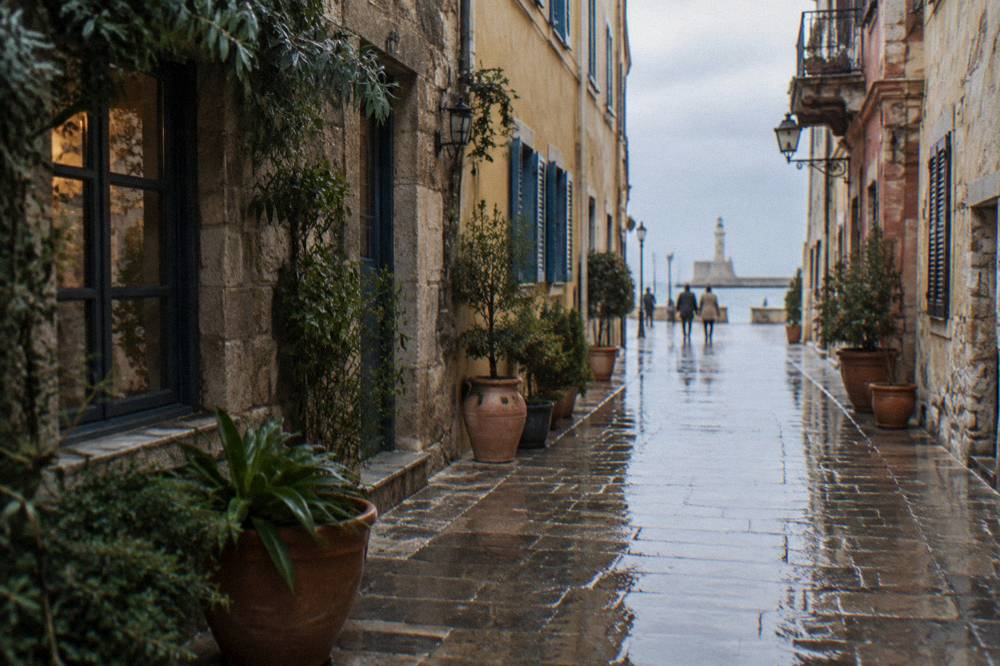
Two practical readings follow from the numbers. First, rain matters: December through February each carry roughly a fortnight of rain days, so a waterproof layer matters more than a heavy coat, since mean maximums stay between 14.4 and 16.2 C. Second, the shoulders are different animals: October still records a 19.4 C mean against 67.7 mm of rain, and March drops to 76.0 mm, so late autumn and early spring are noticeably drier gambles than deep winter. More detail sits on the site's Chania weather page.
| Layer | Station-table basis | What it means for packing |
|---|---|---|
| Waterproof jacket | 129.5 mm rain in January, 16.3 rain days | The single most useful item |
| Mid layers, not a parka | Mean max 14.4 to 16.2 C Dec to Feb | Days are mild, evenings fall to 7.8 to 9.7 C |
| Something for the wind | Prevailing wind west in the table | The harbour mole is exposed in any breeze |
| Swimwear, optional | No sea-temperature normal published | Only for the hardy, or a heated pool |
What Can You Do In Chania In Winter?
Winter activity in Chania concentrates on the Old Town, the museums, the food and the villages inland: the Archaeological Museum at 15 Skra Street in Halepa lists a full ticket at EUR 15 and a concession at EUR 8, the Firka Fortress grounds are free, and the harbour, the lighthouse mole and the Neoria shipyards can all be walked without a ticket or a booking. Indoor and outdoor options split roughly by the rain forecast for the day.
A workable pattern is a museum or a church in any wet morning, the harbour circuit and the lighthouse mole in any dry afternoon, and long lunches in between. The Old Town's lanes, the Splantzia district and the seafront walk toward Nea Chora fill a full day at winter pace, and none of it depends on a season. The site's pages on the Old Town layout and on where to stay in Chania help with basing decisions, and the hotel roundups cover the best hotels in Chania and boutique hotels in Chania for short winter breaks.
For a guided day that does not depend on the sea, a small-group village tour such as the 7 Villages of Apokoronas tour with lunch covers the inland lake-and-village country east of the city, or you can Check availability directly on the operator's live listing.
Which Museums And Sights Stay Open In Chania In Winter?
The Archaeological Museum of Chania, at 15 Skra Street in Halepa, lists a full ticket at EUR 15 and a concession at EUR 8, and asks visitors to leave 20 minutes before closing; its current opening hours should be checked on the museum's own visit page, since the sources list conflicting schedules. The Firka Fortress on the harbour, built in 1620, has free grounds and holds the Maritime Museum of Crete, whose prices and hours the listing does not state and should be confirmed on site.
The fixed winter sights are mostly free and always open: the Venetian Harbour basin, first built 1320 to 1356 with dredging and a wall recorded in 1515, the lighthouse of about 1595 to 1601 with its Egyptian-era restoration of 1830 to 1840, the seven surviving Neoria shipyards, and the layers of the city walls, the first raised 1336 to about 1356 and the second from 1536 to Michele Sanmicheli's design. Ottoman rule began with the 1645 conquest of Chania, and union with Greece came in 1913, so a winter walk crosses four eras of stonework in under an hour.
| Sight | Winter access | Cost |
|---|---|---|
| Venetian Harbour and lighthouse mole | Always walkable | Free |
| Firka Fortress grounds | Open ground, fort built 1620 | Free |
| Archaeological Museum, 15 Skra Street, Halepa | Check the museum's visit page for hours | EUR 15 full, EUR 8 concession |
| Maritime Museum of Crete, inside Firka | Confirm prices and hours on site | Not stated |
| Neoria shipyards, exterior | Always viewable from the harbour east side | Free |
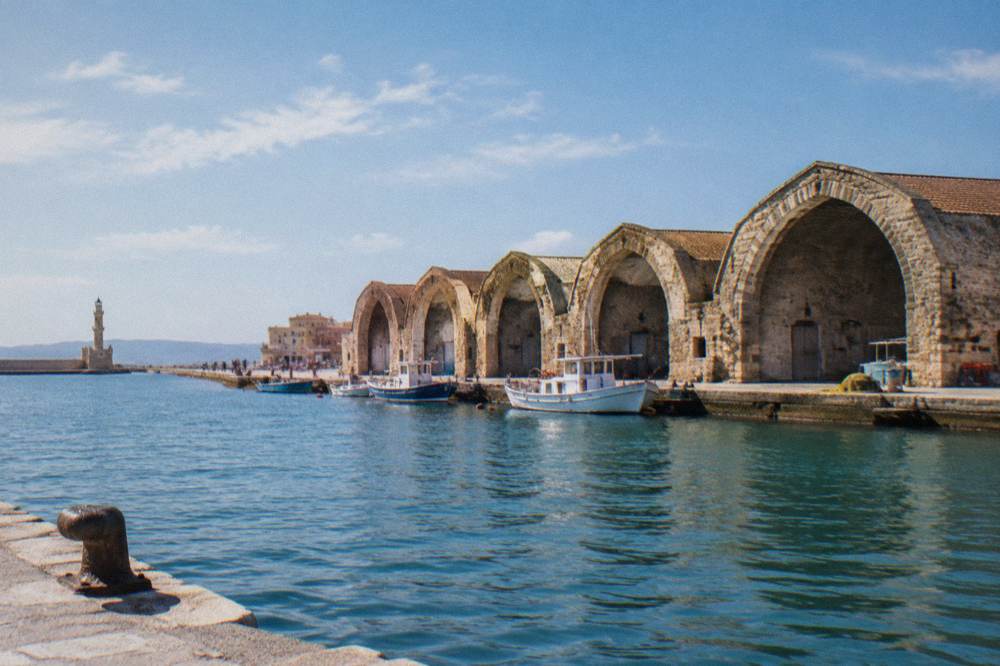
One caution the desk repeats across the site: the museum's opening hours are genuinely unclear in the available sources, one listing 08:00 to 20:00 daily and another a Tuesday closure, so the museum's own page is the authority before a dedicated trip across to Halepa. Pairing Halepa with the harbour on the same day is easy on foot and avoids a wasted journey.
Can You Swim In Chania In Winter?
Swimming in Chania in winter is possible only for the well prepared: no official monthly sea-temperature normal exists for the Cretan Sea off the city, so nothing reliable can be printed about how cold the water is in January, and the station table's mean air temperatures of 11.0 to 12.7 C from December to February describe a season nobody treats as beach weather. A live sea reading is a live reading, and none is quoted here.
What winter does offer is the shoreline itself. Nea Chora beach, the city's own sandy stretch a short walk west of the Old Town, and the pebbles at Koum Kapi are empty in January, and a walk along either in a 14.4 C mean-maximum afternoon is one of the season's small pleasures. The sea is close, dramatic after storms, and unvisited. The rest of the planning pages sit on Chania Crete Travel Guide.
The beach season proper is a different question, and it is covered in full on the site's roundups of the best beaches in Chania. For anyone whose trip spans late autumn, the Balos boats from Kissamos run daily departures only to 31 October 2026 on the operator's own schedule, so November onward means the city beaches and the coast roads, not the lagoon trips.
Is It Worth Hiking The Gorges Around Chania In Winter?
The gorges around Chania are effectively a warm-season activity: Samaria Gorge normally opens 1 May to 31 October and is closed or delayed whenever storms damage the path, with the operator NECCA aiming works at readiness in May 2027 after storm damage in late September and early October 2026, so no winter hike of Samaria is possible and its status must be checked on the official channels before any plan. Winter gorge walking in the White Mountains is a matter of local conditions and local advice.
The storm context matters. The same late-September and early-October 2026 weather that damaged Samaria is a reminder that these paths are managed, seasonal and weather-exposed. The gorge had also closed earlier in the 2026 season for storms. The site's Samaria Gorge page and the blog answer on why the Samaria Gorge closes carry the full picture, and the individual EUR 10 ticket via the NECCA e-ticket portal, free for EU residents under 18 and over 65, applies only in the normal season.
For walkers set on a guided gorge day in the cooler half of the year, the choice that keeps running is Imbros, and a guided option such as the Imbros Gorge hike with a Sfakia coastal finish pairs the gorge with the south coast. The desk's standing advice holds in every season: check the operator's live listing for winter departure dates rather than assuming a calendar.
Where Do You Eat In Chania In Winter?
Winter eating in Chania is the city at its most local: the restaurants of the Old Town and the districts around it run at neighbourhood pace, and the site's restaurant and Cretan-food roundups carry the detailed lists, while the one price the food sources state is structural, that the climate crisis resilience fee is collected per room or apartment per night by accommodation, never by restaurants, with seasonal rates confirmed at booking. No menu price is printed here, because none is verified.
The seasonal foods are the point. Winter is olive-harvest and citrus season across Crete, the period when new oil reaches taverna kitchens, and the cold months are the natural home of slow-cooked dishes rather than the summer grill. The desk defers to the site's dedicated pages, on Chania restaurants and on Cretan food in Chania, for where to eat, and the cooking-class options on the Chania cooking classes roundup run indoors and fit a rainy winter afternoon perfectly.
A short winter eating framework:
| Time | Winter pattern | Why it works in this season |
|---|---|---|
| Morning | Coffee and bakery stops in the Old Town or Splantzia | Bakeries are year-round city institutions |
| Midday | Long lunch, the warmest part of a 14 to 16 C day | Daylight is shorter, lunches run longer |
| Late afternoon | A walk on the harbour mole between showers | Rain comes in spells, not all day |
| Evening | Early dinner in a neighbourhood taverna | Booking pressure is near zero in January |
How Do You Get To And Around Chania In Winter?
Chania International Airport "Ioannis Daskalogiannis" (CHQ), operated by Fraport Greece, sits about 14 km from the city centre on the Akrotiri peninsula near Souda, and public bus and taxi information for the transfer is published on the airport's own site, while the overnight Blue Star Ferries service to Piraeus departs Souda port, about 7 km east of the Old Town, at about 21:30 with a crossing of about 9 h 15 min on the operator's published timetable. No fare of any kind is printed here, and winter timetables should be confirmed with each operator.
The KTEL long-distance bus station on Kydonias street runs the routes that matter to a winter visitor: Heraklion, Rethymno, Kissamos, Paleochora, Omalos and, in summer, Elafonisi. In winter the beach branches thin out and the city and town routes carry the load. The site's pages on getting around Chania, the KTEL Chania buses, the transfer from the airport, car rental in Chania and driving in Crete cover the mechanics, and the longer-distance guides on Athens to Chania, the Piraeus to Chania ferry and flights to Chania cover arrival.
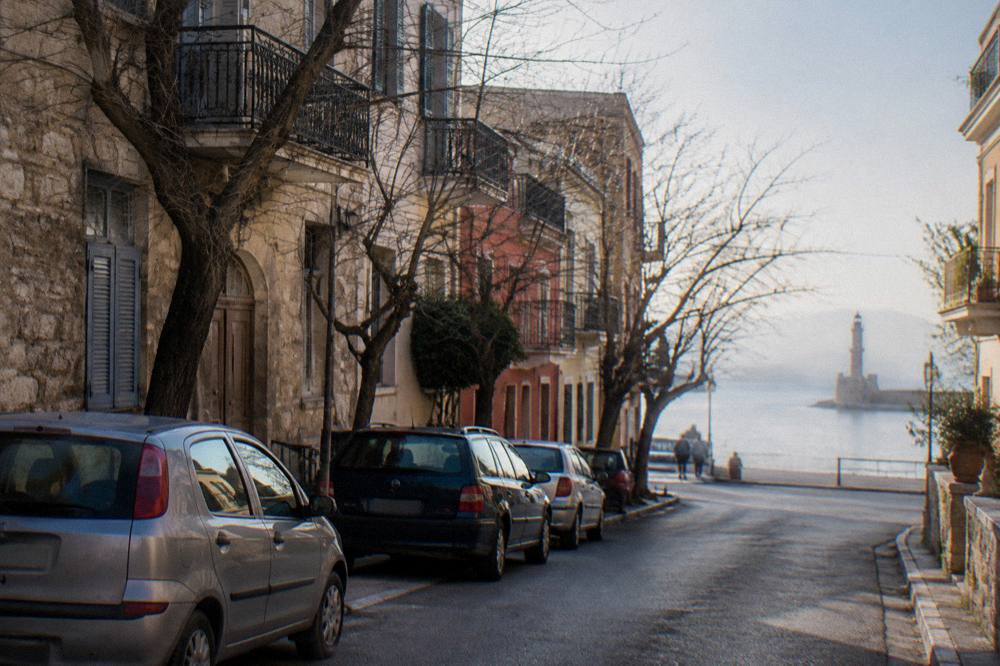
Winter affects the calculus in one clear way: a car earns its keep in the cooler months, because the sea-dependent excuses for staying in town are gone and the island opens up. Mountain roads in the White Mountains can carry snow after cold spells, so the desk's advice is to check conditions before any high route and keep the day's plan flexible.
| Leg | What the sources state | Winter note |
|---|---|---|
| Airport to city centre | About 14 km, bus and taxi info on the airport's own site | Confirm winter flight schedule with the airline |
| Souda port to Piraeus | Blue Star Ferries, overnight, about 21:30 departure, about 9 h 15 min | Operator's timetable, confirm before travel |
| City to Heraklion or Rethymno | KTEL from Kydonias street station | Year-round routes |
| City to Kissamos, Paleochora | KTEL from Kydonias street station | Beach branches reduce off season |
| City to Omalos | KTEL route, gorge access seasonal | Gorge closed in winter, check status |
Which Day Trips From Chania Still Work In Winter?
The winter day trips from Chania are the ones that do not depend on the sea or the gorge season: Rethymno and Heraklion with Knossos by KTEL bus or car, the lake and springs country of Apokoronas, Lake Kournas and the Argiroupoli springs, and the villages of the White Mountains foothills, while Balos boats stop after 31 October 2026 on the operator's schedule and Samaria is closed until its storm repairs are settled. Inland Crete is the winter map.
The town pairs are worth the driving time. Rethymno keeps its own old quarter open year round, and Heraklion carries the archaeological weight of the island, with Knossos reachable on a full-day tour such as the Knossos Palace and Heraklion day trip. Closer to the city, the villages of Apokoronas sit under the White Mountains with lake and spring stops in between, which is exactly the terrain a guided day with lunch covers.
The seasonal split, in one table:
| Day trip | Winter status | Basis |
|---|---|---|
| Rethymno | Works | KTEL route from Kydonias street, year-round town |
| Heraklion and Knossos | Works | KTEL route and guided tours run year round |
| Apokoronas villages, Lake Kournas, Argiroupoli springs | Works | Inland, guided tours with lunch operate in cooler months |
| White Mountains villages by jeep or Land Rover | Works, weather permitting | Inland routes, check conditions after cold spells |
| Balos and Gramvousa by boat | Does not run | Daily departures to 31 October 2026, operator's schedule |
| Samaria Gorge | Closed | Normal season 1 May to 31 October, storm repairs pending |
| Elafonisi by bus | No winter bus | KTEL Elafonisi route runs in summer only |
What Should You Pack For Chania In Winter?
Packing for Chania in winter follows the station table: mean maximums of 14.4 to 16.2 C from December to February with mean minimums of 7.8 to 9.7 C, rain on 14.5 to 16.3 days a month totalling 101.9 to 129.5 mm, and humidity peaking at 73 percent in January, so the kit is a waterproof, layers, and shoes that handle wet stone. Nothing heavier than a warm mid layer is justified by the numbers.
The Old Town's paving is stone, and stone is polished by decades of feet, so wet-day footwear is a safety item, not a comfort item. Daylight is shorter than a summer visitor expects, which argues for planning the harbour walk or the lighthouse circuit for early afternoon and leaving museums and meals for the edges of the day.
| Month | Mean C | Mean max C | Rain mm | Rain days | Packing emphasis |
|---|---|---|---|---|---|
| Dec | 12.7 | 16.2 | 101.9 | 16.1 | Waterproof, layers |
| Jan | 11.0 | 14.4 | 129.5 | 16.3 | Waterproof, warm evenings |
| Feb | 11.0 | 14.7 | 104.0 | 14.5 | Waterproof, layers |
| Mar | 12.7 | 16.6 | 76.0 | 11.5 | Lighter layers, rain easing |
Does Anything Close In Chania Over Winter?
Closures in Chania over winter concentrate on the seasonal economy: the Balos and Gramvousa boat season ends with daily departures to 31 October 2026 on the operator's schedule, Samaria Gorge is closed on its normal 1 May to 31 October season with reopening dependent on storm-repair works, the KTEL bus to Elafonisi runs only in summer, and some harbour-front businesses that serve summer visitors pause until spring, while the city's own infrastructure, the museums, the restaurants of the neighbourhoods and the KTEL town routes, continues. Gavdos boats from Paleochora and Sougia run in season only, so that island is off the winter map too.
The pattern is predictable enough to plan around: anything whose business is beaches, boats or gorges pauses or thins, and anything whose business is residents continues. A visitor who wants a guided structure for the winter days can browse the best tours from Chania and the site's walking and food roundups for the options that keep running, and confirm each winter departure on the operator's live listing before committing a day.
Common Questions About Chania In Winter
Is Chania warm in winter?
The HNMS Chania Souda station table, station records 1958 to 2010, gives mean temperatures of 12.7 C in December, 11.0 C in January and 11.0 C in February, with mean maximums of 16.2, 14.4 and 14.7 C. Mild by northern European standards, but not beach weather.
Does it rain a lot in Chania in winter?
On the same station table, January records 129.5 mm of rain across 16.3 rain days, February 104.0 mm and December 101.9 mm. January is the wettest month in the table. Rain comes in spells, with dry days between.
Is the Samaria Gorge open in winter?
No. The gorge normally runs 1 May to 31 October and is closed or delayed whenever storms damage the path. After storm damage in late September and early October 2026, works are aimed at readiness in May 2027, and the official status should be checked before any plan.
Can you do a boat trip from Chania in winter?
The Balos and Gramvousa cruises from Kissamos list daily departures to 31 October 2026 on the operator's schedule, so the main lagoon season ends in autumn. Short local trips, such as a sunset cruise or a Lazaretta island trip, run from the Venetian Harbour on the operators' own winter schedules; check the live listing for dates.
Are the museums in Chania open in winter?
The Archaeological Museum at 15 Skra Street, Halepa, lists a EUR 15 full ticket and EUR 8 concession, and visitors are asked to leave 20 minutes before closing, but the sources give conflicting hours, so the museum's own visit page is the authority. Firka Fortress grounds are free, and the Maritime Museum inside should be confirmed on site.
Is Chania worth visiting in winter?
For a city break of Old Town lanes, museums, long meals and inland villages, yes: the quiet season suits exactly that. For beaches, boats and gorges, no, those are summer products. The trade is space and local pace against rain and closed sea trips.
Chania in winter is a city that keeps its harbour, its museums and its kitchens running while the seasonal coast sleeps, and a visitor who packs for 129.5 mm of January rain gets the quiet side of the Venetian Harbour in return. The Chania Crete Travel Guide carries the rest of the picture, from the seasonal openings to the day trips, in the pages linked above.