Agia Marina Platanias: The Chania Beach Strip Explained
Agia Marina and Platanias are the two neighbouring resort villages on the sandy coast west of Chania, on the island of Crete, Greece, and this guide sets out what each one offers, how they differ, and which verified trips, beaches and day tours work from here.
Short answer
Agia Marina and Platanias sit side by side on the sandy north-west coast a short drive west of Chania city: Agia Marina is the quieter, flatter, more family-leaning stretch, Platanias is the busier one with the stronger nightlife and the hill village above it. Both share the same long sandy beach, the same boat-departure options from nearby Chania, and the same dry summer weather the HNMS Chania Souda station records for the whole area.
Agia Marina and Platanias are the two neighbouring resort villages on the sandy coast immediately west of Chania, the coastal city on the north-west side of Crete, Greece, that looks north over the Cretan Sea. The pair forms one continuous built-up beach strip with the White Mountains stacked behind it, and together they are the accommodation base the region is best known for outside the Old Town itself. This guide, from the Chania Crete Travel Guide editorial desk, compares the two villages, lists what the beaches, food and boat trips actually involve, and prints only the weather and transport figures the official records carry.
Where Are Agia Marina And Platanias Relative To Chania?
Agia Marina and Platanias are consecutive villages on the north coast west of Chania city, sharing one continuous sandy beach that faces the Cretan Sea, with Platanias the further west of the two and a hill village of the same name sitting directly above the coastal resort. The strip belongs to the wider Chania municipality, which counted 111,375 permanent residents at the 2021 census and covers 356.12 square kilometres.
The order, travelling west out of Chania along the coastal road, runs from the city through the suburban fringe and on to Agia Marina first, then Platanias, with the beach unbroken between them. The municipal facts give the population and area of the whole municipality, not of the individual villages, so no village-level figure is printed here. What distinguishes the strip geographically is the combination of due-north aspect, fine sand rather than the pebble and rock coves found on the nearby Akrotiri peninsula, and the wall of the White Mountains to the south, which the site's Akrotiri peninsula guide covers on the other side of the bay.
Platanias adds a second layer: the old hill village above the coastal resort, reached by a steep lane from the seafront, which gives the place a split character the flatter Agia Marina does not have. For orientation inside Chania city itself, the Old Town area guide covers the Venetian Harbour end of the continuum, and the wider things to do in Chania page lists the headline sights. Neither village has a railway, because Crete has no railway at all, so everything below moves by road or by boat.
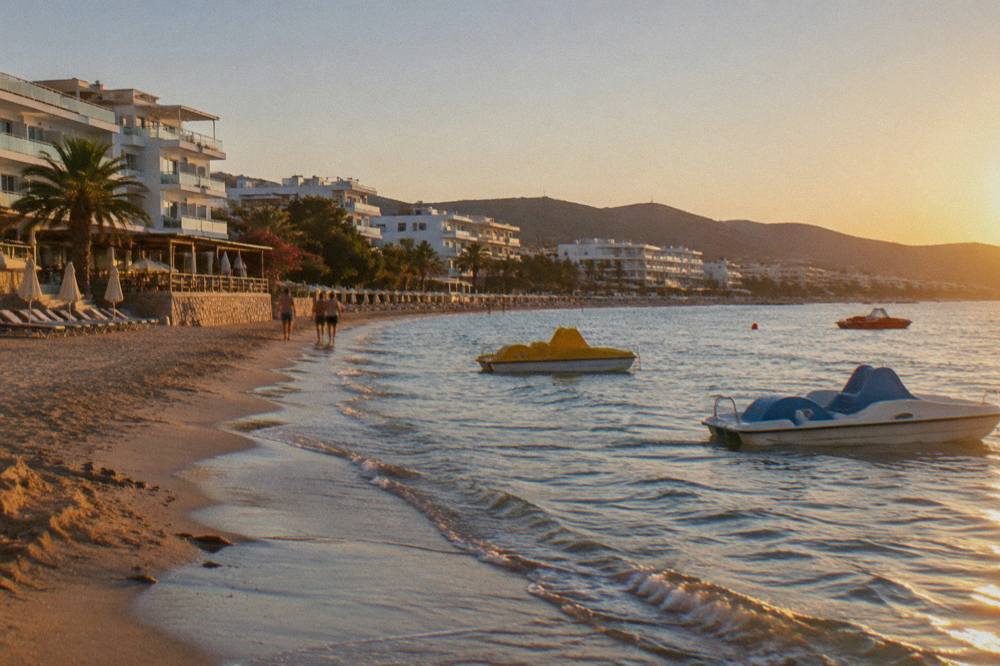
What Are The Beaches At Agia Marina And Platanias Like?
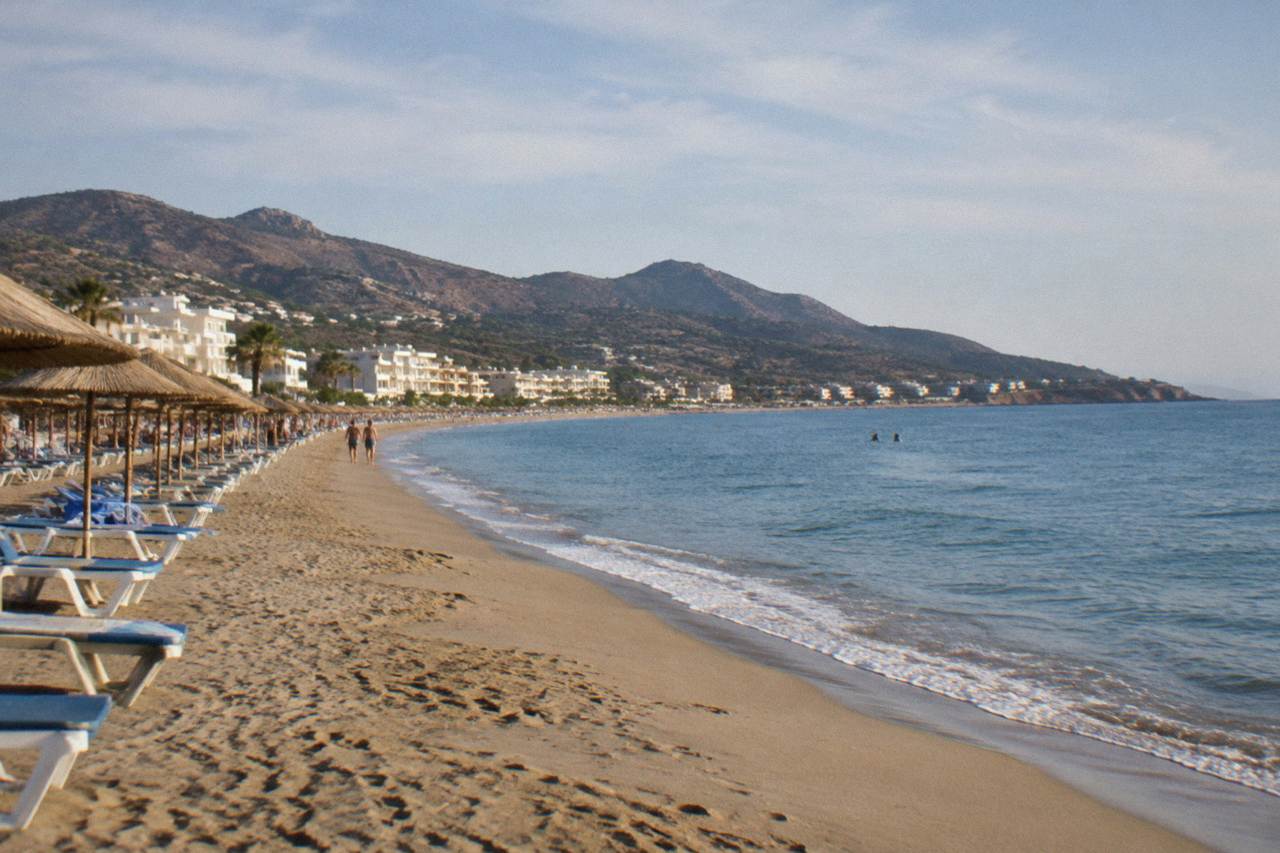
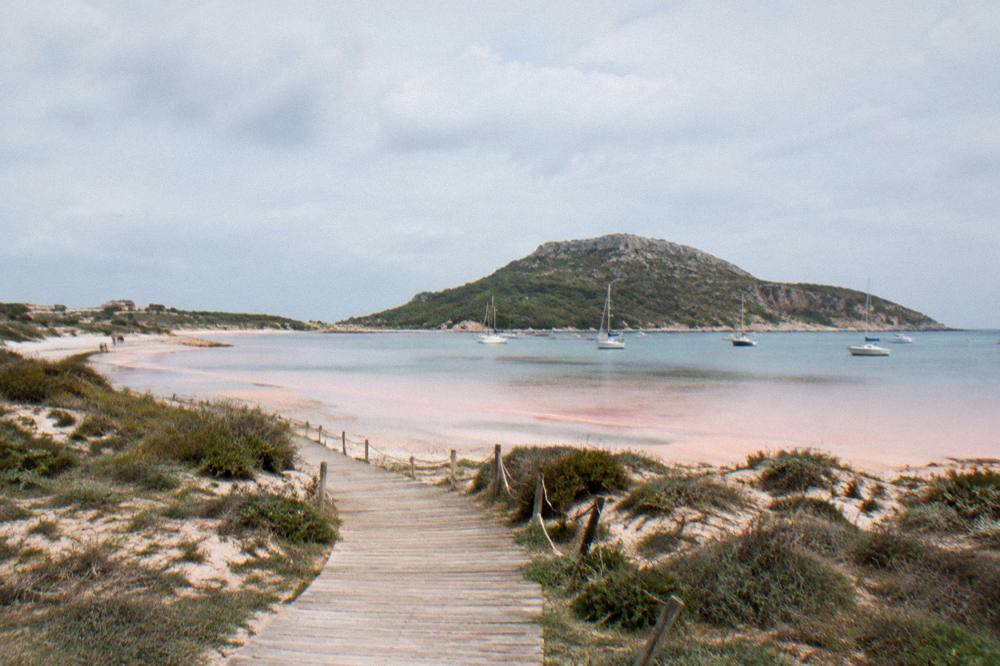
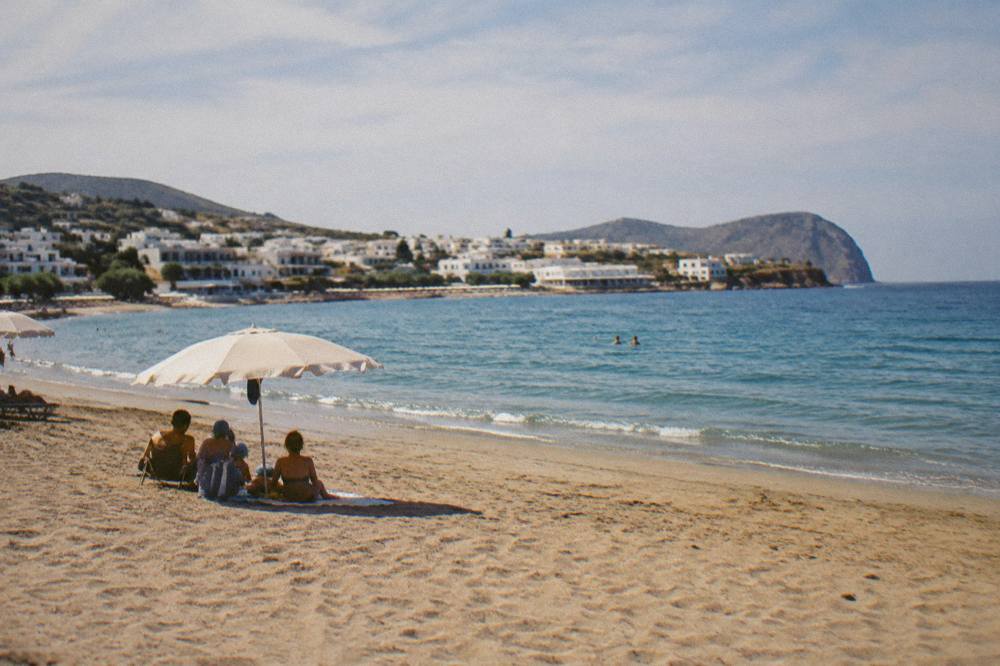
Both villages sit on the same long stretch of north-facing sandy beach, shallow and calm on windless days and fully organised with rows of sunbeds along the built-up front, and the eastern half of the strip is covered in detail on this site's dedicated Agia Marina beach page. What the two ends share is fine sand underfoot, gentle shelving into the water, and the meltemi, the summer north-westerly wind pattern the HNMS records show prevailing across the area in July and August.
The practical difference is density and character rather than sand quality. Platanias is the more developed, higher-energy end, with a wider water-sports offering, a busier seafront and the nightlife that goes with it, while Aga Marina is the softer, more family-leaning stretch, covered in full on the site's Agia Marina beach page. Because the two beaches physically run into one another, a walker staying in one village can simply walk the sand to the other, and the site's broader things to do in Chania round-up places the strip in its regional context against the west-coast lagoons.
Two cautions matter more here than any sunbed layout. First, no charge for the sand itself is published on any official page this desk holds, so confirm prices for beds and umbrellas on the spot rather than trusting a number quoted online. Second, the sea temperature has no official monthly normal, the Hellenic meteorological service publishes none, so any monthly sea figure seen elsewhere is an indicative series rather than an official reading, and a live reading on the day is the only number worth trusting.
| Feature | Agia Marina | Platanias |
|---|---|---|
| Beach type | Sandy, shallow entry, organised front | Sandy, shallow entry, organised front |
| Built-up character | Quieter, family-leaning resort | Busier resort, stronger nightlife |
| Second centre | None, single seafront level | Old hill village above the resort |
| Wind exposure | North-facing, exposed to the summer north-westerly | Same coast, same exposure |
| Detailed page on this site | /attractions/agia-marina-beach/ | Covered on this page |
The meltemi point deserves one expansion. The HNMS Chania Souda station records the prevailing wind as west for the year overall and north-west in July and August, which on a due-north-facing beach means mornings can be glassy and afternoons chopped up with whitecaps close to shore. Swimmers with small children do better before midday in high summer, and the shallow gradient means the chop stays manageable even when it arrives.
Which Boat Trips Work From Agia Marina And Platanias?
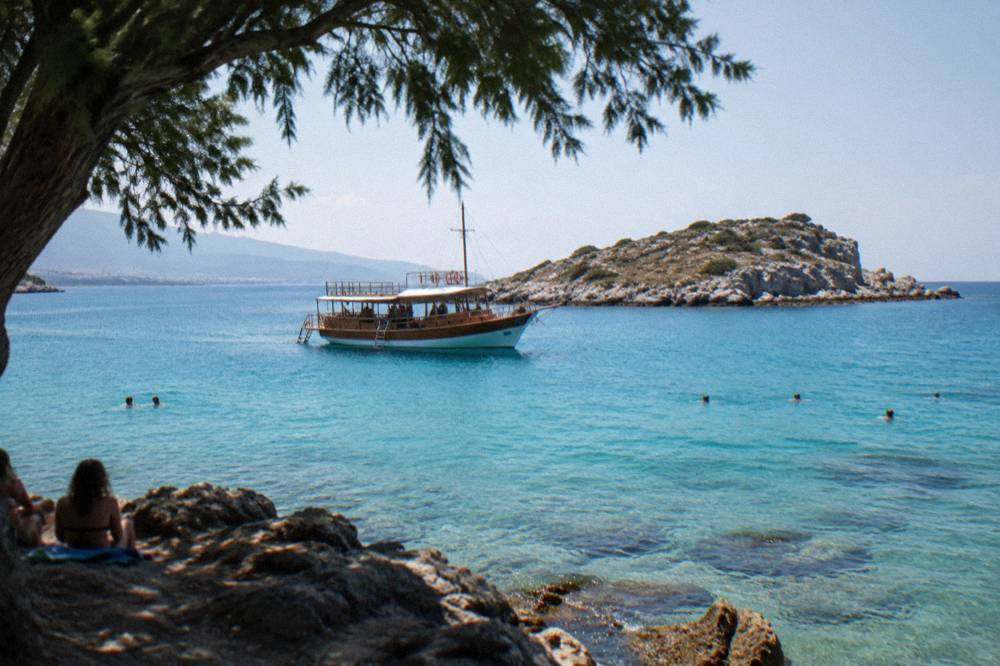
The fastest boat access from either village is the Chania harbour front, where the excursion boats and small cruisers dock, and the standout close-to-shore option is the traditional-boat cruise to Agioi Theodoroi and Lazaretta Island, the two small islands visible on the horizon directly north of the beach strip. That trip, like every cruise on this site, is booked through the operator's live listing, and prices and ratings render on its tour page rather than being typed here.
Agioi Theodoroi is the larger, uninhabited island that dominates the sea view from every sunbed in Agia Marina, and Lazaretta is the small green islet closer to Chania's harbour. A cruise that combines both gives the strip's resident a view of their own coastline from the water, which is the angle the beach itself cannot provide. The related tour on this page is exactly that run: a traditional boat, two islands, swim stops, and a departure point a short transfer along the coast from either village. The tour's own page carries the current price, rating and review count, and Check availability on the operator's listing before locking a date.
For a shorter water fix, a dedicated Lazaretta trip with a swim stop runs from the same harbour, and the site's Chania boat trips guide groups the full range, from sunset runs to all-day cruises. Village-based visitors weighing a big day on the water should also read the Balos lagoon and Gramvousa day trip page: those boats leave from Kissamos port further west, which is actually closer to Platanias than to Chania city, a point worth noting when planning.
Is Agia Marina Or Platanias Better For Families?
Platanias suits families who want everything walkable and lively in one place, water sports, tavernas, and a seafront that stays animated after dark, while Agia Marina suits families who want the same sand with a calmer evening rhythm, and the decision usually comes down to sleep rather than daytime activities, because the beach itself is effectively the same. Neither village is remote: both sit on the continuous coastal strip west of Chania city.
Once you know which village rhythm suits you, book a hotel here.
Daytime, the practical family assets are shared. The shallow sandy entry suits small children at both villages, and the water-sports operators cluster at the Platanias end. The strongest inland family half-day from the strip is Lake Kournas, the freshwater lake inland to the south-east, pedal boats on flat water and tavernas at the shore, reachable by hire car or taxi. The Agia Triada monastery on the Akrotiri side makes a quieter cultural stop, and the site's dedicated Chania with kids material lists more.
One Platanias-specific option deserves a mention: the quad and buggy safaris that depart from Platanias itself, one of the few tours on this site with the village as its named base. The listing carries its own price and rating, and the operator's page is where the current details live. For teenagers, that, plus the boat trips above, covers the adrenaline quota without leaving the strip.
The evening split is where the guidebooks' descriptions align with the layout on the ground. Platanias' seafront road carries the bulk of the strip's bars and late tables, which is a benefit or a cost depending on where the room is, while Agia Marina's front thins out sooner after dark. Families booking either village should check the room's position relative to the seafront road rather than the village name alone, since one street of separation changes the night more than one village of separation does.
Where Should You Eat Around Agia Marina And Platanias?
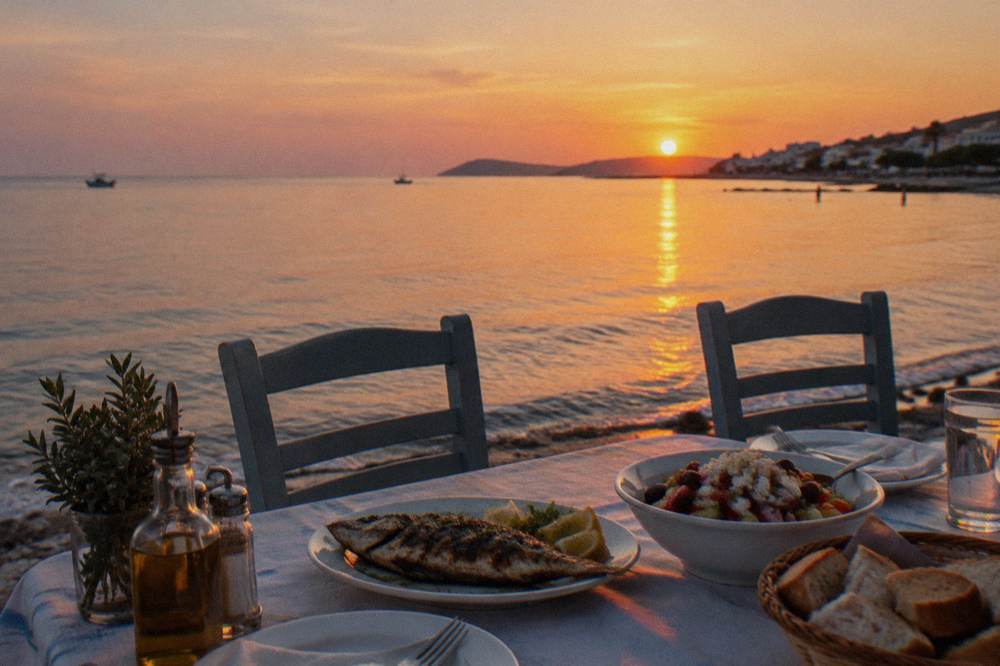
The eating along the strip runs from seafront tavernas serving grilled fish and Cretan standards to the bakery-cafes and breakfast rooms that open early for the resorts, with the heaviest concentration on the Platanias seafront and the second cluster in Agia Marina behind the beach road, and no specific restaurant is recommended here because no venue review is verified by this site's sources. What this desk can point to is the food culture itself, which the site's Cretan food in Chania and restaurants overview pages cover for the city end.
The honest checks are ones any visitor can run. A taverna that itemises the fish by weight on the bill, with the kilo price on display, is operating the way Greek fish tavernas are supposed to, and the posted price board outside is the document to read before sitting down, not after. The site's no-stereotypes rule applies: this page describes what a reader can verify, posted prices and an itemised bill, not what any named venue does.
Two structured food experiences start with pickup from the strip's area. The first is a cooking class in a village up in the White Mountains, where the class covers the dishes rather than the dining, and the mountain drive is part of the point. The second is the food-tasting walk in Chania's Old Town, which pairs the meal with the Venetian Harbour and the lanes this site covers in its eating pages. Prices and ratings for both render on their tour pages.
How Do You Get To Agia Marina And Platanias From Chania?
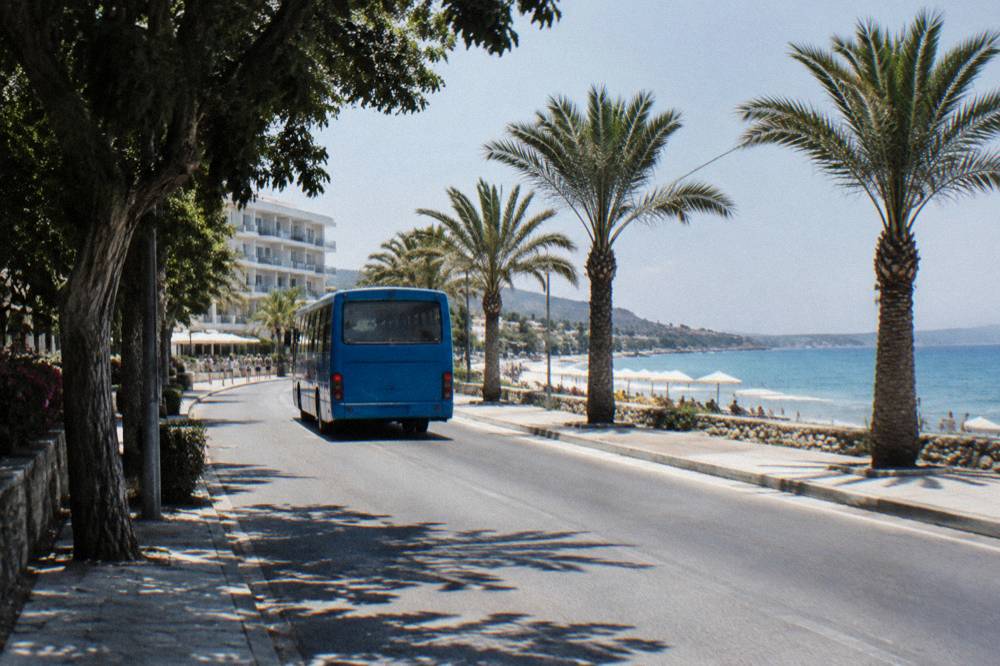
The villages are reached by road west along the coastal strip from Chania city, by the local bus network, by taxi, or by hire car, and the two practical anchors are that Chania International Airport, Ioannis Daskalogiannis, sits about 14 kilometres from the city centre on the Akrotiri peninsula, and that the overnight Blue Star Ferries service to Piraeus leaves from Souda port about 7 kilometres east of the Old Town, not from the Venetian Harbour.
The airport point matters because the figure quoted widely as 5 kilometres is wrong: the airport's own description places it about 14 kilometres from the centre, on the Akrotiri peninsula near Souda. Arriving visitors heading for the strip therefore cross the whole Chania urban area before turning west, and the airport's own site carries the current public bus and taxi information, including where the KTEL services connect. No bus fare, taxi fare or transfer price is printed here, because none is verified on an official page, and the fare ranges seen online should be confirmed with the driver or the ticket desk.
For travel without a car, the KTEL bus network is the spine of the north coast. The Chania long-distance station sits on Kydonias street in the city, and the published route list includes Heraklion, Rethymno, Kissamos, Paleochora and Omalos, plus a seasonal Elafonisi service in summer. The local city-and-suburb services, including the coastal villages west of town, run on the same network, and current timetables live on the operator's site rather than in any printed guide. This site's dedicated Chania airport to town and getting around Chania pages carry the fuller detail.
Hire car is the flexible third option, and the site's driving in Crete material covers the realities of the coastal road and the mountain routes behind the strip. One planning note attaches to the strip specifically: the single coastal road carries all village traffic, so in high summer the drive into Chania for a harbour departure is best timed early, and the boat-trip operators' pickup services, which many listings include, remove the parking question entirely.
What Is The Weather Like In Agia Marina And Platanias?
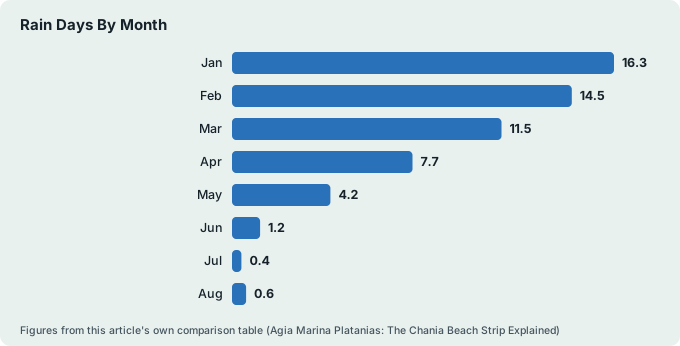
The weather record for the area is the HNMS Chania Souda station table, station records for 1958 to 2010, which shows a Mediterranean pattern of mild wet winters and hot dry summers: July is the warmest month at a mean of 26.7 C and the driest at 1.0 mm of rain, January is the coolest at 11.0 C and the wettest at 129.5 mm, and the whole dry run from May to September adds up to barely a rainy day per week.
The station sits inland of Souda Bay at 148 metres, so it reads very slightly warmer at night and cooler by day than the beach itself, but it is the only official series published for the Chania area and the one this site prints. The two tables below give the full monthly breakdown: temperatures first, then rain, because the two decide different halves of the year.
| Month | Mean C | Mean Max C | Mean Min C |
|---|---|---|---|
| Jan | 11.0 | 14.4 | 7.9 |
| Feb | 11.0 | 14.7 | 7.8 |
| Mar | 12.7 | 16.6 | 9.0 |
| Apr | 15.9 | 20.0 | 11.4 |
| May | 20.2 | 24.5 | 15.0 |
| Jun | 24.7 | 28.9 | 19.0 |
| Jul | 26.7 | 30.7 | 21.2 |
| Aug | 26.3 | 30.4 | 21.2 |
| Sep | 23.2 | 27.4 | 18.7 |
| Oct | 19.4 | 23.5 | 15.7 |
| Nov | 15.8 | 19.6 | 12.4 |
| Dec | 12.7 | 16.2 | 9.7 |
| Month | Rain mm | Rain Days |
|---|---|---|
| Jan | 129.5 | 16.3 |
| Feb | 104.0 | 14.5 |
| Mar | 76.0 | 11.5 |
| Apr | 31.5 | 7.7 |
| May | 13.5 | 4.2 |
| Jun | 3.4 | 1.2 |
| Jul | 1.0 | 0.4 |
| Aug | 1.4 | 0.6 |
| Sep | 15.4 | 3.2 |
| Oct | 67.7 | 9.3 |
| Nov | 77.0 | 11.2 |
| Dec | 101.9 | 16.1 |
Read together, the tables settle the month question. July and August are the peak-heat, near-zero-rain months, with mean maxima of 30.7 and 30.4 C and a combined monthly rainfall of 2.4 mm, but they also carry the north-westerly wind and the crowd peak. May, June and September are the shoulder sweet spots: warm means of 20.2, 24.7 and 23.2 C, with 13.5, 3.4 and 15.4 mm of rain respectively. October turns at 67.7 mm and 9.3 rain days, and from November through March the strip shifts into its off-season rhythm, with 16.3 rain days in January. Humidity across the year runs from 50 percent in July to 73 percent in January in the same station table.
Which Day Trips Run Best From Agia Marina And Platanias?
The strip is the single best-positioned base in the Chania area for the west-coast day trips, because Balos and Gramvousa boats leave from Kissamos port to the west, meaning Platanias sits between the departure port and Chania city, while the gorge hikes, Elafonisi and Falassarna all run west or south from roads the villages already sit on. The site's full things-to-do round-up indexes every category for planning the week.
The headline westbound options are covered in dedicated pages here. Balos lagoon and Gramvousa, with its EUR 1 Kissamos municipal fee collected on the boat ticket for over-13s and daily departures running to 31 October 2026 per the operator's schedule, is the marquee boat day. Elafonisi, a Natura 2000 protected area with free reported entry and a strict prohibition on taking sand, shells or plants, is the marquee beach day. Falassarna adds a third sandy option further west, and the site's Elafonisi versus Balos comparison helps choose between the two big names. The things to do in Chania round-up indexes the whole catalogue.
The gorge question needs its caveat. Samaria Gorge normally runs 1 May to 31 October, entry EUR 10 through the NECCA e-ticket portal with free entry for EU residents under 18 and over 65, but storms in late September and early October 2026 destroyed sections of the path, staff describe a 2026 reopening as extremely difficult, and works are aimed at readiness in May 2027, so the NECCA status page is the only authority worth checking before planning the walk. Imbros Gorge, covered on its own page here, is the shorter alternative that stayed walkable and runs as a guided trip with a village visit. Tour prices for any gorge trip exclude the separate entrance and ferry charges, which the tour listings state and this desk repeats.
Inland, the White Mountains safaris and the Lake Kournas half-day give the coast a break, and eastward the Akrotiri peninsula packs monasteries and coves into a loop from the city. The table below matches each direction to its constraint, because on this coast the constraint, not the distance, is what makes or breaks the day.
| Day Trip Direction | Headline Option | Key Caveat From The Official Sources |
|---|---|---|
| West by boat | Balos and Gramvousa from Kissamos | EUR 1 municipal fee on the ticket, over-13s; departures to 31 Oct 2026 operator-reported |
| West by road | Elafonisi | Natura 2000 site; no sand, shells or plants may be taken |
| South by road | Samaria Gorge | Seasonal and storm-dependent; check NECCA status before booking |
| South, shorter | Imbros Gorge | Runs as guided trip with village visit |
| Inland | Lake Kournas | Freshwater lake, pedal boats, flat water |
| East | Akrotiri peninsula | Monasteries and coves, city-side loop |
Should You Stay In Agia Marina And Platanias Or In Chania Old Town?
Choose the strip for the beach-first holiday, sand on the doorstep, sunset over the sea, and day-trip access to the whole west coast, and choose the Old Town for the harbour, the restaurants and the walkable history, accepting a pebbly city swimming spot rather than a sandy one, because the two bases deliver different holidays and the coastal bus and road link makes mixing them easy. The site's Old Town and where to stay in Chania pages cover the city side in depth.
The honest framing is a trade, not a ranking. A stay in Agia Marina or Platanias puts the organised sandy beach below the balcony and puts Kissamos, the Balos departure port, closer than it is to the city, but every Old Town evening involves a bus, a taxi or a designated driver. A stay in the Old Town reverses it: the Venetian Harbour, the lighthouse and the dinner lanes are on foot, but the proper sandy beaches are a ride away, and the nearest city swimming, covered in the site's beaches near the Old Town material, is not the strip's fine sand. No hotel rate is printed on this site in either direction, because none is verified; rates move and are confirmed at booking.
The split-stay option deserves a line of its plan. The coastal bus link and short transfer times make a two-centre week, Old Town first, strip second, straightforward with one booking change, and the site's itinerary pages, including the two-day and three-day Chania plans, show how the sight days cluster naturally at the city end and the beach days at the strip end. Families with a car can base anywhere on the strip and do both; families without one should weigh how many Old Town evenings they actually want before choosing.
Common Questions About Agia Marina And Platanias
Is Platanias nicer than Agia Marina?
Neither is objectively nicer: Platanias is livelier, with the stronger nightlife, the water-sports cluster and the old hill village above it, while Agia Marina is calmer and more family-leaning on effectively the same sand. The choice is about evening rhythm, not beach quality.
Can you swim at Agia Marina and Platanias beaches?
Yes, both villages sit on one continuous sandy, shallow-entry beach organised with sunbeds along the built-up front. Confirm sunbed prices on the spot, and expect afternoon chop in July and August when the north-westerly wind pattern is at its strongest.
How do you get from Chania Airport to Agia Marina and Platanias?
The airport, Chania International Airport Ioannis Daskalogiannis, is about 14 kilometres from Chania city centre on the Akrotiri peninsula, and the villages sit west of the city beyond that. The airport's own site carries the current public bus and taxi information; no fare is printed here because none is verified on an official page.
What is the best month for Agia Marina and Platanias?
By the HNMS Chania Souda station table, records 1958 to 2010, June and September pair mean temperatures of 24.7 and 23.2 C with only 3.4 and 15.4 mm of rain, making them the strongest warm-and-dry months outside the crowded July and August peak.
Are Agia Marina and Platanias good for a boat trip to Balos?
Yes, and arguably better positioned than Chania city, because the Balos and Gramvousa boats leave from Kissamos port, which lies west of the strip. Daily departures run to 31 October 2026 on the operator's reported schedule, and the EUR 1 Kissamos municipal fee is collected on the boat ticket for over-13s.
Is Agia Marina good for families?
The shallow sandy entry, the calmer evening rhythm and the proximity of inland half-days such as Lake Kournas make it a practical family base. The site's dedicated Agia Marina beach page carries the fuller beach detail.
The strip west of Chania earns its place on one proposition: organised sand on the doorstep, the White Mountains behind, and the whole west-coast trip network within reach on the road to Kissamos. A visitor who wants harbour lanterns at midnight stays in the Old Town instead, and the coastal bus settles the argument in both directions on any evening it matters.