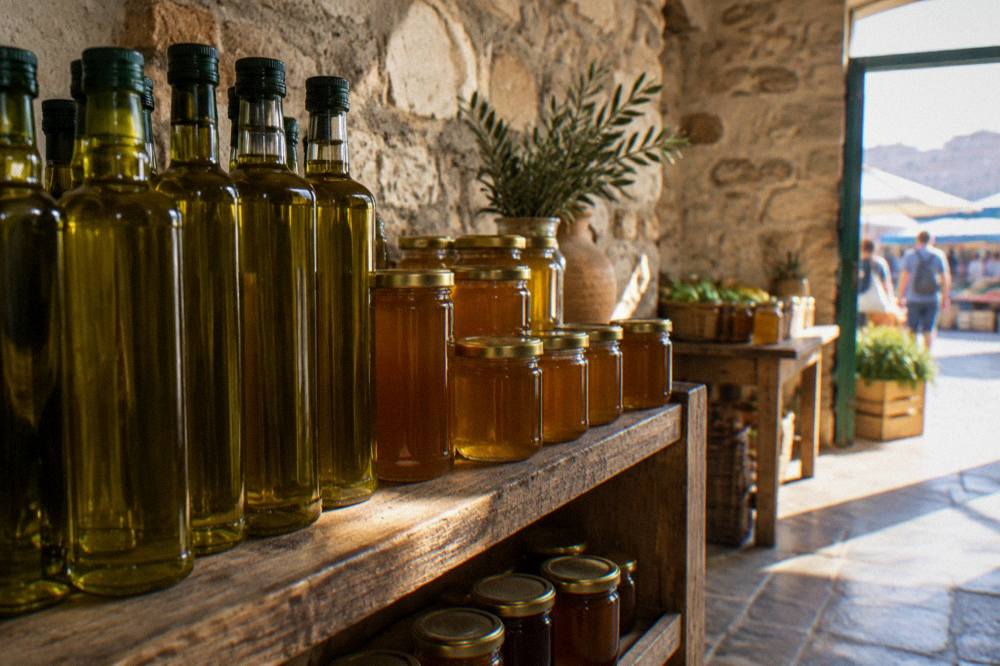
Chania Wine Tour
Wine tours from Chania pair the wineries of the countryside around the city with olive oil, cheese and honey, and the best days combine a tasting with the villages of the White Mountains.
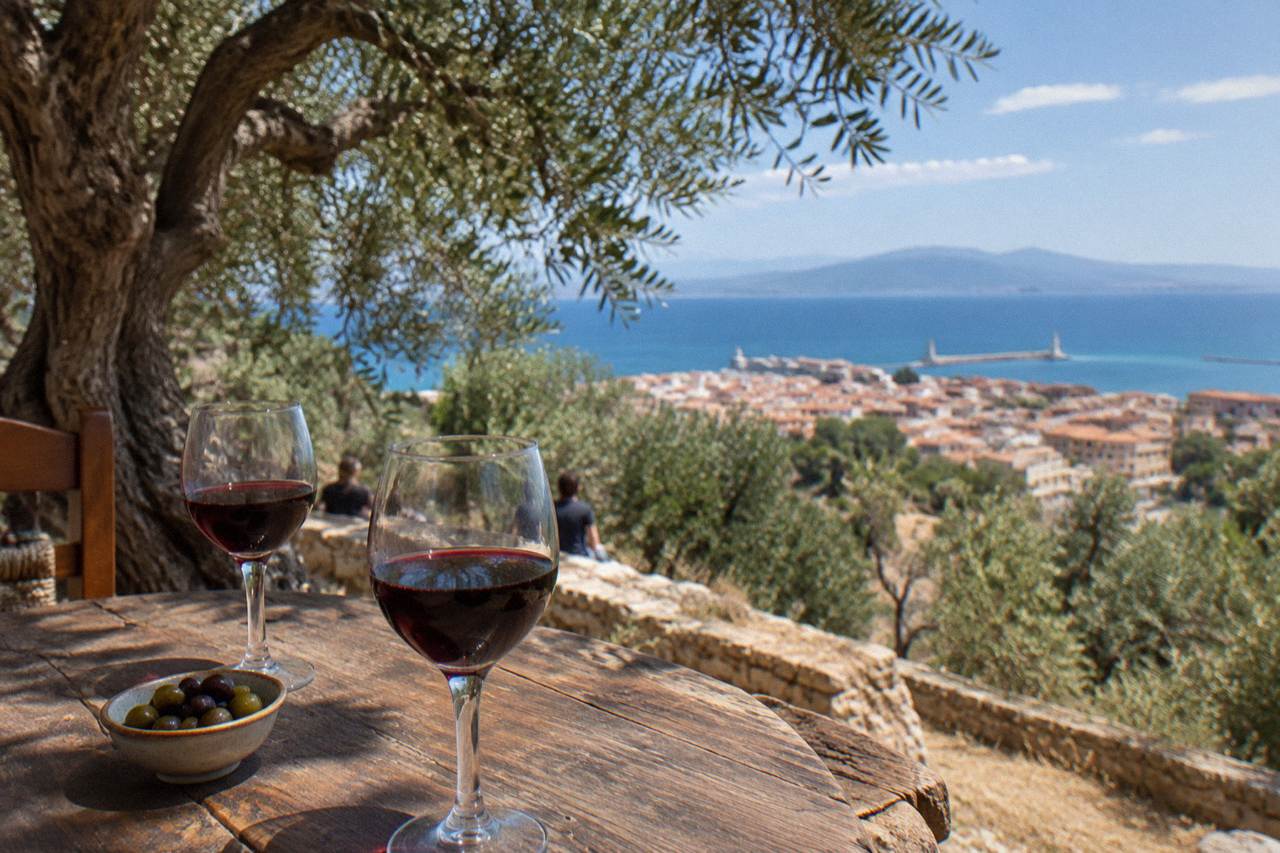
Short answer
A Chania wine tour is a guided half or full day from the city into the wine country of western Crete, visiting wineries and producers for tastings of local wine, olive oil, cheese and honey. Bookings run through the operator's live listing, and many days add village stops or a gorge walk.
Wine tasting around Chania, the coastal city on the north-west coast of Crete, means leaving the Venetian Harbour behind for an hour or two and climbing into the foothills of the White Mountains, where vines, olive groves and village producers sit within a short drive of the Old Town. A Chania wine tour is the easiest way to reach them: guided days from the city visit wineries and small producers, pour local labels alongside olive oil, cheese and thyme honey, and return to the harbour by evening. This guide lays out what a tasting day actually includes, which tour options run from the city, when the calendar suits a glass outdoors, and how a wine day fits a wider Chania itinerary.
What Is A Chania Wine Tour And What Does One Include?
A Chania wine tour is a guided excursion from the city into the wine and food country of western Crete, built around tastings of local wine and usually paired with olive oil, cheese and honey at one or more stops in the hills or villages outside town. The operator's live listing carries the current price, the meeting point and what the day covers, and the seasons matter: vines and producers work year round, while some village stops and combined itineraries run mainly in the warmer months. The listing says exactly which products are poured and how many stops are made.
The shape of the day depends on the itinerary. Some tours stay close to a single winery and pour a flight of local labels. Others build a loop through the countryside, adding an olive oil press, a cheesemaker or a honey producer, and the drive itself becomes part of the experience: the road out of Chania climbs quickly, and the White Mountains frame the vineyards within minutes of leaving the coast.
What every version shares is the pairing logic of Cretan tables. Wine here is not tasted in isolation: it arrives with bread, oil, cheese and raki, the way village tables serve it. A tasting tour that stops at four producers in one day is closer to a long lunch through the landscape than to a formal cellar visit, and that is worth knowing before booking.
Which Food And Wine Tasting Tours Run From Chania?
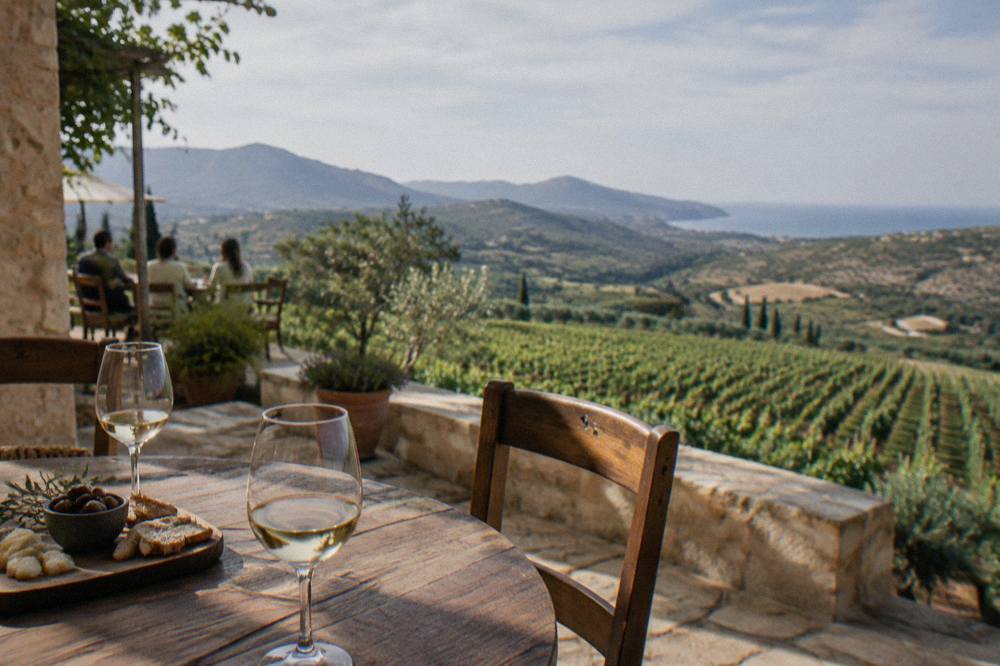
The tasting tours on this site's roster from Chania fall into four kinds: multi-product days covering wine, olive oil, cheese and honey together; wine-focused visits to a single winery with snacks; cooking classes that end with a full Cretan meal and the wines that go with it; and beach or village day trips with a honey or wine stop built in. Prices, ratings and durations for each render on the tour cards below from verified listing data, so compare coverage rather than headline figures, and check the operator's live listing for what the current season runs.
The multi-product day is the classic choice. It packs a winery, an oil press, a cheese stop and a honey producer into one loop out of the city, and it teaches more about how Cretan food fits together than any single visit could. The wine-and-oil-only day goes deeper on fewer stops and suits a visitor who already knows the food and wants the cellar conversation instead.
Cooking classes suit a different mood: instead of driving between producers, the group cooks a Cretan meal in a village kitchen in the White Mountains and then sits down to eat it with local wine. And for anyone combining a beach day with a taste of the countryside, one Elafonisi itinerary adds Elos village and honey and wine tasting stops on the drive, which turns a long transfer into part of the day out.
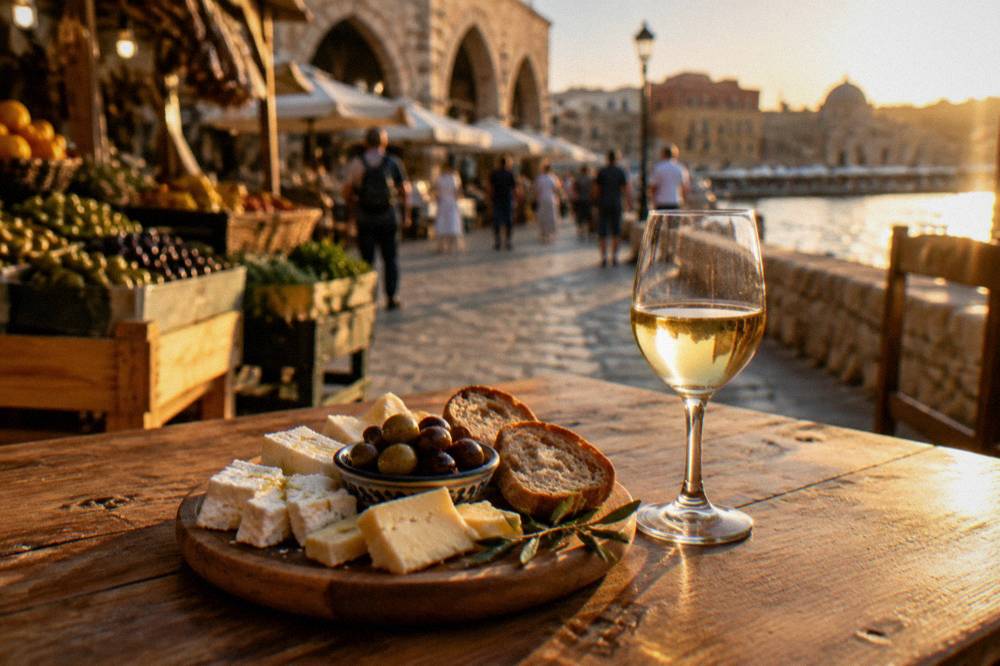
The four tasting formats at a glance:
| Format | Typical stops | Best for |
|---|---|---|
| Four-product tasting day | Winery, olive oil press, cheese producer, honey producer | First-time visitors wanting the full Cretan larder |
| Wine and olive oil day | One or two cellars with snacks | Visitors focused on the wine itself |
| Village cooking class | Mountain village kitchen, full meal with wine | Travellers who want to cook, not just taste |
| Beach day with tasting stop | Elafonisi beach plus Elos honey and wine stops | Visitors pairing a beach day with the countryside |
For a deeper look at the food scene back in town, the Cretan food in Chania guide covers the dishes a tasting day will introduce, and the Chania restaurants guide lists where to eat them afterwards.
When Is The Best Season For A Chania Wine Tour?
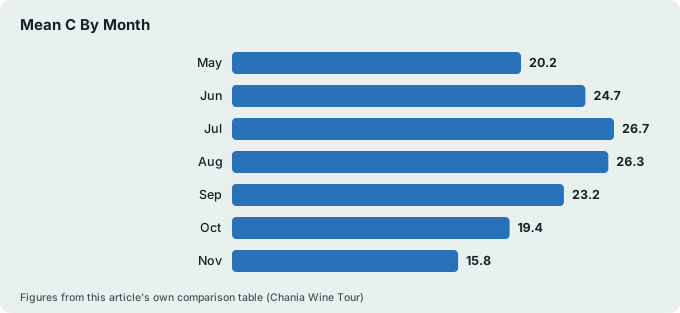
The best season for a Chania wine tour is May to September, when the HNMS Chania Souda station table shows mean temperatures of 20.2 to 26.7 C and monthly rainfall of just 1.0 to 13.5 mm, so tastings can run on terraces and the drives between producers stay dry. The same table, covering station records from 1958 to 2010, puts October at 67.7 mm of rain and January at 129.5 mm, which makes spring to early autumn the dependable window for an outdoor pour. Tour departures themselves follow the operator's seasonal calendar on the live listing.
The harvest is the romantic calendar: vines are picked in late summer and early autumn, and the raki distillation season follows it. Village producers are busiest then, and a September or October tasting day sometimes coincides with fresh production. That same window, though, is exactly when the first storms can reach western Crete, so late-season bookers should watch the forecast and keep the operator's cancellation terms in mind.
Winter tasting is possible and quieter. The mean temperature sits at 11.0 C in January and December sits at 12.7 C in the HNMS table, cold for a terrace but fine for a cellar, and the off-season means smaller groups. Rain is the trade: 16.3 rain days in January against 0.4 in July in the same station records.
| Month | Mean C | Rain mm (Chania station, 1958 to 2010) |
|---|---|---|
| May | 20.2 | 13.5 |
| Jun | 24.7 | 3.4 |
| Jul | 26.7 | 1.0 |
| Aug | 26.3 | 1.4 |
| Sep | 23.2 | 15.4 |
| Oct | 19.4 | 67.7 |
| Nov | 15.8 | 77.0 |
The full month-by-month picture, including winter figures, sits in the Chania weather guide, and the broader planning question is covered in the best time to visit Chania.
Where Does Cretan Wine Come From Around Chania?
The wine country around Chania sits in the hills and inland valleys south and west of the city, on the lower slopes of the White Mountains and in green pockets like Elos on the road toward Elafonisi, where altitude, winter rain and dry summers give the vines western Crete's growing conditions. The HNMS Chania Souda station records, 1958 to 2010, describe the climate those vines grow in: a mean of 11.0 C in January, 26.7 C in July, and roughly 622.3 mm of rain across the year, almost all of it between October and March. No official map of appellations is carried in this site's facts, so treat village names on an itinerary as the reliable geography.
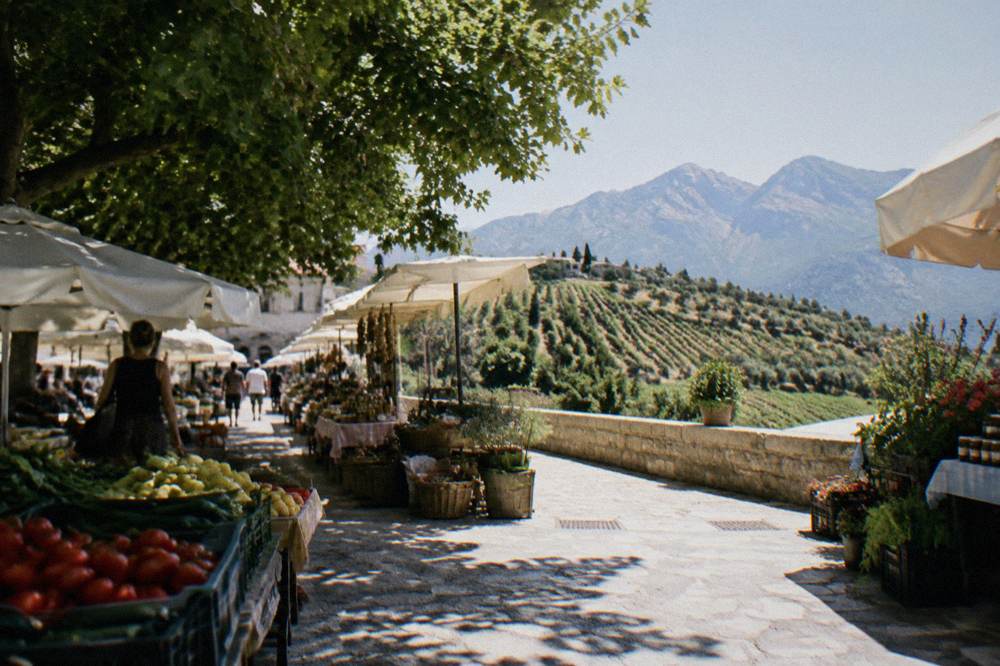
Elos is the name that appears on itineraries because it is both a real village stop and a natural break on the long drive to Elafonisi, and tasting stops there pair honey and wine with the shade of chestnut country. Inland from Chania, the Apokoronas villages sit on the other side of the peninsula toward the south coast roads, and tours that thread seven of them in a day pass through the same mixed farmland of olives, vines and stock.
What the tours consistently show is that Cretan wine is a village product first. Labels are small, families pour them, and the same producer often sells oil and honey from the same counter. That is why the multi-stop day has become the standard format: the wine explains the oil, the oil explains the food, and none of it makes sense on its own.
How Do You Get To The Wine Country From Chania Old Town?
Guided tasting tours collect from central Chania, usually from the Old Town or set pickup points, so reaching the wine country needs no car of your own, and the practical alternative is hiring a car and driving the inland roads yourself, which the driving-in-Crete guidance covers in detail. The tours on this site's roster list their pickup arrangements on each operator page, and the Chania car rental guide covers the self-drive option, including pickup at the airport, which sits about 14 km from the city centre on the Akrotiri peninsula.
Self-driving has real appeal in this landscape. The roads inland are winding, the distances between producers are short, and a car lets a group linger at a village taverna that a tour schedule cannot wait for. Against that, a guided day removes the question of who abstains from driving, which on a wine tour is not a small detail: the whole point of the day is to taste.
Two practical notes apply either way. The climate crisis resilience fee is collected by accommodation per room or apartment per night at seasonal rates, so confirm the amount at booking rather than at the door. And if a tasting day is one item on a longer list, the how many days in Chania guide helps sequence it against the gorges and beaches competing for the same calendar.
| Way to reach the wine country | How it works | Trade-off |
|---|---|---|
| Guided tasting tour | Pickup in Chania, producer stops arranged | Fixed schedule, no detours |
| Rental car from Chania | Self-drive inland roads at your own pace | A driver must abstain from tasting |
| Tasting stop inside a beach day | Honey and wine stops on the Elafonisi route | Less time at the cellar, more at the coast |
What Else Combines Well With A Tasting Day In Chania?
The itineraries that pair best with a Chania tasting day are the gorge walks and village circuits of the White Mountains, especially the Imbros Gorge hike with a village visit, the seven villages of Apokoronas loop with lunch, and a coast day such as a calm-water paddleboard tour in the morning before an evening pour. Each of these uses a different part of the same landscape, and a week in Chania can comfortably hold all three: one day on foot in the gorge country, one in the villages, one on the water. Coverage details and booking run through the operator pages linked here.
The Imbros Gorge day deserves a special mention for wine-minded travellers, because it is the gorge that stays walkable when Samaria is closed or delayed. Samaria Gorge normally opens 1 May to 31 October, but storms in late September and early October 2026 destroyed sections of its path and staff describe a 2026 reopening as extremely difficult, with works aimed at readiness in May 2027, so check the official NECCA status before planning any Samaria day. Imbros runs through the same White Mountains on a shorter, steadier walk, and the guided version from Chania adds a village stop. Full details, availability and the current listing sit on the Imbros Gorge guided hike and village visit tour page, and you can Check availability at the operator.
A sample week that balances all of it:
| Day | Activity | Why it fits |
|---|---|---|
| Day 1 | Old Town and Venetian Harbour on foot | Jet-lag-friendly, everything walkable |
| Day 2 | Four-product tasting day into the hills | The wine day itself |
| Day 3 | Imbros Gorge hike with village visit | Mountain country on foot, steadier than Samaria |
| Day 4 | Beach day at Elafonisi or Balos with tasting stops | Coast plus producers on the drive |
| Day 5 | Seven villages of Apokoronas with lunch | Villages, food and scenery in one loop |
| Day 6 | Morning paddleboard tour, afternoon free | Calm water, then a harbour evening |
For the full list of excursions, the best tours from Chania guide ranks the day trips, and the root things to do in Chania page holds the complete index, as this Chania Crete Travel Guide site is built around them.
What Should You Know Before Booking A Tasting Tour In Chania?
Before booking a Chania tasting tour, confirm three things on the operator's live listing: what the price actually covers, since some days include meals and others only tastings, where pickup happens, and what the cancellation terms are, because storm-season weather in October and November can move or cancel countryside itineraries. Product prices, ratings and review counts render on this site's tour cards from verified data and are never quoted in prose, so treat the card figures as the current numbers and the listing as the contract.
Two regional caveats are worth carrying into any booking. If a tasting itinerary advertises a Samaria element, remember the gorge is not currently a promise: the storm damage of late 2026 has it closed or delayed until official NECCA status says otherwise, and works are aimed at May 2027 readiness. And if a tour route passes Balos, the only confirmed charge there is a EUR 1 Kissamos municipal fee collected on the boat ticket for over-13s, with daily boat departures reported to 31 October 2026 by the operator; boat-ticket prices themselves are never quoted here, only on the live listings.
The city context that frames every booking is compact and reliable: the municipality counts 111,375 permanent residents in the 2021 census across 356.12 km2, Greece has used the euro since 1 January 2001, and passport checks at the border run on the Schengen system with the Entry Exit System fully deployed across Schengen since 10 April 2026. None of that changes a tasting day, but it settles the practical questions that come with it.
| Practical item | What to check | Where |
|---|---|---|
| Tasting inclusions | Meals, tastings and transport coverage | The operator's live listing |
| Pickup point | Old Town access or set stops | The operator's live listing |
| Cancellation terms | Weather moves in the storm season | The operator's live listing |
| Gorge add-ons | Current Samaria status | Official NECCA channels |
| Balos boat elements | The EUR 1 municipal fee for over-13s | The boat operator |
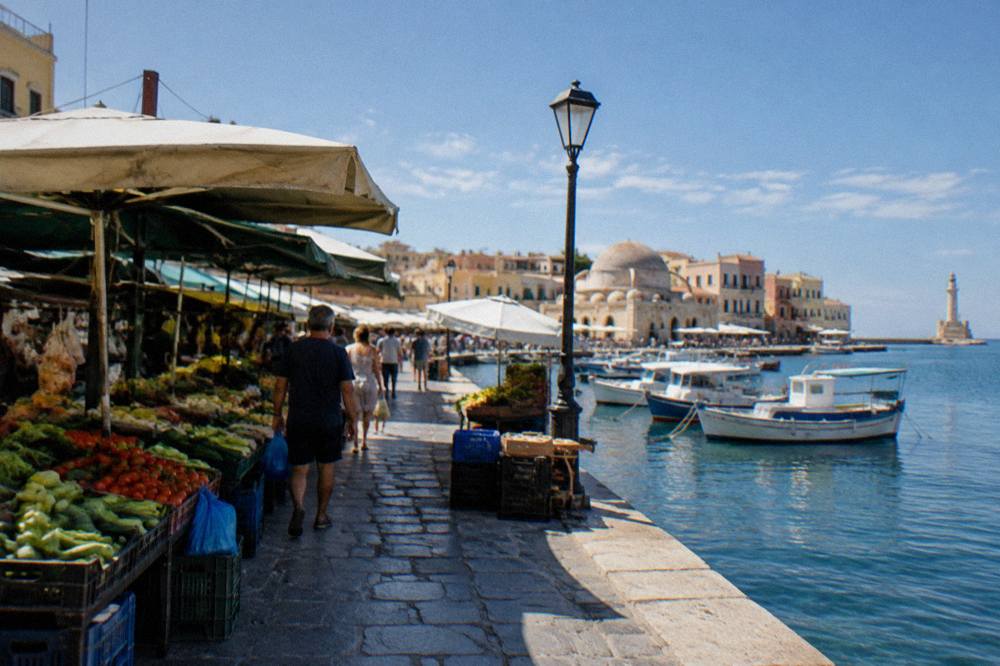
Where Does A Tasting Day Fit In The Old Town Itself?
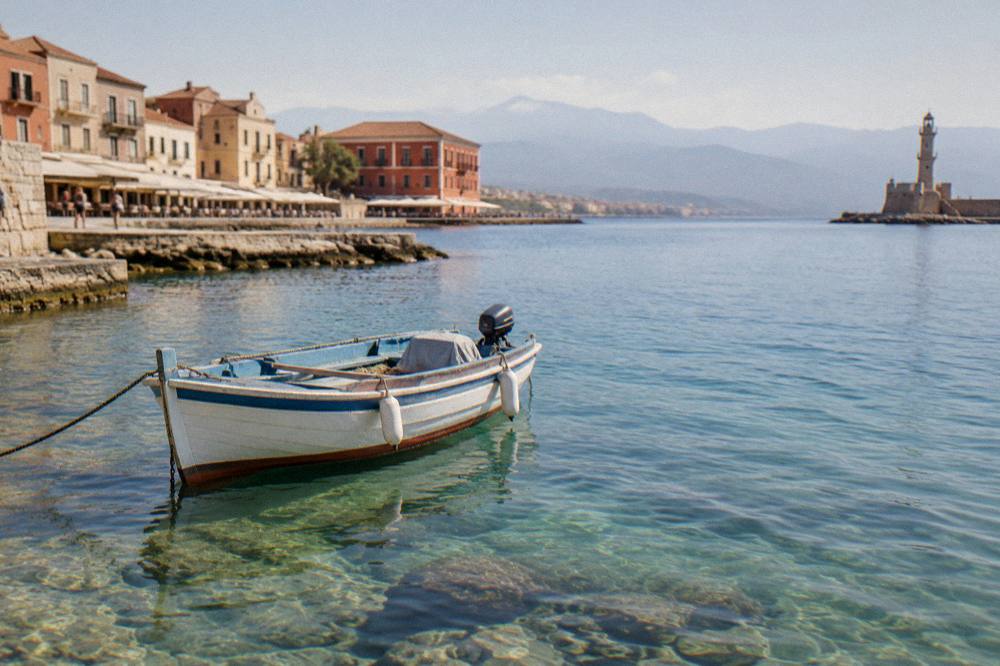
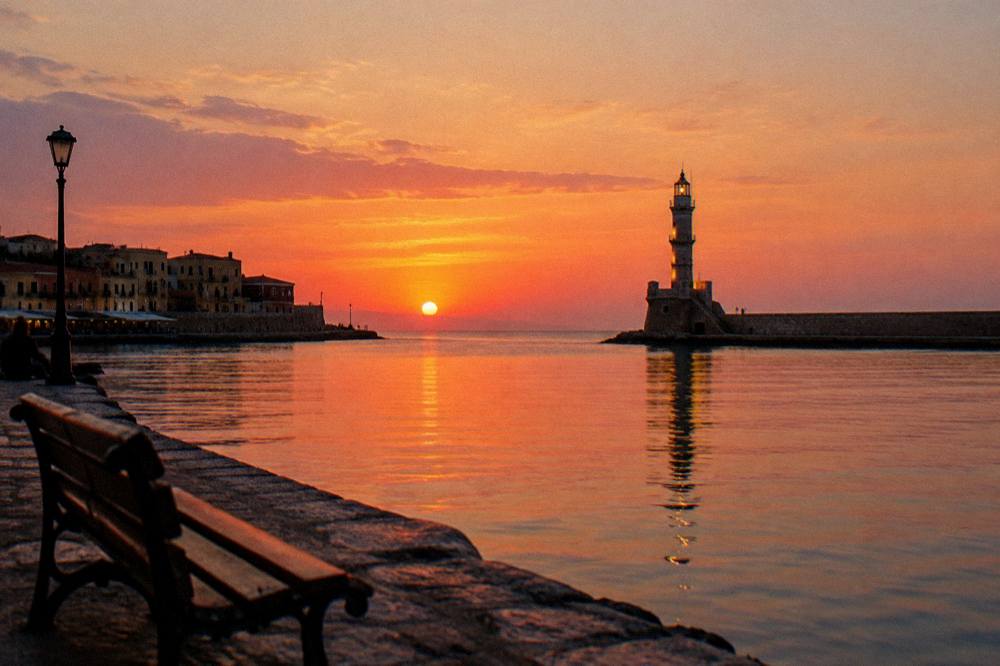
A tasting day fits the Old Town before and after the drive: the morning starts with coffee around the Venetian Harbour, whose first works date from 1320 to 1356 with a wall recorded in 1515, and the evening ends with dinner streets away from the tasting bus drop-off, so no part of the day is wasted in transit. The harbour history rewards the walk: the lighthouse on its mole was built about 1595 to 1601 and restored on its Venetian base during Egyptian rule from 1830 to 1840, and seven shipyard buildings survive of an original seventeen from the 15th to 16th century.
Two further stops round out a food-minded day in town. The Archaeological Museum of Chania at 15 Skra Street in Halepa lists a full ticket at EUR 15 with a concession at EUR 8, and its visit page carries the current opening arrangements, which should be checked before travelling out to Halepa. Firka Fortress at the harbour mouth, built in 1620, has free grounds and makes an easy sunset viewpoint before dinner.
The Old Town is compact enough that none of this competes with a tasting departure: everything above sits within a walk of the harbour, and the where to stay in Chania guide helps pick the base that keeps both the morning pickup and the evening stroll short.
| Old Town sight | Verified detail |
|---|---|
| Venetian Harbour | First built 1320 to 1356; a wall recorded in 1515 |
| Lighthouse | Built about 1595 to 1601; restored 1830 to 1840 in the Egyptian era |
| Neoria shipyards | Seven survivors of an original seventeen, 15th to 16th century |
| City walls | Second walls from 1536, on Michele Sanmicheli's design |
| Firka Fortress | Built 1620, grounds free |
| Archaeological Museum | 15 Skra Street, Halepa; EUR 15 full, EUR 8 concession |
Common Questions About Wine Tours In Chania
How long does a Chania wine tour last?
Durations vary by itinerary and are printed on each tour card on this page from verified listing data; the operator's live listing carries the exact schedule for the date you choose. Multi-stop countryside days run longer than single-cellar visits.
Can you do a wine tour from Chania without a car?
Yes. The guided tasting tours collect from central Chania, and transport between producers is included in the day. Only a self-drive itinerary needs a rental car, and then one member of the group has to abstain from tasting.
What do you taste on a Cretan wine tour?
Local wine, usually alongside olive oil, cheese and honey, because Cretan producers sell several products from the same holdings and tours reflect that. Some itineraries add a full meal, and cooking-class versions end with the meal you cooked.
When is wine harvest season in Crete?
The harvest falls in late summer and early autumn, followed by the raki distillation season. Exact dates vary each year by producer and weather, so confirm timing with the operator if fresh production matters to your visit.
Are Chania wine tours suitable if you do not drink alcohol?
The multi-product format works well, since olive oil, cheese and honey stops carry the day without wine. Check the operator's live listing for whether a non-drinking option is priced differently before booking.
Can children join a tasting tour from Chania?
Policies sit with each operator, and the live listing states them. Village and cooking-class formats tend to work better for families than cellar-focused days, since the food stops hold a child's attention longer.
A tasting day is one of the easiest things to add to a Chania trip: it needs no planning beyond a booking, it reaches the landscape the city sits beneath, and it returns you to the harbour in time for dinner. Pick the format that matches your appetite, keep an eye on the season, and let the listing carry the numbers.