Chania 2 Day Itinerary
Two days in Chania cover the Venetian Harbour, the lanes of the Old Town, a lighthouse walk, a swim stop and a table of Cretan food, with the city's airport 14 km from the centre and everything on this plan reachable on foot or by a short bus ride.
Short answer
Spend day one on the Venetian Harbour, the lighthouse, Firka Fortress and the Old Town lanes, and day two on a beach or boat morning plus Nea Chora and a food-focused evening, with one half-day kept free for a kayak or cruise from the harbour.
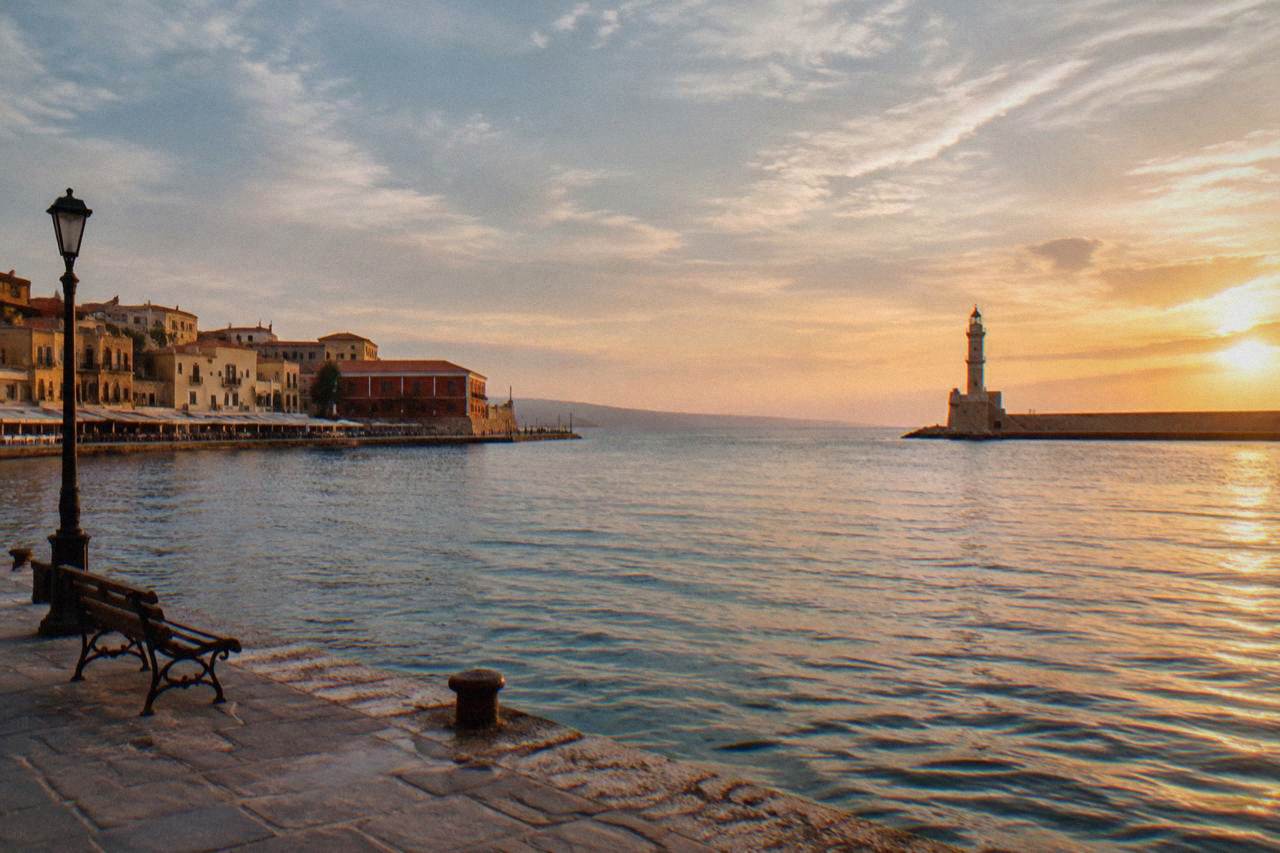
Two days is enough to see Chania, the coastal city on the north-west coast of Crete in Greece, without rushing, because the city's core is compact: the Old Town wraps around the Venetian Harbour, the Egyptian-era lighthouse stands on the mole, and the municipal beach of Nea Chora sits a short walk west of the centre. The White Mountains (Lefka Ori) close the horizon to the south, and the island day trips, Balos, Elafonisi, Samaria and Falassarna among them, radiate out from here when a longer stay allows. This itinerary keeps both days inside the city and its immediate coast, with the airport about 14 km away on the Akrotiri peninsula and the Piraeus ferry leaving from Souda port, about 7 km east of the Old Town, never from the Venetian Harbour itself.
What Can You Actually See In Chania In Two Days?
Two days cover the Venetian Harbour and its lighthouse, the lanes of the Old Town, Firka Fortress, the Neoria shipyard buildings, a swimming beach within walking range of the centre, and at least one morning on the water, because all of it sits inside a walkable city of 111,375 permanent residents whose historic core was shaped between 1320 and 1913. The Venetian Harbour itself was first built between 1320 and 1356, the lighthouse on its mole between about 1595 and 1601, and Firka Fortress in 1620, so a single harbour circuit passes eight centuries of building in under an hour of walking.
That density is the reason two days work here. A visitor based in the Old Town reaches the harbour front on foot in minutes, the lighthouse of Chania at the end of the mole in a little longer, and Nea Chora beach beyond that again, all without a vehicle. The old town guide breaks the quarters down street by street, and the Venetian Harbour page carries the full history of the port, from its beginnings between 1320 and 1356 through the dredging and wall recorded in 1515 to the seven surviving Neoria shipyards of the 15th to 16th century.
If being based in the Old Town appeals, book a hotel in Chania here.
What two days do not comfortably cover is the island's headline day trips. Balos, Elafonisi and Samaria each eat a full day, and Samaria in particular carries access caveats that change with the weather. Treat this itinerary as the city itself, and see how many days in Chania is enough if a third day is on the table.
Where Should Day One Of A Chania 2 Day Itinerary Begin?
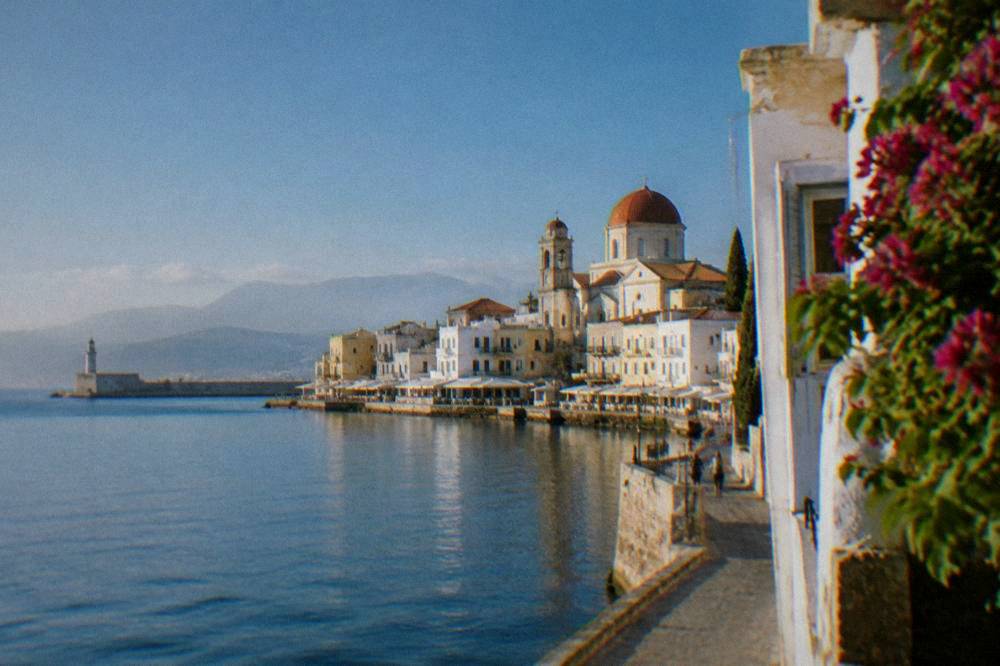
Day one belongs to the harbour and the Old Town: start at the Venetian Harbour at the eastern end near the Neoria, walk the quay past the Mosque of the Janissaries, continue onto the mole to the lighthouse, then loop back through Firka Fortress and spend the afternoon in the Splantzia and Topanas quarters, finishing with dinner inside the Old Town. The whole circuit is flat, on foot, and every stop on it is free to see from the outside, with Firka's grounds free as well.
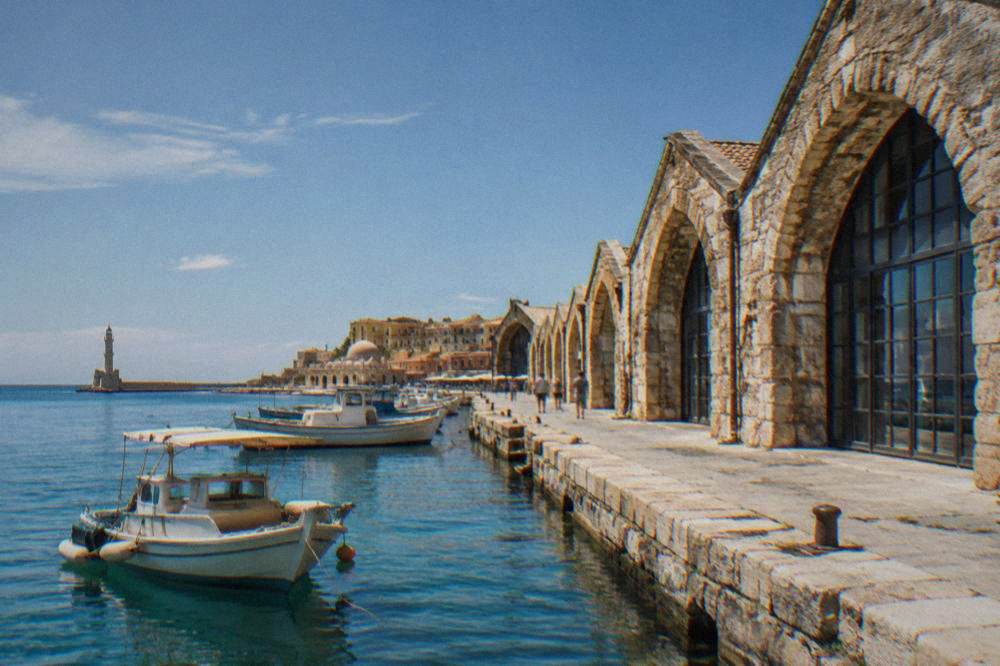
The harbour walk works best early, before the quay fills. The lighthouse stands on a Venetian base restored during the Egyptian years of 1830 to 1840, operating from 1839, and it is the single most photographed structure in the city, so the light is better and the mole quieter in the first hours of the morning. Firka Fortress, built by the Venetians in 1620 at the harbour's western entry, holds the Maritime Museum of Crete inside its walls, and the museum sets its own hours and prices, so check its own page before committing the afternoon. The desk's Firka Fortress page covers what the grounds hold.
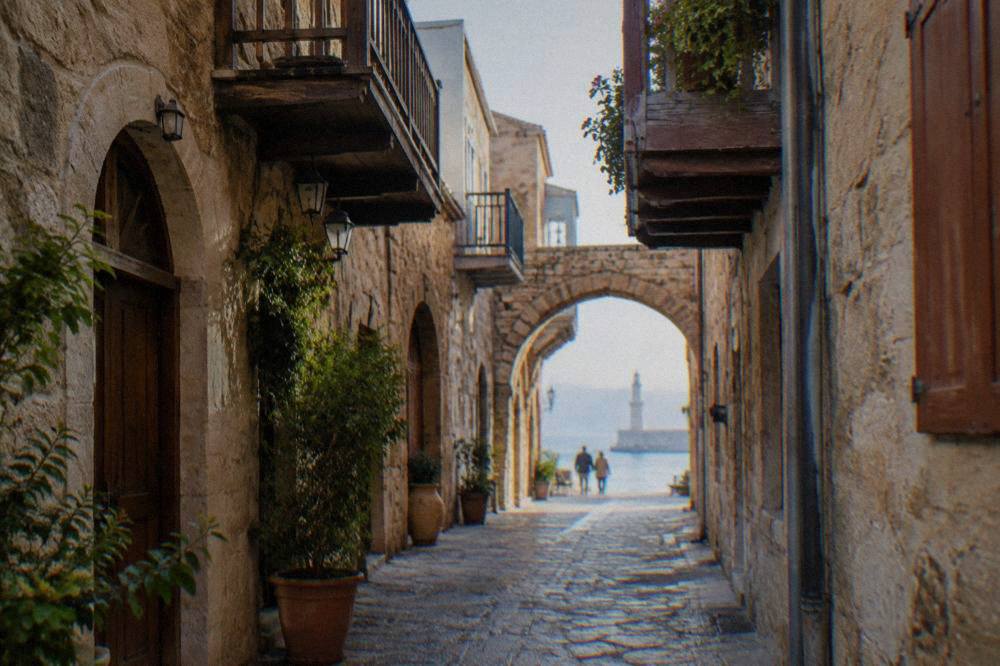
The afternoon splits naturally between the two Old Town quarters. Topanas, west of the harbour, carries the Orthodox cathedral and the quieter lanes; Splantzia, east, holds the Janissaries' mosque and a square that fills each evening. A structured walk ties the two together: the Old Town highlights guided tour with street food moves through the quarters with tastings along the way, and a shorter option, the mythological scavenger hunt walk, turns the same lanes into a puzzle route for families. Both are city products, not day trips, so they fit day one without breaking the walking plan.
What Should Day Two In Chania Look Like?
Day two goes to the water: a morning boat trip, swim stop or kayak session from the harbour or the nearest beaches, an afternoon at Nea Chora or a short bus ride west, and an evening food walk, because the second day is when the coast, not the architecture, takes over, and every option on it departs from or sits beside the city itself. The sea here is the Cretan Sea, the north coast faces it, and the harbour's excursion boats leave from the Venetian Harbour quay.
The boat options are broad. A short Lazaretta island trip with a swim stop leaves from the town, a traditional boat runs to Agioi Theodoroi and Lazaretta, and a sunset cruise with a guide closes the day from the water. For a fuller day, the sea kayaking trip in Sfakia, on the south coast, is the site's featured tour for this itinerary: it is a full-day product, so booking it pulls day two out of the city entirely, and its Check availability link sits beside the desk's Sfakia and Loutro guide for readers who want the coast it paddles. The chania boat trips page compares every option on one list.
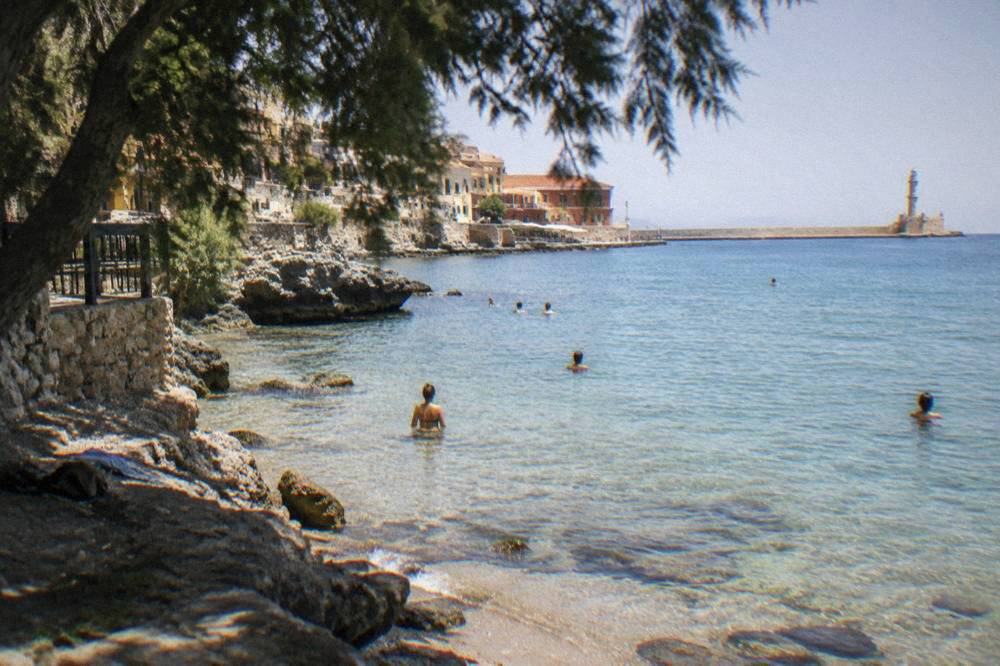
If day two stays local, the beach plan is simple. Nea Chora, the municipal beach west of the centre, is walkable from the Old Town and lined with fish tavernas behind the sand; the desk's Nea Chora beach page covers it. Agia Marina and Platanias sit west along the bus route, with the Agia Marina and Platanias guide holding the detail. Seitan Limania, the cove on the Akrotiri peninsula, is dramatic but demands a steep descent, and the Seitan Limania page is honest about the path. The beaches near Chania Old Town roundup ranks all of them by reachability.
How Much Time Do The Harbour Sights Need?
The full harbour circuit, Neoria to lighthouse to Firka, takes a relaxed half day on foot, with the mole walk to the lighthouse and back the longest single stretch, Firka Fortress needing an hour for its grounds, and the Maritime Museum inside it needing whatever its own posted hours allow, while the Archaeological Museum in Halepa is a separate visit at 15 Skra Street with a full ticket of EUR 15 and a concession of EUR 8. Nothing on the harbour circuit needs a vehicle, and only the Archaeological Museum pulls a visitor out of the core.
The museum numbers are the desk's contribution to planning: the Archaeological Museum's own visit page lists the EUR 15 full and EUR 8 concession tickets, and its hours should be confirmed on that page before a visit. The dated harbour sights, by contrast, need no ticket at all. This table holds every dated structure a two day walk passes:
| Sight | Built or dated | What a visitor sees |
|---|---|---|
| Venetian Harbour | 1320 to 1356, works and a wall recorded 1515 | The quay, the mole, the basin the whole city faces |
| Lighthouse (Faros) | About 1595 to 1601, restored 1830 to 1840, operating 1839 | The tower on the mole end, on its Venetian base |
| First city walls | 1336 to about 1356 | Fragments folded into later building |
| Second city walls | From 1536, to Michele Sanmicheli's design | The western rampart line above the harbour |
| Neoria shipyards | 15th to 16th century | Seven survivors of an original seventeen |
| Firka Fortress | 1620 | Free grounds at the harbour's west entry |
| Ottoman rule | From the 1645 conquest of Chania | The mosque on the eastern quay, the Splantzia quarter |
| Union with Greece | 1913 | The era the waterfront's later buildings belong to |
A morning spent on this circuit leaves the afternoon free. The Venetian Harbour and Maritime Museum of Crete pages carry the detail for each stop, and the rainy day itinerary is the fallback if the weather turns, since the HNMS Chania Souda station table shows rain days climb to 9.3 in October.
When Is The Best Season For A Two Day Chania Plan?
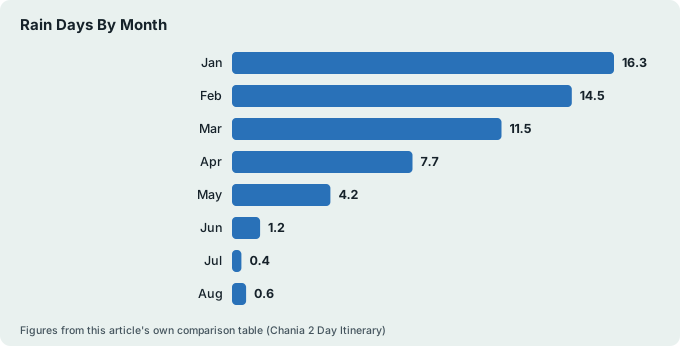
The HNMS Chania Souda station table, covering 1958 to 2010, shows May to September as the dry window, with July rain at 1.0 mm and mean temperatures from 20.2 C in May to 26.7 C in July, while January, at 129.5 mm of rain over 16.3 rain days, is the wettest month in that table and October, at 67.7 mm, is when rain starts to matter again. A two day walking itinerary is a fair-weather plan, so the table, not instinct, should pick the dates.
| Month | Mean C | Mean max C | Rain mm | Rain days |
|---|---|---|---|---|
| Jan | 11.0 | 14.4 | 129.5 | 16.3 |
| Feb | 11.0 | 14.7 | 104.0 | 14.5 |
| Mar | 12.7 | 16.6 | 76.0 | 11.5 |
| Apr | 15.9 | 20.0 | 31.5 | 7.7 |
| May | 20.2 | 24.5 | 13.5 | 4.2 |
| Jun | 24.7 | 28.9 | 3.4 | 1.2 |
| Jul | 26.7 | 30.7 | 1.0 | 0.4 |
| Aug | 26.3 | 30.4 | 1.4 | 0.6 |
| Sep | 23.2 | 27.4 | 15.4 | 3.2 |
| Oct | 19.4 | 23.5 | 67.7 | 9.3 |
| Nov | 15.8 | 19.6 | 77.0 | 11.2 |
| Dec | 12.7 | 16.2 | 101.9 | 16.1 |
These are station records for the period 1958 to 2010 from the Chania Souda station, 148 m inland of Souda Bay, and the Hellenic National Meteorological Service publishes no newer table for the site, so they are labelled as what they are. July and August carry mean maxima of 30.7 C and 30.4 C and a prevailing north-west wind, the general summer pattern on the Aegean. May, June and September combine warm means with rain days of 4.2, 1.2 and 3.2, which is why the desk's best time to visit Chania guide leans on the shoulder months for a walking-heavy two day plan. Sunshine runs about 2,600 hours a year at this station.
Two day trips carry season caveats worth knowing even on a city itinerary. The Balos boats from Kissamos run daily departures to 31 October 2026 on the operator's own schedule, and Samaria Gorge, normally open 1 May to 31 October, is closed or delayed when storms damage the path, so its status must be checked on the NECCA portal before any gorge plan is made.
What And Where Should You Eat Across Two Days In Chania?
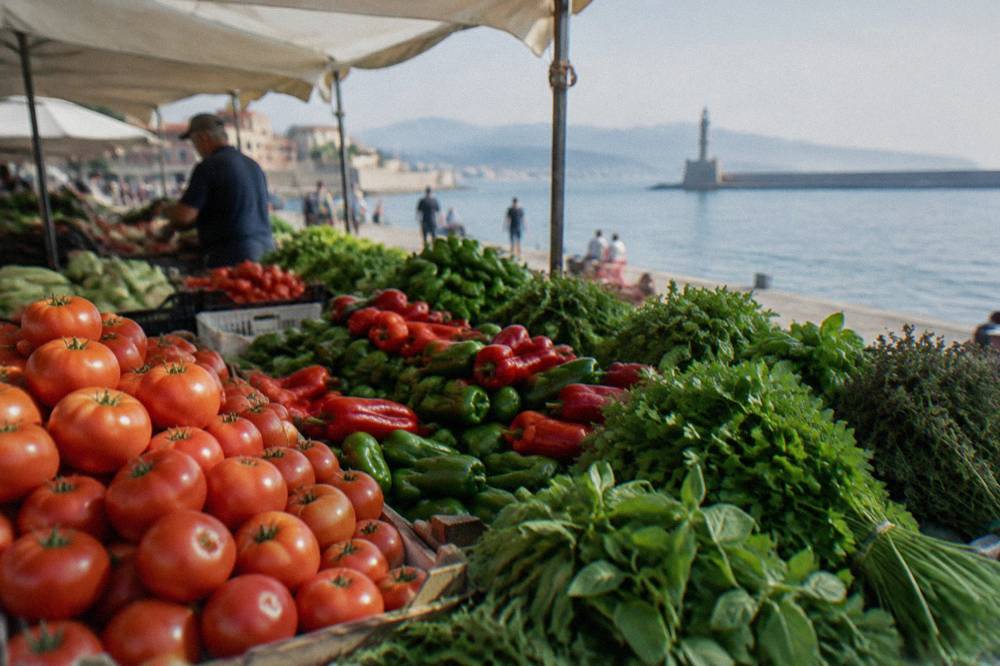
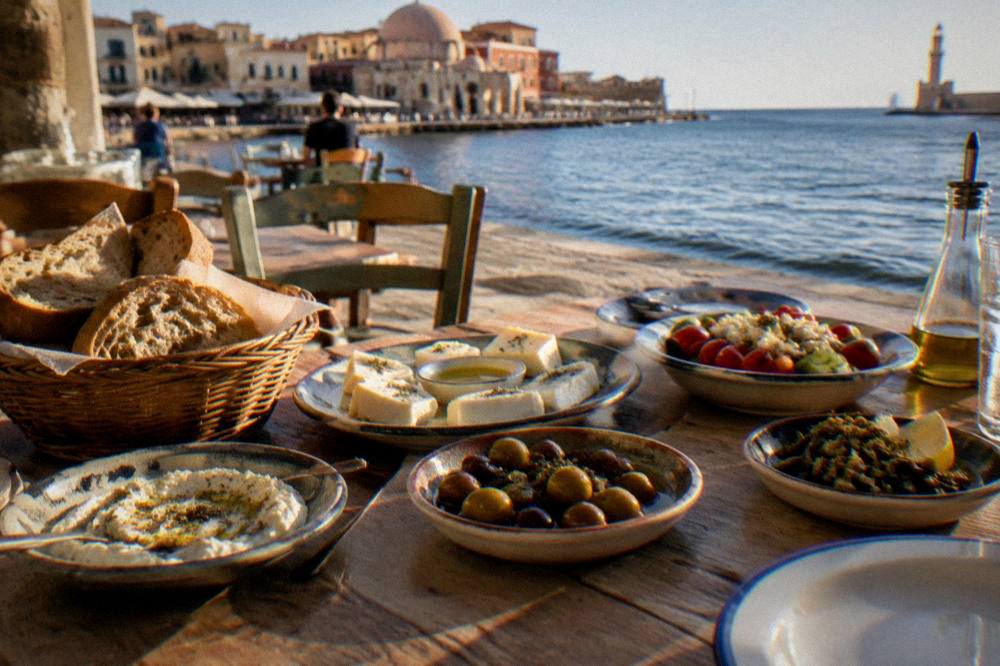
Two days of eating in Chania run from a bakery breakfast of bougatsa, through a harbour-side or Splantzia lunch, to a fish taverna at Nea Chora in the evening, with the Cretan staples of olive oil, cheese, honey and raki appearing at every table, and a guided tasting walk stitching the stops together for anyone who wants the food explained rather than merely eaten. The market hall anchors the shopping side, and its own guide covers what the stalls hold; the market day question is answered on its own page.
The desk's food pages do the heavy lifting here: Cretan food in Chania, the restaurants roundup, the bougatsa guide and the where locals eat answer. For a two day visit the practical split is this:
| Meal | Where | What to look for |
|---|---|---|
| Day one breakfast | Old Town bakery | Bougatsa, warm, cut to portion |
| Day one lunch | Splantzia quarter | Small plates, the square's tables |
| Day one dinner | Old Town taverna | Cretan cheese, mountain greens, raki to close |
| Day two breakfast | Harbour café | Coffee facing the mole |
| Day two lunch | Nea Chora fish taverna | The day's catch, posted or asked for |
| Day two dinner | Food walk or market-adjacent table | Whatever the walk serves |
A tasting structure saves decision fatigue. The four-product Cretan tasting tour covers olive oil, wine, cheese and honey in one outing, and the sightseeing and tastings combo folds the walking and the eating into a single afternoon in the centre. Prices and ratings for both render on their own pages, never in this prose. The desk's cooking classes guide is the option for anyone who wants to take the recipes home instead.
How Do You Get Around Chania In Two Days?
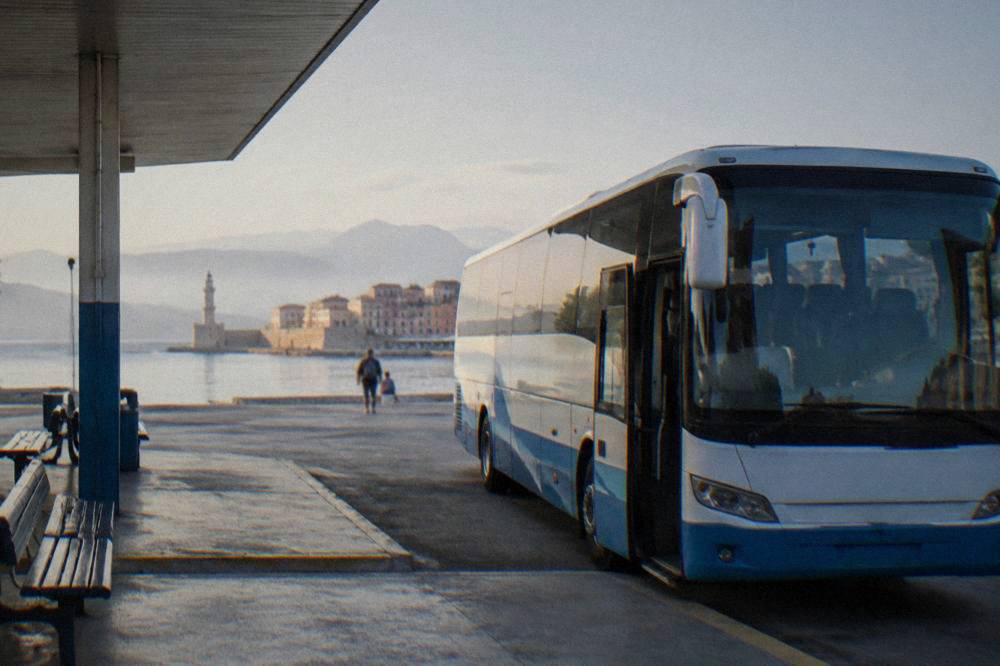
On foot for everything inside the Old Town and harbour, and by KTEL bus for the beaches and villages to the west, with the long-distance bus station on Kydonias street running routes to Kissamos, Paleochora and the other towns, the airport about 14 km out on the Akrotiri peninsula, and the Piraeus ferry leaving from Souda port about 7 km east of the Old Town on an overnight Blue Star Ferries crossing of about 9 h 15 min. No part of this two day itinerary needs a car.
The transport facts that matter, all from the operators' own pages:
| Journey | What the sources say |
|---|---|
| Airport to centre | About 14 km; bus and taxi information on the airport's own site |
| KTEL station | Kydonias street; routes to Heraklion, Rethymno, Kissamos, Paleochora, Omalos, Elafonisi in summer |
| Souda to Piraeus ferry | Blue Star Ferries, overnight, departs about 21:30, crossing about 9 h 15 min |
| Venetian Harbour | Excursion boats only, never the Piraeus ferry |
| Railway | None exists on Crete |
The desk's getting around Chania, KTEL buses, airport and airport to town pages hold the detail, and fares are confirmed at the ticket point, never printed here. For a two day visit a hire car is a liability in the centre: the parking guide explains why, and the driving in Crete page is for the third day onward. If the ferry or a flight closes the trip, the Piraeus to Chania ferry and flights to Chania pages cover the ends of the journey.
What Should You Know Before You Go To Chania?
Greece uses the euro, has been in the euro area since 1 January 2001, and is a Schengen member with internal checks abolished since 26 March 2000, while the Entry Exit System is fully deployed across Schengen since 10 April 2026 and ETIAS is not in operation, and the climate crisis resilience fee is collected by accommodation per room per night with seasonal rates, so the amount is confirmed at booking. None of that changes a two day plan, but all of it changes the paperwork and the bill.
The fee point deserves its own sentence because it appears on hotel invoices without explanation: accommodation collects it per room or apartment per night at seasonal rates, and the exact amount is confirmed at booking rather than assumed. Arrival logistics run through the airport 14 km out or the overnight ferry into Souda, and the desk's is Chania safe and is Chania expensive pages answer the two questions that most often follow.
Should You Add A Third Day To Your Chania Itinerary?
A third day opens the island day trips that two days exclude, with Balos and Gramvousa by boat from Kissamos, Elafonisi's protected Natura 2000 beach, Samaria or Imbros gorge walks subject to the access caveats, and Rethymno or Knossos by KTEL bus, so the honest answer is yes if any of those is the reason for the trip, and no if the harbour, the lanes and the water inside the city were the goal. Two days spent well beat three spent in transit.
The extensions, in order of pull:
| Third-day option | What the desk's page holds | Caveat to check first |
|---|---|---|
| Balos and Gramvousa | /day-trips/balos-lagoon-and-gramvousa/ | Boats from Kissamos; a EUR 1 municipal fee on the ticket for over-13s |
| Elafonisi | /day-trips/elafonisi-beach/ | Natura 2000 area; entry free; taking sand, shells or plants prohibited |
| Samaria Gorge | /day-trips/samaria-gorge/ | EUR 10 ticket via the NECCA portal; storm closures possible, check status |
| Rethymno | /day-trips/rethymno/ | KTEL bus from Kydonias street |
| Knossos and Heraklion | /day-trips/heraklion-and-knossos/ | A long day out; bus routes run direct |
The Chania three days and Chania five days itineraries build those days in properly, the one day plan is the compressed version of this page, and a week in west Crete is the full island answer. Families should read the Chania with kids plan, cruise passengers the cruise port day one, and anyone facing rain the rainy day itinerary. The desk's own Chania Crete Travel Guide root page and the best tours from Chania roundup stand behind all of it.
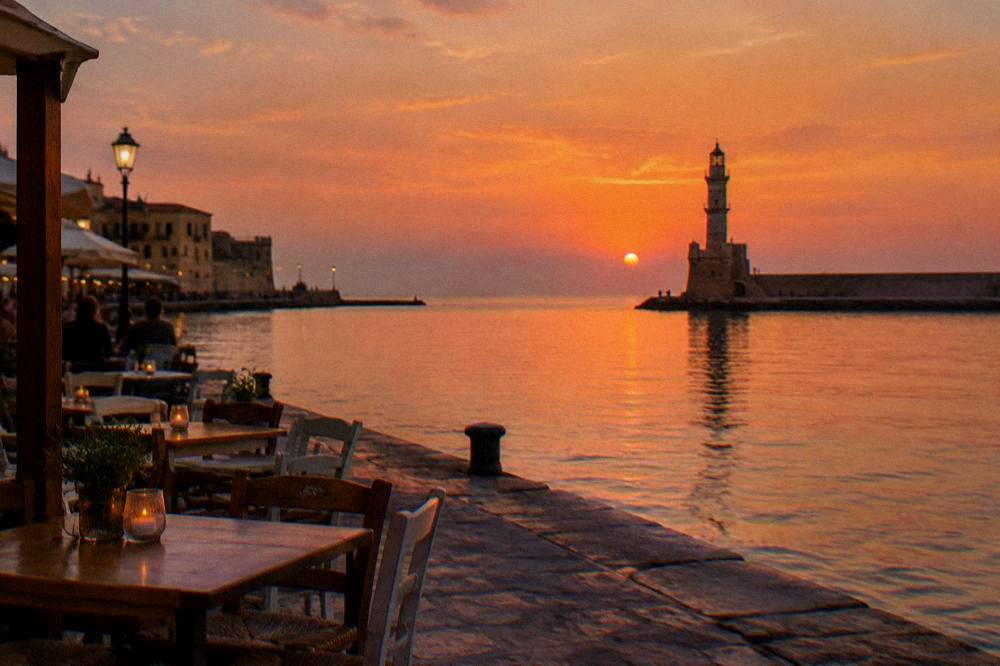
Two days in Chania, walked this way, leave a visitor with the harbour at dawn, the lighthouse underfoot, sand or salt water from at least one swim stop, and a table that explained itself. The city holds that much inside a walkable core, and everything beyond it is a decision for day three.
Common Questions About A Chania 2 Day Itinerary
Is two days enough for Chania?
Two days cover the Venetian Harbour, the lighthouse, Firka Fortress, the Old Town quarters, a beach or boat morning and the food scene, all on foot or a short bus ride. The island day trips such as Balos, Elafonisi and Samaria each need a day of their own, so add a third day for any of them.
Can you walk everywhere in Chania in two days?
The Old Town, the harbour, the lighthouse mole, Firka and Nea Chora beach are all walkable from a central base. The airport is about 14 km out and the Piraeus ferry leaves from Souda port about 7 km east of the Old Town, so those arrivals and departures need a bus or taxi.
What is the best month for a two day Chania itinerary?
The HNMS Chania Souda station table for 1958 to 2010 shows May to September as the dry window, with July rain at 1.0 mm and means from 20.2 C to 26.7 C. October, at 67.7 mm of rain over 9.3 rain days, is when rain starts to matter, and January, at 129.5 mm, is the wettest month in that table.
Do I need a car for two days in Chania?
No. This itinerary is entirely walkable, and the beaches west of the centre sit on KTEL bus routes from the Kydonias street station. A car only pays off from day three, when the gorge and island day trips begin, and the parking situation in the centre argues against one before that.
Can you do a day trip from Chania inside a two day visit?
You can, but it costs the city a full day. Balos, Elafonisi, Samaria and Knossos each consume a whole outing, and Samaria in particular must have its status checked on the NECCA portal before any plan, since storms close or delay the gorge outside the normal 1 May to 31 October season.