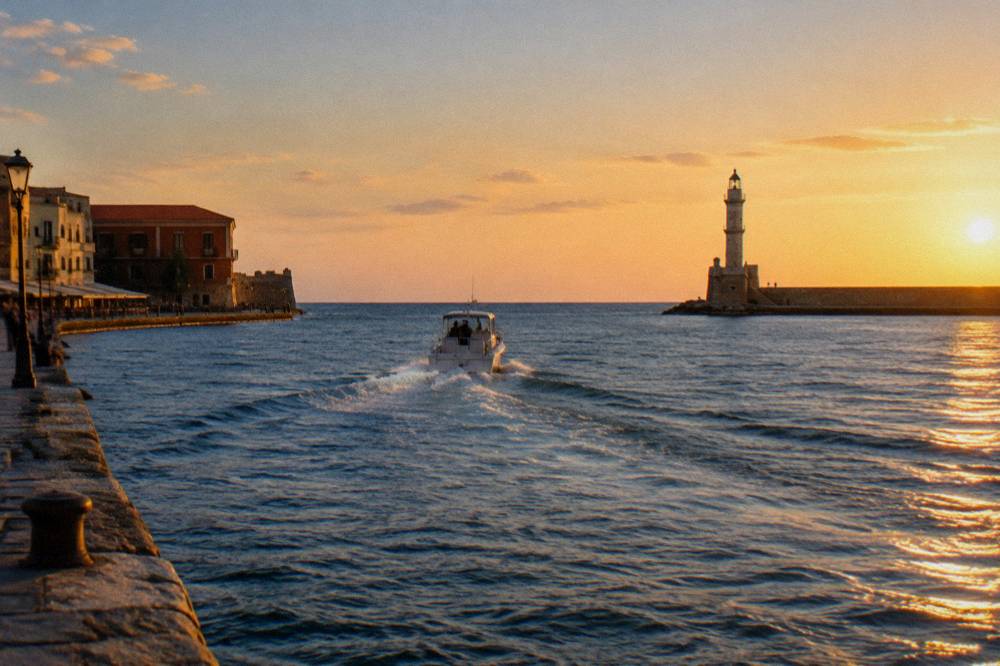
Chania Weather
Chania, on the north-west coast of Crete, has a Mediterranean climate with dry summers and mild, wetter winters. This guide sets out the official station figures month by month and explains what each season means for a visit.
Short answer
Chania averages 11.0 C in January and 26.7 C in July, with 622.3 mm of rain a year, almost all of it falling between October and March, according to the HNMS Chania Souda station records for 1958 to 2010.
Chania, a coastal city on the north-west coast of Crete in Greece, sits on the Cretan Sea with the White Mountains rising to the south, and that geography does more to shape its weather than any distance to the mainland. The only official numbers this guide reports are the HNMS Chania Souda station records for 1958 to 2010, the table the Hellenic National Meteorological Service publishes, and every figure below is labelled with that source. The short version: a genuinely dry summer, a mild but wet winter, and a spring and autumn that sit somewhere between the two.
What Is The Weather Like In Chania Throughout The Year?
Chania has a Mediterranean climate with a hot, almost rain-free summer and a mild, wet winter: the HNMS Chania Souda station records for 1958 to 2010 give a January mean of 11.0 C and a July mean of 26.7 C, with 622.3 mm of rain across the year and July contributing just 1.0 mm of it. The station itself sits at 148 m, inland of Souda Bay, so its readings describe the city and its immediate plain rather than a beach or a mountaintop.
The pattern that matters for planning is how concentrated the rain is. October still averages 19.4 C as a mean, yet its rainfall jumps to 67.7 mm from 15.4 mm in September, and from there the monthly totals climb back over 100 mm by December. May to September, by contrast, is a dry stretch in which June, July and August together record less than 6 mm.
| Month | Mean C | Mean Max C | Mean Min C | Rain mm | Rain Days |
|---|---|---|---|---|---|
| Jan | 11.0 | 14.4 | 7.9 | 129.5 | 16.3 |
| Feb | 11.0 | 14.7 | 7.8 | 104.0 | 14.5 |
| Mar | 12.7 | 16.6 | 9.0 | 76.0 | 11.5 |
| Apr | 15.9 | 20.0 | 11.4 | 31.5 | 7.7 |
| May | 20.2 | 24.5 | 15.0 | 13.5 | 4.2 |
| Jun | 24.7 | 28.9 | 19.0 | 3.4 | 1.2 |
| Jul | 26.7 | 30.7 | 21.2 | 1.0 | 0.4 |
| Aug | 26.3 | 30.4 | 21.2 | 1.4 | 0.6 |
| Sep | 23.2 | 27.4 | 18.7 | 15.4 | 3.2 |
| Oct | 19.4 | 23.5 | 15.7 | 67.7 | 9.3 |
| Nov | 15.8 | 19.6 | 12.4 | 77.0 | 11.2 |
| Dec | 12.7 | 16.2 | 9.7 | 101.9 | 16.1 |
Two readings of that table are worth pausing on. First, the rain-day column: January averages 16.3 days with rain and December 16.1, which is what a wet Cretan winter actually feels like, interrupted spells rather than one grey week. Second, the mean minimum never drops below 7.8 C in any month, which is why unheated rooms feel cold in January even while daytime readings look gentle.
The table also explains why the same week of the year can feel like two different cities depending on the hour. A late-April day opens at an 11.4 C mean minimum, climbs to a 20.0 C mean maximum by early afternoon, and falls back after sunset, so a jacket that sits in a bag all day is the one that makes the evening walk along the harbour comfortable. Anyone comparing Chania with the Greek islands further north, or with Athens, should note that the station sits inland of Souda Bay at 148 m rather than right on the water, and coastal strips a few kilometres away can read a degree or two differently from the same air mass.
What Is The Best Month To Visit Chania For Good Weather?
May, June and September are the months where the official numbers and practical comfort line up: May averages 20.2 C with 13.5 mm of rain, June 24.7 C with 3.4 mm, and September 23.2 C with 15.4 mm, each with far fewer rain days than winter while staying below the July and August means. The trade-offs are straightforward, and the table above lets you weigh them yourself rather than take a season label on trust.
May is the month for anyone who wants green island scenery, since the winter's 622.3 mm of rain has just finished feeding it and the summer heat has not yet dried the hills. September is the month for warm sea swimming after four months of summer, with mean maxima still at 27.4 C and only 3.2 rain days on average. June is the driest comfortable shoulder month in the table before the peak of July and August.
| Month | Mean C | Rain mm | Rain Days | What The Numbers Suggest |
|---|---|---|---|---|
| May | 20.2 | 13.5 | 4.2 | Warm days, green landscape, cool evenings at 15.0 C mean minimum |
| Jun | 24.7 | 3.4 | 1.2 | Dry and warm, sea warming through the month |
| Sep | 23.2 | 15.4 | 3.2 | Summer warmth with the first chance of a shower |
| Oct | 19.4 | 67.7 | 9.3 | Mild but the wet season starts in earnest |
For a fuller weighing of crowds, water temperature and month-by-month trade-offs, the site's best time to visit Chania guide builds on these same station figures, and the how many days in Chania planner helps once the month is fixed.
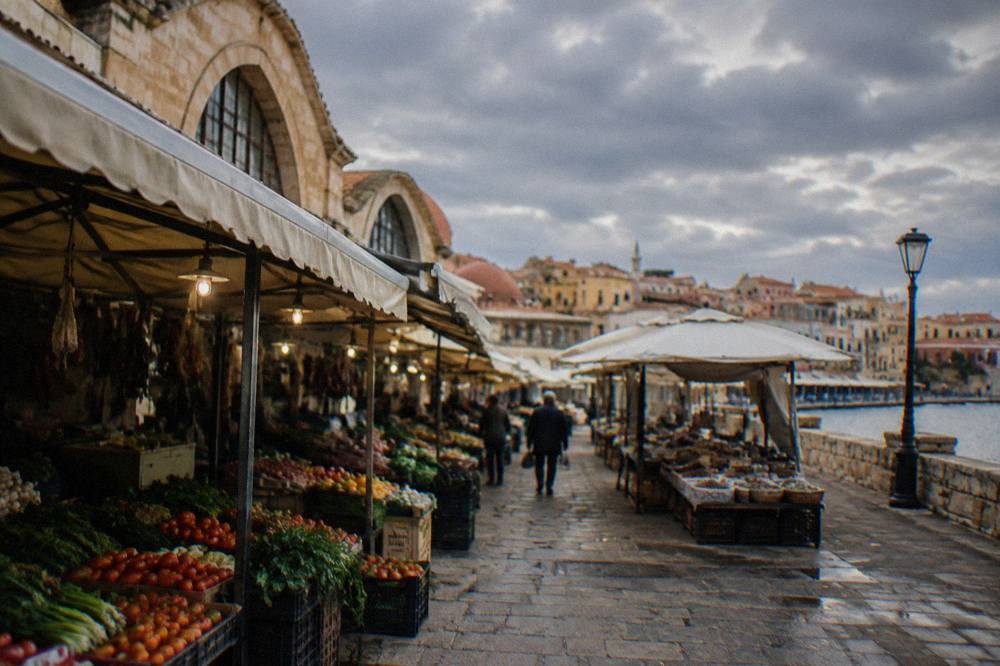
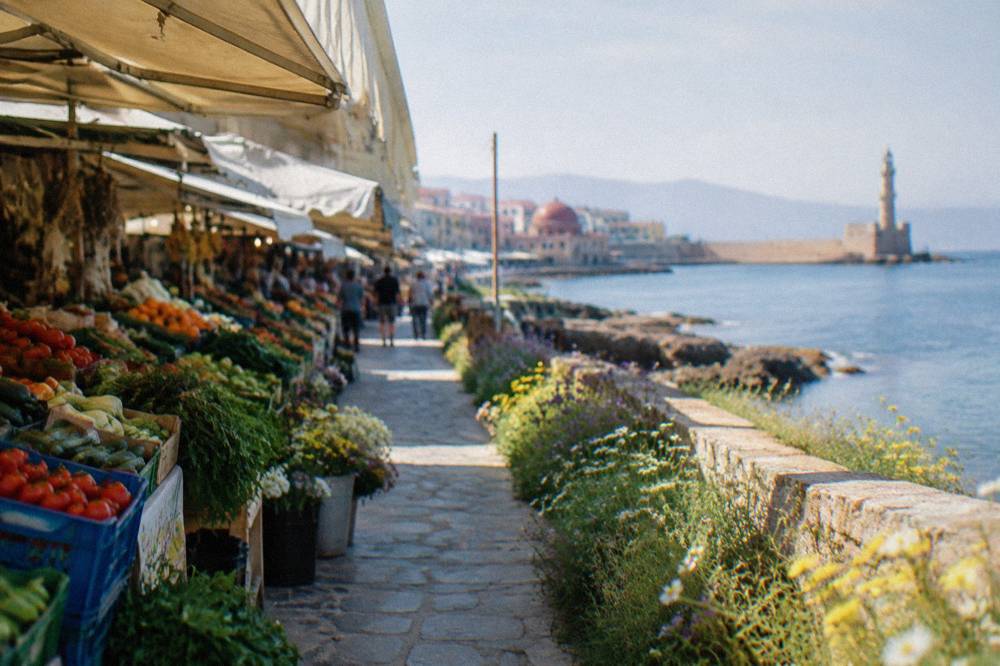
The food side of the city barely notices the weather. A walking food tasting tour in the town of Chania runs through the covered Municipal Market building and the Old Town lanes, so a shower in April or October interrupts it far less than it would a beach day, and the Old Town walks overview covers what else stays open under cloud.
How Hot Does Chania Get In Summer?
July and August are the warmest months in the official record, with July means of 26.7 C and mean maxima of 30.7 C, August means of 26.3 C and mean maxima of 30.4 C, and mean minima of 21.2 C in both months, all from the HNMS Chania Souda station records 1958 to 2010. Night is the part visitors underestimate: a 21.2 C mean minimum means rooms without air conditioning stay warm well past midnight.
The humidity column of the same table runs at 50 percent in July, the yearly low, which keeps the heat of a 30.7 C afternoon drier-feeling than the same reading in a humid climate. The prevailing wind turns north-westerly in July and August, and that wind, not shade, is what makes the harbour front bearable in the early afternoon.
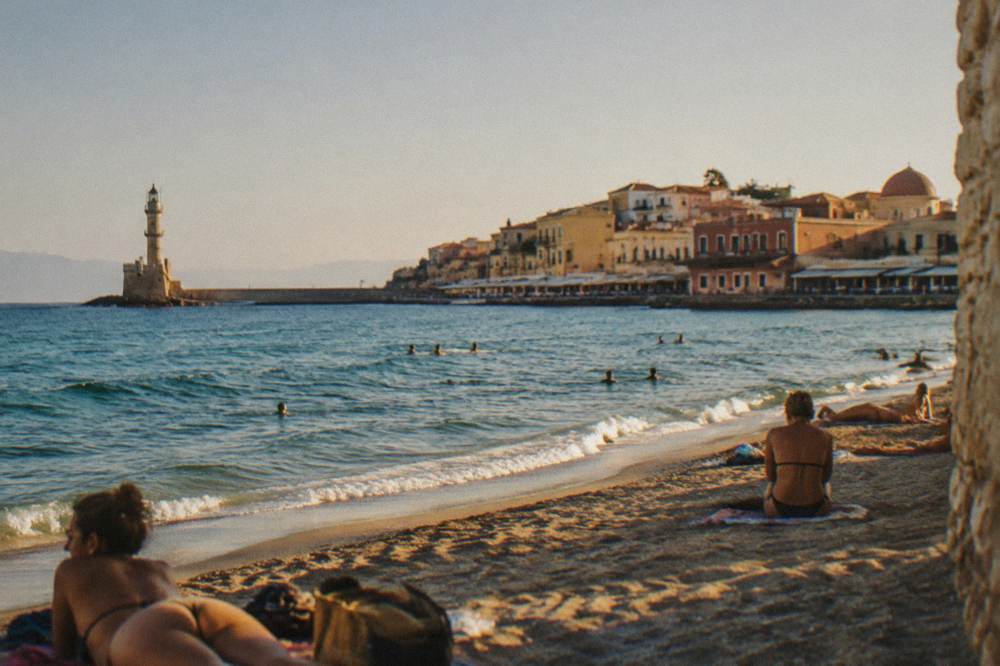
A summer day splits naturally into three blocks, and planning around them costs nothing. Mornings from opening to about 12:00 are for anything physical, a walk, a paddle, a market run. The middle of the day belongs to shade, swimming and long lunches. Evenings start late by northern European habit, and the sunset cruise schedules from the Old Port are built around exactly that rhythm.
Two further points about the summer table deserve attention. The rain-day figures for June, July and August, at 1.2, 0.4 and 0.6 respectively, describe a season in which a rain plan is genuinely unnecessary, so an umbrella packed for a July week is bag weight and nothing more. And the small gap between the July and August means, 26.7 C against 26.3 C, tells you there is no cooler August escape inside the peak: the relief comes from the sea, the wind and the altitude of the White Mountains to the south, not from waiting out a fortnight.
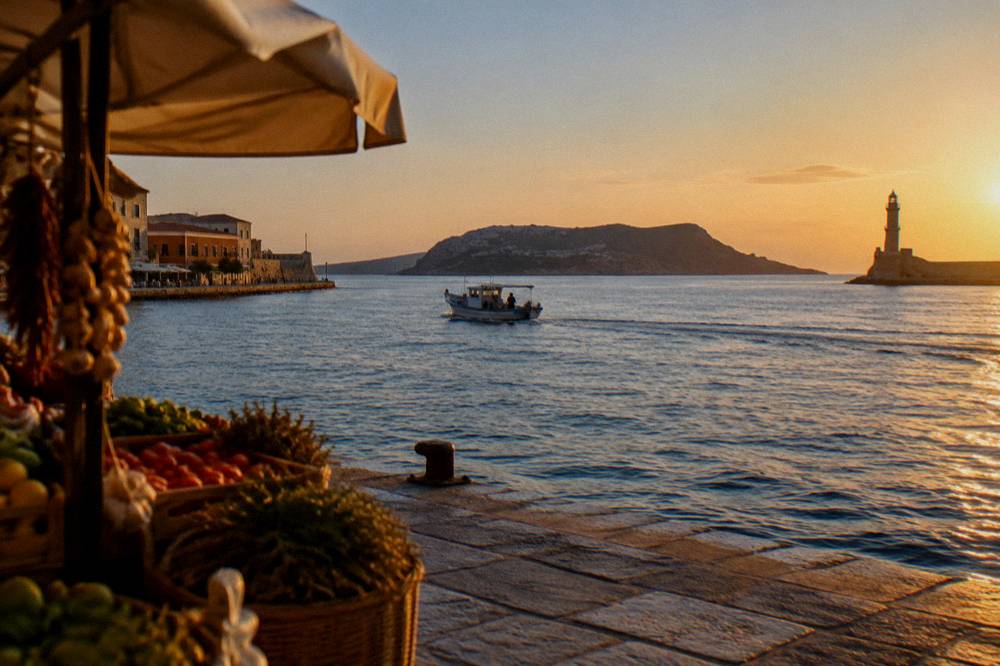
Does It Ever Get Cold In Chania?
Winter in Chania is mild on paper and damp in practice: January, the coldest month in the HNMS Chania Souda records for 1958 to 2010, has a mean of 11.0 C with a mean maximum of 14.4 C and a mean minimum of 7.9 C, and February is close behind at 11.0 C mean with a 7.8 C mean minimum. Freezing weather is not part of the station table, but neither is central heating in many older buildings.
That 7.9 C mean minimum explains the practical reality of a January visit better than the daytime figure does. Stone-built rooms in the Old Town hold the cold, humidity reaches its yearly high of 73 percent, and 16.3 rain days mean the damp has plenty of chances to settle in. Daytime, by contrast, is often pleasant for walking, and the museums fill that role well: the Archaeological Museum of Chania lists a full ticket at EUR 15 and a concession at EUR 8 on its visit page, where current hours should also be checked.
For what stays rewarding in the cooler months, the site's Chania in winter coverage and the rainy day guide are built exactly for the 16-rain-day months.
How Much Rain Does Chania Get, And When?
The HNMS Chania Souda station records for 1958 to 2010 put annual rainfall at 622.3 mm, with January the wettest month at 129.5 mm and December next at 101.9 mm, while July records 1.0 mm, August 1.4 mm and June 3.4 mm, so the year splits into a wet October-to-March half and an almost dry May-to-September stretch. October is the pivot month: 67.7 mm, more than four times September's total.
| Month | Rain mm | Rain Days | Character In The Record |
|---|---|---|---|
| Dec | 101.9 | 16.1 | Core wet season, over 100 mm |
| Jan | 129.5 | 16.3 | The yearly peak in both columns |
| Feb | 104.0 | 14.5 | Still over 100 mm, slightly fewer rain days |
| Mar | 76.0 | 11.5 | Falling fast, landscape at its greenest |
| Apr | 31.5 | 7.7 | Under half of March, spring settling in |
| May to Sep | 1.0 to 15.4 | 0.4 to 4.2 | The dry stretch, July close to zero |
| Oct | 67.7 | 9.3 | The wet season restarting, still mild at a 19.4 C mean |
| Nov | 77.0 | 11.2 | Fully into the wet half of the year |
Rain in Crete arrives in spells rather than drizzle. A January rain day can deliver a heavy shower in the morning and a clear afternoon, which is why the rain-day count and the millimetre count both matter: 16.3 days and 129.5 mm together describe frequent interruption, not constant gloom.
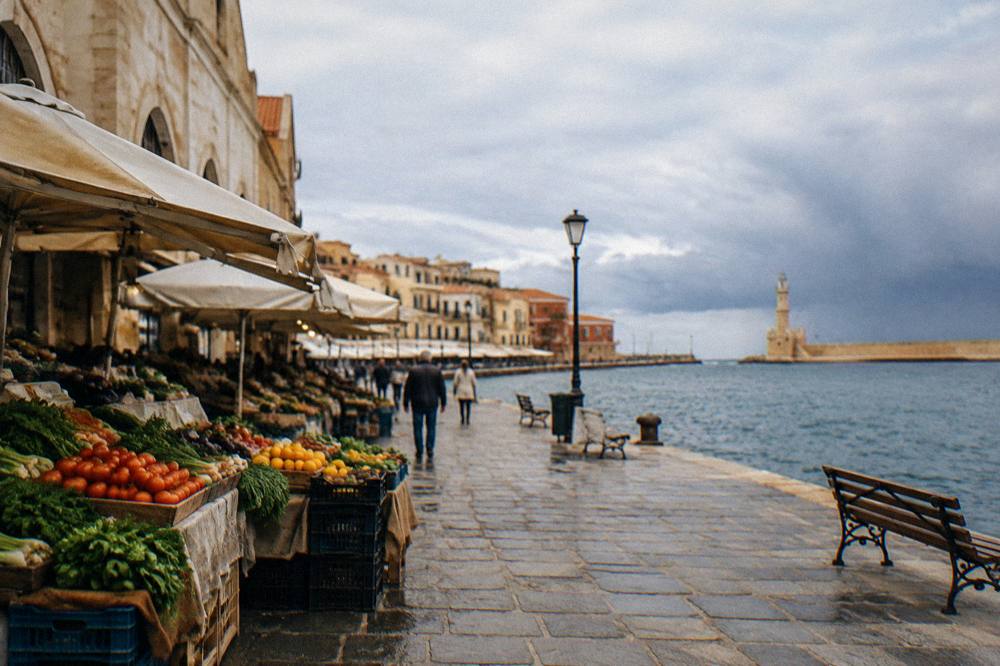
The March and April figures deserve a second look from anyone put off by the winter column. March still carries 76.0 mm across 11.5 rain days, but April drops to 31.5 mm across 7.7, and by May the table shows 13.5 mm across 4.2. That two-month slide from winter into the dry season is the steepest change in the whole record, and it is why April landscapes look so different from July ones even though the mean temperature gap between those months is only about 11 C.
What Is The Wind Like In Chania?
The prevailing wind at the HNMS Chania Souda station is westerly across the year and north-westerly in July and August, with the summer months the period when wind most affects boat schedules, sea conditions on north-facing beaches and how hot a 30.7 C mean maximum afternoon feels in the shade. The station table publishes no wind speeds, so no speed figure appears here.
What the wind direction does explain is geography. A north-westerly summer wind blows onshore onto the beaches north of the city, freshening the air and roughening the water on exposed stretches, while the south coast beyond the White Mountains sits in a different wind regime altogether. That is one reason a south coast day, a boat to Loutro or a swim off Sfakia, can feel like different weather from Chania on the same date, and the south coast guide covers those crossings.
How Does Chania Weather Affect Boat Trips And Gorge Hikes?
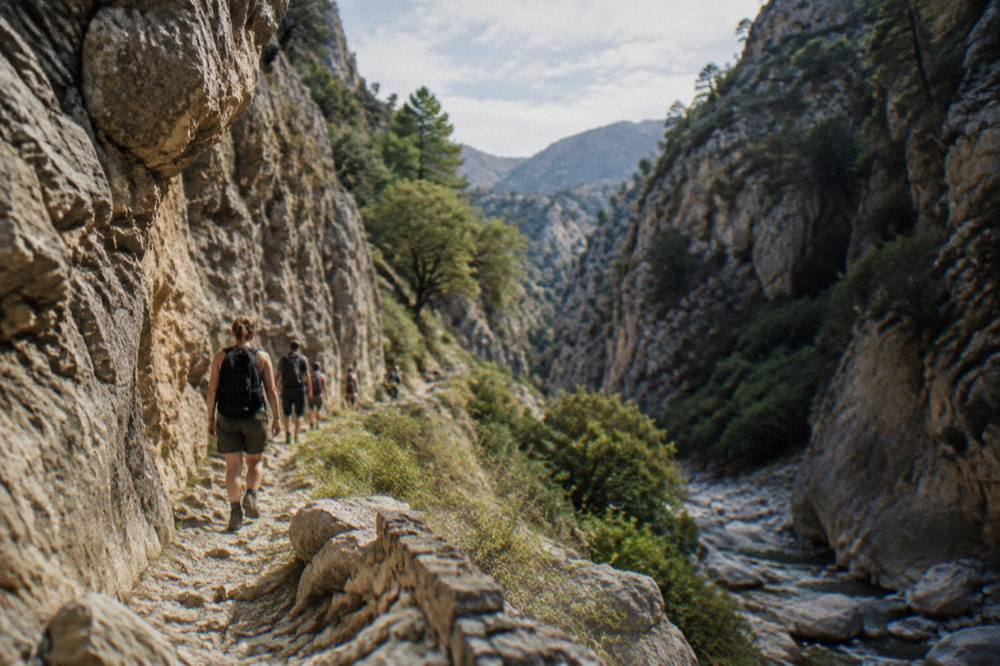
Boat trips from Chania and Kissamos depend on sea state rather than rain, and the summer's north-westerly wind is the usual cause of cancellations, while gorge walks depend on the winter's rain: storms in late September and early October 2026 destroyed sections of the Samaria Gorge path, and no reopening decision is confirmed, so the NECCA status must be checked before any gorge plan is made. These are two different weather dependencies, and mixing them up wastes a day.
The gorge rule first, because it changes year to year. Samaria normally opens 1 May to 31 October, but the season shifts when storms damage the path, as 2026 showed sharply, and the operator's works are aimed at readiness in May 2027. The individual ticket is EUR 10 through the NECCA e-ticket portal, free for EU residents under 18 and over 65, and tour prices exclude the separate entrance and ferry charges. The park's reported rules allow full-walk entry from 07:00 to 13:00 with everyone out by 18:00, and no swimming or camping applies inside the park.
Boats are simpler. The Balos and Gramvousa cruise season runs with daily departures to 31 October 2026, operator-reported, and the only confirmed charge on that route is a EUR 1 Kissamos municipal fee collected on the ticket for over-13s. A proposed time-slot visitor cap from August 2026 is not in force, so no cap should be assumed. When the wind does cancel a sailing, an Old Town day is the standing alternative, and the desk's own Chania Crete Travel Guide root page collects them.
The weather link between the two activities runs through the calendar as much as the forecast. A May or June visitor has both options open, because the dry table months keep gorge paths in condition and the wind has not yet reached its settled summer direction. A late-September or October visitor faces the opposite arithmetic: the sea is at its warmest of the whole record's year, but a single storm can close the gorge for the season while the boats from Kissamos keep sailing to the end of October. Building a trip around one activity in that window, with the other as backup, is the reliable order.
For booking terms, the operator's live listing carries the cancellation conditions, and the button below reads exactly as it should.
What Should You Pack For Chania Weather?
Pack for the station table, not the postcard: summer means a 21.2 C mean minimum and 30.7 C mean maximum in July, so layers matter at night even in August, while the October-to-March half brings 9.3 to 16.3 rain days a month and a January mean minimum of 7.9 C, which calls for a real rain layer and something warm for unheated rooms. One packing logic covers the whole year.
| Season | Station Figures That Drive It | What Goes In The Bag |
|---|---|---|
| May to Jun | 20.2 to 24.7 C means, 3.4 to 13.5 mm rain | Light layers, one warm layer for evenings at 15.0 to 19.0 C minimum |
| Jul to Aug | 26.3 to 26.7 C means, 1.0 to 1.4 mm rain | Sun protection, breathable clothing, nothing for rain |
| Sep to Oct | 23.2 then 19.4 C means, 67.7 mm in Oct | Swimwear plus a rain layer and a light jacket |
| Nov to Apr | 11.0 to 15.9 C means, 31.5 to 129.5 mm rain | Waterproof, warm indoor layer, shoes that handle wet stone |
Two Chania-specific notes. First, wet stone: the Old Town's marble-flagged lanes and harbour front become genuinely slick in a November shower, so sole grip matters more than boot weight. Second, the wind: on a north-westerly July afternoon a light windbreaker earns its place even with a 30.7 C mean maximum on the books, particularly on a boat.
A third note applies to the in-between months that the table handles less obviously. May evenings run to a 15.0 C mean minimum and September mornings to 18.7 C, cool enough that a single warm layer covers every month of the year outside July and August, so the same light fleece that serves an April museum afternoon serves a June dinner by the harbour. Travellers heading into the hills, the Omalos plateau or the gorges, should remember that the station table describes the city plain at 148 m, and temperatures fall with the climb the White Mountains demand.
Where Should You Check The Chania Forecast Before Your Trip?
Check a current forecast for the Chania Souda area shortly before travel and again the evening before any boat trip or gorge walk, because the station table in this guide is a 1958 to 2010 average and says nothing about the specific week of a visit, and the NECCA page is the authority on whether Samaria Gorge is walkable at all on a given date. Averages plan the packing list; forecasts plan the days.
The practical rhythm is simple. The week before travel, one look at the forecast settles the packing balance between the summer and autumn columns above. The evening before a booked cruise, the operator's own notice is the final word on departure, since operators cancel on sea state, not on rainfall. Before any gorge plan, the NECCA status replaces every other source, and the Samaria Gorge guide explains the ticket and ferry chain in full.
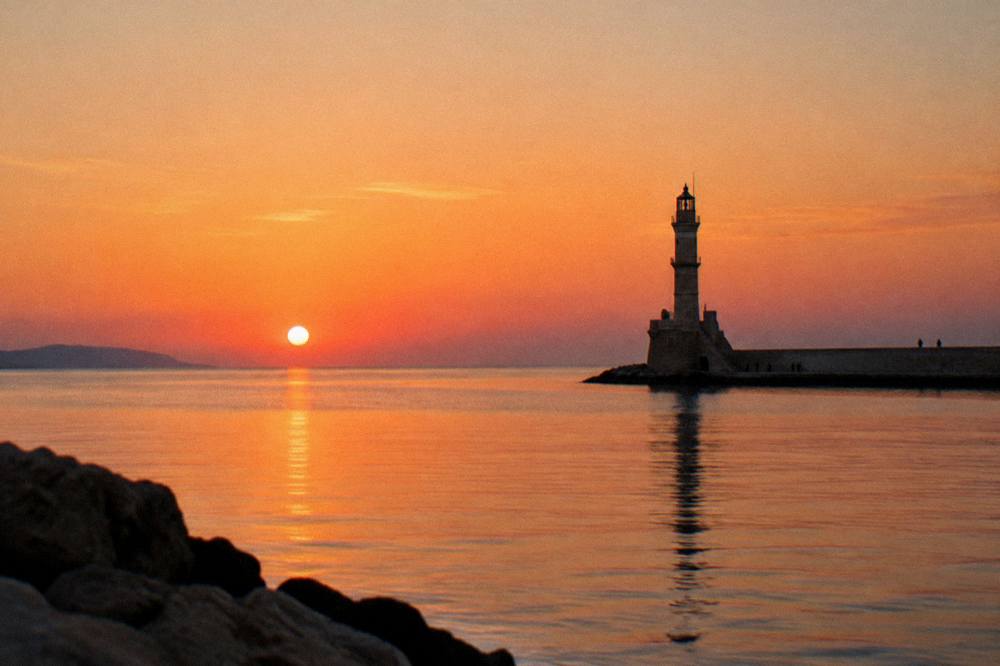
Weather also shapes the day trips more than the city itself. The beaches overview and the Elafonisi beach and Balos guides each carry their own access notes, and a west coast beach in a July north-westerly is a different proposition from the same beach in a flat June morning.
Common Questions About Chania Weather
What is the wettest month in Chania?
January, at 129.5 mm across 16.3 rain days on average in the 1958 to 2010 station records, with December close behind at 101.9 mm and 16.1 rain days.
Does it rain all day in Chania in winter?
The station table records rain days, not rain hours, so it cannot answer directly, but 16.3 rain days against mild mean maxima of 14.4 C in January describes frequent showers interrupting pleasant spells rather than continuous rain.
Is Chania windy in summer?
The prevailing wind at the station is north-westerly in July and August, and it is the main influence on sea state for boat trips and exposed beaches; the published table gives direction, not speeds.
When does the rainy season start in Chania?
October is the pivot in the station records, jumping from 15.4 mm of rain in September to 67.7 mm, and the totals then climb above 100 mm by December.
The station table is a 1958 to 2010 record, the newest official one published for Chania, and used that way, as a baseline to check a live forecast against, it does its job well.