How Many Days In Chania Is Enough?
How many days in Chania is enough? A planning answer built on verified facts: what one, two, three and four days cover in the city and its day trips.
Chania is a coastal city on the north-west coast of Crete, Greece, facing the Cretan Sea, with its Old Town wrapped around a Venetian Harbour and the White Mountains rising to the south. The honest answer to how long to stay depends on one thing: whether the plan includes the island's headline day trips, because Balos, Elafonisi and the gorges each swallow a full day and none of them is inside the city. The desk's short version is two days minimum, three comfortable, four to five once the lagoons and gorges are on the list, and the arithmetic below shows why. The municipality counted 111,375 permanent residents at the 2021 census, which matters here for a simple reason: this is a real working city with a year-round life, not a resort strip, and the things worth seeing are layered close together rather than scattered along a coast road.
How Many Days In Chania Is Enough?
Two days is enough for Chania itself, meaning the Old Town, the Venetian Harbour, the Firka Fortress grounds and one short swim stop, while three days is the comfortable number once a beach or a short boat trip is added, and four to five days is the realistic total for anyone who also wants Balos, Elafonisi or a gorge, because each of those day trips takes a full day away from the city. That is the whole answer in one paragraph, and the rest of this page shows the working behind it.
The city's core is compact. The Old Town sits around the Venetian Harbour, first built between 1320 and 1356, and the whole walkable quarter between the harbour, Splantzia and the top of Halidon Street can be crossed on foot in well under an hour. The Archaeological Museum of Chania is at 15 Skra Street in Halepa, a full ticket is EUR 15 and a concession EUR 8, and the museum's visit page is the place to check hours before going. Firka Fortress, built in 1620, has free grounds at the harbour's west end. A first day of harbour, lighthouse mole, Old Town lanes and one museum is full but not rushed, and a second day can be given to the waterfront east of the harbour, Nea Chora beach and a boat outing. The itineraries the desk publishes as one day in Chania and two days in Chania follow exactly that shape.
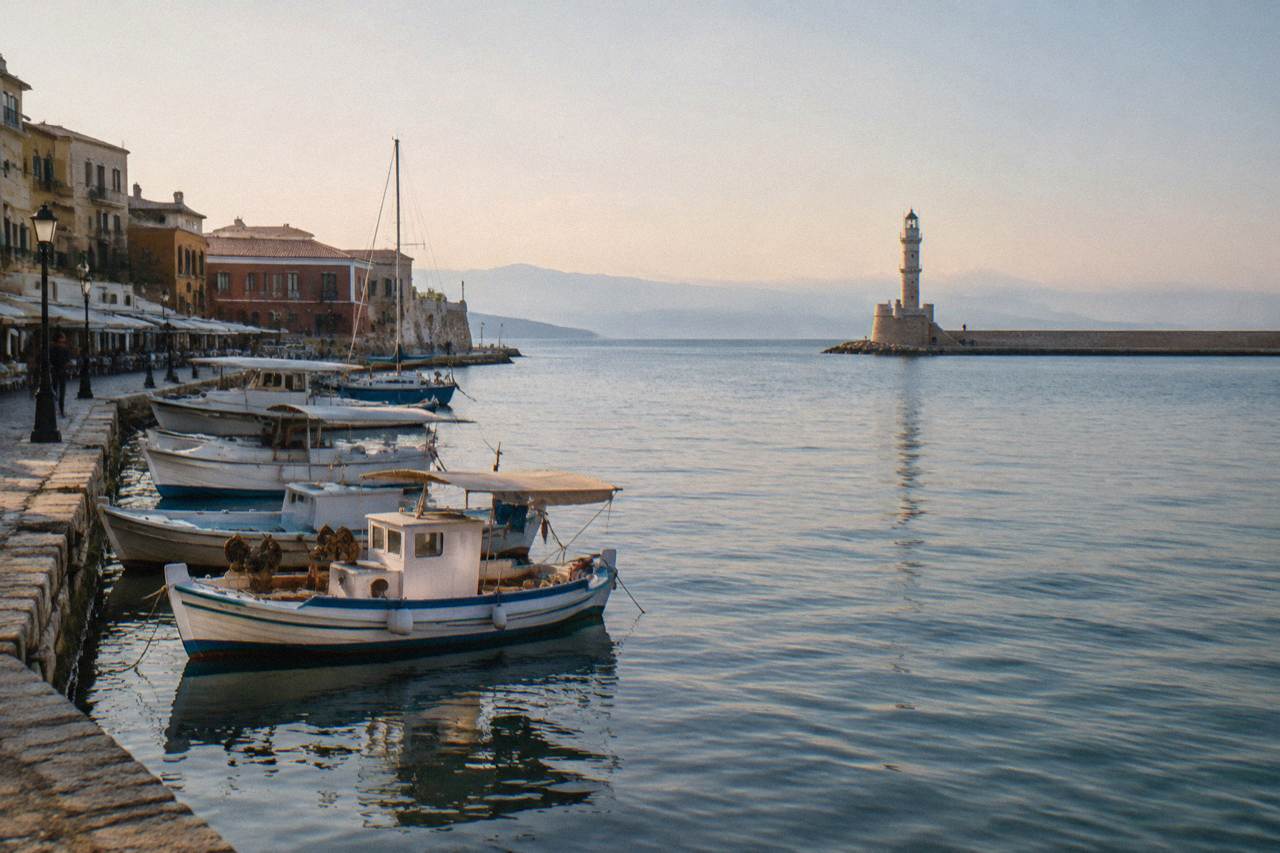
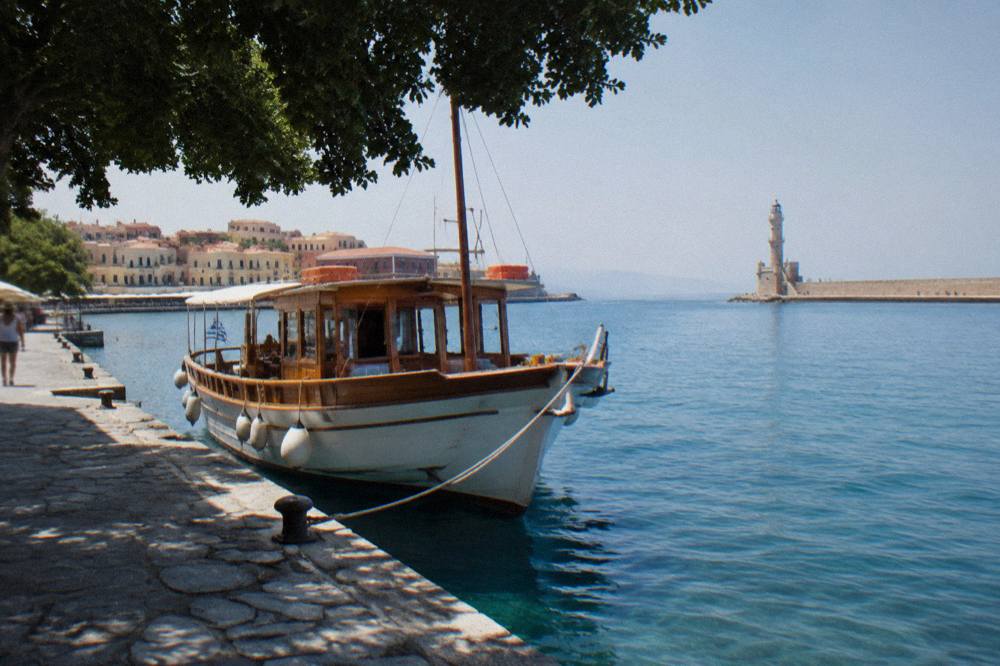
There is a second layer inside the city that a two-day plan only brushes. The harbour itself is a documented piece of engineering, with dredging and a wall recorded in 1515, and the Neoria shipyards along its eastern side count seven survivors of an original seventeen from the 15th to 16th century. The lighthouse at the end of the mole stands on a Venetian base of about 1595 to 1601 and was restored during the Egyptian rule of 1830 to 1840, operating from 1839. Reading any of that on the spot takes minutes; walking the mole out to the lighthouse and back at sunset takes an hour, and it is the single hour the desk would protect first in any plan, however short.
Why The Day Trips Add Whole Days To The Count?
The big excursions from Chania, Balos and Gramvousa, Elafonisi, Samaria Gorge and Imbros Gorge, are each full-day outings that leave little or nothing of the day for the city, so every one of them added to a plan effectively adds a day to the stay, and a plan with two or three of them needs four or five days total rather than two or three. The geography is the reason: the lagoons and gorges sit at the western and southern edges of the island, hours from the harbour on roads that wind through the mountains.
The numbers make this concrete. Balos boats leave from Kissamos port, a separate town west of Chania, and the 2026 sailing season runs daily departures to 31 October, with the only confirmed charge a EUR 1 Kissamos municipal fee collected on the boat ticket for over-13s. Anyone driving to Balos instead faces an unpaved road from Kaliviani to a parking area and then a walk down to the lagoon, which is why the boat option dominates most plans. Samaria Gorge runs one-way from Xyloskalo on the Omalos plateau down to Agia Roumeli, with boats from Agia Roumeli at about 17:30 connecting to Sougia or Chora Sfakion and then a KTEL bus back, and the park's normal season is 1 May to 31 October, though storms in late September and early October 2026 destroyed sections of the path, so the NECCA status must be checked before any plan is fixed. Elafonisi is a Natura 2000 protected area with reported free entry and a strict ban on taking sand, shells or plants. None of that fits inside a city morning.
To add the Balos day to the plan, book a Balos and Gramvousa boat cruise here.
Here is the desk's planning table, day by day:
| Days | What realistically fits | What does not fit |
|---|---|---|
| 1 | Old Town, Venetian Harbour, lighthouse mole, one museum | Any beach west of the city, any gorge |
| 2 | Adds Nea Chora, Splantzia, Firka grounds, a short boat trip such as Lazaretta | Balos, Elafonisi, Samaria, Knossos |
| 3 | Adds one big day trip, usually Balos or Elafonisi | A second big day trip without rushing |
| 4 | Adds a second day trip plus a slow city morning | Three big day trips |
| 5 to 7 | Adds a gorge plus Rethymno or Knossos, or a south-coast day | Nothing on this list is left out |
What Does One Extra Day Actually Buy In The City?
A third or fourth day in Chania itself buys depth rather than distance: the Halepa district east of the city centre, the Archaeological Museum at 15 Skra Street, the Maritime Museum, a proper cooking or tasting outing, and unhurried time on the harbour at both morning and evening, which is the difference between seeing the city and being able to describe it a week later. The museum ticket alone rewards a slow visit, and the desk's guide to three days in Chania is built on exactly that assumption.
The honest counter-question is whether the extra city day is better spent on food. Chania's food identity is real and specific, from bougatsa bakeries to the Cretan tasting plates around the market quarter, and a guided tasting walk compresses the best of it into a single outing. The desk's food answers, starting with what food Chania is known for, lay out what to order and where the specialties actually come from, and they argue for keeping at least one unhurried meal block in any plan of three days or more. A cooking class in the White Mountains pushes the same logic further, trading a city afternoon for a village kitchen, and it needs a spare day exactly the way a gorge does, only with less driving.
Does The Season Change The Answer?
Yes, because the HNMS Chania Souda station table for 1958 to 2010 shows the dry window runs from May through September, with 13.5 mm of rain in May falling to 1.0 mm in July, while October jumps back to 67.7 mm and January carries 129.5 mm across 16.3 rain days, so a short two-day stay in the wet half of the year loses far more to weather than the same stay in early summer. A one-day plan that collapses to rain has nothing to fall back on; a three-day plan absorbs it.
The same station table, the only climate series the desk prints, shows the shape of the year:
| Month | Mean C | Rain mm | Rain days |
|---|---|---|---|
| January | 11.0 | 129.5 | 16.3 |
| April | 15.9 | 31.5 | 7.7 |
| July | 26.7 | 1.0 | 0.4 |
| October | 19.4 | 67.7 | 9.3 |
Two planning consequences follow. First, the gorge and boat seasons are summer-shaped: Balos boats run daily to 31 October 2026 per the operator, and Samaria's normal window is 1 May to 31 October, storm damage permitting, so a late-autumn or winter visit shrinks the day-trip list and with it the number of days the destination can absorb. Second, the summer months concentrate demand on the same small set of beaches and boats, which argues for the extra day purely as slack. Humidity in the same table runs from 50 percent in July to 73 percent in January, and the prevailing wind swings west to north-west in July and August, a pattern worth knowing for anyone booking a boat day. The desk's month-by-month breakdown sits in the best time to visit Chania.
What Is The Minimum If You Only Have A Weekend?
A single full day is enough for the Old Town, the harbour walk out toward the lighthouse, the Firka Fortress grounds and one meal on the waterfront, and a weekend of two days adds a museum morning plus a short boat trip from the harbour, which is a genuinely complete short visit provided no one in the party expects Balos or a gorge, because those are simply not reachable inside a weekend that also covers the city. The mistake the desk sees is trying to fold a Balos cruise into a two-day city break, which converts both days into logistics.
For the compressed version, an organised city outing does the work of a self-guided day, and the related tour below is built exactly for that: a small-group bike sweep of the city highlights, described on its own listing. See the Chania city highlights bike tour page for what it covers, or Check availability for the operator's live listing.
Common Questions About Trip Length In Chania
How many days in Chania is enough?
Two days for the city itself, three with a beach or boat day added, and four to five if Balos, Elafonisi or a gorge is on the list, since each of those is a full-day trip outside the city.
Is Chania Old Town walkable in one day?
Yes. The Old Town sits around the Venetian Harbour and its lanes, museums and fortress grounds can be crossed on foot in a single full day, which is why one day is a real minimum rather than a compromise.
Can you do Balos and Elafonisi from Chania in one day?
Not in a self-driven single day at any relaxed pace. Each sits at the western edge of the island, and tours that pair Elafonisi with Falassarna in one guided day exist precisely because the two beaches share one direction.
Is a day trip to Samaria Gorge worth a whole extra day?
The gorge is a one-way walk from Xyloskalo to Agia Roumeli with a boat connection at about 17:30 and a KTEL bus back, so it consumes a full day. The entrance ticket is EUR 10 through the NECCA portal, and the park's status must be checked before booking anything, since storms in late 2026 damaged the path.
Does rain change how many days you need?
It can. The HNMS Chania Souda station table for 1958 to 2010 shows October at 67.7 mm of rain over 9.3 rain days against 1.0 mm in July, so an off-season short stay benefits from a spare day the way a July stay does not.
A final note from the desk: this Chania Crete Travel Guide exists to keep the arithmetic honest, and the honest arithmetic says the city rewards three days and the region rewards five. Pick the number that matches the trips on the list, not the other way round, and the days will fit.