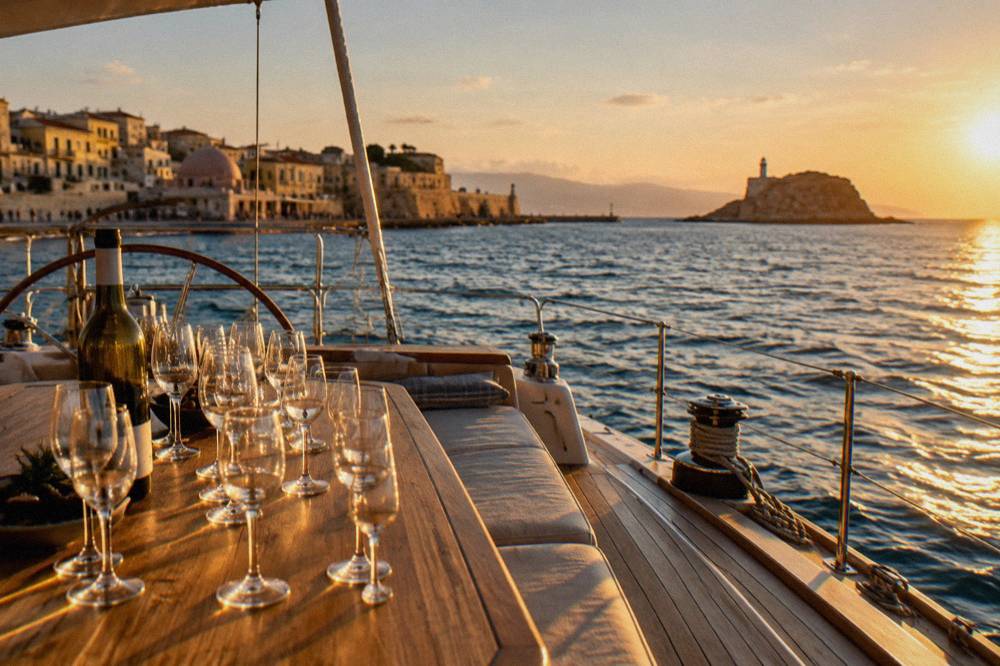
Loutro Chania
Loutro sits on the Libyan Sea side of Crete, reached by boat rather than by road, and it pairs naturally with Sfakia and the gorge walks of the White Mountains. This guide lays out what a day trip from Chania involves.
Short answer
Loutro is a small south-coast village reached by sea from Chora Sfakion or by boat tour from Chania, with no road into the village itself; plan it as a full day from Chania.
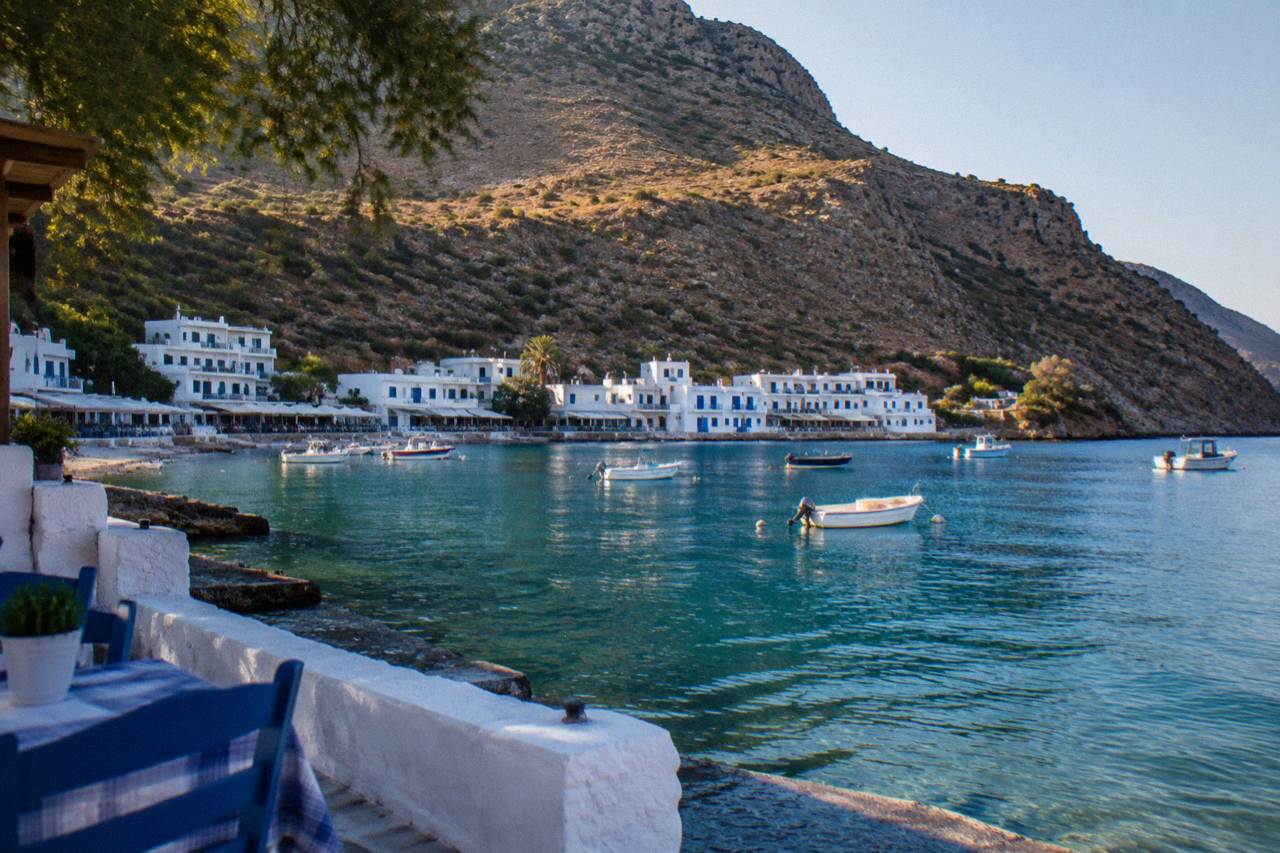
Loutro is the small white village on the south coast of Crete, on the Libyan Sea below the White Mountains, and the reason it lands on so many Chania itineraries is simple: the sea is the practical way in. Chania, the coastal city on the north-west side of the island, holds the Venetian Harbour, the airport and the ferry port at Souda, and every south-coast day trip, to Loutro, to Sfakia, to Agia Roumeli and Samaria Gorge, starts by crossing the mountains from there. This guide sets out what the sources actually say about getting there, what a day covers, and how the pieces fit together.
Where Is Loutro And How Do You Get There From Chania?
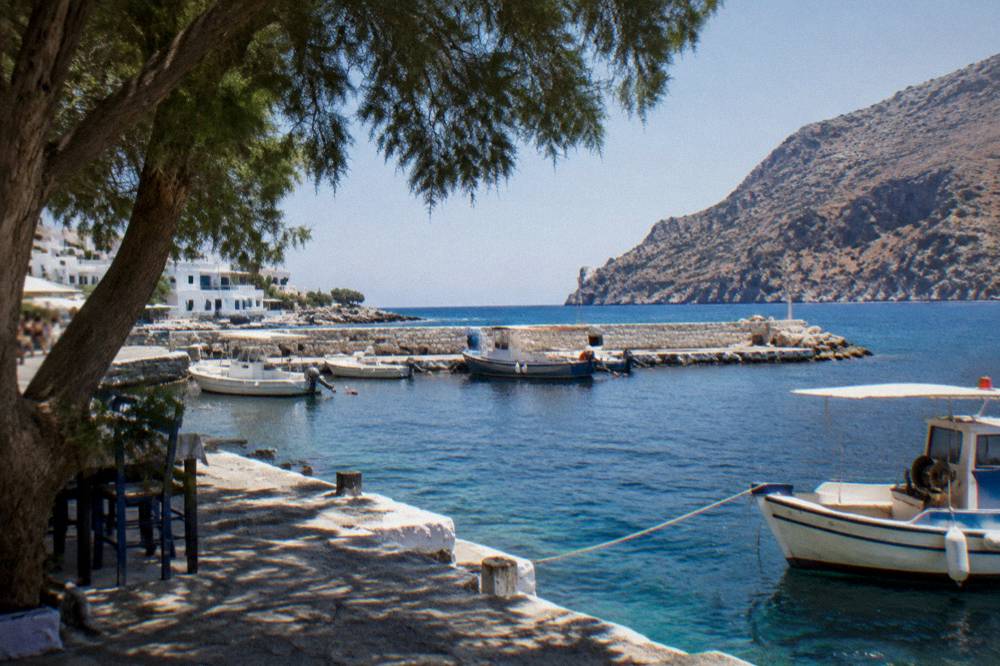
Loutro sits on Crete's south coast, facing the Libyan Sea below the White Mountains, and it is reached by boat: the practical chain from Chania runs by road or bus over the mountains to Chora Sfakion, the small harbour town also called Sfakia, and then by boat along the coast to the village. The boat leg is the defining fact of the place, and it is why the guided day trips that run there from Chania advertise boat tickets as part of the product rather than as an afterthought. Schedules for local boats are seasonal, and no timetable is published in a form worth printing here, so the day needs confirming at the harbour or at booking.
Chora Sfakion itself is the administrative and transport anchor of this coast. The long-distance KTEL bus station in Chania sits on Kydonias street, and the KTEL network reaches the south coast villages including Chora Sfakion and Paleochora; fares and timetables are checked at e-ktel.com or at the station, because neither belongs on a page like this one. Driving is the other option, and the mountain roads south from the Chania area are part of what the day is: the White Mountains stand between the city and this coast, and the crossing is a real part of the plan.
The village also connects to the wider south-coast boat network. The verified Samaria route runs the other way: hikers exit the gorge at Agia Roumeli, and boats leave Agia Roumeli for Sougia or Chora Sfakion at about 17:30 as the park's reported arrangement, then a KTEL bus closes the loop back to Chania. Boats to Gavdos, further south, run from Paleochora and Sougia in season. Loutro sits inside that same web of small harbours, which is why pairing it with a gorge walk or with a Sfakia swim stop works so well as a single day.
What Makes Loutro Different From The Other South Coast Stops?
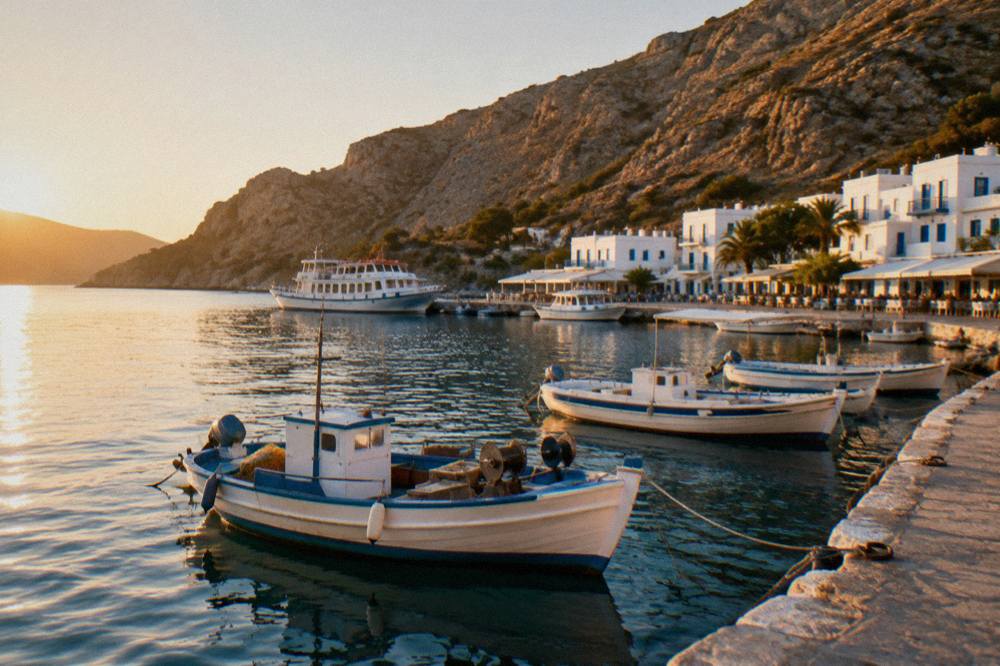
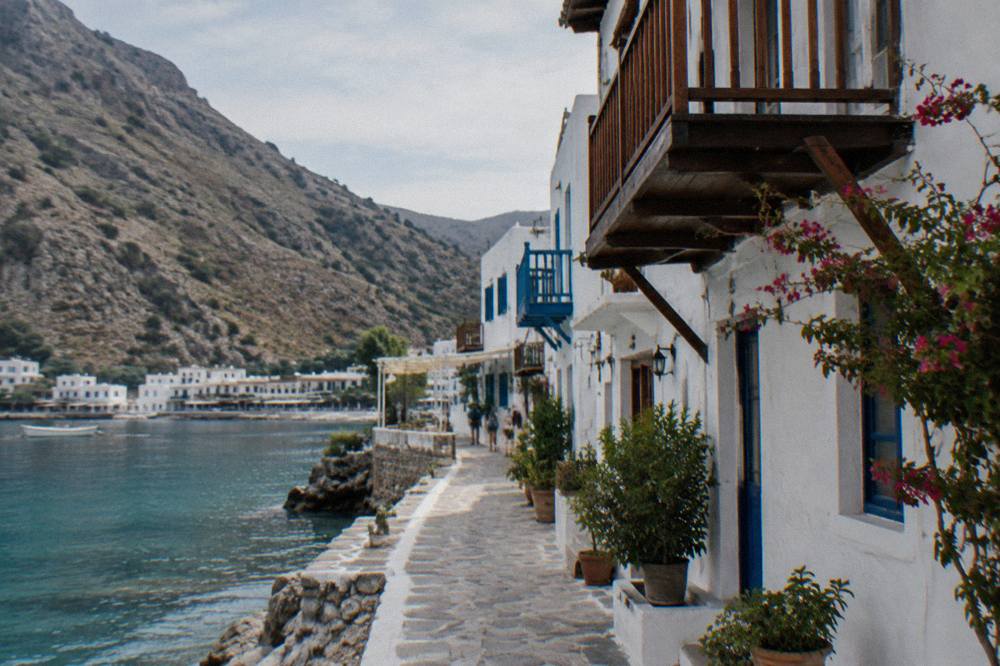
Loutro is a village you arrive at across the water rather than through a parking area, and that single fact shapes everything about a visit: the scale stays small, the day runs on boat times, and the rhythm is set by the arrivals from Chora Sfakion and the swim stops along the coast. Sfakia, the harbour town at the head of the bay, plays a different role, as the roadhead where buses and cars stop and the boats begin. The two places work as a pair, and a day trip that touches both gives a fuller picture of this coast than either alone.
For scale and character, the comparison with the island's better-known beach destinations is the useful one. Balos and Elafonisi, west of Chania, are day trips built around a lagoon or a beach; Loutro is a day trip built around a village and the water in front of it. The Balos Lagoon and Gramvousa guide covers the western model, where a cruise from Kissamos is the plan, while this coast is about harbours, boats and the mountain wall behind them.
| Place | Coast | How You Arrive | What The Day Is Built Around |
|---|---|---|---|
| Loutro | South, Libyan Sea | Boat from Chora Sfakion or guided boat trip | The village bay and swimming |
| Chora Sfakion | South, Libyan Sea | Road from the Chania area, KTEL bus | The roadhead, tavernas, boat hub |
| Agia Roumeli | South, Libyan Sea | On foot out of Samaria Gorge, or by boat | The gorge exit and the sea after it |
| Sougia | South, Libyan Sea | Road and KTEL bus, boat in season | A quieter beach and pebble shore |
| Paleochora | South, Libyan Sea | Road and KTEL bus, Gavdos boats in season | A resort village with beaches either side |
The villages in that table are the ones the verified transport facts actually cover, and the pattern is consistent: the south coast runs on a small number of harbours linked by seasonal boats, with roads threading over the mountains from the Chania side. Anyone planning a week in the region can mix a south-coast day with the northern beaches using the three days in Chania itinerary as a skeleton.
The trio above mixes the two halves of the region: the western beaches by jeep and the mountain villages by minibus. The guided Loutro option itself, with boat tickets folded into the product, is the one that maps most directly onto this page, and it sits further down.
What Can You Actually Do In Loutro And Sfakia In One Day?
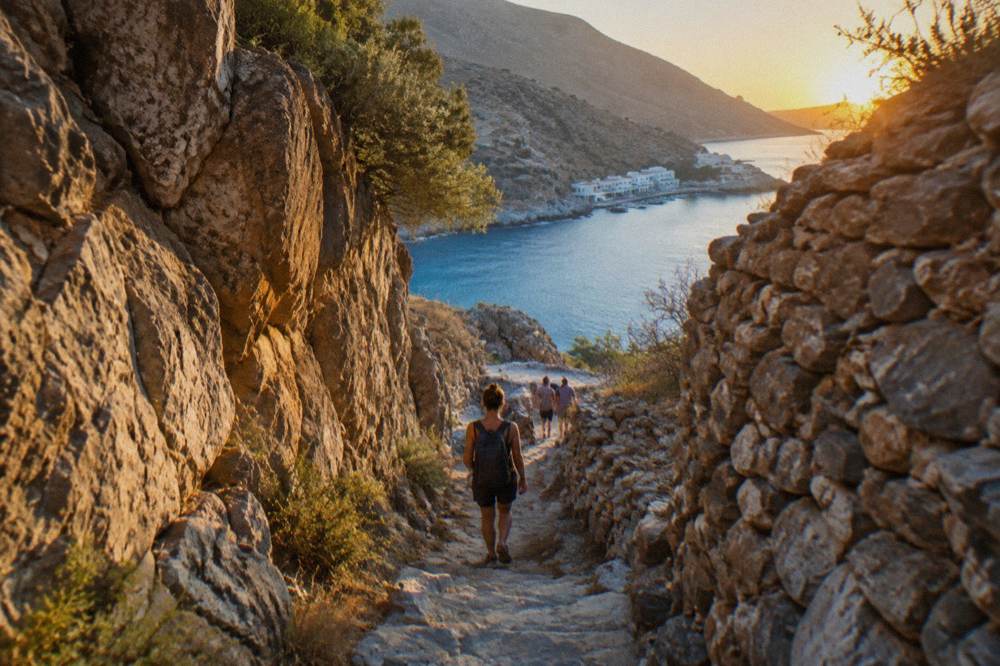
A day here divides into three parts: the crossing from Chania over the White Mountains, the boat leg from Chora Sfakion to Loutro, and the hours in the village itself, which are for swimming off the bay, eating at the water's edge and walking the short coastal path before the return boat. The guided version compresses all of it into one booking, with the driving, the boat tickets and the timing handled as a single product; the independent version means a very early start and a careful eye on the last connections back.
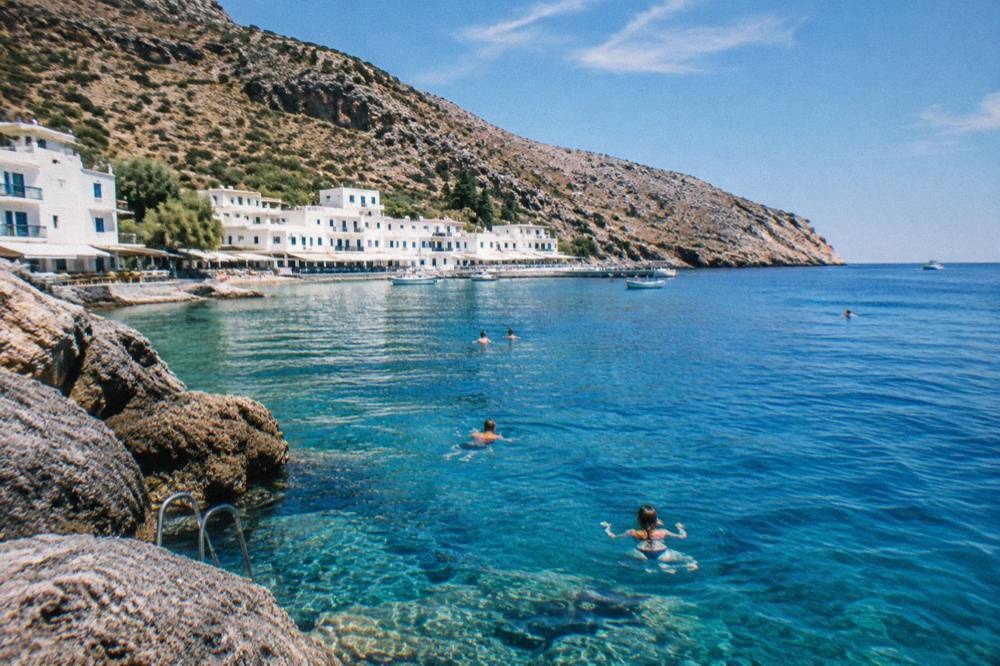
Swimming is the anchor activity, and the bay in front of the village is the reason the swim stops on south-coast tours are timed the way they are. The water on this side of the island is the Libyan Sea, deep and clear close to shore, unlike the shallow lagoon at Balos or the sandspit at Elafonisi. Sfakia's own small beaches and its harbour tavernas fill the hours on the Chora Sfakion side, and the town is the natural place to wait for a return bus.
Eating is the other half of the day. This coast is Sfakia's home territory, and the local pastry filled with soft cheese, the Sfakia pita, plus the region's cheeses and honey, are what the tavernas serve. The Cretan food in Chania guide covers what those ingredients look like in the city; on the south coast they appear in family kitchens rather than in town restaurants.
For travellers who prefer the logistics solved, the guided product runs as one unit:
The listing shows the current price and the departure details, and because the boat tickets are inside the product, the one leg that independent travellers usually misjudge is already accounted for.
How Do The Gorges Connect To Loutro And Sfakia?
The White Mountains hold two walking routes that end on this same coast: Samaria Gorge, the national park walk that exits at Agia Roumeli with boats to Chora Sfakion at about 17:30, and Imbros Gorge, the shorter eastern gorge whose exit also feeds down toward the Sfakia coast road. Both walks convert a hiking day into a sea day at the finish, and both close their loop back to Chania with a KTEL bus from the coast, as the reported arrangement runs. A gorge day and a Loutro day are therefore two readings of the same geography.
Samaria needs its caveats stated plainly. The gorge normally opens 1 May to 31 October, but storms in late September and early October 2026 destroyed sections of the path, staff describe a 2026 reopening as extremely difficult, no final decision is on record, and works are aimed at readiness in May 2027. It had also closed earlier in the 2026 season for storms. Nobody should write this walk into an itinerary without checking the NECCA status first. The full picture, including the ticket, the entry window and the boat exit, sits in the Samaria Gorge guide.
| Item | Samaria Gorge | Imbros Gorge |
|---|---|---|
| Normal season | 1 May to 31 October, storm closures possible | Walkable year-round in principle, guided tours run in season |
| 2026 status | Storm damage; reopening uncertain, works target May 2027 readiness | Unaffected by the Samaria damage |
| Ticket | EUR 10 via the NECCA e-ticket portal, free for EU residents under 18 and over 65 | No park fee stated in the verified facts |
| Route | One-way, Xyloskalo down to Agia Roumeli | Shorter gorge walk with village visits on guided versions |
| Exit | Agia Roumeli, boats to Sougia or Chora Sfakion about 17:30, then KTEL bus | Exit near the Sfakia coast road |
| Rules | Entry for the full walk 07:00 to 13:00, everyone out by 18:00, no swimming, no camping | Standard countryside conduct |
Imbros is the practical alternative when Samaria is closed or when a shorter walk fits the day better, and the guided version from Chania pairs the gorge with a village visit.
The comparison between the two walks, and the question of which one suits a given traveller, is covered in the Imbros Gorge guide, which also carries the storm-damage caveat for its bigger neighbour.
When Is The Best Time Of Year For A South Coast Day Trip?
The south coast season runs with the boat season: May to September is the dry window on the HNMS Chania Souda station records for 1958 to 2010, with July at 1.0 mm of rain and June at 3.4 mm, while October jumps to 67.7 mm and January peaks at 129.5 mm, so the shoulder months of May, June and September balance warmth against the first and last of the rain. The station sits at 148 m inland of Souda Bay, and its numbers describe the Chania side of the mountains, but they are the only official series to plan around.
The mountain crossing matters as much as the rainfall. The roads to the south coast climb over the White Mountains, and a wet day on a mountain road with a boat connection at the end is a different plan from a dry one. Summer brings the meltemi, the general north-westerly wind pattern, and the prevailing wind at the station runs west, turning north-west in July and August, which is the season when boat operators watch the forecast on the exposed south coast. Other pages covering the same trip are gathered on Chania Crete Travel Guide.
| Month | Mean Temperature (C) | Rain (mm) | Rain Days |
|---|---|---|---|
| May | 20.2 | 13.5 | 4.2 |
| June | 24.7 | 3.4 | 1.2 |
| July | 26.7 | 1.0 | 0.4 |
| August | 26.3 | 1.4 | 0.6 |
| September | 23.2 | 15.4 | 3.2 |
| October | 19.4 | 67.7 | 9.3 |
Figures: HNMS Chania Souda station, monthly means 1958 to 2010. The station table is the source for every number above, and no newer official series exists for the site. The same months govern the gorge season and the boat season, which is why the whole south-coast complex opens and closes together in practice.
Should You Visit Loutro Independently Or Take A Guided Day Trip From Chania?
The independent route costs less in cash and more in logistics: a KTEL bus or a hire car over the mountains, a boat ticket bought at Chora Sfakion, and a day governed by return times you did not set, while a guided trip folds the driving, the boat tickets and the schedule into one product with a fixed meeting point in Chania. The choice turns on how much of the day you want to own, and on whether the date sits inside the shoulder season when connections thin out.
The guided market from Chania covers this coast unevenly. The Loutro day with boat tickets included is the direct product; the Imbros hikes and the village tours touch the same mountains from the north; and the western beach trips, like the jeep tour to Balos and Falassarna with loungers and lunch, run to a different coast entirely but solve the same problem of mountain roads and parking. Anyone weighing the two coasts can read the Elafonisi beach guide against this one before choosing.
The jeep option below is this site's featured product for the region, and its listing carries the live price, the rating and the inclusions.
It runs west rather than south, so it belongs here as a comparator: same White Mountains backdrop, different sea. The full write-up sits with the Balos and Falassarna jeep tour, and the operator's live listing holds the current availability: Check availability.
How Does A Loutro Day Fit Into A Longer Chania Stay?
A south-coast day works best as the second or third day of a Chania stay, after the Old Town and one northern beach day, because it is the longest and most weather-dependent excursion on the standard list and it benefits from a flexible date you can slide forward if the wind or the forecast turns. The itineraries on this site sequence it exactly that way, with the harbour and the city sights first and the mountain and sea crossings once the trip's rhythm is set.
A sample week from the Chania base reads like this. Day one, the Old Town and the Venetian Harbour, whose first works date from 1320 to 1356, with the lighthouse on its Venetian base at the mole. Day two, a close beach, at Nea Chora or along the Agia Marina and Platanias stretch. Day three, Balos or Elafonisi in the west. Day four, the south coast, Loutro and Sfakia. Day five, a gorge, Samaria if it is running, Imbros otherwise. Day six, Rethymno or the Apokoronas villages. Day seven, the harbour again at a slower pace.
| Day | Plan | Notes |
|---|---|---|
| 1 | Old Town and Venetian Harbour | Harbour first built 1320 to 1356; Firka Fortress grounds are free, fort from 1620 |
| 2 | Nea Chora or the Agia Marina beaches | Swimmable northern beaches close to the centre |
| 3 | Balos and Gramvousa or Elafonisi | Boat from Kissamos, or the road to the Natura 2000 beach, entry reported free |
| 4 | Loutro and Sfakia | The south-coast boat day this page covers |
| 5 | Samaria or Imbros Gorge | Check the NECCA status for Samaria before committing |
| 6 | Apokoronas villages or Rethymno | Mountain villages or the Venetian town east of Chania |
| 7 | Slow harbour day | Lighthouse walk and the shipyard row, seven survivors of seventeen |
The Apokoronas day in that skeleton is the guided option below, a village tour with lunch included, and it is the gentlest of the mountain days.
For the full skeleton in more depth, the things to do in Chania page holds the master list, and the one-day and two-day versions cover shorter stays.
What Should You Know Before You Commit To The Day?
Three things decide whether this day works: the boat connections, which are seasonal and need confirming on the day; the mountain crossing, which adds real driving on either side of the visit; and, if a gorge is in the plan, the NECCA status of Samaria Gorge, which in 2026 is governed by storm damage and an uncertain reopening rather than by the normal 1 May to 31 October calendar. Everything else on the day is flexible, but those three are not.
Pack for two climates in one day. The Chania side and the south coast can differ by several degrees, the boat legs are windy, and the gorge walks, if attached, need proper footwear rather than beach sandals. Water, sun cover and layers cover the rest. The euro is the currency, Greece is a Schengen member, and the climate crisis resilience fee is collected by accommodation per room or apartment per night with seasonal rates, an amount to confirm at booking rather than on a page.
Finally, keep the return leg honest. The Samaria exit boats run at about 17:30 from Agia Roumeli, and the south-coast day trips that include boat tickets schedule their returns around fixed sailing times, so an independent traveller should establish the last boat from Chora Sfakion side before letting the afternoon stretch. A day planned around the last sailing is a better day than one that discovers it.
Each of the three above runs from Chania with the mountain roads handled, and each pairs with a different reading of the region: beaches by jeep, a gorge on foot, villages by road. The Loutro boat day stands beside them as the sea-and-harbour version of the same crossing.
Common Questions About Loutro And Sfakia
Can you get to Loutro from Chania without a car?
Yes, by KTEL bus from the Chania long-distance station on Kydonias street toward Chora Sfakion, then by boat along the coast. The bus and boat timetables are seasonal, so confirm both at e-ktel.com and at the harbour before committing to the day.
Is Loutro worth a day trip from Chania?
For travellers who want a boat-and-village day rather than another beach, yes: the crossing over the White Mountains, the boat leg from Chora Sfakion and the swimming bay give the day a shape no northern beach trip has. It is a long day, so it suits a stay of four days or more.
What is the difference between Loutro and Sfakia?
Sfakia, or Chora Sfakion, is the roadhead harbour town where the buses and cars arrive; Loutro is the smaller village reached onward by boat. A day trip typically touches both, with time in Sfakia around the boat connection.
Can you combine Samaria Gorge with Loutro in one day?
Not realistically: the gorge walk exits at Agia Roumeli, and the reported arrangement is boats from there to Sougia or Chora Sfakion at about 17:30, then a KTEL bus back to Chania, which uses up the day. Treat Samaria and Loutro as separate days, and check the NECCA status for Samaria first, since 2026 storm damage has left its reopening uncertain.
When do the boats to Loutro stop running?
The south-coast boats are seasonal and no printed timetable is reliable enough to quote here. The operator-reported season pattern on this coast runs into late autumn in good years, but the sailing for any given date should be confirmed at Chora Sfakion or with the tour operator at booking.
The short version of this whole page: Loutro is the boat day of the Chania repertoire, Sfakia is its roadhead, and the two together give the clearest picture of how the south coast works, one harbour, one boat and one mountain crossing at a time.