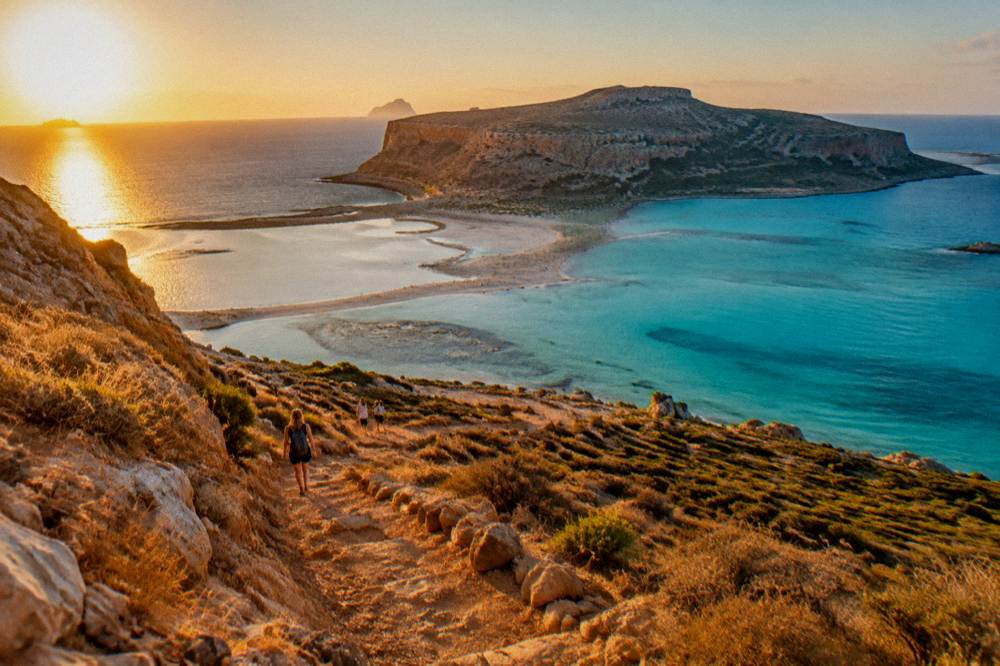
Agia Marina Beach Chania
Agia Marina is one of the sandy beaches on the coast west of Chania, on the north-west coast of Crete, and this page sets out what the sources say about the sand, the swimming season, the facilities and how the beach fits into a wider Chania holiday.
Short answer
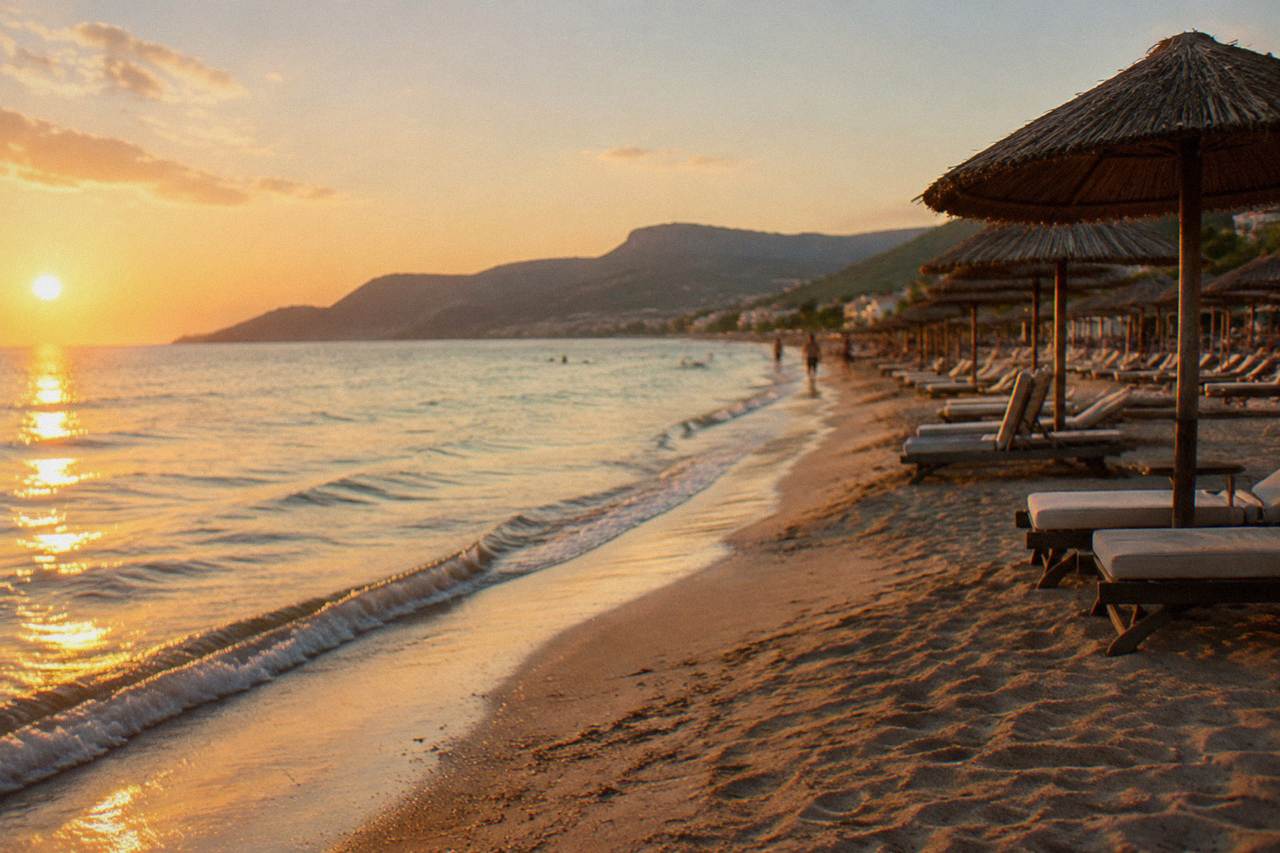
Agia Marina is a developed sandy beach on the Cretan Sea coast west of Chania, backed by the resort strip that runs toward Platanias, with warm-weather swimming reliably in the dry May to September window the HNMS Chania Souda station table shows.
Agina Marina sits on the north-west coast of Crete, on the Cretan Sea, in the resort belt that runs west from Chania toward Platanias. The municipality of Chania recorded 111,375 permanent residents at the 2021 census, and the coastal strip west of the city holds a large share of the area's visitor beds. This page, from the Chania Crete Travel Guide desk, reports what primary sources and the site's verified facts say about the beach itself, the swimming season, the facilities, family logistics and the day trips that pair well with a stay here. Nothing on this page is a personal account of a visit; every figure carries the source the facts file gives it, and where no such figure exists, the answer is to check locally.
Where Is Agia Marina Beach In Chania?
Agia Marina is a coastal resort area on the Cretan Sea shore west of Chania city, on the stretch of the north-west Crete coast that runs toward Platanias, within the municipality of Chania and roughly along the airport-free western side of the city's beach belt. The city's international airport, Chania International Airport "Ioannis Daskalogiannis" (CHQ), sits on the Akrotiri peninsula about 14 km from the city centre, on the opposite, eastern side of the city, so a visitor staying in Agia Marina lands on one side and sleeps on the other.
The geography matters for planning. Chania is a coastal city on the north-west coast of Crete, with the White Mountains (Lefka Ori) rising to the south and the Libyan Sea on the island's south coast. The north coast, where Agia Marina lies, faces the Cretan Sea, and the beach strip west of the city is the flat, built-up continuation of the city's own seafront. The neighbouring resort of Platanias sits further west along the same coast, and the site's Agia Marina and Platanias area guide covers the two together as one belt of sand, hotels and tavernas.
What the strip gives up in isolation it returns in reach. A stay here puts the Venetian Harbour and the Old Town a short drive or local bus ride to the east, and the big west-coast beach destinations, Balos, Falassarna and Elafonisi, at the far end of a day trip to the west. The desk's own one week in west Creany itinerary uses exactly that logic: sleep on the north coast, strike out west and south on alternate days.
The placement of the strip's landmarks and gateways, using only the distances and facts the verified file carries:
| Place | Direction From Agia Marina | Verified Fact |
|---|---|---|
| Chania city centre | East along the coast | Municipality of 111,375 residents (2021 census), 356.12 km2 |
| Airport (CHQ) | East, on the Akrotiri peninsula | About 14 km from the city centre, Fraport Greece operated |
| Platanias | West along the same coast | Neighbouring resort on the same beach strip |
| Souda port | South-east, in Souda Bay | Piraeus ferry terminal, not the Venetian Harbour |
| White Mountains | South | The Lefka Ori range behind the coastal plain |
What Is The Sand And Water Like At Agia Marina Beach?
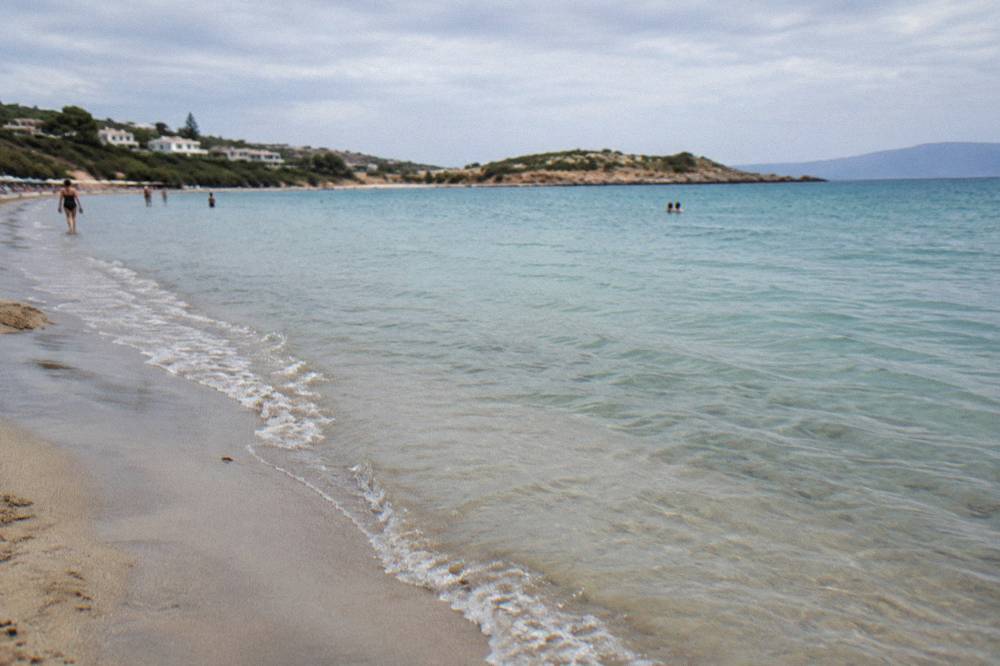
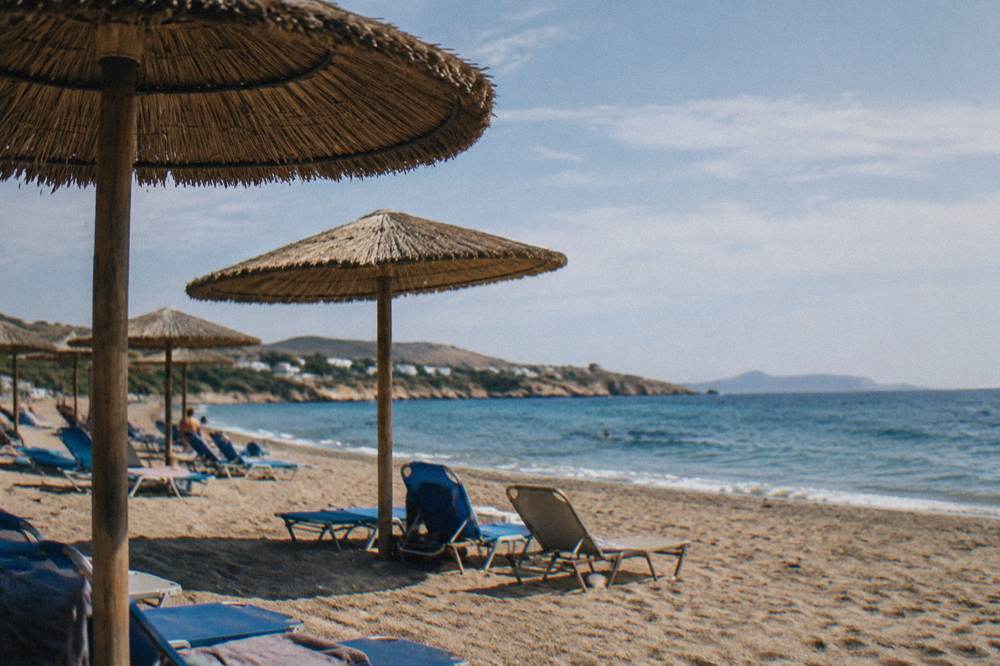
Agia Marina is a sandy north-coast beach: soft sand underfoot and a shallow entry into the sea, the profile the whole Chania city beach belt shares. The beach faces north across the Cretan Sea, and the prevailing west wind, turning northwest in July and August, reaches the shore, so the practical check is the morning flag or the water surface. The site's verified facts are firm on what cannot be said: no official monthly sea-temperature normal exists for the Chania coast, and any live reading is a live reading, not a climate statement.
What can be reported is the coastal pattern. The beach faces north across the Cretan Sea, and the HNMS Chania Souda station table records the prevailing wind as west, turning north-west in July and August. On a north-facing beach a westerly or north-westerly wind reaches the shore, and the meltemi, the general summer north-westerly pattern of the Aegean, is the wind family behind it. No speeds or dates are published in the site's facts, so none are given here; the practical check is the morning flag or the water surface in front of you.
For swimmers who want to compare profiles rather than read marketing copy, the honest framing is this: Agia Marina is the convenient sand option at the doorstep of a resort strip, while the headline beaches of the region, Elafonisi, Balos and Falassarna, are destination beaches at the end of a drive or a boat ride. The site's can you walk to a beach from Chania Old Town page covers the city-end options, and the prettiest beach in Crete answer handles the comparison question directly. Readers who want sand without a car will find Agia Marina the simpler proposition; readers who want a protected lagoon will not.
For a different water experience entirely, a guided sea kayak day on the south coast is bookable from Chania:
Which Months Are Best For Swimming At Agia Marina Beach?
The dry, warm window for swimming at Agia Marina runs from May through September, when the HNMS Chania Souda station table (1958 to 2010) shows 13.5 mm of rain in May, 1.0 mm in July and 15.4 mm in September, against 129.5 mm in January, with July the warmest month at a 26.7 C mean and January the coldest at 11.0 C. Those are station records from the Chania Souda site at 148 m, inland of Souda Bay, and they are labelled with their period, not presented as a newer normal.
The full station table, the only climate source this site uses:
| Month | Mean C | Mean Max C | Mean Min C | Rain mm | Rain Days |
|---|---|---|---|---|---|
| Jan | 11.0 | 14.4 | 7.9 | 129.5 | 16.3 |
| Feb | 11.0 | 14.7 | 7.8 | 104.0 | 14.5 |
| Mar | 12.7 | 16.6 | 9.0 | 76.0 | 11.5 |
| Apr | 15.9 | 20.0 | 11.4 | 31.5 | 7.7 |
| May | 20.2 | 24.5 | 15.0 | 13.5 | 4.2 |
| Jun | 24.7 | 28.9 | 19.0 | 3.4 | 1.2 |
| Jul | 26.7 | 30.7 | 21.2 | 1.0 | 0.4 |
| Aug | 26.3 | 30.4 | 21.2 | 1.4 | 0.6 |
| Sep | 23.2 | 27.4 | 18.7 | 15.4 | 3.2 |
| Oct | 19.4 | 23.5 | 15.7 | 67.7 | 9.3 |
| Nov | 15.8 | 19.6 | 12.4 | 77.0 | 11.2 |
| Dec | 12.7 | 16.2 | 9.7 | 101.9 | 16.1 |
Read the table for what it actually says. January is the wettest month in the record at 129.5 mm and July the driest at 1.0 mm; the mean maximum climbs to 30.7 C in July and 30.4 C in August; humidity runs from 50 percent in July to 73 percent in January. Rain starts to matter again from October, when the station records 67.7 mm, so the shoulder season on this coast is a real shoulder, not an extension of summer. The desk's Chania weather coverage and the best time to visit Chania answer both build on this same table.
A season-by-season reading of the same record, in the terms a beach planner actually uses:
| Season | Months | Station Record | Beach Reading |
|---|---|---|---|
| Core summer | Jun to Aug | Means 24.7 to 26.7 C, rain 1.0 to 3.4 mm | Reliable daily swimming, afternoon wind pattern north-west |
| Early summer | May | Mean 20.2 C, 13.5 mm rain, 4.2 rain days | Warm days, sea still building from spring |
| Shoulder | Sep to Oct | 23.2 C then 19.4 C, rain 15.4 then 67.7 mm | September still strong, October turns |
| Winter | Nov to Mar | Means 11.0 to 15.8 C, rain 76.0 to 129.5 mm | Walking coast, not swimming coast |
For visitors using the beach as a base and pairing it with boat days, the season facts matter in one specific way: boat operators publish their own calendars, and the site's verified facts record daily Balos departures from Kissamos running to 31 October 2026 as an operator-reported season. Gorge and boat seasons do not run year-round, so a late-autumn swim week on the north coast can still be a beach week even when the big excursion calendar has thinned out. Confirm the current operator calendar at booking rather than assuming either way.
What Facilities Does Agia Marina Beach Have?
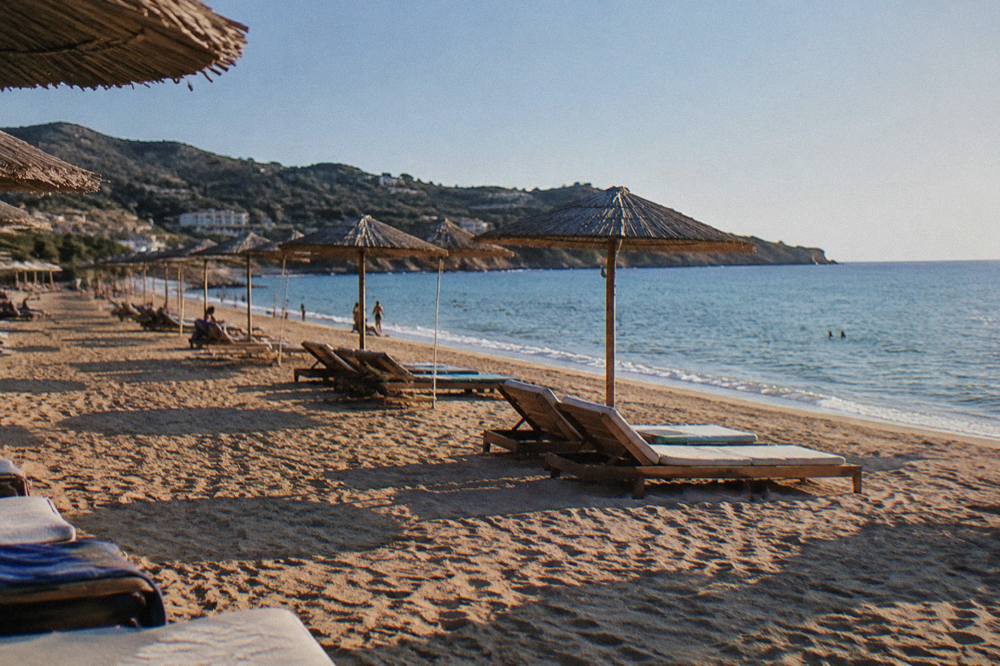
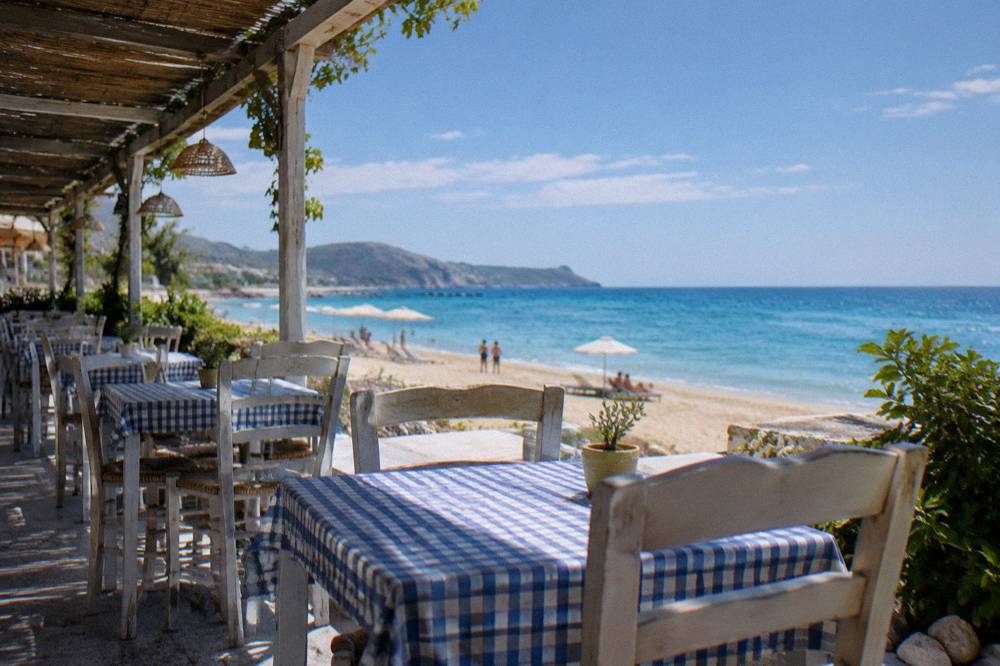
Agia Marina is a fully developed resort beach, which means the facility picture is the standard one for a built-up strip: organised sunbeds and tavernas along the sand, accommodation behind it, and water-sport and rental outfits in season, but the site's verified facts carry no fee, price or quota for any of it, so the desk directs every specific charge to the operator or the posted tariff on the day. No sunbed price, no parking tariff and no rental rate for Agia Marina appears in the facts file, and none is invented here.
That honesty rule is not a limitation on planning, it is the planning. A beach in a resort strip runs on posted prices, and the check the reader can always make is the board at the sunbed rows and the itemised bill at the taverna. The site's general page on things to do in Chania groups the organised beaches against the wild ones, and the contrast is the useful one: Agia Marina is where facilities are the point, while Seitan Limania on the Akrotiri peninsula is the dramatic cove with none of this infrastructure.
A plain comparison of the beaches within reach of a Chania stay, using only what the site's pages hold:
| Beach | Character | Facilities | Profile |
|---|---|---|---|
| Agia Marina | Resort-strip sand west of the city | Organised, tavernas, accommodation behind the sand | Sandy, shallow entry, north-facing |
| Nea Chora | City-end beach walkable from the west side of Chania | Organised, close to town | Sandy city beach |
| Stavros | Enclosed bay on the Akrotiri peninsula | Small-scale, village-backed | Sheltered sandy bay |
| Marathi | Family bay on Akrotiri, near Souda | Organised, calm | Shallow sandy bay |
| Kalathas | Small Akrotiri bay | Modest, quiet | Sandy with an islet offshore |
| Elafonisi | Protected Natura 2000 destination beach | Day-trip scale, no printed charges here | Lagoon sand, far west |
The one regulatory fact worth carrying from the protected west-coast beaches, even on a page about a resort strip, is the Elafonisi rule the park states: entry is reported to be free, and taking sand, shells or plants is prohibited. Nothing of that kind applies to a normal resort beach, but the contrast explains why destination beaches behave differently from the sand at your hotel's back door.
Is Agia Marina Beach Good For Families?
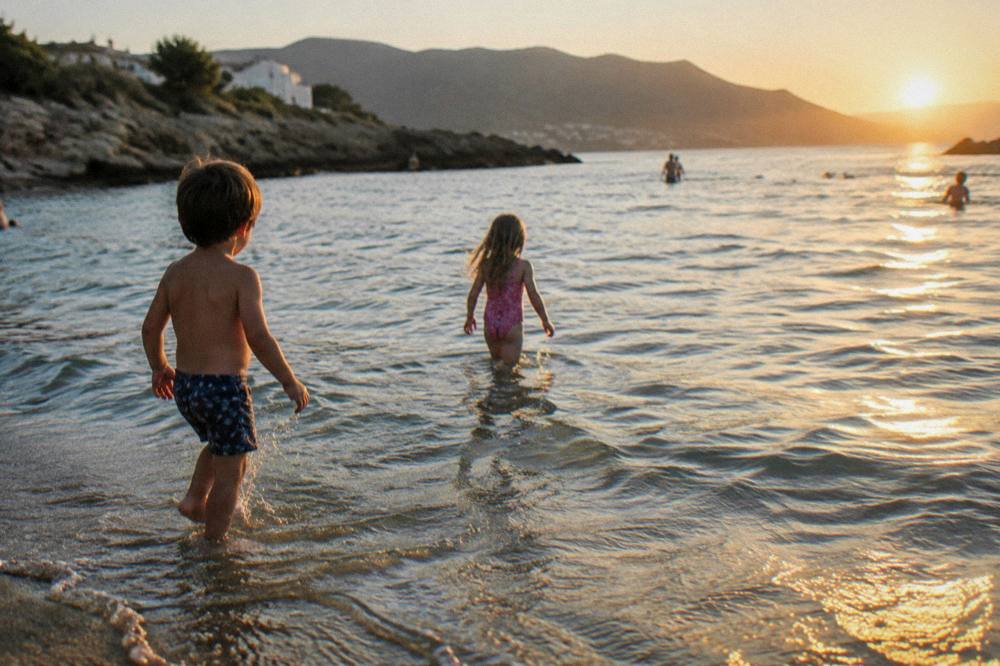
Agia Marina works for families precisely because it is a developed, shallow-entry sandy beach with accommodation, food and shade directly behind the sand, and the site's dedicated Chania with kids planning coverage treats the north-coast resort belt, including this strip, as the base that pairs child-friendly days with easy day trips to calmer bays and villages. The facts file holds no safety statistic, no lifeguard roster and no water-quality verdict for any beach, so those are checked on the posted signs at the beach itself.
The family case for the strip is logistical. Beds, meals and the sea sit within a few minutes' walk of each other, the sea entry is the shallow sandy kind, and the two big child-friendly excursions from a Chania base, Lake Kournas with its pedal boats inland and the quiet Akrotiri bays, are short drives away. The beach hotels in Chania guide covers where to sleep for exactly this pattern, and the Agia Marina and Platanias area page covers the strip's own taverna and shopping picture.
Two practical cautions that cost nothing to observe. First, the climate crisis resilience fee: accommodation collects it per room or apartment per night with seasonal rates, and the amount is confirmed at booking, since the desk prints no figure. Second, the wind: on a north-facing beach the July and August north-westerly pattern the station table records can freshen the surface in the afternoon, and the morning is the flatter swimming window. Neither is a reason to change plans; both are reasons to read the beach as it is on the day.
How Do You Get To Agia Marina Beach From Chania?
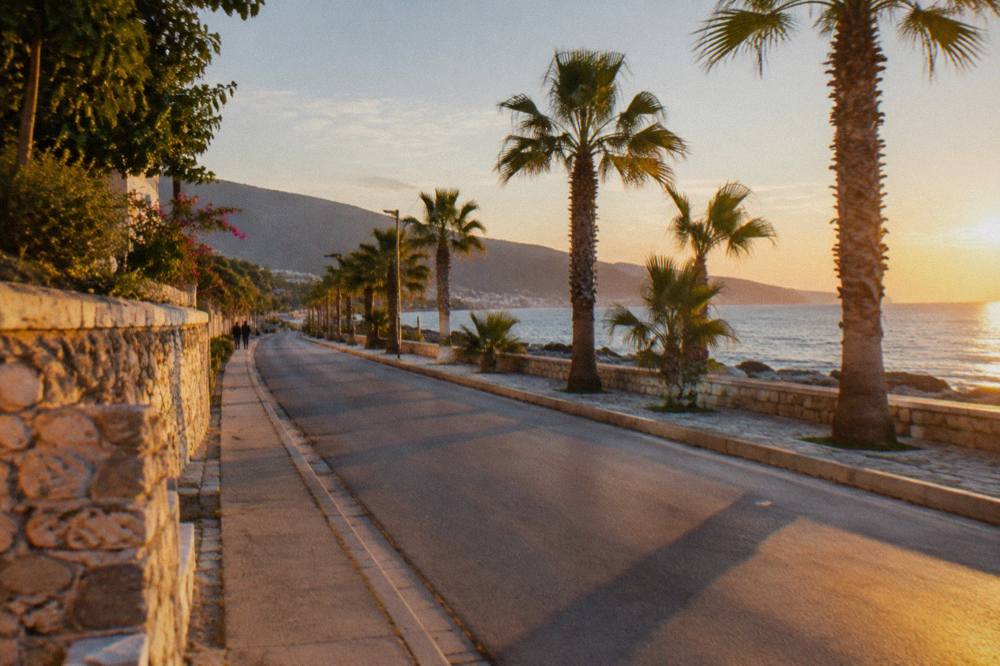
Agia Marina is reached from Chania by road along the coastal strip west of the city, using the local KTEL bus network whose long-distance station sits on Kydonias street in Chania, or by taxi or hire car, and the site's verified facts print no fare, no frequency and no timetable for any of these, so every specific is confirmed with the operator or on the airport's own site for arrivals. The facts file is explicit that bus fares, taxi fares and parking tariffs are not printed anywhere on this site.
For arriving visitors the anchor fact is the airport. Chania International Airport "Ioannis Daskalogiannis" (CHQ), operated by Fraport Greece, sits on the Akrotiri peninsula about 14 km from the city centre, and Agia Marina lies west of the city, so an arrival transfer crosses the whole urban area to reach the strip. Public bus and taxi information sits on the airport's own site. The KTEL network runs from the Kydonias street station to Kissamos, Paleochora and the other west-coast points, which matters for beach days beyond the strip, and the site's getting around coverage links the transport picture to the area.
A visitor without a car is not stranded, but the calculus depends on the day. The strip and the city connect along one coastal corridor, and the big west-coast beaches are a different question: is it difficult to get to Balos beach answers that one directly, and the answer involves a boat from Kissamos or an unpaved road from Kaliviani followed by a walk down. For eaters rather than drivers, the city's food walk is a bookable evening out from the strip:
If you would rather have your own wheels, book a rental car here.
What Day Trips Pair Well With A Stay At Agia Marina Beach?
The strongest day trips from an Agia Marina base are the west-coast beach runs to Elafonisi and Falassarna, the boat cruises to Balos lagoon and Gramvousa from Kissamos port, and the south-coast and mountain villages reached through the White Mountains, all of which start from the Chania area the strip belongs to. The related tour on this page covers the first of those: a guided small-group day from Chania to Elafonisi and Falassarna with snacks. Check availability on the operator's live listing, since no price or rating is typed on this page.
The site's day-trip pages hold the detail for each of these: Elafonisi beach for the protected Natura 2000 lagoon at the far west, Falassarna for the long west-facing sand, and the Balos and Gramvousa cruises from Kissamos, where the only confirmed charge in the verified facts is a EUR 1 Kissamos municipal fee collected on the boat ticket for over-13s. A time-slot visitor cap of about 1,200 visitors per three hours was proposed in August 2026 and is not in force, so the desk states no cap as a rule. The unpaved road from Kaliviani to the Balos parking area, followed by a walk down, is the land alternative, and is it worth going to Elafonisi beach weighs that day directly.
The pairing logic for a beach-base holiday is simple and the site's itineraries follow it. North-coast sand for the easy days, one west-coast beach day, one boat day, one south-coast or mountain day, and the city's Old Town for evenings. The Lighthouse of Chania, on its Venetian base on the harbour mole, and the Municipal Market in the centre are the two landmarks that anchor an evening walk, and the Firka Fortress, built in 1620 with free grounds, sits at the harbour's west end. A week based on the Agia Marina strip can touch all of it without ever planning a journey longer than a day trip.
For a fuller shortlist of the strongest options, these are the site's current picks for days out from the Chania area:
Common Questions About Agia Marina Beach
Is Agia Marina Beach sandy?
Yes. Agia Marina is a developed sandy beach on the north-coast strip west of Chania, with the shallow sandy entry typical of that coast. Water-quality verdicts and Blue Flag claims are not in the site's verified facts, so those are checked on posted signs at the beach.
How far is Agia Marina from Chania Airport?
The airport, Chania International Airport "Ioannis Daskalogiannis" (CHQ) on the Akrotiri peninsula, is about 14 km from Chania city centre. Agia Marina lies west of the city, so the transfer crosses the urban area; bus and taxi information is on the airport's own site, and no fare is printed here.
When is the best time to swim at Agia Marina?
The HNMS Chania Souda station table (1958 to 2010) shows the dry warm window running May to September, with July the warmest month at a 26.7 C mean and only 1.0 mm of rain, and rain rising again from October at 67.7 mm. May to September is the reliable swimming window on that record.
Is Agia Marina good for families?
It is a resort strip, so accommodation, tavernas and organised sand sit together, with a shallow sandy entry into the sea. The site's Chania with kids coverage treats this north-coast belt as the standard family base, with Lake Kournas and the Akrotiri bays as easy excursions.
Can you visit Balos or Elafonisi from Agia Marina?
Yes, both are day trips from the Chania area. Balos cruises leave from Kissamos port with a EUR 1 municipal fee for over-13s collected on the ticket, and Elafonisi is reached by road or guided tour, with entry reported to be free and taking sand, shells or plants prohibited.
Does Agia Marina Beach have an entry fee?
No entry fee for the beach appears in the site's verified facts, and no sunbed, parking or rental charge for Agia Marina is printed anywhere on this site. Charges on organised beaches are read from the posted tariff on the day.
Agia Marina earns its place on the Chania coast by being the easy option: sand at the door, the city a short hop east, and the big beaches and gorges of western Crete arrayed to the west and south for the days when easy is not the point. Plan the swimming window off the HNMS Chania Souda table, check every charge against the posted price or the operator's live listing, and the strip does the rest.