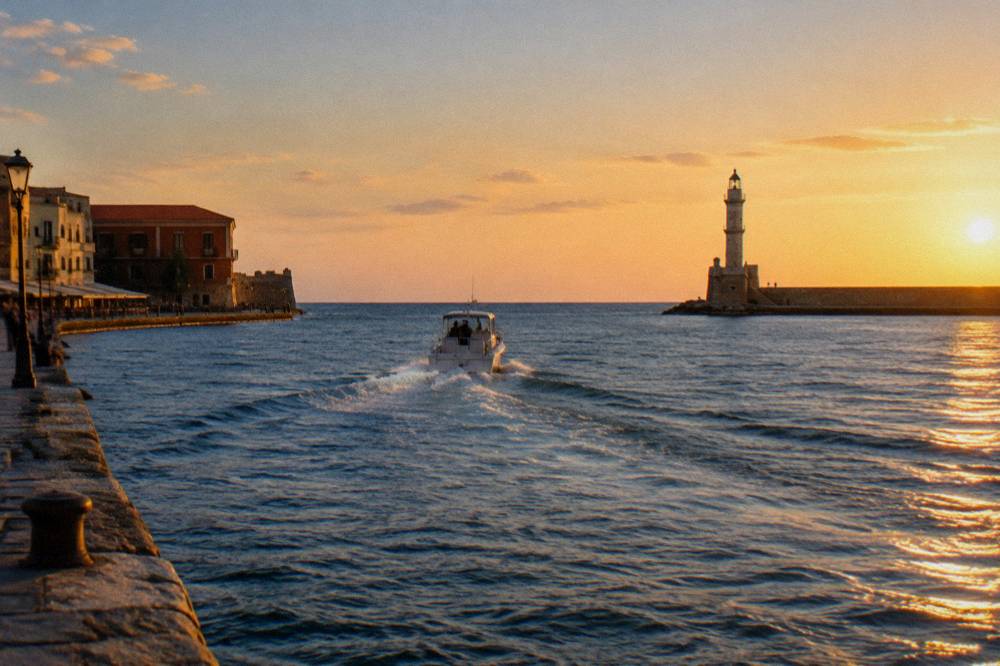
What Is The Best Time To Visit Chania?
When to visit Chania in Crete, month by month: the HNMS Chania Souda station rainfall and temperature table, the gorge and boat seasons, and which months suit beaches, hiking and the Old Town.
Chania sits on the north-west coast of Crete, Greece, facing the Cretan Sea, with the White Mountains rising to the south and the Libyan Sea coast a few hours' drive away. The question of when to go is really a question of three separate calendars: the weather station's own record, the gorge season in the mountains, and the boat season along the coast. All three line up from late spring to early autumn, which is why the answer below is not a single month but a window, with the trade-offs laid out month by month. The deeper companion piece, when to go and what each season brings, covers the same ground for readers planning a full itinerary.
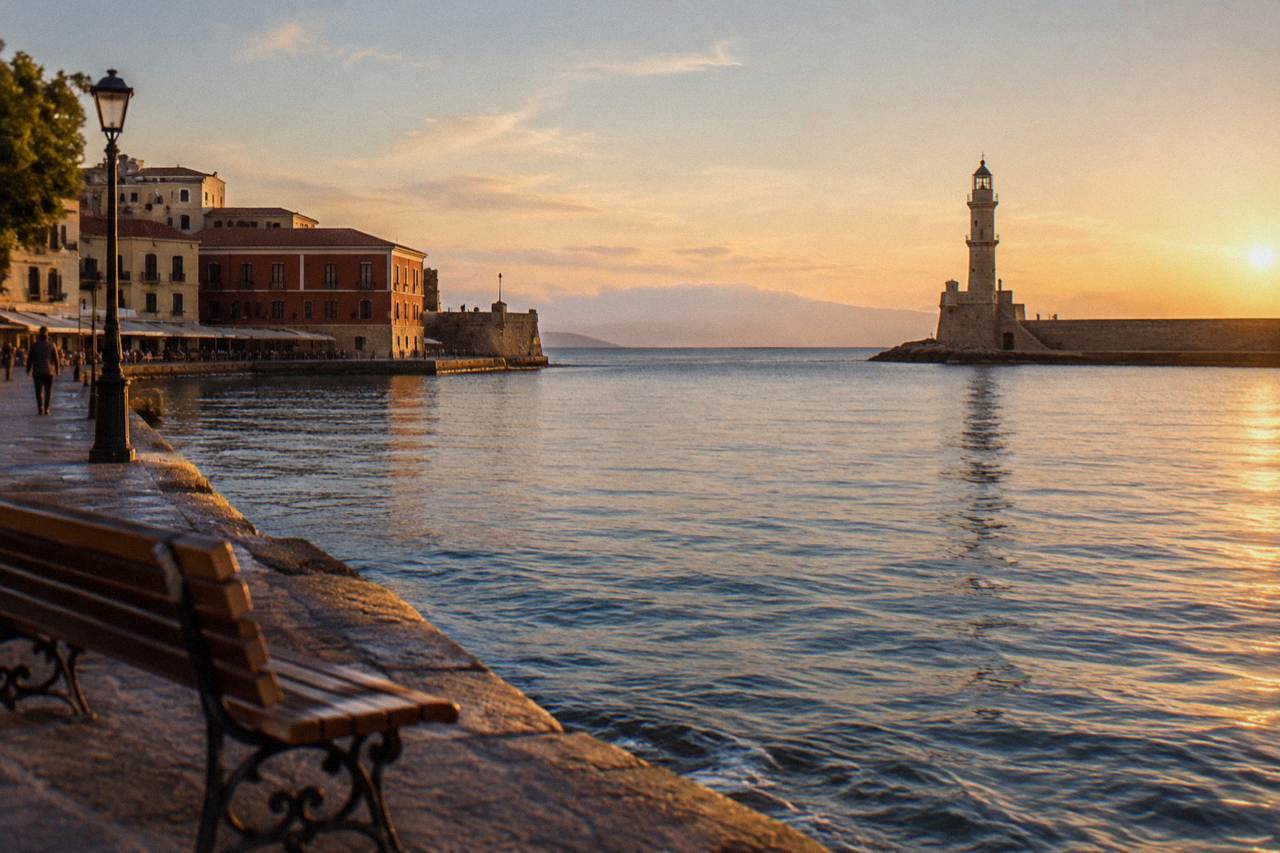
What Is The Best Time To Visit Chania?
The best time to visit Chania is late May to early July, or September to mid-October, when the HNMS Chania Souda station table shows warm, dry weather, the sea trips run daily, and the summer peak of July and August has either not arrived or has passed. Rainfall in that window runs from 13.5 mm in May down to 1.0 mm in July and back up to 67.7 mm in October, against 129.5 mm in January, so the dry months bracket the whole period.
That answer splits into two quite different trips. June is dry, warm and busy without being at the August peak, and every boat, gorge and beach operation is running. September is nearly as dry, with 15.4 mm of rain across the month on the station table, and the sea has had all summer to warm up. October is the gambler's month: the mean temperature is still 19.4 C, but the rain days climb to 9.3 and the first storms of autumn can close the gorges, as the late September and early October 2026 storms did to sections of the Samaria path.
For a reader whose priority is the Old Town, the museums and the restaurants rather than the beaches, the shoulder months and even the winter are workable. The Archaeological Museum's visit page should be checked for hours, and the climate crisis resilience fee is collected by accommodation per room per night with seasonal rates, so the amount is confirmed at booking rather than assumed.
What The Weather Station Table Shows For Each Month In Chania
The only official monthly figures for Chania are the HNMS Chania Souda station records for 1958 to 2010, and they show a Mediterranean pattern: a mean of 26.7 C in July against 11.0 C in January, with 1.0 mm of rain in July against 129.5 mm in January and 16.3 rain days. The station sits at 148 m, inland of Souda Bay, so the table describes the airport side of the city rather than the harbour front.
The table below reproduces the station's monthly means. The numbers matter less as raw comfort than as a planning tool: May to September is the genuinely dry stretch, October is when rain starts to matter again at 67.7 mm, and the November to March period carries the bulk of the year's 622.3 mm total.
| Month | Mean C | Mean Max C | Mean Min C | Rain Mm | Rain Days |
|---|---|---|---|---|---|
| Jan | 11.0 | 14.4 | 7.9 | 129.5 | 16.3 |
| Feb | 11.0 | 14.7 | 7.8 | 104.0 | 14.5 |
| Mar | 12.7 | 16.6 | 9.0 | 76.0 | 11.5 |
| Apr | 15.9 | 20.0 | 11.4 | 31.5 | 7.7 |
| May | 20.2 | 24.5 | 15.0 | 13.5 | 4.2 |
| Jun | 24.7 | 28.9 | 19.0 | 3.4 | 1.2 |
| Jul | 26.7 | 30.7 | 21.2 | 1.0 | 0.4 |
| Aug | 26.3 | 30.4 | 21.2 | 1.4 | 0.6 |
| Sep | 23.2 | 27.4 | 18.7 | 15.4 | 3.2 |
| Oct | 19.4 | 23.5 | 15.7 | 67.7 | 9.3 |
| Nov | 15.8 | 19.6 | 12.4 | 77.0 | 11.2 |
| Dec | 12.7 | 16.2 | 9.7 | 101.9 | 16.1 |
Two readings of the table shape the season choice. Humidity runs from 50 percent in July to 73 percent in January, and the prevailing wind is westerly, swinging north-west in July and August, the pattern known as the meltemi. A north-westerly blowing down on the north coast can rough up harbour swimming days in high summer even when the temperature reading is perfect, and it is a reason the sheltered south coast trips are worth a look in those weeks.
The seasonal operators read the same table. The Balos and Gramvousa boats from Kissamos were running daily departures to 31 October 2026 on the operator's own schedule, and the Samaria Gorge operates a normal season of 1 May to 31 October, with entry to the full walk between 07:00 and 13:00 and everyone out of the park by 18:00, as the park's reported rules state. The gorge closes or delays opening when storms damage the path, and the NECCA status is the page to check before committing to a date.
Which Months Suit Swimming, Boat Trips And Gorge Walks Around Chania
For swimming and boat trips, June through September is the reliable window, with July and August the warmest at means of 26.7 C and 26.3 C and almost no rain. Gorge walking follows the park's calendar instead: Samaria normally runs 1 May to 31 October, with Imbros in the same mountain weather system, so the two seasons only partly overlap. For gorge walking, the season is fixed by the park rather than the weather: Samaria's normal dates are 1 May to 31 October, and the Imbros gorge, which several guided hikes from Chania cover, sits in the same mountain weather system.
The two calendars do not perfectly overlap. May is a fine walking month, with a mean of 20.2 C and 4.2 rain days, but the sea has not yet warmed and the boat season is only starting. September flips that: the sea is at its warmest after a whole summer of heat, but the first autumn storms become possible, and the 2026 storm damage in Samaria came in exactly that window. A trip built around a specific gorge should hold a backup plan, and the comparison piece on the two main gorges and which suits a hiker lays out the choice in detail.
Boat trips split into two families. Harbour and near-island trips, such as the runs to Lazaretta and Agioi Theodoroi, sit on sheltered water and run through the whole season. The big lagoon trips to Balos and Gramvousa leave from Kissamos, and the only confirmed charge beyond the ticket itself is the EUR 1 Kissamos municipal fee collected on the boat ticket for over-13s. Booking conditions and the operator's live listing are the place to confirm what any specific departure includes.
How Crowds And Prices Change Through The Chania Season
July and August are the peak months for arrivals and heat together, while the months either side of them, May, June, September and early October, carry the same dry-station weather with thinner crowds: harbor front restaurant tables are easier to come by, the gorge path is quieter, and accommodation pricing follows the calendar, with the seasonal resilience fee confirmed at booking. The airport's own page gives the scale of the season: Chania International Airport "Ioannis Daskalogiannis", operated by Fraport Greece, handled 3,992,149 passengers from January to October 2025.
The practical differences show up in three places. Restaurant tables on the harbour front are easier to come by outside the peak weeks. The gorge path is quieter, which matters on a one-way walk where the ferry from Agia Roumeli leaves at about 17:30 and sets the day's rhythm. And accommodation pricing follows the calendar, though no rate is quoted here: the resilience fee is seasonal too, and the amount is confirmed at booking. Other pages covering the same trip are gathered on Chania Crete Travel Guide.
None of this makes August a bad month. It is the month with the fullest schedule of departures, the warmest sea after two hot months, and the longest stretch of near-zero rain at 1.4 mm on the station table. It simply demands earlier booking and a tolerance for 30.4 C mean daily maxima.
What October And November In Chania Are Really Like
October is the last month of the main season in Chania, with a mean of 19.4 C, 9.3 rain days and 67.7 mm of rain on the HNMS Chania Souda table, and the boat operators were scheduled to 31 October 2026. November tips into the quiet season, at 15.8 C and 77.0 mm of rain, with the Balos cruises and the gorge season finished for the year.
Early October is a genuinely good bet for a mixed trip: warm enough for the beach, cool enough for walking, and still inside the daily-departure window for the Kissamos boats. The second half of the month is when the calculus changes, because the station's rain-day count nearly triples from September's 3.2, and the storm systems that damaged the Samaria path in late September and early October 2026 arrived in exactly this period. The NECCA status page settles whether the gorge is walkable on any given date.
November onward belongs to the Old Town, the museums and day trips that do not depend on a sea schedule. The Archaeological Museum of Chania at 15 Skra Street in Halepa charges EUR 15 full and EUR 8 concession, and its visit page carries the current hours, which should be checked rather than assumed. Readers weighing the quiet months against the season can start with how many days are enough for a first Chania trip and work outward.
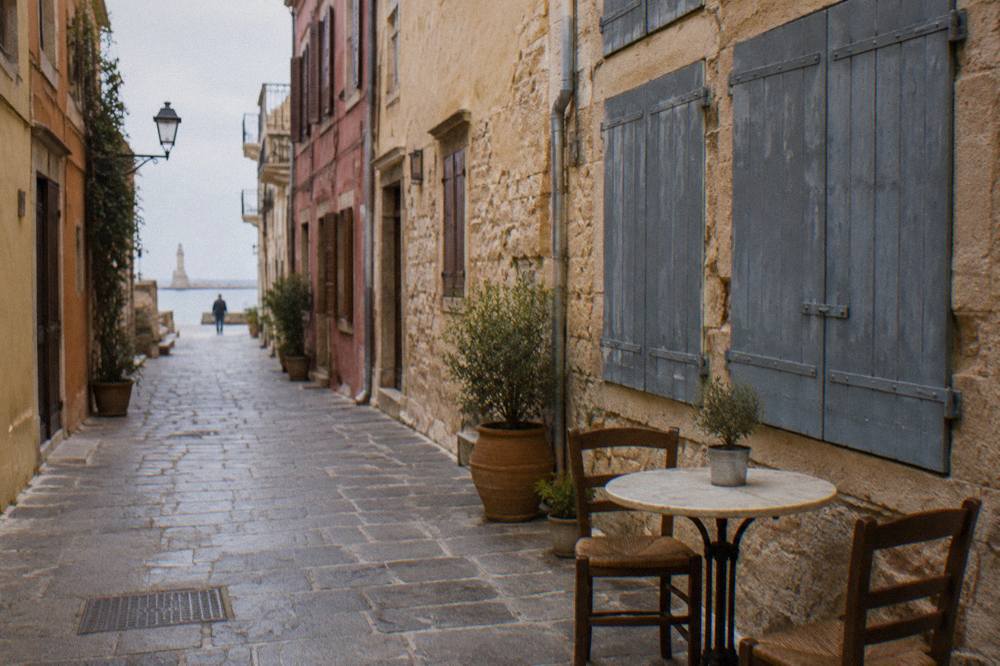
Is Winter In Chania Worth The Trip?
Winter in Chania is mild rather than warm, with means of 11.0 C in January and 12.7 C in December, but it is also the wettest stretch of the year, with 129.5 mm in January falling across 16.3 rain days on the station table. The compensations are a working Greek city of 111,375 permanent residents in the wider municipality, open tavernas, and historic sights such as Firka Fortress, whose free grounds date from 1620.
The winter months suit a particular kind of visitor: one whose days are built around the harbour, the Splantzia and Topanas quarters, food, and short drives that do not depend on a boat timetable. Some closures are structural, the gorge season is shut, the Balos cruise schedule is finished, and sea swimming becomes a matter of personal tolerance rather than a plan. Others are day by day: a January week can deliver bright, dry days at 14.4 C mean maxima, and it can deliver a full 16-rain-day month's share of grey.
Shoulder-season and winter readers planning around food rather than beaches have a deep bench in the city itself, and the food Chania is known for is a better anchor for those weeks than any beach list. The winter trade-off, crowds against weather, is the same one the question of whether Chania is worth visiting turns on, and the honest answer is that it depends on which side of that trade the reader values.
A final note on the shoulder window and the south coast. The guided day trip to Loutro, with boat tickets included in the price, is exactly the kind of product whose season matches the calendar above: it depends on calm water on the Libyan Sea side and on the summer boat schedule being in force. The operator's live listing shows the dates it runs, and the same check applies to every sea-dependent plan in this guide. Anyone stacking the trip around a single date-sensitive item should book that item first and build the rest of the week around it, keeping a flexible day for weather.
Common Questions About The Best Time To Visit Chania
What Is The Best Time To Visit Chania?
Late May to early July and September to mid-October, when the HNMS Chania Souda station table shows warm, dry weather and the summer peak has either not arrived or has passed. The gorge and boat seasons both run into October, with the caveats on storm closures.
What Is The Rainiest Month In Chania?
January, with 129.5 mm of rain across 16.3 rain days on the station table. December is close behind at 101.9 mm, and rain falls off sharply from May, with July recording 1.0 mm.
Is October A Good Month To Visit Chania?
Early October usually is: the mean is 19.4 C, the sea is warm, and the Kissamos boat schedule ran to 31 October 2026. Late October carries more risk, with 9.3 rain days on the table and autumn storms capable of closing the gorges, so the NECCA status is checked before a Samaria plan.
Can You Swim In Chania Outside Summer?
May through October is the practical swimming window, with the sea at its warmest in September after the summer heat. The station table publishes no monthly sea-temperature normal, so a live reading is the only honest figure for any specific date.
Is Chania Worth Visiting In Winter?
For the Old Town, the museums and food, yes, with means of 11.0 C in January and free sights such as Firka Fortress, built in 1620. The beach, boat and gorge seasons are shut, and January brings 129.5 mm of rain, so the trip is planned around the city rather than the coast.