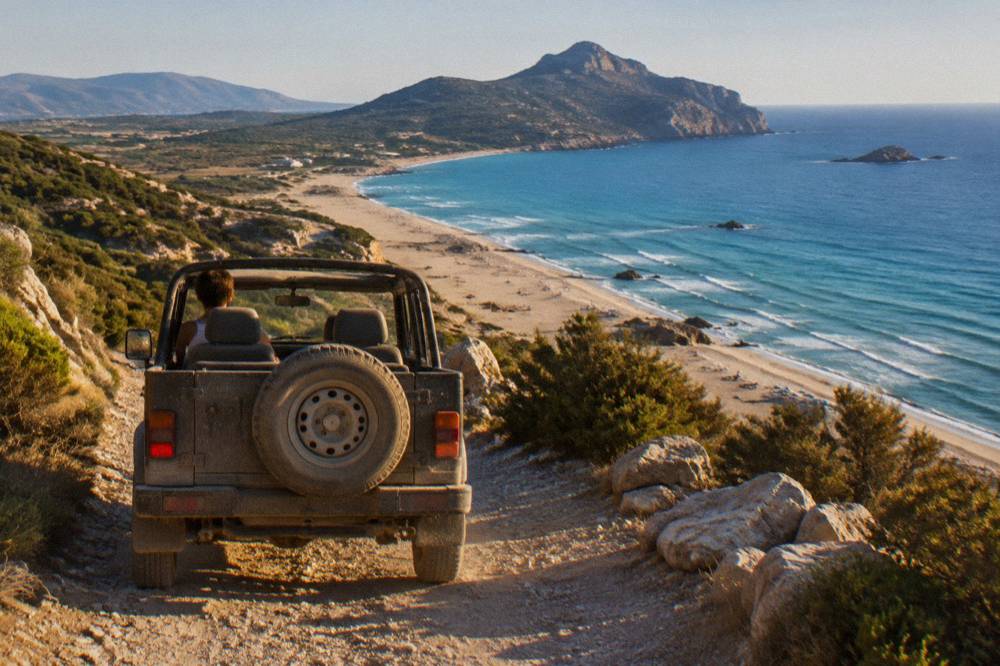
Kalathas Beach Chania
Kalathas Beach is a small sandy bay on the Akrotiri peninsula, the headland north-east of Chania on the Aegean coast of Crete, Greece, and it works as a quiet swimming base within easy reach of the city.
Short answer
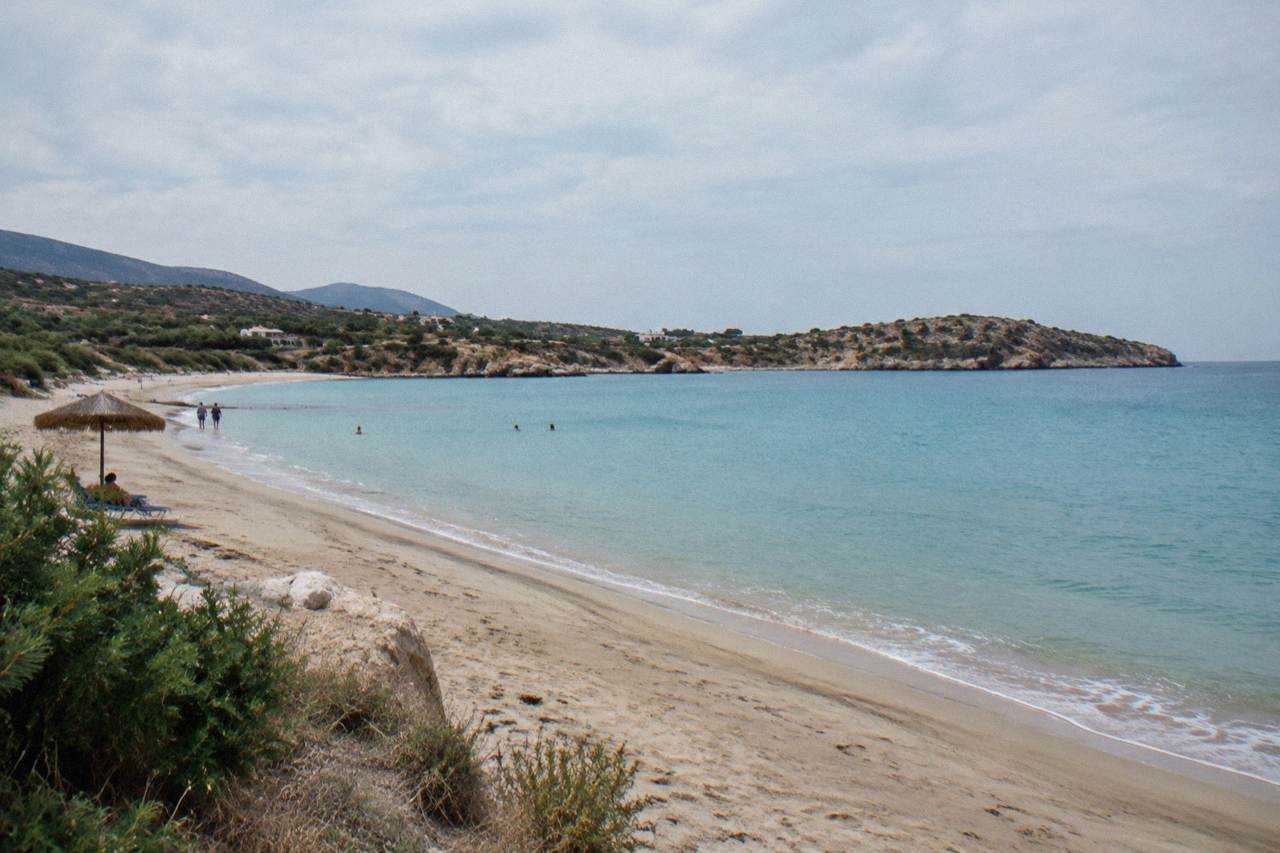
Kalathas Beach is a sheltered sandy bay on the Akrotiri peninsula north-east of Chania, about 14 km from the airport side of the coast, with calm shallow water suited to families and a small island offshore that strong swimmers reach by crossing the channel.
Kalathas Beach sits on the Akrotiri peninsula, the headland that closes the north-east side of the Bay of Chania on the Aegean coast of Crete, Greece. It is a compact sandy bay backed by low hills and a handful of houses, with water that stays shallow for a long way out, which is the single fact that shapes who the beach suits. This guide lays out what the beach is, how the approach works, what a day there involves, and how it compares with the other beaches around the city, so a visitor based in Chania can decide whether Kalathas earns a slot on the itinerary.
Where Is Kalathas Beach And What Kind Of Beach Is It?
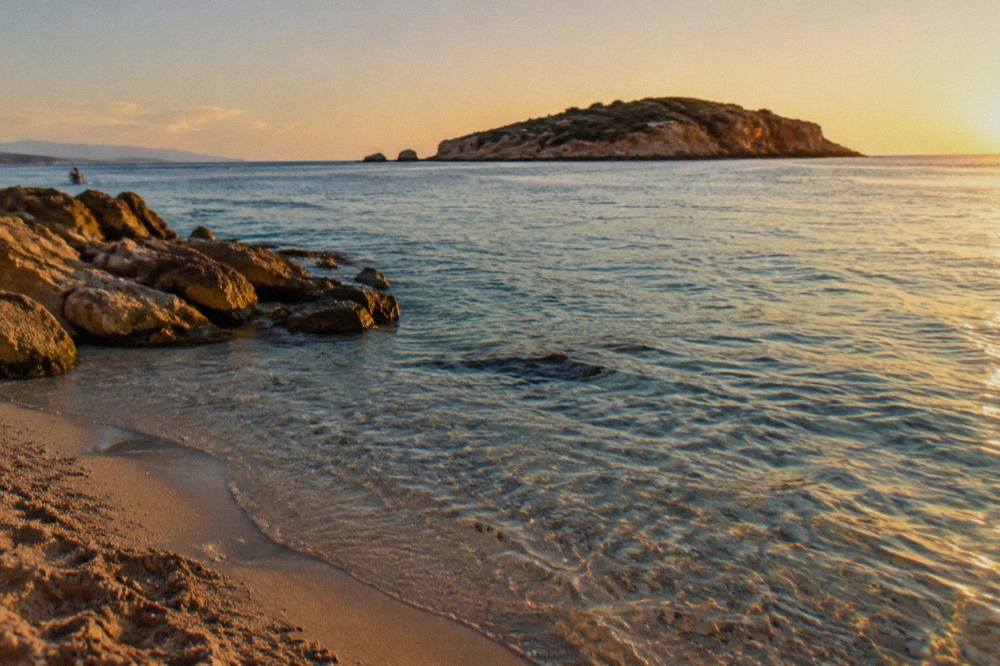
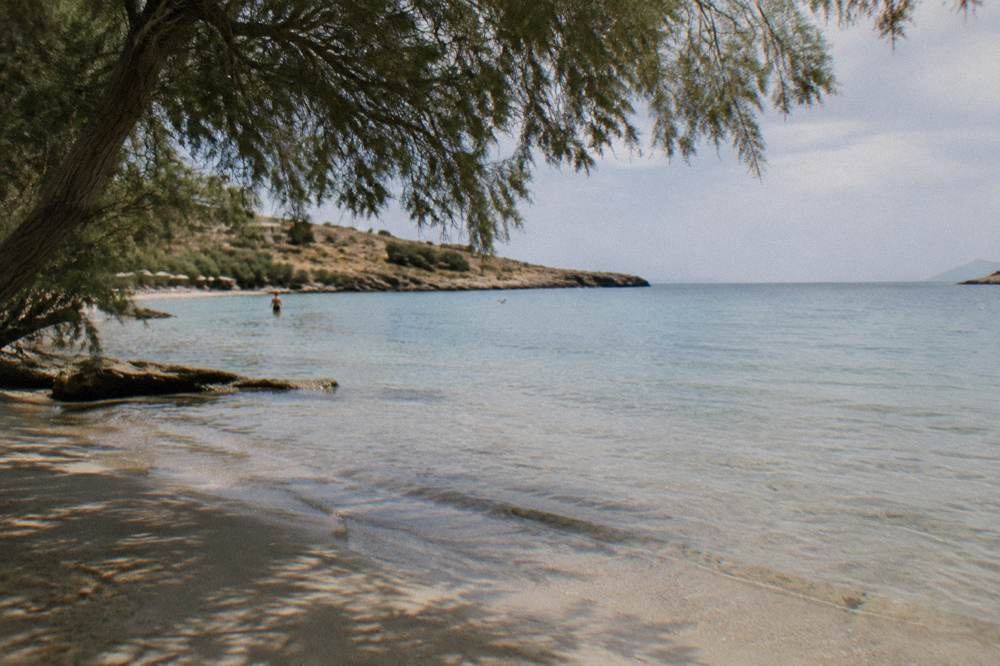
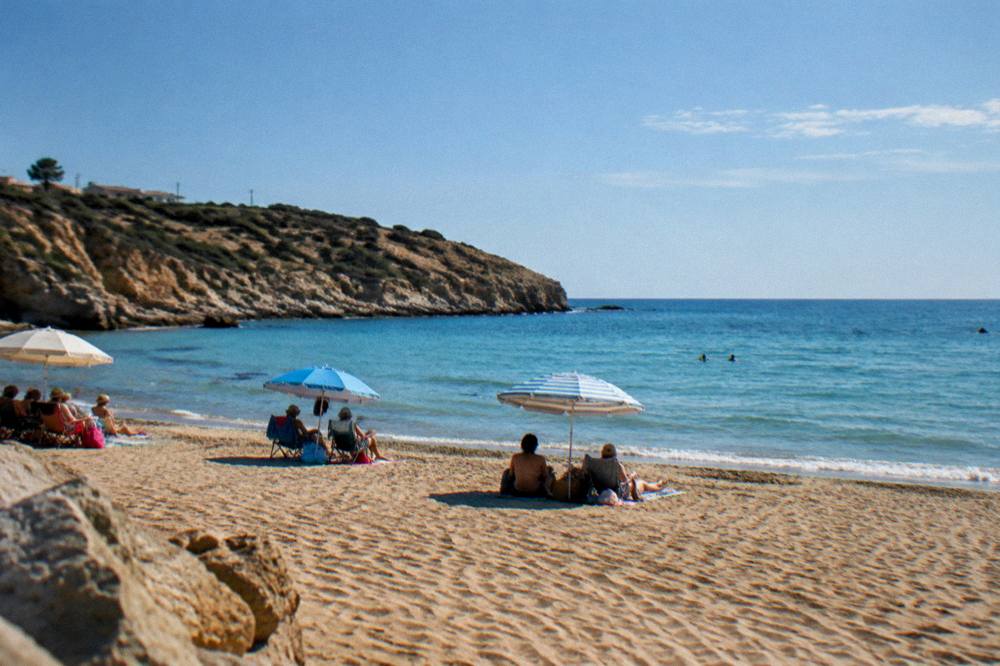
Kalathas Beach is a small sandy bay on the north coast of the Akrotiri peninsula, the headland north-east of Chania on the Cretan Sea, sheltered by the headland itself and backed by low rocky hills, with a tiny uninhabited island a short swim offshore that gives the bay its most distinctive feature. The peninsula is the same stretch of land that carries Chania International Airport, so the approach to the beach runs through the same area of the coast visitors already cross between the airport and the city. The bay faces north but the surrounding headland softens the open-sea swell, and the sand slopes gently, which keeps the shallows wide.
The setting matters more than the size. This is not a long strand like the west-coast beaches; it is a pocket bay, one curved sweep of sand with a rocky point at each end. Behind the sand sit a few tavernas and small accommodation, and above them the dry hills that cover much of Akrotiri. The island opposite the beach is the detail visitors remember: it is close enough that confident swimmers cross to it and back within the bay's shelter, though the channel is a real swim and anyone unsure of their distance judgment should stay on the main sand.
For orientation, Chania's Old Town wraps around the Venetian Harbour on the opposite side of the bay, and the Venetian Harbour page covers that side of the geography. Kalathas belongs firmly to the Akrotiri side, along with Marathi, Stavros and the monastery sights, so it pairs naturally with a peninsula day rather than a city day.
How Do You Get To Kalathas Beach From Chania?
Kalathas Beach is reached by road from Chania across the Akrotiri peninsula, the same headland that carries Chania International Airport about 14 km from the city centre, with hire car, taxi and a limited local bus as the realistic options, since no train or tram exists anywhere on Crete. There is no railway on the island at all, so the choice is between driving, being driven, or the peninsula bus network, and the airport's own site is where public bus and taxi information for the wider area is posted. Visitors hiring a car can cross-check the practicalities on the Chania car rental picture through the site's driving guide before committing to a peninsula itinerary.
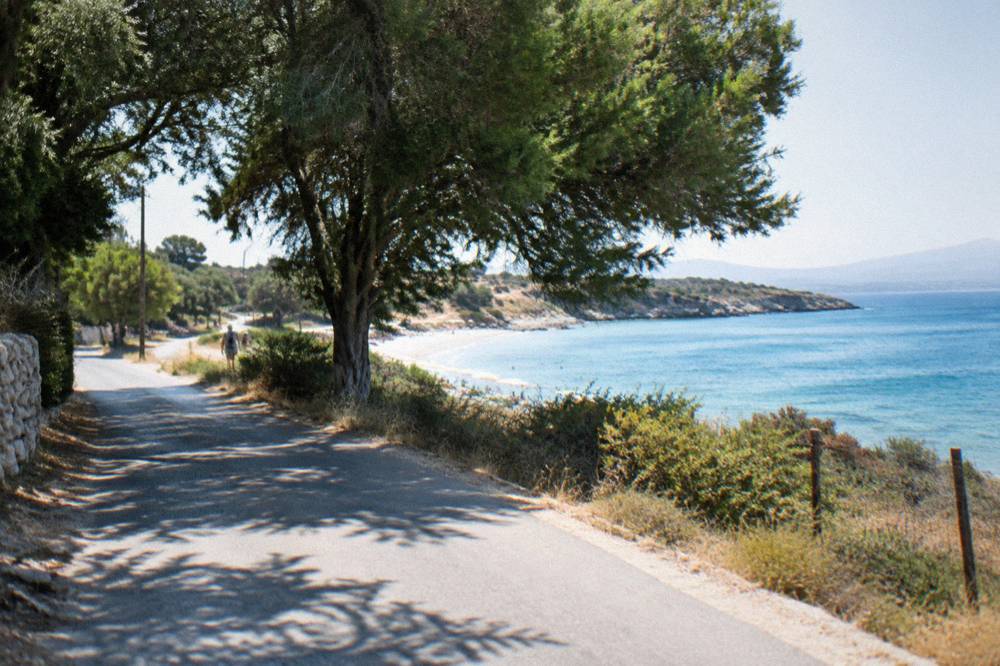
Driving is the straightforward case. The road from Chania climbs onto Akrotiri and threads past the airport turn-off, the monastery roads and a string of bays, with Kalathas signposted among them. Parking at a small bay in high summer is the pinch point, so an arrival before mid-morning buys both a space and a place on the sand. The road itself is normal tarmac, not the rough unpaved track that leads toward Balos from Kaliviani on the far side of the peninsula's west, so a standard hire car is fine here.
Without a car, the practical answer is a taxi or a peninsula excursion that includes beach time. Visitors planning a car-free week can read the wider picture in the getting around Chania guide, and anyone weighing whether the city's own beaches justify skipping Akrotiri altogether can start with can you walk to a beach from Chania Old Town, which answers the opposite end of the same question.
For anyone pairing the beach with sightseeing rather than transport logistics, the peninsula carries enough for a full day, and the related Old Town activity below works as the evening half:
Is Kalathas Beach Good For Swimming And Families?
Kalathas is one of the more family-friendly bays around Chania because the sand shelves gently into shallow, calm water inside a sheltered headland, the bay is small enough to keep sight of children from almost anywhere on the sand, and the offshore island gives stronger swimmers a goal without leaving the bay's protection. That combination, wide shallows plus a contained shape, is what separates it from steeper or more exposed beaches on the same coast. No water-quality award or safety statistic is verified for this beach, so none is claimed here; the practical check a family can make is the same as anywhere, look at the conditions on the day and swim where locals swim.
The swimming itself is the draw. The water over the sand stays knee to waist deep for a long stretch, which makes it warm early and late in the season and forgiving for tentative swimmers. The channel to the island is the one place judgment matters: it is a genuine crossing, not a wade, and it belongs to confident swimmers. Snorkelling around the rocky points at either end of the bay rewards a mask, since fish gather where sand meets rock. Other pages covering the same trip are gathered on Chania Crete Travel Guide.
What the bay does not offer is surf, waves or a long walking beach. Visitors who want a wilder swimming scene can weigh Seitan Limania, the steep cove on the peninsula's north-east side, against Kalathas in advance, because the two sit on the same headland and suit completely different days. Families with small children will find Kalathas the easier of the two by a wide margin.
What Can You Do At And Near Kalathas Beach?
A day at Kalathas divides naturally into swimming and snorkelling inside the bay, an easy walk over the headland to neighbouring coves on the Akrotiri coast, and a short drive to the peninsula's monasteries and other beaches, which makes it a base for a half or full peninsula day rather than a single-activity stop. The bay itself answers the swimming half. The rocks at the edges hold small fish for a snorkeller, the island crossing answers the athletic half of the group, and the sand answers everyone else.
The wider peninsula carries the rest. The Agia Triada monastery and Gouverneto monastery sit inland on Akrotiri and pair with a beach morning as a classic peninsula loop. South along the same coast, Marathi Beach and Stavros Beach offer alternative bays if Kalathas is full or the wind has turned, and both are close enough that switching beaches mid-day is realistic with a car.
Back in the city, the same evening holds the Old Town and its guided options. The mythology-themed scavenger hunt walk is the site's featured activity for this page, a puzzle-driven route through the Old Town that suits families who have spent the day on sand and want a structured wander instead of another restaurant hunt; the internal page is Chania: Mythological Scavenger Hunt with Puzzles & Clues, and Check availability covers live times and pricing.
Where Do You Eat Near Kalathas Beach?
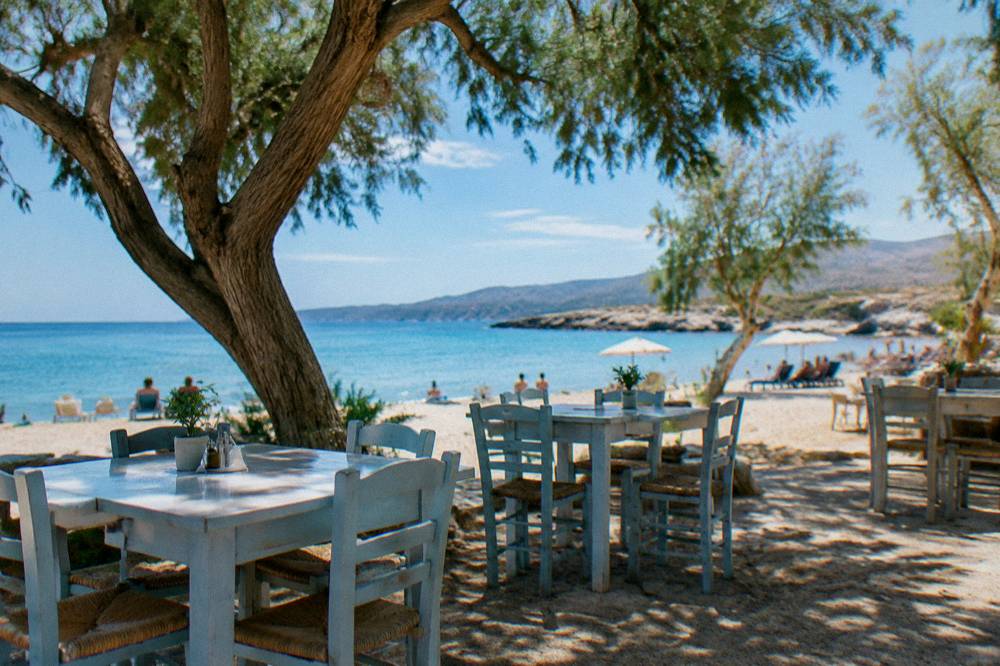
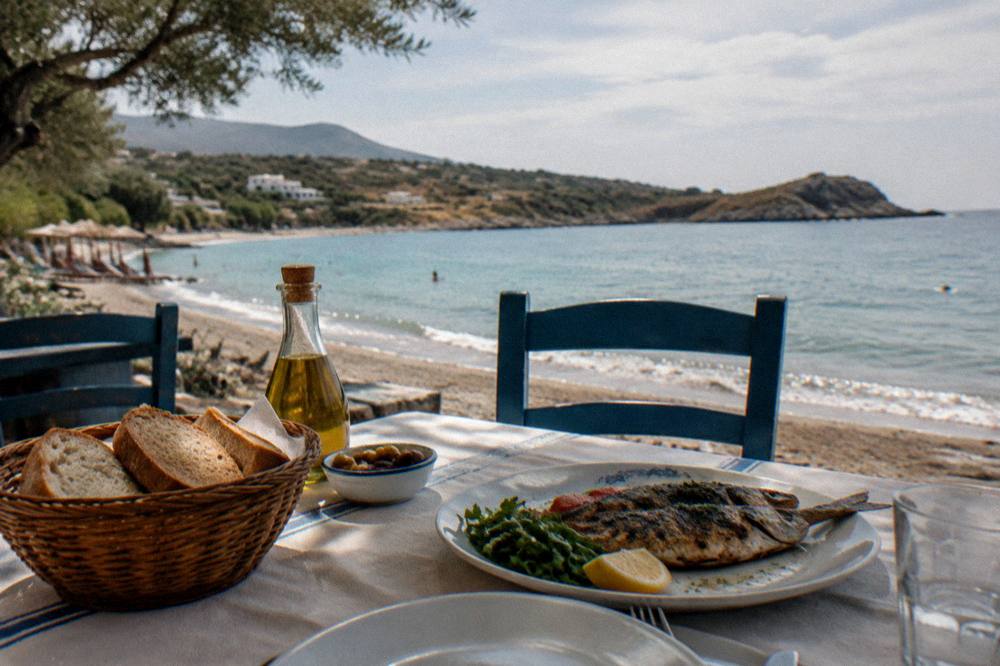
Eating at Kalathas is a small-scale affair: a handful of tavernas sit at or near the sand, serving the grilled fish and Cretan dishes the region cooks everywhere, and the honest check a visitor can run is the posted menu and the itemised bill rather than any promise made in a guide. No dish at these tavernas is endorsed here. What can be said is structural: the bay is small, the tavernas face it, and lunch between swims is the rhythm the place is built around.
The Cretan table travels well across this coast. DAKOS, fresh cheese, olive oil, small fried fish and grilled larger fish are the regional staples, and the site's Cretan food in Chania guide covers what the cuisine actually is, so a reader can order with context rather than guesswork. For visitors who want the cuisine explained while tasting it, a guided tasting walk in town pairs with a beach day as a one-two:
Supplies for the beach, water, bread, fruit, come from Chania itself, and the Municipal Market page covers the city's central market building where that shopping is done. A cooler bag from a city shop before the drive out is the standard move for a full day on Akrotiri, since the bays have limited shade by the afternoon.
How Does Kalathas Compare With The Other Beaches Near Chania?
Kalathas sits in the middle of the Chania beach spectrum: calmer and more contained than the open west-coast strands like Falassarna, easier with small children than the steep cove at Seitan Limania, and quieter than the purpose-built beach strips west of the city at Agia Marina and Platanias, while the city's own Nea Chora beach remains the no-car fallback. Each of those comparisons changes the plan, because the beaches around Chania differ more in access and exposure than in sand quality.
| Beach | Side of Chania | Character | Best suited to |
|---|---|---|---|
| Kalathas | Akrotiri, north-east | Small sheltered bay, shallow water, island swim | Families, calm-water swimmers |
| Nea Chora | City, west of the Old Town | Urban sandy beach, walkable from town | Car-free days in the city |
| Agia Marina | West along the coast | Long organised beach strip | Sunbed-and-services beach days |
| Stavros | Akrotiri, north | Enclosed bay under a cliff headland | Sheltered swimming, easy access |
| Seitan Limania | Akrotiri, north-east | Steep descent to a narrow cove | Confident walkers and swimmers |
| Elafonisi | Far south-west | Natura 2000 protected area, free entry | A full-day trip, not a beach hop |
The far beaches are a different category. Elafonisi is a protected Natura 2000 area where entry is reported to be free and taking sand, shells or plants is prohibited, and it is a day trip rather than an afternoon hop; the site's is Elafonisi worth visiting answer covers that decision. Balos, meanwhile, is its own logistics question, covered in is it difficult to get to Balos Beach, where the unpaved road from Kaliviani and the boat options are laid out.
When Is The Best Time Of Year For Kalathas Beach?
The beach season at Kalathas tracks the Chania climate table, where the HNMS Chania Souda station records 1958 to 2010 show mean temperatures rising from 15.9 C in April to 20.2 C in May and peaking at 26.7 C in July, with rainfall collapsing from 31.5 mm in April to 1.0 mm in July, so late May through September is the reliable swimming window. Those are station records, published by the Hellenic National Meteorological Service for its Chania Souda station, and they are the honest basis for planning, since no newer official table exists.
| Month | Mean C | Rain mm | Rain days |
|---|---|---|---|
| Apr | 15.9 | 31.5 | 7.7 |
| May | 20.2 | 13.5 | 4.2 |
| Jun | 24.7 | 3.4 | 1.2 |
| Jul | 26.7 | 1.0 | 0.4 |
| Aug | 26.3 | 1.4 | 0.6 |
| Sep | 23.2 | 15.4 | 3.2 |
| Oct | 19.4 | 67.7 | 9.3 |
June and July are the dry heart of that window: 3.4 mm and 1.0 mm of rain respectively, with rain days at 1.2 and 0.4 in the same station table. August stays nearly as dry at 1.4 mm, with the mean maximum at 30.4 C against July's 30.7 C. May is the shoulder-month gamble, with a 20.2 C mean and only 4.2 rain days, and October tips toward rain at 67.7 mm across 9.3 rain days, which is when the beach question gives way to city and gorge itineraries.
No monthly sea-temperature normal exists for this coast, so none is printed. A live sea reading on the day, checked that morning, tells a swimmer more than any invented average, and the shallow shelf at Kalathas warms earlier than deep-water bays in any case.
What Should You Know Before You Go To Kalathas?
Bring water, shade and cash sense: the bay has limited natural shade, no verified lifeguard or water-quality claim can be made for it, accommodation in the area collects the Greek climate crisis resilience fee per room per night at seasonal rates confirmed at booking, and the practical checks are the ones a visitor runs anywhere, posted prices at the tavernas and conditions on the water. Greece is in the euro area, since 1 January 2001, and a Schengen member with internal checks abolished since 26 March 2000, so for European visitors the border side of the trip is simple; entry-system detail beyond that is a question for official sources, not a beach guide.
Shade is the real planning item. Tamarisk trees back parts of the sand, but a small bay in July, with a station mean maximum of 30.7 C, demands an umbrella or a plan built around morning and late-afternoon swims. Footwear for the rocky points helps anyone snorkelling, and a mask is worth the luggage space here more than at the city beaches.
| Item | Why it matters at Kalathas |
|---|---|
| Umbrella or shade plan | Limited natural shade; July mean maximum 30.7 C at the Chania Souda station |
| Snorkel mask | Rocks at both points of the bay hold fish in shallow water |
| Water and food for the day | Small bay, limited shops; supplies are bought in Chania first |
| Footwear | Rocky entry at the bay's edges |
| Cash or card sense | Tavernas post menus; check the posted price and the itemised bill |
One pairing worth making on the same peninsula day is the inland water contrast at Lake Kournas, Crete's freshwater lake south of Georgioupoli, reachable as part of a guided inland loop:
Should Kalathas Beach Be On Your Chania Itinerary?
Kalathas earns its place when the day calls for calm, shallow, low-stress swimming within a short drive of Chania, and it should be skipped when the priority is a headline beach like Elafonisi or Balos, a long coastal walk, or a day built around the Old Town, because it is a compact local bay rather than a destination beach. That is the honest frame. The bay competes on convenience and calm, not on scale or drama, and visitors who accept that sizing get exactly what it promises.
Itineraries that fit it best are the peninsula day and the split day. A peninsula day strings Kalathas with the monasteries and one other Akrotiri bay. A split day pairs a morning at Kalathas with an afternoon or evening activity in the city, and the site's Chania one day and Chania with kids itineraries both have slots where a bay of this kind slots in cleanly. For a wider look at the coast's headline strands, what is the prettiest beach in Crete answers the ranking question directly.
Common Questions About Kalathas Beach
Is Kalathas Beach good for children?
The bay's shallow sand shelf and contained shape suit families with small children, and the water stays knee to waist deep for a long stretch. No lifeguard or water-quality claim is verified for the beach, so conditions should be checked on the day.
Can you swim to the island at Kalathas Beach?
Yes, confident swimmers cross the channel to the small island inside the bay's shelter. It is a genuine swim rather than a wade, so it belongs to swimmers who trust their distance judgment.
How far is Kalathas Beach from Chania Airport?
Kalathas sits on the Akrotiri peninsula, the same headland that carries Chania International Airport, itself about 14 km from the city centre. The beach is a short drive from the airport side of the peninsula, which makes it one of the first beaches many visitors reach after landing.
Is Kalathas Beach windy?
The HNMS Chania Souda station table, 1958 to 2010, records the prevailing wind as west, turning north-west in July and August. Kalathas is a sheltered bay within the headland, so it sits calmer than open north-facing coast, but conditions should still be judged on the day.
Do you need a car to visit Kalathas Beach?
A car or taxi is the practical way to reach the bay from Chania, since there is no railway on Crete. A peninsula excursion or a taxi covers the trip for visitors without a hire car, and the airport's own site posts public bus information for the area.
What else can you combine with Kalathas Beach in one day?
The Akrotiri peninsula pairs the bay with the Agia Triada and Gouverneto monasteries, the Marathi and Stavros bays, and the Seitan Limania cove for confident walkers. A beach morning plus an Old Town evening is the other natural split.