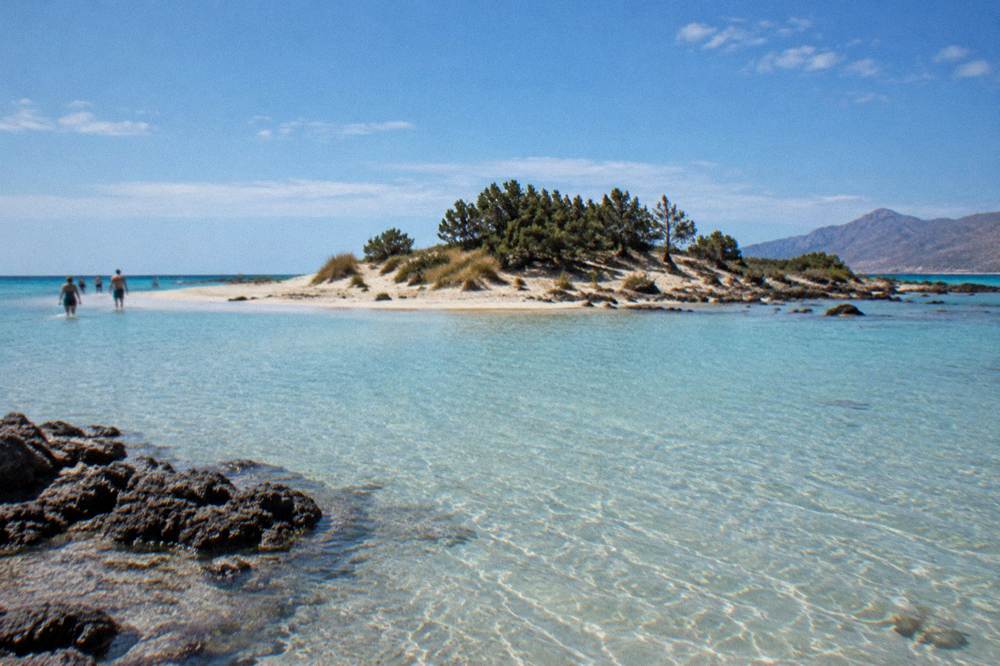
What Is The Prettiest Beach In Crete?
Elafonisi and Balos lead the argument for the prettiest beach in Crete, and both are day trips from Chania. Here is what the sources actually say about each.
Chania, on the north-west coast of Crete in Greece, is the base from which the island's two most photographed beaches are reached, and that fact shapes the whole argument about which stretch of sand deserves the title. Beauty is not a measurable quantity, and no authority ranks beaches. What the sources do give is concrete: protected status, entry rules, access routes and climate figures. This page sets out what is actually known about the leading candidates, Elafonisi, Balos, Falassarna and the south coast coves, so the choice can be made on facts rather than superlatives.
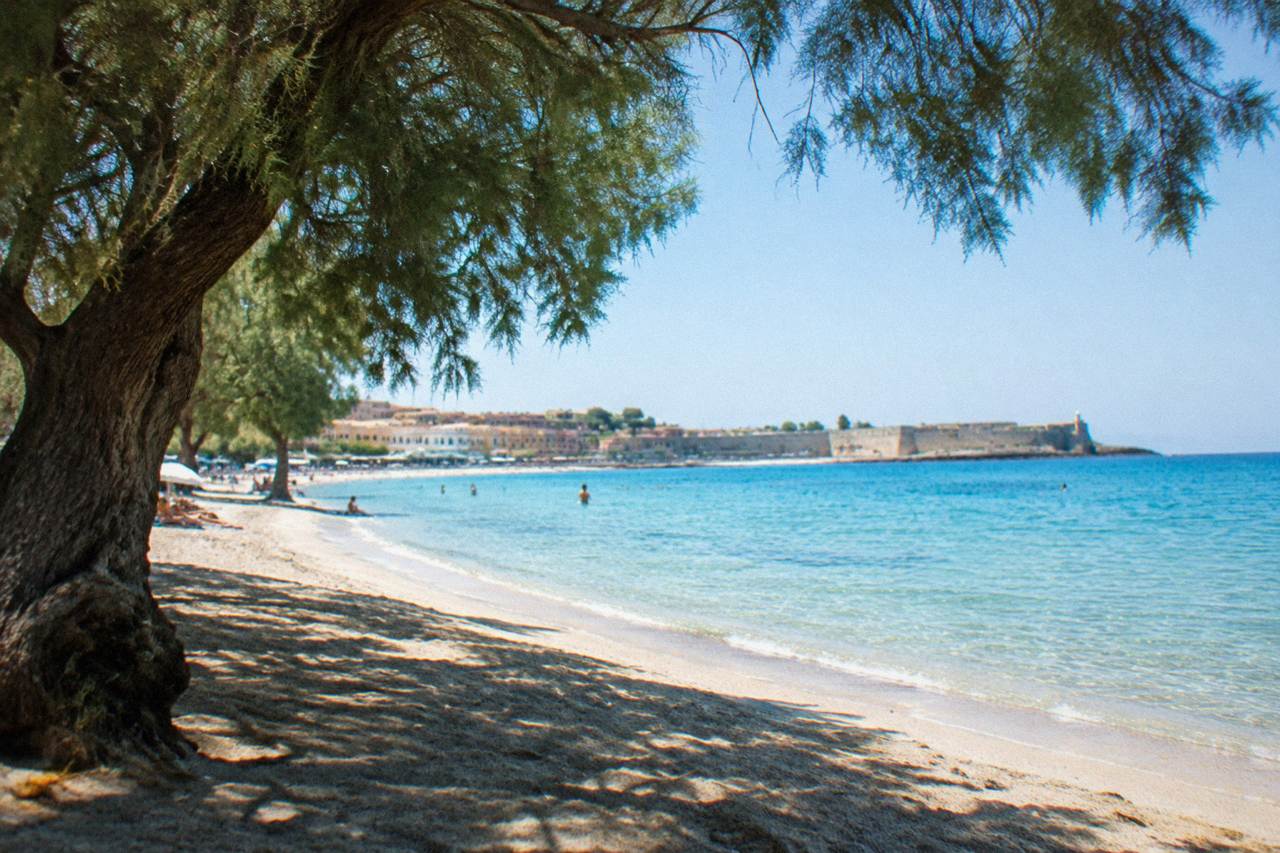
What Is The Prettiest Beach In Crete?
No official answer exists, and the two beaches that dominate the discussion are Elafonisi and Balos, both on the western end of the island and both reachable as day trips from Chania. Elafonisi is a Natura 2000 protected area with reported free entry and pink-tinged sand, while Balos is a lagoon under Gramvousa reached by boat from Kissamos or by an unpaved road. Preference between them comes down to access, not scenery.
Neither beach can honestly be called the winner. What can be said is which facts attach to each. Elafonisi sits inside a Natura 2000 protected area, entry is reported to be free, and taking sand, shells or plants is prohibited. Balos carries only one confirmed charge, a EUR 1 Kissamos municipal fee collected on the boat ticket for passengers over 13, and its land approach runs along an unpaved road from Kaliviani to a parking area, followed by a walk down to the lagoon.
For a reader based in Chania, both are practical. Balos boats leave from Kissamos port, with operator-reported daily departures running to 31 October 2026. Elafonisi is served by KTEL buses in summer, according to the KTEL route list, and by a wide range of organized day trips. The desk's Chania Crete Travel Guide covers the full planning picture.
For days the bus timetables do not fit your plans, book a rental car here.
Why Do Elafonisi And Balos Lead Every Discussion?
Elafonisi and Balos lead because each pairs an unusual physical setting with a documented, distinctive feature: Elafonisi has protected status and protected pink sand, and Balos has a shallow lagoon framed by the Gramvousa peninsula and a fortress-topped island. Neither claim is marketing shorthand, both are grounded in what the protecting bodies and operators publish.
At Elafonisi, the protected-area designation carries rules a visitor should know before arriving. Taking sand, shells or plants is prohibited, which matters because the beach's famous colour comes precisely from that sand. Parking is reported at around EUR 5 a day. Entry itself is reported to be free, and no other charge is confirmed. The why the sand is pink question has its own full answer on this site.
Balos is a different proposition. The lagoon sits below the Gramvousa peninsula, and the standard visit combines it with the island of Gramvousa itself. The only confirmed charge is the EUR 1 municipal fee, collected on the boat ticket for over-13s. A proposed time-slot cap of roughly 1,200 visitors per three hours was put forward in August 2026, but it was a proposal and is not in force, so it should not be treated as a rule. Reaching Balos by land means the unpaved Kaliviani road and a walk down; reaching it by sea means a cruise from Kissamos. The question is it difficult to get to Balos beach addresses the logistics in detail, and the is Elafonisi worth visiting page does the same for the rival.
Falassarna deserves a place in the same conversation. It sits further down the west coast, it is a common pairing with Balos on combined day trips, and it holds its own on width and water colour without the protected-sand rules of Elafonisi or the boat dependency of Balos.
Which Beaches Can You Reach Without Leaving Chania?
The beaches within walking or short local reach of central Chania are city beaches, above all Nea Chora west of the Old Town, and they answer a different need from Elafonisi or Balos: they are the everyday option, not the spectacle. The question can you walk to a beach from Chania Old Town has its own page, and the answer is yes, with Nea Chora the standard name.
The Akrotiri peninsula east of the city holds the next ring of options: Marathi, Stavros, Kalathas and the steep cove of Seitan Limania. Agia Marina and Platanias stretch west along the north coast. None of these carries a verified fee in the sources available, and none should be described with a superlative, but they are the beaches a visitor actually swims at on the days between big excursions.
A realistic pattern for a week based in Chania looks like this: one or two headline excursions west, the rest spent on the nearby strands. The day trips from Chania guide lays out the excursion menu, and the prettiest-beach question is really about which single headline day to build a trip around.
| Beach | Where It Sits | Access From Chania | What The Sources Confirm |
|---|---|---|---|
| Elafonisi | South-west tip of Crete | Day trip by road or summer KTEL bus | Natura 2000 area, entry reported free, sand and shells protected, parking reported around EUR 5 a day |
| Balos lagoon | North-west, below Gramvousa | Boat from Kissamos port, or unpaved road from Kaliviani plus a walk | EUR 1 municipal fee on the boat ticket for over-13s, daily departures reported to 31 October 2026 |
| Falassarna | West coast | Day trip by road, often paired with Balos | Listed KTEL destination area, commonly combined with Balos on tours |
| Nea Chora | Edge of Chania city | Walkable from the Old Town | City beach with its own guide on this site |
Balos, Elafonisi Or Falassarna: How Do You Actually Choose?
The choice splits on three practical axes: how you want to travel, what rules you accept, and how fixed your dates are. Balos requires a boat or an unpaved road, Elafonisi requires respecting protected-sand rules at a Natura 2000 site, and Falassarna is the road-only option with the fewest confirmed constraints of the three.
Boat-based Balos is the most weather-exposed plan. Kissamos departures are reported daily to 31 October 2026, but sea conditions govern sailing, and a sailing cancelled for wind leaves a hole in a short trip. The land route to Balos trades that dependency for the unpaved Kaliviani road and the walk down to the lagoon, which rules it out for anyone with limited mobility or a small hire-car agreement that excludes unpaved surfaces. Confirm the terms at pickup.
Elafonisi is the most rule-bound but the simplest logistically: a road journey, reported free entry, and a clear prohibition on taking sand, shells or plants. The Elafonisi beach guide and the Falassarna beach guide hold the detail for each.
What Does The South Coast Offer Instead?
The south coast gives the clearest alternative to the west-coast headline beaches: coves and village beaches on the Libyan Sea, reached through the White Mountains, a mountain wall dropping to a quieter sea where the journey is part of the point. Loutro, Sfakia and Preveli are the names that come up, with Preveli's palm-backed river mouth further east. The geography is the draw, a mountain wall dropping to a quieter sea, and the journey there is part of the point.
The Imbros Gorge route shows how these days work. The gorge is walked one-way downhill, and a guided option that pairs it with time on the Sfakia coast, Check availability on the operator's live listing, turns a hike into a mountain-and-swim day without any planning burden on the visitor. The listing carries the current price, rating and duration.
Preveli, with its palm-backed river mouth, sits further east and has its own guide page. Boats to Gavdos run from Paleochora and Sougia in season, per the operator information gathered, though no timetable can be stated here. The south coast will never win a sand-colour contest against Elafonisi, but it answers a different idea of beauty: empty water under cliffs.
When Is The Beach Weather At Its Best?
The HNMS Chania Souda station table, covering station records from 1958 to 2010, shows the dry beach season running from May through September, with July the driest month at 1 mm of rain and only 0.4 rain days, and January the wettest at 129.5 mm across 16.3 rain days. Rain starts to matter again from October, which logs 67.7 mm.
The same table gives mean temperatures of 20.2 C in May, 26.7 C in July and 23.2 C in September, with mean maxima of 30.7 C in July and 30.4 C in August. These are station records from an inland site at 148 m above Souda Bay, not a coastal reading, and no monthly sea-temperature normal exists to print.
| Month | Mean C | Rain mm | Rain days |
|---|---|---|---|
| May | 20.2 | 13.5 | 4.2 |
| Jun | 24.7 | 3.4 | 1.2 |
| Jul | 26.7 | 1.0 | 0.4 |
| Aug | 26.3 | 1.4 | 0.6 |
| Sep | 23.2 | 15.4 | 3.2 |
| Oct | 19.4 | 67.7 | 9.3 |
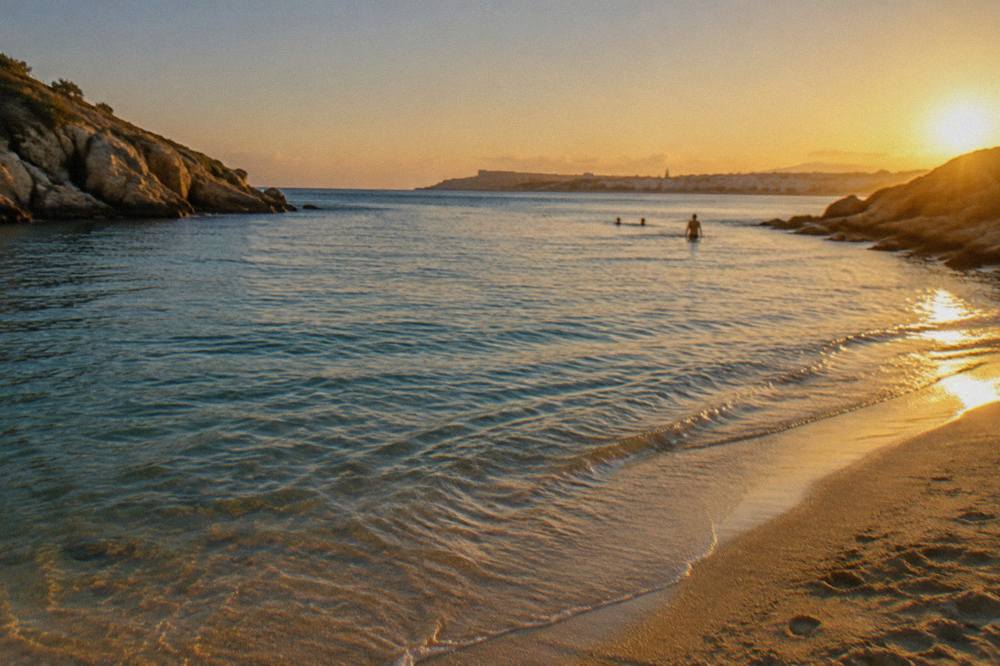
June and early July combine the driest tables of the station record with sea conditions that suit boat trips to Balos. September keeps warm means, 23.2 C, with only 3.2 rain days in the table, and thinner crowds once school terms resume. October is the gamble month: 19.4 C mean against 67.7 mm of rain and 9.3 rain days in the 1958 to 2010 station records.
Common Questions About The Prettiest Beach In Crete
What is the prettiest beach in Crete?
No official ranking exists. Elafonisi and Balos are the two names that dominate the discussion, both on the west of the island and both day trips from Chania, with Falassarna close behind.
Is Elafonisi free to enter?
Entry is reported to be free. The beach is inside a Natura 2000 protected area, taking sand, shells or plants is prohibited, and parking is reported at around EUR 5 a day.
Does Balos charge an entry fee?
The only confirmed charge is a EUR 1 Kissamos municipal fee, collected on the boat ticket for passengers over 13. No visitor cap is in force.
Can you reach Balos without a boat?
Yes, by the unpaved road from Kaliviani to a parking area, followed by a walk down to the lagoon. Check hire-car terms before driving it.
Which beach is closest to Chania Old Town?
Nea Chora sits at the western edge of the city and is walkable from the Old Town, making it the everyday option between excursions.
What is the driest month for a beach day?
In the HNMS Chania Souda station records from 1958 to 2010, July is the driest month at 1 mm of rain and 0.4 rain days.
The honest close is this: the prettiest beach in Crete is whichever of Elafonisi or Balos fits the travel style, a protected pink-sand strand reached by road, or a lagoon reached by boat or rough track, and a week based in Chania leaves room to see both and judge for yourself.