Beach Hotels Chania
Chania pairs a Venetian-harbour Old Town with a string of swimmable beaches on its north-west coast, and the beach-hotel question comes down to which stretch of that coast you want to wake up on.
Short answer
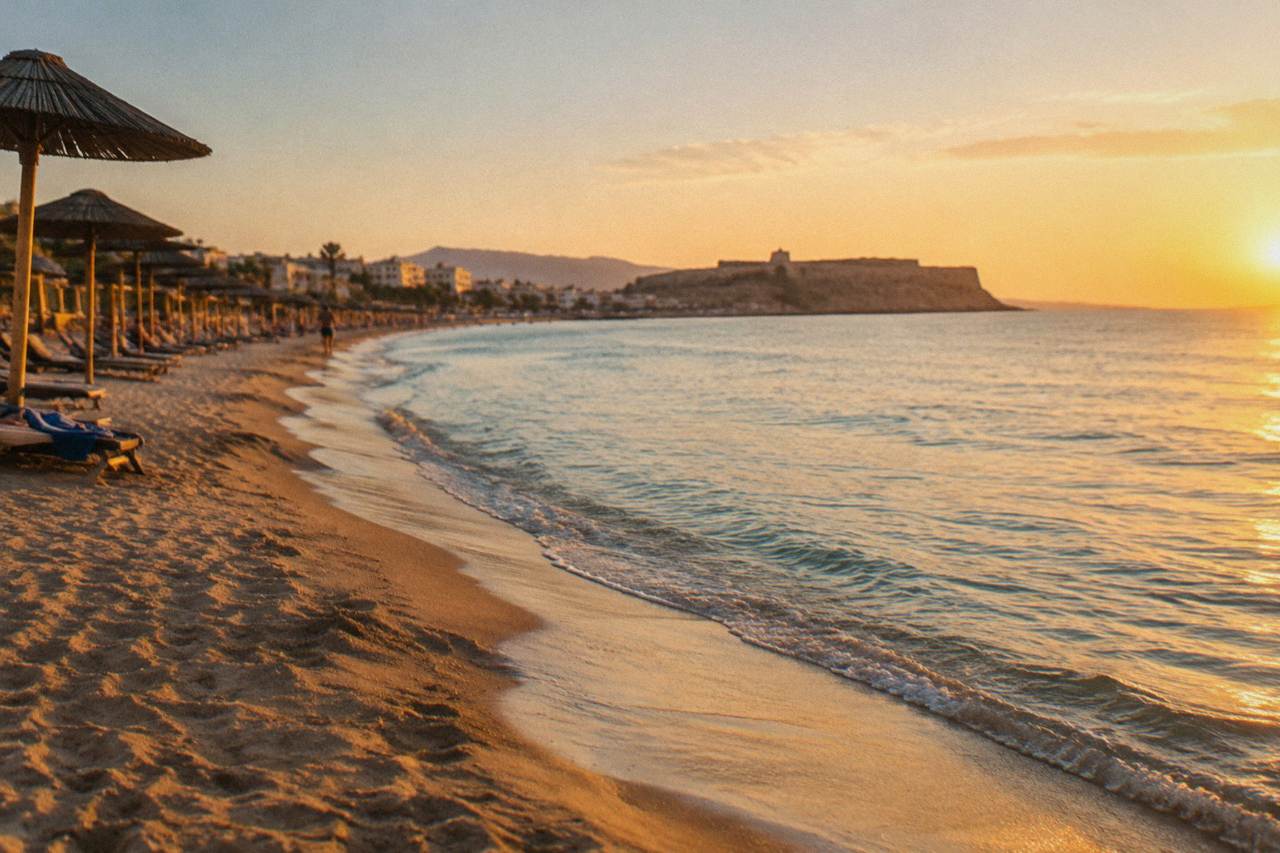
Stay near Nea Chora for a walkable sandy beach beside the Old Town, at Agia Marina or Platanias for the longest resort stretch west of the city, or on the Akrotiri peninsula for quieter coves such as Marathi, Stavros and Kalathas.
Chania sits on the north-west coast of Crete, facing the Cretan Sea, with its Old Town wrapped around the Venetian Harbour and the White Mountains rising behind the city to the south. That geography is what makes the beach-hotel question unusually pleasant here: the city is coastal, the sand starts within walking distance of the harbour walls, and the resorts thin out west along the bay and east around the Akrotiri peninsula. This page from the Chania Crete Travel Guide desk sets out the beach areas one by one, what the HNMS Chania Souda station table says about the seasons, and the checks worth making before you book any room.
Where Are The Best Beach Hotel Areas In Chania?
The beach-hotel map of Chania divides into three practical zones: the Nea Chora stretch on the western edge of the Old Town, the Agia Marina and Platanias resort belt running west along the bay, and the Akrotiri peninsula east of the city with its quieter coves at Marathi, Stavros and Kalathas. Each zone trades convenience against peace, and none is more than a short drive or bus ride from the harbour.
Nea Chora is the answer for anyone who wants sand and the Old Town in the same day without a vehicle. The beach sits just beyond the western walls, close enough that the walk from the Old Town to the sand is a real question visitors ask, and the answer is a plain yes for this stretch. Agia Marina and Platanias, west of the city, carry the heavier share of resort hotels, tavernas and water sports, and they connect to town by the coast road. Akrotiri, the peninsula that also holds the airport, keeps smaller beaches in separate coves, so a stay there feels like a village choice rather than a resort strip. The where to stay in Chania guide compares these zones against the Old Town itself.
| Zone | Main Beaches | Character | Car Useful? |
|---|---|---|---|
| Nea Chora | Nea Chora city beach | Sandy, walkable from the Old Town, tavernas on the front | No |
| West bay | Agia Marina, Platanias | Long resort stretch, water sports, busiest in summer | Helpful, bus route runs |
| Akrotiri peninsula | Marathi, Stavros, Kalathas | Separate sheltered coves, quieter, village scale | Yes |
A fourth option belongs to day trips rather than hotel zones. Balos, Elafonisi and Falassarna, the west-coast beaches the region is famous for, lie far enough from the city that they are visited from a Chania base rather than slept on, and each has its own access conditions worth knowing before you plan a day there.
Which Beach Should You Stay Near In Chania?
For a car-free holiday, stay near Nea Chora, where the sand begins at the edge of the Old Town and the harbour, tavernas and museums are all on foot. For a classic resort week with a long sandy beach, stay at Agia Marina or Platanias. For quiet water and small-cove swimming, stay on the Akrotiri peninsula at Marathi, Stavros or Kalathas and accept that a car becomes part of the plan.
The deciding factor is usually the water your group wants to swim in. The north coast faces the open Cretan Sea, and the bay beaches can take wind and waves when it blows, while the Akrotiri coves sit in more sheltered corners of the peninsula, which is why families with small children often end up at Marathi. The individual beach guides, Marathi, Stavros and Kalathas, describe each cove on its own terms, and the Agia Marina beach page covers the west-bay stretch in detail.
One distinction saves confusion later. The beaches that make the postcards, Balos, Elafonisi and Falassarna, are day-trip destinations from any Chania hotel, not neighbourhoods you sleep in. Balos is reached by boat from Kissamos or by an unpaved road from Kaliviani followed by a walk down, with only a EUR 1 Kissamos municipal fee confirmed, collected on the boat ticket for over-13s. Elafonisi is a Natura 2000 protected area with free entry and a strict rule against taking sand, shells or plants, and parking is reported at around EUR 5 a day. A beach hotel in town is the base from which you reach all three.
If a hotel-with-beach day trip appeals, the Elafonisi beach trip from Chania and a boat cruise from Kissamos to Balos and Gramvousa are the two products the desk sees booked most for this purpose, and the operator's live listing carries current prices and departure points.
What Extra Fees Apply To A Beach Hotel Stay In Chania?
Greek accommodation collects a climate crisis resilience fee per room or apartment per night, with seasonal rates by star category and for rentals, and the amount is confirmed at booking rather than assumed, because published rates change by season and category. No nightly hotel rate belongs in a planning page, since rates move constantly and the operator's own listing is the only live source.
The practical advice is simple and boring, which is why it works. When you book, ask the property what the resilience fee adds per night for your dates, and treat the answer at booking as the number that matters. Sunbeds and umbrellas, where a beach offers them, are a separate question from the room: at Elafonisi no sunbed price is published anywhere official, so check on the sand before you sit. The same discipline applies to parking, where only Elafonisi's roughly EUR 5 a day figure is reported, and to nothing else on this coast.
A beach week in Chania also pairs naturally with the island's table, and one evening of it can be spent learning the cuisine rather than only eating it. The Chania Cooking Class, The Authentic Enjoy traditional Cretan meal runs in the region, and Check availability for your dates before you lock the rest of the week in.
Is Nea Chora The Right Beach Base For Chania Old Town?
Nea Chora is the strongest car-free beach base in Chania, because its sandy beach sits at the western edge of the Old Town, within an ordinary walk of the Venetian Harbour, the Municipal Market and the lanes around the harbour walls, and its seafront carries its own row of fish tavernas so dinner does not require a journey back into town.
The trade-offs are honest ones. Nea Chora is a city beach, so it is busy in high summer and it is not the powder-sand of the west-coast postcards. What it buys is time: no transfers, no parking, no decision about whether the evening ends in town or at the hotel. The Nea Chora beach guide covers the beach itself, and the wider best hotels in Chania and boutique hotels in Chania pages cover where the characterful rooms actually are, including the Old Town conversion properties a short walk inland of the sand.
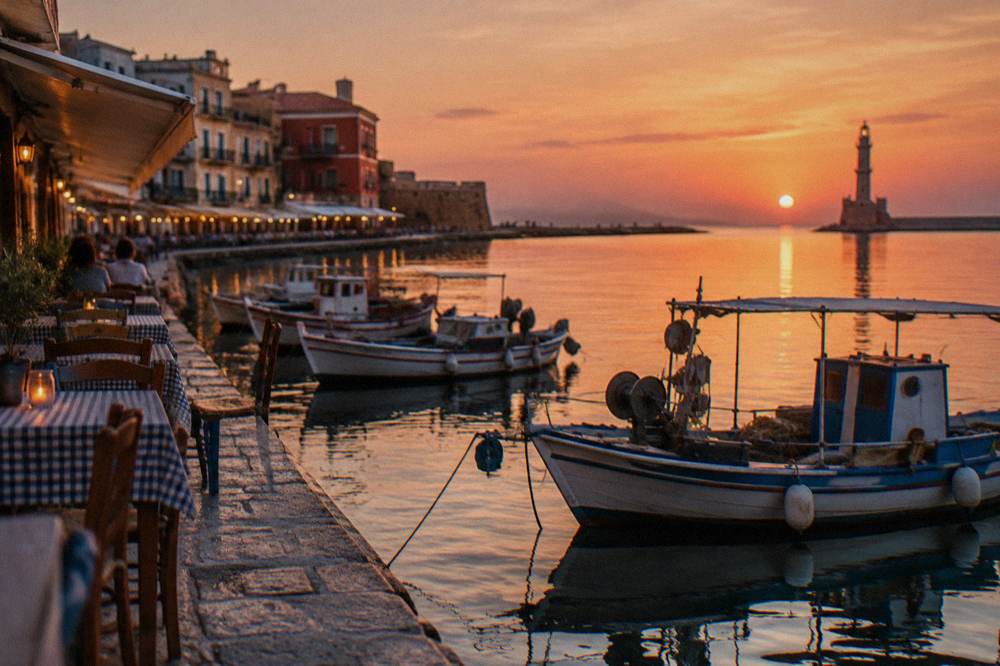
For anyone weighing a harbour-view room in the Old Town against a seafront room at Nea Chora, the practical difference is noise and light. The harbour front stays loud and lively deep into a summer night, while the Nea Chora front quiets when the tavernas close. Readers who want the full comparison of the two areas will find it in the where-to-stay guide linked above.
Are Agia Marina And Platanias Good For Beach Hotels In Chania?
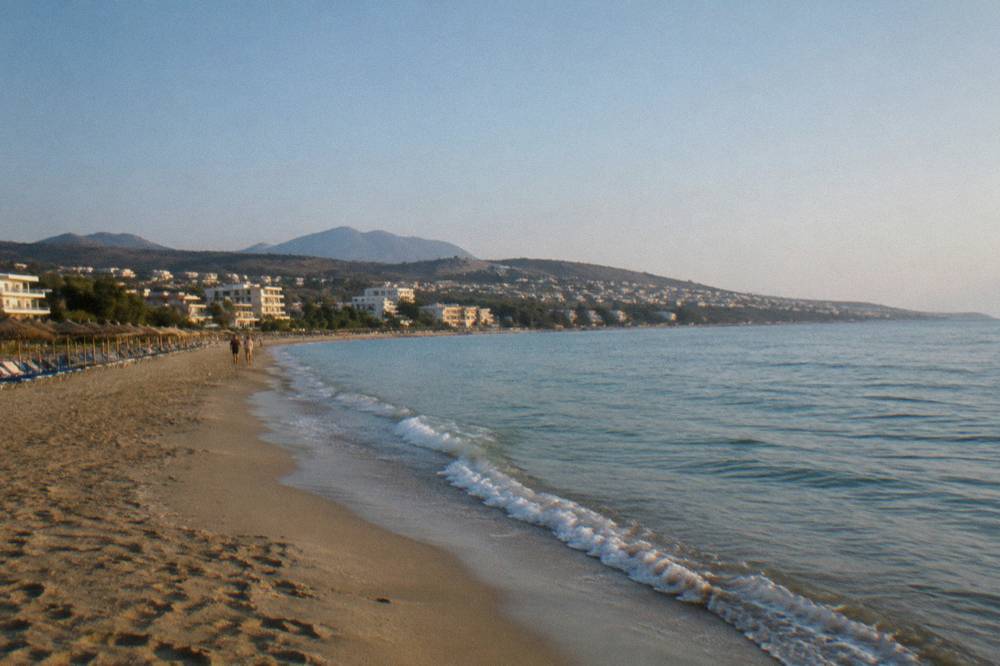
Agia Marina and Platanias form the main resort belt west of Chania, a long sandy stretch served by the coast road with the heaviest concentration of beach hotels, tavernas and water sports in the area, and they suit visitors who want a full beach-holiday week with the city as an occasional excursion rather than a daily base.
The belt runs west from the city along the bay, with Agia Marina the nearer of the two and Platanias the larger, livelier centre beyond it. Platanias also lifts uphill behind the beach, so a room "in Platanias" can mean a seafront room or a hillside room with a view and a climb, and the listing's map matters more than its name. Water depth and waves here follow the open bay, so on windy days the swimming is more energetic than in the Akrotiri coves. The Agia Marina and beach guide holds the detail for the stretch as a whole.
Getting into Chania from the belt is straightforward on the coast road, and the getting-around pages, getting around Chania and the KTEL bus guide, explain the practical options without promising any fare, since bus fares are not published on the official pages the desk checks. What the region's own sources do confirm is the road network itself: the airport sits about 14 km from the city centre on the Akrotiri peninsula near Souda, and the Chania airport and airport to town guides cover the arrival side of a west-bay holiday.
Is The Akrotiri Peninsula Better For Quieter Beach Hotels Near Chania?
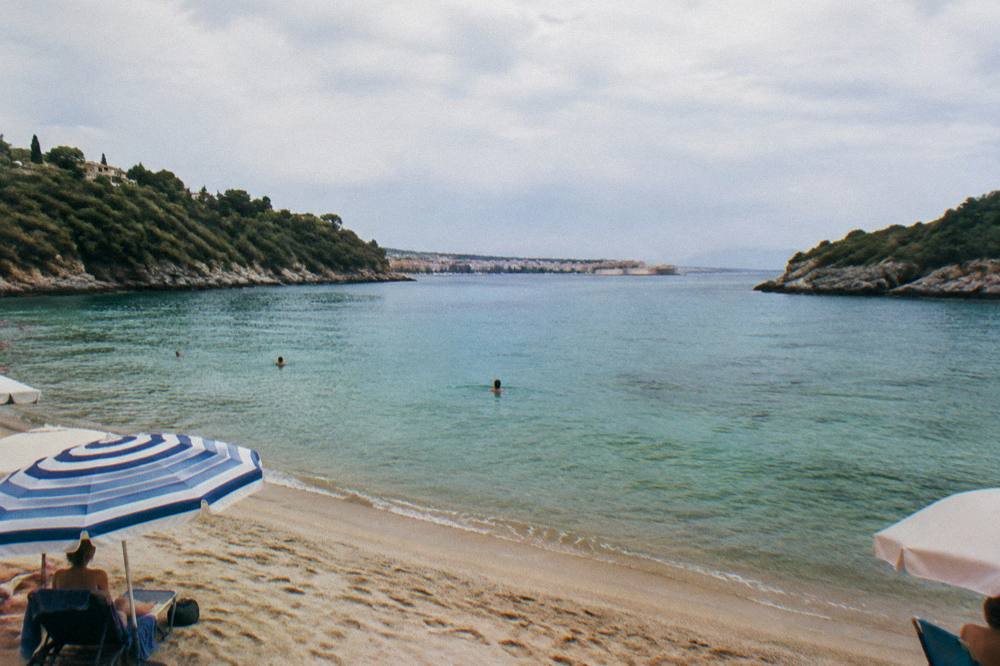
Akrotiri is the quiet-water choice near Chania, holding Marathi, Stavros and Kalathas as separate sheltered coves with village-scale surroundings rather than a resort strip, and it suits families and swimmers who prefer calm water, with the trade that a car becomes close to essential and the airport shares the peninsula, which matters for rooms under flight paths.
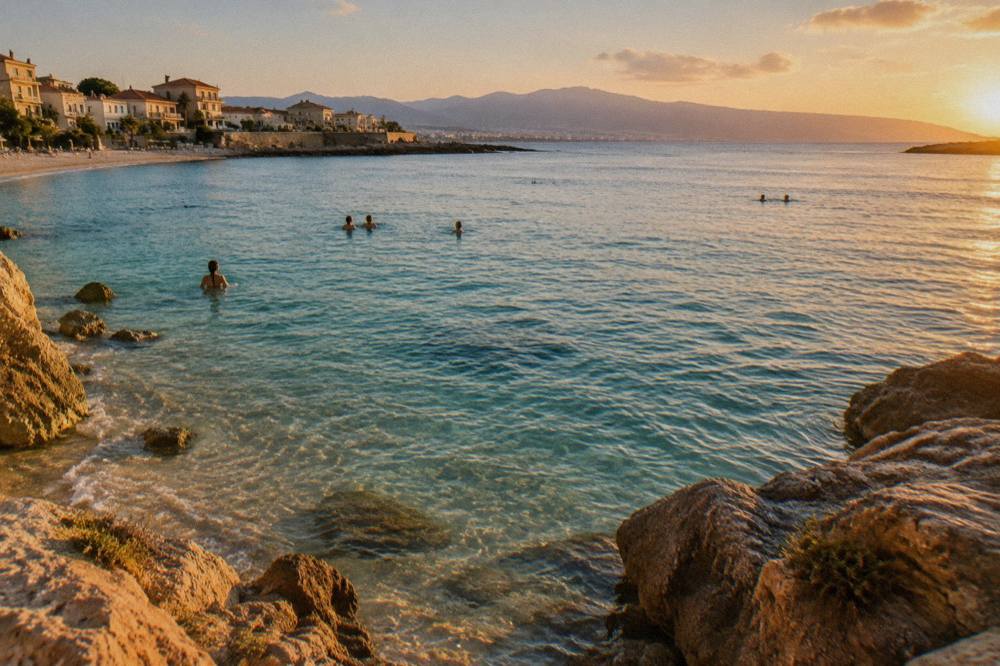
The coves are genuinely different from the bay. Each sits in its own fold of the peninsula, each has its own character, and the desk's individual pages on Marathi, Stavros and Kalathas describe them one by one. Stavros sits at the northern tip with its enclosing headland, Kalathas has a small sandy bay with a taverna presence, and Marathi is the shallow, sheltered one that families with toddlers seek out. Monasteries and walks inland of the coves give the peninsula more to do than its beaches alone.
The peninsula's other fact is the airport, officially Chania International Airport "Ioannis Daskalogiannis", operated by Fraport Greece, about 14 km from the city centre. That cuts both ways for a beach hotel: transfers are short, and departure day is painless, but a room directly under the approach path hears aircraft in season. Ask the property which side of the flight path it sits on, a question any owner answers in one sentence.
When Is The Best Time To Book A Beach Hotel In Chania?
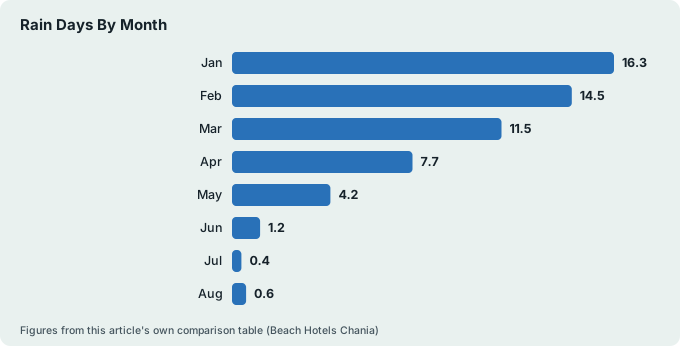
The HNMS Chania Souda station table, covering the period 1958 to 2010, shows the swimming season clearly: July and August are the warmest and driest months, with means of 26.7 C and 26.3 C and just 1.0 mm and 1.4 mm of rain, while rain becomes a real factor from October onward at 67.7 mm, so the beach-hotel high season follows the dry window from May into September and early booking matters most inside it.
The full monthly picture, from the station the Hellenic National Meteorological Service publishes, is worth reading rather than summarising. The station sits at 148 m, inland of Souda Bay, so it measures air temperature and rainfall, not beach conditions, and no official monthly sea-temperature normal exists for this coast.
| Month | Mean C | Rain mm | Rain Days |
|---|---|---|---|
| Jan | 11.0 | 129.5 | 16.3 |
| Feb | 11.0 | 104.0 | 14.5 |
| Mar | 12.7 | 76.0 | 11.5 |
| Apr | 15.9 | 31.5 | 7.7 |
| May | 20.2 | 13.5 | 4.2 |
| Jun | 24.7 | 3.4 | 1.2 |
| Jul | 26.7 | 1.0 | 0.4 |
| Aug | 26.3 | 1.4 | 0.6 |
| Sep | 23.2 | 15.4 | 3.2 |
| Oct | 19.4 | 67.7 | 9.3 |
| Nov | 15.8 | 77.0 | 11.2 |
| Dec | 12.7 | 101.9 | 16.1 |
Read as a booking calendar, the table says three things. May to September is dry, with monthly rainfall at 13.5 mm or less across the whole window. July and August are the warm months, with mean maximums of 30.7 C and 30.4 C, and July is the driest month in the table at 1.0 mm. October is the pivot month, still warm at a 19.4 C mean but with rain back at 67.7 mm, so late-season beach stays are pleasant and cheap but weather-bundled. The Chania weather and best time to visit Chania guides carry the full reading of these figures.
| Season Window | Station Picture | Beach-Hotel Reading |
|---|---|---|
| May to June | 20.2 C to 24.7 C means, rain 13.5 mm down to 3.4 mm | Warm sea arriving, thinner crowds, good value window |
| July to August | Means 26.7 C and 26.3 C, rain near zero, humidity lowest at 50 percent | Peak season, book early, expect wind on north-facing bays |
| September | 23.2 C mean, 15.4 mm rain | Settled and quieter, the desk's pick for a swimming week |
| October | 19.4 C mean, 67.7 mm rain over 9.3 rain days | Mild, variable, confirm cancellation terms |
Can You Manage Without A Car At A Chania Beach Hotel?
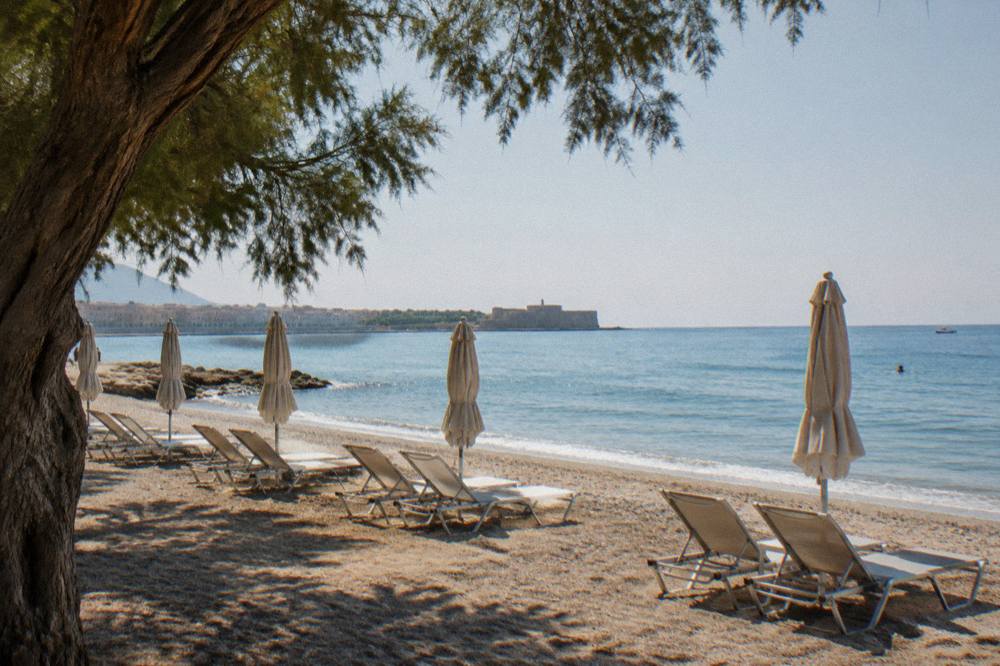
Yes, in exactly one zone: a hotel near Nea Chora or inside the Old Town puts the city beach, the Venetian Harbour, the museums and the long-distance KTEL bus station on Kydonias street all within an ordinary walk, and from that station buses run to Heraklion, Rethymno, Kissamos, Paleochora, Omalos and, in summer, Elafonisi, so even the big day trips work without driving.
That is the honest boundary of the car-free plan. Nea Chora works entirely on foot. Agia Marina and Platanias work on the coast-road bus link into the city, with the caveat that no fare is published on the official pages, so confirm locally. Akrotiri's coves do not really work without a vehicle, because the coves sit apart from each other around the peninsula, and a family relying on taxis there spends the holiday scheduling. The Chania car rental guide covers the driving decision, including airport pickup, and the desk prints no hire rate, since those prices live on the operators' own pages.
For the headline day trips, the car-free choice is a guided product. The Samaria Gorge hike from Chania with a professional guide is the walking option, with the standing caveat that the gorge normally opens 1 May to 31 October, is closed or delayed when storms damage the path, and its status must be checked on the NECCA portal before any plan is made, because the 2026 storms destroyed sections and no reopening decision is on record. The Elafonisi beach trip covers the protected western beach the same way, and its tour page carries the operational detail.
Which Day-Trip Beaches Pair Well With A Chania Beach Hotel?
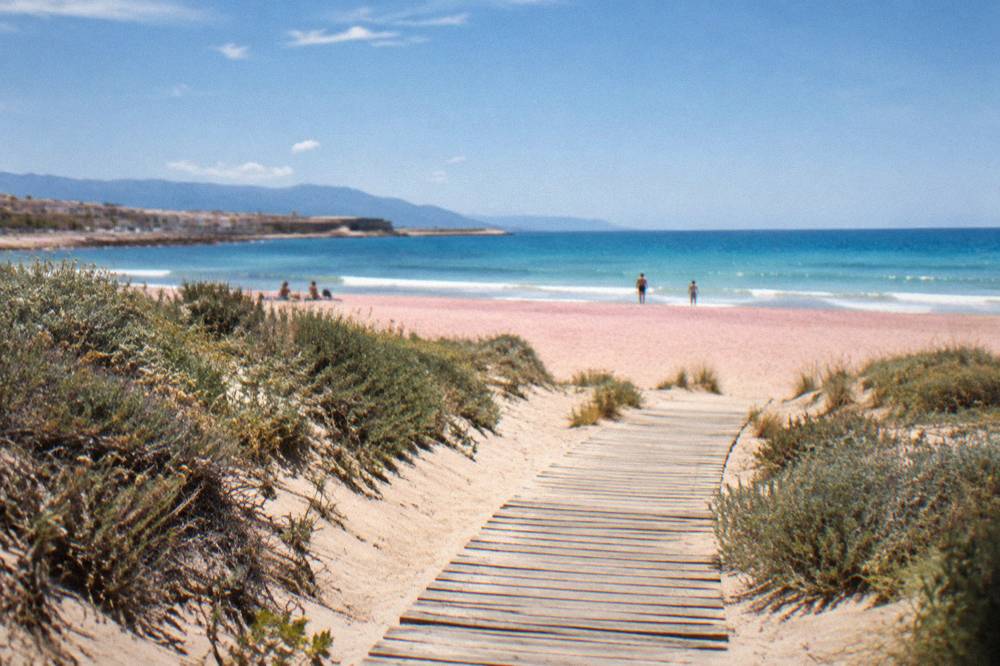
Three beaches define the day-trip list from any Chania hotel: Balos and Gramvousa by boat from Kissamos or by the unpaved Kaliviani road, Elafonisi with its protected Natura 2000 status and pink sand on the far south-west tip, and Falassarna on the west coast, and each one is a full day out rather than an afternoon, so a week in a beach hotel usually holds two of them at most.
To pair Elafonisi and Falassarna in one outing, book a small group tour here.
The access notes matter more than the photographs. Balos carries only one confirmed charge, the EUR 1 Kissamos municipal fee on the boat ticket for over-13s, and boats run daily to 31 October 2026 on the operator's reported schedule. Elafonisi is free to enter, prohibits taking sand, shells or plants, and has parking reported at around EUR 5 a day. Falassarna is reached by road from the Kissamos direction. The desk's dedicated pages on Elafonisi and Falassarna hold the detail, and the answers on whether it is difficult to get to Balos and whether Elafonisi is worth it settle the two most common arguments for it.
| Beach | How You Reach It | Confirmed Charges | Notes |
|---|---|---|---|
| Balos and Gramvousa | Boat from Kissamos port, or unpaved road from Kaliviani then a walk down | EUR 1 municipal fee on the boat ticket, over-13s | Daily departures reported to 31 October 2026 |
| Elafonisi | Road trip west, about a full day from Chania | Entry free, parking reported around EUR 5 a day | Natura 2000 area, taking sand or shells prohibited |
| Falassarna | Road via the west coast | None confirmed in the desk's sources | Long sandy stretch, pairs with a Balos or Elafonisi day |
A week based at any of the three hotel zones above comfortably holds two of these day trips alongside swimming days, and cramming all three into one week is the classic over-plan. Readers still choosing between the far beaches can start with the desk's comparison of the two headline names, Elafonisi versus Balos, before booking anything.
Common Questions About Beach Hotels In Chania
Can You Walk To A Beach From Chania Old Town?
Yes. The Nea Chora beach sits at the western edge of the Old Town, an ordinary walk from the Venetian Harbour, and its seafront carries its own tavernas, so a beach morning and an Old Town afternoon need no transport at all.
Which Is The Quietest Beach Area Near Chania For Families?
The Akrotiri peninsula, and Marathi in particular, holds sheltered shallow coves away from the open bay, which suits families with small children. The trade-off is that a car is close to essential there, since the coves sit apart around the peninsula.
Do Chania Beach Hotels Charge Any Extra Tax?
Greek accommodation collects a climate crisis resilience fee per room or apartment per night, with seasonal rates by star category and for rentals. The amount is confirmed at booking, and no figure belongs on a planning page because the seasonal rates differ by category.
Is It Better To Stay In Chania Old Town Or By The Beach?
Nea Chora answers both at once, since its beach is on the Old Town's western edge. A stay at Agia Marina, Platanias or Akrotiri buys more beach and more quiet, and gives up the walk-home convenience of the harbour restaurants and museums.
When Is Beach Weather In Chania?
The HNMS Chania Souda station table for 1958 to 2010 shows the dry window running from May to September, with July the driest month at 1.0 mm of rain and a 26.7 C mean, and rain returning strongly from October at 67.7 mm.
Can You Visit Balos And Elafonisi While Staying At A Chania Beach Hotel?
Yes, and that is the normal way to do it. Both are full-day trips, Balos by boat from Kissamos or the unpaved Kaliviani road, Elafonisi by road west, and the desk's day-trip pages carry the access detail and the confirmed charges for each.
The short version of this whole page: pick your water first, then your room. Calm coves point at Akrotiri, a walkable city beach points at Nea Chora, and a full resort week points at the Agia Marina and Platanias belt, with the west-coast postcard beaches visited from whichever base you choose.