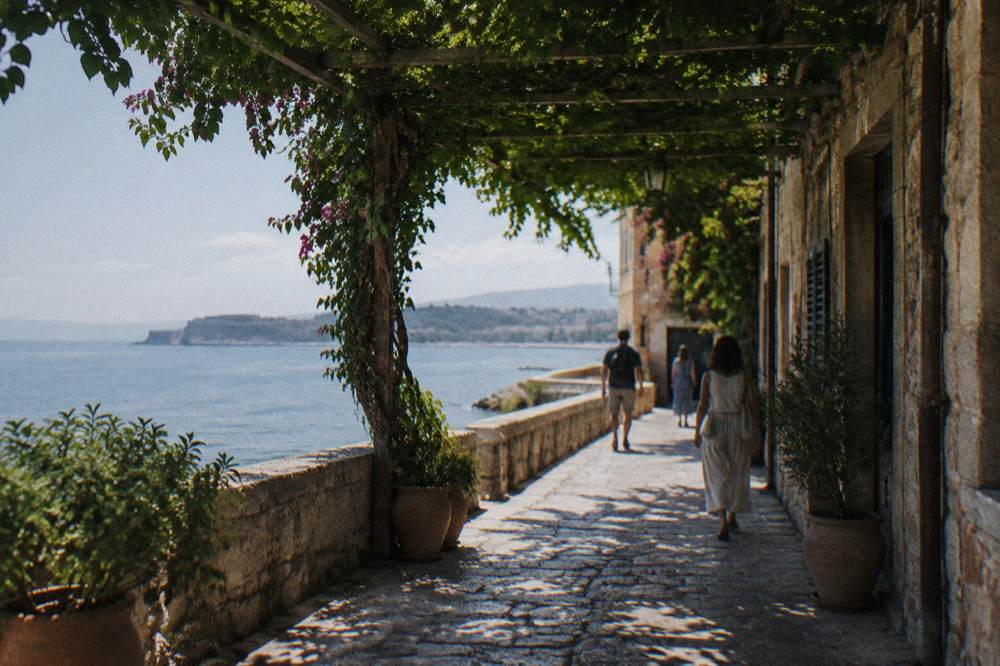
Chania Vs Rethymno
Chania and Rethymno sit about an hour apart on Crete's north coast, and they compete for the same travellers. This guide sets the two cities side by side on the facts that matter: the harbours, the beaches within reach, the day-trip geography, and how each one is reached.
Short answer
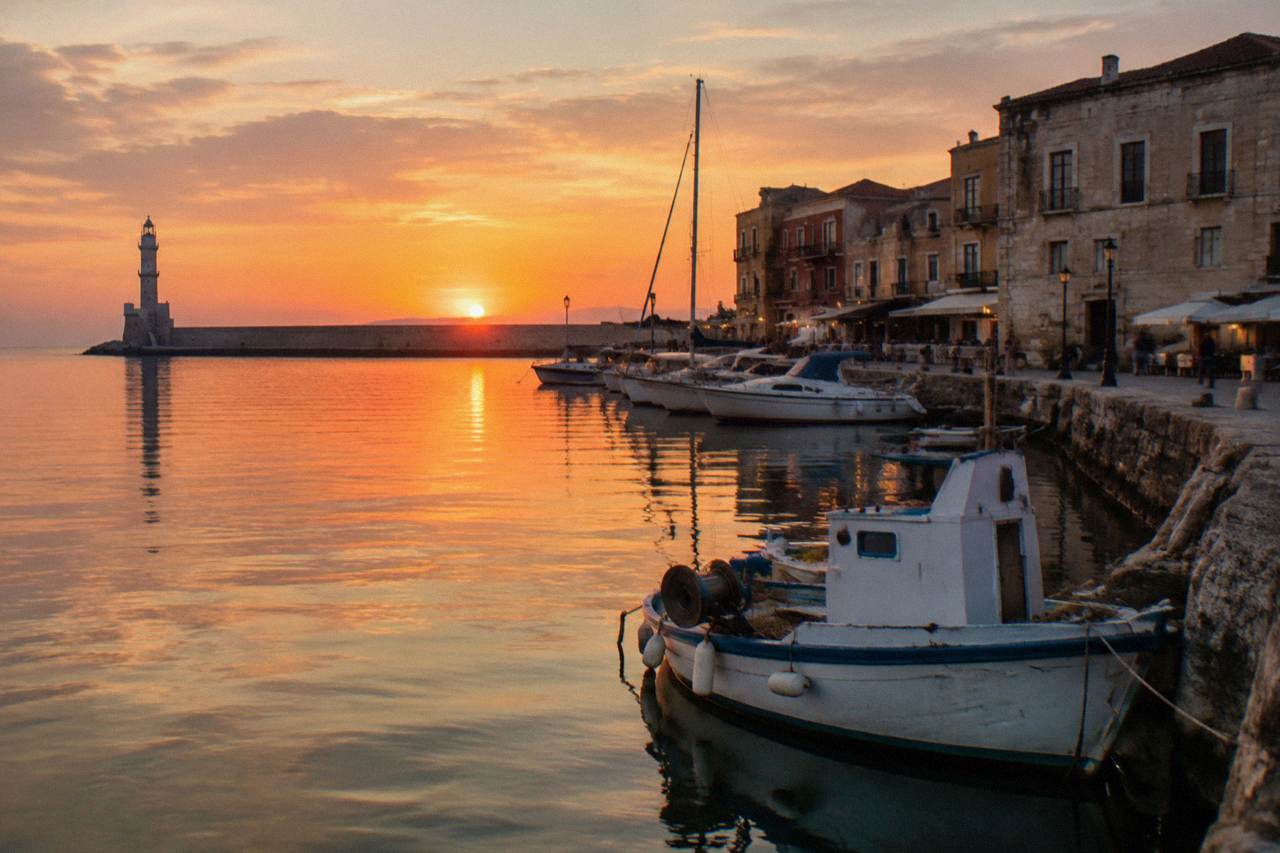
Chania is the larger base with the airport, the Souda ferry port and the west-Crete day trips; Rethymno is smaller and sits closer to the island's centre, which shortens the run to Heraklion and Knossos. The Venetian Harbour gives Chania its signature look, while Rethymno answers with its own old town and a long sandy beach that starts at the city edge.
Chania and Rethymno are the two cities travellers weigh against each other when a Crete trip has room for only one base. Chania, on the north-west coast of the island, holds the region's airport, its ferry port at Souda, and the Venetian Harbour that fronts the old town; the municipality counted 111,375 permanent residents at the 2021 census. Rethymno lies east along the same coast, reachable by the KTEL bus that leaves Chania's long-distance station on Kydonias street, and it is the subject of its own companion piece at Rethymno as a day trip from Chania. What follows is a side-by-side read of the two, built on what primary sources actually say rather than on preference.
Chania Vs Rethymno: Which City Should You Base A Crete Trip In?
Chania works as the base for a west-Crete trip and Rethymno works as the base for a centre-and-east trip, because the island's geography, not the cities themselves, decides it. Chania sits at the top of the ladder down to Balos, Elafonisi, Samaria and the White Mountains, and it owns the airport and the Souda ferry link to Piraeus. Rethymno sits closer to Heraklion and Knossos, which shortens that single long day trip in the island's other direction.
The practical way to frame the choice is by what you actually want to do on Crete. If the holiday is built around the famous west-coast beaches and the gorges, Chania is the launch point: the boat cruises to Balos Lagoon and Gramvousa leave from Kissamos to the west, the road to Elafonisi runs from Chania's side of the island, and the Samaria Gorge route begins at Xyloskalo on the Omalos plateau, all covered in the site's best tours from Chania round-up. The fuller itineraries at how many days in Chania assume exactly this day-trip ladder.
If instead the pull is Knossos and the Heraklion museum, Rethymno shaves distance off that journey, and its own old town gives the evenings a smaller, quieter stage. The honest answer for a first visit of a week or less, in this desk's reading of the transport map, is that Chania's connections win more arguments than Rethymno's compactness does, and that Rethymno rewards a second trip or a two-base plan. Nothing stops a stay in one city from including the other: the KTEL route between them runs from the Kydonias street station, and the travel detail sits in the KTEL Chania buses guide.
How Do The Two Old Towns And Harbours Compare?
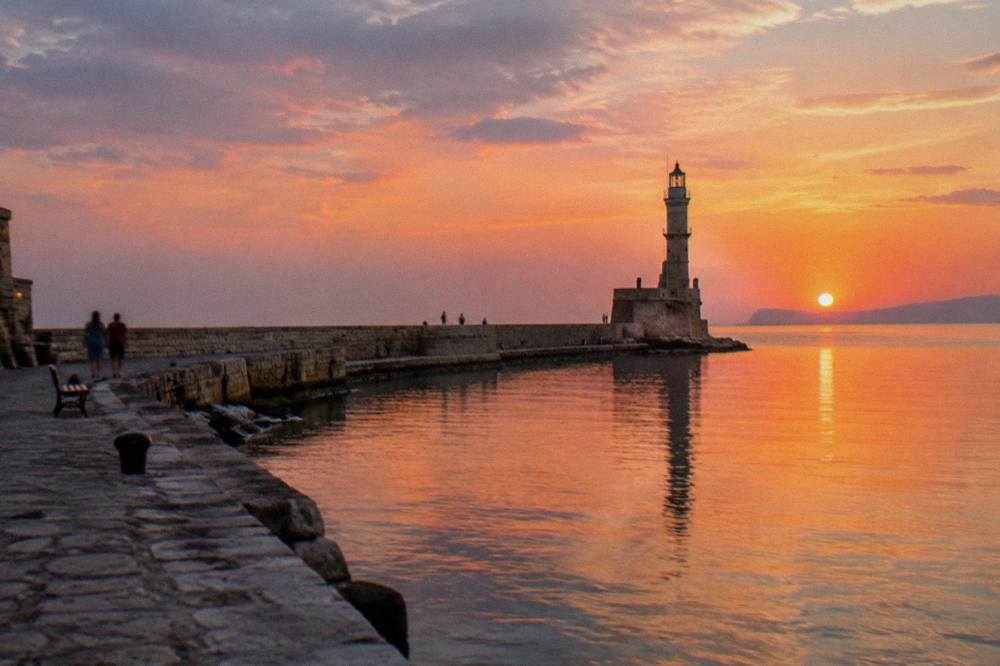
Chania's old town wraps a working Venetian Harbour that was first built between 1320 and 1356, with a lighthouse on the mole that dates from about 1595 to 1601 and shipyard vaults from the 15th to 16th century among its walls; Rethymno's old town is smaller in footprint and its own fortress guards the sea front. The recorded dates give Chania the deeper documented harbour story, while Rethymno trades on density: the same assortment of lanes, arcades and sea walls in a walkable cluster.
Chania's harbour record is unusually specific because the Venetian administration wrote it down: first works from 1320 to 1356, dredging and a wall recorded in 1515, first city walls from 1336 and the second circuit from 1536 on Michele Sanmicheli's design. The lighthouse was restored on its Venetian base during the years of Egyptian rule, 1830 to 1840, and was operating in 1839. The Neoria shipyards count seven surviving vaults from an original seventeen. Ottoman rule began with the 1645 conquest of Chania, and Crete's union with Greece followed in 1913, so the streets carry that layered record too; the Old Town, Venetian Harbour and lighthouse pages walk through it building by building.
Rethymno's old town answers with its own fortress above the water and a mix of Venetian and Ottoman fabric in the lanes below it, and this card's facts support no dated building-by-building claim for the city beyond that general description. What can be said is documentary: Chania's harbour dates are on record in the sources this site reports, and Rethymno's equivalent dates are not in the verified fact set, so no comparison of "which is older" is made here. Sensible readers will treat both old towns as Venetian-era port towns and choose on atmosphere and access, not on superlatives this desk will not print.
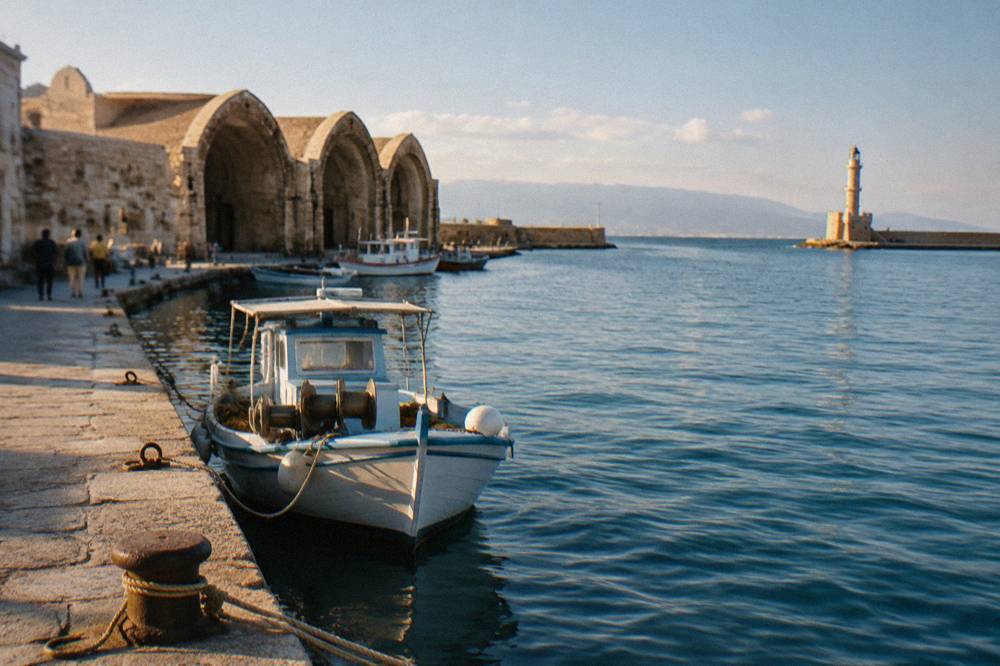
A fair summary table of what the record holds for each city's core:
| Feature | Chania | Rethymno |
|---|---|---|
| Harbour first built | 1320 to 1356, wall recorded 1515 | Not in the verified fact set |
| Signature fortress | Firka Fortress, built 1620, grounds free | Fortress above the old town, no dated claim held here |
| Lighthouse | Venetian base, about 1595 to 1601, Egyptian-era restoration 1830 to 1840, operating 1839 | No verified lighthouse claim held here |
| Municipal population | 111,375 (2021 census) | Not in the verified fact set |
| Recorded rulers reflected in the fabric | Venetian, Ottoman from 1645, union with Greece 1913 | Venetian and Ottoman fabric described generally |
Both cities are walkable, and walkability is one of the questions the site answers separately for Chania in is Chania Old Town walkable's companion discussion and in the Chania walking tours guide. The short version: neither old town wants a car inside it, and Chania's parking reality, which the Chania parking page covers, is the stronger reason to keep the rental outside the walls.
Which City Has The Better Beaches And Coastline Within Reach?
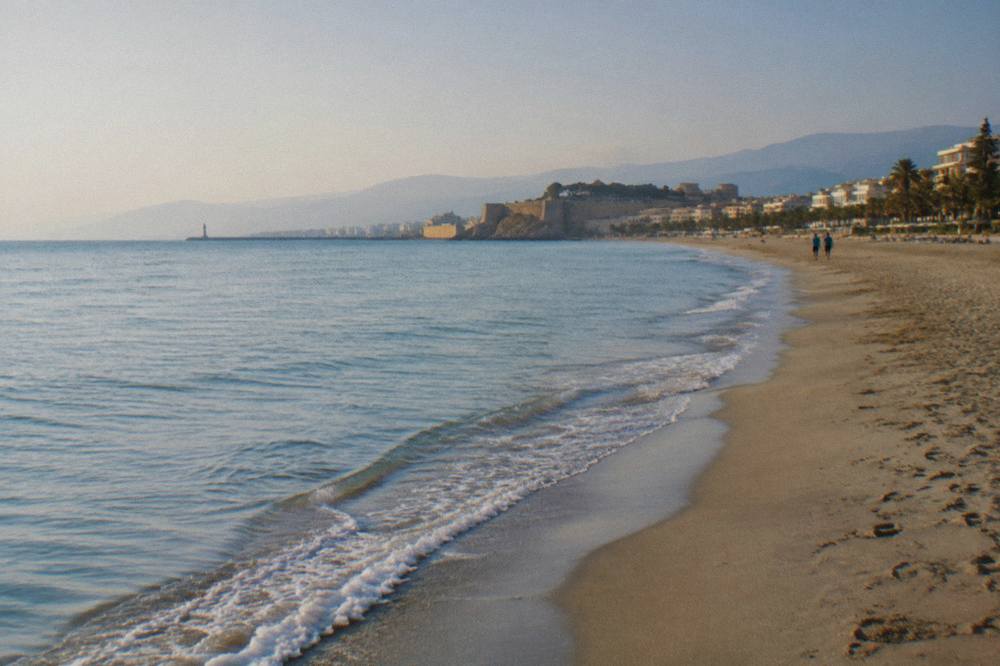
Chania commands the famous west-coast set, Balos and Gramvousa by boat from Kissamos, Elafonisi on its protected Natura 2000 sand, Falassarna and the nearer strands like Nea Chora, while Rethymno's own town beach puts sand directly at the old town's edge. The difference is between Chania's world-known destinations at a distance and Rethymno's convenience underfoot, and the verified detail favours Chania for spectacle and Rethymno for a swim without a drive.
The west of Crete is where the postcards come from, and Chania is its gateway city. Balos Lagoon and Gramvousa are reached by cruise from Kissamos port, with daily departures running to 31 October 2026 on the operator's reported schedule, plus a EUR 1 Kissamos municipal fee collected on the boat ticket for over-13s; the drive option uses an unpaved road from Kaliviani to a parking area and then a walk down. Elafonisi is a Natura 2000 protected area with free reported entry and a strict ban on taking sand, shells or plants. The full comparisons live at Balos Lagoon and Gramvousa, Elafonisi beach and best beaches in Chania.
Rethymno's counter is the long beach that runs along the town itself, sand you can walk to from a hotel door, plus a quieter stretch of coast east and south of the city. For Chania, the equivalent "walk out of the old town and swim" answer is Nea Chora, west along the shore, which has its own page. The honest comparison, on the facts this card holds, is that Chania's headline beaches are trips and Rethymno's headline beach is furniture: the can you walk to a beach from Chania Old Town question and the beaches near Chania Old Town guide settle it street by street.
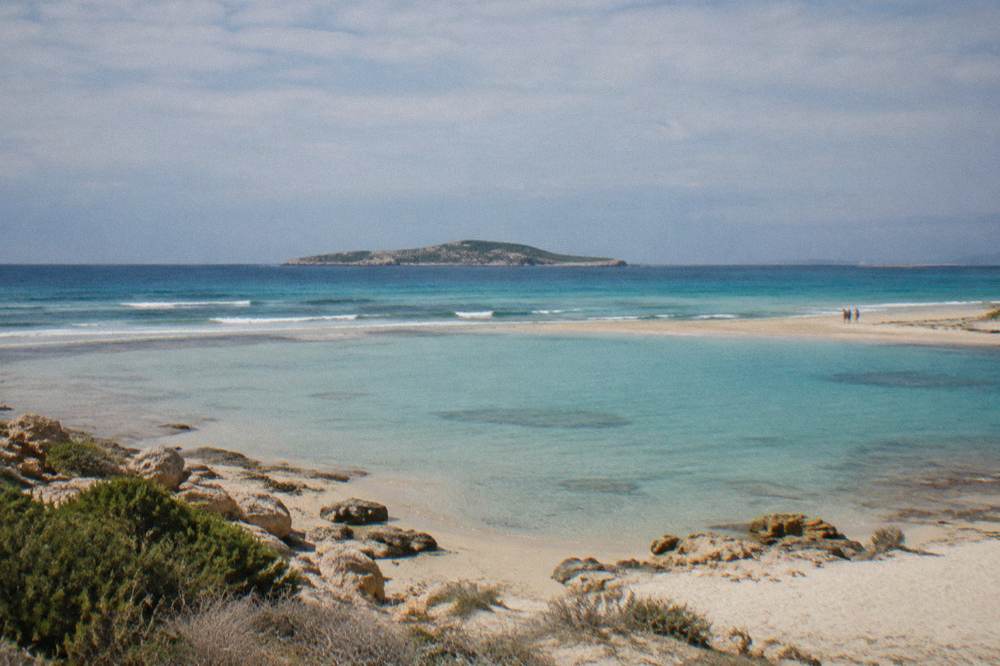
The coastline is also a place to be on the water rather than beside it, and that is a category where Chania's listing depth is real. Beyond the trio above, a day on a rented boat with no licence needed covers the coves west of the city, and the site's Chania boat trips page lines up the cruise and sailing options from the Venetian Harbour and nearby marinas.
How Do Day Trips From Chania And Rethymno Differ?
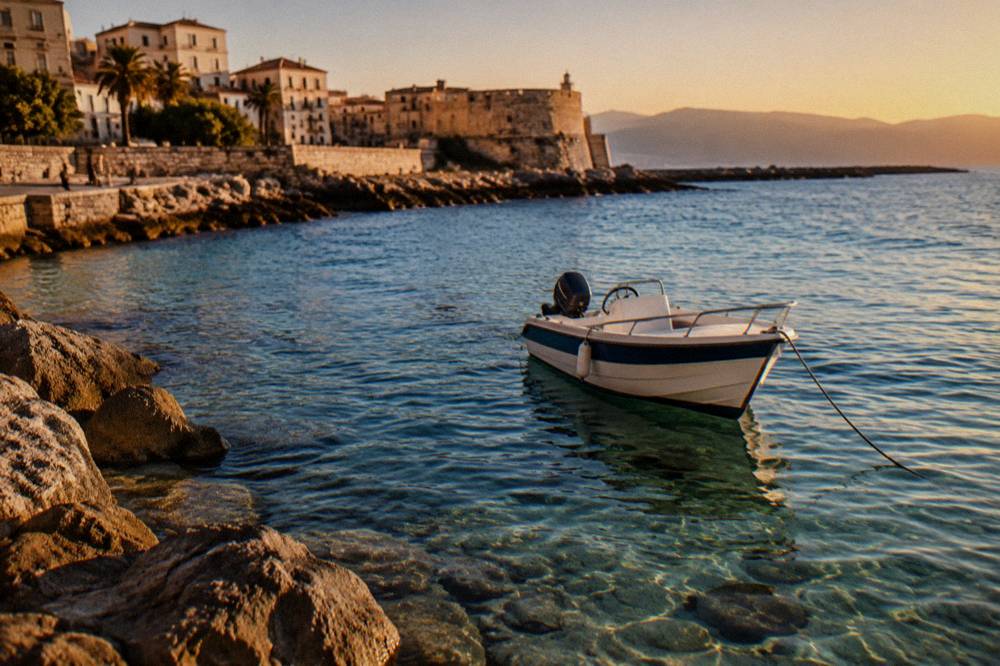
Chania's day-trip map points west and south, to Balos and Gramvousa from Kissamos, Elafonisi, Falassarna, the Samaria and Imbros gorges and the White Mountains, while Rethymno's map points east and south, with Heraklion and Knossos closer and the same south-coast gorges reachable. The two cities share the island; they simply face opposite halves of it, and the famous west-coast names are all on Chania's side of the divide.
The verified detail on Chania's side: Samaria Gorge is a one-way walk from Xyloskalo on the Omalos plateau down to Agia Roumeli, with boats from Agia Roumeli to Sougia or Chora Sfakion at about 17:30 and a KTEL bus back, all reported. The park's normal season is 1 May to 31 October, with an individual ticket at EUR 10 through the NECCA e-ticket portal, free for EU residents under 18 and over 65. Storms in late September and early October 2026 destroyed sections of the path, staff describe a 2026 reopening as extremely difficult, and works are aimed at readiness in May 2027, so the status must be checked with NECCA before any plan is made; the why is the Samaria Gorge closed page and the Samaria Gorge guide carry the full caveat. The Imbros Gorge is the shorter alternative on the same southward axis.
Rethymno's side of the ledger is shorter to write but real: from there, Heraklion and Knossos are the natural full-day run, and Chania itself becomes the day trip. A traveller based in Chania who wants Knossos faces the same distance in reverse, which the Knossos and Heraklion page plans out. South-coast escapes such as Preveli and the villages above the Libyan Sea are reachable from both cities, with the south-coast logic explained in things to do in Western Crete.
| Day trip | Base city that wins | Verified detail this card holds |
|---|---|---|
| Balos and Gramvousa | Chania | Boats from Kissamos; daily departures to 31 October 2026; EUR 1 municipal fee on the ticket for over-13s |
| Elafonisi | Chania | Natura 2000 area; free reported entry; no sand, shells or plants may be taken |
| Samaria Gorge | Chania | Xyloskalo to Agia Roumeli; EUR 10 ticket via NECCA; storm damage, status must be checked |
| Imbros Gorge | Either | Shorter gorge on the same southward axis from Chania |
| Heraklion and Knossos | Rethymno | Closer eastward run from Rethymno; full-day trip from Chania |
| Both old towns | Either | KTEL route links the two cities from Chania's Kydonias street station |
One structural point worth holding on to: the White Mountains sit directly south of Chania, and the hiking in West Crete page shows how much of the region's walking hangs off that single range. Rethymno has mountain country too, but the verified material this site holds concentrates on the west, which is itself an answer to the comparison.
Which City Is Easier To Fly Into And Get Around?
Chania has its own airport, Chania International Airport "Ioannis Daskalogiannis" (CHQ), operated by Fraport Greece and about 14 km from the city centre on the Akrotiri peninsula, plus the overnight Blue Star Ferries service from Piraeus into Souda port; Rethymno has neither an airport nor a ferry port of its own, so it is reached overland from Chania or Heraklion. On arrivals and onward connections, Chania wins on the record, and it is not close.
The airport numbers that matter: CHQ handled 3,992,149 passengers between January and October 2025, and it sits roughly 14 km from the centre. Public bus and taxi information is on the airport's own site, and the transfer options are laid out in Chania airport, Chania airport to Chania town and flights to Chania. The ferry side is just as one-sided: the overnight Blue Star Ferries crossing from Souda to Piraeus departs about 21:30 and takes about 9 h 15 min on the operator's published timetable, and that port, Souda, sits about 7 km east of the Old Town, never the Venetian Harbour itself. The Piraeus to Chania ferry and Athens to Chania pages carry the planning detail.
Rethymno's arrivals story is a road story: bus or hire car from Chania or from Heraklion's airport. That makes the car question weightier for a Rethymno base, and the site's Chania car rental, airport car rental and driving in Crete guides exist because the island rewards a steering wheel once you leave the cities. Within either city, on the other hand, feet and the local buses do the work, as the getting around Chania page sets out.
| Connection | Chania | Rethymno |
|---|---|---|
| Own airport | CHQ, about 14 km from the centre, Fraport Greece operator | None; reached by road |
| Ferry to Piraeus | Blue Star Ferries overnight from Souda, about 21:30 departure, about 9 h 15 min crossing | No port service held in the facts |
| Inter-city bus | KTEL station on Kydonias street; routes to Heraklion, Rethymno, Kissamos, Paleochora, Omalos, Elafonisi in summer | Served by the same KTEL network |
| Car usefulness | Needed for the west-coast beaches and trailheads | Needed for Knossos and the south coast |
What About Weather, Food And Where To Sleep?
The HNMS Chania Souda station table, covering 1958 to 2010, gives Chania a July mean of 26.7 C with 1.0 mm of rain and a January mean of 11.0 C with 129.5 mm, and no equivalent verified table exists on this site for Rethymno, so no weather comparison is made beyond that; on food, both cities serve Cretan cooking, with Chania's listing depth in food tours and cooking classes the larger of the two on this roster.
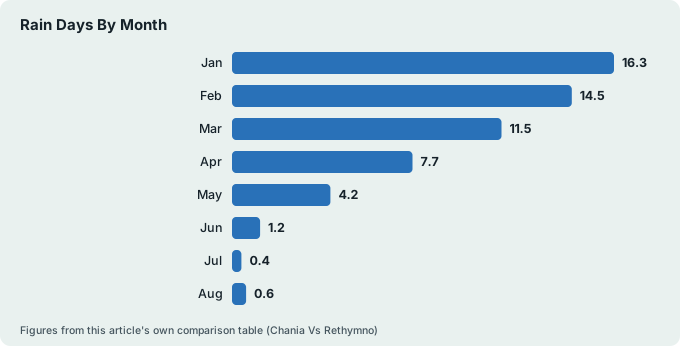
The weather point deserves precision, because comparison sites blur it. The only station table this desk reports is the HNMS Chania Souda one, recorded at 148 m inland of Souda Bay over 1958 to 2010, the period the service publishes. January is the wettest month in that table at 129.5 mm and July the driest at 1.0 mm; rain starts to matter from October, at 67.7 mm, and May through September is dry. Both cities sit on the same north coast about an hour apart, so the table is a reasonable regional guide, but it is printed as Chania's, not as Rethymno's, and the Chania weather and best time to visit Chania pages carry the full monthly breakdown.
| Month | Mean C (Chania station) | Rain mm | Rain days |
|---|---|---|---|
| Jan | 11.0 | 129.5 | 16.3 |
| Feb | 11.0 | 104.0 | 14.5 |
| Mar | 12.7 | 76.0 | 11.5 |
| Apr | 15.9 | 31.5 | 7.7 |
| May | 20.2 | 13.5 | 4.2 |
| Jun | 24.7 | 3.4 | 1.2 |
| Jul | 26.7 | 1.0 | 0.4 |
| Aug | 26.3 | 1.4 | 0.6 |
| Sep | 23.2 | 15.4 | 3.2 |
| Oct | 19.4 | 67.7 | 9.3 |
| Nov | 15.8 | 77.0 | 11.2 |
| Dec | 12.7 | 101.9 | 16.1 |
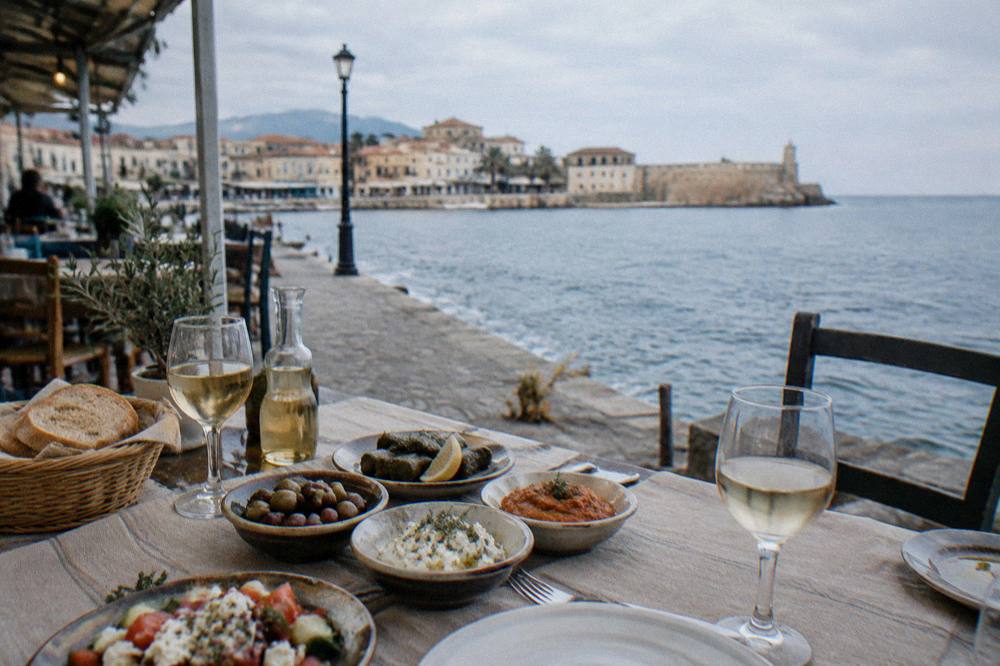
On the plate, the two cities share one cuisine. Cretan cooking, olive oil, cheese, honey, mountain greens and fish, is the island's common inheritance, and Chania's version of it is documented across the Cretan food in Chania and Chania restaurants pages. What Chania adds is a deep bench of food-and-cooking experiences: tasting tours built around olive oil, wine, cheese and honey, street-food walks through the old town, and cooking classes held up in the White Mountains, all catalogued in the Chania cooking classes and Chania wine tours guides. Rethymno's tavernas are part of its charm and no comparison of menus is attempted here.
Sleeps work the same way: no hotel rate is printed anywhere on this site, and the accommodation questions are answered by area rather than by price. Chania's areas, the Old Town, Nea Chora, Halepa, Agia Marina and Platanias among them, are mapped in where to stay in Chania and the hotel guides linked from best hotels in Chania, with the broader island question handled at which is the nicest part of Crete to stay in. One cost that applies in either city: accommodation collects the climate crisis resilience fee per room or apartment per night at seasonal rates, and the amount is confirmed at booking.
To browse those areas for your travel dates, book a hotel in Chania here.
Chania Or Rethymno For Families, Couples And Short Stays?
For a short stay of one to three nights built around one photogenic old town, either city serves, and Rethymno's walk-from-the-door beach is a genuine family advantage; for a stay of four nights or more with day trips attached, Chania's bus station, airport and tour roster make it the practical base, and the site's itinerary pages assume exactly that.
Couples chasing harbour evenings lean Chania on the strength of the Venetian Harbour and the lighthouse walk; families weighing sand and simplicity lean Rethymno's town beach or Chania's Nea Chora.
The family case is argued in detail at Chania with kids, which finds the city's case in its shallow city beaches, the boat trips that leave from its own harbour, and the short-drive options such as Lake Kournas. Rethymno's family case needs no guide to state: a long beach that meets the town. The couple-and-evening case for Chania rests on documented geography, the harbour, the lighthouse at the end of the mole, the Firka Fortress grounds, free to enter, built in 1620, and the restaurants and bars inside the walls, with the Chania nightlife page covering the after-dark hours.
Short-stay maths matters too. A cruise passenger or a two-night visitor gets a tighter loop in Rethymno, but Chania's own one-day and two-day itineraries, at Chania in one day and Chania in two days, show how much the city packs into a small radius. A five-night plan, at Chania in five days, is really a west-Crete plan with a city attached, which is the strongest single argument in this whole comparison: only one of these two cities can host that itinerary without changing hotel.
Can You Combine Chania And Rethymno In One Trip?
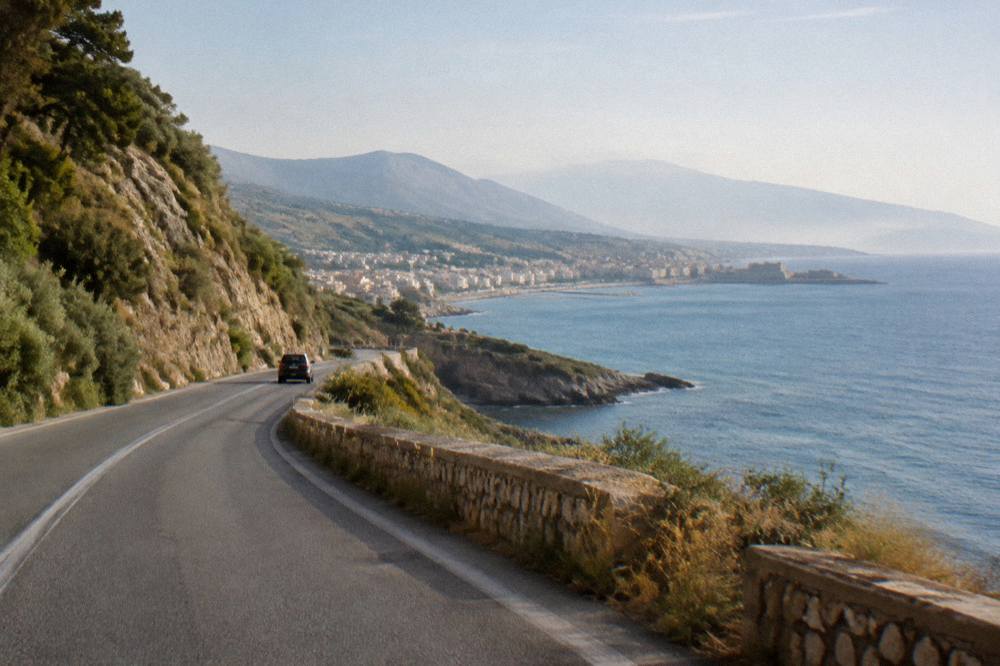
Yes, and the two-base plan is the one this desk would put first for a week or more: KTEL buses link the two cities from Chania's Kydonias street station, the run is short enough to move hotels without losing a day, and the pairing gives you Chania's west-coast ladder and Rethymno's eastward reach without the long single-day drives. Flying into CHQ and out of Heraklion, where such a ticket exists, turns the pair into a clean one-way route.
The mechanics are simple. Start in Chania, use it for the west, Balos, Elafonisi, a gorge if the NECCA status allows, then take the KTEL bus east, spend two or three nights in Rethymno for its old town, its beach and a Knossos day, and continue or return. The one-week framework at West Crete in one week shows the Chania half of that plan, and the budget question, which this comparison always raises, is handled at Chania on a budget. The reverse order works identically for arrivals via Heraklion.
The verdict, stated plainly: the record favours Chania as the single base, because the airport, the ferry port, the bus station, the day-trip ladder and the tour listings all sit there, and because the harbour and lighthouse dates give its old town a documented depth this card cannot match for Rethymno. Rethymno is the better second act, the better town-beach stay, and the better staging point for Knossos, and a trip that uses both cities loses nothing by the comparison. For everything a Chania base opens up, start with things to do in Chania and the itineraries above, and for the site that assembled this comparison, see the Chania Crete Travel Guide home page.
Common Questions About Chania Vs Rethymno
Is Chania or Rethymno better for a first visit to Crete?
Chania, on the practical record: it has the airport, the Souda ferry port, the KTEL bus station and the west-coast day trips, and its old town fronts the Venetian Harbour. Rethymno makes an excellent first stop too, but a first-time visitor weighting connections and day trips will find Chania the easier base.
Is Rethymno cheaper than Chania?
No verified price comparison exists on this site, and no hotel rate, fare or tariff is printed. Accommodation in both cities collects the climate crisis resilience fee per room per night at seasonal rates, and the amount is confirmed at booking. Compare actual rooms at the moment of travel rather than rule-of-thumb claims.
How far apart are Chania and Rethymno?
The two cities sit on the same north coast with a direct KTEL bus route between them, leaving from Chania's long-distance station on Kydonias street. The service also runs onward to Heraklion, Kissamos, Paleochora and, in summer, Elafonisi, so the same network serves both bases.
Which city is closer to Knossos and Heraklion?
Rethymno. Heraklion and Knossos sit to the east, so a Rethymno base shortens that day trip, while Chania treats it as a full-day excursion of its own, planned in the site's Knossos and Heraklion guide.
Does Rethymno have an airport?
No. Chania International Airport "Ioannis Daskalogiannis" (CHQ), about 14 km from Chania's centre on the Akrotiri peninsula, is the west-Crete arrival point, and Rethymno is reached from it or from Heraklion by road.
Can you stay in Chania and visit Rethymno for the day?
Yes. The KTEL route from the Kydonias street station makes Rethymno a straightforward day trip from Chania, and the site's own Rethymno day-trip page walks the old town and fortress itinerary for a single day.