Best Beaches In Chania
Chania, a coastal city on the north-west coast of Crete, sits between the Aegean Sea in front and the White Mountains behind, which means the beach map around it runs from a city beach you can walk to from the Old Town to lagoons and pink-sand stretches a day trip away.
Short answer
The best beaches around Chania span three rings: walkable city beaches such as Nea Chora, close-in west-coast sands such as Agia Marina and Kalathas, and famous day-trip destinations Balos, Elafonisi and Falassarna, each with its own access, fee and season realities.
Chania, a coastal city on the north-west coast of Crete in Greece, has one of the widest beach menus of any city on the island. The Old Town wraps around a Venetian Harbour built between 1320 and 1356, the White Mountains rise to the south, and from the city's own sandy edge at Nea Chora the coast runs west toward Kissamos and Balos and east along the Akrotiri peninsula. This guide sorts those beaches into three rings, city, near-city and day trip, and gives the access facts, the confirmed charges and the season realities for each, so the choice matches the day you actually have.
Which Beaches Can You Actually Walk To From Chania Old Town?
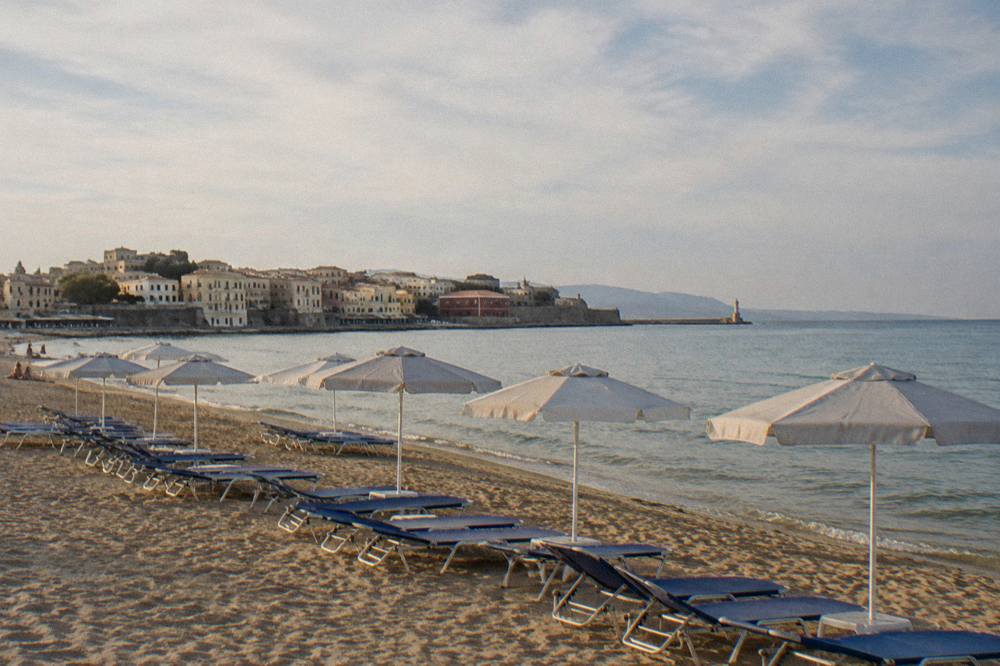
The only beach genuinely within walking range of the Old Town is Nea Chora, the sandy beach beside the fishing harbor just west of the Venetian walls. It has sand underfoot, shallow water, and tavernas along the front, and it carries no entry charge of any kind. Every other swimming option requires a bus or a short drive. Beyond it, the next swimming options require a bus or a short drive, because the Old Town itself fronts the harbour, which is a working port for excursion boats rather than a swimming beach. The beaches near Chania Old Town page expands on this in detail, but the short version is simple: plan on Nea Chora for a swim before dinner, and plan transport for everything else.
Nea Chora works because it is real and close. Sand underfoot, shallow water, tavernas along the front, and the western edge of the old city walls behind you. The municipal market and the Old Town lanes are a level walk away, which makes it the default answer on a jet-lagged arrival afternoon or a morning before a ferry from Souda port.
The honest limit is that it is a city beach. It is popular, it faces the shipping lanes of the Cretan Sea at the harbour mouth, and it is not the postcard image that brings people to west Crete. For that, the next two rings are where the guide goes.
What Are The Best Beaches Near Chania Within A Short Drive?
The close-in band runs west along the coast to Agia Marina and Platanias and east onto the Akrotiri peninsula to Kalathas, Stavros and Marathi, all sandy, all free to enter, and all reachable by local bus or a drive of well under an hour from the city centre. These are the beaches that fill a half day without consuming it, and each has a distinct character: Agia Marina and Platanias are long, served, resort-front sands; Kalathas and Stavros are smaller peninsula bays; Marathi is the calm, shallow one closest to the airport side.
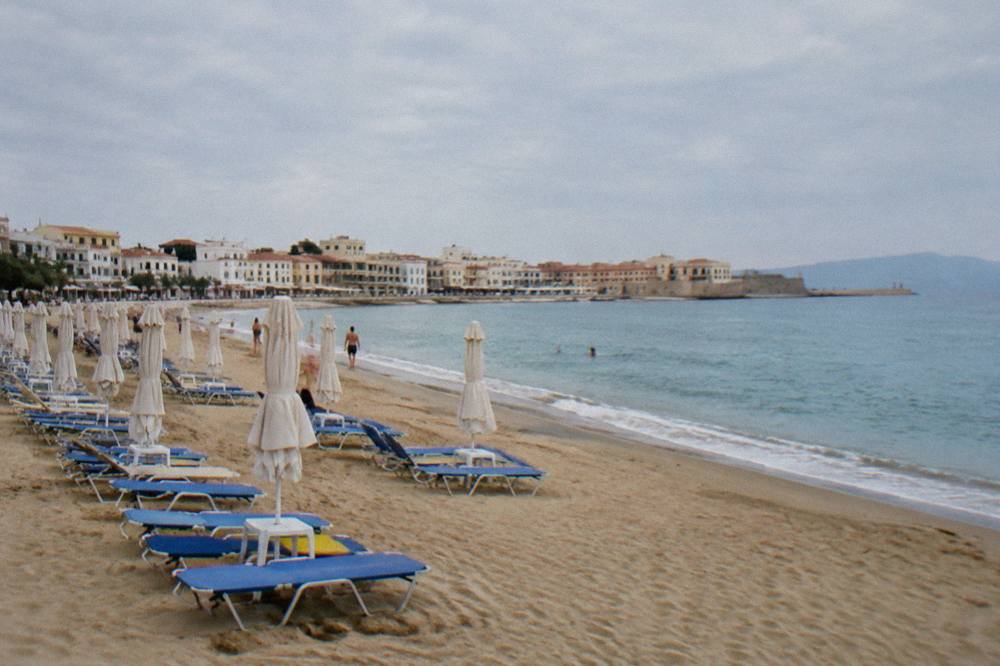
Agia Marina and Platanias form one continuous stretch of sand west of the city, backed by hotels and tavernas. The sand shelves gently, the water stays shallow a long way out, and the KTEL bus network reaches the strip, which makes it the easiest "proper beach morning" without a car. The trade-off is summer crowds: this is the most built-up coast nearest the city.
The Akrotiri peninsula east of the city works differently. Kalathas is a compact bay with a small island offshore; Stavros sits in a dramatic cove beneath a steep rock wall; Marathi is shallow and sheltered on the south side of the peninsula. All three are family-friendly in layout, and none charges for entry. Sunbed and umbrella prices at any of them are set by the operators on the ground, so check the posted rates at the stand rather than any guide page, this one included.
One Akrotiri beach deserves its own warning label. Seitan Limania is a narrow cove reached by a steep, exposed descent on foot, and its beauty is exactly why people underestimate it. Firm shoes, water, and no small children on the path are the standard precautions. The reward is a fjord-like inlet of bright water framed by cliffs, and goats on the slopes above it.
Here is how the near-city options compare:
| Beach | Direction From Centre | Sand Type | Entry | Best For |
|---|---|---|---|---|
| Nea Chora | West, walkable | Sand | Free | Swim without transport |
| Agia Marina / Platanias | West, short drive | Sand | Free | Served resort-front beach day |
| Kalathas | East, Akrotiri | Sand | Free | Compact bay, small island |
| Stavros | East, Akrotiri | Sand | Free | Dramatic cliff cove |
| Marathi | East, Akrotiri | Sand | Free | Sheltered, shallow water |
| Seitan Limania | East, Akrotiri | Sand | Free | Adventurous descent, wild cove |
Getting between them is straightforward with a hire car, and the Chania car rental and driving in Crete pages cover that side of the planning. In high summer the Akrotiri car parks fill early, and the Platanias strip is easiest outside the midday hours.
To move between them at your own pace, book a rental car here.
Is Balos Lagoon Worth The Day Trip From Chania?
Balos is a shallow lagoon of pale sand and turquoise water wedged between Gramvousa peninsula and the island of the same name, about 20 km of coast west of Kissamos, and the only confirmed charge is a EUR 1 Kissamos municipal fee collected on the boat ticket for visitors over 13. Access is by boat from Kissamos port or by an unpaved road from Kaliviani to a parking area followed by a walk down on foot, so it is a destination you plan, not one you drift into. The full picture is on the Balos Lagoon and Gramvousa page.
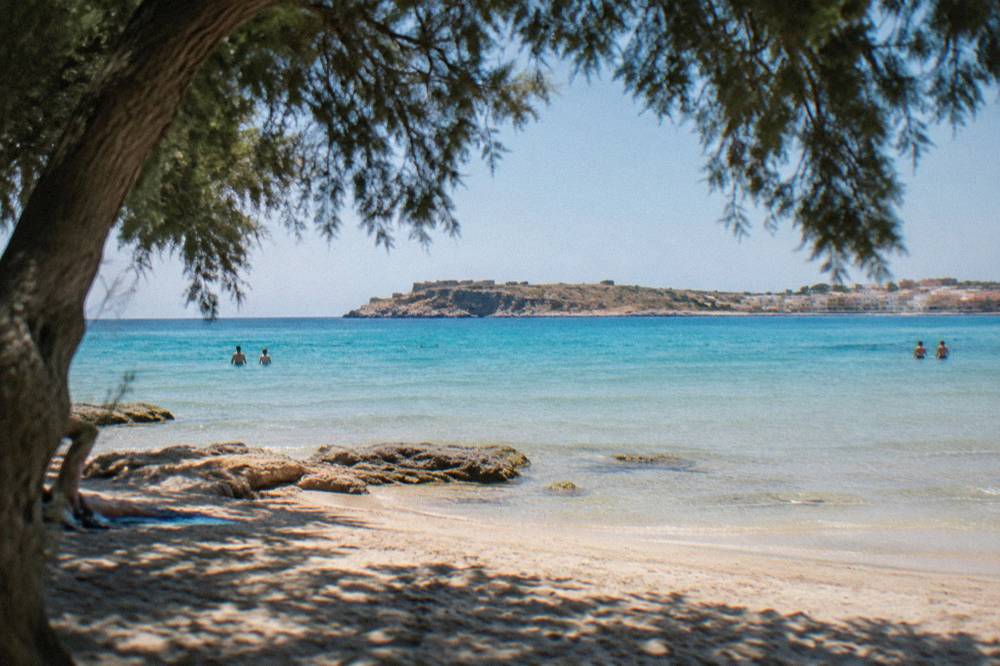
The boat option is the common one. Cruises leave Kissamos port daily through to 31 October 2026 on the operator's published season, most calling at Gramvousa island for a climb to a Venetian-era fortress before the lagoon swim. A time-slot visitor cap of about 1,200 people per three hours was proposed in August 2026, but it is a proposal, not a rule, so treat any claim of a cap as unconfirmed. What is confirmed is the EUR 1 municipal fee on the ticket for over-13s.
The road option trades the boat for self-driving. From Kaliviani at the head of the Kissamos gulf, an unpaved road runs to a parking area, and from there a footpath descends to the lagoon. The road is rough, the descent is on foot, and the return is uphill in the heat of the day, which is why families with small children usually pick the boat. Whichever way you go, water, sun protection and shoes for the path matter more than they do on any near-city beach.
The Balos day trips from Chania and the wider best tours from Chania pages cover the planning angles, including pickup options from the city.
Is Elafonisi Beach Worth The Long Drive From Chania?
Elafonisi is a Natura 2000 protected area at the south-west corner of Crete, free to enter, with sand that takes a pink tint from crushed shells and a lagoon you can wade across to the islet; taking sand, shells or plants is prohibited. It is the farthest of the famous three from Chania, reached by a drive through the Topolia gorge road or the longer coastal route via Falassarna, and parking is reported at around EUR 5 a day. The protected-status rules are posted and enforced, so the pink sand stays where it is.
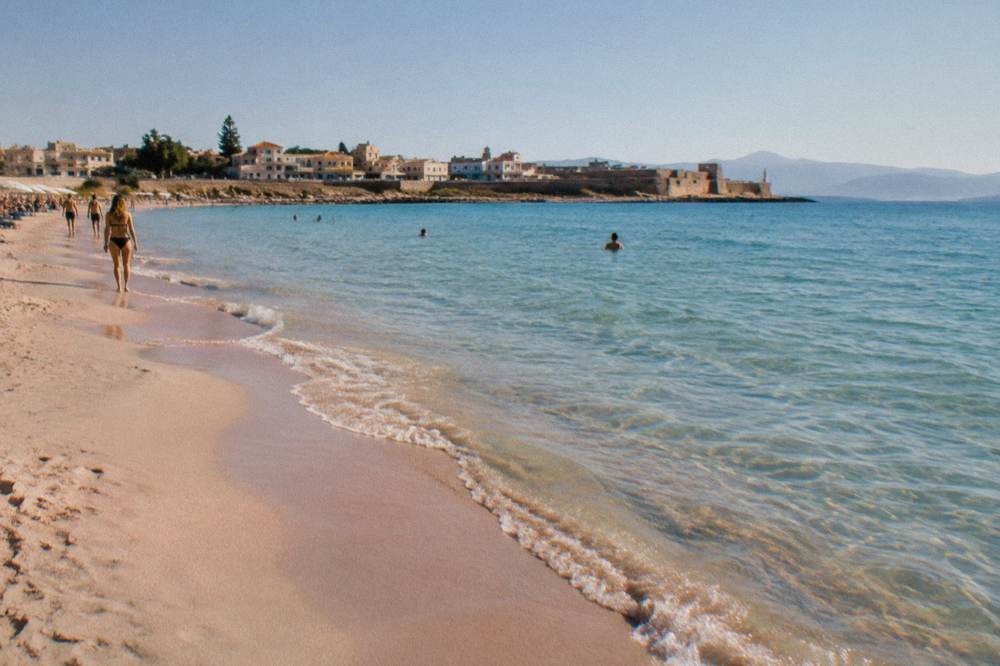
The beach itself is two experiences in one. The lagoon side is shallow, warm and calm, ankle to knee deep for a long stretch, which is why it draws families. Beyond the sand bar, the open sea side has more wave energy and more space. The islet across the lagoon carries walking paths and a small chapel, and the whole area sits inside the Natura 2000 network, so the protections against removing sand and shells apply everywhere on it.
In summer a KTEL bus route serves Elafonisi from Chania, which removes the parking question entirely. The bus runs in the high season only, so check the KTEL Chanion schedules on e-ktel.com before relying on it. Out of season, the drive is the way, and the KTEL Chania buses page explains how the long-distance station on Kydonias street works.
For a day that combines the drive with something beyond the beach, a guided trip such as Check availability on the Elafonisi and Elos excursion adds honey and wine tastings in the hill villages along the route. The listing carries the current dates and inclusions.
How Do Falassarna And The South Coast Beaches Compare?
Falassarna is a long, open stretch of sand and dunes on the west coast north of Elafonisi, free to enter and known for space and sunset-facing water, while the south coast beaches beyond the White Mountains, reached through gorges and villages like Sougia and Paleochora, are quieter, darker-sanded and pebblier. Falassarna fits a west-coast loop; the south coast is a different day entirely, usually paired with a gorge walk or a boat.
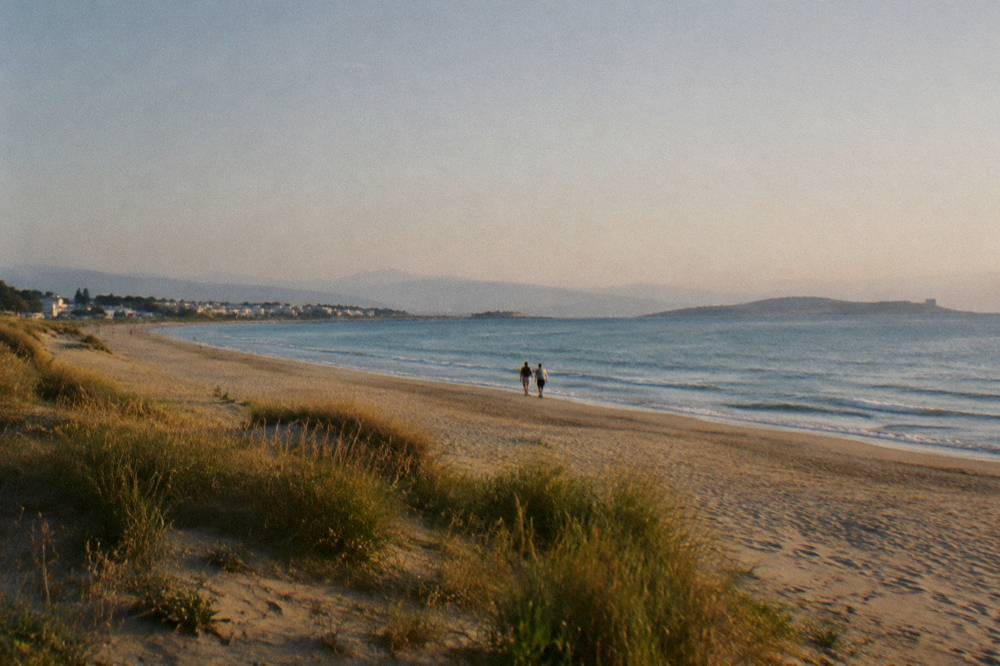
Falassarna rewards a car. Several sandy coves run in a row, the back of the beach is dunes and farmland rather than hotels, and the coast faces west, which makes it the one on this list where the evening light falls on the water rather than behind you. The open aspect also means it takes the wind when it blows, and the meltemi, the summer north-westerly pattern of the Aegean, can put chop on the water in July and August.
The south coast is a different geography. Paleochora and Sougia sit on the Libyan Sea, reached by road over the mountains or, from Agia Roumeli at the end of the Samaria Gorge, by boat. The sand runs darker, the beaches run quieter, and the season runs marginally longer because the White Mountains block the worst of the northern winds. Boats to Gavdos leave from Paleochora and Sougia in season, with no published timetable to quote here, so confirm locally.
A useful way to see the trade-offs:
| Destination | Coast | Character | Entry | Main Access From Chania |
|---|---|---|---|---|
| Balos | North-west | Lagoon, shallow, boat or rough road | Free, EUR 1 municipal fee on boat ticket | Boat from Kissamos or Kaliviani road |
| Falassarna | West | Long sand, dunes, open water | Free | Car or west-coach tour |
| Elafonisi | South-west | Pink sand, lagoon, protected area | Free | Car, summer KTEL bus or tour |
| Paleochora | South | Sand and pebble, town front | Free | KTEL bus over the mountains |
| Sougia | South | Pebble and sand, quiet | Free | Road or via gorge boats |
| Marathi | Akrotiri | Sheltered shallow bay | Free | Short drive or taxi |
When Is The Beach Season In Chania, Really?
The HNMS Chania Souda station table for 1958 to 2010 shows the sea-adjacent months clearly: July averages 26.7 C with 1 mm of rain, August 26.3 C with 1.4 mm, and the dry window runs from May through September, while October still averages 19.4 C but picks up 67.7 mm of rain and January, the wettest month, collects 129.5 mm across 16.3 rain days. In practice that means beach weather from late May into early October, with the shoulder months of May, June and September trading peak heat for emptier sand.
| Month | Mean Temp C | Rain mm | Rain Days | Beach Verdict |
|---|---|---|---|---|
| May | 20.2 | 13.5 | 4.2 | Warm days, cool sea |
| Jun | 24.7 | 3.4 | 1.2 | Prime beach month |
| Jul | 26.7 | 1.0 | 0.4 | Peak heat, peak crowds |
| Aug | 26.3 | 1.4 | 0.6 | Peak heat, peak crowds |
| Sep | 23.2 | 15.4 | 3.2 | Best balance of sea and space |
| Oct | 19.4 | 67.7 | 9.3 | Swim mornings, watch the sky |
The figures come from the HNMS Chania Souda station, elevation 148 m inland of Souda Bay, records 1958 to 2010, which is the table the national service publishes. No official monthly sea-temperature normal exists for Chania, so none is printed here; a live reading is a live reading, and it changes with the wind.
The seasonal facts touch the beach list directly. Balos boats run daily to 31 October 2026 on the operator's season. Elafonisi's summer bus runs only in high season. Samaria Gorge, which many pair with a south-coast swim at Agia Roumeli, normally runs 1 May to 31 October, but storms in late September and early October 2026 destroyed sections of its path, staff describe a 2026 reopening as extremely difficult, and works aim at readiness in May 2027, so check the NECCA status before planning a gorge-plus-beach day. The Chania weather and best time to visit Chania pages carry the full climate picture.
Which Chania Beach Should You Pick For Your Day?
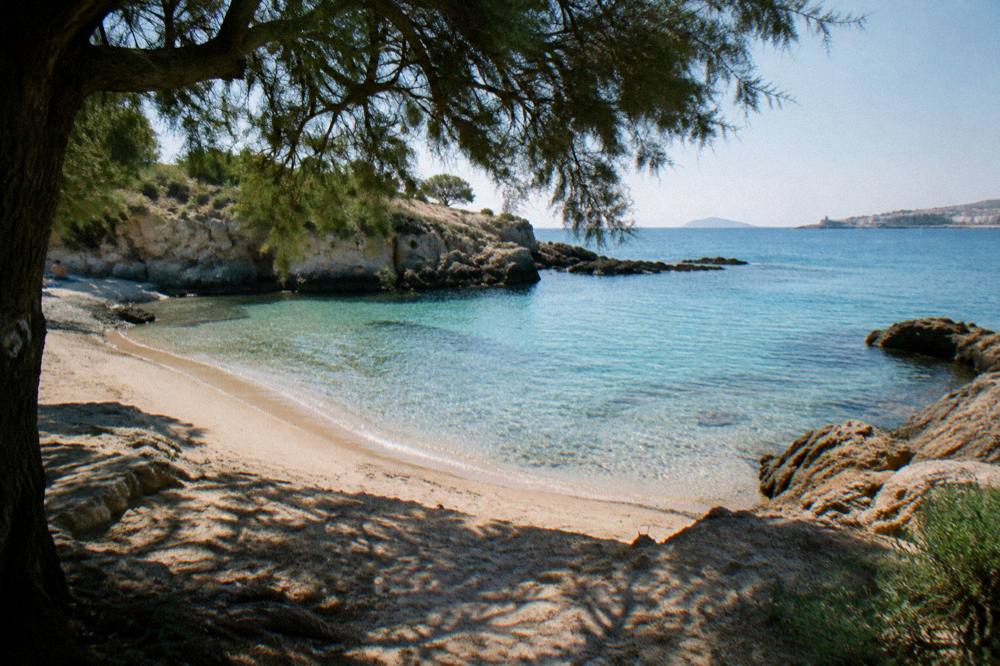
Match the beach to the day you have: a walkable swim means Nea Chora, a half-day with children points to Marathi or Kalathas, a full-day classic points to Balos or Elafonisi, and a sunset or photography day points to Falassarna or Seitan Limania, in each case weighing the EUR 1 Balos fee, the Elafonisi protections and the drive times against the hours available. The single commonest planning error is underestimating west Crete's distances: the island's western quarter looks small on the map and drives like a mountain region, because it is one.
For a short stay, the maths of days matters. The how many days in Chania page lays out the sequencing, and the short version is that a two-day visit supports one far beach day at most, while five days supports Balos, Elafonisi and a peninsula day without rushing any of them.
A simple decision table:
| If You Have | Pick | Why |
|---|---|---|
| One afternoon | Nea Chora | Walkable, free, tavernas |
| One half day, no car | Agia Marina bus | Direct service, served sand |
| One half day, with car | Marathi or Kalathas | Sheltered, quick from town |
| One full day | Balos or Elafonisi | The two signature destinations |
| Two full days | Balos and Elafonisi, or Falassarna | West-coast pairing |
| A hiking day | Imbros plus Sougia swim | Gorge and south coast combined |
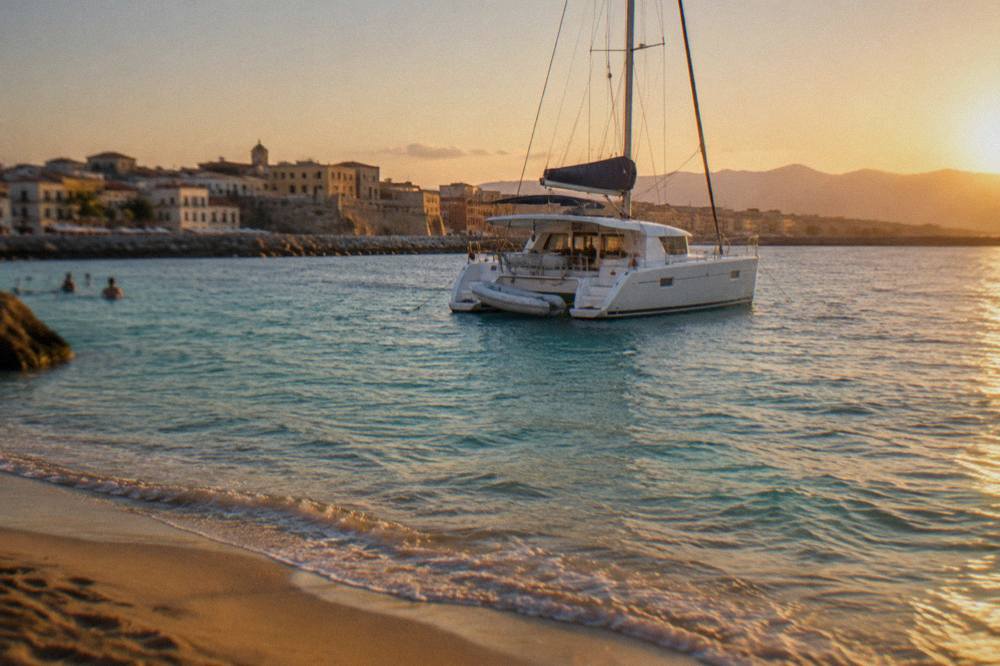
Guided options remove the driving question entirely. The best tours from Chania page sorts them by kind, and the boat-based Balos catamaran and the four-product Cretan tasting tour below both work as beach-plus-something days.
What Should You Know About Fees, Rules And Protections At Chania Beaches?
Entry to every beach in this guide is free, with two caveats attached to specific places: Balos carries a EUR 1 Kissamos municipal fee on the boat ticket for over-13s, and Elafonisi, as a Natura 2000 area, prohibits taking sand, shells or plants, with parking reported at around EUR 5 a day. Everything else on the cost side, sunbeds, umbrellas, boats beyond the Balos cruise, is set by operators and posted on site, so the posted rate at the stand is the only number that counts.
Two protections deserve respect rather than complaint. The Natura 2000 status at Elafonisi exists because the dune system and its species are fragile, and the pink sand is part of that system; the prohibition on removing it is posted and enforced. At Balos, the volume of summer visitors is the pressure point, and the municipal fee, small as it is, is the local mechanism for managing it.
A few practicalities close the picture. No official monthly sea-temperature normal exists, so any figure you see for Chania water temperature is a live reading or an estimate, not a published normal. The meltemi, the summer north-westerly wind pattern of the region, can freshen open west-facing beaches like Falassarna in July and August while leaving sheltered bays like Marathi calm. And the accommodation collects the climate crisis resilience fee per room or apartment per night at seasonal rates; confirm the amount with your booking rather than any article.
For everything beyond the sand, the Chania Crete Travel Guide homepage collects the sight, food and itinerary pages, and the where to stay in Chania page matches each beach band to the areas you can sleep in.
Common Questions About Beaches In Chania
Can you walk to a beach from Chania Old Town?
Yes. Nea Chora, a sandy beach beside the fishing harbour just west of the city walls, is within walking range of the Old Town and free to enter. Every other beach around Chania needs a bus, a taxi or a hire car.
Which is better, Balos or Elafonisi?
They suit different days. Balos is a shallow lagoon reached by boat from Kissamos or an unpaved road and a walk from Kaliviani, with a EUR 1 municipal fee on the boat ticket for over-13s. Elafonisi is a free Natura 2000 protected beach with pink-tinted sand and a wadeable lagoon, reached by a long drive or a summer bus. The elafonisi-vs-balos question is covered in depth on its own page.
Do you have to pay to visit Balos lagoon?
The only confirmed charge is a EUR 1 Kissamos municipal fee, collected on the boat ticket for visitors over 13. No entry fee to the lagoon itself is in force, and a proposed time-slot visitor cap from August 2026 was a proposal, not a rule.
Can you take pink sand from Elafonisi?
No. Elafonisi is a Natura 2000 protected area and taking sand, shells or plants is prohibited. Entry to the beach is free, and parking is reported at around EUR 5 a day.
When is beach season in Chania?
The HNMS Chania Souda station table for 1958 to 2010 shows the dry, warm window running May through September, with July averaging 26.7 C and 1 mm of rain. In practice, late May to early October is the beach season, and September often balances warm sea with emptier sand.
Is Seitan Limania beach hard to reach?
Yes, by ordinary beach standards. The cove on the Akrotiri peninsula is reached by a steep, exposed descent on foot after a drive on the peninsula road. Firm shoes, water and caution with children on the path are the standard advice.