Is Chania Old Town Walkable?
Is Chania Old Town walkable? Yes: the whole Old Town of Chania in Crete is compact, pedestrian-first and car-light, and this guide covers what the streets are like, what to expect on foot and when wheels help.
Chania, a coastal city on the Aegean Sea in Crete, Greece, keeps its entire historic core on a compact harbour-side grid where walking is the normal way to move. The Old Town sits around the Venetian Harbour, with the White Mountains visible to the south, and the municipality as a whole counts 111,375 permanent residents in the 2021 census. Almost nothing a visitor comes to see in the old quarter requires a car, a bus or a taxi, and a fair share of its lanes were never built for cars in the first place. This page answers the walking question in detail: what the ground is like, where the stairs are, how far the edges of the Old Town sit from the harbour, and when a boat or a bus is the better call.
Is Chania Old Town Walkable?
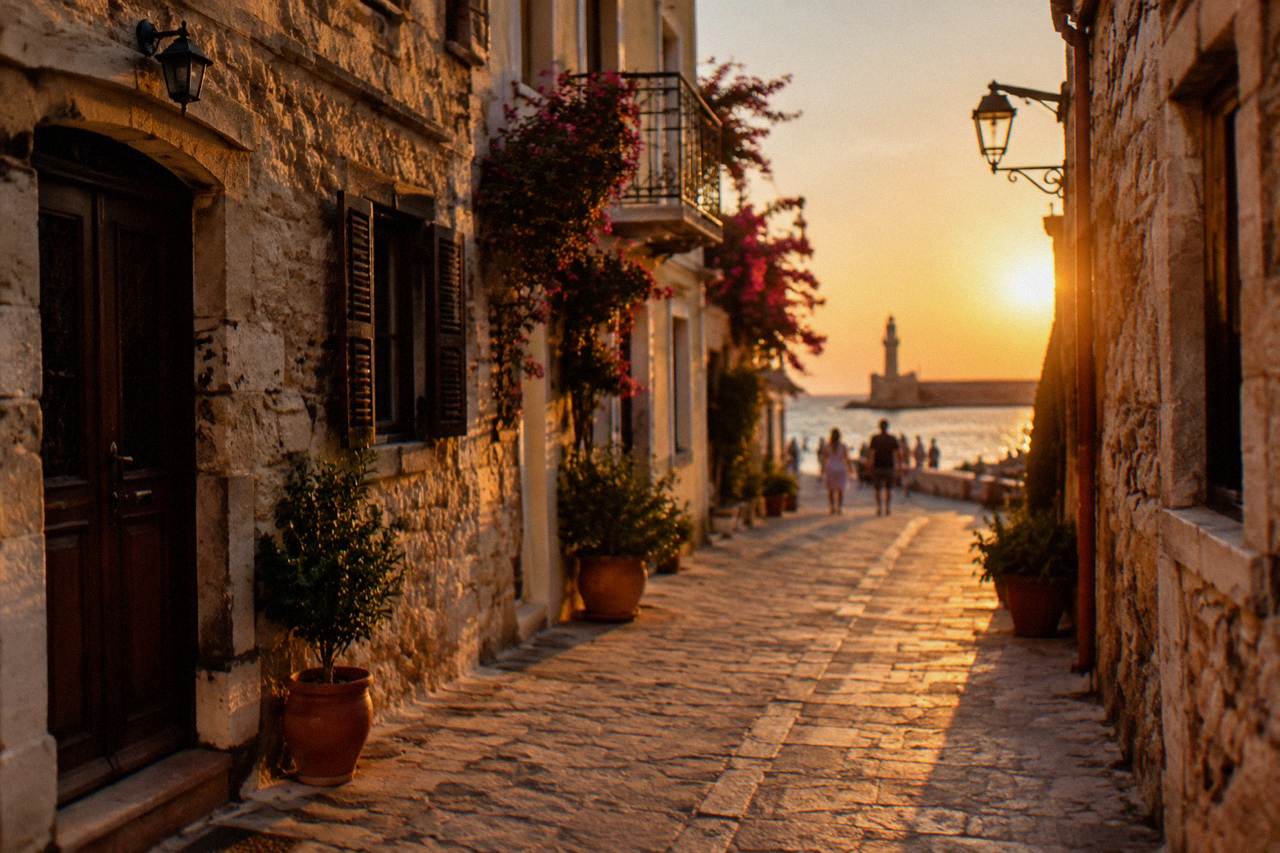
Yes, Chania Old Town is walkable, completely and by design: the historic quarter is compact, largely pedestrianised, and organised around a harbour you can circle on foot, with the municipal market, the Firka Fortress, the lighthouse mole and the Splantzia quarter all reachable on flat-to-gently-sloping ground within the same small area. The Old Town is the walled core that grew between the first Venetian walls of 1336 and the second walls begun in 1536 to Michele Sanmicheli's design, and much of it remains a warren of lanes where deliveries, not through-traffic, are the main vehicles you meet. Streets are surfaced in stone and worn paving, so the walking is slow and uneven rather than strenuous. Visitors with limited mobility should read the terrain section below before planning, because cobbles and steps are genuine obstacles in parts of the quarter.
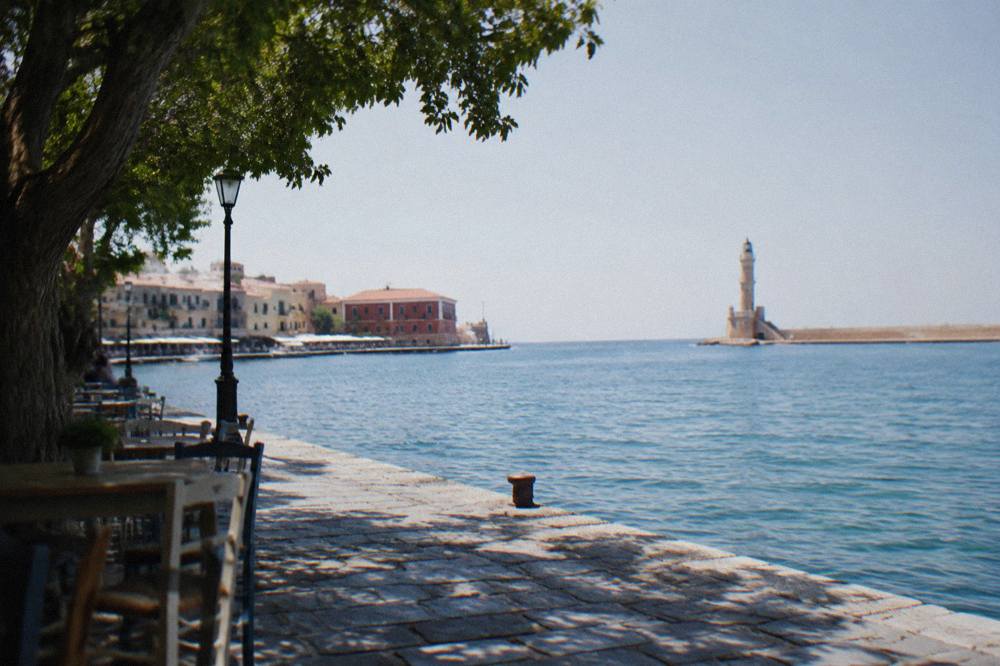
The distance question answers itself quickly in practice. The Old Town runs from the Firka Fortress at the harbour's western end, past the Mosque of the Janissaries and the seven surviving Neoria shipyards of an original seventeen, to Splantzia on the eastern side, and none of these landmarks sits more than a short stroll from any other. The lighthouse (Faros) stands on the harbour mole on its Venetian base, restored during the period of Egyptian rule from 1830 to 1840, and walking the mole out and back is itself one of the standard circuits of a visit. For a fuller picture of the quarter's layout, the Old Town area guide breaks it street by street.
Two practical notes shape any walking day. First, the Old Town is a living neighbourhood: the municipal market, bakeries and workshops operate inside it, so mornings bring carts and deliveries through lanes that are calm by afternoon. Second, the harbour front is the flattest and easiest corridor, while the streets immediately behind it rise in short steps toward the old walls, so a route that hugs the water is the low-effort option. The guide to what not to miss in Chania groups the sights in walking order.
What Are The Streets And Distances Actually Like On Foot?
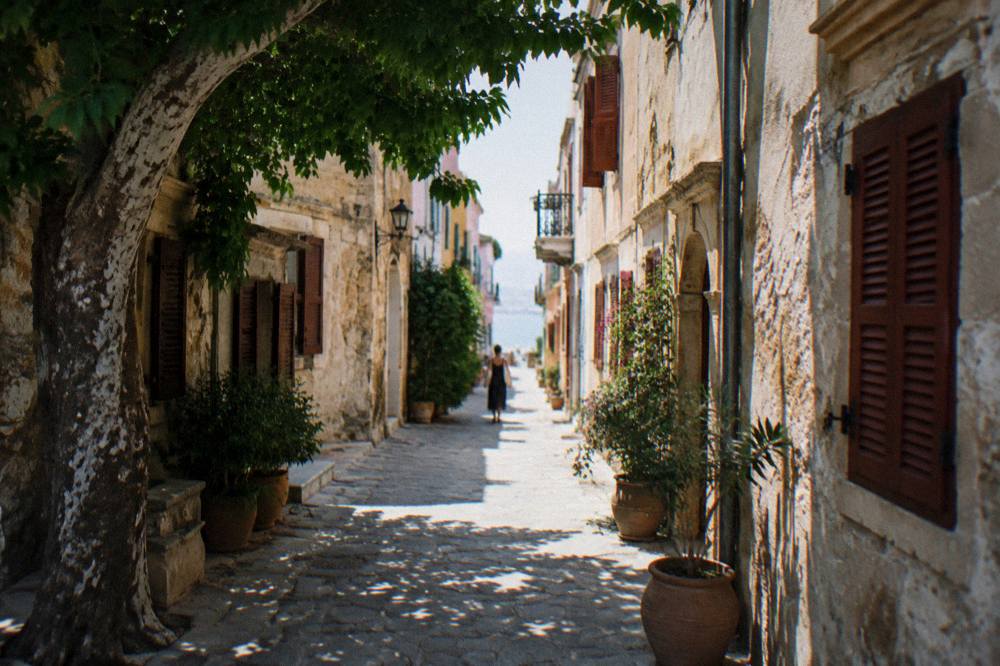
The streets of Chania Old Town are narrow, stone-surfaced and largely car-free, with the whole quarter compact enough that a crossing from the Firka Fortress on the west side to Splantzia on the east takes in nearly every landmark along one harbour-side line, and the only real climbs are the short stepped lanes rising toward the old walls. There is no verified street-by-street distance table for the quarter, and this site does not invent one; what the layout itself guarantees is compactness, because everything of note sits inside the line of the Venetian walls. Footwear matters more than fitness: worn stone, marble slick when wet, and occasional steps reward shoes with grip rather than smooth soles.
The terrain splits into three bands, and knowing them saves missteps. The harbour front is flat and open, a promenade the whole way. The middle band, where the shops and restaurants sit, is a grid of lanes that stay level or slope gently. The outer band, against the walls, is where stepped alleys appear, and these are the sections that punish wheeled luggage. The table below summarises what each band is like, based on what the quarter's own geography shows rather than on any timed survey. The full index of guides sits on Chania Crete Travel Guide.
| Band of the Old Town | Surface and gradient | Ease on foot | Watch for |
|---|---|---|---|
| Harbour front promenade | Flat, open, paved | Easy at any pace | Midday sun with little shade |
| Central lane grid (shops, restaurants) | Narrow stone lanes, level or gentle slopes | Easy, but slow when busy | Delivery carts in the morning |
| Wall-side lanes toward Splantzia and Tophana | Short stepped alleys, worn cobbles | Moderate; steps in places | Wheeled luggage, slick stone after rain |
Rain is rare in the walking season but not absent. The HNMS Chania Souda station table, covering station records from 1958 to 2010, shows May at 13.5 mm of rain, July at 1.0 mm and August at 1.4 mm, while October climbs to 67.7 mm and January reaches 129.5 mm. In plain terms, the stone underfoot is dry through the summer half of the year, and from October onward a wet morning can make polished paving genuinely slippery. If a walking day turns wet, the rainy day guide for Chania lists the indoor options, including the Archaeological Museum at 15 Skra Street in Halepa, whose full ticket is EUR 15 and concession EUR 8, with hours to be confirmed on the museum's own visit page.
Is Chania Old Town Walkable For Everyone, Including With Luggage Or Limited Mobility?
Chania Old Town is walkable for anyone who manages uneven stone, but it is not uniformly accessible: the harbour front promenade is flat and step-free, while the back lanes include cobbles and short stairways that make wheelchairs, rollators and wheeled suitcases hard work, so where you sleep inside the quarter matters as much as whether you can walk it. The question of staying inside the Old Town versus outside it is covered in detail on the page on whether it is worth staying in Chania Old Town, and the honest version is this: the quarter rewards travellers who pack light and punishes the twenty-kilo suitcase on cobbles. There is no verified accessibility audit of the lanes, so confirm access directly with your accommodation before booking.
The same geography that makes the quarter charming makes it imperfect for wheels. Ottoman-era arches, stepped thresholds and lanes barely a shoulder wide are ordinary here, a legacy of building that began under the Venetians and continued through the Ottoman rule that started with the 1645 conquest. For cruise passengers, the separate question of the walk from the port into town has its own answer on the guide to whether Chania is walkable from the cruise port. For families, the flat harbour line plus a beach reachable on foot from the Old Town makes a workable formula, and the guide to walking from the Old Town to a beach confirms which ones are within reach without a vehicle.
When Is Walking The Wrong Tool Around Chania?
Walking is the wrong tool for anything outside the Old Town and its immediate edges: the airport sits about 14 km from the city centre on the Akrotiri peninsula, the Piraeus ferry leaves from Souda port about 7 km east of the Old Town rather than the Venetian Harbour, and every major day trip, Balos, Elafonisi, Samaria, Imbros, Falassarna, Rethymno and Knossos, starts beyond walking range, so those days belong to buses, boats or tours. The distance figures come from the airport's and ferry operator's own published information, not from estimates. The long-distance KTEL bus station on Kydonias street handles routes to Heraklion, Rethymno, Kissamos, Paleochora, Omalos and, in summer, Elafonisi, with tickets through the operator's own booking site; no fare or timetable belongs on this page, so check the operator directly.
Getting from the airport into town is its own small planning item, covered on the airport to town guide, and car-hire decisions have a dedicated page too. The pattern worth internalising is that Chania splits cleanly in two: a walkable historic core you never need to drive inside, and an island-scale landscape around it that you do. Even the sea itself is better treated as a place you take a boat to rather than a place you walk past. The related tour on this page is a case in point: a Check availability link sits beside the trip's own page at the tour section of this site, and the operator's listing carries the price, rating and timing. The fuller things to do in Chania roundup sorts every option by whether it starts on foot or needs a departure.
One more walking caveat concerns the gorges, because they get mistaken for town walks. Samaria Gorge is a one-way mountain route from Xyloskalo on the Omalos plateau down to Agia Roumeli, with boats from Agia Roumeli to Sougia or Chora Sfakion at about 17:30 and a KTEL bus back, run under the NECCA park authority. The gorge normally operates 1 May to 31 October, but storms in late September and early October 2026 destroyed sections of the path, and staff have called a 2026 reopening extremely difficult, so the NECCA status must be checked before any plan is made. The individual ticket is EUR 10 through the NECCA e-ticket portal, free for EU residents under 18 and over 65, and tour prices exclude the separate entrance and ferry charges. None of that is a stroll from the Old Town; it is a mountain day, and the Samaria Gorge guide covers it properly.
How Do You Plan A Walking Day In Chania Old Town?
A walking day in Chania Old Town plans itself around the harbour: start at the Firka Fortress, whose grounds are free and whose fort dates from 1620, walk the mole toward the lighthouse built about 1595 to 1601, return along the harbour past the Mosque of the Janissaries and the Neoria shipyards, then finish in the Splantzia lanes, with the municipal market as the morning anchor. The market, the fortress and the lighthouse are covered each in their own depth on this site, including the municipal market page, so this section sticks to the walking logic that connects them. Water, shade and timing matter: the HNMS Chania Souda station table, for the period 1958 to 2010, puts the July mean maximum at 30.7 C and the August mean maximum at 30.4 C, with January's mean minimum at 7.9 C, so the shoulder months are the kindest hours for covering the whole quarter on foot.
Prefer to cover the same circuit with a guide on two wheels? Book a city highlights bike tour here.
| HNMS Chania Souda, 1958 to 2010 | Mean C | Mean max C | Rain mm | Rain days |
|---|---|---|---|---|
| April | 15.9 | 20.0 | 31.5 | 7.7 |
| May | 20.2 | 24.5 | 13.5 | 4.2 |
| June | 24.7 | 28.9 | 3.4 | 1.2 |
| July | 26.7 | 30.7 | 1.0 | 0.4 |
| September | 23.2 | 27.4 | 15.4 | 3.2 |
| October | 19.4 | 23.5 | 67.7 | 9.3 |
Two final planning notes complete the picture. The harbour-front line carries the evening crowds and the sunset view toward the lighthouse, while the lane grid behind it empties in the afternoon, so the same day can hold both a busy waterfront hour and a quiet back-street one. And when the legs are done, the sea is the natural next move: the boat trips guide lays out the water options that leave straight from the harbour the walk ends on.
Common Questions About Walking In Chania Old Town
Is Chania Old Town walkable?
Yes. The Old Town of Chania is compact, largely pedestrianised and organised around the Venetian Harbour, and all of its main sights, the Firka Fortress, the lighthouse mole, the Neoria shipyards and Splantzia, sit within one continuous walk on flat to gently sloping stone streets.
Can you walk from Chania Old Town to a beach?
Yes, the nearest beaches sit within walking range of the Old Town, and the dedicated page on walking from the Old Town to a beach covers which ones and what the route is like. For anything farther along the coast, buses and boats take over.
Is Chania Old Town step-free?
Partly. The harbour front promenade is flat and step-free, but the lanes behind it include worn cobbles and short stairways toward the walls, so wheelchair users and travellers with wheeled luggage should confirm access with their accommodation before booking.
Do you need a car inside Chania Old Town?
No. The quarter is a walking neighbourhood by design, its lanes predate cars, and parking at its edges is a separate question covered on this site's parking guide. Cars matter for day trips, Balos, Elafonisi and the gorges, not for the Old Town itself.
Is Chania Old Town walkable at night?
The harbour front and the central lanes are lit and active in the evening, and the sunset walk along the mole toward the lighthouse is a standard part of a visit. As with any city, standard care applies; this site publishes no safety statistics.