Chania Airport Car Rental
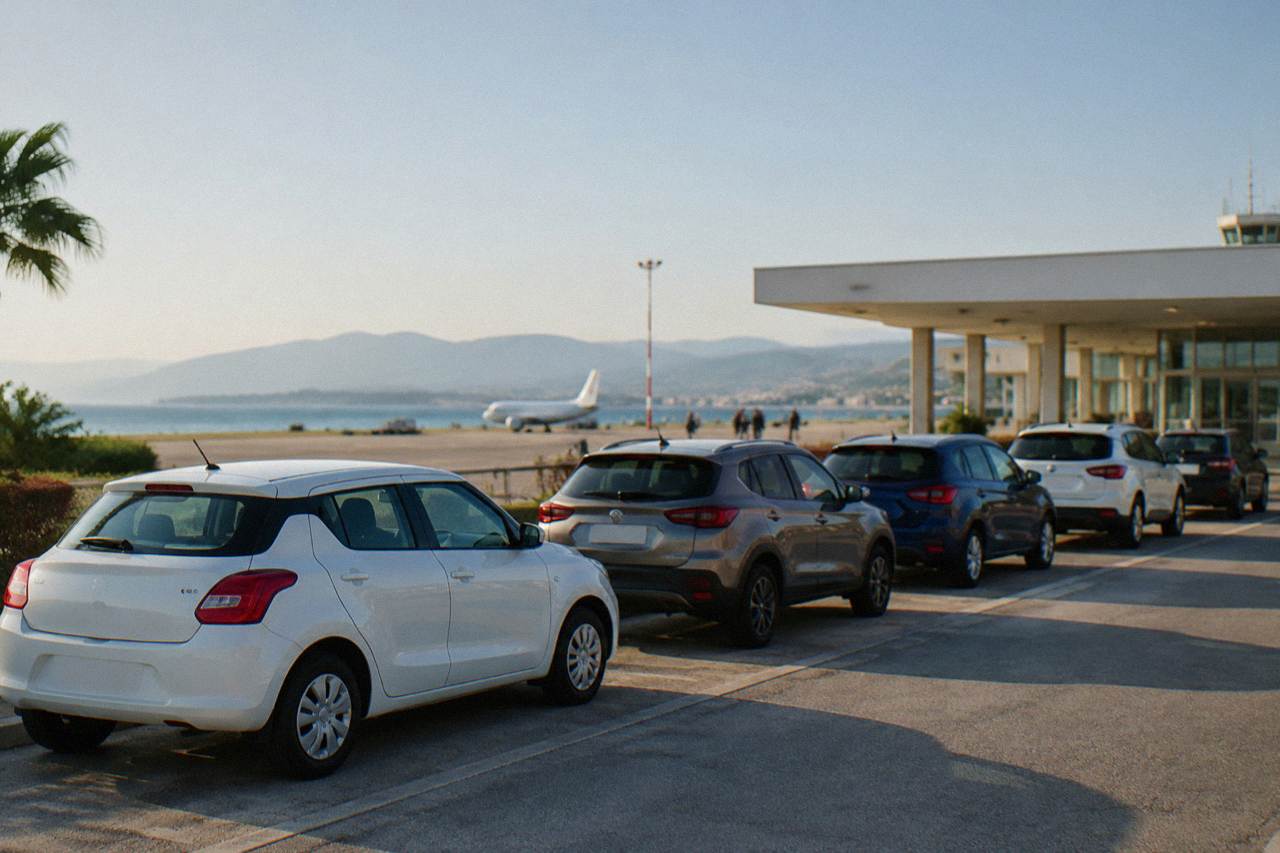
Chania International Airport Ioannis Daskalogiannis sits on the Akrotiri peninsula about 14 km from the city centre, and a hire car is the fastest way from the terminal to the Old Town, the west-coast beaches and the gorges beyond.
Short answer
Yes, renting a car at Chania Airport is worth it if the trip includes Balos, Elafonisi, Falassarna or the gorges, because public buses to those places are seasonal or slow. Book before you fly in summer, bring a full licence held for the period the desk asks for, photograph the car at pickup, and expect an unpaved final stretch on the Balos road.
Renting a car at Chania Airport is the decision that shapes the whole week. Chania is a coastal city on the north-west coast of Crete, Greece, and its airport, Chania International Airport "Ioannis Daskalogiannis" (CHQ), operated by Fraport Greece, sits on the Akrotiri peninsula near Souda, about 14 km from the city centre. From that single terminal the entire west of the island opens up: the White Mountains to the south, the beach strips of Agia Marina and Platanias to the west, and the long drives to Balos, Elafonisi and Falassarna that justify a car in the first place. This guide lays out how airport car hire actually works at CHQ, what the desk will ask for, what to check before you drive away, and when leaving the car behind is the smarter plan. The broader site, Chania Crete Travel Guide, covers the city itself in depth, and the companion page on car rental in Chania generally goes into city desks and neighbourhood pickup.
Is Renting A Car At Chania Airport Worth It?
A car hired at Chania Airport is worth it as soon as the itinerary leaves the city, because the beaches and gorges that draw people to west Crete sit at the end of roads that the public bus network only partly covers, and in some cases only in summer. The KTEL Chanion bus station on Kydonias street runs routes to Heraklion, Rethymno, Kissamos, Paleochora, Omalos and, in summer, Elafonisi, so a car-free trip is possible. But the timetable thins outside the summer season, the drives involve changes, and the spontaneity of stopping at a cove or a village taverna disappears.
The honest answer splits by trip type. A visitor staying inside the Old Town for three days, walking the Venetian Harbour and eating along the harbour front does not need a car for any of that; the streets are narrow, parking is scarce, and the companion page on parking in Chania explains why a car in the centre is often a liability. A visitor planning Balos, Elafonisi, Falassarna, Samaria or Imbros is looking at long days on mountain roads, and a car, or a tour with transport included, is the practical route.
There is a third case that sits between them: the traveller who wants the beach strips west of the city, such as Agia Marina and Platanias, or the Akrotiri peninsula beaches like Stavros and Marathi. Those are short drives, and a car for even half the week changes what is possible. The page on getting around Chania compares the options in detail.
Which Car Hire Companies Operate At Chania Airport, And How Do The Desks Work?
Chania Airport has a compact terminal, so the international brands and the local Cretan operators work from a small cluster of desks in or just outside arrivals, and some local companies meet flights with a shuttle to an off-site yard a few minutes away; which shape you get is written in the booking voucher, not discovered on arrival. The general question of which company to trust is covered separately, in the detailed answer on the best car rental company in Crete, and the honest advice is the same there: the desk you book with matters less than the terms you read before paying.
Booking ahead matters at CHQ specifically because the airport is small and the summer demand is large. The terminal handled 3,992,149 passengers between January and October 2025, and the fleet at a small airport in peak July cannot stretch to walk-up demand. Walk-up desks exist, but the price is set by whoever is left with cars, and in August that can mean the category you wanted is gone entirely.
The practical sequence at pickup, compiled from what the operators themselves publish:
| Step | What Happens | What To Do |
|---|---|---|
| Landing | Walk from the gate to arrivals; CHQ is small, the walk takes minutes | Skip the first queue if your voucher names an off-site shuttle meeting point |
| Desk | Licence, voucher and card are checked; the deposit is held on the card | Present the same card used to book, as the terms usually require |
| Shuttle (if any) | A minibus runs to the yard where the car actually sits | Count the drive time into any tight onward plan |
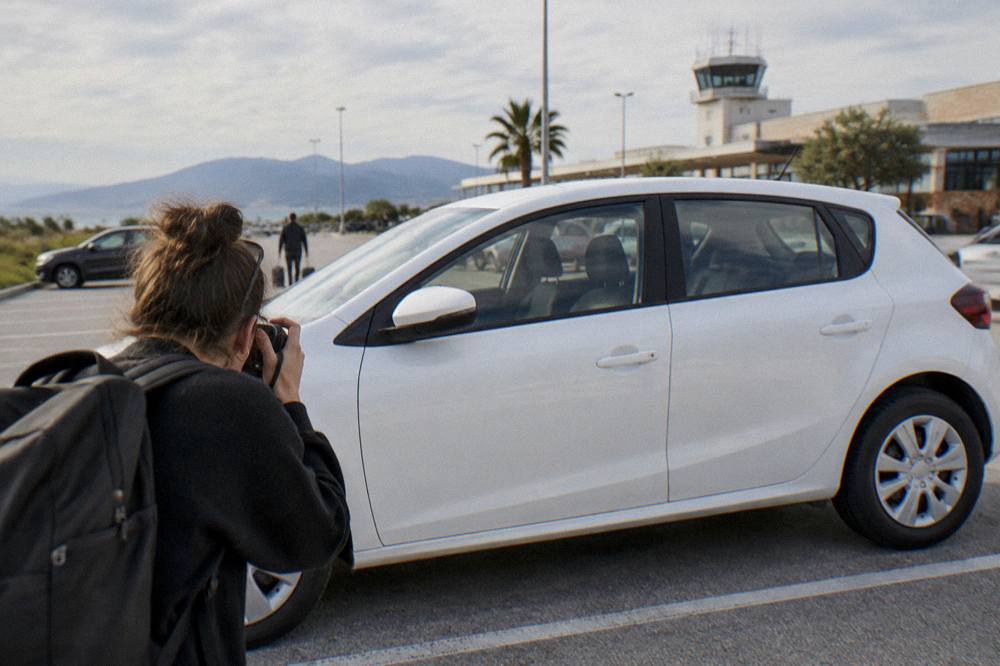
| Handover | The car is inspected and damage is marked on the agreement | Photograph every panel, wheel and glass surface before signing |
| Return | The car is checked against the handover sheet | Ask for the signed closure note or photograph the returned car |
The photograph habit is the single highest-value minute of the whole rental. A dispute about a scuffed bumper at 05:00 before a flight is settled by timestamped photos taken at pickup, not by argument. Check that the fuel policy on the voucher matches what the desk says aloud, and check whether the return is staffed at your flight hour.
What Documents And Checks Do You Need To Hire A Car In Crete?
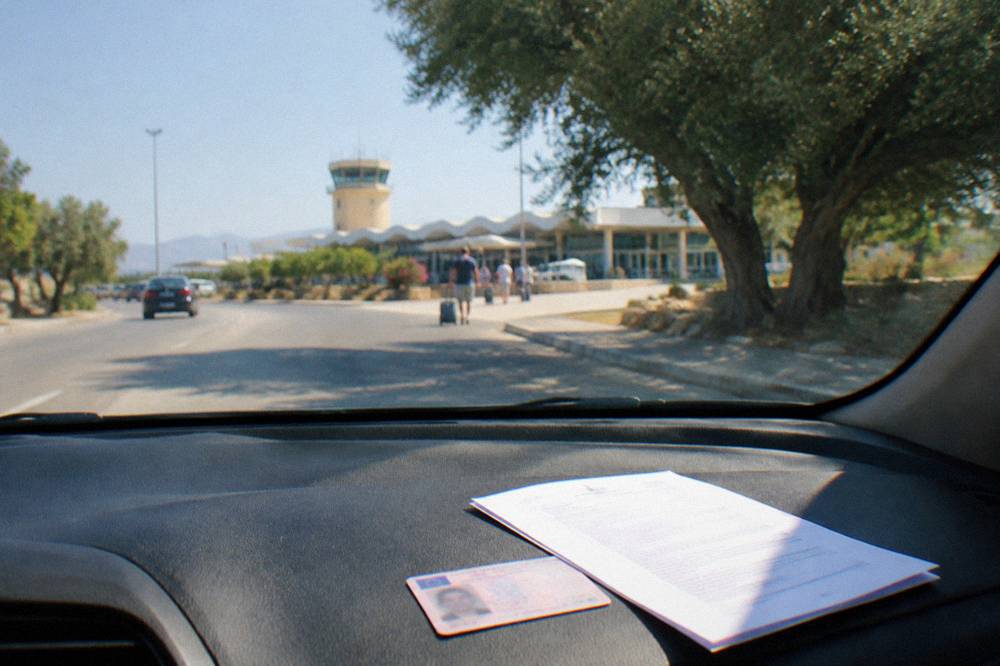
The core documents at a Chania Airport desk are a full driving licence held for the period the company states in its terms, the booking voucher, the credit card in the main driver's name for the deposit, and a passport or identity card; a licence printed in a non-Latin script may need an International Driving Permit, and the company's own terms are the authority on that, not hearsay. Greece is a Schengen member with internal checks abolished since 26 March 2000, and the Entry/Exit System has been fully deployed across Schengen since 10 April 2026, so border formalities for Europeans are light, but the hire desk checks documents regardless of how you entered the country.
The deposit is where the real cost hides. The desk holds a sum on the card, and the size of that hold depends on the insurance level chosen at booking. A cheaper prepaid rate often carries a large deposit and a high excess, meaning the amount the driver pays if the car is damaged. Buying the excess waiver at the desk is routinely the most expensive place to buy it; a standalone excess policy arranged before travel, or the waiver bought online with the booking, usually costs less for the same protection. The terms, not the counter conversation, define who pays for what: glass, tyres, underside and clutch damage are the classic exclusions.
Mountain roads make one clause worth reading twice. The road from Kaliviani towards Balos is unpaved after a certain point, leading to a parking area and then a walk down to the lagoon, and a rental agreement that excludes unpaved roads excludes exactly that road. The same logic applies to the rough track down to Seitan Limania. Anyone whose plan includes those two beaches should confirm the unpaved-road clause in writing before booking, or plan to walk the final stretch, or take a boat.
| Document Or Check | Why The Desk Wants It | Watch Out For |
|---|---|---|
| Full licence | Legal requirement to drive in Greece | Licence held under the stated minimum period can void the rental |
| Voucher | Proves the category, fuel policy and inclusions | Read the fuel policy before arrival, not at the desk |
| Credit card in driver's name | Deposit hold | Debit cards are refused by some operators; check terms |
| Passport or ID card | Identity matching the licence | Name must match across all documents |
| International Driving Permit | Only if the licence is not in Latin script | Confirm with the operator's terms, not word of mouth |
| Damage photos at handover | Fixes the baseline for the return inspection | Photograph wheels, glass and bumpers, not just the doors |
How Does The Drive From Chania Airport To The City Actually Work?
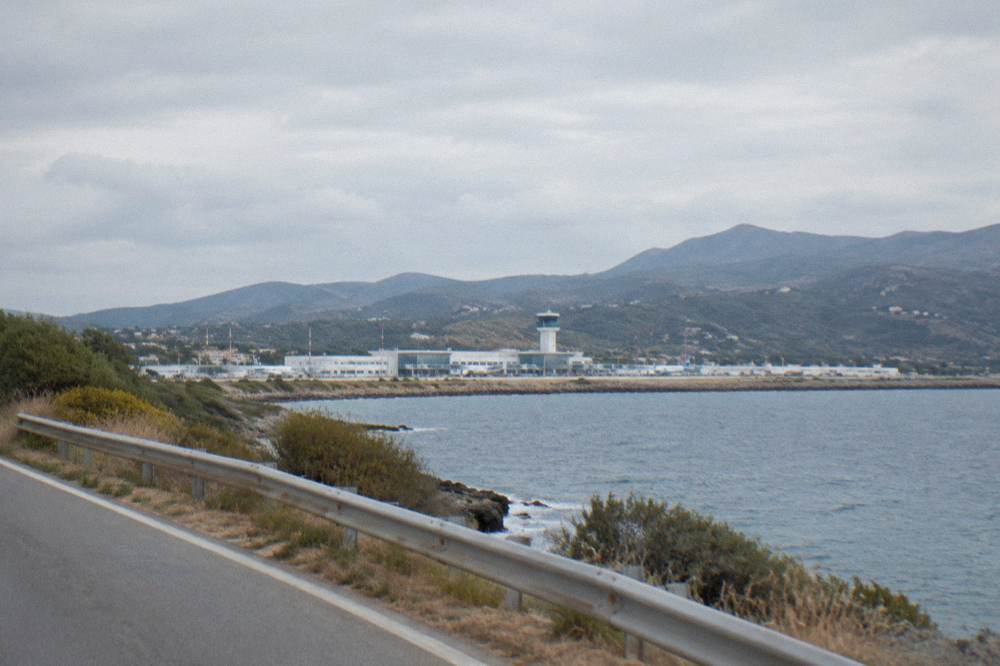
The drive from Chania Airport to the city centre covers about 14 km from the Akrotiri peninsula, and the airport's own site is where current public bus and taxi information is published, so the choice between driving into town and dropping the car later comes down to where the stay is based rather than the distance itself. The route runs west from the airport towards the city, and the final stretch into the Old Town is where the easy driving ends: the lanes around the harbour were built centuries before the car.
For the ride from the terminal to your door, book an airport transfer here.
That is why the base decision and the car decision should be made together. A stay inside the Old Town, described in the guide to where to stay in Chania, pairs well with a car collected later in the week, or with tours that include pickup, rather than a car sitting in a paid space doing nothing. A stay in Nea Chora, Agia Marina or further out along the beach road pairs well with a car from day one. The full breakdown of airport-to-town options, including the bus station locations, is in the dedicated guide to getting from Chania Airport to Chania town, and the airport itself has its own page covering the terminal, the airlines and the military-base question people often ask.
For the drive itself, the driving in Crete guide carries the detail: Cretan driving is assertive, overtaking on two-way mountain roads is a daily reality, and the north-coast national road is a different world from the switchbacks above it. One airport fact worth repeating: CHQ is about 14 km from the centre. Anyone planning a tight pickup-and-drive schedule should budget for the real distance.
What Kind Of Car Suits The Roads Around Chania?
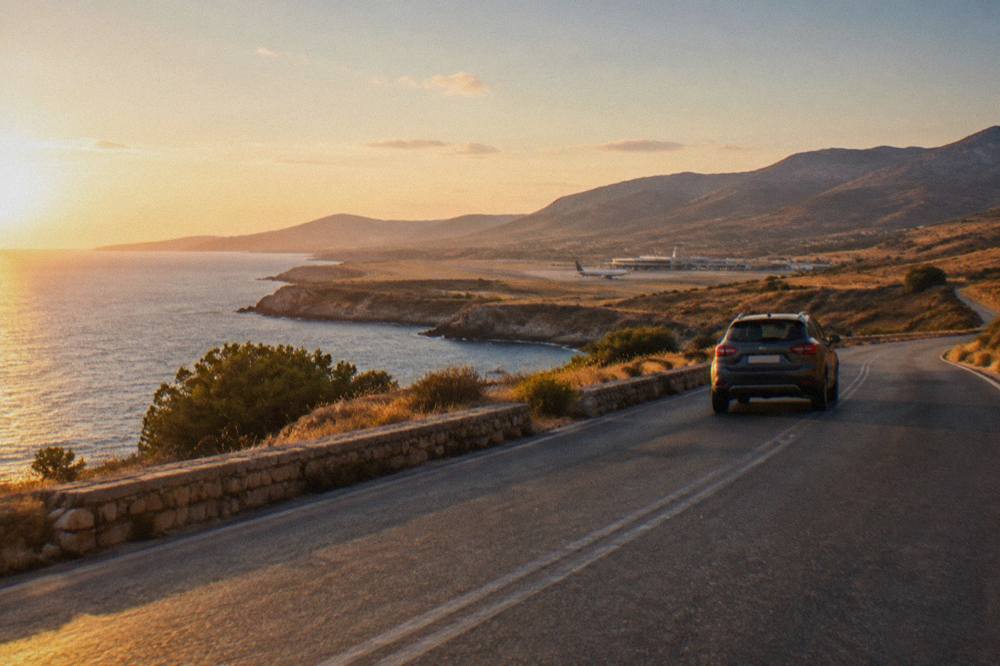
A compact car is the right default for a Chania-based trip, because the Old Town lanes, the village streets and the parking spaces are all small, and only itineraries heavy on mountain roads or unpaved stretches justify anything larger, while the decision between automatic and manual is really a decision about driver comfort on steep switchbacks, not prestige. The north-coast road to Rethymno or Heraklion is comfortable in any car. The roads into the White Mountains, towards Omalos or the south-coast villages, are winding with tight bends, and a small, light car is easier there, not harder.
Category choice by itinerary, using only what the road types and the facts support:
| Itinerary Type | Roads Involved | Sensible Category |
|---|---|---|
| Old Town and harbour only | City lanes, paid parking | Smallest available, or no car at all |
| Beach strip west (Agia Marina, Platanias) | Paved coast road | Compact |
| Balos by road | Paved to Kaliviani, then unpaved to a parking area and a walk down | Compact with confirmed unpaved-road cover, or a tour |
| Elafonisi | Long westbound drive, seasonal KTEL bus alternative | Compact with comfortable seats for the distance |
| Gorges (Samaria, Imbros) | Mountain roads to Omalos or Imbros village | Compact, small engine is fine |
| South coast (Sfakia, Loutro) | Winding mountain descents | Compact; consider a tour with transport |
Two notes attach themselves to two of those rows. First, Samaria Gorge: the gorge normally operates 1 May to 31 October, but storms in late September and early October 2026 destroyed sections of the path, staff have called a 2026 reopening extremely difficult with works aimed at readiness in May 2027, and no final decision is on record, so the NECCA status must be checked before any plan is built around it. The full story, including the EUR 10 individual ticket via the NECCA e-ticket portal and the Agia Roumeli boat connection at about 17:30, is in the Samaria Gorge guide. Second, Balos by road: the only confirmed charge tied to a visit is a EUR 1 Kissamos municipal fee collected on the boat ticket for over-13s, and a time-slot visitor cap was proposed in August 2026 but is not in force; the details live in the Balos and Gramvousa guide.
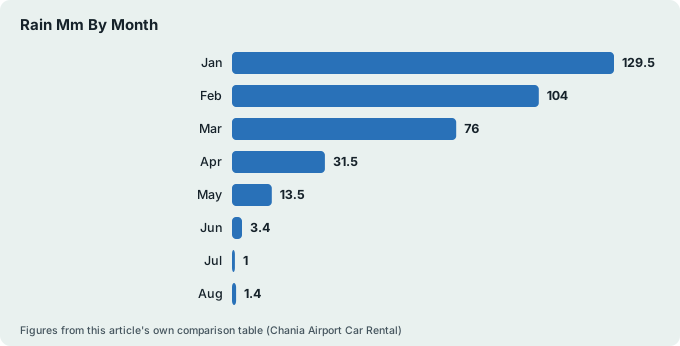
Weather belongs in the driving decision too. The HNMS Chania Souda station table, covering station records from 1958 to 2010, shows how sharply the year splits: July averages just 1.0 mm of rain over 0.4 rain days, while January averages 129.5 mm over 16.3 rain days, and October jumps to 67.7 mm. In plain terms, the dry window from May to September is when mountain driving is at its simplest, and from October onward a wet-road plan matters.
| Month | Mean Temp C | Rain Days | Rain mm |
|---|---|---|---|
| Jan | 11.0 | 16.3 | 129.5 |
| Feb | 11.0 | 14.5 | 104.0 |
| Mar | 12.7 | 11.5 | 76.0 |
| Apr | 15.9 | 7.7 | 31.5 |
| May | 20.2 | 4.2 | 13.5 |
| Jun | 24.7 | 1.2 | 3.4 |
| Jul | 26.7 | 0.4 | 1.0 |
| Aug | 26.3 | 0.6 | 1.4 |
| Sep | 23.2 | 3.2 | 15.4 |
| Oct | 19.4 | 9.3 | 67.7 |
| Nov | 15.8 | 11.2 | 77.0 |
| Dec | 12.7 | 16.1 | 101.9 |
The figures come from the HNMS Chania Souda station, which sits at 148 m inland of Souda Bay, so they read slightly cooler and wetter than the beachfront in high summer. The Chania weather page unpacks the full table, and the best time to visit Chania page translates it into a trip calendar.
Where Can You Drive From Chania Airport In A Day?
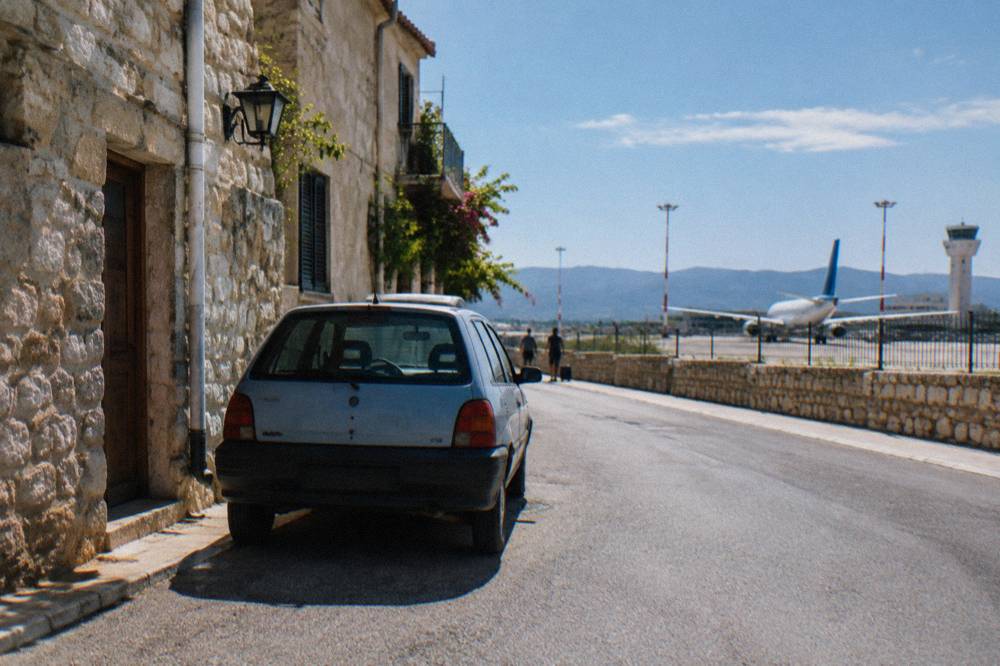
The realistic day drives from Chania are the west-coast beaches, the gorges, the south coast via the mountain roads, and the long eastbound runs to Rethymno or Heraklion, and the constraint is not distance but opening hours, ferry connections and, for the beaches, the heat of the middle of the day. The island has no railway, so the car, the bus or a tour are the only ways anywhere.
The west-coast day is the classic. Elafonisi is a Natura 2000 protected area where entry is reported to be free and taking sand, shells or plants is prohibited; no charge of any other kind should be assumed, and the guide to Elafonisi beach carries the access detail. Falassarna sits further north on the same coast. The comparison people ask for, Elafonisi versus Balos, has its own page, and the honest summary is that Balos is the harder logistics: boats leave from Kissamos port on daily departures running to 31 October 2026 as the operators report, or the road route involves that unpaved stretch.
The gorge day depends entirely on status. Samaria runs one-way from Xyloskalo on the Omalos plateau down to Agia Roumeli, with boats from Agia Roumeli to Sougia or Chora Sfakion at about 17:30 and a KTEL bus back, all as reported, and entry for the full walk runs 07:00 to 13:00 with everyone out of the park by 18:00. The separate entrance and ferry fees are excluded from tour prices. Imbros Gorge, covered in its own guide, is the shorter alternative and its path has not made news the way Samaria's has.
The eastbound day is Rethymno or the very long pairing of Heraklion and Knossos, both with their own guides, both reachable by KTEL bus from the Kydonias street station if a rest from driving sounds appealing. And the south coast, Loutro and Sfakia, is the drive that rewards an early start; the Loutro and Sfakia guide explains the boat-and-drive combination.
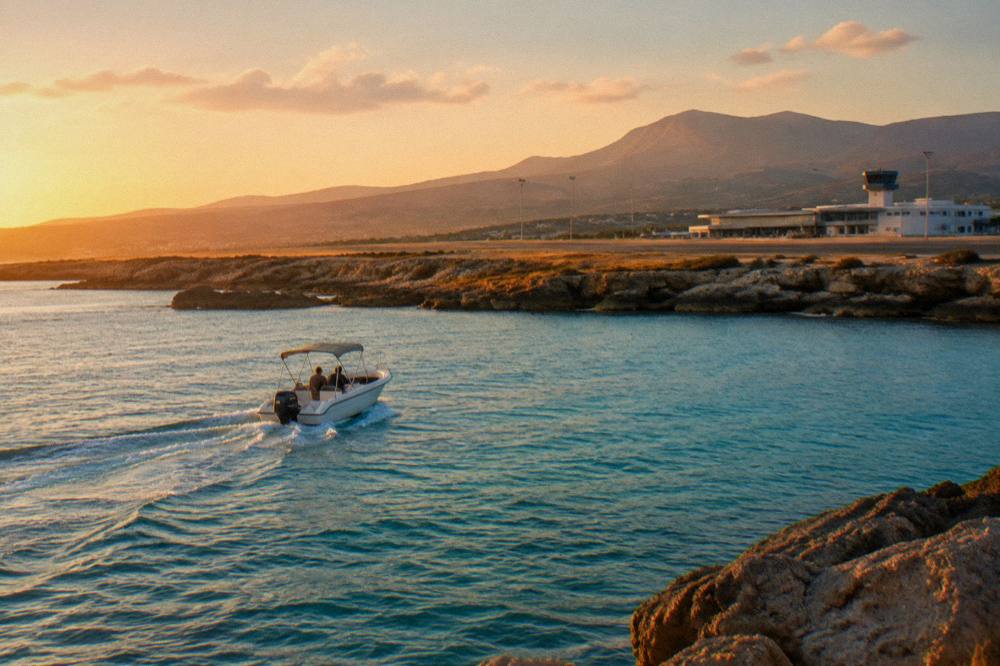
Not every day needs a car at all. The sea is the other road out of Chania, and one of the strongest ways to use a car-free day in the city is on the water. The site features a no-license boat rental from Chania, where you take a small boat out yourself along the coast, alongside a kayak safari from Kera Beach that paddles past Turtle Island and a guided sea kayak tour along the Venetian coastline under the fortress walls; the boat rental has its own page at Rent a Boat in Chania, no license required, with live dates and pricing on the operator's live listing.
What Are The Alternatives To Chania Airport Car Rental?
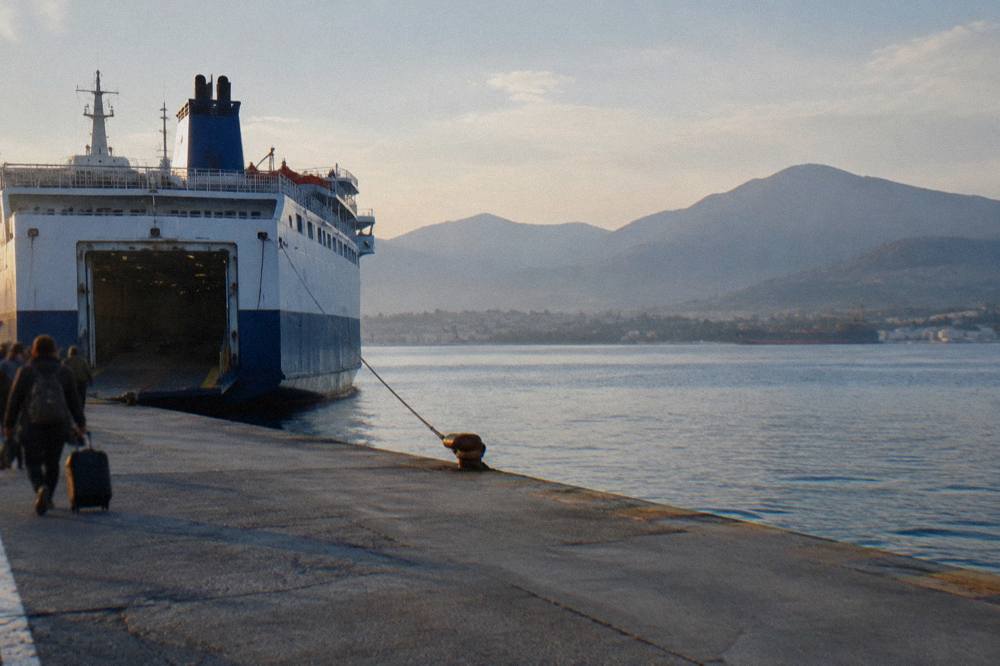
The real alternatives to a Chania Airport rental car are the KTEL bus network radiating from the Kydonias street station, organised day tours with transport included, and arriving without a car at all by ferry into Souda port, where the Blue Star Ferries overnight service from Piraeus departs about 21:30 and takes about 9 h 15 min as the operator's published timetable shows. The bus network reaches Heraklion, Rethymno, Kissamos, Paleochora, Omalos and, in summer, Elafonisi, with tickets bookable at e-ktel.com; no fare is printed here because the official fare belongs on the operator's own pages.
Tours with transport included solve the hardest driving days outright. A Balos and Gramvousa excursion from Kissamos, or one with pickup from Chania and Rethymno, removes the unpaved-road clause question entirely, and a Samaria trek with a guide handles the Omalos drive and the return logistics. The best tours from Chania page sorts the full range, and for a first visit the guide to how many days in Chania helps decide how many of those days a car would actually serve.
The ferry is the other framing. Arriving by sea into Souda, about 7 km east of the Old Town, puts a visitor in the same position as an airport arrival but with the city closer; the Piraeus to Chania ferry guide and the Athens to Chania page cover the crossing, and the flights to Chania page covers the air side, with the Chania Airport guide as the full terminal reference.
What Should You Check Before Driving Away From The Desk?
Before leaving any Chania Airport rental lot, walk the car and photograph every panel, wheel and piece of glass, confirm the fuel level against the voucher's fuel policy, check that the spare wheel and its tools are present, test the lights and the handbrake on a slope, and make sure the desk's damage sheet matches what the photos show, because every one of those points is the difference between a clean return and a charge nobody can dispute. The check takes five minutes and pays for itself the first time a return desk disagrees with you.
The same discipline applies to the return, especially for early flights. Ask at pickup whether the return is staffed at the hour of the departure, and if it is not, ask what the drop-off procedure is and photograph the car where it is left, with the fuel gauge and the mileage visible. A closed lot at 05:00 with no procedure agreed in advance is the single most common way a smooth rental ends badly.
Insurance paperwork deserves one read in the room, not at the gate. Note the excess amount, the exclusions, and the number to call if the car breaks down; a breakdown on the Omalos road is not the moment to search a voucher PDF for a phone number. Keep the agreement in the glovebox for the whole rental.
Common Questions About Chania Airport Car Rental
Is it easy to rent a car at Chania Airport?
The terminal is small and the rental desks are close to arrivals, with some local operators using a short shuttle to an off-site yard. Booking ahead in summer is the difference between a quick pickup and a long wait, because a small airport's fleet cannot cover peak-season walk-up demand.
Do I need a car in Chania at all?
Not for the Old Town, the Venetian Harbour or the city beaches; those are walkable or a short bus ride away. A car earns its cost on the west-coach beach drives and the gorge roads, or on stays outside the centre in places like Agia Marina or Platanias.
Can I drive to Balos with a rental car?
Only if the rental terms allow unpaved roads, because the route from Kaliviani to the parking area is unpaved and then continues on foot down to the lagoon. Many agreements exclude exactly this road, so confirm in writing before booking, or take a boat excursion from Kissamos instead.
What documents do I need to hire a car in Crete?
A full driving licence held for the minimum period the operator states, the booking voucher, a credit card in the main driver's name for the deposit, and a passport or identity card. An International Driving Permit may be needed when the licence is not printed in Latin script; the operator's own terms settle that question.
Is there a train from Chania Airport into town?
There is no railway anywhere on Crete. The options from CHQ are the hire car, the public bus or a taxi, with current bus and taxi information published on the airport's own site.
Is it better to book car hire before I fly?
Yes, for travel between late May and early October. Summer demand at a small airport strips the popular categories first, and pre-booking also locks the fuel policy and the insurance level while there is still time to read them.
The pattern that holds across every version of this question is simple: decide what the trip is for, then decide what the car is for. A week built around the Old Town, the harbour restaurants and a boat on the water needs almost no driving, while a week chasing Balos at dawn and the south coast by lunch is a driving holiday that happens to include a beautiful city at its base. Start with the stay, choose the wheels to match, and photograph the car before you leave the lot.