Is Chania Airport A Military Base?
Chania International Airport in Crete is a civilian airport run by Fraport Greece. Here is what official sources say about its status, its location and getting into town.
Chania, the coastal city on the north-west of Crete in Greece, is served by one airport, and travellers arriving there sometimes wonder what kind of airport it is. The short answer comes straight from the official record: Chania International Airport "Ioannis Daskalogiannis", airport code CHQ, is a civilian commercial airport operated by Fraport Greece, and it handled 3,992,149 passengers between January and October 2025. Nothing in the material the operator or the airport publishes describes it as a military base. This page lays out what the sources do say, where the airport actually sits, and how to plan the arrival.
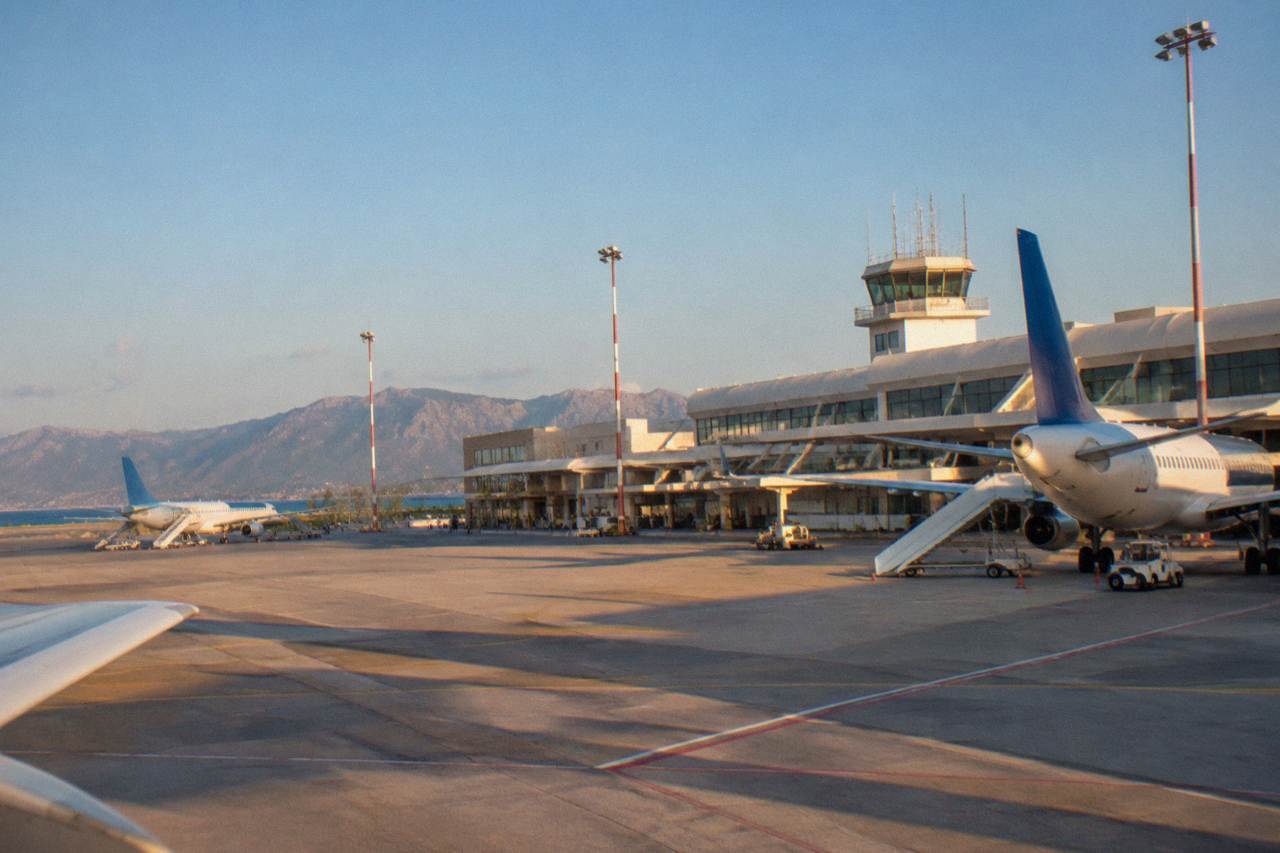
Is Chania Airport A Military Base?
Chania Airport is a civilian airport, not a military base in its published role: its official name is Chania International Airport "Ioannis Daskalogiannis" (CHQ), it is operated by the commercial operator Fraport Greece, and its traffic is scheduled and charter passenger traffic, with 3,992,149 passengers recorded from January to October 2025. The airport's own pages present a passenger terminal, airline information, bus and taxi guidance and retail services, the furniture of a civilian airport, and no official source consulted for this guide labels it otherwise.
That is the direct answer, and it is worth being precise about why the question exists at all. Airports on Greek islands have mixed histories, and names can carry echoes of earlier arrangements that current timetables do not. What a reader can verify without any insider knowledge is the present operation: Fraport Greece is a commercial airport operator, the airport publishes passenger airline information, and its site directs arriving travellers to public buses and taxis, the practical signs of a civil facility. If a question concerns restricted areas, access rules or security zones, those apply at any international airport in the Schengen area, and the airport's own site is the place to check current conditions before travel.
For context, Greece has been a full Schengen member with internal checks abolished since 26 March 2000, and the Entry/Exit System (EES) has been fully deployed across Schengen since 10 April 2026. Greece has been in the euro area since 1 January 2001, so arrivals handle everything in euros. ETIAS is not in operation and collects no applications as of October 2026, so no traveller needs to factor it into a booking yet.
Where Is Chania Airport And Why Does The Location Confuse People?
Chania Airport sits on the Akrotiri peninsula near Souda, about 14 km from the city centre, and it is a different place from Souda port and the Venetian Harbour. The airport's own page gives the distance. The Piraeus ferry leaves from Souda port, about 7 km east of the Old Town, while the Venetian Harbour in the Old Town serves excursion boats only.
The Akrotiri peninsula is the headland north-east of the city, and it is also a destination in its own right, covered in the Akrotiri Peninsula guide territory of this site's content. To separate the three places cleanly:
| Place | What It Is | Distance From The City Centre |
|---|---|---|
| Chania Airport (CHQ) | Civilian international airport, Fraport Greece, on the Akrotiri peninsula | About 14 km |
| Souda port | Ferry port for the overnight Blue Star Ferries service to Piraeus | About 7 km east of the Old Town |
| Venetian Harbour | Historic harbour in the Old Town, used by excursion boats | In the Old Town |
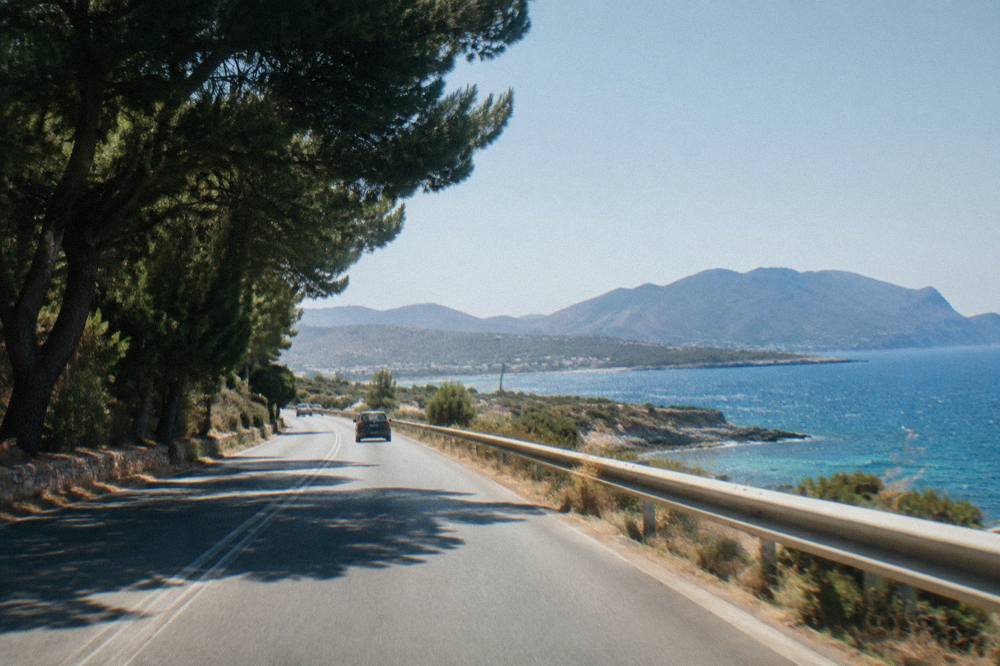
The drive from the airport into Chania therefore crosses the peninsula's edge and descends toward the city, with the White Mountains (Lefka Ori) visible to the south on clear days. Public bus and taxi information sits on the airport's own site, and this guide prints no fare for either, because fares move and the official page is the live source. Travellers who plan to drive can read the site's airport car rental guide for the hire-side picture and driving in Crete context, both of which cover the roads you meet after leaving the terminal.
A related question travellers ask is whether the arrival city itself is worth the flight, and the site's is Chania worth visiting material covers the Old Town's walkability, which is the practical answer: the Old Town sits around the Venetian Harbour and is compact on foot.
How Do You Get From Chania Airport Into Chania Town?
Getting from Chania Airport into Chania town means one of three options, public KTEL bus, taxi, or a hire car, and the airport's own site is the official source for current bus and taxi information; no fare, timetable or journey figure is printed here because none belongs on a static page. The bus is the scheduled public option, the taxi rank serves the terminal, and hire desks serve travellers who want the peninsula and the beaches under their own steering.
To drive yourself from the airport into town, book a Chania Airport car rental here.
Each option trades convenience against flexibility. The bus connects the airport with the city's bus network, whose long-distance station sits on Kydonias street, with routes onward to Heraklion, Rethymno, Kissamos, Paleochora, Omalos and, in summer, Elafonisi. The taxi door-to-door. A hire car opens the Akrotiri beaches, Seitan Limania among them, and the west-coast day trips. Travellers weighing car hire against other islands' setups can also read can you fly directly to Crete from the US for the routing picture into CHQ and Heraklion.
Arrival day rarely needs a full itinerary, and an evening on the water is one calm way to close it. A guided sunset boat cruise from the Old Port is the site's featured pick for exactly that window, and the listing can be checked at Check availability.
What Should Travellers Know Before Flying Into Chania?
Before flying into Chania, three things matter from the official record: the airport is operated by Fraport Greece and publishes its own passenger information, border processing runs under Schengen rules with EES fully deployed since 10 April 2026, and accommodation in Greece collects a climate crisis resilience fee per room or apartment per night with seasonal rates that the booking confirms at the time. No fee amount, no flight time and no route list appears here, because those are live details.
The climate picture helps with packing and with choosing dates. The HNMS Chania Souda station records, covering 1958 to 2010, show the pattern a coastal north-west Crete arrival can expect:
| Month | Mean Temperature (C) | Precipitation (mm) |
|---|---|---|
| January | 11.0 | 129.5 |
| April | 15.9 | 31.5 |
| July | 26.7 | 1.0 |
| October | 19.4 | 67.7 |
January is the wettest month in that table at 129.5 mm and July the driest at 1.0 mm, with rain returning as a factor from October onward. May through September sits in the dry part of the record. The figures are station means for 1958 to 2010 as the Hellenic National Meteorological Service publishes them, not a newer normal.
Two practical notes close the pre-flight list. Greece uses the euro, so no currency exchange is needed within the country. And arrivals heading onward by sea should remember that the overnight Blue Star Ferries service to Piraeus departs Souda port at about 21:30 with a crossing of about 9 h 15 min per the operator's published timetable, which travellers confirm before relying on it.
What Can You Do On The First Day After Landing In Chania?
The first day after landing in Chania divides naturally into three moves: settle into the Old Town around the Venetian Harbour, take a short boat trip from the Old Port such as the cruise to Agioi Theodoroi and Lazaretta Island, or, with more energy, head west on a 4x4 safari toward Balos lagoon from Kissamos, with each option's details, price and rating on the operator's live listing. The harbour itself is a short transfer from the airport side of the city and needs no booking at all.
The Old Town rewards a first afternoon with plain walking. The Venetian Harbour was first built between 1320 and 1356, the lighthouse on its mole dates from about 1595 to 1601 on a Venetian base with an Egyptian-era restoration between 1830 and 1840, and the Neoria shipyards survive as seven of an original seventeen from the 15th to 16th century. Firka Fortress, built in 1620, has free grounds at the harbour's western edge. None of that needs a ticket queue, which is what a travel day appreciates.
For the water, short cruises run from the Old Port and the nearer bays, and the desks' picks below cover the calm options as well as the rougher west-coast day:
The heavier day trips, Balos and Gramvousa, Elafonisi, Samaria when its status allows, are covered in the site's own guides and are better saved for day two onward, since Samaria in particular requires a check of the current park status before any plan is made. Balos cruises run from Kissamos port, with a EUR 1 Kissamos municipal fee collected on the boat ticket for over-13s as the only confirmed charge.
For everything the city itself offers beyond day one, the root page of this Chania Crete Travel Guide collects the full set of pages on sights, beaches, day trips and stays.
Common Questions About Chania Airport
Is Chania airport a military base?
No. The official record describes Chania International Airport "Ioannis Daskalogiannis" (CHQ) as a civilian airport operated by Fraport Greece, with 3,992,149 passengers between January and October 2025. The airport's own pages cover airlines, buses and taxis, and no official source describes it as a military base.
How far is Chania Airport from the city centre?
About 14 km, on the Akrotiri peninsula near Souda. The airport's own page gives the distance; public bus and taxi information is also on the airport's site, and fares should be checked there rather than on any static guide.
Do ferries to Athens leave from Chania Airport?
No. The overnight Blue Star Ferries service to Piraeus leaves from Souda port, about 7 km east of the Old Town, with a departure at about 21:30 and a crossing of about 9 h 15 min per the operator's published timetable. The Venetian Harbour serves excursion boats only.
What currency and border rules apply on arrival in Chania?
Greece uses the euro, since 1 January 2001. Greece is a full Schengen member, internal checks abolished 26 March 2000, and the Entry/Exit System has been fully deployed across Schengen since 10 April 2026. ETIAS is not in operation and collects no applications as of October 2026.
Is there a fee added to accommodation in Chania?
Accommodation collects a climate crisis resilience fee per room or apartment per night, with seasonal rates by category. The amount is confirmed at booking, and this guide prints no figure for it.
Can you fly directly to Crete from the US?
That depends on the season and the carrier, and the site's dedicated page on flying to Crete covers the routing picture into Chania and Heraklion, including what to expect at each airport.