Bougatsa Chania
Bougatsa is one of the foods Chania is known for, a warm filled pastry sold by the slice and eaten at almost any hour. This guide covers what it is, how it is served, and how to build a food day around it in the city's Old Town and beyond.
Short answer
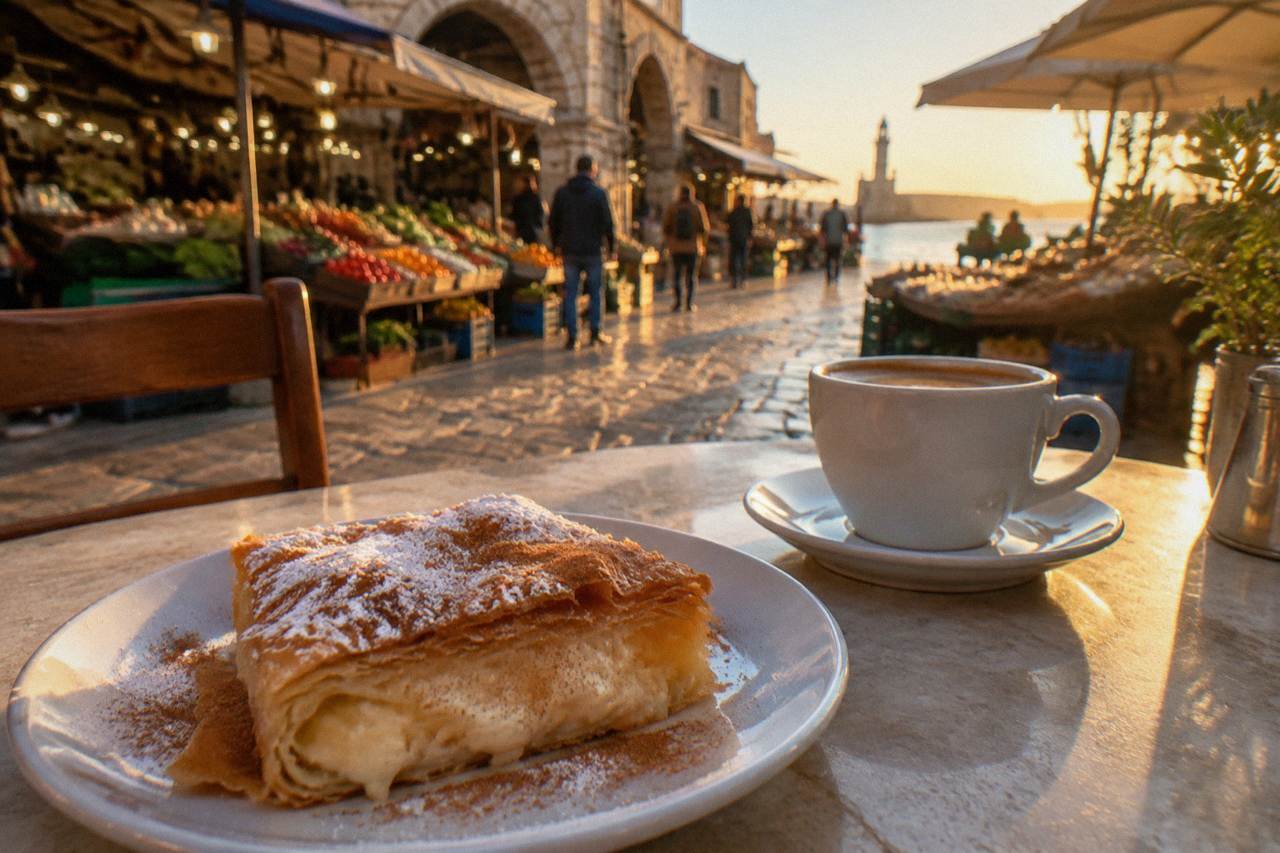
Bougatsa in Chania is a warm filo pastry filled with sweet semolina custard, served in squares or slices with sugar and cinnamon on top. Bakeries and dairy bars around the Old Town sell it from early morning, and it works as a breakfast, a mid-morning stop, or a late treat after a harbour walk.
Chania, on the north-west coast of Crete in Greece, is a city whose food reputation starts at breakfast, and bougatsa sits near the centre of it. It is a warm, filled pastry built from thin filo sheets, and in this city it is usually sold by the slice, cut from a large tray and handed over on a small plate with sugar and cinnamon shaken on top. The shops that sell it open early, fill quickly, and empty again by mid-morning, which tells you when the city itself eats it. This guide covers the pastry, the habits around it, and how to fold it into a wider food day in the Old Town and the neighbourhoods around it.
What Is Bougatsa And Why Does Chania Eat It For Breakfast?
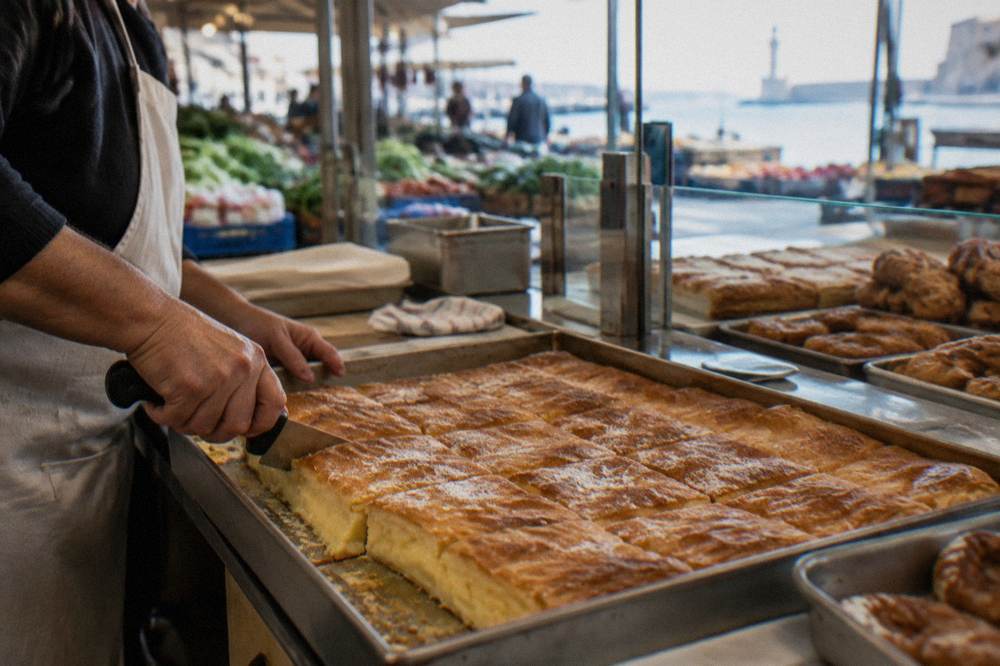
Bougatsa is a filled filo pastry, and in Chania the filling that defines it is sweet semolina custard, served warm in slices with sugar and cinnamon over the top. It is a bakery and dairy-bar food rather than a restaurant dessert, eaten standing or at a small counter, from early morning until the trays run out. The dish belongs to a wider eastern Mediterranean family of filled pastries, and Crete has its own way of serving it.
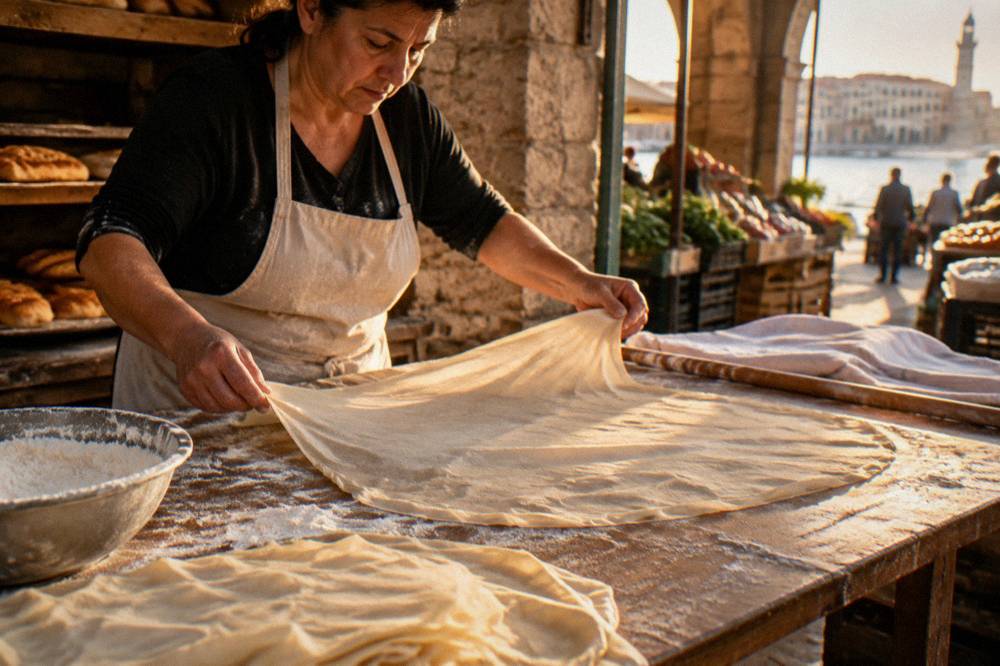
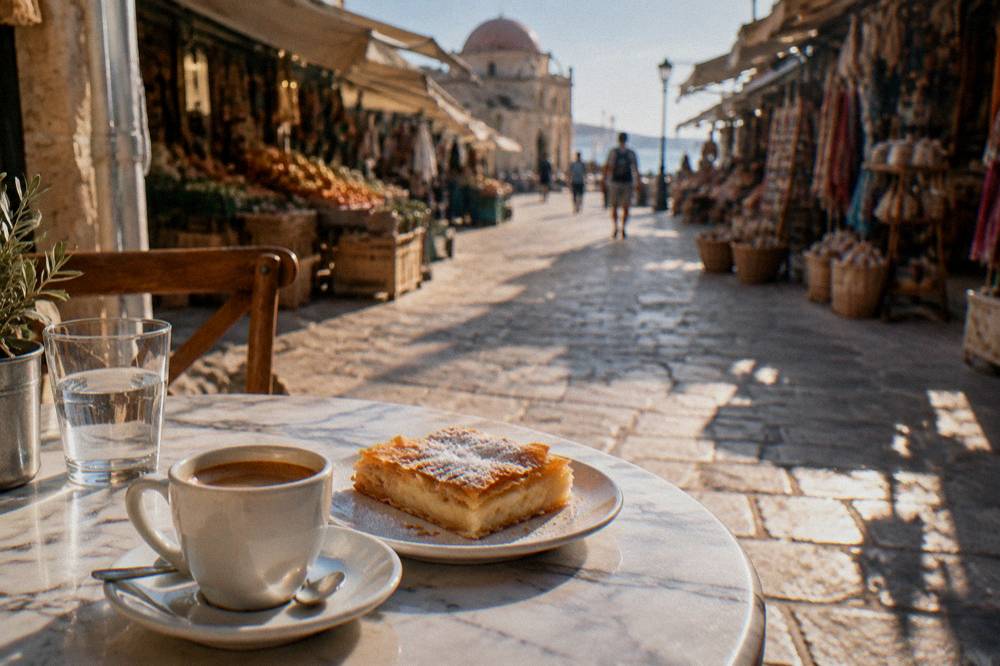
The mechanics are simple, which is part of the point. Thin sheets of filo are layered with a cooked semolina custard, baked in wide trays, and cut to order. The contrast between crisp top layers and soft filling is the whole appeal, so the pastry is at its best freshly cut and still warm. A generous dusting of icing sugar and ground cinnamon finishes it, and the standard drink alongside is a coffee or a cold glass of milk, the legacy of the dairy bars that traditionally sold it.
What varies across Crete and the rest of Greece is the filling. Sweet custard is the classic, but savoury versions exist, filled with cheese, and some bakeries also fold minced meat or spinach into the same filo. The table below shows the versions you are likely to meet in and around Chania and when each is normally eaten.
| Bougatsa type | Filling | Usual serving | When it is eaten |
|---|---|---|---|
| Custard bougatsa | Sweet semolina custard | Warm slice, sugar and cinnamon on top | Breakfast, mid-morning |
| Cheese bougatsa | Fresh soft cheese, sometimes salty | Warm wedge, sugar optional | Breakfast, savoury snack |
| Meat bougatsa | Minced meat | Warm wedge, no sugar | Later morning, lunch |
| Vegetable filling | Spinach or greens in filo | Warm wedge | Any time of day |
One honest note on the city's food history: the record for Chania's sights runs deep, from the Venetian Harbour first built between 1320 and 1356 to Firka Fortress raised in 1620, but the pastry's own origin story is not in it. Competing guides attach creation stories and dates to bougatsa that no primary source in this desk's files confirms. What can be said is that the dish is firmly part of everyday eating here today, served in bakeries across the Old Town, Nea Chora, Halepa and Splantzia, and that the city's food identity gives it pride of place. For the wider food picture, including the dishes that surround bougatsa on a Cretan table, see Cretan food in Chania, and for where to eat in the evening, the Chania restaurants guide covers the city's sit-down side.
Where To Eat Bougatsa In Chania?
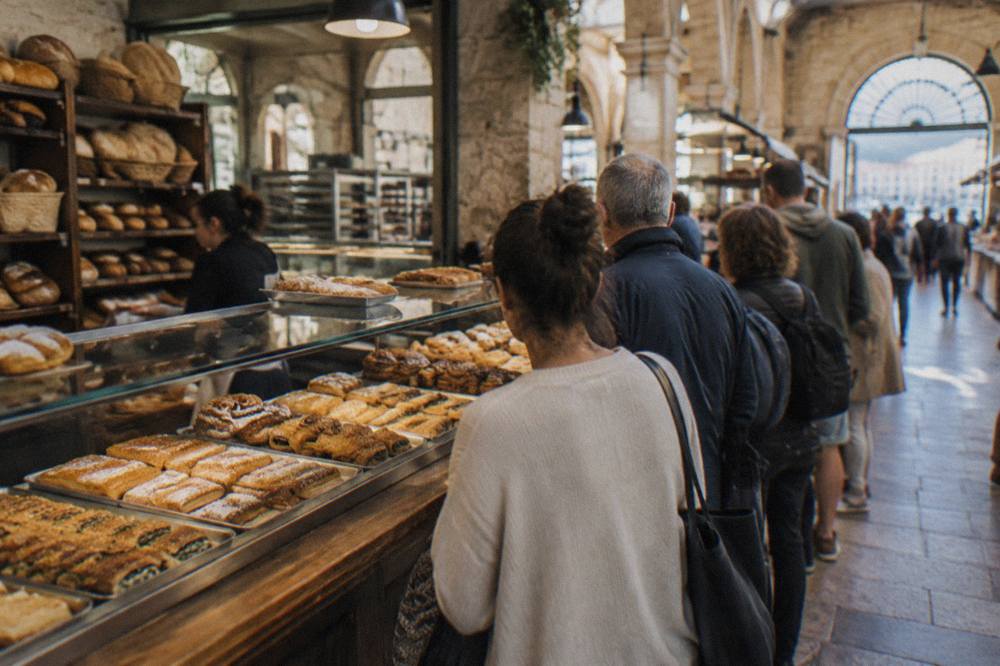
The best bougatsa strategy in Chania is to follow the morning rhythm: go to a bakery or dairy bar between opening and mid-morning, eat it warm on the spot, and treat any shop near a market, a school run or the Old Town's edge as a candidate. The city has no single verified champion shop, and the honest answer is that the pastry is judged fresh, not famous. Look for trays coming out of the oven and a fast-moving counter.
This desk does not rank named bakeries it cannot check. What can be offered instead is a method, and it works in any neighbourhood. Buy where the trays are warm and the turnover is quick. Ask for it cut fresh rather than pre-portioned. Eat it at the counter or on a bench within minutes, because the crisp top softens as it sits. Confirm the day's price at the counter before ordering, since bakery prices move and no verified tariff exists for this page to print.
Geographically, the search maps neatly onto the city's neighbourhoods. The Old Town's lanes around the Municipal Market hold bakeries that open with the market crowd. Splantzia, east of the harbour, has its own cluster. Nea Chora to the west and Halepa to the east are working residential quarters where morning bakeries serve locals first. The Chania walking tours guide covers the streets that connect these quarters if you want the pastry hunt to double as an orientation walk.
For travellers who would rather have the stops chosen for them, a guided food walk is the efficient route. The Walking Food Tasting Tour In The Town Of Chania moves through the town with multiple tastings, bougatsa among the city's everyday foods, led by someone who knows which counters to hit at which hour. Check availability if that suits your dates.
How Do You Order Bougatsa In Chania Without Guessing?
Ordering bougatsa in Chania takes three words and one decision: state the filling, state whether you eat in or take away, and confirm the price at the counter before it is cut. Portion terms are simple, usually a small slice or a quarter tray, and shops expect quick counter orders rather than long deliberation. Nothing about the transaction requires Greek beyond a greeting and a thank you.
The vocabulary is small and worth having. "Bougatsa" itself needs no translation. If you want the classic, point or ask for the custard one, "gala" being the Greek word for milk that marks the custard filling. Cheese filling is "tiri". "Edo" means here, for eating in, and "s'ena xarti", in paper, means wrapped to take away. Take-away matters less than you might think: the pastry travels badly, the crisp layers soften in paper within minutes, so eating at the counter or the nearest bench is the better plan.
Prices are the one place to slow down. This page prints no bakery price because no verified tariff exists in this desk's files, and posted counter prices are the check that works everywhere. Order first, watch the scale or the till, and pay what the register says. The same discipline applies across the city's food stalls and shops. Give yourself the checks you can make, posted prices and an itemised bill, rather than trusting any list of named villains.
A short ordering reference saves the fumbling:
| Situation | What to say or do | What happens |
|---|---|---|
| Choosing the filling | Point, or say "gala" for custard, "tiri" for cheese | The counter cuts from the right tray |
| Eating on the spot | "Edo" | Served on a plate or paper square at the counter |
| Taking it away | "S'ena xarti" | Wrapped, best eaten within minutes |
| Checking the cost | Watch the till before paying | You pay the posted price, no negotiation |
| Morning timing | Arrive before the late morning | Warm trays, full choice of fillings |
The rhythm of the city supports all of this. Bakeries open early, the morning market crowd peaks soon after, and by late morning the choice narrows. The how many days in Chania guide helps you budget mornings, because a bougatsa stop competes for the same early hours as the harbour light, the day-trip departures and the museum openings.
Is Bougatsa A Breakfast, A Snack Or A Dessert In Crete?
In Chania the honest answer is all three, with breakfast as the anchor. The custard version is a morning food, eaten early with coffee or milk, while cheese and other savoury fillings stretch the dish into the mid-morning and lunch hours. Slices also appear as an afternoon sweet, but the tradition the city keeps is the early one, and the trays sell out to prove it.
Compare it with the other pillars of a Cretan morning. Bougatsa is the warm, immediate option, cut and eaten at once. Bakeries' breads and rusks, the paximadi that underpins the famous Cretan salads, are the pantry option. Yogurt with honey, kalitsounia little cheese or honey pastries, and fresh fruit complete the picture. None of these excludes the others, and a proper Cretan breakfast table often holds several at once. What separates bougatsa is that it does not keep, so the city has built a habit around eating it while it is warm.
The dessert claim has some substance without being the main story. The sugar-and-cinnamon topping is sweet enough that a late slice with coffee works, and in the evening the pastry shops around the harbour lanes do steady trade in sweets. But the shops that specialise in bougatsa are morning businesses, and their hours are the stronger signal. Plan it as breakfast with a sweet tooth, and let the evening belong to the restaurants.
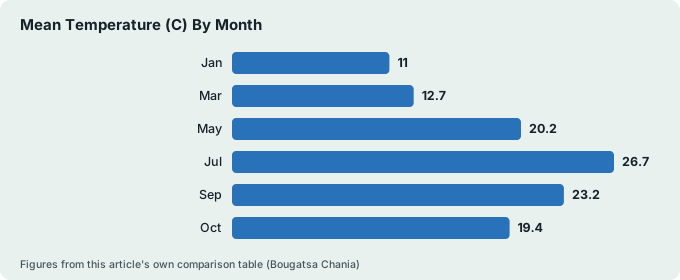
The seasons barely touch it. The HNMS Chania Souda station table, covering records from 1958 to 2010, shows why food habits here stay steady: mild winter means around 11 C in January and a dry summer with 1.0 mm of rain in July. Rain returns in force from October, 67.7 mm that month against 1.4 mm in August, but the bakery counter is indoors and the espresso machine never notices. The Chania weather guide carries the full monthly picture for planning around it.
| Month | Mean temperature (C) | Rainfall (mm) | Rain days | Bougatsa weather verdict |
|---|---|---|---|---|
| Jan | 11.0 | 129.5 | 16.3 | Indoors at the counter |
| Mar | 12.7 | 76.0 | 11.5 | Counter, then a harbour walk |
| May | 20.2 | 13.5 | 4.2 | Bench outside, sunshine |
| Jul | 26.7 | 1.0 | 0.4 | Early stop before the heat |
| Sep | 23.2 | 15.4 | 3.2 | Morning stop, beach after |
| Oct | 19.4 | 67.7 | 9.3 | Indoors, market nearby |
Source for the columns: HNMS Chania Souda station, station records 1958 to 2010.
Can You Learn To Make Bougatsa Or Cretan Food In Chania?
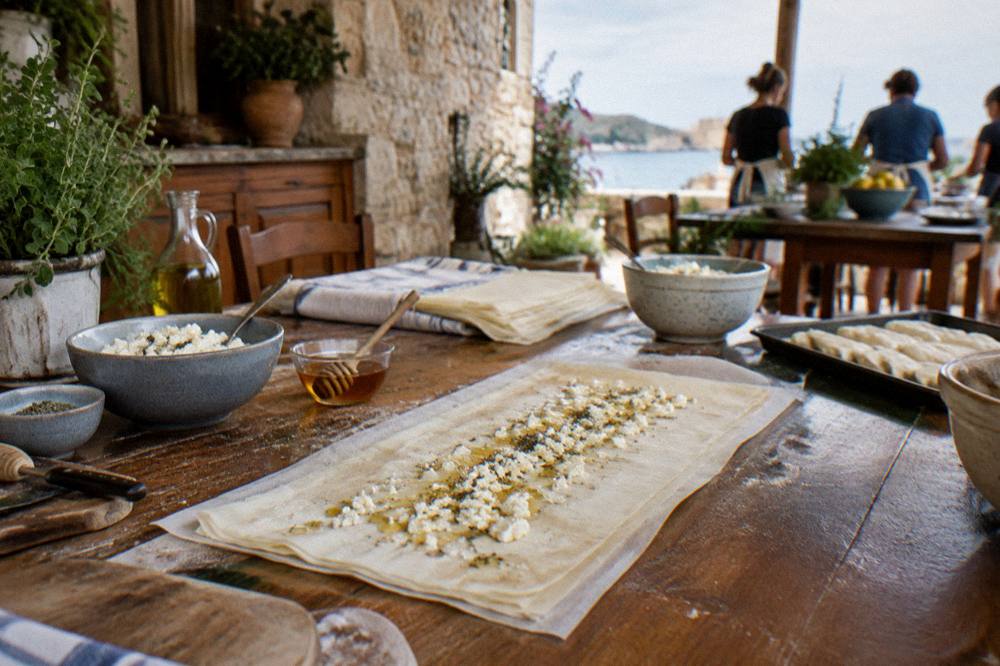
Yes, and a cooking class is the one bougatsa-adjacent purchase worth planning ahead in Chania. The city's food classes cover the wider Cretan table, from mountain village kitchens to home cooks, and while the pastry itself is not the headline of every class, the filo, custard and cheese techniques behind it sit inside the repertoire. Classes book out in high season, so reserve before you fly.
The roster of food experiences based in and around the city is broader than the pastry alone. There are tasting walks through the Old Town, cooking classes held in villages in the White Mountains, wine and olive oil tours into the hinterland, and combined sightseeing-and-tastings walks that pair the harbour's history with its food. If your trip has room for one food experience and bougatsa is the thread, the guided town walk with tastings is the closest match, and the mountain cooking class is the deepest.
Neither requires skill or preparation beyond an appetite and sensible shoes for the Old Town's lanes. The walk versions cover ground between stops, so they double as an orientation to the city, which is useful on a first morning. The class versions are longer commitments, half a day or more, and belong in the middle of a stay rather than at its end.
How Does Bougatsa Fit Into A Day In Chania?
A bougatsa-first day in Chania runs in a clean arc: pastry and coffee in a bakery by mid-morning, the Old Town and harbour on foot until early afternoon, a real lunch, then either a beach or a boat in the afternoon, and the harbour at sunset. The city is compact around the Venetian Harbour, the airport is about 14 km away, and everything in the arc below is reachable without a car if you stay central.
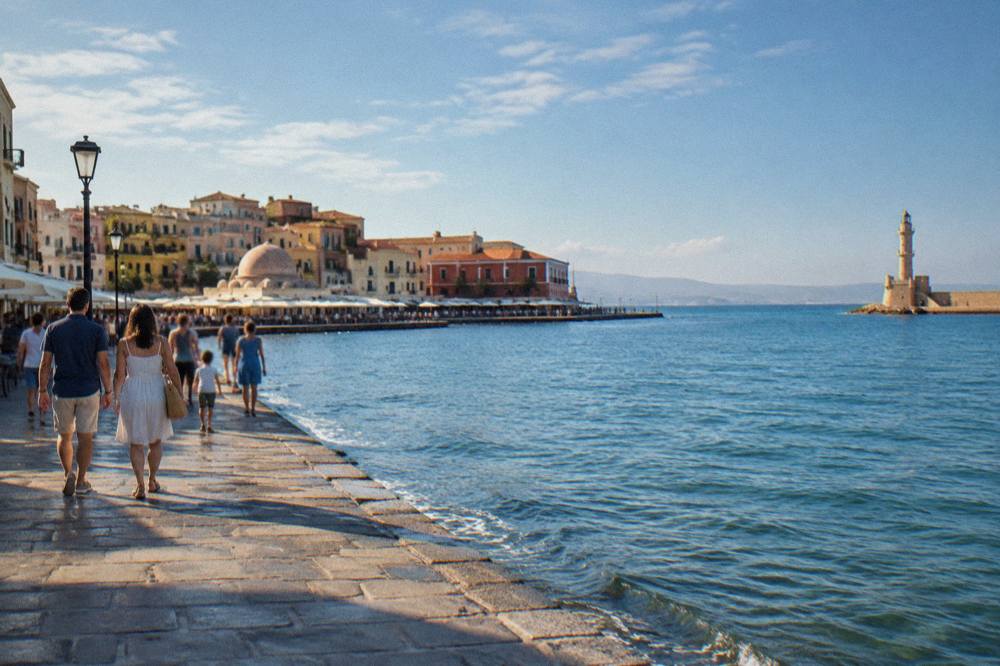
The morning is the pastry's natural slot, and it pairs well with the market. The Municipal Market sits at the head of the Old Town, and the bakeries around it open with the stalls, so an early stop covers both. From there the walk to the harbour is minutes: the lighthouse on its mole, the shipyard buildings known as the Neoria, seven survivors of an original seventeen from the 15th to 16th century, and Firka Fortress at the harbour's western entrance, its grounds free to enter, the fort itself dating from 1620. The Archaeological Museum of Chania sits out in Halepa at 15 Skra Street, full ticket EUR 15, concession EUR 8, and its own visit page carries the hours to check before you go.
The afternoon forks two ways. The water option is a boat trip from the harbour: a short cruise to Lazaretta Island with a swim stop, a snorkeling and paddleboarding trip, or a sunset catamaran that leaves late enough to follow a full food day. The land option is a beach: Nea Chora walks out from the western edge of town, and the best beaches in Chania guide covers the rest of the ladder, from city sand to Balos and Elafonisi day trips. Those far beaches are full-day commitments with their own access notes, the EUR 1 Kissamos municipal fee on Balos boat tickets and the free entry to Elafonisi's protected Natura 2000 shore among them, so they do not mix with a bougatsa morning in town.
A sample day, built around verified times and openings:
| Time | Stop | Note |
|---|---|---|
| Early morning | Bakery stop, custard bougatsa and coffee | Eat warm at the counter |
| Mid-morning | Municipal Market and Old Town lanes | Market-area bakeries open with the stalls |
| Late morning | Venetian Harbour walk, Firka Fortress | Fortress grounds free, fort from 1620 |
| Midday | Lunch in the Old Town | See the restaurants guide |
| Afternoon | Boat trip from the harbour, or Nea Chora beach | Sunset cruise leaves last |
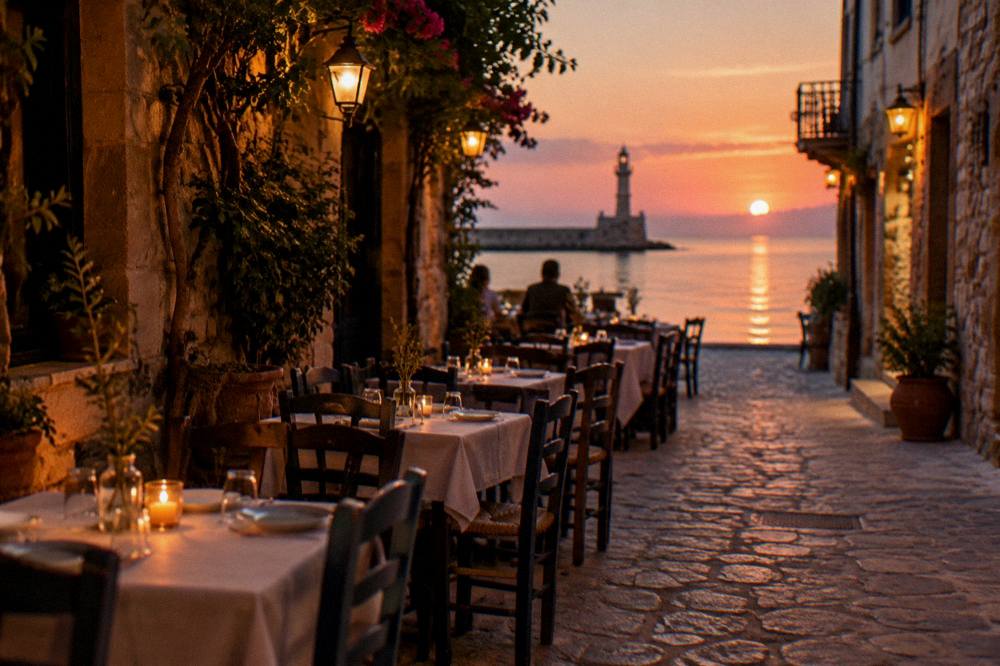
| Evening | Harbour at sunset, lighthouse view | Lighthouse base from about 1595 to 1601 |
If you are working out how many such days you need, the how many days in Chania page breaks the city and its day trips into two-day, three-day and five-day shapes, and the best time to visit Chania page puts the seasons against them.
What Else Should You Know About Eating Out In Chania?
Eating out in Chania rewards the same habits as the bakery counter: go where locals queue, check posted prices, and match the venue to the hour, markets and bakeries in the morning, tavernas at midday and night. The city's food scene runs from counter breakfasts to harbour dinners, the climate crisis resilience fee is collected by accommodation per room per night at seasonal rates confirmed at booking, and no verified list of famous names is needed to eat well.
A few structural facts help. The municipality holds 111,375 permanent residents at the 2021 census, which sustains a year-round eating culture beyond the tourist season, in neighbourhoods like Splantzia, Nea Chora and Halepa as well as the Old Town. Greece uses the euro, in the euro area since 1 January 2001, so there is no currency arithmetic to worry about. And the country sits in Schengen with internal checks abolished since 26 March 2000, while the new EES entry system has been fully deployed across Schengen since 10 April 2026, which matters for the border, not the bakery.
For verified sight and site figures that pair with a food day, this table collects the ones a planner actually uses:
| Item | Verified figure | Note |
|---|---|---|
| Archaeological Museum of Chania | EUR 15 full, EUR 8 concession | 15 Skra Street, Halepa; check the visit page for hours |
| Firka Fortress grounds | Free | Fort built 1620 |
| Samaria Gorge ticket | EUR 10 | Via the NECCA e-ticket portal; storm damage has closed sections, check status before planning |
| Balos boat from Kissamos | EUR 1 municipal fee on the ticket | For over-13s; departures daily to 31 October 2026, operator-reported |
| Elafonisi entry | Free | Natura 2000 area; taking sand, shells or plants prohibited |
| Airport distance | About 14 km | Chania International Airport on the Akrotiri peninsula |
The wider exploration pages pick up from there: where to stay in Chania matches the neighbourhoods above to beds, and getting around Chania covers the buses and walking distances between them.
The pull of the city is that the pastry is not a curiosity kept for visitors, it is a working breakfast with a queue in front of it, and every habit in this guide, the early hour, the warm slice, the counter price, is one a resident would recognise. Start the morning the way the city does, and the rest of the day, harbour, market, beach or boat, tends to arrange itself. For the full landscape of tastes beyond the breakfast tray, the guides to Cretan food in Chania and the city's restaurants carry the day forward, and the Chania Crete Travel Guide holds the rest of the day trips, beaches and practical pages in one place.
Common Questions About Bougatsa In Chania
What is bougatsa in Chania?
Bougatsa is a filled filo pastry, and in Chania the classic filling is sweet semolina custard, served warm in slices with sugar and cinnamon on top. Savoury versions filled with cheese also appear in bakeries, and the dish is eaten mainly in the morning.
Where can I eat bougatsa in Chania?
Bakeries and dairy bars across the Old Town, Splantzia, Nea Chora and Halepa sell it from early morning. This desk does not rank named shops it cannot verify; the reliable method is to buy where trays are warm, turnover is fast, and prices are posted at the counter.
Is bougatsa a breakfast or a dessert?
Both, with breakfast as the tradition. The custard version is a morning food eaten with coffee or milk, while a sweet slice with coffee in the afternoon also works. The shops that specialise in it are morning businesses and often sell out by late morning.
How much does bougatsa cost in Chania?
No verified bakery price exists for this page to print. Confirm the price at the counter before it is cut; posted prices at the till are the check that works in every shop in the city.
Can I try bougatsa on a food tour of Chania?
Yes. Guided food walks through the town include multiple tastings of the city's everyday foods, and the walking food tasting tour in the town of Chania is the closest match, with stops chosen for the hour.
What do you drink with bougatsa?
Coffee or cold milk are the standard pairings, a habit carried over from the dairy bars that traditionally sold the pastry. No verified rule stops you ordering anything else, and the counter will have the usual Greek coffee and espresso options.