Gouverneto Monastery Chania
Gouverneto Monastery stands on the Akrotiri peninsula north-east of Chania, a walled monastic complex that pairs naturally with the peninsula's beaches and coves. This guide sets out how to plan the visit, what the sources confirm, and how to combine the monastery with time on the coast.
Short answer
Gouverneto Monastery is a working monastery on the Akrotiri peninsula, about 14 km from Chania city centre in the same direction as the airport. It is visited by car or on an organised excursion, hours and dress rules are confirmed at the entrance, and it pairs naturally with nearby beaches and boat trips.
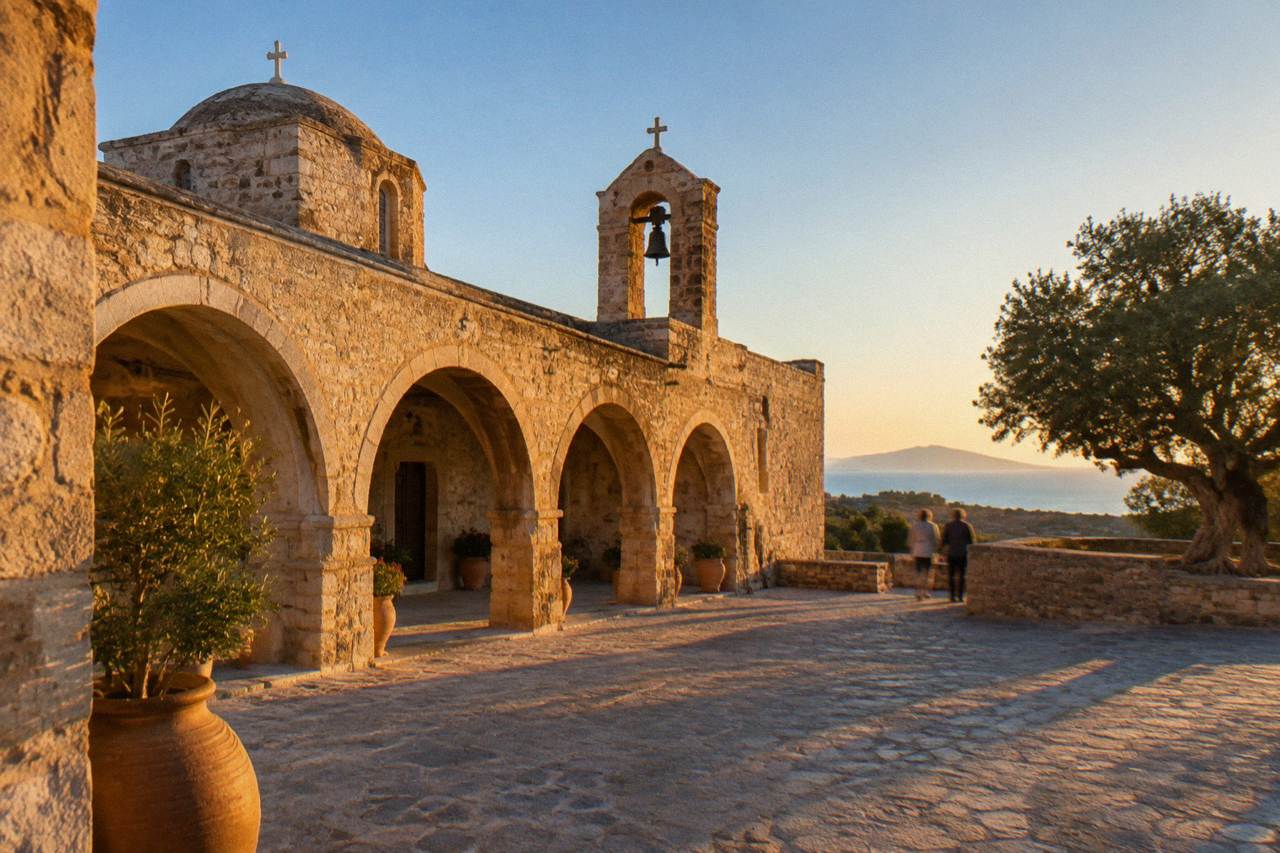
Gouverneto Monastery is a walled monastic complex on the Akrotiri peninsula, the headland north-east of Chania on the island of Crete, Greece, where the airport, quiet beaches and sea caves all share one stretch of coast. The monastery is one of the quieter stops on a peninsula that visitors reach by car, by bus or as part of a wider excursion, and it rewards planning: opening arrangements change, the site is a working religious community rather than a museum, and the surrounding peninsula holds enough for a full day. This guide sets out what can be confirmed from the sources, how to structure a visit, and how the monastery fits the rest of a Chania stay.
What Is Gouverneto Monastery?
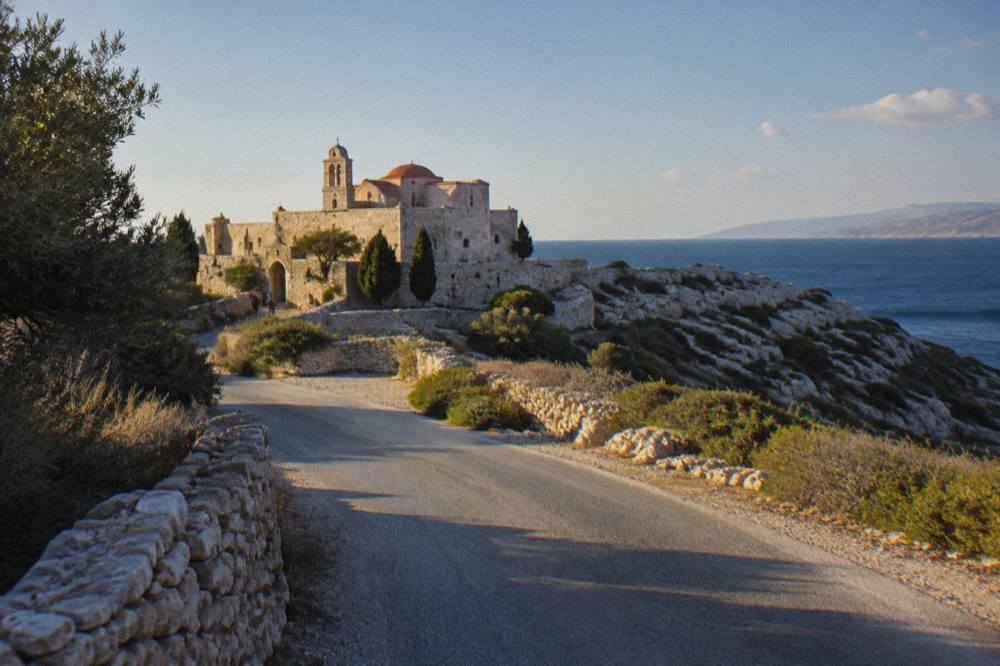
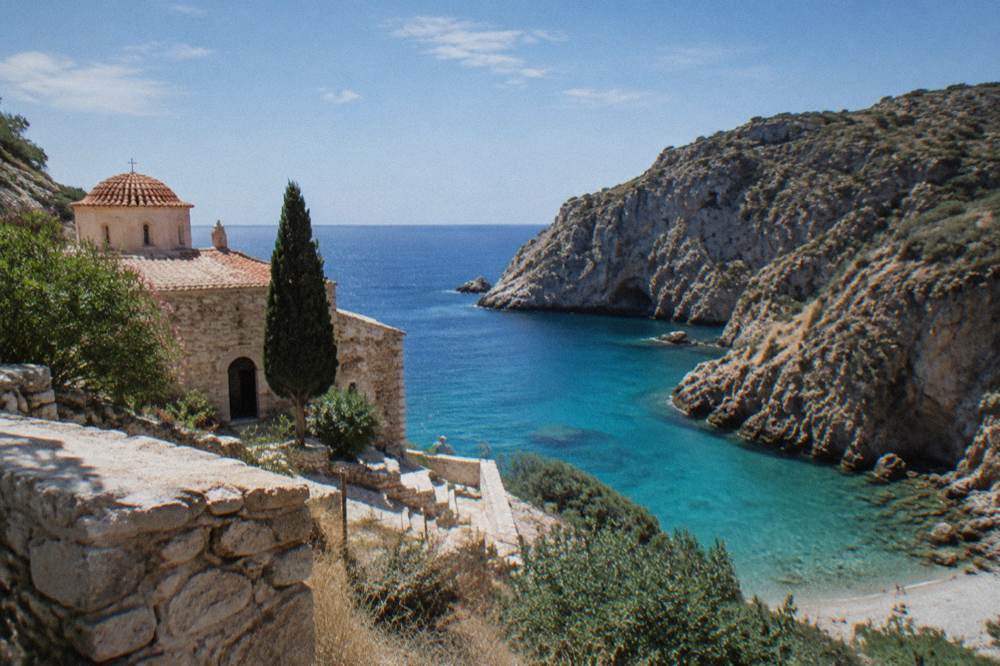
Gouverneto Monastery is a fortified Orthodox monastery on the Akrotiri peninsula north-east of Chania, built as a walled complex with a courtyard, a church and surrounding cells, and still functioning as a religious house rather than a commercial attraction. It belongs to a cluster of monastic sites on the peninsula, of which Agia Triada Monastery is the largest and the best documented, and it sits in rocky, sparsely built terrain that slopes toward the Cretan Sea.
The monastery's role in the region is best understood through that monastic cluster. The Akrotiri peninsula carries several religious foundations, and the Agia Triada Monastery guide on this site covers the largest of them in detail. Gouverneto is the smaller, quieter neighbour, and visitors typically treat it as a short stop: a courtyard, a church interior, and the drive or walk that surrounds it. The desk's advice is simple and repeated throughout this page: check arrangements before setting out, because a working monastery keeps its own calendar.
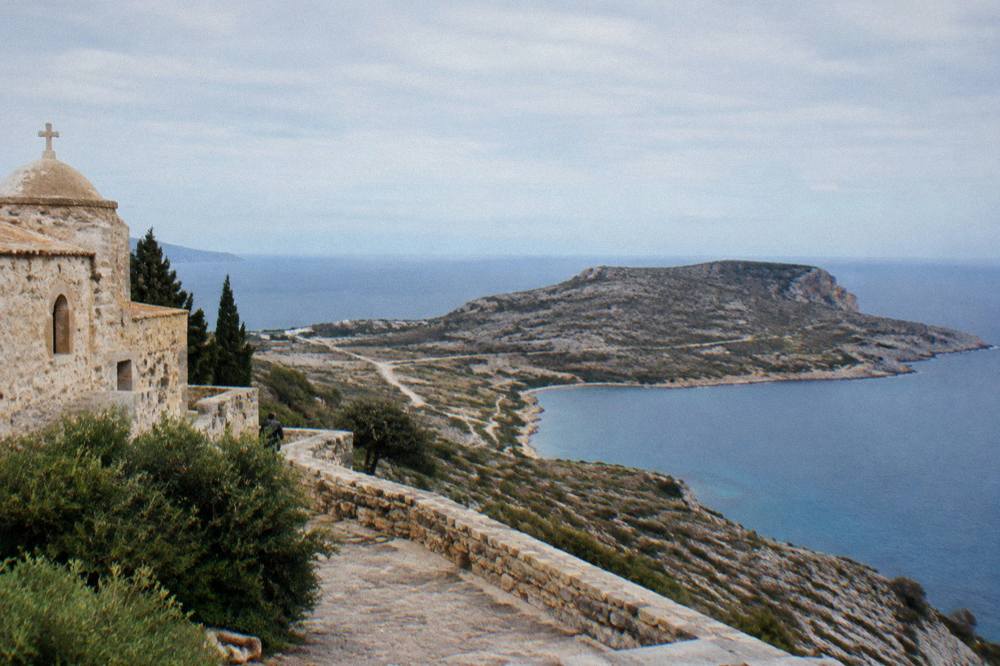
What the visitor actually experiences is architecture of a defensive kind. Thick perimeter walls, a compact courtyard and a church at the centre are the pattern of Cretan monastic building, and Gouverneto follows it. There is no ticket price, no opening-hours schedule and no guided-walk product that this site can print with confidence, so the standing instruction for this page is to confirm hours, dress expectations and photography rules at the entrance or with the local church authorities before travelling. What is certain is the setting: rocky ground, low scrub, sea air, and views that open toward the north coast of the peninsula.
How Do You Get To Gouverneto Monastery From Chania?
Gouverneto Monastery is reached by road from Chania city centre onto the Akrotiri peninsula, the same headland that carries Chania International Airport about 14 km from the city, with onward local roads serving the peninsula's monasteries and beaches; there is no railway on Crete, so every route is by car, bus, taxi or organised excursion. The airport's own site carries the public bus and taxi information for reaching the peninsula, and the monastery's exact access arrangements are confirmed locally before departure.
The geography matters more than any timetable. Chania sits on the north-west coast of Crete with its Old Town around the Venetian Harbour; the Akrotiri peninsula juts north-east of the city and holds the airport, the monasteries and a string of beaches from Kalathas to Stavros. A day on the peninsula therefore works as a loop: out from the city, across to the monasteries, then out to one of the beaches before returning. Nothing in the verified sources gives a driving time or a bus fare for the monastery itself, so none is printed here.
For visitors without a car, two realistic options remain. One is the KTEL public bus network, whose Chania long-distance station sits on Kydonias street and whose routes cover the region; the peninsula's local services are confirmed through the operator rather than assumed. The other is an organised excursion that folds the peninsula into a wider programme. The full-day trips below are the strongest pairings for a stay that wants both the monastery loop and the headline sights of western Crete.
One caution from the verified transport facts: the Piraeus ferry leaves from Souda port, about 7 km east of the Old Town, not from the Venetian Harbour, which serves excursion boats. That distinction shapes any plan that mixes a monastery morning with an evening on the water, and it is worth internalising early in any Chania trip.
| Journey | What The Verified Sources Say | Where To Confirm |
|---|---|---|
| Chania centre to the Akrotiri peninsula | The airport on the peninsula is about 14 km from the city centre | The airport's own transport page |
| Airport and peninsula bus options | Public bus and taxi information sits on the airport's site | The airport's own page |
| Regional bus network | Chania long-distance station is on Kydonias street, with routes to Heraklion, Rethymno, Kissamos, Paleochora, Omalos and Elafonisi in summer | The KTEL operator |
| Ferry connections | Blue Star Ferries runs Souda to Piraeus overnight, departing about 21:30, crossing about 9 h 15 min, as the published timetable gives | The ferry operator's route page |
What Can You See At Gouverneto Monastery?
The visit centres on the monastery courtyard, the church and the perimeter buildings, seen at a walking pace in under an hour, with the surrounding rocky peninsula as the wider attraction; no verified schedule of interior opening hours is in print here, so the pattern is to arrive expecting a quiet, self-guided look at the exterior and courtyard and to confirm interior access on the spot. Photography rules, dress expectations and any closures follow the monastery's own practice and are confirmed at the gate.
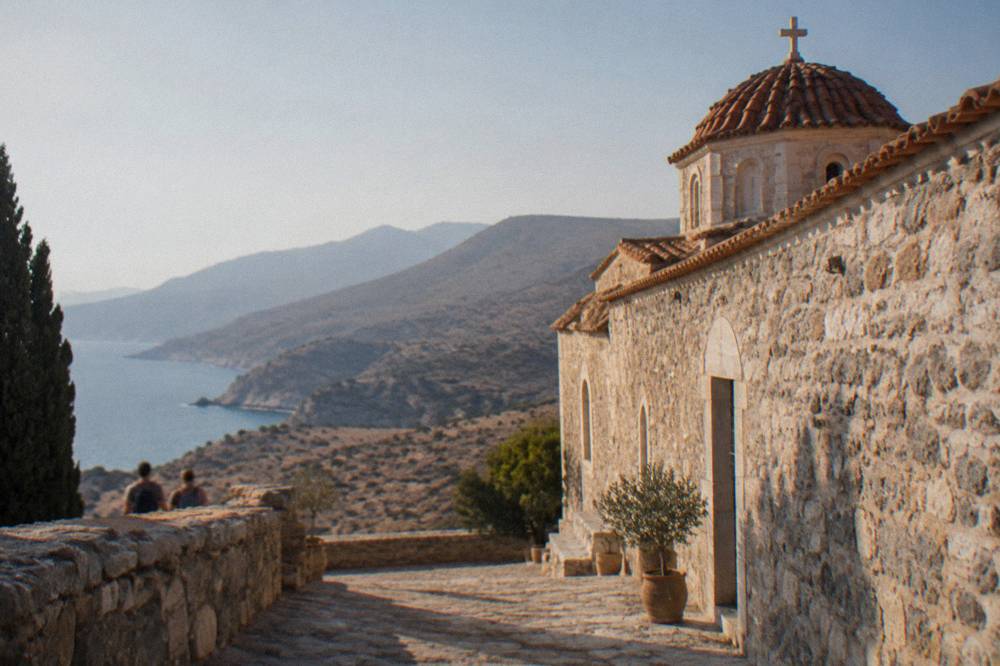
The courtyard is the heart of any Cretan monastery visit. At Gouverneto it delivers the standard monastic composition: a church facade closing the view, arched ranges around the sides, and the particular silence of a working religious house. Visitors who arrive with that expectation, rather than expecting a curated museum, come away better matched to what the site offers. Those who want interpretation, objects and displays are better served by the city's museums, and the Archaeological Museum of Chania and the Maritime Museum of Crete guides cover those.
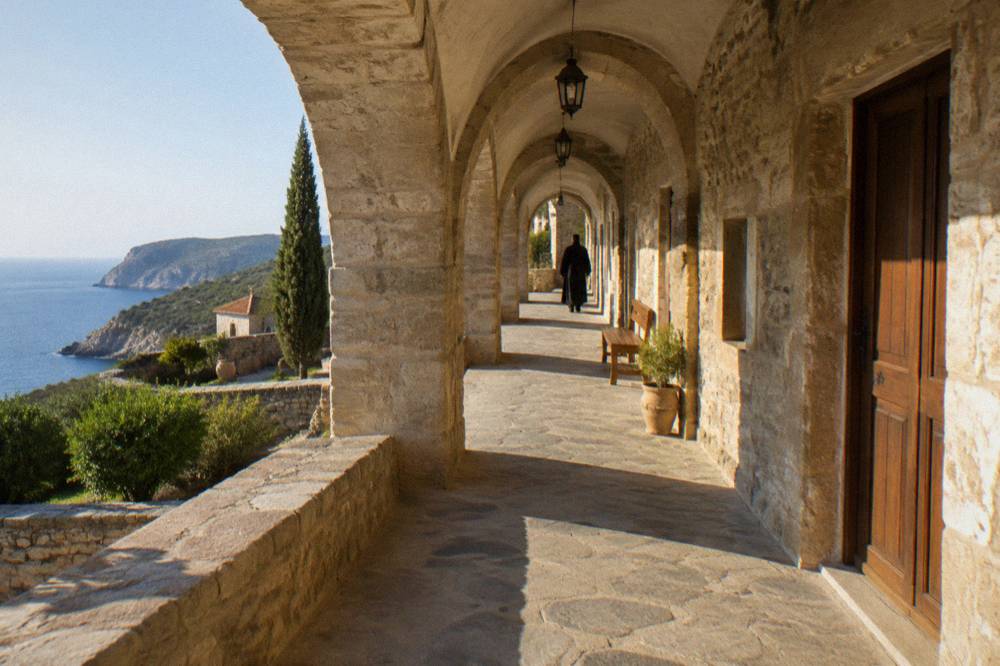
Dress is the one planning item that decides whether the visit happens at all. Monasteries across Crete apply modest-dress expectations, typically covering shoulders and knees, and the specific practice at Gouverneto is confirmed at the entrance rather than assumed from any other site. The same applies to photography inside the church: ask before shooting. These are small courtesies, but they are the difference between a hurried stop at the gate and a full look around.
What Else Is On The Akrotiri Peninsula Near Gouverneto Monastery?
The Akrotiri peninsula packs a working airport, several monasteries, and a set of beaches and coves including Kalathas, Marathi, Stavros and the steep cove of Seitan Limania into one compact headland, which makes a monastery stop the anchor of a full peninsula loop rather than a standalone drive. Every one of those beaches has its own guide on this site, and the loop is built by pairing the monastery with one or two of them in a single day.
The beaches are the natural complement. Kalathas and Marathi are family-friendly bays with water that stays shallow near the shore, covered in the Kalathas Beach and Marathi Beach guides. Stavros, on the peninsula's north-west, sits beneath a dramatic rock wall and is covered separately. Seitan Limania is the famous steep descent to a narrow cove, dramatic and demanding, and the Seitan Limania guide sets out what the walk involves.
| Akrotiri Stop | What It Offers | Guide On This Site |
|---|---|---|
| Agia Triada Monastery | The peninsula's largest monastic complex, with a working community and visitor facilities | /attractions/agia-triada-monastery/ |
| Kalathas Beach | A sheltered bay with shallow water near the shore | /attractions/kalathas-beach/ |
| Marathi Beach | A calm, family-friendly bay on the north side | /attractions/marathi-beach/ |
| Stavros Beach | A beach beneath a sheer rock backdrop at the peninsula's edge | /attractions/stavros-beach/ |
| Seitan Limania | A steep descent to a narrow cliff-framed cove | /attractions/seitan-limania/ |
The loop works best in one direction. A morning at the monasteries, when the light is softer and any community activity happens, followed by an afternoon at a beach, is the sequence this site suggests in its Chania one-day itinerary. Visitors with two or three days can slow the loop down or trade the peninsula for one of the big island day trips, which the itineraries cover in full.
When Is The Best Time To Visit Gouverneto Monastery?
The best time to visit Gouverneto Monastery is late spring to early autumn, when the HNMS Chania Souda station table, covering 1958 to 2010, shows the dry months of the Chania year: May records a mean of 20.2 C with 13.5 mm of rain, June 24.7 C with 3.4 mm, July 26.7 C with 1.0 mm and August 26.3 C with 1.4 mm.
Midsummer afternoons are hot for walking exposed rocky ground, so a morning visit is the sounder plan from June to August.
The climate record for the Chania area is specific and worth reading rather than guessing at. The HNMS Chania Souda station, at 148 m inland of Souda Bay, records monthly means over the period 1958 to 2010, which is the table the service publishes and the only climate source this site prints. Rainfall tells the clearest story for planning: January carries 129.5 mm across 16.3 rain days, December 101.9 mm across 16.1 days, and the curve collapses through spring to almost nothing in high summer before climbing again in October, which carries 67.7 mm.
| Month | Mean Temperature (C) | Rainfall (mm) | Rain Days |
|---|---|---|---|
| January | 11.0 | 129.5 | 16.3 |
| February | 11.0 | 104.0 | 14.5 |
| March | 12.7 | 76.0 | 11.5 |
| April | 15.9 | 31.5 | 7.7 |
| May | 20.2 | 13.5 | 4.2 |
| June | 24.7 | 3.4 | 1.2 |
| July | 26.7 | 1.0 | 0.4 |
| August | 26.3 | 1.4 | 0.6 |
| September | 23.2 | 15.4 | 3.2 |
| October | 19.4 | 67.7 | 9.3 |
| November | 15.8 | 77.0 | 11.2 |
| December | 12.7 | 101.9 | 16.1 |
In that table, January is the wettest month at 129.5 mm and July the driest at 1.0 mm, and the mean maximum climbs to 30.7 C in July and 30.4 C in August. Humidity in the record runs from 50 percent in July to 73 percent in January, and the prevailing wind is west, turning north-west in July and August. For a monastery visit, the practical reading is this: May, June and September combine warm means, low rainfall and comfortable walking conditions; July and August suit an early start; and winter visits are possible but wet, with the monastery's own calendar the deciding factor.
What Should You Wear And Bring To Gouverneto Monastery?
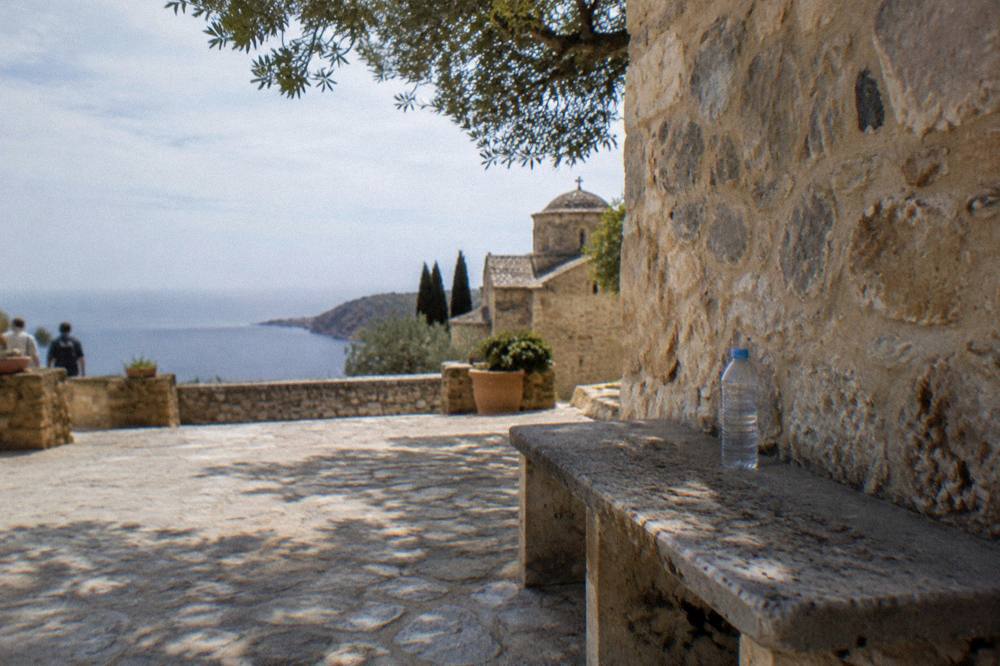
Wear clothing that covers shoulders and knees, carry water, and bring shoes that handle rocky, uneven ground, because the monastery sits in exposed terrain and the dress expectation is the one rule that gates entry at Cretan monasteries; the specific practice at Gouverneto is confirmed at the entrance, and in the hot months the HNMS table's mean maximum of 30.7 C in July and 30.4 C in August makes a hat and water standard equipment rather than optional.
The packing logic splits in two: one half for the monastery, one half for the peninsula. For the monastery, modest dress and a quiet manner carry the visit. For everything around it, the Akrotiri peninsula is dry, sun-exposed country, and the same kit that serves Seitan Limania's descent serves the monastery's surrounds. A simple checklist keeps the day honest.
| Item | Why It Matters At The Monastery | Season Notes |
|---|---|---|
| Covered shoulders and knees | Cretan monasteries apply modest-dress expectations at the gate | Applies year-round; confirmed at the entrance |
| Water | Exposed rocky terrain with little shade on the approach | The July mean maximum is 30.7 C in the HNMS record |
| Closed walking shoes | Uneven stone and rocky paths around the site | Extra grip matters if the peninsula loop includes Seitan Limania |
| Hat and sun screen | Low scrub gives little cover on the peninsula | May to September records 13.5 mm of rain or less per month |
| A layer for the church interior | Stone interiors stay cooler than the courtyard | Spring and autumn means sit between 15.9 C and 20.2 C |
One further note on the wider trip: accommodation in Greece collects the climate crisis resilience fee per room or apartment per night at seasonal rates, and visitors confirm the exact amount at booking. The verified amounts sit in the tax authority's own document, and the collection point is the accommodation, not the monastery or any attraction.
Can You Combine Gouverneto Monastery With A Boat Trip From Chania?
Yes, and the pairing is one of the strongest day shapes Chania offers: the monastery loop covers the peninsula by land in the morning, while the Venetian Harbour, a short drive back into the city, is the departure point for the excursion boats and small cruises that run along the coast, including guided sea kayaking along the Venetian coastline, short trips to Lazaretta Island and the two-island cruises to Agioi Theodoroi, so the monastery and the water can share a single day without contradiction.
The Chania Crete Travel Guide covers the harbour and its boat options in depth, but the shape is worth summarising here. The Venetian Harbour, first built between 1320 and 1356 with dredging and a wall recorded in 1515, serves excursion boats; the big ferries to Piraeus leave from Souda port instead. The lighthouse on the mole, built about 1595 to 1601 and restored on its Venetian base during Egyptian rule between 1830 and 1840, is the landmark that frames every departure. A kayak tour along that coastline is the closest water product to the monastery day in spirit: quiet, close to the shore, and unhurried.
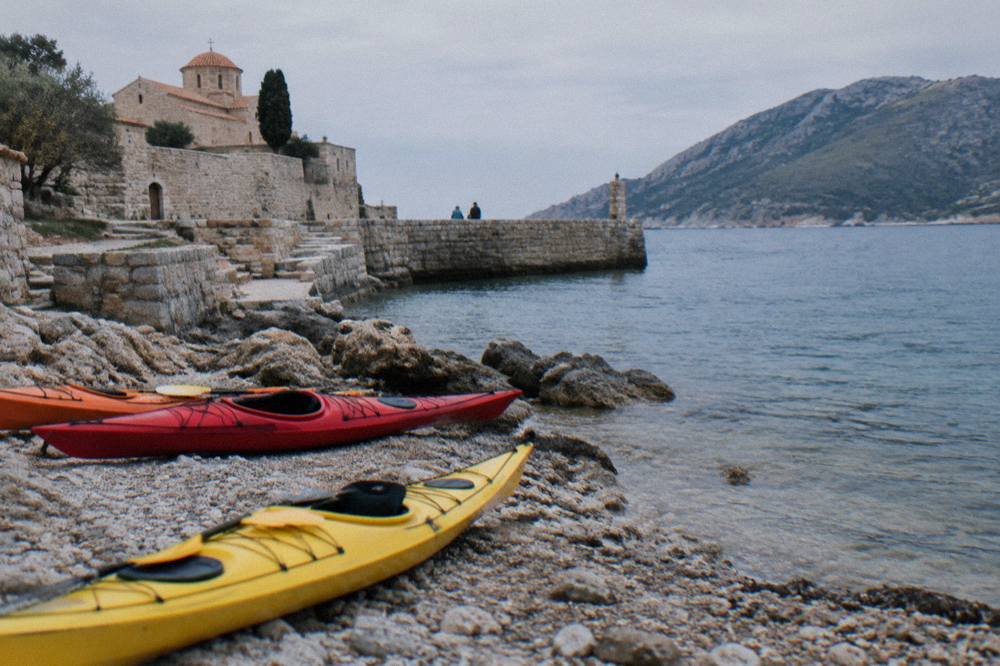
For visitors who want the sea without paddles, the short boat products are the natural fit. A swim-stop trip to Lazaretta Island sits just off the city, and a traditional-boat cruise to Agioi Theodoroi and Lazaretta covers two islands in one sail. Families with energy left after the peninsula can also look at the beginner scuba session or the stand-up paddleboard tour in calm water. Every price, rating and duration for these products renders from the live listings rather than from this page.
How Does Gouverneto Fit A Longer Chania Itinerary?
Gouverneto Monastery slots into the first morning of almost any Chania itinerary: on a one-day stay it pairs with the Old Town and the Venetian Harbour; on two or three days it shares the schedule with a beach morning and one big day trip; and on a five-day stay it sits comfortably alongside Balos, Elafonisi, a gorge hike and a city day, with the monastery loop placed on the arrival or departure day, since the airport sits on the same peninsula.
The logic is geographic. The airport sits on the Akrotiri peninsula, so an arrival day or a departure day is already half-committed to that headland, and folding the monastery and one beach into it costs almost nothing. The itineraries on this site, including the Chania three-day itinerary, build exactly that way. For the big day trips, the verified access picture holds: Balos cruises leave from Kissamos port with the EUR 1 municipal fee on the ticket for over-13s, Elafonisi is a Natura 2000 protected area with free entry where taking sand, shells or plants is prohibited, and Samaria Gorge normally runs 1 May to 31 October but must be checked with the NECCA authority after the 2026 storm damage.
| Itinerary Length | Where The Monastery Fits | Pairing Highlights |
|---|---|---|
| One day | Morning loop with the Old Town afternoon | Venetian Harbour, Old Town, one peninsula beach |
| Two days | Day one, arrival day, with the airport on the same peninsula | Day two: Balos cruise or Elafonisi day trip |
| Three days | Day one morning; day trip on day two; city on day three | Imbros Gorge hike or a Rethymno excursion |
| Five days | Arrival day; four full days for the headline trips | Balos, Elafonisi, Samaria or Imbros, and a food or wine tasting day |
The monastery also earns its place on a quiet-weather day. When the meltemi, the summer's north-westerly wind pattern named in the climate record, makes boat trips and exposed beaches less comfortable, a stone courtyard inland of the north shore is a calmer place to be, and the pairing with a sheltered bay like Marathi keeps the day intact.
Common Questions About Gouverneto Monastery Chania
Is Gouverneto Monastery open to visitors?
It is a working monastery, and access follows the community's own arrangements. Opening hours and any closure days are confirmed at the entrance or with the local church authorities before travelling; this site prints no schedule for the site.
Is there an entrance fee at Gouverneto Monastery?
No verified ticket price or fee for the monastery is in the sources this site holds, so none is printed. Any donation practice is observed on site.
What should you wear to Gouverneto Monastery?
Clothing that covers shoulders and knees, in line with the modest-dress expectation at Cretan monasteries. The specific practice at Gouverneto is confirmed at the gate, and sturdy shoes help on the rocky ground around the site.
How far is Gouverneto Monastery from Chania?
The monastery sits on the Akrotiri peninsula, the same headland as Chania International Airport, which the airport's own page places about 14 km from the city centre. No verified driving distance or time for the monastery itself is printed here, so it is checked against the route before setting out.
Can you visit Gouverneto Monastery and Seitan Limania in one day?
Yes. Both sit on the Akrotiri peninsula, and the loop that works is monastery first, then the Seitan Limania descent, ideally before the afternoon heat; the mean maximum temperature in July is 30.7 C in the HNMS Chania Souda record for 1958 to 2010. The Seitan Limania guide on this site covers the descent in detail.
Is Gouverneto Monastery suitable for children?
The courtyard and short walk suit children who can manage uneven stone and a quiet, respectful visit; a working monastery asks for calm rather than play. Pairing the stop with Kalathas or Marathi Beach gives the day a balance of culture and swimming.
The monastery rewards a visitor who arrives early, dressed for a religious house, with a car or a plan for the peninsula loop, and who treats the stop as one half of a day whose other half belongs to the water. Plan the peninsula as a whole, confirm the site's arrangements on the day, and the visit slots neatly into any Chania itinerary from a single day to a full week.