What Food Is Chania Known For?
Chania is known for dakos, fresh seafood at the Venetian Harbour, Cretan olive oil and cheese, and a street-food scene rooted in the Old Town market streets. Here is what to order and where.
Chania, a coastal city on the north-west coast of Crete, is known across Greece for the plain strengths of the Cretan table: barley rusks soaked with tomato and olive oil, sharp local cheeses, wild greens, slow-cooked lamb and goat, honey and cheese pastries, and fish landed at the ports west of the city. The food scene is anchored by the Old Town around the Venetian Harbour, where the market streets, the Neoria shipyard front and the lanes of Splantzia carry the tavernas, bakeries and specialty shops the city is named for. Eating here is not a separate activity from sightseeing; the harbour first built between 1320 and 1356 is lined with tables, and the Ottoman-era streets behind it carry the smaller kitchens.
What Food Is Chania Known For?
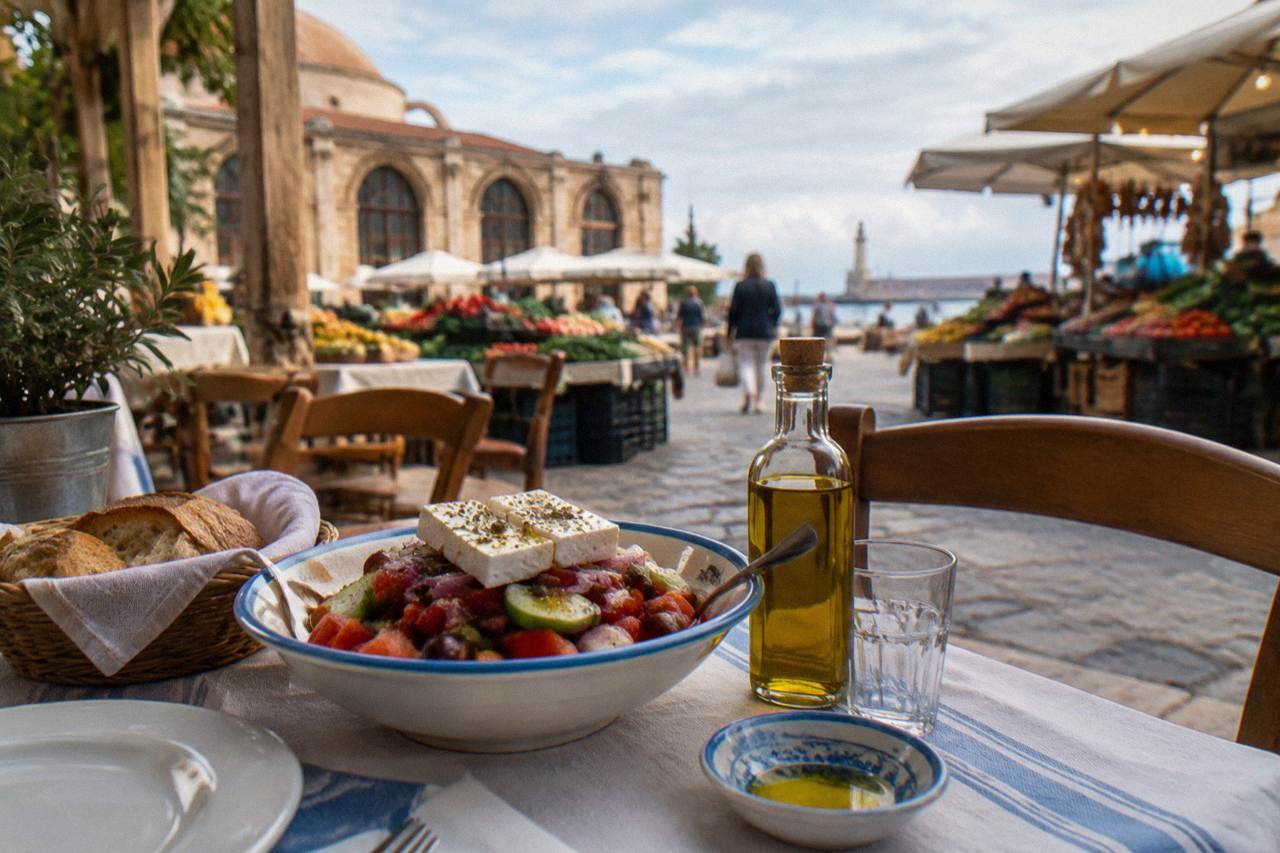
Chania is known for the Cretan diet eaten at its source: dakos, the barley rusk topped with tomato, cheese and olive oil, plus kalitsounia cheese pastries, sfakian pies with honey, wild greens, snails in rosemary, slow lamb and goat, fresh fish at the Venetian Harbour, graviera and myzithra cheeses, Cretan olive oil, thyme honey, raki and local wine. The city's position matters as much as its recipes. The White Mountains to the south supply the olive groves, cheese dairies and herb gardens, and the Cretan Sea supplies the fish, so the Old Town's kitchens sit between two larders.
The raki, also called tsikoudia, deserves its own word. It is the grape distillate poured after meals across Crete, and in Chania it arrives with every bill and every plate of fruit, whether asked for or not. Refusing it outright is not expected; a sip and a thank you is the normal courtesy.
Two practical pointers shape any food day in the city. First, the market streets of the Old Town and the Municipal Market area carry the bakeries and shops where the famous items are sold by weight and by piece, so a walking lunch of bougatsa, kalitsounia and cheese costs less than a seated meal. Second, the harbour front restaurants trade view for kitchen; the lanes one or two streets back, especially in Splantzia, carry the tavernas locals book for Sunday. For the wider sightseeing picture, see what to see in Chania.
Which Dishes Should You Order First In Chania?
Order dakos first, then kalitsounia or a sfakian pie with honey, a plate of chochlioi (snails) if the kitchen has them, slow-cooked lamb or goat, and fresh fish at the harbour, with graviera cheese and Cretan olive oil arriving beside almost all of it. That short list covers the island's signature plates and the ones Chania's kitchens are judged on. None of it needs translation help beyond the names below, which appear on menus in both Greek and English.
The dish list below is the practical core of the page: what each item is, and how it is normally served in the city.
| Dish | What It Is | How It Comes In Chania |
|---|---|---|
| Dakos | A hard barley rusk soaked with olive oil and tomato, topped with cheese | Summer starter, sometimes a light lunch |
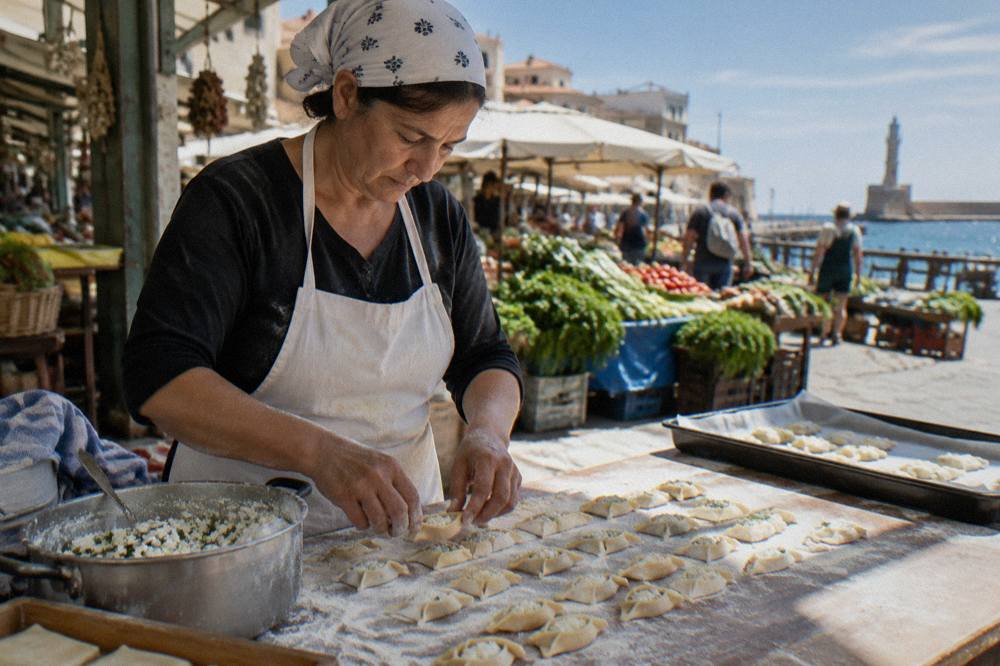
| Kalitsounia | Small sweet or savoury cheese pastries | Bakery item and breakfast, sold by weight |
| Sfakia pie (sfakianopita) | Thin cheese-filled pastry fried and served with honey | Dessert, associated with the Sfakia region to the south |
| Chochlioi | Snails cooked with rosemary and vinegar or tomato | Meze, ordered by the plate |
| Antikristo | Lamb cooked beside a fire, turned as it cooks | Mountain-taverna dish, often needs ordering ahead |
| Graviera | A hard sheep or goat cheese, aged in rounds | Cheese plate, grated, or fried as saganaki |
| Myzithra | A soft fresh cheese, sometimes sweetened | In pastries, with honey, or by the slice |
| Fried snails or fava | Split pea purée with olive oil and onion | Standard meze alongside bread |
Bread and oil open nearly every table, and the oil is the quiet hero of the whole cuisine. Crete's groves sit in the hills behind the city, and the oil served in a serious taverna is local, peppery and poured without measure. The Cretan food in Chania guide covers the dishes and the shops street by street, including the bougatsa shops the city argues about, and it is the right next read if this page settles the what and leaves the where open.
Seafood needs one honest caveat. The Venetian Harbour restaurants serve fish that is priced by the kilo, and the bill is calculated on the actual fish weighed in front of you, so the posted per-kilo price and the weighing are the two things to check before ordering, not after. This is standard practice across Greece, not a Chania trick, and it keeps the harbour honest when the guest watches the scale.
Can You Taste Your Way Around The Old Town On Foot?
Yes, the Old Town of Chania is compact enough that a food walk between the harbour, the market streets and Splantzia covers the city's signature bites in a couple of hours on foot, and a guided version pairs those stops with the history of the streets themselves. The distance from the lighthouse mole at the harbour entrance to the far edge of Splantzia is a short flat walk, and every stop on a tasting route, bakery, cheese shop, honey shop, taverna, sits inside it. This is the rare city where a food tour and a sightseeing tour are genuinely the same route, past the Firka Fortress built in 1620, the seven surviving Neoria shipyards and the lanes behind the harbour.
For visitors who want that route led rather than self-planned, the Check availability link for the Old Town highlights walk with street food sits beside the site's Old Town guided tour with street food page. The walk covers the Old Town's headline sights and folds tastings in along the way, which suits a first day in the city before a boat trip or a gorge day.
Self-guided works too, with one rule: eat where the menu is short. A chalkboard of five dishes means the kitchen shops that morning. A laminated folio of forty dishes with photographs of lobsters means otherwise. The market streets near the Municipal Market are the place to assemble a picnic of cheese, olives, rusks, honey and fruit, and the sea wall west of the harbour is the place to eat it.
When Is The Best Season For Eating Out In Chania?
The terrace season in Chania runs roughly May through October, because the HNMS Chania Souda station table, covering station records from 1958 to 2010, shows May to September as the dry months, with rainfall of 13.5 mm in May falling to 1.0 mm in July, while October's 67.7 mm and January's 129.5 mm mark the return of indoor tables. The same table gives a July mean of 26.7 C and a January mean of 11.0 C, so summer eating is outdoors and long, and winter eating moves inside to the tavernas that stay open for the city's 111,375 permanent residents rather than its visitors.
| Month | Mean Temp (C) | Rain (mm) | What It Means For Eating |
|---|---|---|---|
| May | 20.2 | 13.5 | Terraces open, first outdoor dinners |
| July | 26.7 | 1.0 | Peak terrace season, late dinners |
| September | 23.2 | 15.4 | Warm sea, quieter tables |
| October | 19.4 | 67.7 | Mixed, some rain, harvest time |
| January | 11.0 | 129.5 | Indoor dining, city for locals |
Autumn carries one further advantage the weather table cannot show: it is harvest and distillation season in the hills, the olive harvest begins as the rains return, and the tavernas' winter menu, wild greens, pulses, chestnuts, slow meat, starts appearing while the terraces are still out. Spring does the same in reverse, with the first mountain herbs and young cheese.
Can You Learn To Cook The Food Rather Than Just Eat It?
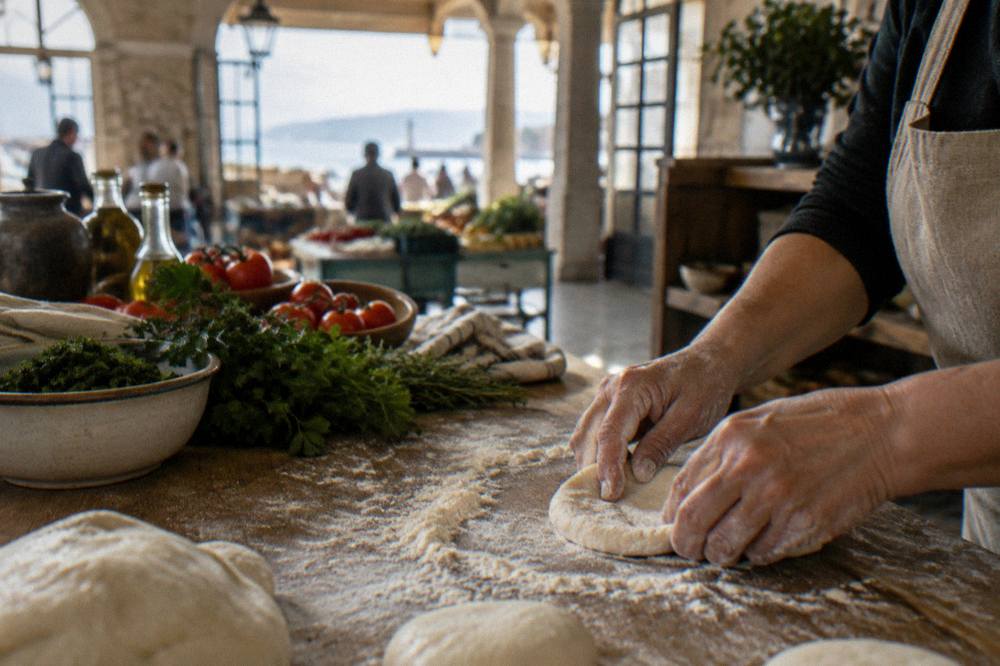
Yes, cooking classes around Chania teach the Cretan table hands-on, and they run from village kitchens in the White Mountains to town-based classes that end with the meal you cooked, so a half day spent learning dakos, pitas and slow lamb is a real alternative to another beach day. The classes in the hills lean on wood ovens and village produce, the ones in town lean on market shopping plus cooking, and both end around a shared table. The site's Chania cooking classes guide compares the formats and what each one covers.
To learn it hands-on in a mountain village kitchen, book a White Mountains cooking class here.
Wine is the other half of the lesson. Crete's indigenous grapes have carried the island's wine for centuries, and the tasting rooms within an hour of Chania pour them beside olive oil and honey, often at the same stop. The Chania wine tours guide lays out the routes, and a tasting day pairs naturally with a cooking morning for a full food day out of town.
One thing worth planning around: the big west-crease day trips, Balos, Elafonisi, Samaria, eat whole days, so food-focused days sit better between them than on top of them. A common week shape is gorge or lagoon day, recovery day of market, tavernas and a short harbour cruise, then a class or a wine route. If the trip is short, the how many days in Chania page helps with the arithmetic, and the question of whether the city itself is a trap is tackled at is Chania a tourist trap.
Common Questions About Food In Chania
What food is Chania known for?
Dakos, kalitsounia cheese pastries, sfakian pies with honey, snails with rosemary, slow lamb and goat, graviera and myzithra cheeses, fresh fish, Cretan olive oil, thyme honey, raki and local wine. The Old Town around the Venetian Harbour and the lanes of Splantzia carry the tavernas and shops that serve them.
Is Chania good for seafood?
Yes. Fish is landed at ports along the coast west of the city and served at harbour tavernas, priced by the kilo and weighed in front of you. Watching the weighing and checking the posted per-kilo price is the normal practice before ordering.
What is a food budget approach for Chania?
The cheap end is a walking lunch from bakeries and market shops: bougatsa, kalitsounia, cheese, olives and fruit by weight. Mid-range is a meze taverna meal in Splantzia or the back streets. Confirm prices on posted menus, and note that accommodation collects the climate crisis resilience fee per room per night at seasonal rates, an amount to confirm at booking.
Can you do a food tour in Chania?
Yes. Guided walks of the Old Town pair the sights with street-food tastings, and cooking classes and wine-tasting days run from the city into the surrounding hills. Check availability on the operator's live listing for current days and prices.
What drink comes with the meal in Chania?
Raki, also called tsikoudia, is the grape spirit served after meals across Crete, usually with fruit or sweets and usually unasked. Local wine, poured from the island's own grapes, is the standard pour beside the food itself.
The short version: come hungry, order the dakos, walk the market streets, and let one table a day be nothing but bread, oil, cheese and the harbour view. The Chania Crete Travel Guide covers the rest of the city, from the beaches near the Old Town to the day trips that fill the weeks between meals.