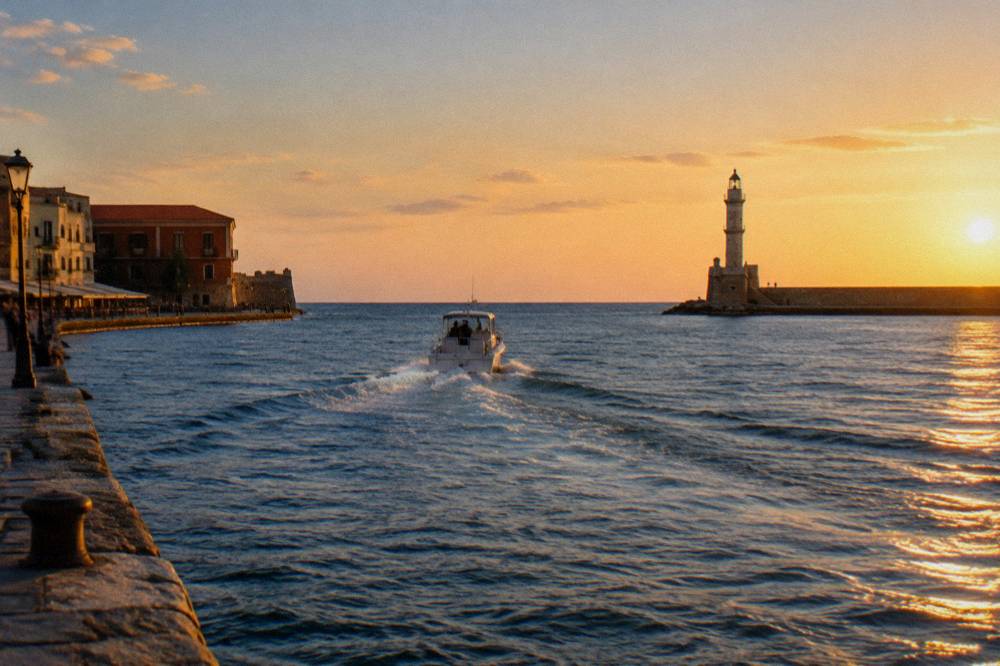
Chania On A Budget
Chania rewards a careful budget better than any other city on Crete: the harbour, the Old Town lanes and the nearest beaches cost nothing to walk, and the expensive mistakes are easy to sidestep once you know which paid items carry separate fees.
Short answer
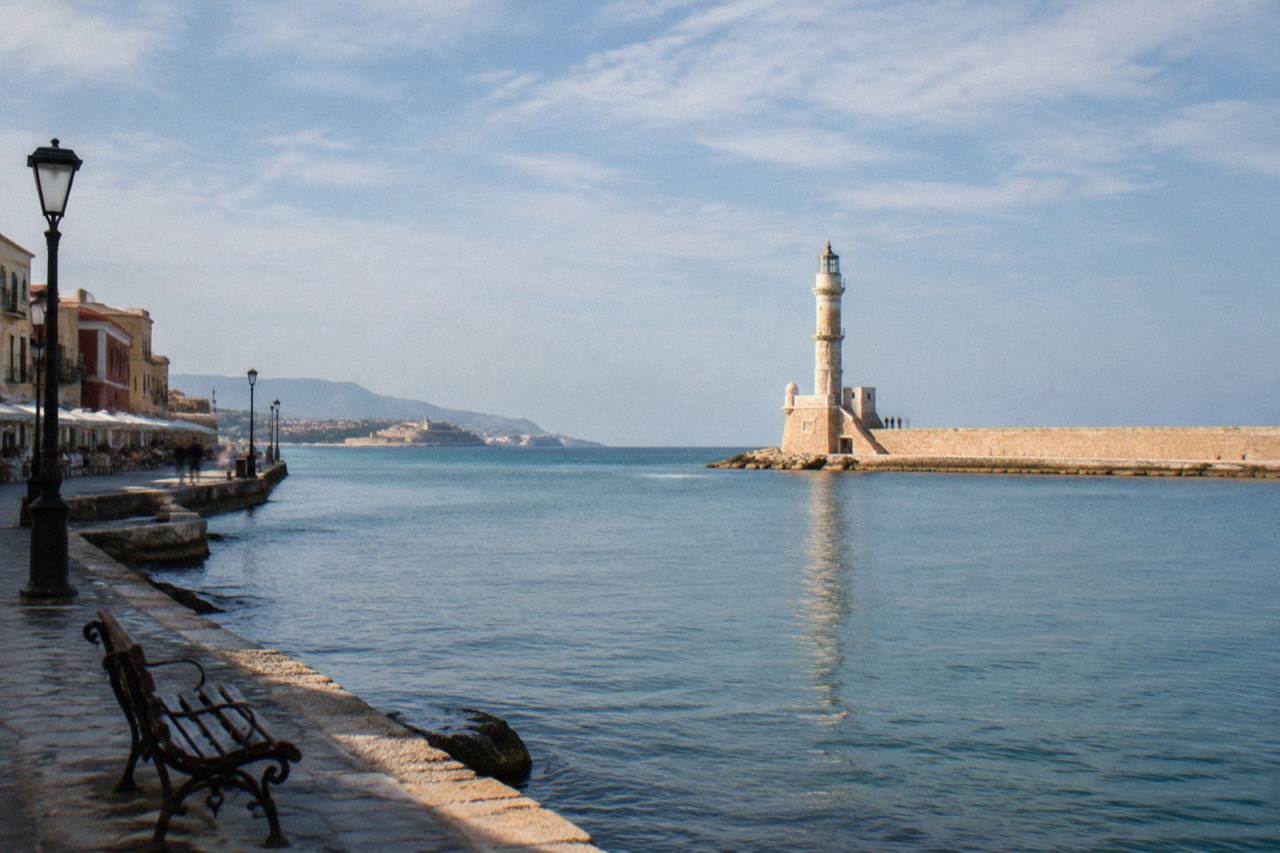
Yes, Chania works on a budget. The Old Town, the Venetian Harbour, Firka Fortress grounds and the city beaches are free, the KTEL bus network reaches the big sights, and the two paid items that genuinely justify their cost are a boat trip from the harbour and one well-chosen guided day trip. The avoidable costs are airport taxis, harbour-front restaurants and paying twice for Balos access fees.
Chania sits on the north-west coast of Crete, Greece, facing the Cretan Sea, and it is one of the few Mediterranean harbour cities where the headline sights cost nothing to see. The Venetian Harbour, first built between 1320 and 1356, the lighthouse at the end of the mole, the seven surviving Neoria shipyards from an original seventeen, and the whole knot of lanes that make up the Old Town are all open public space. The budget question is not whether the city can be done cheaply, it is which of the paid items deserve a place in the plan at all. This guide from the Chania Crete Travel Guide desk sets out the free sights, the cheap food, the bus-based day trips and the two or three splurges that earn their price.
Is Chania Expensive To Visit?
No, Chania is not expensive by Greek island standards, because the core of a visit, the Old Town, the Venetian Harbour and the walk-in beaches, costs nothing, and the main variable costs, food and day trips, scale down easily. The city is the second largest on Crete, with 111,375 permanent residents in the municipality at the 2021 census, so it runs on local prices as well as visitor prices, which keeps bakeries, markets and suburban tavernas honest. The costs that wreck budgets are avoidable ones: taxis from the airport instead of the public bus, harbour-front tables instead of the streets two lanes back, and day trips booked with fees left unexplained. A separate article on whether Chania is expensive covers price levels in detail, and how many days in Chania helps size the total spend.
The rhythm of the week matters more than the price of any single item. The Municipal Market building anchors the food-shopping side of the city, and the streets around it carry the bakeries and rotisseries that feed Chania at local prices. The strategy throughout this guide is simple: spend on the water and on one big guided day, and let everything else be free or near-free.
What Can You Do In Chania For Free?
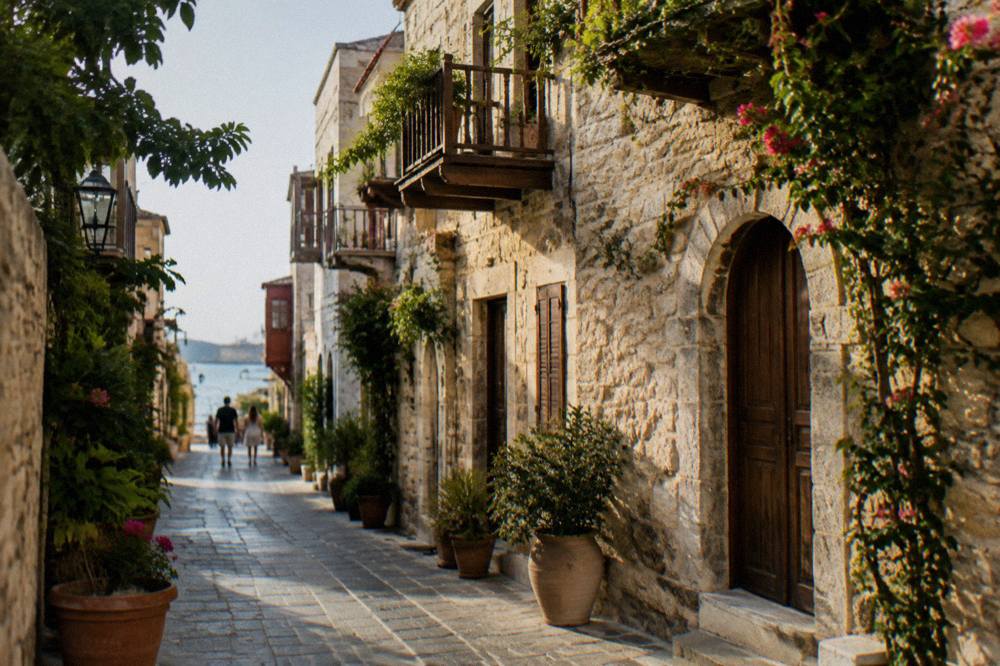
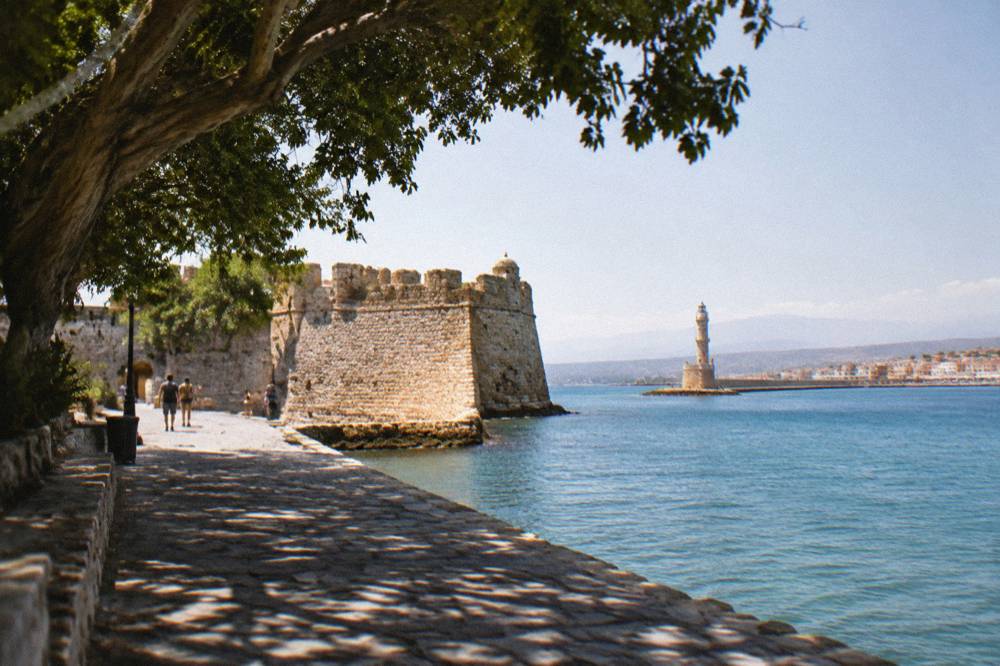
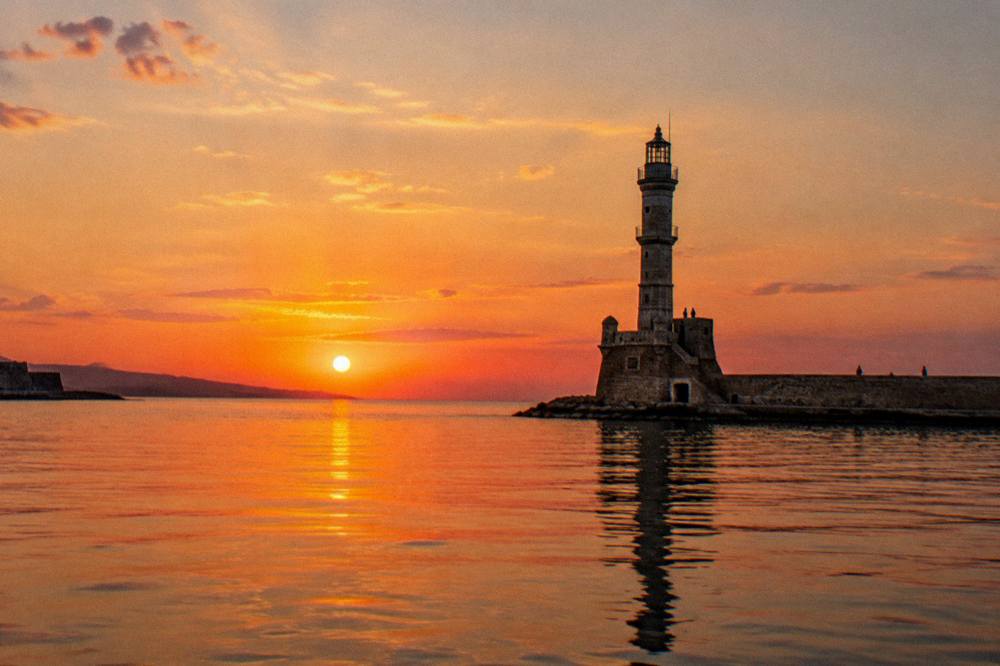
The entire historic core of Chania is free to walk: the Venetian Harbour from the Firka Fortress to the lighthouse mole, the Neoria shipyards, the Splantzia and Topanas quarters, the Mosque of the Janissaries as an exterior, and the city beaches at Nea Chora, all cost nothing. Firka Fortress, built in 1620 at the harbour mouth, has free grounds, and its walls give one of the clearest views over the harbour entrance. The lighthouse stands on a Venetian base restored during the Egyptian period between 1830 and 1840, and the walk out along the mole to see it up close is the single best free hour in the city. The Venetian Harbour guide maps the whole circuit, and the Old Town guide covers the lanes behind it.
Beyond the centre, the free list keeps going. The Akrotiri peninsula carries monasteries such as Agia Triada and Gouverneto, reached by bus or a hired car, with no entry charge to the complexes. The beaches of Nea Chora sit within an easy walk of the western edge of the Old Town, so a swim costs nothing but the walk. Even the hard history is free to stand in front of: the city walls from 1536 onward, built to Michele Sanmicheli's design, ring the Old Town as ordinary streets.
| Free sight | What you get | Where |
|---|---|---|
| Venetian Harbour circuit | Harbour walls, mole walk, boat views | Old Town waterfront |
| Firka Fortress grounds | Fort from 1620, harbour-entrance views | West end of the harbour |
| Lighthouse (Faros) | Venetian base, Egyptian-era restoration 1830 to 1840 | End of the mole |
| Neoria shipyards | Seven surviving 15th to 16th century arched sheds | East side of the harbour |
| Nea Chora beach | Sand and tavernas, walkable from the Old Town | West of the centre |
| City walls | Second walls from 1536, Sanmicheli's design | Around the Old Town |
If one paid sight belongs on a tight itinerary, it is the Archaeological Museum at 15 Skra Street in Halepa, at EUR 15 full price and EUR 8 concession, with the museum's own visit page the place to check days and hours before going. Everything else in the historic core is free, and the free list alone fills two days. For a full run of paid and free activities, the root things to do in Chania page collects them all in one place.
Where Does The Money Actually Go On A Chania Trip?
The three real cost centres of a Chania trip are the flight and transfer, the room, and the day trips, and the day trips are the only one of the three where a budget traveller can cut cost without cutting experience, by choosing one guided day and doing the rest independently by bus. The flight side is covered in flights to Chania and Athens to Chania, including the overnight Blue Star Ferries crossing from Piraeus, which departs Souda port at about 21:30 with a crossing of about 9 hours 15 minutes per the operator's timetable. The room side is covered in where to stay in Chania, and accommodation in the municipality also collects the climate crisis resilience fee per room per night at seasonal rates, an amount to confirm at booking rather than assume.
To keep the nightly room cost down, book a hostel bed here.
The transfer from Chania International Airport "Ioannis Daskalogiannis", about 14 km from the centre on the Akrotiri peninsula, is the classic first-day overspend. The airport's own site carries the public bus and taxi information, and Chania airport to Chania town lays out the options; the budget answer is the KTEL bus, with the airport details on the airport guide.
How Do You Eat Cheaply In Chania?
Chania eats cheaply when meals come from the bakery counter, the market streets and the tavernas away from the harbour front, because the city runs on its own residents, 111,375 of them in the municipality, and the places that feed them sit two or three streets back from the water. Bougatsa, the cream-filled pastry that is the city's signature breakfast, is sold by weight at specialist bakeries, and the bougatsa in Chania page explains how ordering works. The Municipal Market building and its surrounding streets carry cheese, olives, bread and honey at prices set partly for local shoppers. A practical check anyone can make: read the posted prices at the counter before ordering, and read the itemised bill when it arrives.
The split between visitor pricing and resident pricing in Chania follows geography, not quality. A taverna with a straight view of the lighthouse pays for that view in its menu, while the same kitchen standards run in Splantzia, Nea Chora and the streets behind the market at lower posted prices. The Chania restaurants guide and the Cretan food in Chania guide cover where the dishes themselves come from, and where locals eat in Chania frames the same question from the resident side.
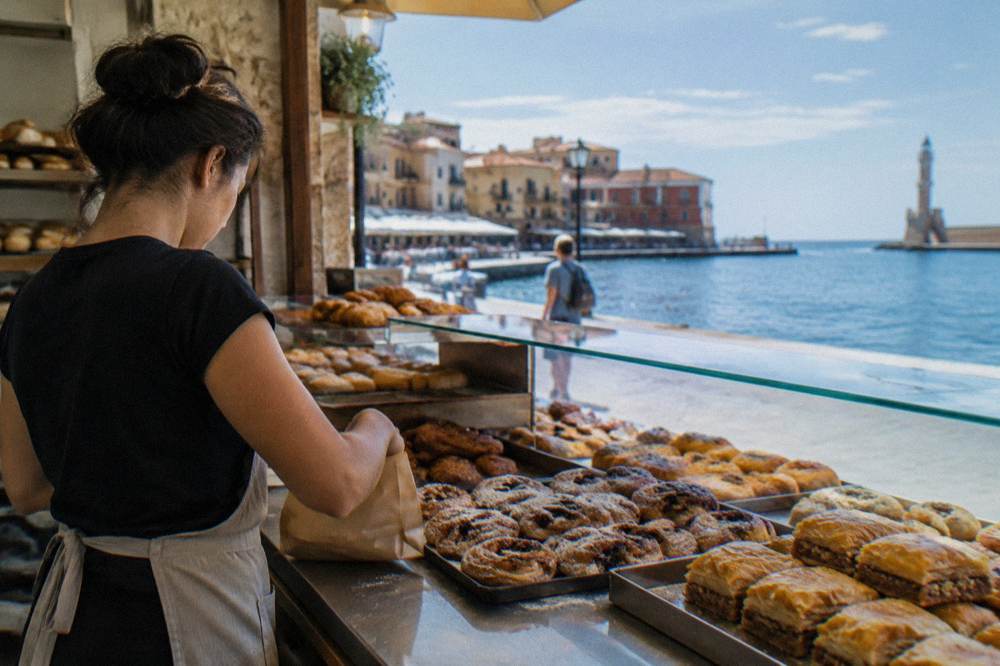
A food walk is the one food spend that can replace a whole day of restaurant meals, and the roster carries several, from a street-food walk of the Old Town to a tasting walk built around the market streets. The value logic is simple: a tasting route samples six or eight kitchens for the price of one long dinner. The four-product tasting tour below is the clearest example, covering olive oil, wine, cheese and honey in a single outing.
Which Day Trips From Chania Are Cheapest?
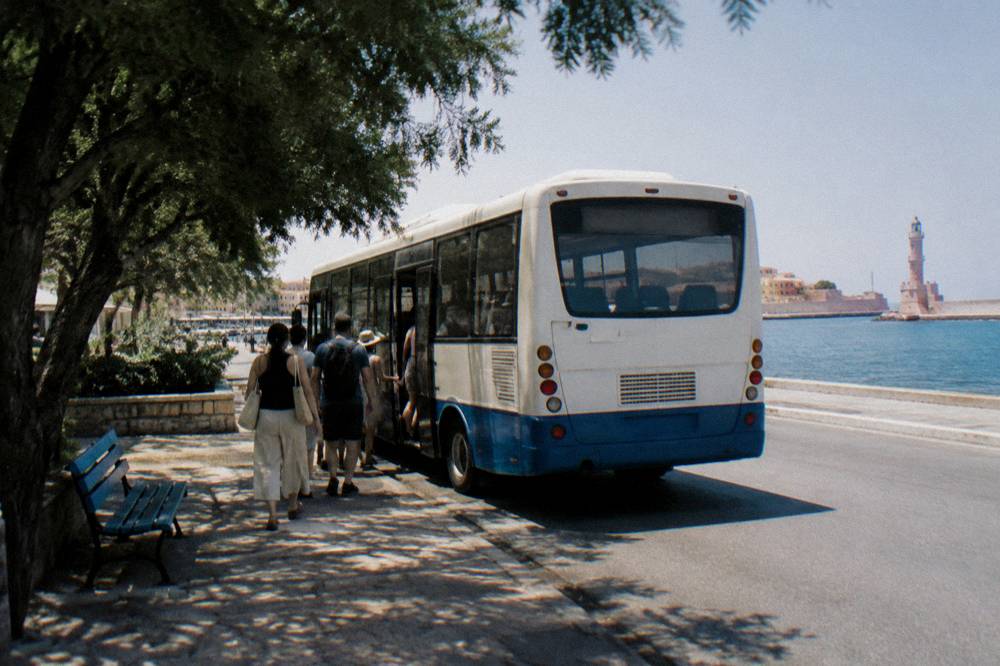
The cheapest day trips from Chania are the ones reachable by KTEL bus, because the Chania long-distance bus station on Kydonias street runs routes to Kissamos, Paleochora, Rethymno, Heraklion and, in summer, Elafonisi, and a bus day trip costs a fraction of any guided equivalent. The KTEL Chania buses page holds the route detail, and getting around Chania puts bus travel in the wider transport picture. The trade-off is fixed: buses run to a timetable you must fit, while guided trips move on your schedule and include the access fees in one payment. The full comparison, including the ferry leg at the end of the Samaria walk, sits on the best tours from Chania page.
The two famous west-coast destinations deserve specific budget notes. Balos lagoon and Gramvousa island are reached by boat from Kissamos port, and the only confirmed compulsory charge is a EUR 1 Kissamos municipal fee collected on the boat ticket for over-13s; the operator's listing states what the fare itself covers. The unpaved road from Kaliviani to a parking area, then a walk down, is the land alternative, described in is it difficult to get to Balos beach. Elafonisi is a Natura 2000 protected area with reported free entry, and taking sand, shells or plants from it is prohibited; the bus runs there in summer. The Elafonisi vs Balos comparison helps choose one rather than both.
Samaria Gorge needs a separate caution. Storms in late September and early October 2026 destroyed sections of the path, staff describe a 2026 reopening as extremely difficult with no final decision on record, and works are aimed at readiness in May 2027. The gorge's season normally runs in the warmer months, and the entrance ticket is sold through the NECCA e-ticket portal, free for EU residents under 18 and over 65. Anyone planning the walk must check the NECCA status first, and any tour price excludes the separate entrance and ferry charges. Imbros Gorge, covered in which gorge is better, Samaria or Imbros, is the lower-commitment alternative.
| Day trip | Budget route | Guided alternative | Separate charges to know |
|---|---|---|---|
| Balos and Gramvousa | Bus to Kissamos, boat | Cruise or 4x4 safari from the roster | EUR 1 municipal fee on boat tickets for over-13s |
| Elafonisi | Summer KTEL bus | Guided beach day with stops | Reported free entry, protected area rules |
| Samaria Gorge | Bus to Omalos, then walk | Guided trek from Chania | Entrance via NECCA portal, ferry from Agia Roumeli, check status |
| Imbros Gorge | Bus toward Sfakia | Guided hike with village visit | Confirm locally at booking |
| Rethymno | Direct KTEL bus | Not needed | None stated |
| Heraklion and Knossos | Direct KTEL bus | Guided full-day tour | Knossos entry bought separately |
The Elafonisi day trip below is the budget-friendly version of the famous beach run: it pairs the pink-sand beach with stops in the villages and tastings along the way, which replaces both a separate lunch and a separate tasting outing.
When Is The Cheapest Time To Visit Chania?
The cheapest time to visit Chania is the shoulder season, because the HNMS Chania Souda station table for 1958 to 2010 shows May, June, September and October still warm, with mean temperatures of 20.2, 24.7, 23.2 and 19.4 C, while rainfall stays low at 13.5, 3.4, 15.4 and 67.7 mm, so the sea and beach weather arrive without peak-season room rates. July and August, at 26.7 and 26.3 C mean and 1.0 and 1.4 mm of rain, are the months when demand peaks, and January, the wettest month at 129.5 mm across 16.3 rain days, is the quietest but also the dampest. The Chania weather and best time to visit Chania pages carry the full reasoning, and Chania in winter covers the low-season city.
| Month | Mean temperature (C) | Rainfall (mm) | Rain days | Budget reading |
|---|---|---|---|---|
| Jan | 11.0 | 129.5 | 16.3 | Wettest month, lowest rates |
| Feb | 11.0 | 104.0 | 14.5 | Quiet, changeable |
| Mar | 12.7 | 76.0 | 11.5 | Cool, cheap |
| Apr | 15.9 | 31.5 | 7.7 | Warming, shoulder prices |
| May | 20.2 | 13.5 | 4.2 | Dry, pre-peak |
| Jun | 24.7 | 3.4 | 1.2 | Warm, busy but pre-August |
| Jul | 26.7 | 1.0 | 0.4 | Driest month, peak rates |
| Aug | 26.3 | 1.4 | 0.6 | Peak season |
| Sep | 23.2 | 15.4 | 3.2 | Warm sea, shoulder rates |
| Oct | 19.4 | 67.7 | 9.3 | Mixed weather, low rates |
| Nov | 15.8 | 77.0 | 11.2 | Quiet, wetter |
| Dec | 12.7 | 101.9 | 16.1 | Mild, off season |
These are station records from the HNMS Chania Souda station, 148 m inland of Souda Bay, for the period 1958 to 2010, which is the table the national weather service publishes; they are station means, not a newer normal. The budget logic falls straight out of the numbers: May and September deliver summer conditions with 13.5 mm and 15.4 mm of rain respectively, while October at 67.7 mm begins the return of rain that matters from that month onward. Balos boats were still running daily departures to 31 October 2026 in the operator's own season statement, so late-season boat days remain possible in October, weather permitting.
Is It Worth Renting A Car In Chania On A Budget?
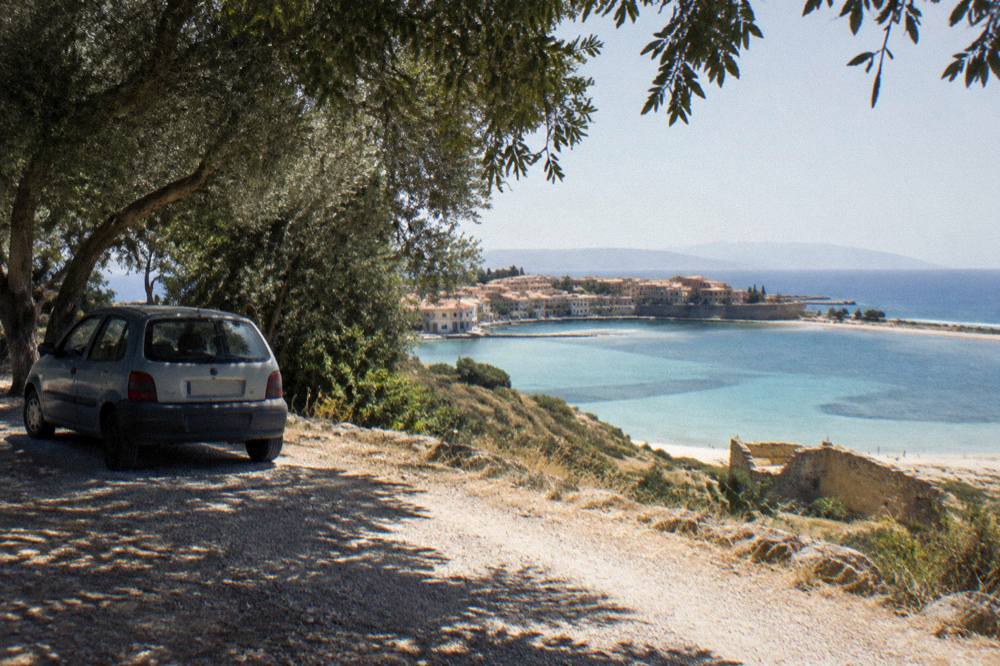
A hired car saves money in Chania only when two or more paid day trips would otherwise be replaced by it, because the car carries its own daily rate plus fuel plus parking, while the KTEL bus network already covers Kissamos, Paleochora, Rethymno, Heraklion and, in summer, Elafonisi at a per-trip cost. The comparison depends entirely on group size and itinerary: a solo traveller doing the harbour, the Old Town, Nea Chora and one guided boat day needs no car at all, while a family planning Balos by road, Falassarna, Elafonisi and the Akrotiri monasteries in one week will likely do better with wheels. Chania car rental, Chania airport car rental, driving in Crete and Chania parking carry the four sides of that decision, and no rate appears on any of them because rates are confirmed at booking.
The one car-specific budget warning is the Balos road: the stretch from Kaliviani to the parking area is unpaved, and a walk down follows, so a small hire car and that road need thinking through before committing. The boat from Kissamos avoids the road question entirely. For a car-free week built on buses and two chosen tours, three days in Chania and five days in Chania sketch the itineraries that work without driving.
What Does A Cheap Day In Chania Actually Look Like?
A cheap day in Chania runs: the market streets and a bakery breakfast in the morning, the free harbour circuit from Firka Fortress to the lighthouse mole before the heat, a swim at Nea Chora in the afternoon, and a taverna two streets back from the water in the evening, with the only paid decision of the day being whether to put a short boat trip in place of the swim. The morning circuit is where the city's whole history sits within a fifteen-minute walk: the harbour from 1320 to 1356, Firka from 1620, the shipyards of the 15th to 16th century, and the Ottoman-era layers that followed the 1645 conquest, all before lunch. The one day in Chania itinerary sequences the same walk with timings.
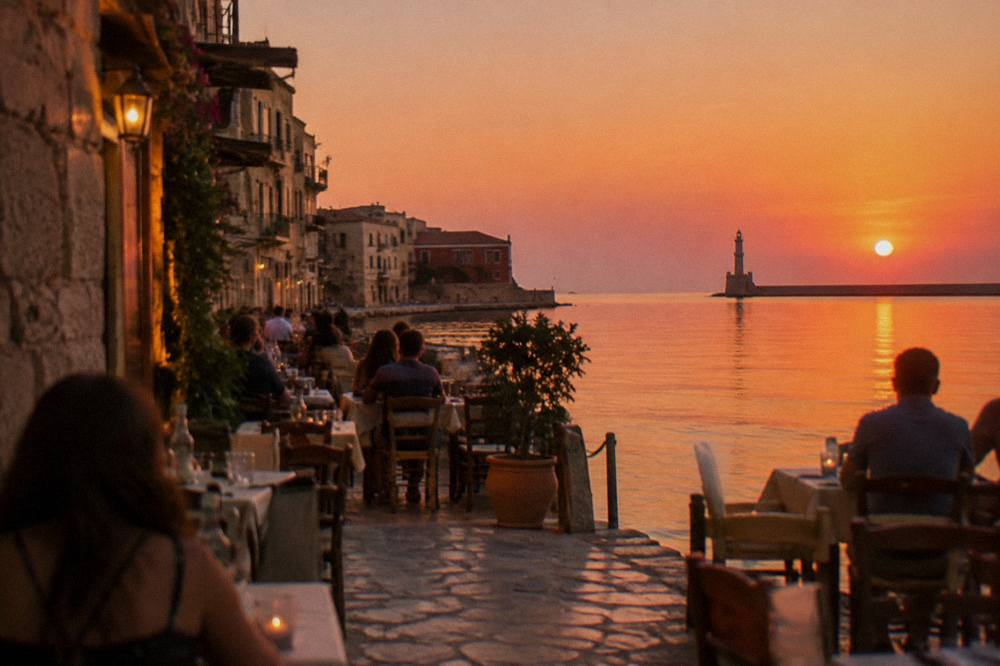
The afternoon fork is the budget fork. A swim from Nea Chora or the beaches near the Old Town costs the walk and nothing else, as can you walk to a beach from Chania Old Town confirms. The alternative is the one cheap splurge this guide keeps recommending: a guided sunset boat cruise from the harbour, which puts the lighthouse, the mole and the city walls into a single water-level view, with a guide explaining what the shore cannot. The related tour below is the short version, and the same page explains what the fare covers.
Evening is where budgets are quietly won or lost. The harbour front is for the walk after dinner, not the dinner itself, and the streets of Splantzia and the blocks behind the Municipal Market carry the kitchens with posted prices aimed at people who live here year-round. A glass of something on the harbour wall at sunset, bought from a shop, costs a fraction of a reserved table with the same view of the lighthouse.
How Do You Keep A Week In Chania Under Control?
A budget week in Chania holds its shape around two paid days and five free or bus days: one guided boat or beach day for the west coast, one harbour sunset cruise or food walk as the city splurge, and the rest filled with the free Old Town circuit, Nea Chora, the market streets and bus runs to Rethymno or Kissamos. The one week in west Crete plan shows how those pieces sequence geographically, and this page holds the cost logic behind them. The guided days below are the three the site's own roster surfaces for exactly this kind of week, and each listing states its own from-price and what it covers.
The trio above splits the week's spending cleanly. The sunset cruise is the short city water trip. The 4x4 safari replaces both a hire car and a boat ticket for Balos in one booked day. The two-island cruise to Agioi Theodoroi and Lazaretta covers the swimming day without a long westward transfer. Two of the three together still cost less than a week of harbour-front dinners, and each carries its own cancellation terms on the operator's live listing, worth reading before any weather-dependent booking in the shoulder season.
| Budget lever | Free or cheap version | Costlier version to skip or ration |
|---|---|---|
| Airport transfer | KTEL public bus per the airport site | Taxi for the whole 14 km |
| Breakfast | Bakery bougatsa by weight | Hotel breakfast add-on |
| Day at the beach | Nea Chora on foot | Paid loungers at resort beaches |
| West-coast beaches | Summer KTEL bus to Elafonisi | Multiple separate boat days |
| Old Town sightseeing | Free circuit, Firka grounds | Skipping the walk for paid viewpoints |
| Evening meal | Tavernas two streets back from the harbour | Harbour-front reserved tables |
Common Questions About Visiting Chania On A Budget
Is Chania Greece expensive?
Not by Greek island standards. The Old Town, the harbour circuit and the walk-in beaches cost nothing, and the city's 111,375 residents keep a layer of local-priced bakeries, markets and tavernas running year-round. The avoidable costs are airport taxis and harbour-front tables.
What can you do in Chania for free?
The Venetian Harbour walk, the lighthouse mole, Firka Fortress grounds from 1620, the seven surviving Neoria shipyards, the Old Town lanes, the city walls and the beaches at Nea Chora are all free public space.
What is the cheapest time to visit Chania?
The shoulder months. The HNMS Chania Souda station table for 1958 to 2010 shows May at 20.2 C with 13.5 mm of rain and September at 23.2 C with 15.4 mm, summer-grade weather without the peak-season rates of July and August.
Can you visit Balos on a budget?
Yes. The boat from Kissamos carries only a confirmed EUR 1 municipal fee for over-13s on the ticket, and the land route via the unpaved road from Kaliviani avoids the boat fare entirely at the cost of the drive and the walk down.
Do you need a car in Chania to save money?
Not necessarily. The KTEL bus network from the Kydonias street station reaches Kissamos, Paleochora, Rethymno, Heraklion and, in summer, Elafonisi, and a car only pays for itself when it replaces several paid day trips for a group.
Is the Archaeological Museum worth it on a budget?
At EUR 15 full price and EUR 8 concession it is the one paid sight in the city worth keeping, with hours to be checked on the museum's own visit page, since the published sources give conflicting days.
The budget picture in Chania comes down to a short list of choices: bus over taxi, bakery over hotel breakfast, back streets over harbour front, and one or two well-picked guided days over a week of half-organised ones. Everything the city is famous for, the harbour, the lighthouse, the lanes and the light on the water at sunset, is already free.