Athens To Chania
Athens to Chania comes down to two real options: a flight into Chania International Airport, about 14 km from the city centre, or the overnight ferry from Piraeus to Souda port. This guide sets out what each involves.
Short answer
There is no rail line to Crete, so Athens to Chania means either flying into Chania International Airport (CHQ), about 14 km from the centre on the Akrotiri peninsula, or taking the overnight Blue Star Ferries service from Piraeus to Souda port, about 7 km east of the Old Town, departing about 21:30 with a crossing of about 9 hours 15 minutes.
The journey from Athens to Chania, the coastal city on the north-west coast of Crete that fronts the Cretan Sea, comes down to two real options, and neither of them involves a train, because Crete has no railway. A flight lands at Chania International Airport "Ioannis Daskalogiannis", about 14 km from the city centre on the Akrotiri peninsula, or an overnight ferry crosses from Piraeus, the port of Athens, to Souda, the ferry port about 7 km east of the Old Town. This guide from the Chania Crete Travel Guide desk lays out both routes with the figures the operators and official pages publish, then covers what to plan for the days after arrival, because Chania is also the base for the island's best-known day trips, from Balos and Elafonisi to Samaria and Imbros.
How Do You Get From Athens To Chania?
Travellers from Athens to Chania have exactly two practical routes: a direct flight from Athens into Chania International Airport (CHQ), which sits about 14 km from the city centre, or the overnight ferry from the port of Piraeus to Souda, which the operator's timetable shows departing about 21:30 with a crossing of about 9 hours 15 minutes. There is no third overland option, since Crete is an island and has no rail connection of any kind.
The choice is less about money and more about time and temperament. The flight puts you in Chania the same morning; the ferry puts you at sea overnight and docks at Souda in the morning, having crossed the Aegean while you slept, or tried to. The ferry operator, Blue Star Ferries, publishes its Souda to Piraeus timetable on its route page, and at the time of writing the published timetable extends as far as 31 October 2026, so the service is a scheduled, bookable route rather than a seasonal shuttle.
What the choice is not about is where you arrive. Both routes finish away from the historic core. The airport is on the Akrotiri peninsula near Souda Bay, and the ferry port is a separate place again: ferries to Piraeus leave from Souda port, never from the Venetian Harbour, which serves only excursion boats. Anyone picturing a ship gliding past the lighthouse should reset that picture before booking, because the last 7 km from Souda into the Old Town are covered by road.
For the detail on the crossing itself, the companion piece on the sailing covers timings and how the route works in practice: ferry hours from Athens to Crete.
What Is The Flight From Athens To Chania Like?
The flight lands at Chania International Airport "Ioannis Daskalogiannis" (CHQ), operated by Fraport Greece, which handled 3,992,149 passengers between January and October 2025 and sits about 14 km from the city centre on the Akrotiri peninsula near Souda. The airport's own pages carry the current airline and route information, and the airport site also lists the public bus and taxi options for the transfer into town.
It is a modest airport by capital-city standards, and the arrival process is short: one terminal building, a walk to the kerb, and then the decision of how to cover the roughly 14 km to the centre. The dedicated transfer guide, getting from Chania airport to town, walks through the options step by step, and the full airport overview sits at Chania airport explained.
| Airport fact | Published figure |
|---|---|
| Official name | Chania International Airport "Ioannis Daskalogiannis" |
| IATA code | CHQ |
| Operator | Fraport Greece |
| Distance to city centre | About 14 km |
| Location | Akrotiri peninsula, near Souda |
| Passengers Jan to Oct 2025 | 3,992,149 |
The airport sits about 14 km from the centre, per its official description, which means a transfer needs planning rather than an afterthought, especially with luggage in July heat, when the HNMS Chania Souda station table shows a mean maximum of 30.7 C.
The flight side of the route, including which airlines serve CHQ from Athens and how the domestic market works, has its own dedicated page: flights to Chania.
To compare fares for the hop from Athens, book a flight here.
For travellers who prefer to arrive with a plan already in hand, three products that fit a first day in the city or a first excursion out of it:
How Does The Overnight Ferry From Piraeus To Souda Work?
The ferry from Athens to Chania is the overnight Blue Star Ferries service from Piraeus to Souda port, which the operator's published timetable shows departing about 21:30 with a crossing of about 9 hours 15 minutes, docking roughly 7 km east of the Old Town rather than in the historic harbour. Fares move with the season and cabin type, so the operator's own booking pages are the reference for price, not any number printed here.
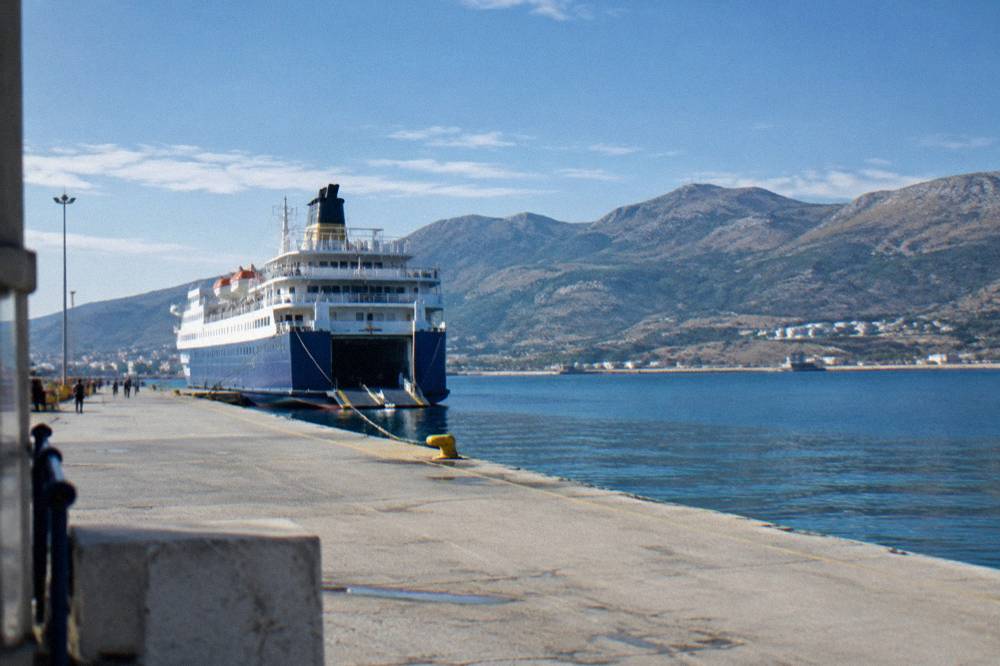
Souda is a working port. The ship berths beside a bay backed by low hills, passengers walk off via a gangway, and the road into Chania runs west along the shore. The Venetian Harbour, the postcard with the lighthouse, is a different body of water entirely, and the harbour serves excursion boats. Anyone connecting onward should read the Piraeus to Chania ferry in full, which covers cabins, the drive out of Athens to Piraeus, and what the timetable shift means for planning.
| Ferry fact | Published detail |
|---|---|
| Operator | Blue Star Ferries |
| Route | Piraeus to Souda |
| Departure | About 21:30 (operator's timetable) |
| Crossing time | About 9 h 15 min |
| Sailing type | Overnight |
| Souda port location | About 7 km east of Chania Old Town |
| Timetable published to | 31 October 2026 at time of check |
The overnight ferry earns its place for a specific kind of traveller: the one who wants a cabin, a night that doubles as accommodation, and a sea-level arrival into Crete in morning light. It is slower than flying, but the crossing is the journey rather than a delay inside one, and Souda to Old Town is a short hop compared with the airport run. The trade-offs, and the question of which suits a family or a tight schedule, are laid out in the dedicated answer page how long is the ferry from Athens to Crete.
A first afternoon in the Old Town can go two ways: an aimless wander that ends at the harbour, or a structured one. The mythological scavenger hunt, a puzzle-driven walk through the lanes around the harbour, is a way to give the first afternoon a spine, and the listing carries the current price and availability.
Should You Fly Or Take The Ferry From Athens To Chania?
The flight suits tight schedules and same-day arrivals, while the overnight ferry suits travellers happy to spend a night at sea and arrive rested at Souda in the morning; both routes end about 7 to 14 km from the Old Town, so neither removes the final transfer into the city. Neither option is objectively better, and the deciding factors are time, luggage and appetite for a night aboard a ship.
Consider the shape of each day. A flight day starts early at Athens airport and ends on the Akrotiri peninsula by mid-morning, with the whole arrival day still in front of you. A ferry day starts in the evening, with dinner aboard or a cabin bunk, and the crossing happens while the calendar turns over once. Families with small children, travellers prone to seasickness, and anyone with an onward connection tend to fly; slow travellers, drivers bringing a car, and anyone who dislikes airport mornings tend to sail. Greece's euro pricing applies to both, since the country has used the euro since 1 January 2001.
The border formalities are worth a sentence, because they changed recently. Greece is a Schengen member with internal checks abolished since 26 March 2000, and the Entry/Exit System (EES) was fully deployed across Schengen on 10 April 2026. ETIAS, the planned travel authorisation for visa-exempt visitors, is not in operation and collects no applications as of October 2026, so non-EU travellers should not pay anyone for an "ETIAS registration" for this trip. An Athens to Chania leg is domestic in any case, so a Schengen arrival happens once, at the first Greek port of entry.
How Do You Get From Souda Or The Airport Into Chania Old Town?
Both arrival points connect into the city by road: the airport sits about 14 km away on the Akrotiri peninsula, Souda port about 7 km east of the Old Town, and the airport's own site lists the public KTEL bus and taxi arrangements, while the KTEL long-distance station in Chania itself is on Kydonias street. No fare for either transfer is published on an official page, so the desk prints none.
The KTEL Chanion bus network matters beyond the airport run. Its Chania station on Kydonias street is the hub for routes to Heraklion, Rethymno, Kissamos, Paleochora and Omalos, with summer services to Elafonisi, which means a traveller without a car can still reach a surprising amount of western Crete. The network's own pages carry schedules and booking, and the site's overview at KTEL Chania buses covers what the network does and does not reach.
For the airport transfer specifically, the options and their practical order are set out in Chania airport to Chania town. For a stay built around day trips, renting a car at CHQ changes the arithmetic completely, and both Chania car rental and the airport-specific airport car hire guide cover it, with the wider driving picture in driving in Crete. Within the city itself, the Old Town is compact enough that arrival day needs no vehicle at all, a point the getting around Chania page develops.
What Is There To Do Once You Arrive In Chania?
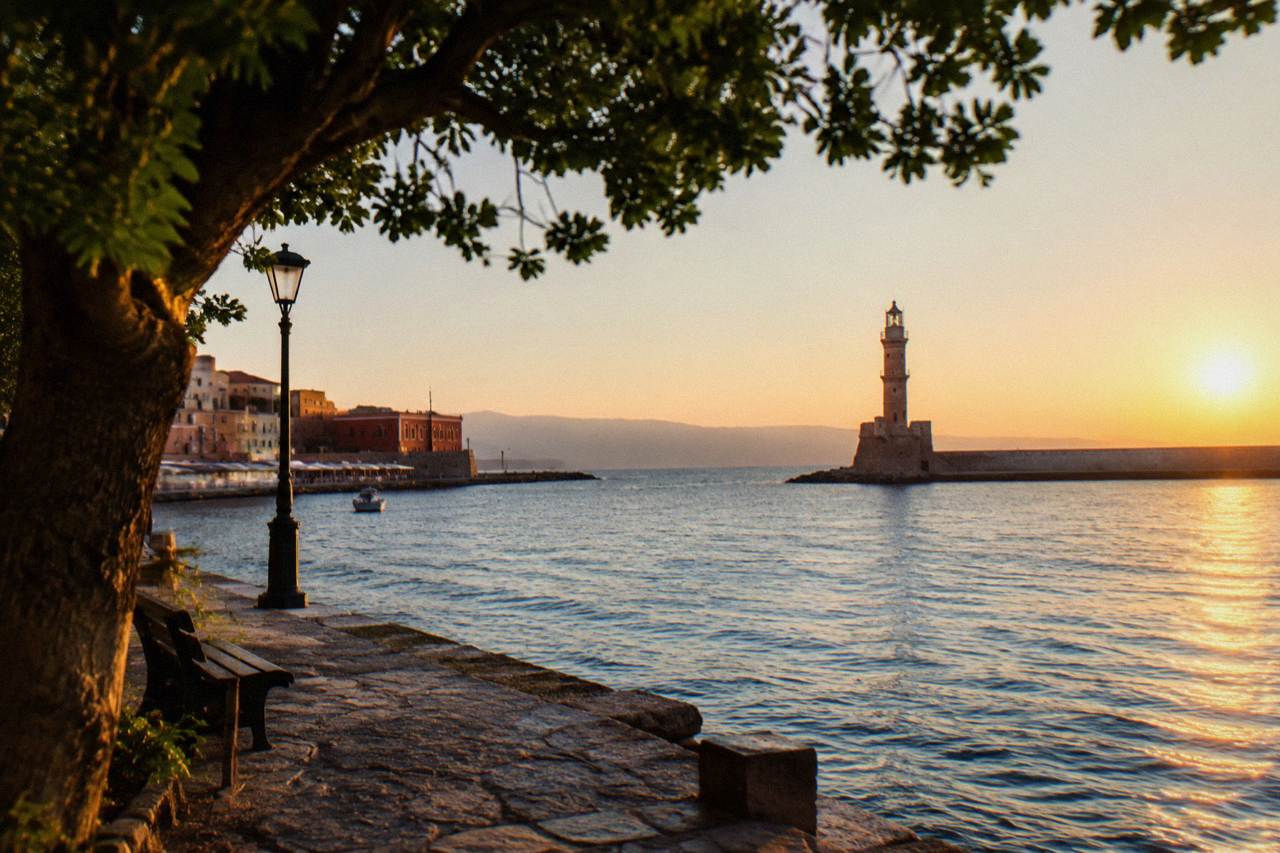
Arrival in Chania puts you beside a harbour first built between 1320 and 1356, under a lighthouse raised about 1595 to 1601 and restored during the Egyptian era from 1830 to 1840, with seven surviving Venetian shipyards, the Neoria, of an original seventeen standing along the shore. The Old Town wraps around this harbour, and it is walkable in a way few Greek city centres are.
The dated fabric tells the story in sequence, and the dates below are the ones the sources carry. Firka Fortress at the harbour mouth dates from 1620, with free grounds. The first Venetian walls went up from 1336 to about 1356, the second circuit from 1536 to Michele Sanmicheli's design, Ottoman rule began with the 1645 conquest of Chania, and Crete's union with Greece followed in 1913. None of this needs a guidebook to be visible; the layers sit on top of each other along a two-kilometre stretch of waterfront.
| Old Town sight | Date from the sources |
|---|---|
| Venetian Harbour, first construction | 1320 to 1356 |
| First Venetian city walls | 1336 to about 1356 |
| Lighthouse (Faros), on its Venetian base | About 1595 to 1601, restored 1830 to 1840 |
| Neoria shipyards, seven survivors of seventeen | 15th to 16th century |
| Firka Fortress | 1620 |
| Ottoman conquest of Chania | 1645 |
| Union of Crete with Greece | 1913 |
The museums anchor the rainy options. The Archaeological Museum of Chania, at 15 Skra Street in Halepa, lists a full ticket at EUR 15 and a concession at EUR 8, with visitors asked to leave 20 minutes before closing; because the published hours in its own materials conflict, the museum's visit page is the place to confirm opening times before setting out. The Archaeological Museum guide carries what is verified, and the Maritime Museum of Crete page does the same for its neighbour on the harbour.
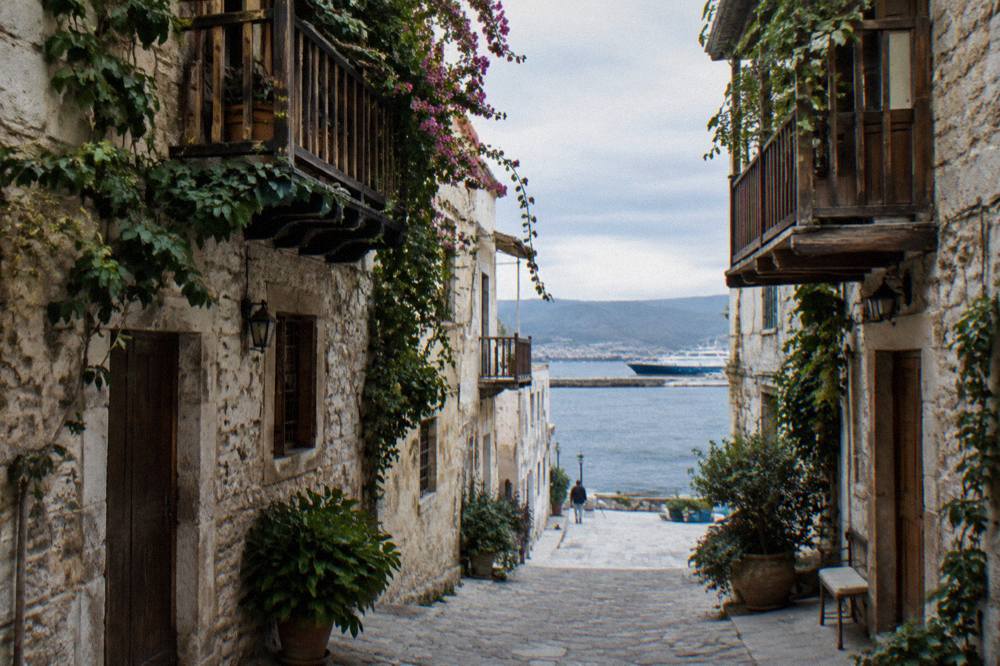
Food deserves its own arrival evening. The lanes behind the harbour hold the city's restaurants and its famous butter-and-custard bakeries, covered in depth at Chania restaurants and Cretan food in Chania. A tasting walk that pairs the Old Town lanes with local food gives structure to that first evening:
Beyond the city, the day trips begin. Balos and Gramvousa boats leave from Kissamos port, with daily departures running to 31 October 2026 per the operator, and the only confirmed charge is a EUR 1 Kissamos municipal fee collected on the boat ticket for over-13s. Elafonisi is a Natura 2000 protected area with reported free entry, where taking sand, shells or plants is prohibited. Samaria Gorge normally runs 1 May to 31 October, one-way from Xyloskalo to Agia Roumeli, but storms in late September and early October 2026 destroyed sections of the path and no reopening decision is on record, so the NECCA status must be checked before any plan is made; the separate EUR 10 entrance and the ferry out of Agia Roumeli are not covered by tour prices. The full picture for each trip sits at Balos lagoon and Gramvousa, Elafonisi beach and Samaria Gorge, with the complete rundown in the best tours from Chania.
When Is The Best Time To Make This Journey?
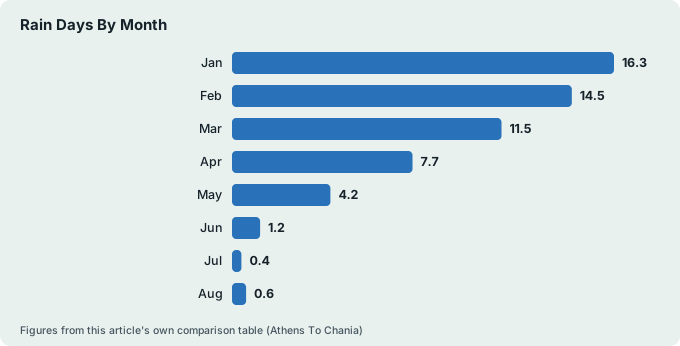
The HNMS Chania Souda station table for 1958 to 2010 shows the warmest month as July at a mean of 26.7 C and the wettest as January at 129.5 mm, with May to September dry, so the travel season is really a weather decision before it is a fare decision. July and August bring mean maximums of 30.7 C and 30.4 C respectively, with 1.0 and 1.4 mm of rain across the whole of each month.
The shoulder months reward the ferry traveller especially. May averages 20.2 C with 13.5 mm of rain, October 19.4 C with 67.7 mm, and September 23.2 C with just 15.4 mm. Rain starts to matter from October onward, when the monthly figure jumps to 67.7 mm and rain days to 9.3, and January sits at 16.3 rain days. The full monthly breakdown and what each month means for the trip is at Chania weather and the best time to visit Chania.
| Month | Mean C | Rain mm | Rain days |
|---|---|---|---|
| Jan | 11.0 | 129.5 | 16.3 |
| Feb | 11.0 | 104.0 | 14.5 |
| Mar | 12.7 | 76.0 | 11.5 |
| Apr | 15.9 | 31.5 | 7.7 |
| May | 20.2 | 13.5 | 4.2 |
| Jun | 24.7 | 3.4 | 1.2 |
| Jul | 26.7 | 1.0 | 0.4 |
| Aug | 26.3 | 1.4 | 0.6 |
| Sep | 23.2 | 15.4 | 3.2 |
| Oct | 19.4 | 67.7 | 9.3 |
| Nov | 15.8 | 77.0 | 11.2 |
| Dec | 12.7 | 101.9 | 16.1 |
The HNMS Chania Souda station sits at 148 m, inland of Souda Bay, and its published table covers 1958 to 2010, which is the period the service itself releases; it is labelled here as exactly that, not as a newer normal. Prevailing winds run from the west, swinging north-west in July and August, the meltemi pattern, though the station table publishes no speeds. Humidity runs from 50 percent in July to 73 percent in January.
How Many Days Do You Need In Chania After Arriving?
Three days is the working answer for Chania itself, with a fourth and fifth for the headline day trips: the Old Town and harbour fill day one, beaches and the Akrotiri peninsula day two, and a Balos, Elafonisi or gorge trip takes a full day each beyond that, so a week is the comfortable ceiling. The dedicated breakdown at how many days in Chania builds the itineraries day by day.
The reason the count climbs quickly is geography. Chania is the launch point for western Crete: Balos and Gramvousa by boat from Kissamos, Elafonisi and Falassarna by road, Samaria and Imbros in the White Mountains, the south coast at Loutro and Sfakia, and Rethymno or Heraklion and Knossos to the east. Each is a full day, and the one day in Chania, two days in Chania and three days in Chania pages sequence them for short stays, with one week in western Crete as the extended version.
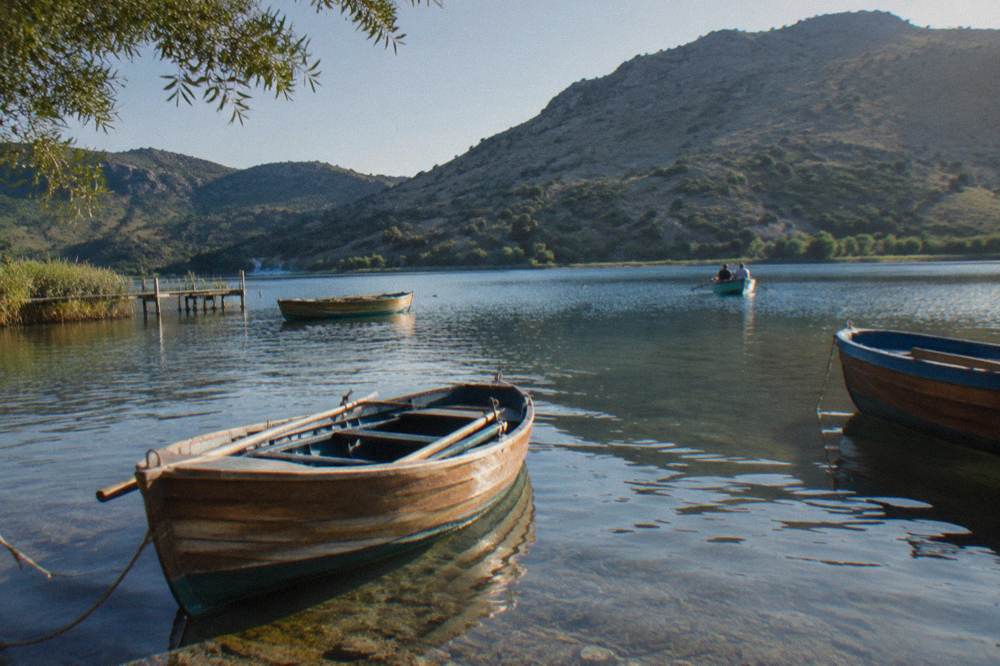
For a quieter day that stays close, the lake and springs trip inland is a counterweight to the beach circuit:
Where to sleep is the other arrival-week decision, and it interacts with the route choice: ferry arrivals at Souda are closest to the eastern neighbourhoods, airport arrivals to the north-east. The area-by-area breakdown, including the Old Town, Nea Chora and the beach suburbs west of the centre, is at where to stay in Chania, with the property-level pages at the best hotels in Chania and boutique hotels in Chania. One arrival note the desk will state: accommodation in Greece collects a climate crisis resilience fee per room or apartment per night, with seasonal rates by star category, and the exact amount is confirmed at booking.
What Should You Not Miss After The Journey From Athens To Chania?
The shortlist the desk can stand behind from verified sources runs: the Venetian Harbour and its Egyptian-era lighthouse, Firka Fortress with free grounds dating from 1620, the Neoria shipyards along the shore, the Archaeological Museum at EUR 15 full entry, and at least one day trip, whether Balos by boat or Elafonisi by road. Everything on that list carries a figure or a fact from an official or operator page rather than from a brochure.
Structure the stay by distance. Day one belongs to the Old Town on foot, from Firka at the harbour mouth along to the Neoria and up into Splantzia, a circuit short enough that fatigue, not distance, ends it. Day two goes to the water: the beaches nearest the city, or a short boat trip from the harbour itself, options covered at the best beaches in Chania and Chania boat trips. Day three and onward go west or south to the headline trips, checking the Samaria status with NECCA before committing to a gorge.
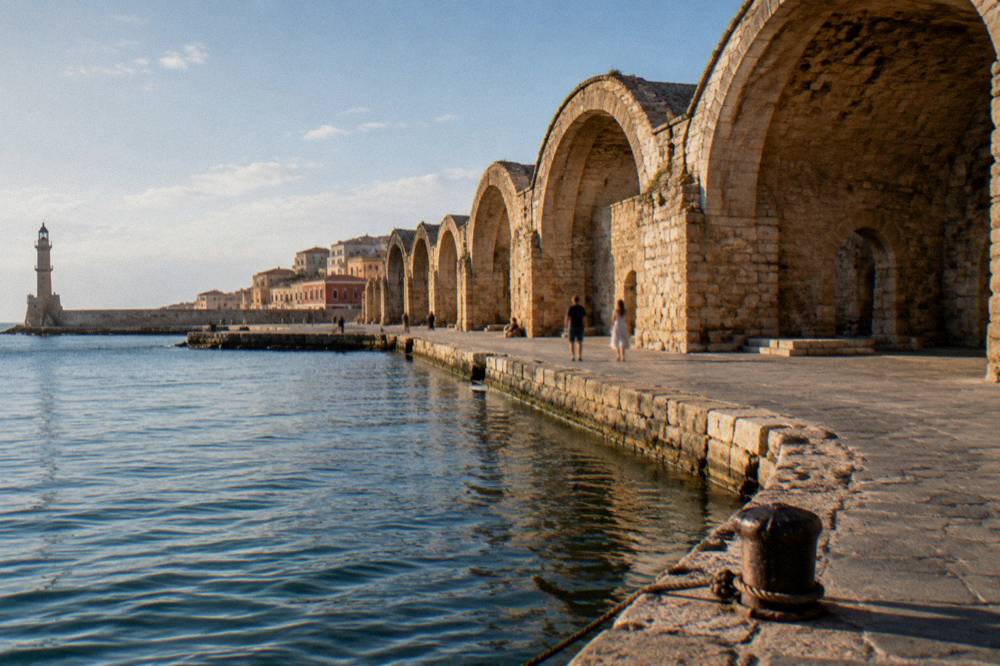
The pedestrian-friendly core makes a car unnecessary for the first days, which is worth knowing before booking a hire for the whole stay. The Old Town guide maps the quarters, and for travellers asking whether the historic centre alone justifies the trip, the answer page is Chania Old Town walkable addresses it directly. Walking-focused products for the city are surveyed at Chania walking tours.
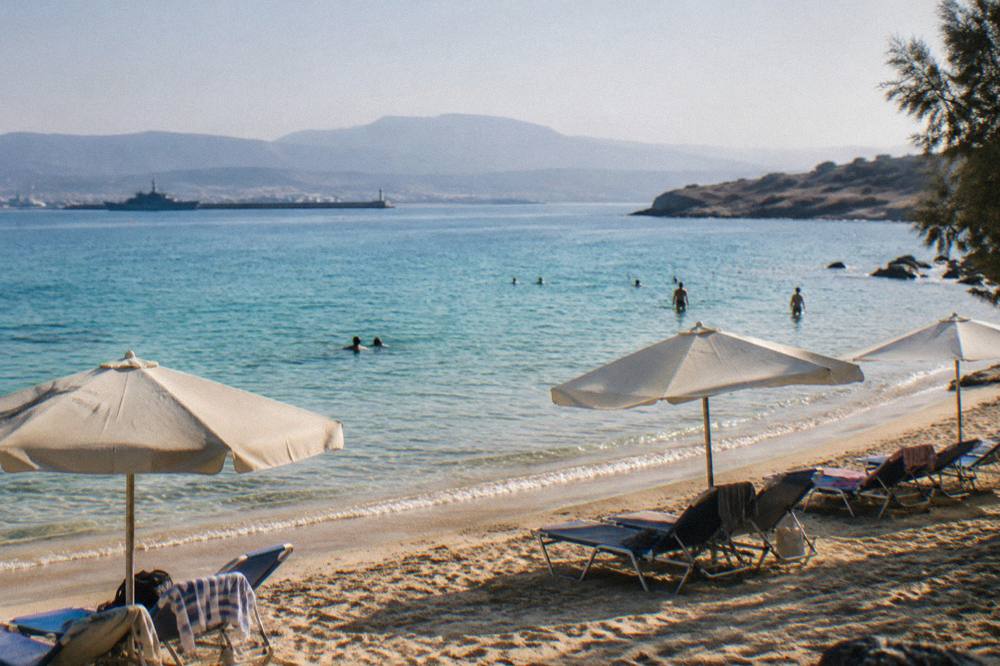
For a fuller survey of the options on the ground, from the harbour museums to the boat departures, the root page things to do in Chania carries the complete directory, and the question of whether the city deserves the journey at all is answered with figures at is Chania worth visiting.
Common Questions About Athens To Chania
How Long Is The Ferry From Athens To Chania?
The Blue Star Ferries overnight service from Piraeus to Souda takes about 9 hours 15 minutes, departing about 21:30 per the operator's published timetable, and arriving at Souda port, about 7 km east of the Old Town. The full answer, including how the timetable shifts across the year, sits at ferry hours from Athens to Crete.
Can You Fly Directly From Athens To Chania?
Yes, Athens to Chania is a domestic flight into Chania International Airport "Ioannis Daskalogiannis" (CHQ), operated by Fraport Greece, which handled 3,992,149 passengers from January to October 2025. The airport's own page lists the current airline information, and the site's flight overview at flights to Chania collects it.
Does The Ferry From Athens Arrive In Chania Old Town?
No. Ferries from Piraeus arrive at Souda port, about 7 km east of the Old Town. The Venetian Harbour in the Old Town serves only excursion boats, and no Piraeus ferry berths there.
Is There A Train From Athens To Chania?
No. Crete has no railway of any kind, so the only routes from Athens to Chania are the flight to CHQ and the overnight ferry from Piraeus to Souda.
How Far Is Chania Airport From The City Centre?
About 14 km. The airport sits on the Akrotiri peninsula near Souda, and the airport's own site lists the public bus and taxi options for the transfer; no official fare is published, so the amount is confirmed on the spot.
Do Non-EU Travellers Need ETIAS For The Athens To Chania Trip?
Not currently. ETIAS is not in operation and collects no applications as of October 2026. The Entry/Exit System was fully deployed across Schengen on 10 April 2026, and Greece has abolished internal checks since 26 March 2000, so the Athens to Chania leg itself is a domestic one.

The desk's closing summary is short: fly to gain a day, sail to keep the night, and either way book the first night's bed within reach of the Old Town, because the harbour, the lighthouse and the shipyards are the reason the journey from Athens to Chania is worth making at all.