Where Do Locals Eat In Chania?
Where Chania residents actually eat: the neighbourhoods, dishes and daily rhythms beyond the harbour, with a guide to reading a menu the way a local household does.
Chania, a coastal city of 111,375 permanent residents on the north-west coast of Crete, runs on a food culture that starts long before the harbour front begins. The Old Town around the Venetian Harbour, first built between 1320 and 1356, holds the postcard tables. The residents eat inland of it: in Splantzia, in Nea Chora, in Halepa, and in the plain neighbourhoods that climb toward the White Mountains. The distinction is not a secret, it is simply geography. A table with a sea view of the lighthouse serves a different customer than a kafeneio on a side street, and the prices, portions and menus reflect that.
The question of where locals eat has a layered answer, and this page works through it layer by layer: the neighbourhoods first, then the dishes and shopping rhythms, then the villages that supply the city. Along the way it points to guided options, including the Imbros Gorge guided hike with village visit, which shows the rural side of the same food chain.
Where Do Locals Eat In Chania?
Chania residents eat away from the Venetian Harbour, in the neighbourhoods that surround the Old Town: Splantzia and the streets off the Agora market for everyday tavernas, Nea Chora for fish at the water's edge, and Halepa, the old consulate quarter, for quieter local tables. The pattern repeats across the city, wherever the menu is written in Greek first and the tables are filled after 21:00.
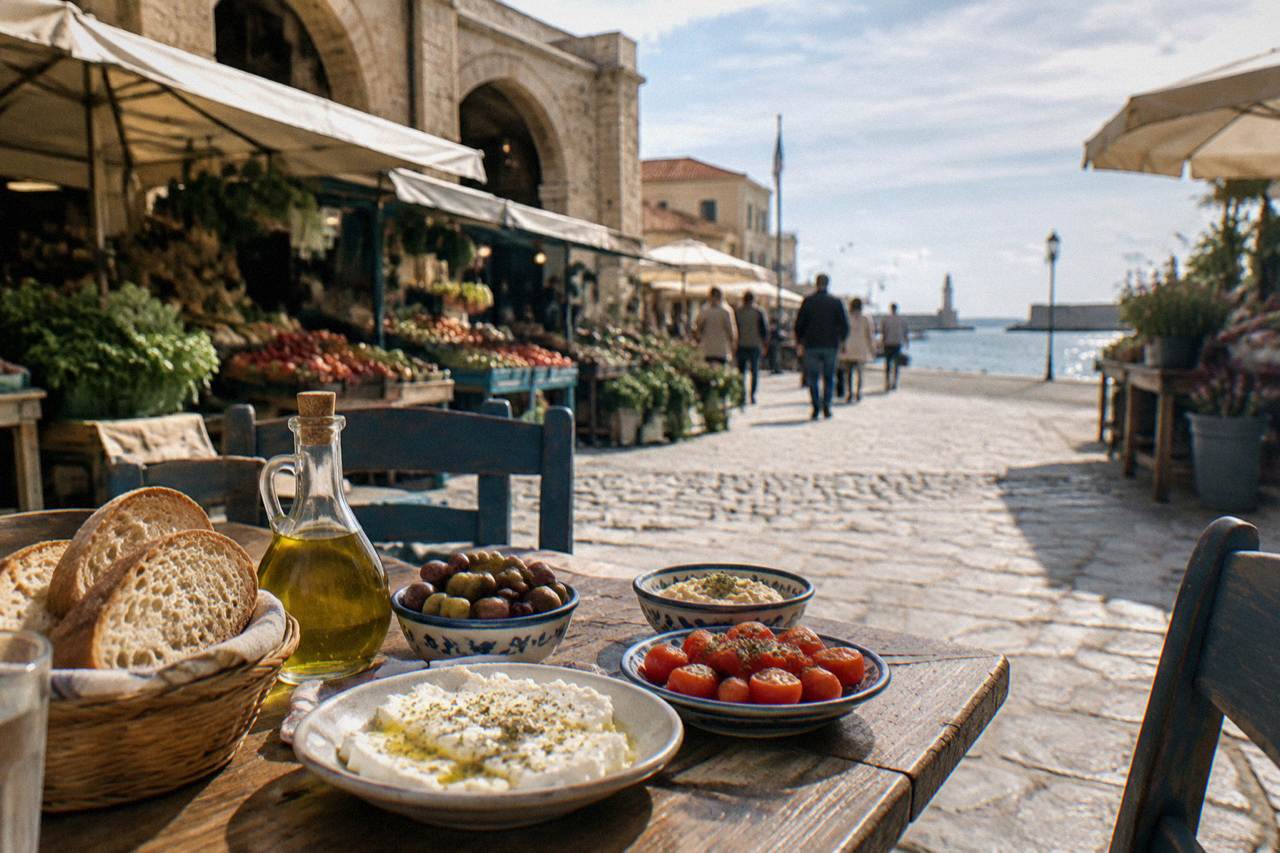
The harbour is not a trap, it is simply priced and pitched for visitors, the way waterfront dining works in any port city in Greece. The residents' own tables sit a ten minute walk inland in almost any direction, and the shortest walk of all is into Splantzia, the quarter east of the harbour where the Mosque of the Janissaries stands. Splantzia's side streets hold tavernas and wine bars that fill late, because the local dinner hour starts around 21:00, later than many visitors expect. Eating at 19:00 marks a table as a visitor's table more than any language does.
Nea Chora, the neighbourhood west of the Old Town with its own working beach, is where the fish restaurants cluster at the point where small boats still come in. The Nea Chora beach guide covers the seafront itself, but the streets behind it are the food reason to go. Halepa, east of the centre and home to the Archaeological Museum of Chania at 15 Skra Street, is a residential quarter of embassy-era houses with a handful of long-standing local kitchens between them.
The municipal market, the Agora, sits at the hinge of all this. A covered market building from the city's later civic era, it is where households still shop for olive oil, cheese, herbs and honey, and its stallholders are a working answer to the question of what the city cooks. The municipal market guide covers it in detail. A useful check any visitor can make: when a menu offers whatever the market had that morning, the fish listed by weight, the bill arrives itemised, and the price per kilo is printed, the table is working for residents as well as guests.
A second useful check is the time of day. Kafeneia, the old style coffee houses, fill from late morning with residents drinking Greek coffee and, in season, tsikoudia. The Splantzia and Topanas guide maps the two quarters flanking the Old Town where this daily rhythm is easiest to watch. No guide can name a single venue as the residents' own, and this site does not try. What it can do is describe the geography, the hours and the dishes that make a local table recognisable.
Which Dishes Do Chania Households Cook And Order?
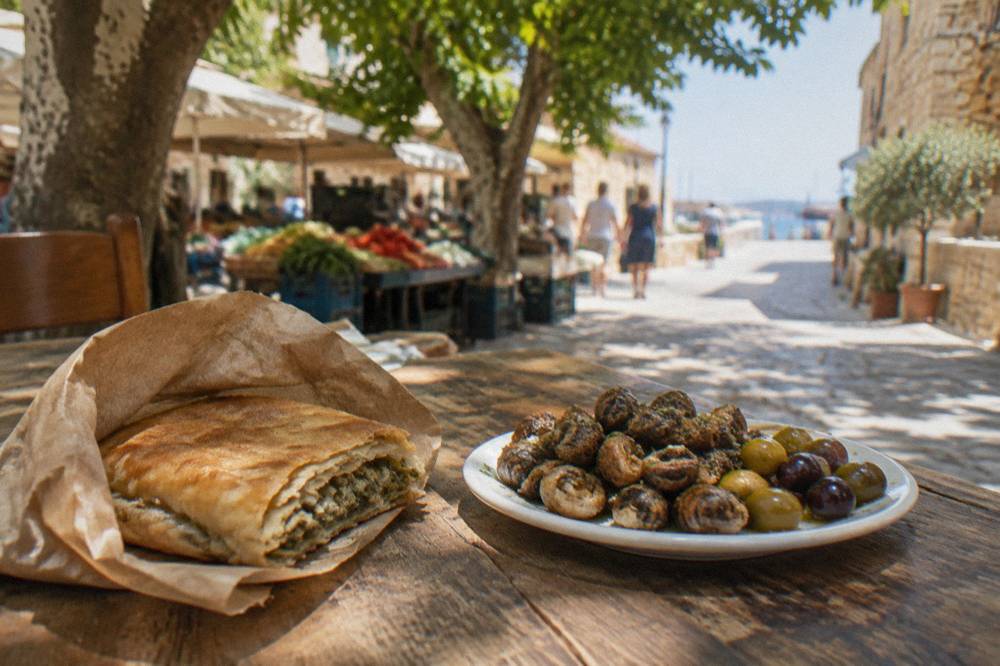
The dishes that define local tables in Chania are the simple Cretan standards: dakos, the barley rusk topped with tomato, mizithra cheese and olive oil; wild greens, horta, gathered through the winter; snails, boubouristi, fried with rosemary; slow lamb, often stamnas; and small fish rather than large ones, with everything dressed in the island's olive oil. None of these is a specialty of one restaurant. They are the city's common vocabulary.
The page on what food Chania is known for covers the full list, but the eating-where-locals-eat version is narrower. It is the dishes that appear on menus in Greek neighborhoods regardless of fashion, and the drinks that go with them: house wine, rarely a bottled list, and tsikoudia, the grape distillate that arrives after a meal. The raki distillation season follows the autumn harvest, and it remains a fresh item to confirm locally rather than a dated event to plan around.
Bougatsa deserves its own line. The cream filled pastry is Chania's breakfast, eaten standing or at a marble table early in the morning, and the bougatsa guide tracks the city's argument over who makes it best. A bougatsa shop busy at 08:00 is by definition a local institution, because almost no visitor is awake to queue for it.
| Course | Local Standard | What To Expect On The Table |
|---|---|---|
| Breakfast | Bougatsa with cheese or cream | Eaten early, standing or seated, with coffee |
| Meze | Dakos, fava, wild greens | Bread, olive oil and rusk based, seasonal |
| Main | Small fried fish, lamb, snails | Fish often priced by the kilo, ask before ordering |
| After | Fruit or yoghurt with honey | Followed by tsikoudia or raki, often on the house |
The seasons shape all of it, and the HNMS Chania Souda station table, for the period 1958 to 2010, explains the pattern. Rain returns in October at 67.7 mm for the month and climbs to 129.5 mm in January, so the wild greens of winter stews are an autumn and winter crop, while July, with 1.0 mm of rain, is the season of tomato, cucumber and anything that does not need heat in the kitchen. A menu that changes with the market rather than repeating a laminated list is another marker of a resident facing kitchen.
Two guided experiences frame this food culture usefully, and both keep the desk's reporting honest: the operator's own listing carries the current prices and inclusions.
The Imbros hike pairs a walk through the gorge with a village stop, and the Apokoronas tour builds a day around seven villages with lunch included, which is the shape of eating in Crete outside the city: long, shared and anchored in one kitchen's own produce.
Where Do Locals Eat Outside The City?
Chania residents eating out of town head two directions: west along the coast toward Kissamos and its fishing ports, and south into the foothills of the White Mountains, where village tavernas serve whatever the village grows, keeps or catches nearby. These are not scenic day trips dressed as meals. They are the city's weekend tables, and the drive is part of the meal.
The White Mountains, Lefka Ori, define the southern horizon of Chania, and their villages hold the slow kitchens of the island: wood ovens, goat and lamb, cheese made in the same settlement, and honey from the same slopes. The hiking in west Crete guide covers the walking routes that end, as Cretan walks do, at a table. On the coast, Kissamos, the port for the Balos and Gramvousa boats, is a working town with fish tavernas serving its own catch, a different proposition from the harbour restaurants of the Old Town.
The question of whether the food culture is worth planning around connects to a bigger one this site answers elsewhere: is Chania worth visiting is really a question about whether daily life there, meals included, rewards a longer stay. The desk's answer is that the food does, because it is embedded in the market, the seasons and the villages rather than staged for a single evening.
For visitors who want the village kitchen experience without organising a car, the guided Imbros walk is the most direct route, and the operator's live listing carries the current details: Check availability.
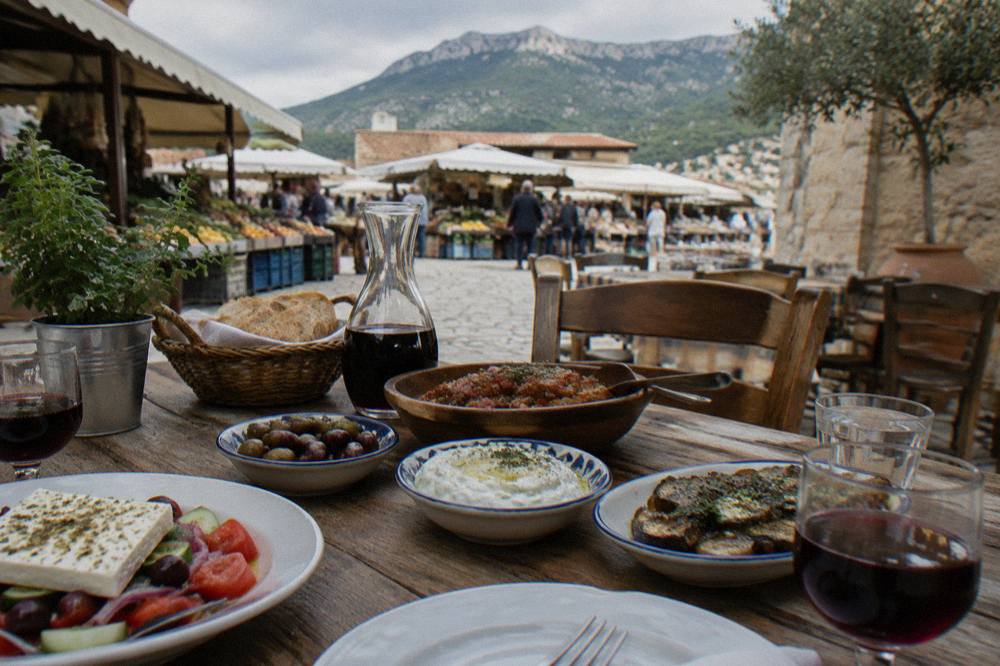
A note on reading any taverna, in the city or the hills. The Cretan meal is built on shared plates that arrive as they are ready, not in courses. Ordering for the table, letting the kitchen decide the order, and accepting the small dishes that arrive unasked is how the meal is meant to run. The bill should itemise every plate, including the ones that came unasked, and a printed price per kilo on fish is the standard the island works to. If either is missing, the visitor can ask, and the answer tells them what kind of table they are sitting at. The full index of guides sits on Chania Crete Travel Guide.
How Do You Find A Local Table On Your Own?
The reliable method is a set of checks, not a name: eat after 21:00, walk ten minutes inland from the Venetian Harbour, look for a menu with the market's vegetables on it rather than a full laminated list of every Cretan dish, and let the fish be weighed and priced before it is cooked. Any table in Chania that passes these checks is feeding residents, whatever the guidebooks say about it.
Start with the clock, because dinner before 21:00 is the clearest marker separating visitor tables from local ones. Then use the market as a compass: the Agora's own stalls show what is in season, and a menu that matches them, greens in winter, tomatoes in July, is a menu written this week. Third, order like the household does, which means meze to share and one or two mains for the table, not a starter, main and dessert each. The cooking classes and wine tours this site catalogues, in the Chania cooking classes and Chania wine tours guides, teach exactly this structure, and a morning in one makes the evening menu legible.
The budget question sits close behind. This site's Chania on a budget guide covers the wider arithmetic, and the food logic is simple: the further a table sits from the harbour water, the closer its prices sit to what a household pays. No specific price belongs on this page, because taverna prices are the operator's or the owner's to state, printed on the menu in front of the diner. What can be said is the structural fact: rent on the harbour front is a cost the menu carries, and the same kitchen's ingredients cost the same a kilometre inland.
A final structural point, and the one locals would make first: the Chania restaurants and Cretan food in Chania guides on this site sort the city's tables by neighbourhood and dish, and the reader who uses them with the clock, market and menu checks above will land on resident tables without needing a single name whispered to them.
Each of these three tours ends around food or the coast that feeds it, and each is described on its own page with the current figures rendered from the operator's listing.
Common Questions About Eating Where Locals Eat In Chania
Where do locals eat in Chania?
In Splantzia, Nea Chora, Halepa and the inland neighbourhoods around the municipal market, at tables that fill after 21:00 and menus that follow the market's seasons rather than a fixed list.
Is the Venetian Harbour a bad place to eat?
Not bad, just priced and pitched for visitors, as waterfront dining is in any Greek port city. The residents' tables sit roughly ten minutes inland, and the same ingredients cost less there.
What time do people eat dinner in Chania?
Local dinner service builds from about 21:00, later than many visitors expect, and a dining room that only fills at 19:00 is serving guests rather than residents.
How can I tell if a taverna is for locals?
Check the menu against the Agora market's stalls, confirm fish is weighed and priced per kilo before cooking, and expect the bill to itemise every plate, including small dishes that arrive unasked.
Do locals eat outside Chania?
Yes, west to the fishing ports around Kissamos and south into the White Mountain villages, where tavernas cook from the village's own produce, cheese and honey.
Can a tour show me the local food culture?
A guided hike with a village visit, such as the Imbros Gorge day trip, or a villages of Apokoronas tour with lunch, reaches kitchens a visitor could not easily arrange alone; the operator's live listing carries current prices and inclusions.
The honest summary is that Chania does not hide its local tables, it simply serves them at a different hour, in a different neighbourhood and in a different order of courses than the harbour front suggests. Arrive late, order to share, read the menu against the market, and the city feeds a visitor the way it feeds itself, which is the only answer the question has ever really had.