What Are The Best Restaurants In Chania, Crete?
An honest answer to which restaurants to pick in Chania, Crete: the dishes to order, the neighbourhoods to eat in, and how to judge a taverna before you sit down.
Chania, the coastal city on the north-west of Crete, eats around its harbour and inland through its old neighbourhoods, and the honest answer to which restaurants are best depends on what a table is actually for: a long Cretan lunch, a quick bougatsa, or fish within sight of the boats that landed it. What it does instead is report what the island's food is known for, where in the city each style of eating is concentrated, and the practical checks a diner can run before sitting down. The site's full restaurant directory lives at the Chania restaurants guide, and the question of which dishes the city is known for has its own page at what food is Chania known for.
What Are The Best Restaurants In Chania, Crete?
There is no verified ranking of Chania restaurants, and this site does not invent one. The best approach is to pick the neighbourhood first, the dish second and the individual taverna last: the Old Town and its Splantzia and Topanas quarters, the Nea Chora waterfront by the fishing shelters, and the lanes off the market streets each specialise in different kinds of eating, and the kitchens that post their prices and write the day's dishes on a board are the ones a visitor can judge for themselves.
The reason a guide can responsibly describe areas but not rank kitchens is simple. A restaurant list built by anyone who has not eaten in the city is a list of names borrowed from somewhere else, and rankings decay anyway as kitchens change hands between seasons. What holds steady is the geography. Splantzia, the old quarter east of the harbour, keeps a concentration of small tavernas and cafes around its square. Topanas, on the west side near the Firka Fortress, mixes quieter dining rooms with rooms facing the harbour walls. Nea Chora, the neighbourhood west of the Old Town with its own beach, is the street where the city's fish tavernas sit closest to the small fishing shelters.
A useful secondary check is how a kitchen handles the day's catch. Fish sold by the kilogram is priced per kilo on the menu or the board, and the table can ask to see the fish and the scale before it is cooked. That request is routine in Greek fish tavernas, not an imposition. If a price per kilo is nowhere in writing, that is the moment to order something else.
Which Cretan Dishes Should A Visitor Order First?
Order the island's own dishes rather than a generic Greek menu: dakos, the barley rusk topped with tomato, mizithra cheese and olive oil; small fried or grilled cheeses; snails cooked in rosemary and vinegar; lamb, goat or chicken cooked in a wood oven; mountain greens gathered locally; and honey-and-cheese pastries to finish. A kitchen that lists these by their Cretan names is cooking the island's food rather than a condensed tourist version of it.
Want to try cooking these dishes yourself? Book a Cretan cooking class here.
Cretan cooking is built on olive oil, wild greens, cheese, bread and whatever the day brought in, and the island's diet is one of the things the region is genuinely known for, a point covered in more depth in what is Chania Greece famous for. The practical menu test follows from that. A taverna that lists a dozen Cretan preparations with the seasons visible, greens in winter and spring, octopus and fish through summer, is working from a real repertoire.
The table below is a starting order, not a ranking, and every dish on it is a standard of the island's kitchen rather than a claim about any single restaurant.
| Course | Dish To Look For | What It Is |
|---|---|---|
| To start | Dakos | Barley rusk softened with olive oil, topped with tomato and mizithra cheese |
| To start | Fried mizithra or graviera | Local cheeses, fried or grilled, often with honey |
| Main | Snails (chochlioi) | Cooked in rosemary, vinegar or tomato, a Cretan standard |
| Main | Wood-oven lamb or goat | Slow-cooked meat, often listed by weight |
| Main | Fish of the day | Priced per kilo; ask to see the fish first |
| Vegetable side | Horta | Boiled wild or cultivated greens with olive oil and lemon |
| Sweet | Sfakia pie or honey pastries | Thin cheese pie served with honey |
Bougatsa deserves its own word, because in Chania it is breakfast rather than dessert, and the city has its own tradition of it. The morning version is a warm, cheese-filled pastry eaten standing or at a counter, and the dedicated bougatsa shops sell out by mid-morning. That is one of the most reliable food experiences in the city precisely because it does not depend on finding a famous dinner table.
How Do You Spot A Good Taverna In Chania?
Run three checks before you sit down: the menu is short and partly handwritten or on a board, prices including any cover charge are printed, and the room holds Greek-speaking tables alongside visitors. A kitchen serving a mixed room has to keep regulars, and a printed price list means the bill at the end can be checked line by line against what was ordered. None of these checks requires local knowledge, only two minutes of reading.
The cover charge point matters on its own. In Greece a small per-person charge for bread and setting the table is normal practice, and an honest menu shows it. The bill should itemise each dish and the cover, and any discrepancy is raised before paying. This is a check the reader can make themselves, and it is a better protection than any list of names.
Location is the weakest signal of all. Tables directly facing the harbour postcard view carry the highest rents in the city, and rent shows up in the plate. A table two streets inland often serves the same food for less, and the question of whether the Old Town's lanes work on foot is answered in is Chania Old Town walkable. The question of overall cost has its own treatment in is Chania Greece expensive.
Food is also one of the areas where a fair question is being asked about the city's character. The tourism-pressure debate, and what does and does not justify the phrase tourist trap, is covered in is Chania a tourist trap, and the dining scene is part of that picture: the kitchens under real pressure sit in the most photographed blocks, and the ones with room to cook sit a walk away.
A tasting table is one way to learn the island's olive oil and wine vocabulary before ordering it in a taverna. Check availability on the operator's live listing to see current dates and pickup points.
Where Does Chania Eat Fish?
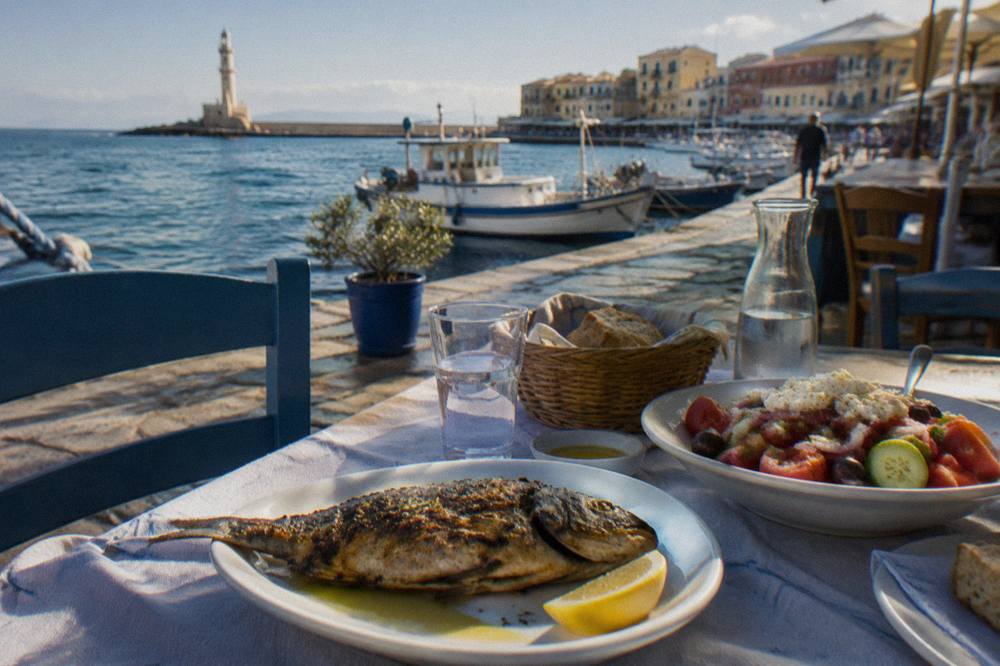
Nea Chora is the city's fish-eating street, sitting between the Old Town and its own beach, with tavernas running along the water by the small fishing shelters. Fish in Crete is priced by the kilo, so the two questions that decide the meal are which fish are listed today and at what price per kilogram, and a diner can ask to see both the fish and the scale before anything is cooked.
The reason to name a street rather than a restaurant is that the street is the verifiable fact. Nea Chora's waterfront tavernas are a short walk west of the Venetian Harbour, and the walk itself is the boundary: past the harbour's excursion boats and the lighthouse mole, the crowds thin and the menus turn toward the catch. The same logic applies inside the Old Town, where Splantzia's square and its side lanes hold a density of small kitchens that locals use, and where the Splantzia and Topanas guide covers the quarters building by building.
How Does The Season Change Where You Eat?
The eating calendar follows the HNMS Chania Souda station table, period 1958 to 2010, which shows why dining concentrates outdoors from May through September: those months carry 13.5 mm of rain in May falling to 1.0 mm in July, while October jumps back to 67.7 mm and January, the wettest month in the table, records 129.5 mm. Terrace tables dominate the dry months, and from October onward the meal moves indoors and the menus shift toward the cooked dishes of the cooler half of the year.
That is not a stylistic preference but a weather fact. Rain days in the same station table run from 0.4 in July to 16.3 in January, and a city that eats outside for half the year eats inside for the other half. The seasonal menu follows the same clock: greens and snails are cold-season food, tomatoes and the full range of island vegetables are summer food, and fish availability moves with the boats rather than a fixed list.
| Month | Mean Temperature (C) | Rainfall (mm) | Rain Days | What It Means For Eating |
|---|---|---|---|---|
| January | 11.0 | 129.5 | 16.3 | Indoors, cooked dishes, greens |
| April | 15.9 | 31.5 | 7.7 | Terraces reopening, spring greens |
| July | 26.7 | 1.0 | 0.4 | Full outdoor season, evening tables |
| October | 19.4 | 67.7 | 9.3 | Terraces closing, menu turning hearty |
| December | 12.7 | 101.9 | 16.1 | Indoor dining rooms, wood ovens |
Source for the figures: HNMS Chania Souda station, monthly means for 1958 to 2010, the station period the service publishes.
Can A Food Trip Include The Gorges And Beaches Too?
Yes, and it works better when the food days and the mountain days alternate, because the island's two great attractions pull in different directions: the tavernas sit in town and by the coast, while the gorges, Balos, Elafonisi and the south coast need full days out. A visitor who plans one hiking or beach day between food days eats better in the evenings and walks off the long lunches, and the day trips all leave from and return to Chania.
The pairing that suits this best is a guided gorge walk with a coastal finish, and the site's featured pick is the Imbros Gorge hike with the Sfakia coastal experience, which ends on the south coast where the Sfakia cheese-and-honey pie of the tasting table comes from. Check availability for current departure details.
One planning note that matters for any gorge day: the Samaria Gorge normally runs 1 May to 31 October, but the path can be closed or delayed when storms damage it, so the park's status has to be checked with the managing agency before the day is planned. The question of why the gorge closes has its own treatment in the site's gorge pages, and Imbros has run as the shorter alternative.
Common Questions About Eating Out In Chania
What are the best restaurants in Chania, Crete?
There is no honest ranked list, because none can be verified from a desk. Pick the neighbourhood first, Splantzia and Topanas in the Old Town, Nea Chora for fish, the market lanes for everyday food, then pick the dish, then the taverna whose prices are printed and whose board lists the day's cooking. The site's full directory sits at the Chania restaurants guide.
Is fish expensive in Chania?
Fish is sold by the kilo, and the price per kilogram appears on the menu or the board. A diner can ask to see the fish and the scale before it is cooked, and the bill should show the weight. No verified price range is printed here, so the board in front of the table is the source that counts.
What should a first-time visitor order?
Start with dakos and a local cheese, order snails or a wood-oven meat if the kitchen lists them, take greens as the vegetable side, and finish with a Sfakia pie with honey. Those dishes are the island's standards, and a kitchen that names them properly is cooking Cretan food.
Is the cover charge normal?
A small per-person charge for bread and cover is standard practice in Greece, and an honest menu shows it. The bill itemises dishes and the cover, and any line that does not match the order is raised before paying.
Are harbour-side tables the best choice?
They carry the view and the rents that go with it. Two streets inland, the same style of food is often served for less, and the Old Town is compact enough on foot that the walk costs minutes. Choose the harbour table for the sunset and the inland table for the plate.
Do restaurant menus change with the seasons?
They do. The HNMS Chania Souda station table, period 1958 to 2010, shows the dry outdoor half of the year from May to September and the wet indoor half from October onward, and the cooking follows the same clock: greens, snails and oven dishes in the cool months, tomatoes, vegetables and the full terrace season in summer.
The short version: this Chania Crete Travel Guide treats restaurants the way it treats every other subject, by reporting what can be checked and refusing to invent what cannot. The neighbourhoods, the dishes and the printed prices are the reader's own verification tools, and they work at any table in the city.