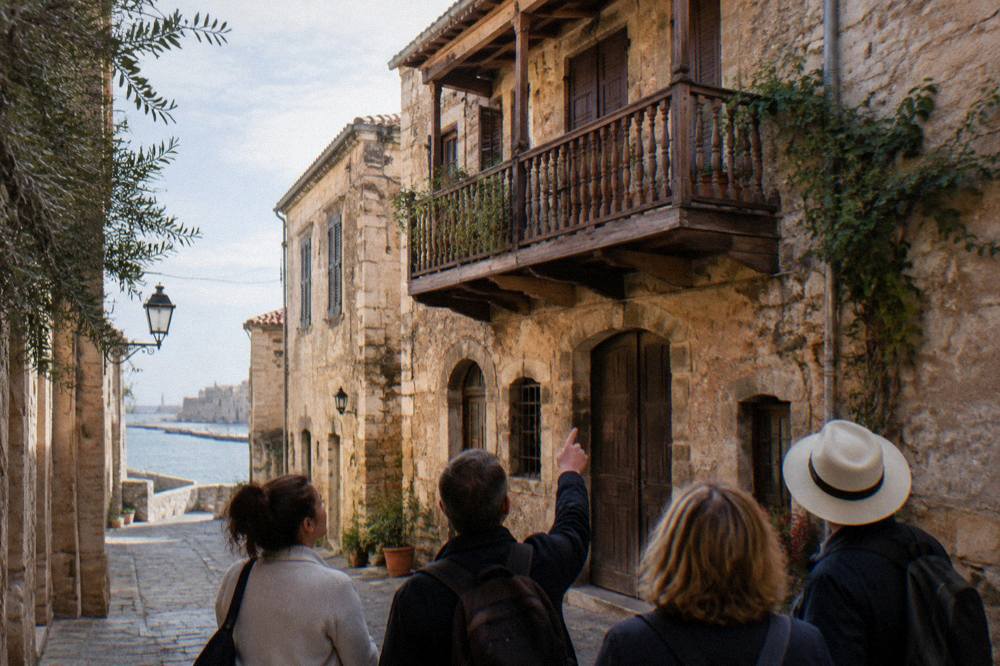
Aptera Chania
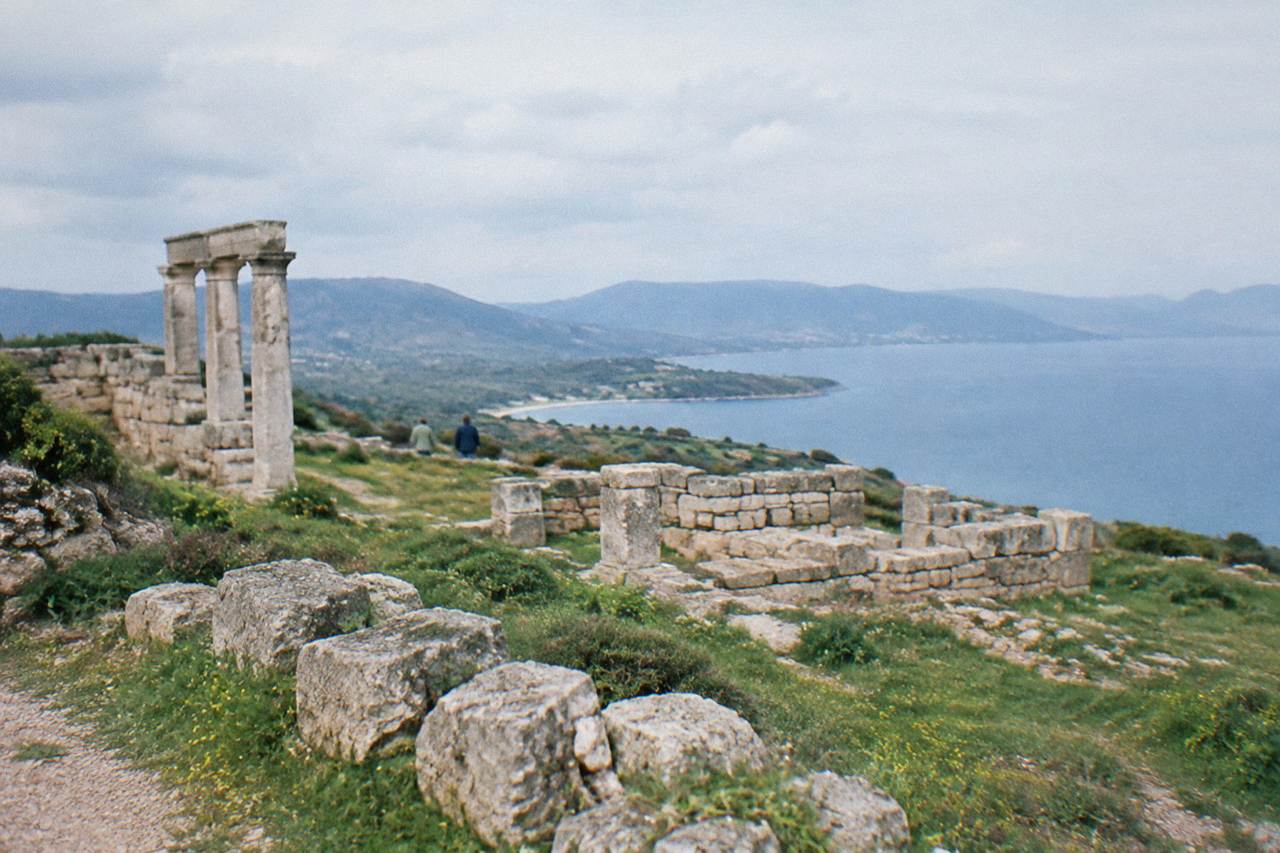
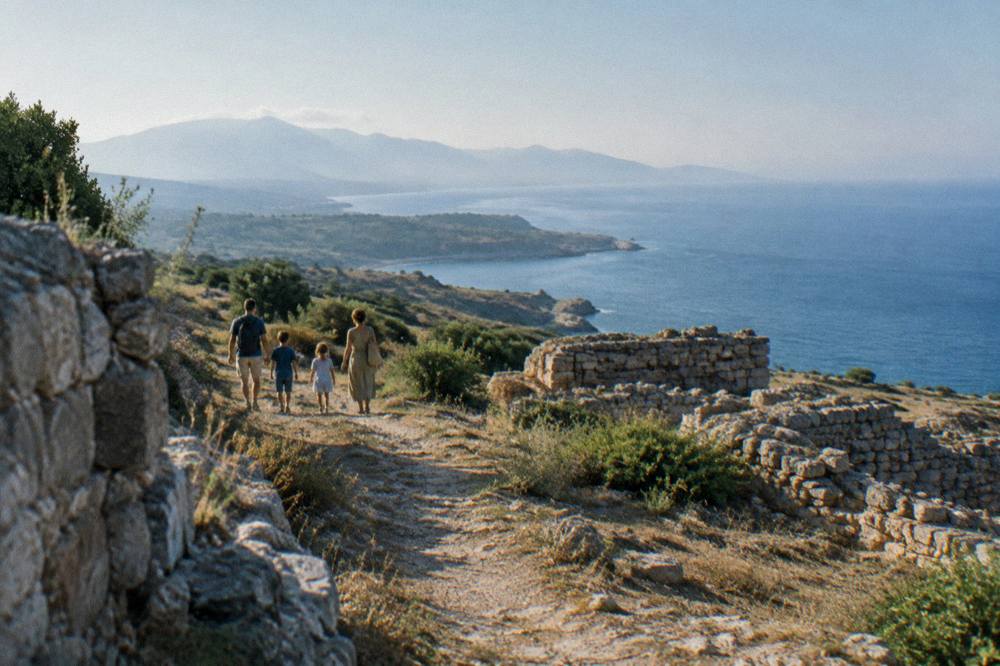
Aptera sits on a hill above Souda Bay, a short way east of Chania on the north-west coast of Crete, and it pairs a large archaeological site with one of the widest views on the island, taking in the bay, the Akrotiri peninsula and the White Mountains.
Short answer
Aptera is an archaeological site on a hill above Souda Bay east of Chania, reachable by car or taxi from the city, best visited in the dry months of May to September, and usually combined with Souda, the Akrotiri peninsula or a wider day trip around west Crete.
Aptera stands on a hill above Souda Bay, east of Chania on the north-west coast of Crete, Greece, and it is one of the few places where an ancient site, a working port and a wide sea view sit inside a single morning. The city of Chania curves around its Venetian Harbour to the west, the Akrotiri peninsula closes the bay to the north-east, and the White Mountains rise to the south. This guide lays out what the site holds, how a visit is planned, what the climate tables say about each month, and how Aptera fits into a wider itinerary around the Chania Crete Travel Guide area.
What Is Aptera In Chania And Why Does It Draw Visitors?
Aptera is an archaeological site on the hillside above Souda Bay, east of Chania on the north-west coast of Crete, and it draws visitors for a combination few sites offer: extensive ruins, an elevated position over one of the deepest natural bays in the Aegean, and a quiet that the Old Town of Chania rarely has. The site is reached from the Chania area in well under a morning, and it looks straight down on Souda port, where the overnight ferry to Piraeus ties up, and across to the Akrotiri peninsula, where Chania International Airport sits near the water.
The desk reports it plainly: the facts file for this site carries no excavation dates, no founding century and no attribution for any structure at Aptera, so none appears here. What can be said is what a visitor sees and where it sits. The hill stands above Souda Bay, the port of Souda lies about 7 km east of the Old Town of Chania, and the airport, officially Chania International Airport "Ioannis Daskalogiannis" and operated by Fraport Greece, is about 14 km from the city centre on the Akrotiri peninsula. From the hill, the geometry of the whole area reads at a glance: bay, peninsula, port, mountains.
That geometry is the reason a visit pairs so naturally with other stops. The Venetian Harbour and its lighthouse sit in Chania itself, the monasteries of the Akrotiri peninsula sit across the bay, and the beaches of the north coast run west from the city. A morning at Aptera leaves an afternoon for any of them, and the one day in Chania itinerary shows how the pieces slot together.
How Do You Get To Aptera From Chania?
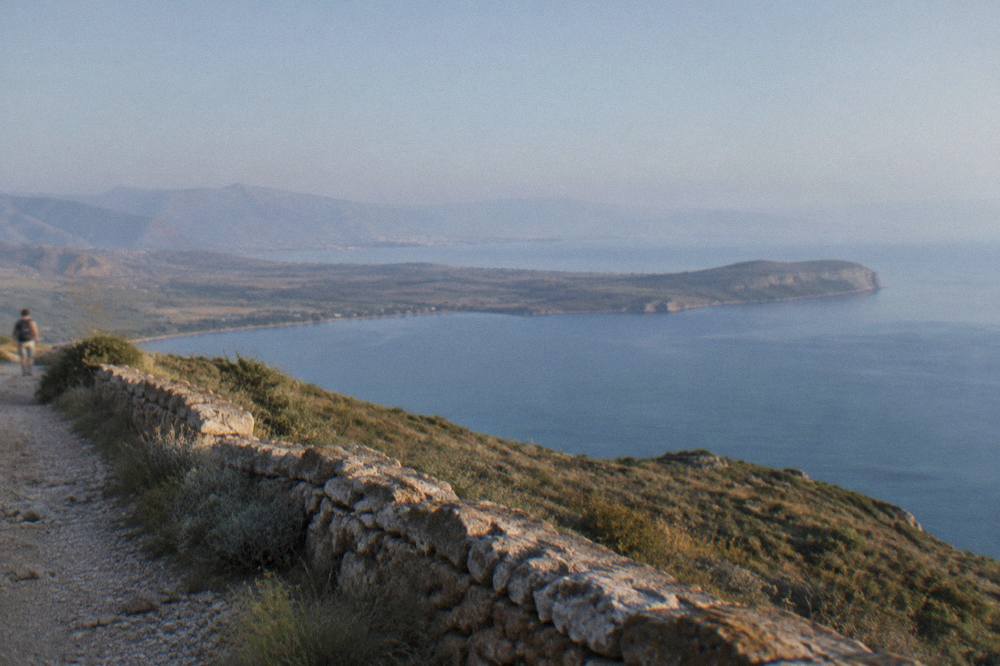
Aptera is reached by road from Chania, most simply by hire car or taxi toward the Souda and Megala Chorafia side of the bay, with the site signed from the main roads east of the city; there is no rail line on Crete, and the KTEL bus network lists no Aptera route on its Chania departure board, so a self-driven or guided visit is the dependable plan. The airport is about 14 km from the city centre, and Souda port is about 7 km east of the Old Town.
For bus travel in general, the Chania long-distance bus station sits on Kydonias street, and the KTEL network runs from there to Heraklion, Rethymno, Kissamos, Paleochora, Omalos and, in summer, Elafonisi. None of those routes serves the Aptera hillside directly, and no bus fare appears in the verified facts, so the desk prints none. Visitors relying on public transport should check current connections locally before committing to a time.
| Journey In The Chania Area | What The Verified Facts State |
|---|---|
| Chania city centre to the airport (CHQ) | About 14 km, on the Akrotiri peninsula near Souda |
| Old Town to Souda port | About 7 km east of the Old Town |
| Souda to Piraeus ferry | Blue Star Ferries, overnight, departs about 21:30, crossing about 9 h 15 min |
| Chania long-distance buses | Station on Kydonias street, routes to Heraklion, Rethymno, Kissamos, Paleochora, Omalos, Elafonisi in summer |
A hire car gives the cleanest version of the day, and the pairing logic is simple: drive the bay road, spend the morning at the site, then continue either across to Akrotiri or west back into Chania for the afternoon. Visitors who prefer not to drive can fold the visit into a guided excursion that covers the wider area, and a boat-based day trip can occupy a separate day entirely. One such option is the Balos and Gramvousa excursion with pickup and boat ticket included: Check availability. Its full listing sits at Balos day trip with pickup from Chania.
To drive the bay road at your own pace, book a rental car here.
Whether driving or riding, the practical advice is the same: carry water, start early in the warmer months, and treat the hillside as exposed ground. The shade at an archaeological site is whatever the ruins themselves give, and the climate table further down shows how quickly the summer months dry out.
What Can You See At The Aptera Site Today?
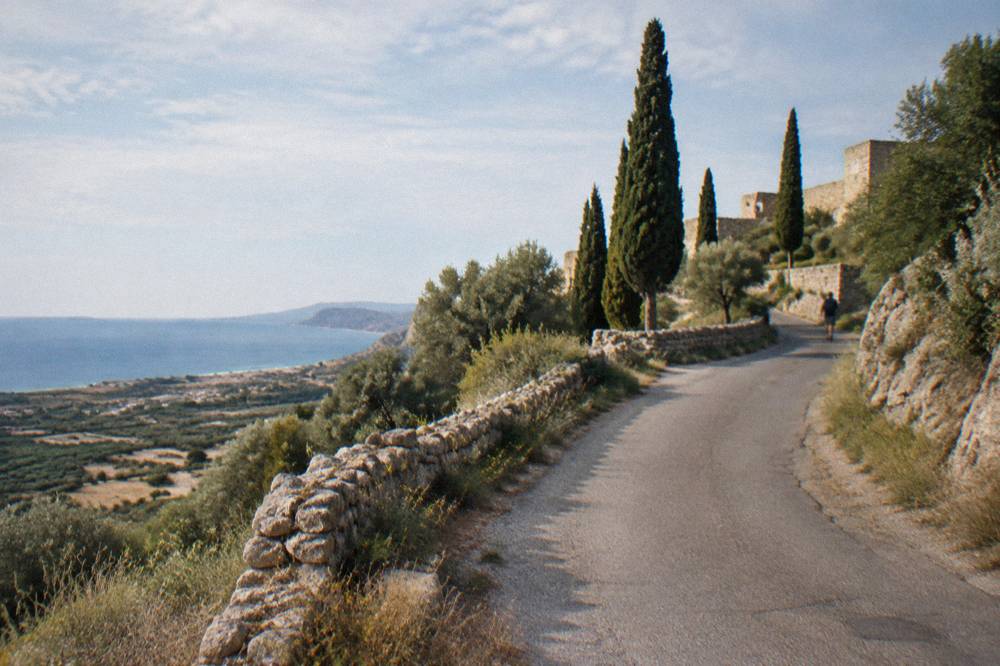
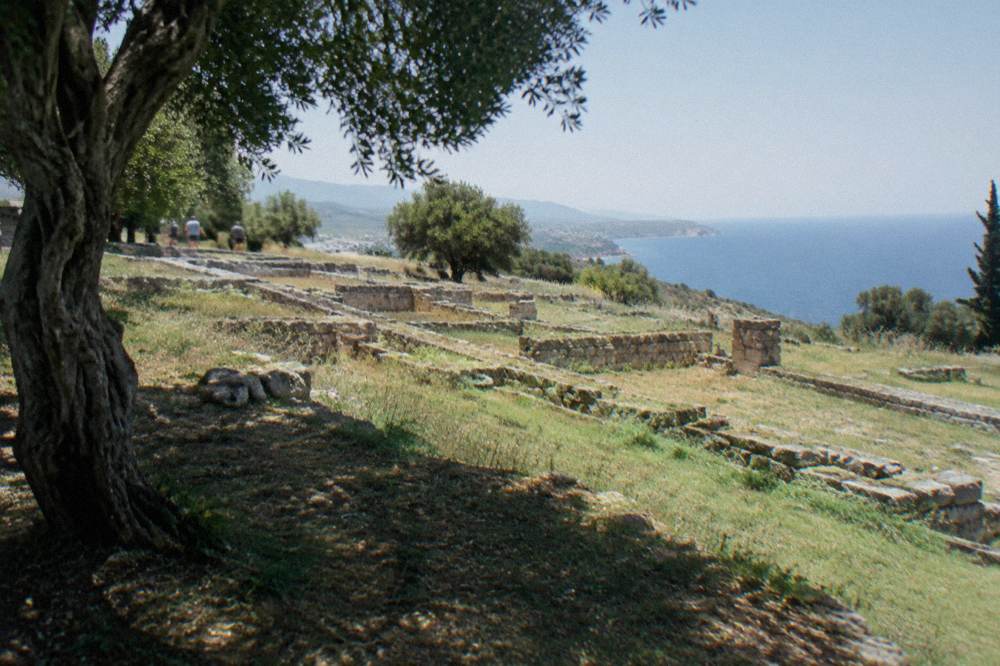
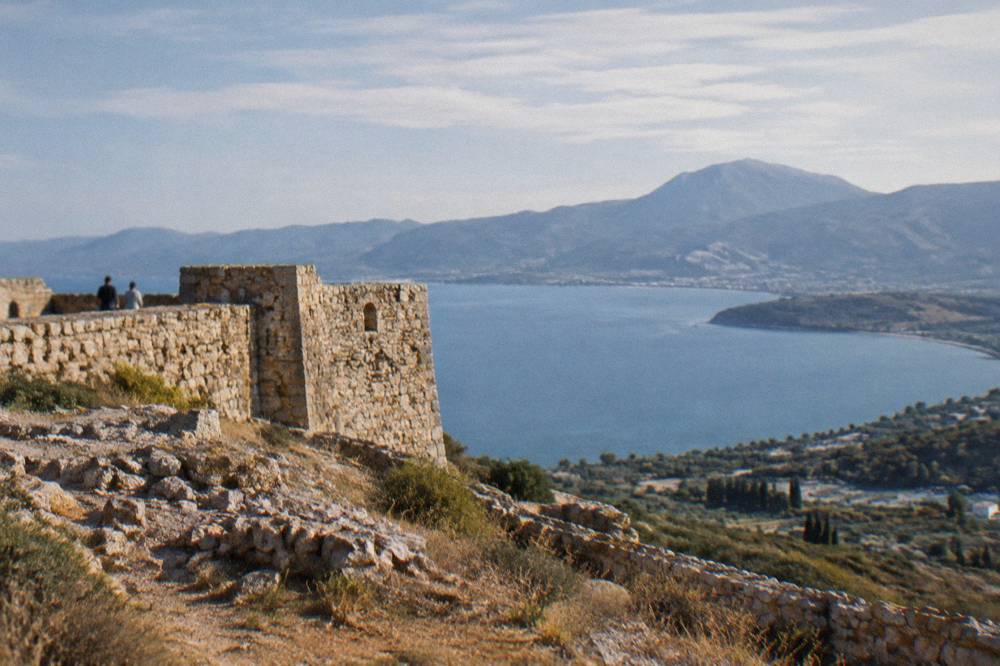
Visitors to Aptera walk a hillside archaeological site above Souda Bay, taking in standing ruins, stretches of ancient wall line, a later fortress structure on the summit, and a panorama that sweeps from the Akrotiri peninsula across the mouth of the bay to the White Mountains behind Chania, all of it quieter than the Old Town at any hour of the day. The desk attributes nothing the facts file does not carry: no founding date, no excavation history and no architectural labels appear here, because none is verified for this site. What is verifiable is the setting, and the setting does half the work.
The view is the anchor. Souda Bay below is the deep natural harbour that made this coast strategically valuable for every power that held it, and the wider area explains why: the Venetian Harbour in Chania was first built between 1320 and 1356, with dredging and a wall recorded in 1515, the first Venetian city walls went up from 1336 to about 1356, and the second walls followed from 1536 on Michele Sanmicheli's design. Ottoman rule began with the conquest of Chania in 1645, and Crete's union with Greece came in 1913. Aptera's hill watched all of it from across the water.
| Verified Date In The Chania Area | Event |
|---|---|
| 1320 to 1356 | Venetian Harbour first built in Chania |
| 1336 to about 1356 | First Venetian city walls |
| 1515 | Harbour dredging and a wall recorded |
| 1536 onward | Second walls built to Michele Sanmicheli's design |
| 1620 | Firka Fortress built by the Venetians |
| 1645 | Ottoman conquest of Chania |
| 1913 | Union of Crete with Greece |
On the ground, plan for uneven footing, low walls and open hillside rather than a curated museum experience. For interiors and curated displays, the Archaeological Museum of Chania at 15 Skra Street in Halepa holds the area's collection, with a full ticket at EUR 15 and a concession at EUR 8, though its opening arrangements should be confirmed on the museum's own visit page before travelling, since the sources available to the desk state conflicting hours. The Firka Fortress at the harbour mouth in Chania has free grounds and dates from 1620, and the Maritime Museum of Crete sits nearby at the fort.
A half day covers the site at a unhurried pace, which leaves room in the afternoon. Many visitors pair the morning here with the Old Town of Chania or with a coastline walk, and the desk's own three days in Chania itinerary sequences the area well for anyone staying longer.
When Is The Best Time Of Year To Visit Aptera?
The dry stretch from May to September is the comfortable window for an exposed hillside site like Aptera, with the HNMS Chania Souda station table showing 13.5 mm of rain in May, 3.4 mm in June, 1.0 mm in July and 1.4 mm in August, against mean temperatures that climb from 20.2 C in May to 26.7 C in July; October and April are workable shoulder months, and November to March brings the rain. The station sits at 148 m, inland of Souda Bay, and the period of the records is 1958 to 2010, which is the table the service publishes.
The numbers matter here more than at a beach, because there is no water and little shade on an archaeological hillside. July and August also carry the highest mean maxima of the year, 30.7 C and 30.4 C respectively, and the prevailing wind in those two months is north-west, the pattern known as the meltemi. An early start beats both the heat and the midday glare on pale stone.
| Month | Mean C | Mean Max C | Mean Min C |
|---|---|---|---|
| Jan | 11.0 | 14.4 | 7.9 |
| Feb | 11.0 | 14.7 | 7.8 |
| Mar | 12.7 | 16.6 | 9.0 |
| Apr | 15.9 | 20.0 | 11.4 |
| May | 20.2 | 24.5 | 15.0 |
| Jun | 24.7 | 28.9 | 19.0 |
| Jul | 26.7 | 30.7 | 21.2 |
| Aug | 26.3 | 30.4 | 21.2 |
| Sep | 23.2 | 27.4 | 18.7 |
| Oct | 19.4 | 23.5 | 15.7 |
| Nov | 15.8 | 19.6 | 12.4 |
| Dec | 12.7 | 16.2 | 9.7 |
| Month | Rain Mm | Rain Days |
|---|---|---|
| Jan | 129.5 | 16.3 |
| Feb | 104.0 | 14.5 |
| Mar | 76.0 | 11.5 |
| Apr | 31.5 | 7.7 |
| May | 13.5 | 4.2 |
| Jun | 3.4 | 1.2 |
| Jul | 1.0 | 0.4 |
| Aug | 1.4 | 0.6 |
| Sep | 15.4 | 3.2 |
| Oct | 67.7 | 9.3 |
| Nov | 77.0 | 11.2 |
| Dec | 101.9 | 16.1 |
Read the table before packing. January is the wettest month in the record at 129.5 mm and July the driest at 1.0 mm, and rain starts to matter again from October, which carries 67.7 mm across 9.3 rain days. Humidity in the same record runs from 50 percent in July to 73 percent in January, figures worth knowing for anyone photographing the bay in the cooler months, when haze softens the far side.
Winter visits are far from pointless. The mean of 11.0 C in January and December's 12.7 C are walking temperatures, and the light on the bay in the low season is famously clear. The trade-off is the rain-day count: 16.3 in January, 14.5 in February, 16.1 in December. The desk's page on Chania in winter covers the season in detail, and the best time to visit Chania page weighs the whole year against travel plans.
How Does Aptera Fit Into A Wider Day Around Souda Bay?
Aptera works best as the anchor of a half-day loop east of Chania that takes in the site, the Souda bayfront and the Akrotiri peninsula, with the verified geography making the loop easy to plan: the site above the bay, Souda port about 7 km east of the Old Town, and the airport and the peninsula's monasteries and beaches across the water. The desk's cruise port day in Chania page handles the compressed version for visitors with only hours, but a full day lets the loop breathe.
Across the bay on Akrotiri sit two monasteries the desk has verified pages for, Agia Triada and Gouverneto, plus the beaches of Marathi, Stavros, Kalathas and the steep cove of Seitan Limania. Stavros, on the peninsula's north side, and Marathi, facing the bay, both suit a relaxed afternoon after a morning on foot among ruins. Water shoes and a wind check are wise at the more exposed coves, since the north-west summer wind blows straight into them.
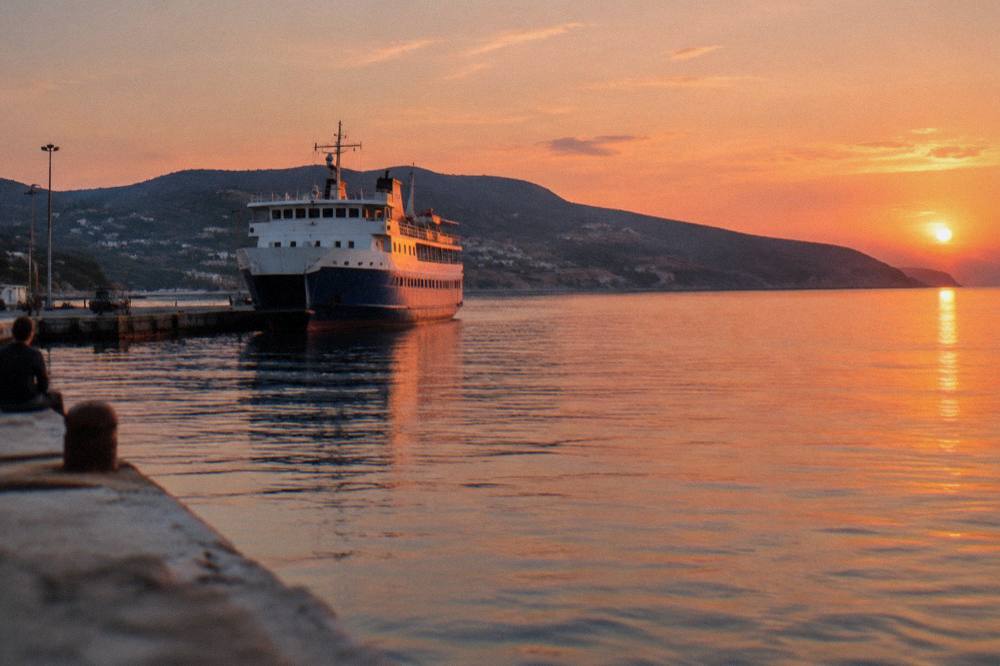
The desk prints no ferry fare, no bus fare and no taxi fare for any of these legs, because none is verified, and visitors should confirm current transport arrangements locally or at booking. What is verified and worth knowing: the Souda to Piraeus ferry is the overnight Blue Star Ferries service, departing about 21:30 with a crossing of about 9 h 15 min as the operator's published timetable has it, so a final evening watching the lights of the bay from the Aptera side ends the day with the ship plainly in view.
For the next day, the big-hitters of west Crete all leave from the Chania area. Balos and Gramvousa cruises run from Kissamos port, with daily departures through to 31 October 2026 on the operator's reported schedule and only a EUR 1 Kissamos municipal fee collected on the boat ticket for over-13s beyond the fare itself. Elafonisi, a Natura 2000 protected area with reported free entry, sits at the south-west corner, and taking sand, shells or plants from it is prohibited. Samaria Gorge normally runs 1 May to 31 October, but storms in late September and early October 2026 destroyed sections of the path, staff describe a 2026 reopening as extremely difficult, and works are aimed at readiness in May 2027, so the NECCA status must be checked before any plan is made; the individual ticket is EUR 10 through the NECCA e-ticket portal, free for EU residents under 18 and over 65.
| Day Trip From The Chania Area | What The Verified Facts State |
|---|---|
| Balos and Gramvousa | Cruises from Kissamos port, daily departures reported to 31 October 2026, EUR 1 municipal fee for over-13s on the boat ticket |
| Elafonisi | Natura 2000 area, entry reported free, taking sand, shells or plants prohibited |
| Samaria Gorge | Normally 1 May to 31 October, storm-damaged in late 2026, check NECCA status, EUR 10 ticket via the e-ticket portal |
| Agia Roumeli boats | Depart about 17:30 to Sougia or Chora Sfakion, then KTEL bus back, reported |
| Gavdos | Boats from Paleochora and Sougia in season, no timetable verified |
What Should You Know Before You Go To Aptera?
Take water, sun protection and closed shoes, start early between May and September, allow half a day, confirm opening arrangements locally before setting out since the desk holds no verified hours or admission details for this site, and pair the visit with the Old Town, the Akrotiri peninsula or a boat day rather than treating it as a full-day destination on its own. Those five points cover the practical core of a visit, and each one comes from the conditions the area's own records describe rather than from guesswork.
On fees and formalities, the desk stays within the verified facts. Greece is in the euro area since 1 January 2001 and a Schengen member with internal checks abolished on 26 March 2000. The entry record system known as EES was fully deployed across Schengen on 10 April 2026, while ETIAS is not in operation and collects no applications as of October 2026, so travellers plan around entry procedures that exist today. Accommodation in the area collects the climate crisis resilience fee per room or apartment per night at seasonal rates, and visitors should confirm the amount at booking. No emergency number, plug type or tipping convention is verified for this destination, so none is stated.
For eating, the Souda bayfront and the villages on the road back into Chania carry the tavernas, and the desk's Chania restaurants and Cretan food in Chania pages cover the city end of the day. Anyone who wants food and archaeology in a single outing can also look at a tasting tour, since the food and wine tours from Chania run year-round and pair well with a site visit on consecutive days.
A final note on reading the landscape. The Neoria shipyards on Chania's harbour, seven survivors of an original seventeen from the 15th to 16th century, and the lighthouse on its Venetian base, built about 1595 to 1601 and restored during the Egyptian era of 1830 to 1840, operating from 1839, all belong to the same story of a coast built around its harbours. Aptera's hill was the lookout over the deepest of them. The lighthouse of Chania and Venetian Harbour pages carry the harbour half of that story.
Is Aptera Suitable For Families And Short Trips?
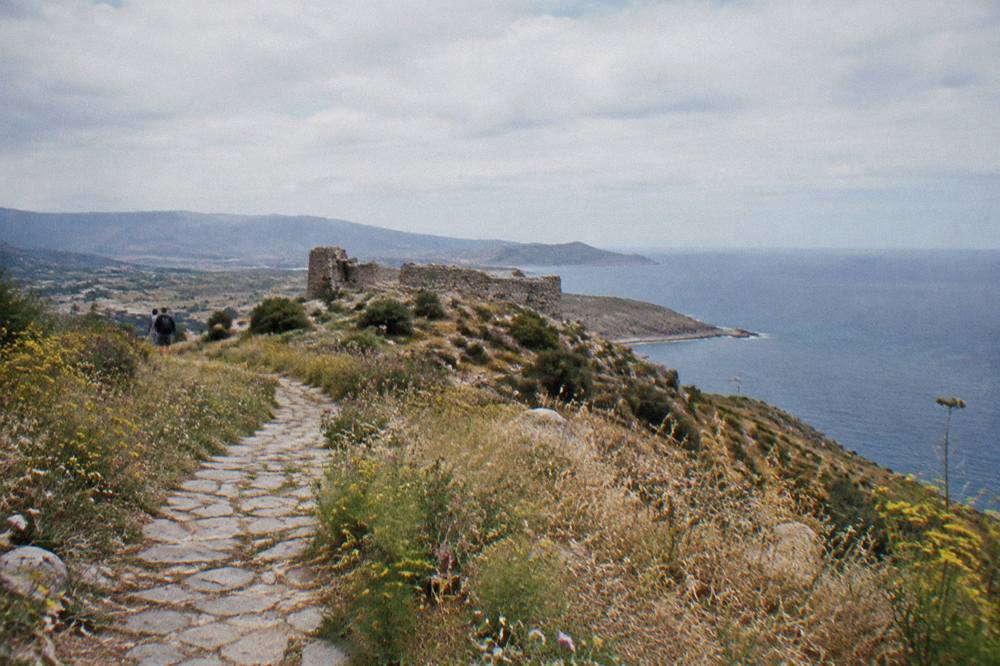
Aptera suits families with children who can manage uneven ground and a hillside walk, and it suits short trips because it needs only a half day, sits a short drive from both the Old Town and the port area, and combines freely with a beach afternoon on the Akrotiri peninsula or a swim stop closer to the city; the limits are shade, footing and the absence of verified on-site facilities, so packing decides the day. The desk's Chania with kids page extends the planning for families staying longer.
For visitors on a tight clock, the arithmetic is kind. A cruise passenger with a full day can do the site in the morning and the harbour by early afternoon, following the cruise port day plan. A visitor with two or three days can slot Aptera beside the Old Town, a beach day and one big excursion, in the order the two days in Chania and three-day itineraries suggest. The desk's how many days in Chania page answers the sizing question directly.
The one thing to resist is cramming the big day trips and the site into the same day. Balos alone is a full-day commitment, and Samaria more so, with entry for the full walk between 07:00 and 13:00 and everyone out of the park by 18:00 under the park's reported rules, which also prohibit swimming and camping inside the park. Aptera rewards the opposite tempo: a slow walk, a long look at the bay, and an unhurried drive back along the water. Give it the half day it asks for and it earns its place in any Chania plan.
Common Questions About Aptera Chania
What is Aptera in Chania?
Aptera is an archaeological site on a hill above Souda Bay, east of Chania on the north-west coast of Crete, Greece, with extensive ruins and a wide view over the bay, the Akrotiri peninsula and the White Mountains. The desk holds no verified founding dates or attributions for the site, so visitors should read the on-site information boards for the history.
How do you get to Aptera from Chania?
By road, most simply with a hire car or taxi toward the Souda side of the bay. The KTEL bus network lists no Aptera route among its Chania departures, and there is no railway on Crete. The airport is about 14 km from the city centre and Souda port about 7 km east of the Old Town, which frames the drive.
Is there an entry fee for Aptera?
The desk holds no verified admission price or opening hours for the site, so none is printed. Visitors should check current arrangements locally or with their excursion operator before setting out, and carry cash for small sites in the area as a general precaution.
When is the best time to visit Aptera?
May to September, when the HNMS Chania Souda station table for 1958 to 2010 shows 13.5 mm of rain in May, 3.4 mm in June, 1.0 mm in July and 1.4 mm in August. Start early in July and August, which carry mean maxima of 30.7 C and 30.4 C, since the hillside has little shade.
Can you combine Aptera with a beach or boat trip?
Combine it with a beach on the Akrotiri peninsula, such as Marathi or Stavros, on the same day, but keep the big boat excursions such as Balos and Gramvousa for a separate day, since those run from Kissamos port and take the whole day. The Elafonisi and Samaria trips are likewise full days of their own.
Is Aptera worth visiting with kids?
Yes, for children who can manage uneven ground and an open hillside walk. Take water, hats and closed shoes, go early in the warmer months, and plan a swim stop afterward. The desk's Chania with kids guide carries the wider family planning for the area.
Aptera asks little and gives a lot: a quiet hill, a deep bay below it, and a half day that fits beside every other plan a Chania holiday holds. Confirm arrangements locally, pick a dry month off the station table, and let the view do the rest.