What Is Chania, Greece Famous For?
Chania, on the north-west coast of Crete in Greece, is famous for its Venetian Harbour, its Old Town, its food and its access to Balos, Elafonisi and the gorges. Here is what the sources actually say.
Chania is a coastal city on the north-west coast of Crete, the largest of the Greek islands, facing the Cretan Sea with the White Mountains (Lefka Ori) rising behind it and the Libyan Sea on the island's south coast. The municipality counted 111,375 permanent residents at the 2021 census and covers 356.12 km2. What the city is famous for can be stated precisely, because each part of the answer is documented: a harbour first built by the Venetians between 1320 and 1356, an Old Town shaped by Venetian and Ottoman rule, a food scene built on Cretan products, and a position that puts Balos, Elafonisi, Samaria Gorge and Falassarna within day-trip range. The Chania Crete Travel Guide desk has assembled what the primary sources say about each of these below.
What Is Chania, Greece Famous For?
Chania is famous for four things together: its Venetian Harbour, first built between 1320 and 1356, its Old Town of narrow lanes behind walls begun in 1536, its Cretan food and wine, and its role as the base for Crete's best-known day trips, Balos Lagoon, Elafonisi, Samaria Gorge and Falassarna. No single one of these carries the city on its own. The combination of a working harbour town, a documented building record spanning the years the sources give, and island-famous beaches within two hours is what sets it apart in Greece.
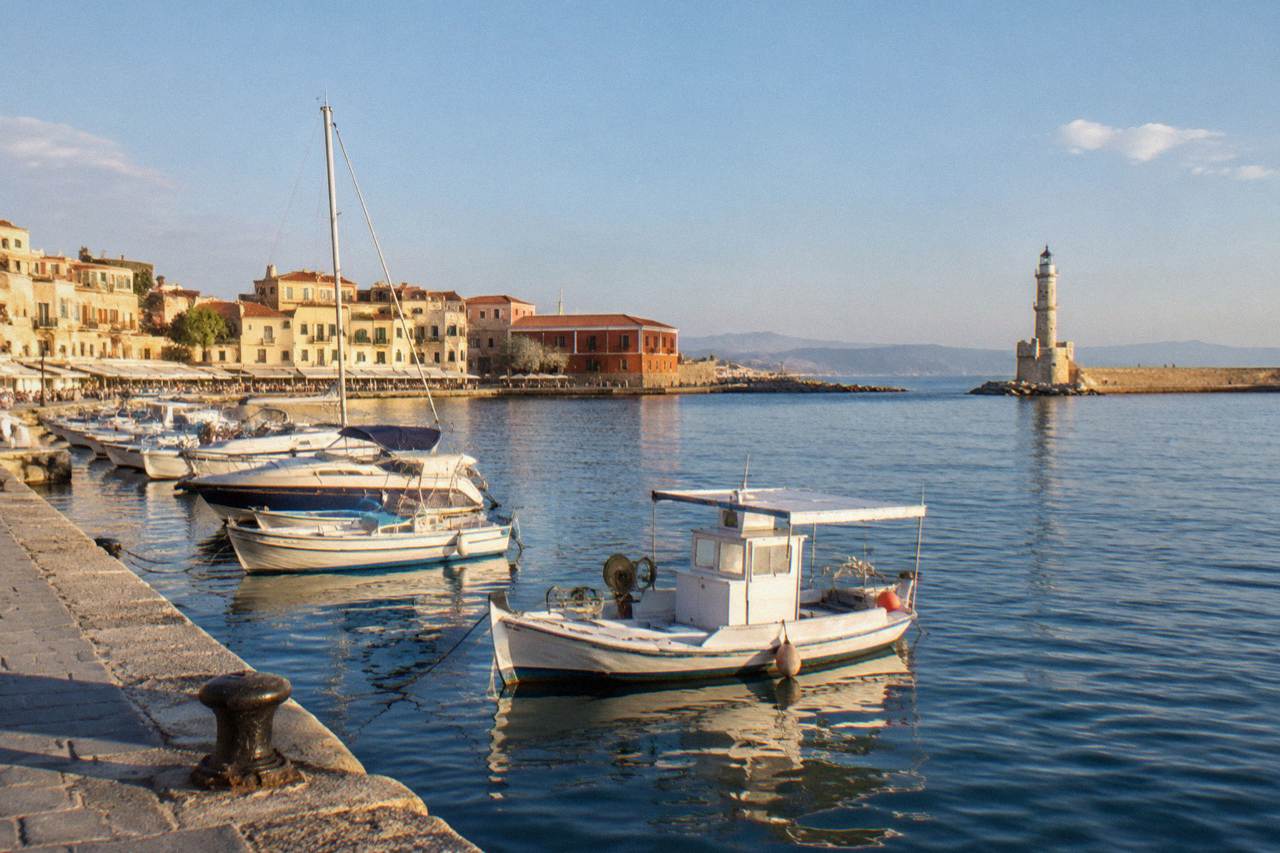
The harbour is the anchor. The Venetians built it between 1320 and 1356, with dredging works and a wall recorded in 1515, and the lighthouse at the end of the mole dates from about 1595 to 1601, restored on its Venetian base during the Egyptian rule of 1830 to 1840 and recorded as operating in 1839. The Neoria, the Venetian shipyards along the shore, survive as seven buildings of an original seventeen from the 15th to 16th century. Ottoman rule began with the conquest of Chania in 1645, and Crete's union with Greece followed in 1913, so the waterfront a visitor walks today carries Venetian, Egyptian-era, Ottoman and Greek layers in the space of a few hundred metres.
The dates in the table below are the verified building record for the harbour area, drawn from the sources this desk reports from rather than from guidebook shorthand.
| Landmark | Verified date from the record |
|---|---|
| Venetian Harbour | First built 1320 to 1356; works and a wall recorded 1515 |
| Lighthouse (Faros) | Built about 1595 to 1601; Egyptian-era restoration 1830 to 1840, operating 1839 |
| First city walls | 1336 to about 1356 |
| Second city walls | From 1536, on Michele Sanmicheli's design |
| Neoria shipyards | 15th to 16th century; seven survive of an original seventeen |
| Firka Fortress | Built 1620 by the Venetians; grounds free to enter |
| Ottoman rule | From the conquest of Chania in 1645 |
| Union of Crete with Greece | 1913 |
For planning a visit around these landmarks, the Chania Old Town guide and the Venetian Harbour guide cover the streets and the waterfront building by building, and the wider things to do in Chania page lists the full set of options across the city.
Why Is The Venetian Harbour And Old Town So Well Known?
The Venetian Harbour and the Old Town around it are well known because they are one of the most complete historic waterfronts in Greece: a harbour begun between 1320 and 1356, a lighthouse from about 1595 to 1601, seven surviving shipyards of an original seventeen, a fortress from 1620 and a walled town laid out under Venetian and then Ottoman rule, all within walking distance of each other. The harbour still serves excursion boats today, while the port for the overnight Blue Star Ferries service to Piraeus sits at Souda, about 7 km east. That working division keeps the historic harbour itself quiet enough to walk.
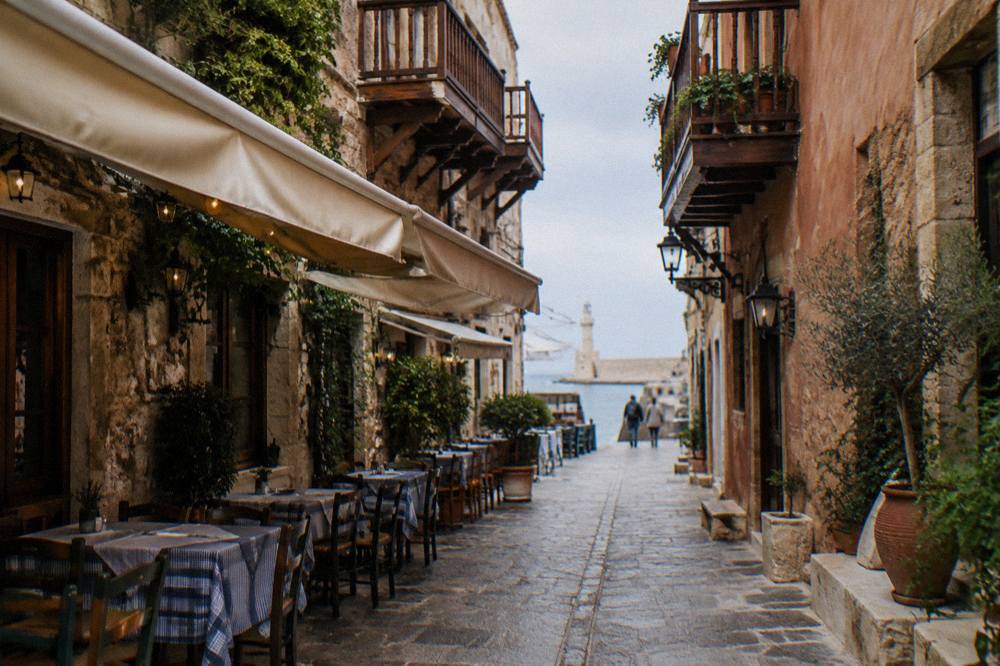
The Old Town's fame also rests on its density. The lanes of Splantzia and Topanas, the Etz Hayyim synagogue, the Mosque of the Janissaries on the harbour and the Firka Fortress at the harbour mouth sit inside the line of the second walls, begun in 1536 on Michele Sanmicheli's design. The Archaeological Museum of Chania holds the area's ancient record at 15 Skra Street in Halepa, with a full ticket at EUR 15 and a concession at EUR 8, and its own visit page carries the current opening arrangements, which visitors should check before travelling out to Halepa. The Maritime Museum of Crete sits inside Firka's ramparts, and the fortress grounds themselves are free to walk.
One detail that surprises readers comparing Chania with other Greek harbour cities: the lighthouse people photograph is not purely Venetian. Its base is Venetian, but the restored structure reflects the Egyptian administration of 1830 to 1840, when the works were recorded and the light was noted as operating in 1839. Reporting that layer honestly is the difference between a caption and a claim.
What Food Is Chania Famous For?
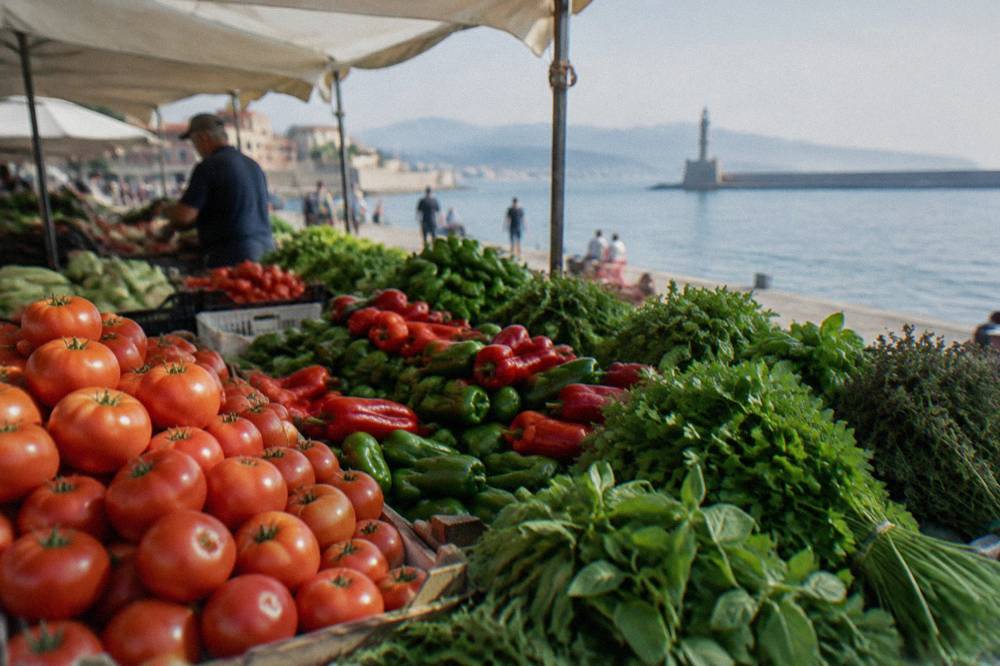
Chania is famous for Cretan food: olive oil, cheese, honey, wine, fresh fish along the harbour and dishes such as bougatsa, a breakfast pastry the city is closely associated with, along with the raki and tsikoudia spirit served after meals. The city's tavernas and markets draw on a hinterland of olive groves and mountain villages, and the Municipal Market building in the centre of the Old Town has historically anchored the shopping for it. The fame is a countryside story told in a city kitchen.
The Cretan food in Chania guide and the bougatsa in Chania page detail the dishes and where the bakeries cluster. What this desk can add from the source record is that the island's food reputation is not just restaurant talk: Cretan olive oil, wine, cheese and honey are produced across the region west of the city, and tasting rooms around Elos and the surrounding hills welcome visitors on organised routes. A cooking class in a White Mountains village takes that one step further, and the options below show how that experience is sold.
Is A Guided Food Or Cooking Experience Worth It In Chania?
A guided food or cooking experience in Chania is worth it for visitors who want the countryside products explained at source, because a class in a White Mountains village or a walking tasting route through the Old Town connects olive oil, cheese, honey and wine to the places they come from, which a restaurant table alone does not. The listing for each product states what is included, and the operator's live listing carries the current price, rating and review count. Nothing in the source record suggests the products themselves differ from what the shops sell.
The cooking and tasting category is broad, from a four-product tasting tour of oil, wine, cheese and honey to street food walks through the Old Town lanes, and the Chania cooking classes and Chania wine tours pages sort the options by what each covers rather than by price.
What Beaches And Day Trips Is Chania Famous For?
Chania is famous as the base for Crete's best-known beaches and gorges: Balos Lagoon and Gramvousa island by boat from Kissamos, Elafonisi with its protected Natura 2000 shoreline, Falassarna on the west coast, and the Samaria and Imbros gorges in the White Mountains, all reachable on organised day trips or by road from the city. Balos cruise boats run daily departures from Kissamos port through to 31 October 2026, according to the operator's published season. That concentration of famous names around one city is the core of the region's reputation.
Each of these carries a caveat this desk reports rather than smooths over. Samaria Gorge normally opens 1 May to 31 October, but storms in late September and early October 2026 destroyed sections of the path, staff describe a 2026 reopening as extremely difficult, and the managing agency's works are aimed at readiness in May 2027, so anyone planning the walk must check the official NECCA status before committing; the individual ticket is EUR 10 through the agency's e-ticket portal, free for EU residents under 18 and over 65. At Balos, the only confirmed charge is a EUR 1 Kissamos municipal fee collected on the boat ticket for over-13s, and a proposed time-slot cap of about 1,200 visitors per three hours from August 2026 is not in force. At Elafonisi, entry is reported to be free and taking sand, shells or plants is prohibited because of the protected area status.
The Balos Lagoon and Gramvousa, Elafonisi beach and Samaria Gorge guides carry the full access detail, and the difficulty of getting to Balos answer explains the unpaved road from Kaliviani to the parking area and the walk down.
What Is The Weather Like In Chania?
The weather in Chania is Mediterranean and coastal: the HNMS Chania Souda station, whose published table covers 1958 to 2010, records a July mean of 26.7 C against a January mean of 11.0 C, with rainfall concentrated in winter at 129.5 mm in January against 1.0 mm in July. The station sits at 148 m inland of Souda Bay, so the table describes the station record rather than a beachfront reading. Sunshine runs at about 2,600 hours a year in the published figures the desk reports.
| Month | Mean C | Mean maximum C | Rain mm | Rain days |
|---|---|---|---|---|
| January | 11.0 | 14.4 | 129.5 | 16.3 |
| April | 15.9 | 20.0 | 31.5 | 7.7 |
| July | 26.7 | 30.7 | 1.0 | 0.4 |
| October | 19.4 | 23.5 | 67.7 | 9.3 |
The pattern that matters for planning: May to September is dry in the station table, 13.5 mm in May falling to 1.0 mm in July, while rain starts to matter again from October, which records 67.7 mm. January is the wettest month in the table and July the driest, statements that hold only for the table itself. The prevailing wind is from the west, turning north-west in July and August, which is the general meltemi pattern; no speeds or dates are stated because none are in the record. Humidity runs from 50 percent in July to 73 percent in January. The Chania weather and best time to visit Chania guides work these figures into month-by-month planning.
How Do You Get To Chania And Around?
Chania is reached through Chania International Airport "Ioannis Daskalogiannis" (CHQ), operated by Fraport Greece on the Akrotiri peninsula about 14 km from the city centre, or by the overnight Blue Star Ferries service from Piraeus, which departs Souda port at about 21:30 with a crossing of about 9 hours 15 minutes. The airport's own page carries the public bus and taxi information for the transfer, and the ferry operator's route page publishes the timetable, which at the time of check ran as far as 31 October 2026. Both should be confirmed before travel.
Getting around the region is by KTEL bus or hired car. The Chania long-distance bus station sits on Kydonias street, with routes to Heraklion, Rethymno, Kissamos, Paleochora, Omalos and, in summer, Elafonisi. The KTEL Chania buses guide and the Chania airport to Chania town page cover the practical detail, and the driving in Crete guide covers the roads west and south of the city.
A short boat trip from the Old Town to Lazaretta Island with a swim stop is one of the simplest ways to see the harbour from the water; the listing for the Lazaretta Island swim-stop trip carries the current price, rating and duration, and the Chania boat trips page places it among the harbour cruises and sunset sails.
Common Questions About What Chania Is Famous For
What is Chania, Greece famous for?
Chania is famous for its Venetian Harbour, first built between 1320 and 1356, its Old Town behind walls begun in 1536, its Cretan food and its position as the base for Balos, Elafonisi, Samaria Gorge and Falassarna day trips.
Is Chania Old Town walkable?
Yes, the Old Town is compact and built for walking, with the harbour, Firka Fortress, the Etz Hayyim synagogue and the Splantzia and Topanas lanes all within a short circuit of each other. The Is Chania Old Town walkable answer carries the detail.
How many days in Chania is enough?
Three days covers the Old Town, a beach and one major day trip, with a fourth or fifth day for a second gorge or south-coast outing. The How many days in Chania is enough answer breaks the trade-offs down.
Is Chania worth visiting compared with Heraklion or Rethymno?
Chania offers the historic harbour and the west-coast beaches, Heraklion offers Knossos and the big museums, and Rethymno offers a smaller old town between the two. The Chania or Heraklion comparison works through the differences on the record.
Can you visit Balos and Elafonisi from Chania in one day?
Separate day trips, yes, with Balos boats leaving Kissamos port and Elafonisi reachable by road or summer bus. Doing both in one day is not a pattern any operator in the roster sells, so plan one famous shore per day and check the NECCA and operator status before booking.
The short version of Chania's fame is a harbour whose building record runs from the works of 1320 to 1356 to the union of Crete with Greece in 1913, an Old Town that survived its empires, a food culture fed by the hills behind it, and the island's famous beaches and gorges on its doorstep, and every one of those claims traces to a source this desk has reported above.