Elafonisi Vs Balos
Elafonisi and Balos are the two beaches west of Chania that every Crete itinerary argues about, and they are not interchangeable: one is a protected Natura 2000 sandbar you drive to, the other a lagoon behind an unpaved road or a boat from Kissamos.
Short answer
Elafonisi is the easier self-drive day from Chania with free entry, while Balos needs either an unpaved road walk or a boat from Kissamos and carries a EUR 1 municipal fee on the ticket; both are protected areas, so the choice comes down to access and the kind of water you want.
Elafonisi and Balos are the two beaches that define the far west of Crete for visitors based in Chania, and the comparison is genuine because the two days are so different. Elafonisi sits at the south-west corner of the island, a Natura 2000 protected area with free entry reached by road. Balos sits at the north-west tip on the Gramvousa peninsula, a lagoon reached either by boat from Kissamos port or by an unpaved road from Kaliviani followed by a walk down. The Chania Crete Travel Guide desk compares the two below on access, cost, protection rules and season, using only what the operators, the municipality and the HNMS Chania Souda station table state.
Which Is Easier To Reach From Chania, Elafonisi Or Balos?
Elafonisi is the easier of the two to reach independently, because it sits at the end of a paved road network that the KTEL bus serves in summer, while Balos requires either a boat from Kissamos port or an unpaved road from the village of Kaliviani followed by a walk down to the lagoon. The KTEL Chanion bus station on Kydonias street in Chania lists Elafonisi among its summer routes, alongside Heraklion, Rethymno, Kissamos, Paleochora and Omalos. No equivalent public bus runs to the Balos lagoon itself: the boats leave from Kissamos port, and the operator's season page shows daily departures running to 31 October 2026.
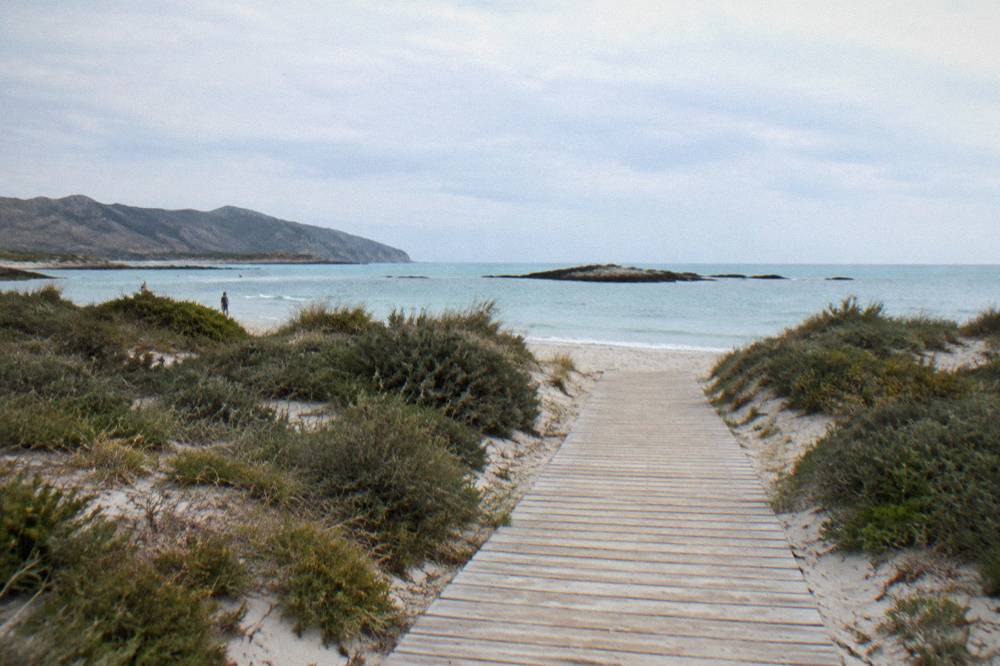
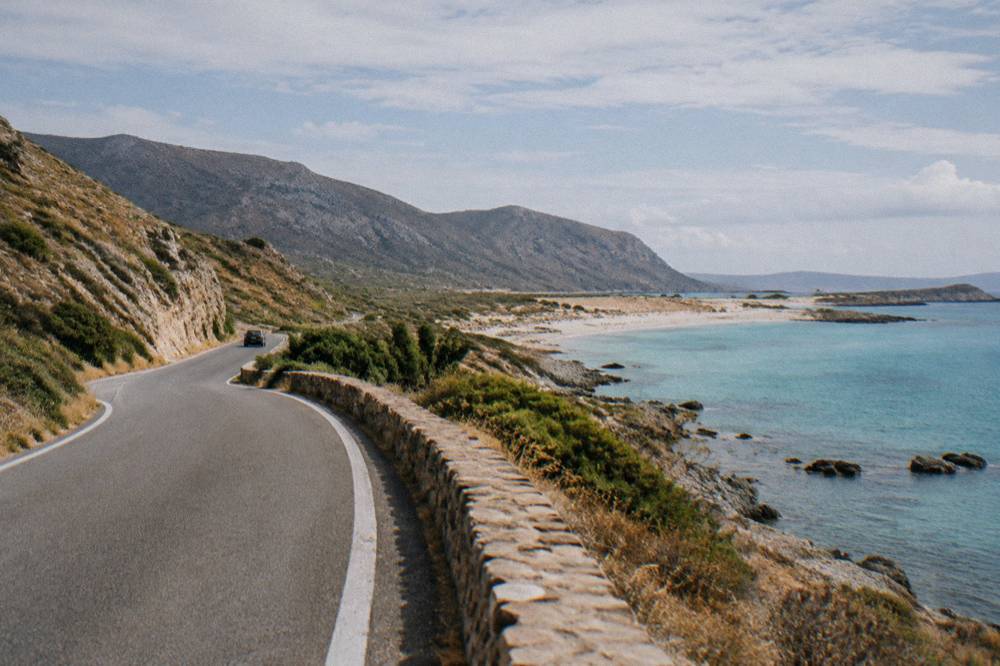
The road difference matters more than the map suggests. Kaliviani is the last village on the way to Gramvousa, and from there the track to the Balos parking area is unpaved, which is why a large share of visitors take the boat instead of driving it. The boat day also folds in Gramvousa island itself, with its Venetian-era fort walls visible above the anchorage, something the drive-only day never sees. The dedicated Balos and Gramvousa day trip guide covers that crossing in detail, and the question is it difficult to get to Balos beach answers the access worry directly.
Elafonisi by car is a long but ordinary drive: south past the Topolia gorge road, through Elos, down to the coast. The parking area sits behind the dunes, and parking is reported around EUR 5 a day. In high summer the KTEL seasonal route means the beach is reachable without a car at all, though the timetable is only published for the season and should be checked at e-ktel.com or the station. For drivers planning the wider west, the Crete car rental decisions guide and the getting around Chania overview explain how the KTEL network and a hire car divide the work.
| Access question | Elafonisi | Balos |
|---|---|---|
| Base for the day | Chania, by road | Kissamos port by boat, or Kaliviani by road |
| Road type | Paved road network | Unpaved road from Kaliviani to a parking area, then a walk down |
| Public bus | KTEL summer route from the Kydonias street station | No bus to the lagoon; KTEL runs to Kissamos |
| Boat option | Not part of the normal day | Daily departures to 31 October 2026, operator-reported |
| Extra stop on the boat day | None | Gramvousa island |
For a visitor weighing the two, the honest framing is this: Elafonisi is a beach you can decide to visit the night before with any car, while Balos is a scheduled day, either a booked boat seat or a committed drive on a rough track. Neither is close, and neither is a half-day from the Old Town.
What Does Each Beach Actually Look Like?
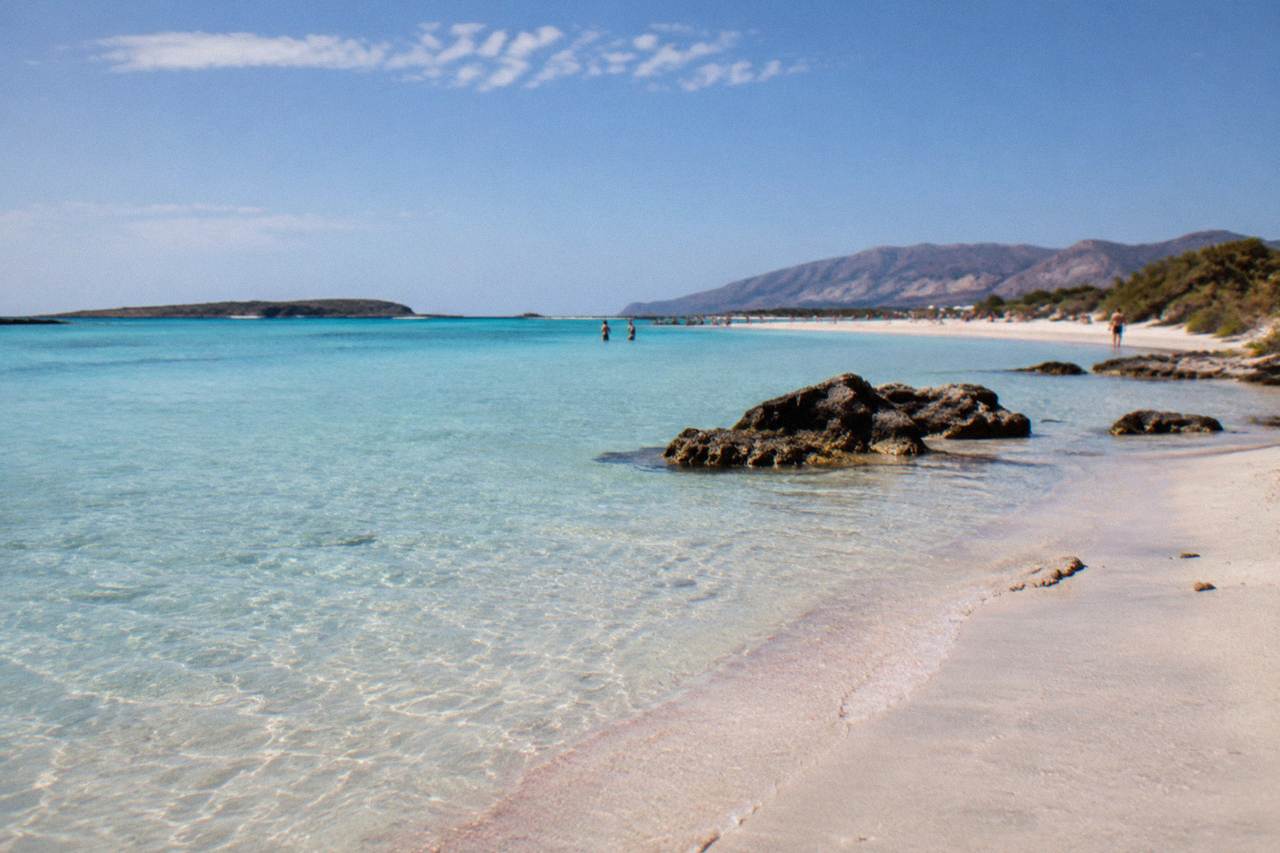
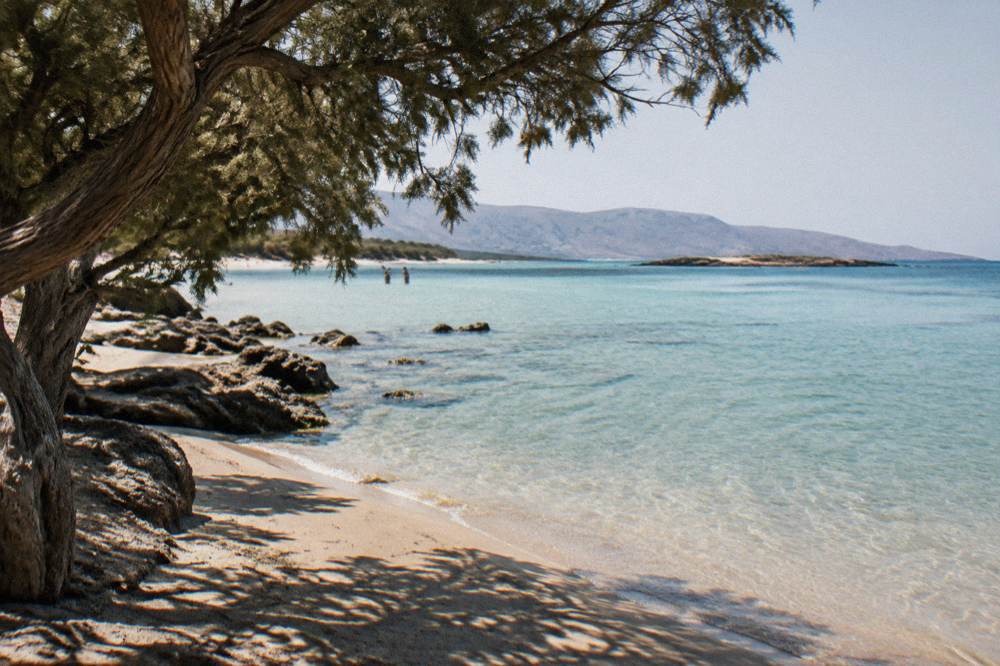
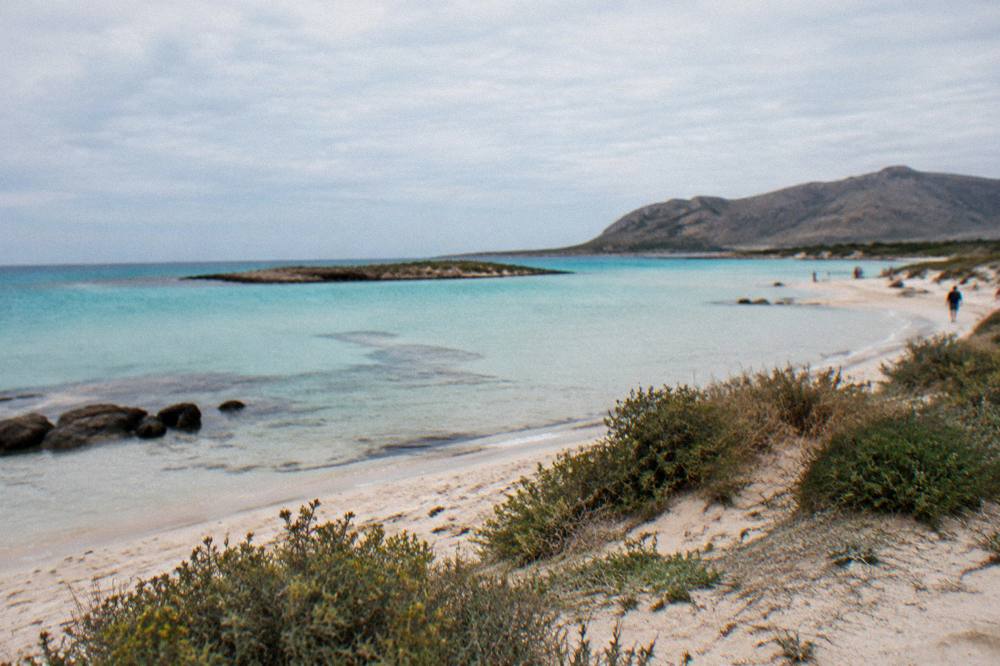
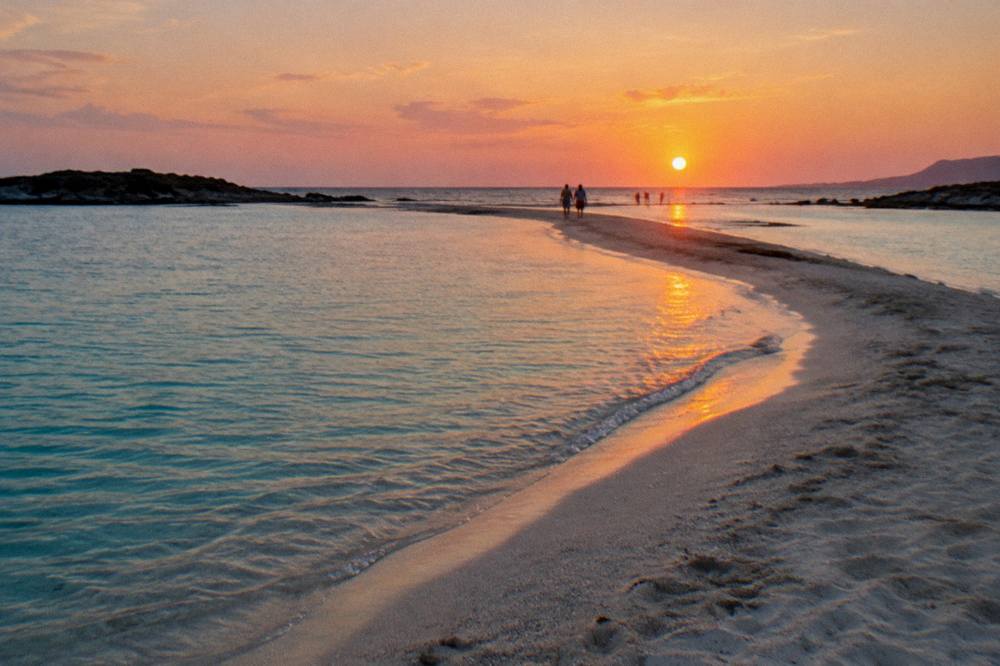
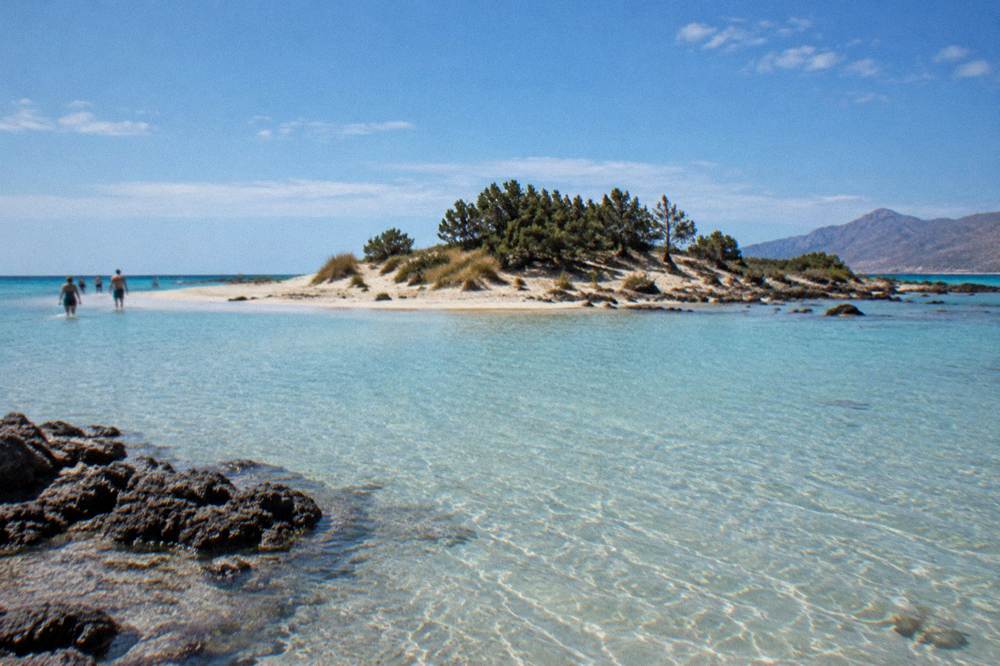
Elafonisi is a shallow lagoon and sandbar area at the south-west corner of Crete where the water stays waist-deep for long stretches, while Balos is a larger lagoon trapped behind the Gramvousa peninsula at the north-west tip, with a boat anchorage at Gramvousa island and a wide expanse of white sand and shallows between the two. Both are protected areas, and the protection shapes what you see: Elafonisi is part of the European Natura 2000 network, and Balos sits inside the wider Gramvousa and Rodopou protected landscape.
The famous pink tint at Elafonisi comes from crushed shell fragments mixed into the sand, and it is stronger in patches than the postcards suggest. What the protection rules mean in practice is simple and worth repeating: taking sand, shells or plants from Elafonisi is prohibited. That rule is on the protected-area basis itself, not a local whim, and it exists because the dune system is the reason the site is protected. The dedicated Elafonisi beach guide and the question is it worth going to Elafonisi beach go deeper on the sandbar itself.
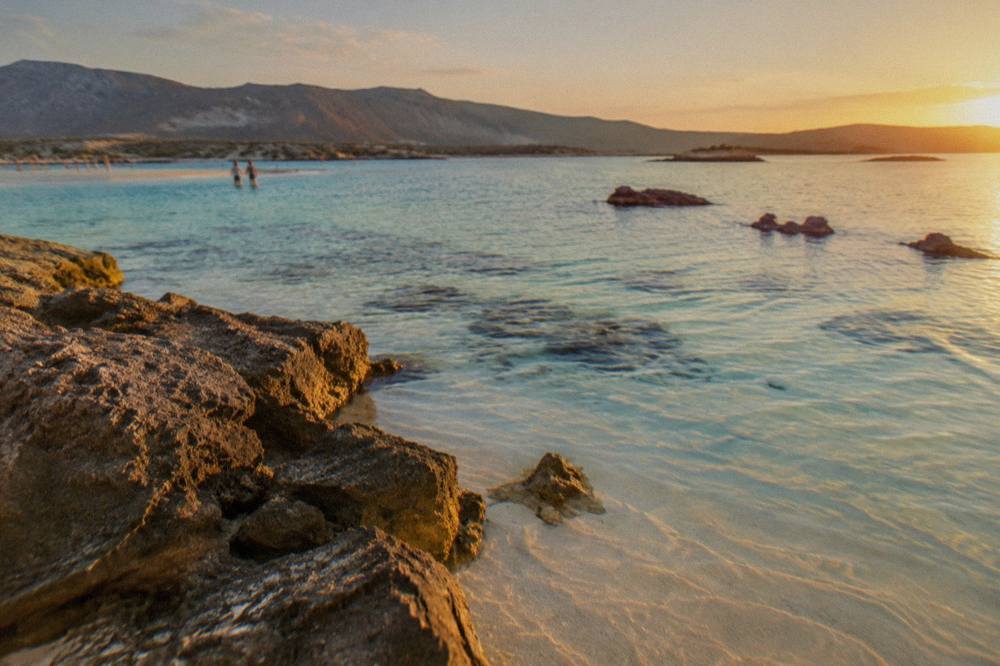
Balos reads differently. The lagoon flattens into shallow water that shifts between blue and green over sand, and the viewpoint from the walk down from the parking area is the image that made the beach famous. The boat day adds Gramvousa, where a short climb reaches the fort the Venetians built on the summit. The two experiences are not really in competition: one is a beach-and-dune day, the other a beach-plus-island-and-fort day.
| What you see | Elafonisi | Balos and Gramvousa |
|---|---|---|
| Water character | Shallow lagoon and sandbar, waist-deep for long stretches | Large shallow lagoon behind the peninsula |
| Signature feature | Pink-tinged sand from shell fragments | Lagoon viewed from above on the walk down |
| Island element | None | Gramvousa island with a Venetian fort on the summit |
| Protection status | Natura 2000 area | Protected peninsula landscape |
| Souvenir rule | Taking sand, shells or plants prohibited | EUR 1 municipal fee collected on the boat ticket |
If the mental image that brought you to Crete is a postcard lagoon you can wade for a hundred metres, either beach delivers it. The difference is the frame around the water: dunes and a quiet corner of the island at Elafonisi, a fortress island and a boat deck at Balos.
Which Beach Suits Which Kind Of Day?
Balos suits a planned, single-focus day built around one big lagoon and an island fort, while Elafonisi suits a flexible day that can absorb a second stop, a long lunch or a detour, because the road to it passes through villages such as Elos that tour itineraries already pair with the beach. The operator itineraries make the contrast explicit: Elafonisi trips commonly bundle honey and wine tastings in Elos on the way, while Balos trips are structured around the boat departure time from Kissamos and the walking window on Gramvousa.
Consider the shape of the two days from Chania. A Balos day is anchored: boat departure times from Kissamos are fixed, the crossing and the island stop fill the middle of the day, and the return is set. An Elafonisi day is elastic: the beach is the destination, but the route there and back is where the day earns variety, through the Topolia gorge road and the villages of the west. That is also why Elafonisi features in what to do in western Crete planning as a combine-able stop, while Balos tends to stand alone.
Families split along an obvious line. The shallows at both beaches are forgiving for children, but Elafonisi's sandbar means a swim that never really gets deep, and arrival is by ordinary road. Balos with children is easiest by boat, since the boat handles the awkward access and the day becomes a deck-and-swim rhythm. Neither beach has a verified lifeguard or water-quality rating in the facts this site holds, so supervision decisions stay with the family, and no safety statistic is claimed here.
For visitors who want the turquoise-water experience without a full day west, there is a third option worth naming: the boat trips that leave directly from the Chania waterfront. A short hop such as the Lazaretta Island trip with a swim stop delivers a swim in clear water within sight of the Venetian Harbour lighthouse, on a day when the drive west or the Kissamos boat is too much. The boat trips from Chania overview places that option against the big west-coast days.
How Do The Costs Compare Between Elafonisi And Balos?
Entry to Elafonisi is free and parking is reported around EUR 5 a day, while the only confirmed charge at Balos is a EUR 1 Kissamos municipal fee collected on the boat ticket for visitors over 13, so the decisive cost at Balos is the boat ticket or the fuel for the unpaved drive, not an entrance fee at either beach. Neither beach charges admission. This site prints no boat-ticket price, no sunbed price and no parking tariff beyond what is stated here, because those figures move by season and operator, and the operator's live listing is where the current number sits.
The fee structure is genuinely simple, which is rare for a headline destination. At Elafonisi the cost is the drive: fuel, parking reported around EUR 5 a day, and lunch if it is not carried. At Balos by boat the cost is the ticket, which carries the EUR 1 municipal fee for over-13s inside it, plus anything spent on Gramvousa. At Balos by car the cost is fuel plus wear on an unpaved road, and the parking situation at the top of the walk is best confirmed locally on the day. A proposed time-slot system of roughly 1,200 visitors per three hours was reported in August 2026, but it was a proposal and is not in force: no cap should be assumed.
| Cost item | Elafonisi | Balos |
|---|---|---|
| Beach entry | Free, reported | No entrance fee |
| Confirmed local fee | None | EUR 1 Kissamos municipal fee, on the boat ticket, over-13s only |
| Parking | Reported around EUR 5 a day | Parking at the end of the unpaved road; confirm locally |
| Boat ticket | Not applicable | Price on the operator's live listing |
| Protected-area rule | No sand, shells or plants may be taken | Fee collected on the ticket |
One warning on comparisons found elsewhere: neither beach has a verified sunbed price or quota in the facts this site holds, and any specific figure quoted in a forum or a listing should be treated as that source's claim, not a standing fact. The bill to plan around is transport, and that is true of every beach day in the far west.
Which Is Better In High Season?
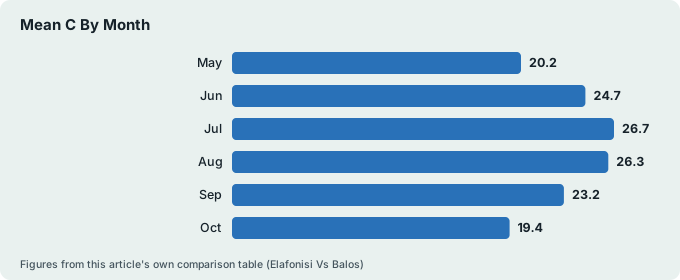
Both beaches sit in the same dry-summer belt, with the HNMS Chania Souda station recording 1.0 mm of rain in July and 1.4 mm in August across its 1958 to 2010 table, so the high-season question is not weather but crowding and heat, and Elafonisi's road access makes it the one you can time around, while Balos by boat spreads arrivals across departure slots. The station table, inland of Souda Bay at 148 m, is the honest climate source for the region, and it shows a mean maximum of 30.7 C in July and 30.4 C in August.
Crowding is where the two days diverge in kind rather than degree. Elafonisi's arrivals concentrate on the parking area and the sandbar, and the beach's protection rules mean the usable area is what it is. Balos arrivals split between the boats from Kissamos and the walkers down from the parking area, and the lagoon is large enough that the two streams thin out. No verified visitor-cap system is in force at either beach, and none should be claimed as reassurance or as a warning.
Heat planning beats crowd planning. A mean maximum above 30 C with a prevailing north-west wind in July and August means the walk down to Balos and any climb on Gramvousa happen either early or with serious water. The Chania weather guide and the best time to visit Chania guide walk through the monthly numbers in full.
| Month | Mean C | Mean max C | Rain mm | Rain days |
|---|---|---|---|---|
| May | 20.2 | 24.5 | 13.5 | 4.2 |
| Jun | 24.7 | 28.9 | 3.4 | 1.2 |
| Jul | 26.7 | 30.7 | 1.0 | 0.4 |
| Aug | 26.3 | 30.4 | 1.4 | 0.6 |
| Sep | 23.2 | 27.4 | 15.4 | 3.2 |
| Oct | 19.4 | 23.5 | 67.7 | 9.3 |
The table is the HNMS Chania Souda station's 1958 to 2010 record, and it carries the one point that matters for planning: rain starts to matter again from October, at 67.7 mm across 9.3 rain days, while May through September stays dry. The Balos boat season itself runs to 31 October 2026 on the operator's page, but the sea and the sky are two different things in late October.
When Is The Best Month For Each Beach?
The shoulder months, June and September, are the strongest window for both beaches on the station record, since June brings a 24.7 C mean with 3.4 mm of rain and September a 23.2 C mean with 15.4 mm, while July and August add roughly six degrees to the daily maximum and concentrate arrivals, and October trades a still-warm 19.4 C mean for 67.7 mm of rain across the month. May is a legitimate pick too, at 20.2 C mean and 13.5 mm of rain, provided the boat season and the KTEL summer routes have started, which the operators and the bus station confirm for the season.
For Elafonisi specifically, the seasonal KTEL bus is the swing variable: the route runs in summer, and the exact start is a station question, not a fixed date this site can print. For Balos, the operator's daily departures to 31 October 2026 give a hard end to the boat option, after which the unpaved road is the only access and autumn weather starts to argue against it. Neither beach has a verified opening or closing gate of its own: Elafonisi's access is the road and the parking, Balos's is the boat timetable and the track.
The honest month-by-month verdict, using only the station table:
| Month | Elafonisi case | Balos case |
|---|---|---|
| May | 20.2 C mean, light rain, fewer arrivals | Boat season under way; check operator start |
| Jun | 24.7 C mean, 3.4 mm rain | Full boat timetable, sea warmed up |
| Jul | 30.7 C mean max | Hot walk down; early boat advised |
| Aug | 30.4 C mean max | Peak arrivals spread across departure slots |
| Sep | 23.2 C mean, 15.4 mm rain | Sea at its warmest after summer; strong pick |
| Oct | 19.4 C mean, 67.7 mm rain | Boat runs to 31 Oct 2026, operator-reported |
September stands out in that table for a reason the numbers make plain: the mean maximum drops to 27.4 C while the sea has absorbed a whole summer of heat, and rain stays light at 15.4 mm. It is the month this desk would put first for either beach, and the best time to visit Chania guide extends the same logic to the city itself.
Can You Combine Elafonisi And Balos In One Trip?
Combining both beaches in a single day from Chania is not realistic, because they sit on opposite corners of the far west with Elafonisi at the south-west tip and Balos at the north-west tip, and the Balos day is anchored to a boat departure from Kissamos or an unpaved drive, so the workable plan is one beach per day across two days, ideally with a night in Kissamos or along that coast between them. The geography, not the distances alone, is the obstacle: the road between the two runs back up and around through the interior.
A two-day west loop is the standard fix and it is a good one. Day one takes Elafonisi with the Elos and Topolia road as the day's second pleasure; an overnight in or near Kissamos turns day two into a relaxed Balos boat morning. Some itineraries substitute Falassarna, which sits on the north-west coast between the two, as a single-beach compromise when only one day exists. The best beaches in Chania guide covers Falassarna and the nearer city beaches for exactly that decision.
For visitors with a week, the sequencing question dissolves. The how many days in Chania guide and the wider day trips from Chania overview show how the west-coast beach days, the gorge hikes and the Old Town days stack without rushing. What the desk would advise against is the temptation to "do" both beaches in one long loop with a hire car: the unpaved Kaliviani track alone makes that a day of driving rather than a day of swimming.
What Do The Protection Rules Mean For Visitors?
Elafonisi's Natura 2000 status means taking sand, shells or plants from the beach is prohibited, and Balos's municipal fee and protected peninsula mean the visit is managed at the point of arrival, so the practical rule at both is the same: carry out everything, touch nothing living, and treat the printed rules at the site as the binding ones. The pink sand at Elafonisi is the headline case: a small bag of it is both prohibited and, at scale, exactly what erodes the reason the site is protected.
The rules are not ornamental. Elafonisi's dunes and its plant communities are what the Natura 2000 designation rests on, and the designation is a European one, not a local sign. At Balos, the fee structure is light, one euro collected on the boat ticket for over-13s, but the peninsula's status is the reason the unpaved road has stayed unpaved and the reason a visitor cap was even proposed in August 2026. That cap is not in force, and this site will not present it as a rule.
Visitors who want the comparison in one place:
| Rule or status | Elafonisi | Balos and Gramvousa |
|---|---|---|
| Protection designation | Natura 2000 area | Protected peninsula landscape |
| Entry charge | Free, reported | No entrance fee |
| Collected fee | None | EUR 1 municipal fee on the boat ticket, over-13s |
| Takeaway prohibition | Sand, shells and plants may not be taken | Site rules posted at arrival |
| Visitor cap | None verified | None in force; 2026 proposal only |
The quiet advantage of both beaches being protected is that neither has been built into a resort strip. What stands behind the sand at Elafonisi is dune, not a beach bar wall, and what stands above the Balos lagoon is the peninsula itself. Keeping that is what the rules are for, and the rules cost a visitor almost nothing.
Which Should You Choose If You Only Have One Day?
Choose Balos if the day is allowed to be a single, scheduled event built around a boat, an island fort and one unforgettable lagoon, and choose Elafonisi if the day needs flexibility, a self-drive rhythm and the option to fold in villages, tastings or a second stop, because the two beaches differ less in beauty than in the shape of the day they force. That is the whole comparison in one sentence, and it survives the marketing noise around both places.
The tie-breakers, honestly listed. If small children or non-swimmers are in the group, Elafonisi's never-deep sandbar is the safer default. If the group wants one big shared experience and photographs from above, Balos wins on the walk-down viewpoint and the Gramvousa fort. If the forecast is uncertain, Elafonisi's paved access is easier to abandon or reschedule than a booked boat seat, though the operator's cancellation terms sit on the live listing and should be read at booking. If the month is October, note the 67.7 mm of rain the station table records and the boat season's 31 October end.
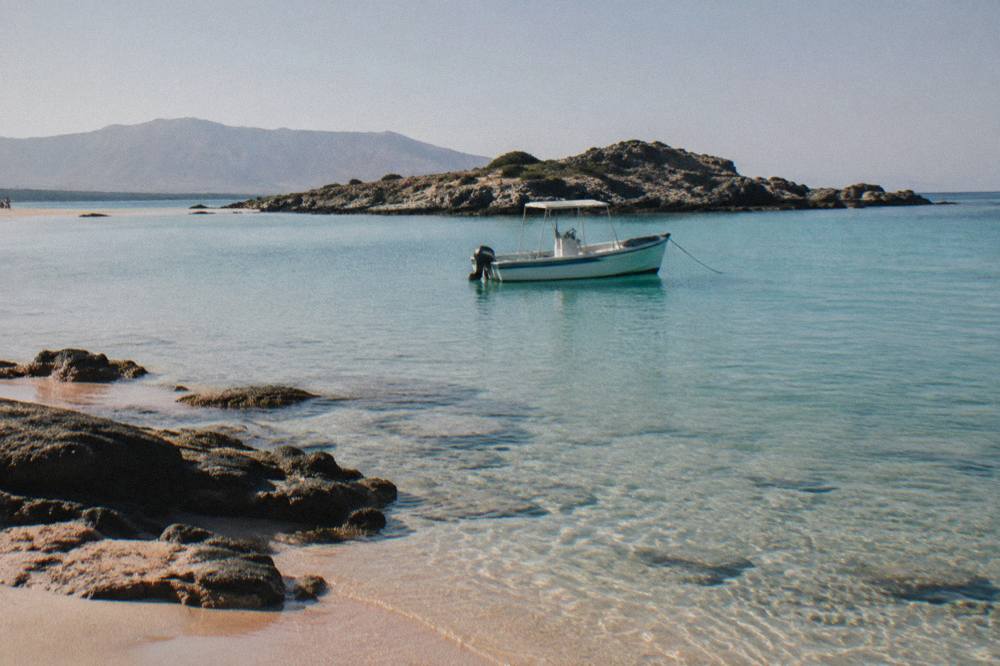
There is also the option of neither, on at least one day of a Chania stay. The beaches nearest the Old Town, covered in the beaches near the Old Town planning page, and the short boat hops from the waterfront give the same water colour with none of the driving. A day of that, sandwiched between an Elafonisi day and a Balos day, is a rhythm rather than a compromise.
Common Questions About Elafonisi Vs Balos
Is Elafonisi or Balos better?
Neither is objectively better: Elafonisi is easier to reach independently with free entry and a shallow sandbar, while Balos offers a boat day, a lagoon and the Gramvousa fort. Choose on the shape of the day you want, not on a ranking.
Can you visit Elafonisi and Balos on the same day?
A same-day visit from Chania is not realistic. The beaches sit on opposite corners of the far west and the Balos day is anchored to a boat departure from Kissamos or an unpaved drive, so plan one beach per day.
Does Elafonisi or Balos charge an entry fee?
Entry to Elafonisi is reported as free, and Balos has no entrance fee. The only confirmed charge at Balos is a EUR 1 Kissamos municipal fee collected on the boat ticket for visitors over 13. Parking at Elafonisi is reported around EUR 5 a day.
Is the road to Balos paved?
No. From the village of Kaliviani the road to the parking area is unpaved, and visitors then walk down to the lagoon. The alternative is the boat from Kissamos port, with daily departures shown to 31 October 2026 on the operator's page.
Which is better with children?
Elafonisi's sandbar keeps the water shallow for long stretches and arrival is by ordinary road, which makes it the easier family default. Balos with children is simplest by boat, since the crossing removes the unpaved-road and walk-down problem.
Can you take pink sand from Elafonisi?
No. Elafonisi is a Natura 2000 protected area and taking sand, shells or plants is prohibited. The rule protects the dune system that earned the designation.
Where Does This Leave The Elafonisi Vs Balos Decision?
The decision rests on access and the shape of the day, not on beauty: Elafonisi is the flexible, self-drive protected beach with free entry and a reported EUR 5 parking day, Balos is the scheduled lagoon-and-fort day reached by boat from Kissamos with a EUR 1 fee on the ticket, and a week in Chania comfortably holds both. Every figure in that sentence comes from the operator pages, the municipality and the HNMS Chania Souda station table, and anything not in them, sunbed prices, caps, water-quality ratings, has been left out on purpose.
The last practical note is timing. June and September carry the strongest case on the station's 1958 to 2010 record, and September in particular pairs a 27.4 C mean maximum with a sea that has warmed all summer. Book or set out early either way: both beaches reward the first hours of daylight, and both punish a midday arrival in July and August. Whichever corner of the west you choose, check the operator's live listing or the KTEL season timetable before the day is fixed, and let the protected status of both places set the tone of the visit rather than the price of it.
Before you go, the pick for this guide:
Elafonissi Beach Day Trip
★ 4.4 458 reviews · From $31
Check availability →