Is It Worth Going To Elafonisi Beach?
Whether Elafonisi Beach is worth the long trip from Chania, what the protected area rules are, how to get there and when to go.
Elafonisi is a protected beach at the south-west corner of Crete, reachable from Chania as a full day trip, and the question of whether it is worth the journey is one this site's mailbox sees constantly. The honest answer has three parts: the place itself is genuinely unusual, the protection rules limit what you can do there, and the experience changes sharply with the season and the time of day. The park's own designation, the reported access details and the weather record together give a more useful verdict than any list of superlatives.
Is It Worth Going To Elafonisi Beach?
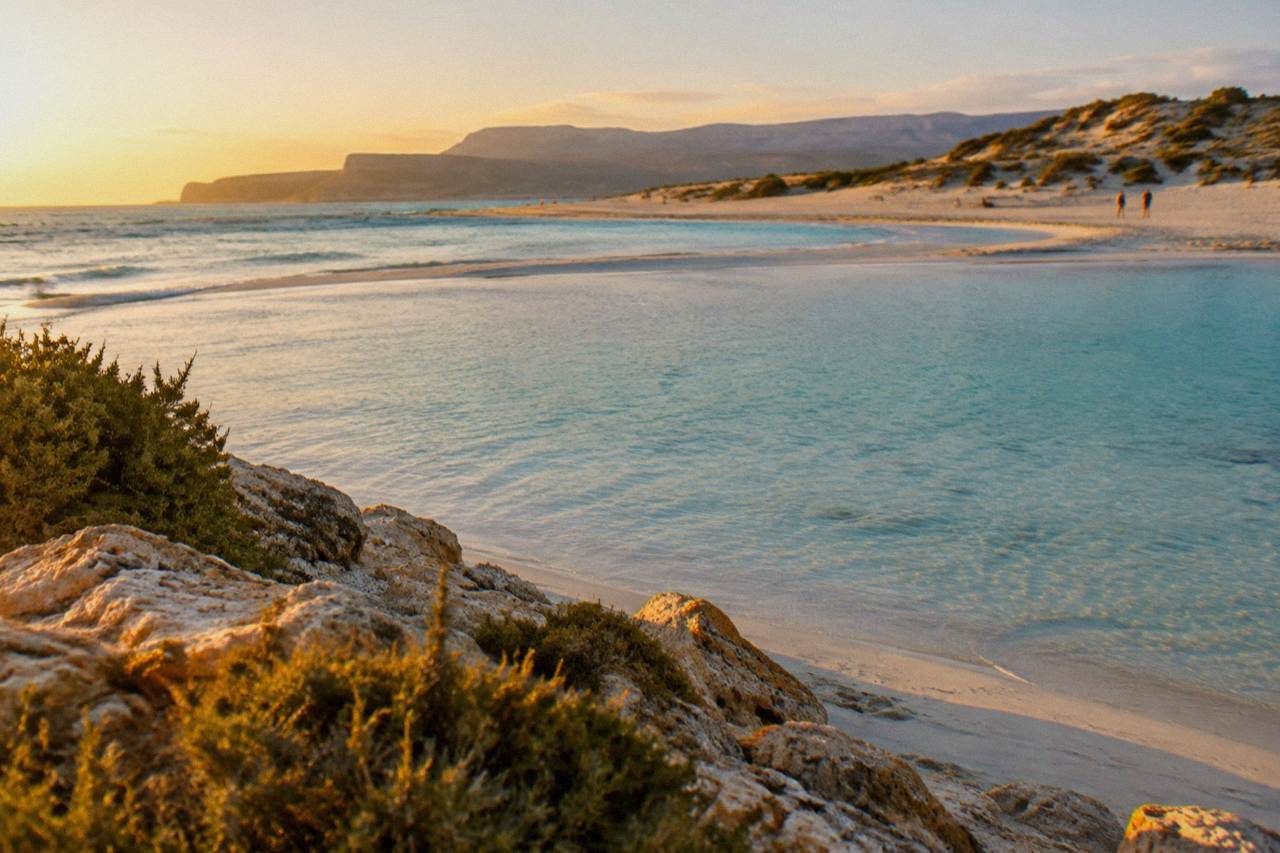
Yes, for the setting and the shallow lagoon, provided the trip is timed well and the rules are accepted before the day is planned. Elafonisi is a Natura 2000 protected area with free entry, its pink-tinged sand and dunes sit against shallow water that warms early, and its weakest point is not the beach but the crowding and the drive at peak season. Read that as a conditional yes: the beach rewards visitors who arrive outside the July and August midday rush and punishes nobody who respects the protected-area rules.
Elafonisi is a Natura 2000 area, which is a European conservation designation, and that status carries visible consequences. Entry is reported to be free, but taking sand, shells or plants is prohibited, and the dunes themselves are fenced in places so the vegetation can hold. The famous pink colour is not decoration; it comes from crushed shell fragments, and removing it is exactly what the prohibition targets. The science behind the colour is covered in the site's dedicated piece on why Elafonisi Beach is pink.
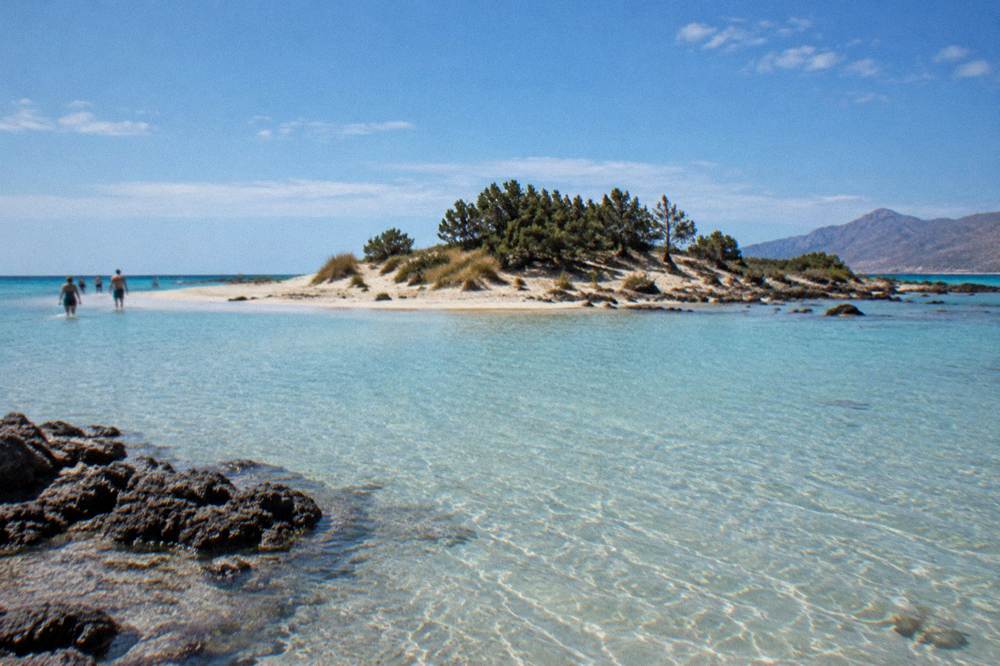
The beach itself is really two beaches. A shallow lagoon separates the mainland strand from the island of Elafonisi proper, and at calm water the crossing is a short wade rather than a swim. Toddlers can stand in much of the lagoon, which is why families dominate the sand in high summer, and the far side, reached on foot, has dunes and quieter corners. The full area guide, including where to eat and what the surrounding roads are like, sits in the Elafonisi Beach day trip guide.
So the verdict from this desk: worth it in May, June, September and October; worth it in July and August only with an early start or a late finish; and not worth it as a rushed add-on squeezed between two other stops. The distance from Chania is the whole budget of the day.
How Do You Get To Elafonisi From Chania?
By car, by seasonal KTEL bus or by guided day trip, with a drive that crosses the island's western interior on winding roads, so the journey is a genuine part of the day and not a shuttle. The KTEL Chanion network runs an Elafonisi route in summer from the Kydonias street station in Chania, and the road options all end at the same reported parking area near the beach, where a day of parking has been reported at around EUR 5.
The car route splits into two broad corridors. The northern route runs west towards Kissamos and then south through the Topolia gorge area, a winding cut through the hills. The southern route drops from Vouves towards Elos and Paleochora territory before cutting back along the coast road. Neither is a fast road, and both put the drive in the same bracket as the other far-west beaches discussed in the Elafonisi versus Balos comparison, where the access trade-offs are laid out side by side.
The bus is the car-free option. The KTEL Chanion station on Kydonias street in Chania lists Elafonisi among its summer routes, alongside Heraklion, Rethymno, Kissamos, Paleochora and Omalos. Timetables and fares should be confirmed on the operator's own channels before the day, because seasonal services adjust through the year.
The guided option trades independence for logistics. The featured trip on this page, the Chania Elafonisi Pink Beach and Elos Honey and Wine Tasting day, pairs the beach with the inland village of Elos and stops for honey and wine along the way, and it has its own tour page with full detail: Check availability. What the guided route gives back is the driving: the roads above Elos are the slowest stretch of the day, and a driver who knows them is worth real time.
If handing the driving and timing to a guide appeals, book a guided Elafonisi day trip here.
| Access option | Boarding point in Chania | What to confirm before travel |
|---|---|---|
| Own car or hire car | Anywhere; route via Topolia or via Elos | Parking at the beach is reported around EUR 5 a day; arrive early in peak season |
| KTEL bus | Kydonias street long-distance station | Elafonisi route runs in summer only; check the timetable and fare with the operator |
| Guided day trip | Hotel or central pickup, per the listing | What the price covers and what it excludes; pickup point and return time |
What Are The Rules And Costs At Elafonisi?
Entry to Elafonisi is reported to be free, the beach is a Natura 2000 protected area, and the two rules that matter are that taking sand, shells or plants is prohibited and that the dunes must be respected where fencing marks them. The only reported cost on the ground is parking, at around EUR 5 a day, and no sunbed, umbrella or entry charge is printed here because none is verified. That places Elafonisi on the cheap end of Crete's far-west beaches.
Contrast that with Balos, where the only confirmed charge is a EUR 1 Kissamos municipal fee collected on the boat ticket for over-13s, and where the road from Kaliviani to the parking area is unpaved before a walk down. The access difficulty of that trip is covered separately in is it difficult to get to Balos Beach, and the two beaches compete for the same day of an itinerary. A time-slot visitor cap of about 1,200 people per three hours was proposed for Balos in August 2026 but is not in force, so it is not a rule to plan around.
At Elafonisi the protection is the rulebook. The Natura 2000 designation means the dune system and the islet's vegetation are the reason the site is managed, and the prohibition on removing sand and shells exists because thousands of small removals are how protected beaches degrade. There is no verified daily visitor cap for Elafonisi either, and no verified quota of sunbeds, so the only honest planning advice is to check locally on the day.
When Is The Best Time Of Year For Elafonisi?
Late May through June, and September through early October, are the strongest windows, because the sea has warmed, the crowds of peak summer have thinned and the rainfall record stays low; July and August are the driest months in the Chania Souda station table but they bring the crowding that changes the beach most. The station record is the only climate source this site prints, and it is blunt about the seasons.
The Hellenic National Meteorological Service station at Chania Souda, recording the period 1958 to 2010, shows the shape of the year. July averages 26.7 C with 1.0 mm of rain and 0.4 rain days; August 26.3 C with 1.4 mm; September 23.2 C with 15.4 mm; October 19.4 C with 67.7 mm. The dry window runs from May, at 13.5 mm, through September, and rain starts to matter from October onward.
| Month | Mean temperature (Chania Souda station, 1958 to 2010) | Rainfall (mm) | Rain days | What it means for Elafonisi |
|---|---|---|---|---|
| May | 20.2 C | 13.5 | 4.2 | Warm, dry, thinner crowds |
| June | 24.7 C | 3.4 | 1.2 | Prime window before peak season |
| July | 26.7 C | 1.0 | 0.4 | Driest month; peak crowding |
| August | 26.3 C | 1.4 | 0.6 | Hot and busy; go early |
| September | 23.2 C | 15.4 | 3.2 | Sea at its warmest, crowds easing |
| October | 19.4 C | 67.7 | 9.3 | Quieter, but rain returns |
Two notes on reading that table. The station sits at 148 m inland of Souda Bay, near Chania, and the far south-west corner of the island can run a little warmer in the afternoons; and the sea itself has no official monthly temperature normal published for this coast, so no sea figure is printed here at all. What can be said is that the shallow lagoon at Elafonisi warms faster than deep water anywhere, which is why families rate it. Within any day, the practical timing advice is the same as for every far-west beach: be on the sand before the late-morning arrivals and the experience belongs to you.
Who Should Skip Elafonisi, And What Are The Alternatives?
A visitor with only one or two days in Chania, or one who dislikes long winding drives, should skip Elafonisi and take a closer beach or a boat trip instead, because the round trip consumes the day; a visitor with three or more days, or a base in the far west, gets the beach at its best. The question of how many days to allocate to Chania decides this more than any quality judgement.
For a short stay, the beaches reachable without a serious drive are honest substitutes. Nea Chora sits within walking range of the Old Town, as the site's piece on walking to a beach from Chania Old Town details, and Agia Marina, Stavros, Marathi and Kalathas all sit on the Akrotiri peninsula a short hop from the city. The debate over the island's finest sand never settles, but the site's own take on the prettiest beach in Crete puts Elafonisi and Balos in context against quieter contenders like Falassarna.
For a longer stay, Elafonisi earns its day. Pair it with something the drive already passes: the villages inland, the honey and wine stops a guided trip includes, or Falassarna on a different day. If the whole question is really about picking a base from which this beach is easy, that is a different decision, and one covered in the nicest part of Crete to stay in.
Common Questions About Elafonisi Beach
Is it worth going to Elafonisi Beach?
For a visitor based in Chania with three or more days, yes: it is a Natura 2000 protected beach with free entry and a shallow lagoon unlike anything nearer the city. On a one-day stay, the drive consumes the day and a closer beach is the better choice.
Is there an entrance fee at Elafonisi?
Entry is reported to be free. The only reported cost on the ground is parking, at around EUR 5 a day. No sunbed or umbrella price is verified, so confirm locally.
Can you take the pink sand from Elafonisi?
No. Elafonisi is a Natura 2000 protected area and taking sand, shells or plants is prohibited. The pink colour comes from crushed shell material and removing it damages the protected dune system.
Is there a bus from Chania to Elafonisi?
The KTEL Chanion network runs an Elafonisi route in summer from the long-distance station on Kydonias street in Chania. Confirm the timetable and fare with the operator before travelling, as the service is seasonal.
Which is better, Elafonisi or Balos?
Both are far-west day trips from Chania and both earn a full day. Elafonisi has free entry, a shallow lagoon and a protected dune system; Balos is reached by boat from Kissamos, with only a EUR 1 municipal fee collected on the ticket for over-13s, or by an unpaved road and a walk. The full comparison is on the site's Elafonisi versus Balos guide.
What is the best month for Elafonisi?
June and September, in the reading of this site. The Chania Souda station table, 1958 to 2010, shows 3.4 mm of rain in June and 15.4 mm in September, with warm sea and thinner crowds than July and August.
The final word from the Chania Crete Travel Guide editorial desk: Elafonisi is worth the day for anyone with the days to spare, provided the protected-area rules are respected and the calendar is chosen with the crowd, not just the thermometer, in mind.