Which Is The Best Resort To Stay In Chania?
A practical comparison of the resort areas around Chania in Crete, from the Old Town and Nea Chora to Agia Marina, Platanias and Kissamos, matched to the holiday each one suits.
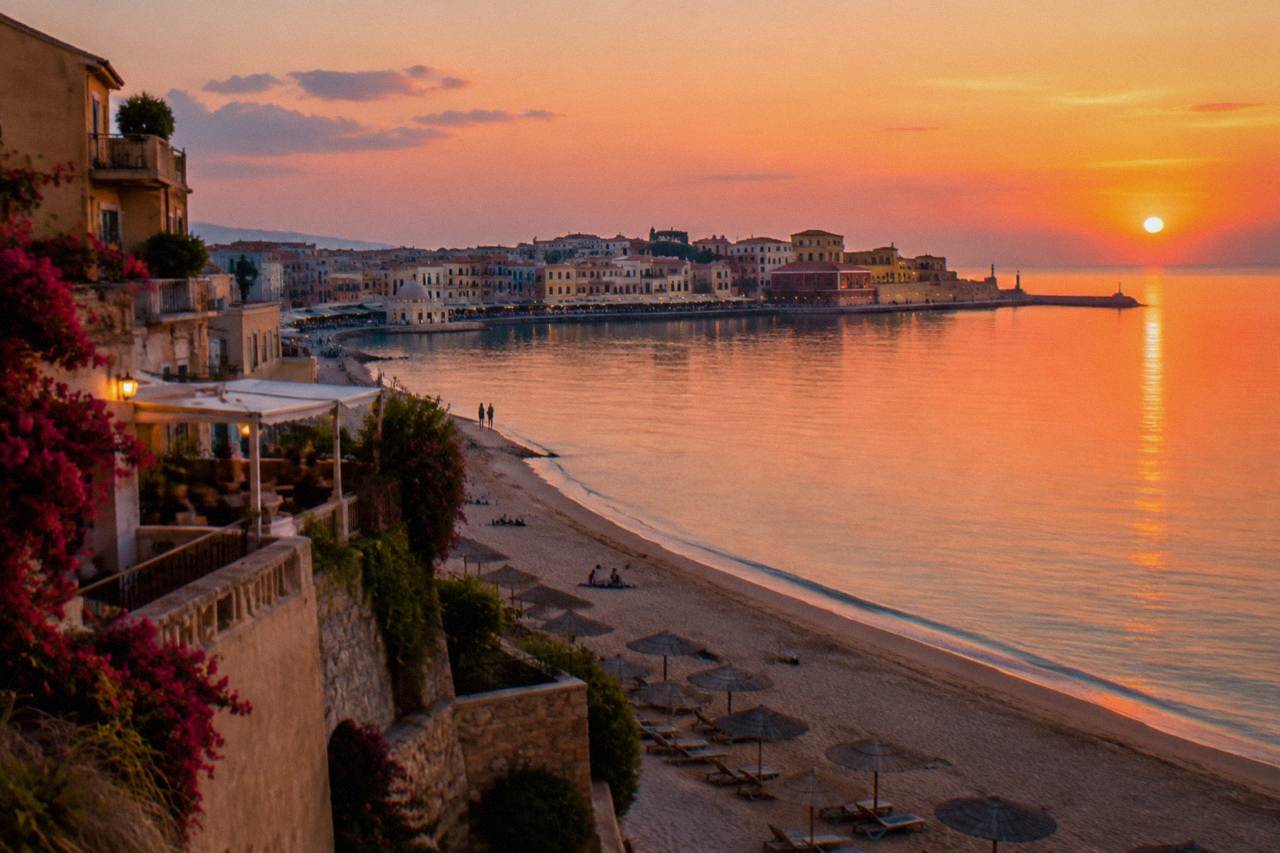
Chania, on the north-west coast of Crete in Greece, is unusual among Greek holiday cities in that its resort strip runs straight out of town. The Venetian Harbour sits at one end, the beaches of Nea Chora and Chrissi Akti a short way west, and then the coastal road continues through Agia Marina and Platanias towards Kissamos without the built-up strip ever really stopping. The municipality counted 111,375 permanent residents at the 2021 census, and a good share of them live along this same westward ribbon, which is why the question of where to base a holiday is less about remoteness and more about trade-offs: walkability against parking, quiet against tavernas, distance to the harbour against distance to Balos. This page compares the bases the way the sources describe them, and pairs each with the trips it serves.
Which Is The Best Resort To Stay In Chania?
For a first visit with no car, the Old Town of Chania is the best base, because the Venetian Harbour, the restaurants and the departure points for harbour boat trips are all on foot; for a pure beach holiday with a hire car, the Agia Marina and Platanias strip west of the city wins on sand and swimming, and for a quieter base aimed at Balos and Gramvousa, Kissamos cuts the driving. The honest answer is that "resort" here means an area, not a single hotel complex, and the coastal strip west of the city is one continuous choice rather than a set of rivals.
The Old Town gives the strongest return for a short stay. The harbour itself was first built between 1320 and 1356, the lighthouse stands at the end of the mole, and the Neoria shipyards survive as seven of an original seventeen from the 15th to 16th century. All of it is walkable, and the page on walking the Old Town covers the streets in detail. The trade-off is real: beaches within walking distance exist at Nea Chora, but a car is a burden in the old streets and parking is tight, which the Chania parking guide addresses directly.
Further west the picture changes. Agia Marina and Platanias run on sand, family apartments and tavernas, with the White Mountains in view to the south. The dedicated Agia Marina and Platanias guide and the broader where to stay in Chania page set out the areas street by street, and the question of which side of Crete is nicer is answered in more depth on its own page.
To see the White Mountains from a different angle, book a quad buggy safari here.
| Base | Setting | Best for | Main trade-off |
|---|---|---|---|
| Chania Old Town | Venetian Harbour, old streets | First visit, no car, restaurants | Little sand on the doorstep, tight parking |
| Nea Chora | City beach west of the harbour | Old Town plus swimming, no car | Fewer resort facilities than the west strip |
| Agia Marina and Platanias | Sandy beach strip west of the city | Beach weeks, families | A drive or bus ride from the Old Town |
| Kissamos | Working town near Balos boats | Balos and Gramvousa trips, quiet | Furthest from the Venetian Harbour |
What Does Each Chania Resort Area Actually Offer?
Nea Chora offers a city beach and tavernas within reach of the Old Town, Agia Marina and Platanias offer the main sandy resort strip about 20 to 30 minutes west by road, and Kissamos offers a quieter town whose port is the departure point for the Balos and Gramvousa boats. Each area has a distinct job, and confusing them is the commonest planning mistake on this coast.
Nea Chora deserves more attention than it gets. It is the closest sand to the Old Town, and the Nea Chora guide describes the beach itself; the essential point for resort planning is that it lets a visitor swim on foot while sleeping within range of the harbour restaurants. It suits couples and anyone who wants one base for a short stay rather than a resort week.
Agia Marina and Platanias are where the package-holiday infrastructure concentrates. The beaches are sandy and the water shallow, the strip is served by the coastal road, and the Agia Marina beach page covers the sand in detail. The trade-off is distance: everything cultural sits back in Chania, so evenings in the Old Town mean a bus, a taxi or a designated driver.
Kissamos, at the far west of the strip, is a different proposition altogether. It is a working Greek town with its own guide page, and its resort value comes from geography: the boats to Balos Lagoon and Gramvousa leave from Kissamos port, and the operator's own schedules run daily departures to 31 October 2026. Basing here turns the region's headline boat trip into a short morning walk rather than an early transfer.
Wherever the booking lands, the accommodation collects Greece's climate crisis resilience fee per room or apartment per night, with seasonal rates by category; the amount is confirmed at booking rather than assumed here. The full index of guides sits on Chania Crete Travel Guide.
Which Chania Base Suits A Beach Holiday Best?
For a beach-first holiday with children, the Agia Marina and Platanias strip is the best resort base around Chania, because it packs sandy, shallow swimming beaches with full taverna and apartment infrastructure; for adults who want sand plus old-town evenings without a car, Nea Chora is the better pick, and for beach days combined with the famous west-coast lagoons, Kissamos or Platanias put Balos and Falassarna within reach. The choice is really about how much driving a beach week should contain.
The sandy options do not stop at the strip. Falassarna sits further west with its own beach guide, and Elafonisi, a Natura 2000 protected area with free entry and a strict ban on taking sand, shells or plants, is covered on the Elafonisi page. Both are day trips rather than resort bases for a Chania-centred holiday, but both are reachable from anywhere on the west strip by car or by an organised tour.
From any of the coastal bases, the water itself is part of the draw, and seeing it from a kayak reframes the whole coast. The Venetian coastline sea kayak tour paddles the water below the harbour walls, and it pairs naturally with a stay anywhere from the Old Town westwards, since it departs from the city side.
The practical filter is transport. No car points at the Old Town or Nea Chora. A car opens the whole strip and the south coast, but the driver should read the driving in Crete notes first, and anyone weighing the two big cities should also read whether it is better to stay in Chania or Heraklion.
Which Chania Resort Base Works Best For Gorges And Boat Trips?
For a trip built around Samaria Gorge, the Balos cruise and the Elafonisi day, the best base is Chania city itself or the near west strip, because every one of those departures is collected from the city and the Agia Marina and Platanias corridor, while Kissamos saves the transfer only for the Balos boats. The day-trip map, not the beach map, is what should drive the choice on an active fortnight.
Samaria is the case in point. The gorge runs one way, from Xyloskalo on the Omalos plateau down to Agia Roumeli, with boats from Agia Roumeli to Sougia or Chora Sfakion at about 17:30 and a KTEL bus back. The individual ticket is EUR 10 through the NECCA e-ticket portal, free for EU residents under 18 and over 65, and the park's reported rules allow entry for the full walk between 07:00 and 13:00 with everyone out by 18:00. But the season is not a promise: the gorge normally opens 1 May to 31 October, and it closes or delays when storms damage the path, so the NECCA status must be checked before any plan is fixed. The full story is on the Samaria Gorge page and in the article on why the gorge closes. Tour prices exclude the separate entrance and ferry charges.
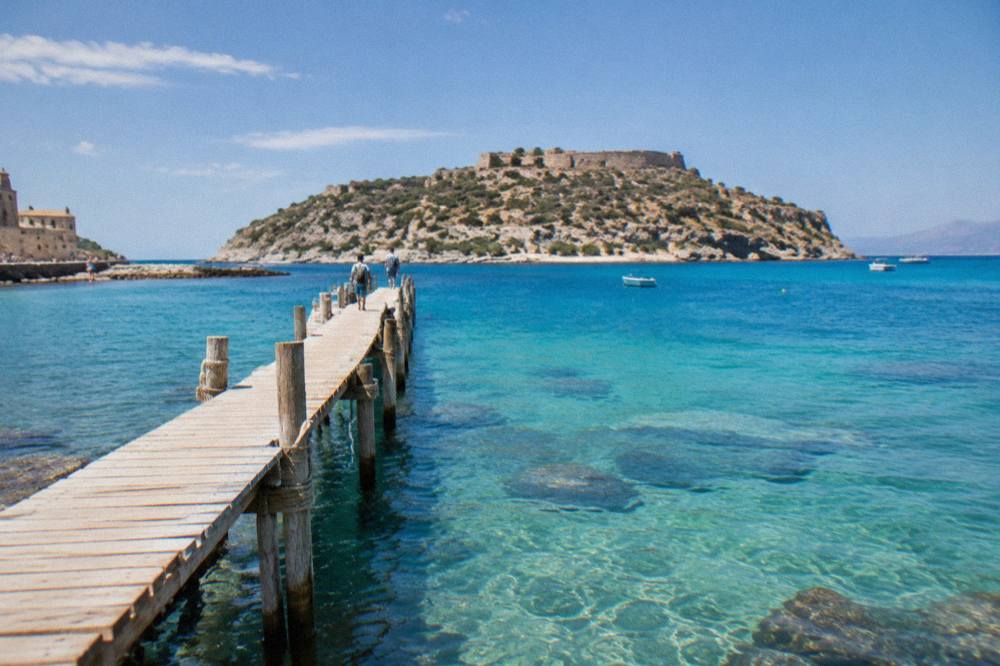
Balos is simpler to place. The boats leave Kissamos port, the only confirmed charge beyond the ticket is a EUR 1 municipal fee collected on the boat ticket for over-13s, and the drive to Balos by land runs from Kaliviani along an unpaved road to a parking area followed by a walk down. Whether a Balos day justifies basing in Kissamos is really a question of how many west-coast days the trip contains, which the Balos and Gramvousa guide and the piece on how hard Balos is to reach both take on directly.
Timing matters as much as geography. The HNMS Chania Souda station table, covering station records from 1958 to 2010, shows May to September as the dry window, with 13.5 mm of rain in May falling to 1.0 mm in July, while October jumps to 67.7 mm across 9.3 rain days. A gorge-and-boats fortnight belongs in that dry window, and the best time to visit Chania page works the seasons through month by month.
How Do The Chania Resort Areas Compare On Cost And Crowd?
Cost differences between the Chania resort areas come less from the area name than from the season and the property type, since the same strip swings between July and August peaks and the quiet months, and no nightly rate, tourist-tax amount or package price can be quoted here; what the sources do show is that crowd pressure is structural, with Old Town streets and harbour restaurants busiest in high summer and the far west quieter by geography. Anyone comparing prices should confirm totals at booking, including the resilience fee the accommodation collects.
Rather than price bands, which would be invented, the honest comparison is structural. The table below sets out what is actually known about each area's rhythm.
| Month | Mean temperature, HNMS Chania Souda station, 1958 to 2010 | Rain, mm | What it means for a resort stay |
|---|---|---|---|
| May | 20.2 C | 13.5 | Warm, dry, quieter than midsummer |
| July | 26.7 C | 1.0 | Peak heat, peak crowds, book ahead |
| September | 23.2 C | 15.4 | Sea still warm from summer, thinning crowds |
| October | 19.4 C | 67.7 | First real rain, 9.3 rain days, low season |
The crowd question has a companion in the is Chania a tourist trap piece, and the budget side is covered in whether Chania is expensive. The one structural fact worth repeating: the resort strip is continuous, so "quieter" west of Platanias is relative, not absolute, and the checks a reader can run are posted prices and itemised bills rather than reputation.
Common Questions About Staying In Chania
Which is the best resort to stay in Chania?
For a first visit, the Old Town; for a car-free beach and city mix, Nea Chora; for a sandy family week, Agia Marina and Platanias; for Balos boat trips and quiet, Kissamos. There is no single winner, only the base that matches the trip.
Is it better to stay in Chania Old Town or by the beach?
The Old Town wins for atmosphere, restaurants and walkable sights including the Venetian Harbour and Firka Fortress, whose grounds are free. Nea Chora splits the difference, putting a city beach within reach of the old streets without a car.
Can you reach Balos and Elafonisi from the resort strip?
Yes. Balos boats leave Kissamos port daily to 31 October 2026 on the operator's schedule, with a EUR 1 municipal fee on the ticket for over-13s, and Elafonisi is reachable by car or seasonal KTEL bus from the Chania long-distance station on Kydonias street. Elafonisi entry is free and taking sand, shells or plants is prohibited.
Do I need a car to stay in the Chania resort areas?
Not in the Old Town or Nea Chora, where parking is tight and the sights are on foot. A car earns its keep on the west strip and for Falassarna, Elafonisi and the south coast, and the driving conditions are covered in the site's driving guide.
Which area is closest to the airport?
Chania International Airport "Ioannis Daskalogiannis" sits on the Akrotiri peninsula about 14 km from the city centre, so the eastern edge of the city is closest; the west strip adds distance along the coastal road. Bus and taxi information is on the airport's own site.
Whatever the final pick, the base is a launchpad rather than the whole trip, and the itinerary pages, from one day in Chania to a full week in west Crete, show how much of the region each base puts within a single day's reach.