Etz Hayyim Synagogue Chania
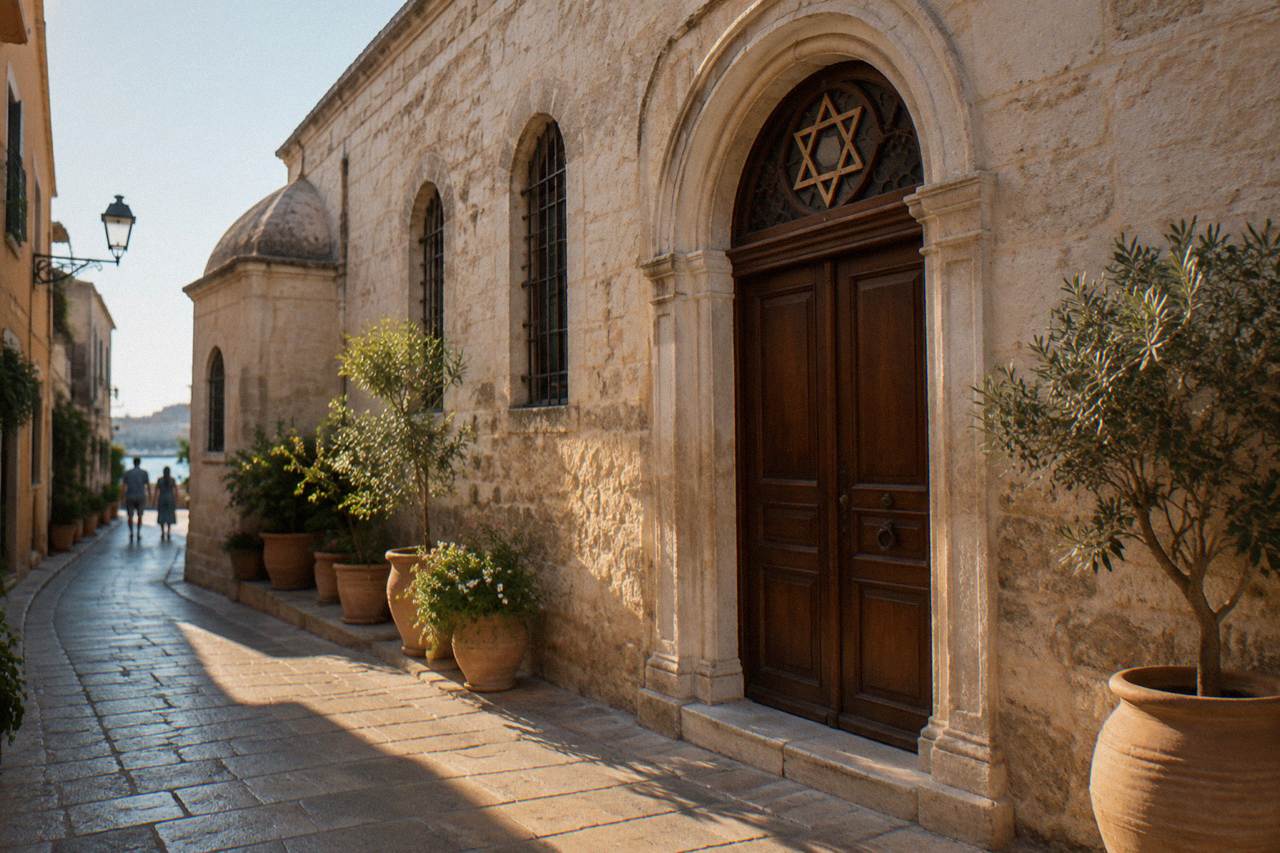
Etz Hayyim Synagogue is a working synagogue tucked into a narrow lane of Chania's Old Town, on the Aegean coast of Crete, Greece, and it stands as both an active place of worship and a memorial to the island's historic Jewish community.
Short answer
Etz Hayyim Synagogue stands in the heart of Chania Old Town in Crete, Greece. It is an active synagogue, restored and reopened after years of abandonment, and it welcomes respectful visitors. Plan around half an hour for the visit itself, and combine it with the Venetian Harbour, the Municipal Market and the lanes of the old Jewish quarter, all within a short walk of each other.
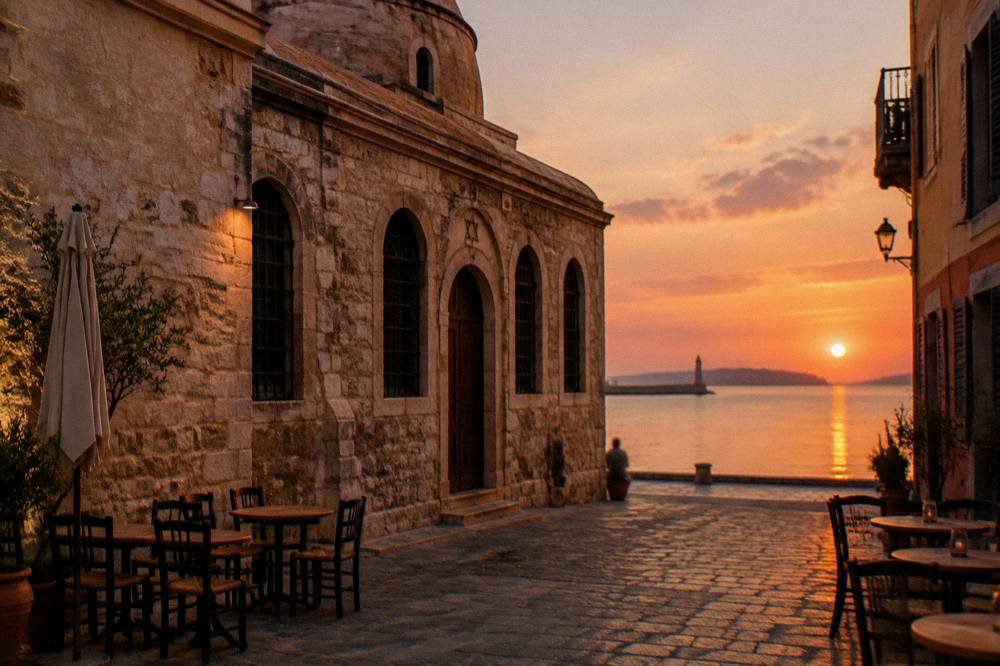
Etz Hayyim Synagogue stands in a narrow lane of Chania's Old Town, on the north-west coast of Crete, Greece, a short walk inland from the Venetian Harbour. It is a working synagogue, restored after a long period of abandonment and damage, and its courtyard and prayer halls now serve both a small living congregation and the many travellers who come to see one of the most quietly affecting buildings in the city. The synagogue gives its name to nothing else on the tourist trail, which is part of its value: it is a single, contained place that tells a story the harbour restaurants do not.
What Is Etz Hayyim Synagogue In Chania?
Etz Hayyim is an active Orthodox synagogue in the Old Town of Chania, Crete, Greece, restored and reopened after decades of disuse, and it functions at once as a house of prayer, a small archive and library, and a memorial to the Jewish community of Crete that was destroyed during the Second World War. The building sits in the old Jewish quarter, a web of narrow lanes behind the harbour, and it is one of the few working synagogues on the island. Visitors are welcomed when it is open, with an expectation of modest dress and quiet conduct.
The name means "Tree of Life" in Hebrew, a name the building carries from its long history as a place of worship for the Jewish community of Chania. That community traced its presence on Crete back many centuries, in a story that ran through Venetian rule, which began with the harbour works of 1320 to 1356, and through the Ottoman period that started with the conquest of Chania in 1645. The community's end came with the Second World War, when the Jewish population of Crete was deported and lost, and the synagogue was left empty and decaying.
What a visitor finds today is the result of a careful restoration carried out after that long abandonment, following which the building reopened for worship and for visits. No date on the building or its fittings should be taken for granted, and the synagogue's own visitor information, available at the entrance, is the authority on its history, its restoration and the rules that apply. The desk's advice is simple: treat the published notice at the door as the live source for everything from opening times to photography rules.
Where Is Etz Hayyim Synagogue And How Do You Get There From Central Chania?
The synagogue sits inside the pedestrian lanes of Chania Old Town, a few minutes on foot from the Venetian Harbour and within easy walking distance of every Old Town hotel, with the main approach from Kondylaki street in the former Jewish quarter; there is no need for a bus or taxi if you are staying anywhere inside the old city, and the lanes are signed and walkable. From the harbour front, walk inland past the Mosque of the Janissaries and the Neoria shipyards direction, then turn into the lanes behind the Municipal Market.
Chania's Old Town is compact, and the whole area between the harbour and the city walls is a walkable district of stone lanes. The synagogue has no dedicated car park, and driving into the Old Town is impractical: the wider parking question is covered on the Chania Crete Travel Guide pages, including the guide to parking and getting around if you are based outside the centre. If you arrive by cruise ship, the walk from the cruise port gate into the Old Town is short and flat.
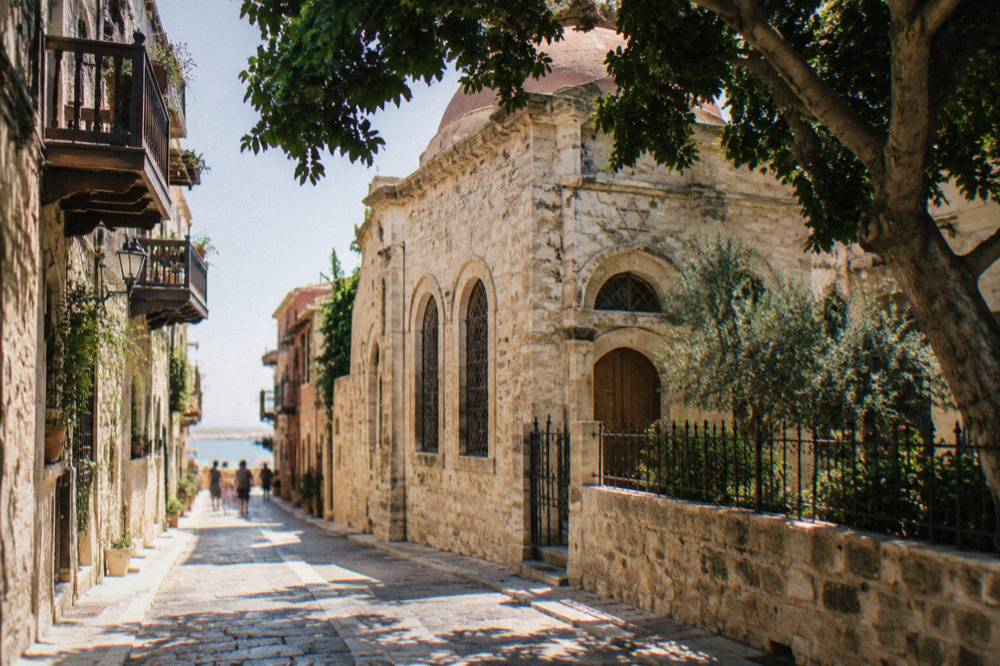
For a first visit to the city, the synagogue slots naturally into an Old Town circuit. The one-day Chania itinerary places the harbour, the market and the inland lanes into a single walk, and the synagogue sits exactly on that route. If you have longer, the two-day itinerary spreads the same ground over a more comfortable pace, and the three-day version adds the beaches and monasteries of the Akrotiri peninsula.
If a guided hour in these same lanes appeals, these Old Town experiences all start within a short walk of the synagogue door:
What Can You See Inside Etz Hayyim Synagogue?
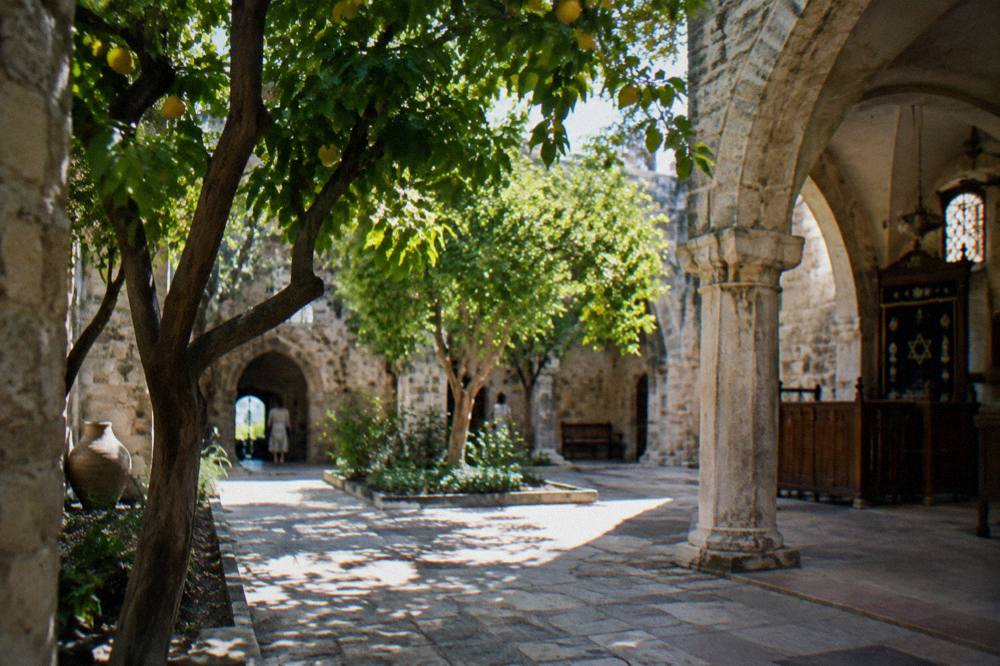
Inside, visitors find a stone courtyard planted with trees, two prayer halls arranged in the Sephardi manner, a ritual mikveh exposed below floor level, tombs set in the courtyard floor, and a small library and display of objects and documents that record the history of Crete's Jewish communities; the interiors are modest in scale and rich in meaning, and a visit usually runs to half an hour or so. The Ehal ark and the reading desk anchor the main hall, and memorial inscriptions record the community lost in the war.
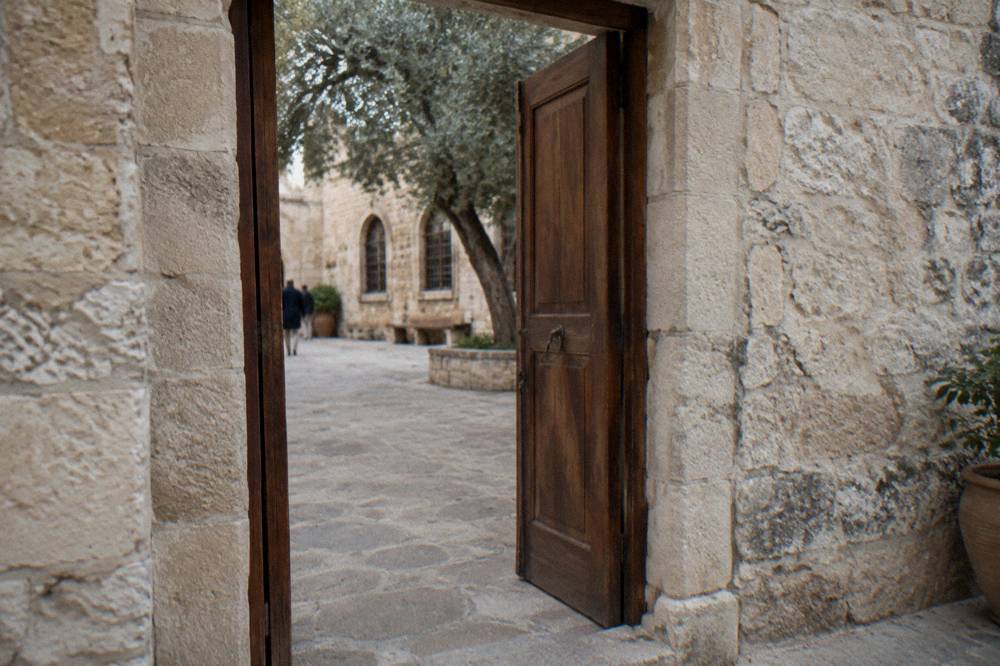
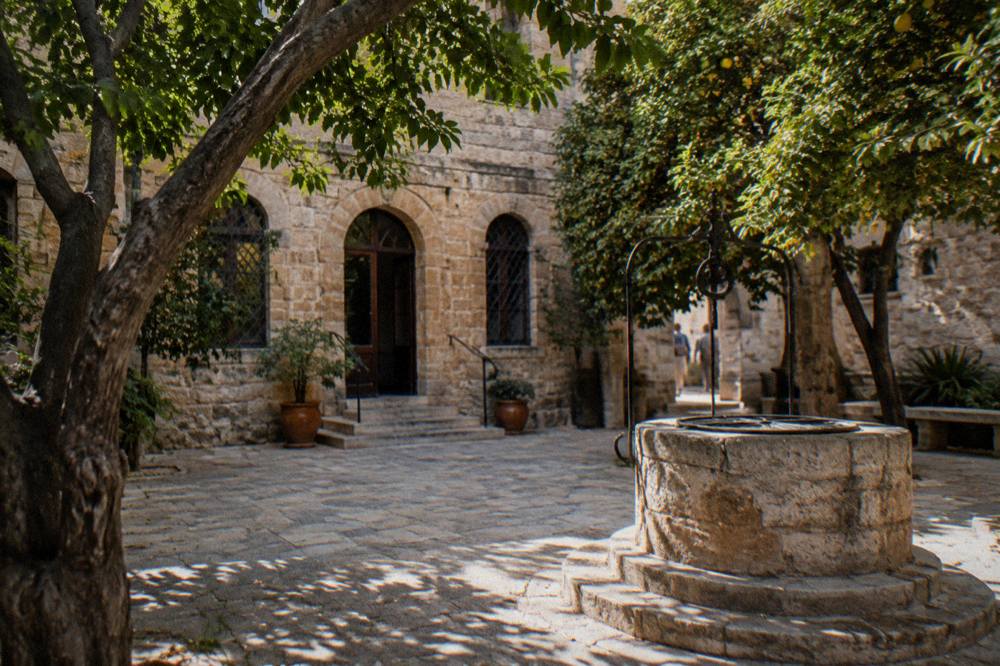
The courtyard is the first space you enter, and it does a great deal of the talking. Trees grow from the paving, and stone gravestones, moved here from the community's former cemetery, lie set into the ground. The halls open off the courtyard, with their furnishings intact and in use for services. A small exhibition area and library hold books and papers, and the mikveh, the ritual bath, is visible as a lower-level feature of the complex. Photography rules and access to particular rooms vary, and the notice at the entrance states what applies on the day.
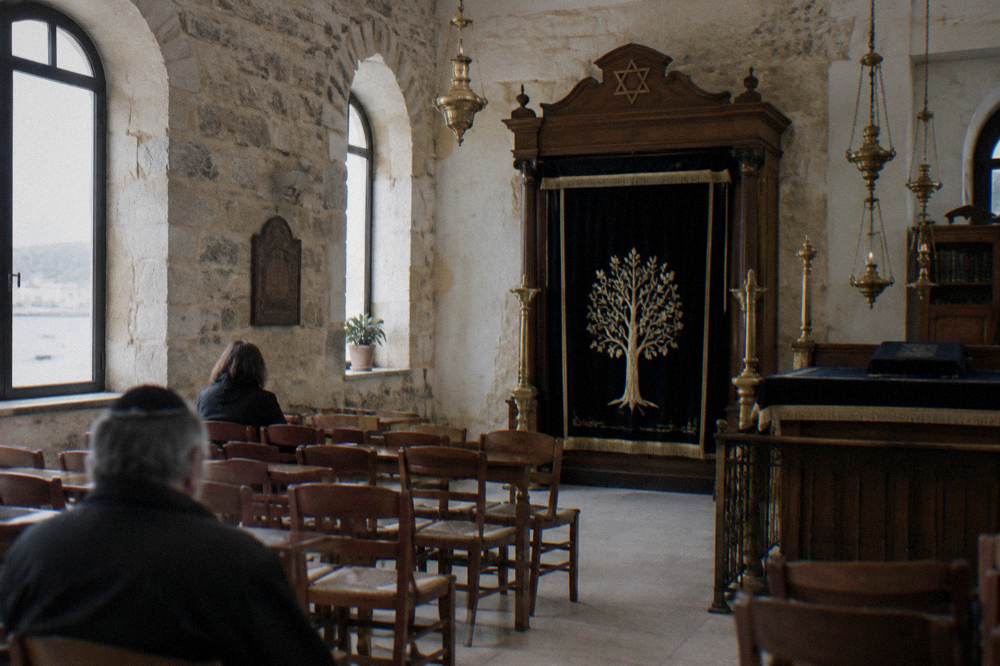
The synagogue is a place of worship first and a sight second, and that ordering shapes the etiquette. Shoulders and knees should be covered, head coverings for men are normally available at the door, and visitors should keep their voices low and stand aside when a service is in progress. Services are held on Shabbat and festivals, and visiting hours are built around them, so the hours change with the religious calendar rather than with the tourist season. The practical answer to "when can I go in" is always the synagogue's own posted information, not a guide page.
Is Etz Hayyim Synagogue Open To Visitors Every Day?
No, and no fixed weekly opening schedule should be relied on, because the synagogue keeps hours set around its religious calendar, adjusts them through the year, and closes for services and festivals; the reliable method is to check the synagogue's own current visitor information shortly before your visit, and to plan your Old Town day so the synagogue is a flexible stop rather than a timed one. An entry donation is the normal practice rather than a fixed ticket, and no price is printed here because none is verified.
This is one of several Chania sights whose practical details live on the door rather than in a brochure. The Archaeological Museum of Chania publishes its own visit page for hours, the Maritime Museum of Crete likewise, and the synagogue belongs in the same category of place where a two-minute check saves a wasted walk. The table below shows what the desk can state with a source and what belongs to the live notice.
| Sight | What Is Verified | What To Check Locally |
|---|---|---|
| Etz Hayyim Synagogue | Working synagogue in the Old Town, restored and reopened | Hours, service times, photography rules |
| Archaeological Museum of Chania | 15 Skra Street, Halepa; full ticket EUR 15, concession EUR 8 | Opening hours and closing days |
| Firka Fortress | Grounds free; fort built 1620 by the Venetians | Interior exhibitions and hours |
| Maritime Museum of Crete | Located at the harbour in Firka Fortress | Price and hours |
How Does The Synagogue Fit Into A Day In Chania Old Town?
Etz Hayyim works as a mid-morning or late-afternoon stop inside a walking circuit of the Old Town, between the Venetian Harbour, the Municipal Market and the two old quarters of Splantzia and Topanas; the building sits on the natural line between the harbour front and the market, so a route that starts at the lighthouse end of the harbour and finishes at the market passes the synagogue lane almost by default, and the whole circuit is short enough to walk at any pace.
A morning might run like this: start at the Venetian Harbour, walk out along the mole toward the lighthouse, return along the water past Firka Fortress, then cut inland into the lanes and reach the synagogue before the midday heat builds. The Municipal Market then makes a natural next stop, and the market-day question has its own answer on the site. Afternoon options fork toward the water: a swim, a boat trip, or a slow circuit of the Old Town lanes you missed in the morning.
Food is the other thread of the Old Town, and the lanes around the synagogue hold some of the city's longest-established counters. A guided tasting walk through the same streets is one way to anchor the day, and the related town food tasting tour covers the quarter's specialities with a local lead, or you can Check availability for your dates. The wider list of where to eat, from bougatsa to waterfront tavernas, sits in the site's restaurant guides.
What Nearby Sights Pair Well With The Synagogue Visit?
The synagogue's closest companions on a walking day are the Venetian Harbour with its lighthouse, Firka Fortress at the harbour's west end, the Maritime Museum of Crete inside Firka, the Archaeological Museum in Halepa, and the Splantzia quarter across the old city, with every one of these reachable on foot and none requiring transport until you head for the beaches of the Akrotiri peninsula or the west-coast day trips. The pairing that saves the most effort is synagogue plus harbour plus market, all inside ten minutes of each other.
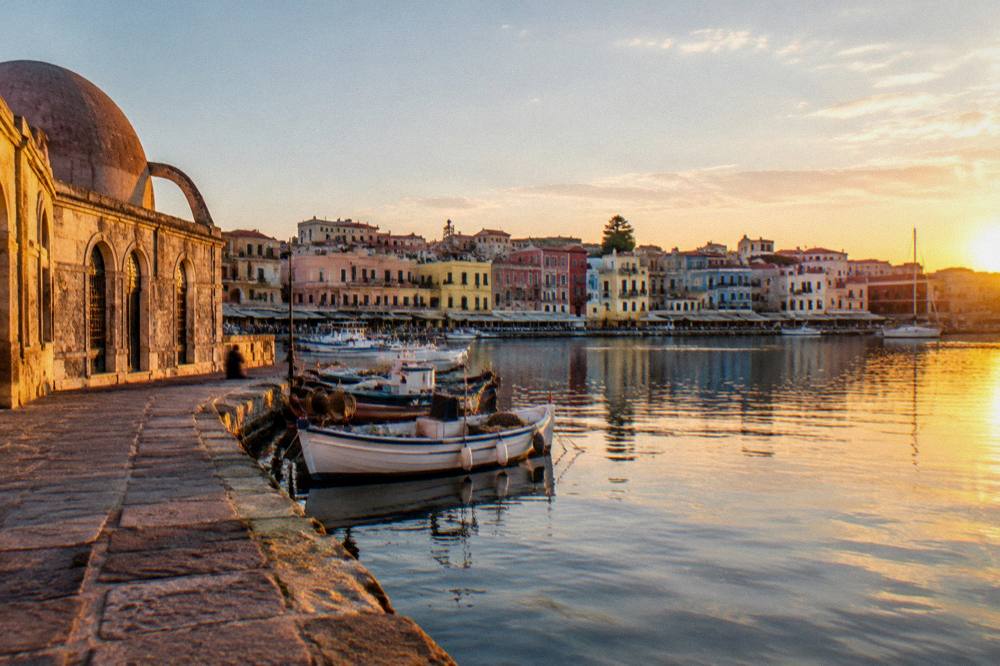
The dating of the harbour monuments is well documented and worth knowing before you walk them. The harbour itself was first built between 1320 and 1356, the lighthouse went up in about 1595 to 1601 and was restored on its Venetian base during the Egyptian period of 1830 to 1840, and Firka Fortress dates from 1620. The Neoria shipyards, seven survivors of an original seventeen from the 15th to 16th century, line the harbour's east side.
| Monument | Built Or Restored | Notes For Visitors |
|---|---|---|
| Venetian Harbour | First built 1320 to 1356 | Dredging and a wall recorded 1515 |
| Lighthouse (Faros) | About 1595 to 1601 | Egyptian-era restoration 1830 to 1840, operating 1839 |
| Firka Fortress | 1620 | Grounds free to walk |
| City walls | First walls 1336 to about 1356; second walls from 1536 | Second walls to Michele Sanmicheli's design |
| Neoria shipyards | 15th to 16th century | Seven survive of seventeen |
For the second half of a pairing day, the water is the obvious pull. An evening sailing out of the old port rounds off a day of stone lanes with the coastline from the sea, and the related sunset catamaran cruise departs from the harbour a short walk from the synagogue lane.
What Is The Weather Like Around The Old Town Through The Year?
The Chania Souda station table, which records monthly means for the period 1958 to 2010, shows a classic Mediterranean pattern: July is the warmest month at 26.7 C mean and the driest at 1.0 mm of rain, January is the coolest at 11.0 C and the wettest at 129.5 mm, and the May to September stretch is dry enough that rain barely figures in a walking day, while from October onward rainfall rises again to 67.7 mm in the month. The figures come from an inland station at 148 m, so the harbour front usually feels a shade milder and breezier.
| Month | Mean Temp C | Rainfall Mm | Rain Days |
|---|---|---|---|
| Jan | 11.0 | 129.5 | 16.3 |
| Feb | 11.0 | 104.0 | 14.5 |
| Mar | 12.7 | 76.0 | 11.5 |
| Apr | 15.9 | 31.5 | 7.7 |
| May | 20.2 | 13.5 | 4.2 |
| Jun | 24.7 | 3.4 | 1.2 |
| Jul | 26.7 | 1.0 | 0.4 |
| Aug | 26.3 | 1.4 | 0.6 |
| Sep | 23.2 | 15.4 | 3.2 |
| Oct | 19.4 | 67.7 | 9.3 |
| Nov | 15.8 | 77.0 | 11.2 |
| Dec | 12.7 | 101.9 | 16.1 |
For synagogue planning, the weather matters less than for the beaches, since the visit itself is indoors and the walk between sights is short. Midsummer midday heat is the one real constraint: the lanes hold heat, so the morning circuit is the comfortable one in July and August, when mean maximums run at 30.7 C and 30.4 C. Humidity in the same station table runs from 50 percent in July to 73 percent in January, and the prevailing wind is west, turning north-west in July and August, which is the meltemi pattern familiar to every Aegean sailor.
How Does Etz Hayyim Compare With Chania's Other Historic Monuments?
The synagogue's distinction is that it is a living religious space inside a city whose other headline monuments are civic or military survivals: the harbour, the walls, Firka Fortress and the Neoria tell the story of Venetian and Ottoman Chania, while Etz Hayyim tells the story of a community, and it is the only major Old Town monument that functions today as it did for centuries, as a working congregation's house of prayer, which is why its hours bend to a religious calendar rather than to a tourism one.
The comparison also works in practical terms. Firka Fortress grounds are free and open with the fortress itself dating from 1620. The Archaeological Museum in Halepa charges EUR 15 full price and EUR 8 concession, on a site a short ride east of the Old Town. The harbour monuments cost nothing to walk. The synagogue asks for nothing but a donation and appropriate conduct, and gives back, in return, the most concentrated piece of human history in the old city. The table below summarises the practical side.
| Monument | Type Today | Entry Cost | Location |
|---|---|---|---|
| Etz Hayyim Synagogue | Working synagogue and memorial | Donation practice; confirm on site | Old Town lanes |
| Venetian Harbour and lighthouse | Public waterfront | Free | Old Town waterfront |
| Firka Fortress | Fortress grounds | Free grounds | Harbour west end |
| Archaeological Museum of Chania | Museum | EUR 15 full, EUR 8 concession | 15 Skra Street, Halepa |
| Municipal Market | Working market | Free entry | Old Town edge |
What Should You Know Before You Go To Etz Hayyim Synagogue?
Dress modestly with shoulders and knees covered, expect a head covering if you are a man and find them provided at the door, keep your voice down and your phone silent, be prepared for hours that follow the religious calendar rather than a fixed weekly grid, and treat the notice at the entrance as the single authority on the day's visiting window, photography rules and any request for a donation; there is no ticket desk, no timed entry and nothing to book ahead for the synagogue itself.
Group visits and research access are handled directly with the synagogue, and the desk advises contacting the community rather than relying on any third party for arranged access. If a day of Old Town lanes, food counters and harbour history sounds like the right shape for your trip, the site's overview of things to do in Chania sorts the options by interest, and the related pages on the cruise port day cover the short-visit case where every minute of routing counts.
For the afternoon, the water is close. A snorkelling and paddleboarding trip out of the old port makes a light counterpart to a morning of stone and shade, and the related snorkeling and paddleboard boat trip leaves from the harbour a few minutes' walk from the synagogue lane, or you can Check availability for the dates you are in the city.
These harbour and food experiences all start within the same short walk of the synagogue's door, which makes pairing the visit with a water or tasting trip the easiest plan in the city:
Common Questions About Etz Hayyim Synagogue In Chania
Is Etz Hayyim Synagogue in Chania open to tourists?
Yes, when its visiting hours allow. It is a working synagogue rather than a ticketed attraction, so the hours follow the religious calendar and change through the year. Check the synagogue's own current visitor information before you go.
How long does a visit to Etz Hayyim Synagogue take?
Allow around half an hour for the courtyard, the prayer halls and the small displays, longer if you want to read the memorial material in full. It fits easily into a walking morning around the Old Town.
Is there an entrance fee for Etz Hayyim Synagogue?
There is no fixed ticket. A donation at the entrance is the normal practice and supports the building's upkeep. No amount is printed here because none is verified.
What should I wear to visit the synagogue?
Modest dress: shoulders and knees covered. Men are normally asked to wear a head covering, and coverings are usually available at the door. Keep voices low and phones silent.
Can you take photographs inside Etz Hayyim Synagogue?
Photography rules vary and are set by the community, so follow the notice at the entrance and ask if in doubt, and never photograph during a service.
Where exactly is the synagogue in the Old Town?
It stands in the lanes of the former Jewish quarter behind the Venetian Harbour, on the walking line between the harbour front and the Municipal Market, a few minutes on foot from both.