Is Chania A Tourist Trap?
Is Chania a tourist trap? A sourced look at where Chania's Old Town genuinely gets crowded, what things actually cost, and how to tell a real Cretan taverna from a visitor-facing one.
Chania, on the north-west coast of Crete in Greece, is a working city of 111,375 permanent residents (2021 census) wrapped around a Venetian Harbour first built between 1320 and 1356. It is popular, and in July and August the lanes behind the harbour are busy. That is not the same thing as a tourist trap, and the difference is measurable: the municipality runs year-round services, the long-distance KTEL bus station on Kydonias street connects the city to Heraklion, Rethymno and Kissamos, and the Archaeological Museum charges the same EUR 15 full ticket to everyone. This page separates what is genuinely visitor-facing from what is simply a small old town absorbing a lot of summer arrivals, using the figures the sources actually publish.
Is Chania A Tourist Trap?
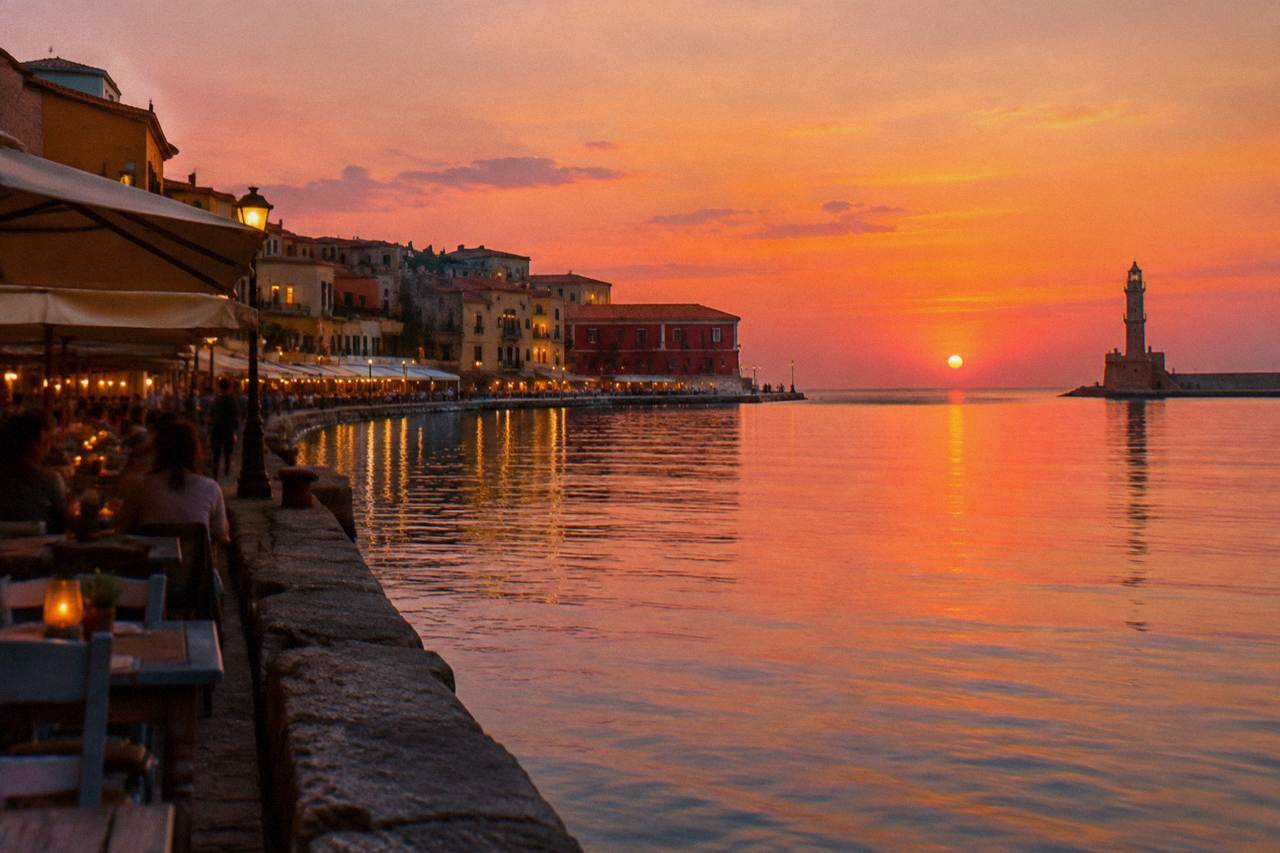
No, Chania is not a tourist trap in the sense of a place that exists only to extract money from visitors, because 111,375 permanent residents (2021 census) live in the municipality, the harbour and the lighthouse predate mass tourism by centuries, and the city's museums, bus station and market serve locals at published prices. What Chania does have is a small Old Town where summer crowds concentrate within a few streets of the water, and a strip of harbourfront restaurants whose business is built almost entirely on that footfall. The honest answer is that the tourist-trap mechanics exist in pockets, the city around them is real, and the boundary between the two is a short walk inland.
The distinction matters because "tourist trap" implies the whole destination is staged. The record says otherwise: the Venetian Harbour was first built 1320 to 1356, the lighthouse on its mole dates from about 1595 to 1601 with an Egyptian-era restoration between 1830 and 1840, and the Neoria shipyards are seven survivors of an original seventeen from the 15th to 16th century. None of that was built for cruise passengers. Ottoman rule from the 1645 conquest and the union of Crete with Greece in 1913 sit in the same streets a visitor walks today.
The pressure point is geographic. The Old Town is small, the harbour is its focal point, and the evening promenade along it is the single activity every visitor does. Crowding is a function of that funnel, not of a city-wide problem. The Chania Crete Travel Guide covers the neighbourhoods street by street, and the pattern that emerges is consistent: the blocks nearest the water carry the highest share of visitor-facing businesses, while Splantzia, Halepa and Nea Chora keep a heavier local mix.
Where Are The Crowds Concentrated In Chania?
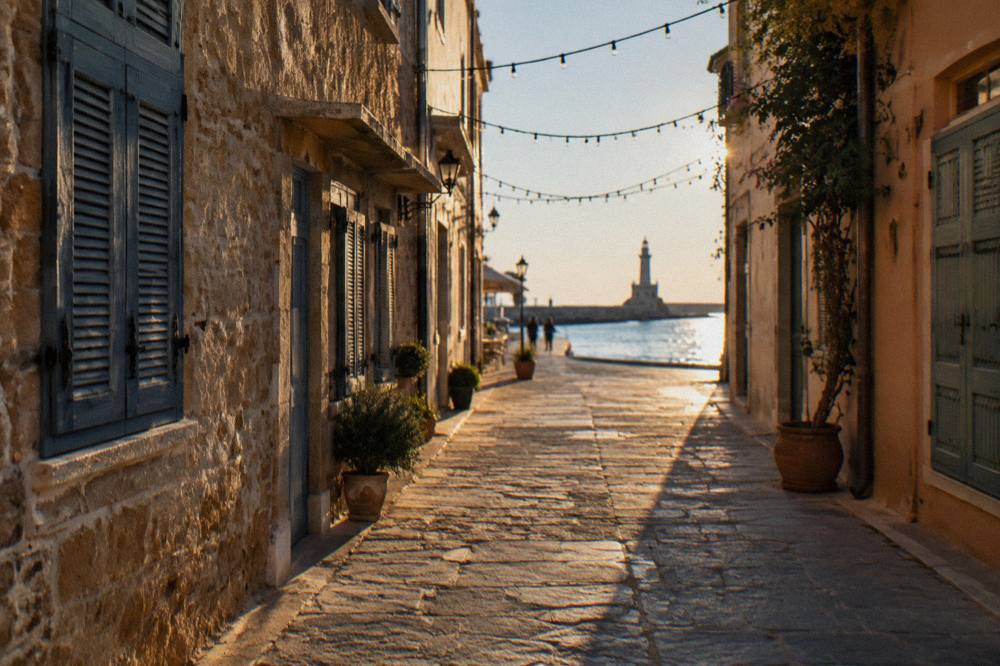
The crowds in Chania concentrate on the harbourfront promenade, the streets immediately behind it around the lighthouse end and the Splantzia edge of the Old Town, and the evening period roughly from sunset onward, because the Old Town is a small pedestrian-scale area and everyone converges on the same waterline. Away from those lanes, the city thins out quickly: Halepa with the Archaeological Museum at 15 Skra Street, Nea Chora's working beachfront, and the residential slopes toward the White Mountains all run at local pace even in August.**
Two structural facts drive this. First, the harbour is the endpoint of nearly every walk, and the boat departures to Lazaretta and Agioi Theodoroi leave from the same general waterfront, so day visitors and staying visitors overlap. Second, the excursion boats that serve Balos and Gramvousa leave from Kissamos port, not Chania, which keeps at least one heavy traffic flow out of the Old Town entirely; the Piraeus ferry is even further out at Souda, about 7 km east.
Season matters as much as geography. The HNMS Chania Souda station table (1958 to 2010) shows July with a mean of 26.7 C and 1.0 mm of rain against 16.3 rain days and 129.5 mm in January, so the visitor surge tracks the dry months, May through September, almost exactly. Anyone who can travel in the shoulder months gets the same harbour with a fraction of the pressure.
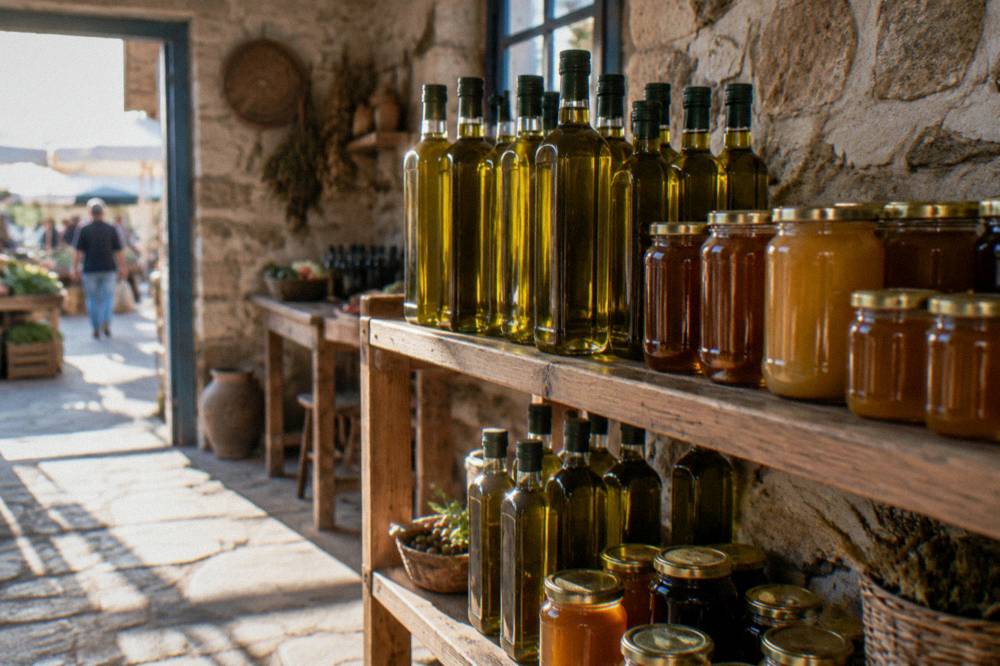
One reliable way out of the funnel is to book a day that leaves the harbour strip altogether. The Crete Wine and Olive Oil Tour runs inland to working producers, and the Knossos and Heraklion day trip takes the island's archaeological heavyweight off your Chania evenings. Both are covered on the site's tour pages, with prices and ratings shown on each operator's live listing.
What Do Things Actually Cost In Chania?
Published, verifiable Chania prices are modest and mostly civic rather than commercial: the Archaeological Museum full ticket is EUR 15 with an EUR 8 concession, Firka Fortress grounds are free, Samaria Gorge's individual ticket is EUR 10 via the NECCA e-ticket portal, and the only confirmed charge at Balos is a EUR 1 Kissamos municipal fee collected on the boat ticket for over-13s. No verified source publishes a price for a harbourfront dinner, and this page will not invent one; the check a reader can make is the menu board and the itemised bill, both of which Greek venues are required to provide.**
The figures that are on record, from the sources themselves:
| Item | Verified figure | Source note |
|---|---|---|
| Archaeological Museum of Chania, full ticket | EUR 15 | 15 Skra Street, Halepa; check the museum's visit page for days |
| Archaeological Museum, concession | EUR 8 | Same listing |
| Firka Fortress grounds | Free | Fort built 1620 |
| Samaria Gorge individual ticket | EUR 10 | NECCA e-ticket portal; free for EU under-18 and over-65 |
| Kissamos municipal fee at Balos | EUR 1 | Collected on the boat ticket, over-13s only |
| Elafonisi entry | Free | Natura 2000 area; taking sand, shells or plants prohibited |
Two cautions go with that table. Samaria Gorge normally runs 1 May to 31 October, but storms in late September and early October 2026 destroyed sections of the path, staff have called a 2026 reopening extremely difficult, and no final decision is on record, so the NECCA status has to be checked before any plan is made. And the climate crisis resilience fee that accommodation collects per room or apartment per night has seasonal rates set by category: confirm the amount at booking rather than from any second-hand figure.
How Do You Avoid The Tourist-Trap Version Of Chania?
Avoid the tourist-trap version of Chania by checking three things any reader can verify on the spot: menu boards with printed prices before you sit, an itemised bill before you pay, and a two-street detour inland from the harbour, where Splantzia and the streets behind the Municipal Market carry a heavier share of local trade. The pattern is structural, not mysterious: rent falls with every street of distance from the water, and the businesses that survive on local repeat trade rather than one-time footfall cluster where that rent is lower.**
The harbourfront itself is still worth walking, and this page does not claim any named venue overcharges; no venue can be honestly described that way without evidence, and the check is the posted menu, not a stereotype. What the sources do show is that the city's identity is not dependent on that strip. The question what is Chania Greece famous for has answers in the harbour's first works of 1320 to 1356, the 1536 walls by Michele Sanmicheli's design and the food culture, not in any single restaurant row.
Food is the area where the inland rule pays off fastest, and the site's Chania food and restaurant coverage plus the answer on what food Chania is known for map the specifics. A guided tasting walk does the same job with a local filter, and a countryside tasting day goes one further by leaving town entirely.
To taste your way inland with a local guide, book a Chania food tasting tour here.
Is Chania Worth Visiting Despite The Summer Crowds?
Yes, Chania is worth visiting despite the summer crowds, because the things that draw people, a harbour first built 1320 to 1356, a lighthouse from about 1595 to 1601, seven surviving 15th to 16th century shipyards and a living city of 111,375 residents, are permanent and cannot be crowded out of existence, and the peak-season pressure is a scheduling problem with known solutions: shoulder months, inland streets and mornings before the excursion traffic builds. The HNMS Chania Souda station table (1958 to 2010) makes the scheduling case in numbers: May averages 20.2 C with 13.5 mm of rain and October 19.4 C with 67.7 mm, both workable months with far lighter arrivals than July's 26.7 C mean.**
The comparison questions visitors ask point the same way. On which is nicer, Chania or Rethymnon, both cities share Venetian roots and summer crowds, and neither is a trap; the honest difference is scale, with Chania larger and further from Heraklion's arrivals funnel, a trade-off also examined in where is nicer, Chania or Heraklion. The broader question of how many days in Chania is enough matters here too: a single rushed day compresses a visitor into exactly the crowded harbour strip, while three or four days spread the same sightseeing across mornings, inland meals and a day trip.
The three trips in that band each solve the crowd problem differently: an inland wine and olive oil day, a Knossos and Heraklion run that front-loads the island's biggest sight, and a snorkelling boat trip that gets you off the seawall and onto the water the harbour faces.
Common Questions About Chania As A Tourist Destination
Is Chania a tourist trap?
No. It is a real, year-round city of 111,375 permanent residents (2021 census) with a harbour first built 1320 to 1356. It has visitor-facing pockets on the harbourfront, but posted menu prices and itemised bills let any visitor check rather than trust a label.
Is Chania Old Town walkable and is it worth staying in?
The Old Town is compact and pedestrian in character, which is exactly why it crowds; the site's answers on walkability and on staying in the Old Town cover the trade-offs street by street.
Is Chania expensive?
The verified civic prices are modest: EUR 15 for the Archaeological Museum, EUR 10 for the Samaria ticket, EUR 1 municipal fee at Balos, free entry at Elafonisi and Firka grounds. Restaurant and hotel rates vary and should be checked at the venue or at booking.
When is Chania least crowded?
The dry season runs May to September on the HNMS Chania Souda table (1958 to 2010), with July at 1.0 mm of rain; May, late September and October keep mild mean temperatures with a fraction of the arrivals.
Are Balos and Elafonisi day trips tourist traps?
The beaches themselves are protected areas, Elafonisi a Natura 2000 site with free entry and a prohibition on taking sand, shells or plants. Boat tickets to Balos from Kissamos carry a EUR 1 municipal fee; prices are on the operators' live listings.
Chania rewards the same attention any old Mediterranean port city does: read the posted prices, walk two streets inland, and give the harbour more than a single hurried day. The city has been trading on this waterline since its first harbour works of 1320 to 1356, and the part of it that is genuinely for visitors sits on top of, not instead of, the real thing.