What Should I Not Miss In Crete?
A planning answer to what not to miss in Crete, written from Chania: the Venetian Harbour, Balos and Elafonisi, Samaria Gorge, the food of the Old Town and the south coast.
Crete is the island that holds the harbour city of Chania on its north-west coast, and the honest answer to what not to miss is almost entirely reachable from there. The Venetian Harbour, the White Mountains, the lagoon at Balos, the pink sand of Elafonisi and the gorge walks at Samaria and Imbros are the island's headline items, and each is either inside the city or a day trip from it. This page sets out the shortlist in the order a visitor based in Chania would actually plan it, with the dates, prices and access rules the official sources give. For the city-only version of the same question, the companion page What Not To Miss In Chania covers the Old Town in detail.
What Should I Not Miss In Crete?
Five things carry the island: the Venetian Harbour and Old Town of Chania, the lagoon at Balos with the island of Gramvousa, the protected beach at Elafonisi, the gorge walks of the White Mountains, and the food of the island itself, from olive oil and honey to the cooked dishes of the Old Town. Each one is reachable from a base in Chania, and together they cover sea, mountain, history and table, which is what the island is for. The list below expands each of them with the figures and the access caveats that decide whether a plan works.
The island's scale matters before any list does. Crete sits across the Cretan Sea from the mainland, and its sights are spread along a long coastline, so the choice of base decides how much of the list a week can carry. Chania is the western anchor: the ferry from Piraeus arrives at Souda port about 7 km east of the Old Town, the airport sits about 14 km from the centre on the Akrotiri peninsula, and the KTEL bus station on Kydonias street runs the routes to Heraklion, Rethymno, Kissamos, Paleochora and, in summer, Elafonisi.
The Venetian Harbour And Old Town Of Chania
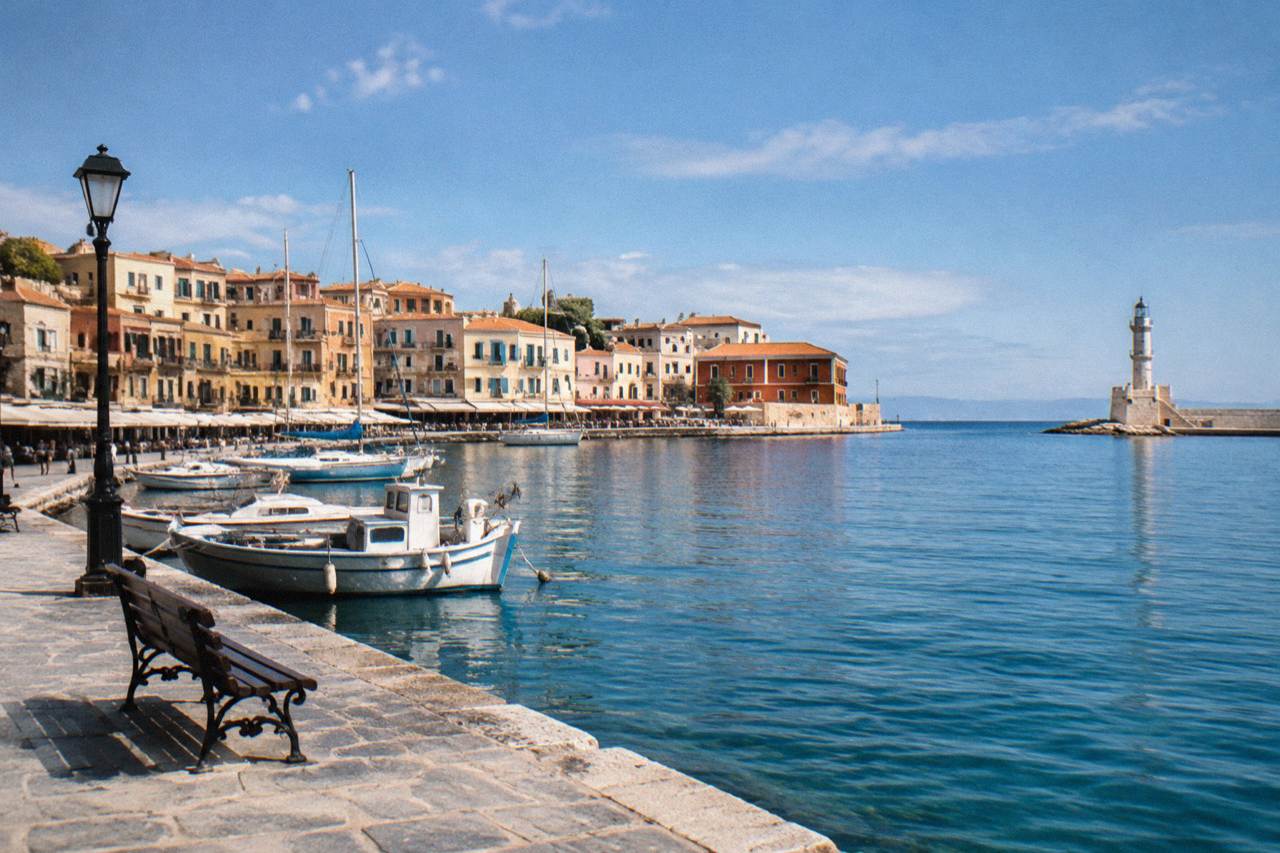
The one sight in the city of Chania that no island list omits is the Venetian Harbour, first built between 1320 and 1356, with its lighthouse on the mole, the Firka Fortress of 1620 and the shipyard sheds known as the Neoria, seven survivors of an original seventeen from the 15th to 16th century. The Old Town wraps around it, and the whole ensemble, harbour, fortress, lighthouse and lanes, sits within walking distance, which is rare on an island this size. The Firka Fortress grounds are free to enter, and the fort itself dates from 1620, built by the Venetians.**
The lighthouse carries the harbour's layered history in one structure. The Venetian tower was built about 1595 to 1601, restored on its Venetian base during the Egyptian rule of 1830 to 1840, and operating by 1839, so a single walk along the mole passes three eras of the island's past. The city walls tell the same story twice over: the first Venetian walls went up from 1336 to about 1356, and the second ring followed from 1536 on Michele Sanmicheli's design. Ottoman rule began with the conquest of Chania in 1645, and Crete's union with Greece came in 1913, dates that explain why the Old Town reads the way it does.
For a structured route through the lanes, the Chania: Mythological Scavenger Hunt With Puzzles & Clues turns the harbour's stories into a clue trail, and its listing carries the current price and rating. The city-level page Chania Crete Travel Guide collects the full sight list, from the museums of Halepa to the beaches of the Akrotiri peninsula, and the wider itinerary Things To Do In Chania ranks the same ground for a first visit.
The Beaches Of West Crete: Balos, Elafonisi And Falassarna
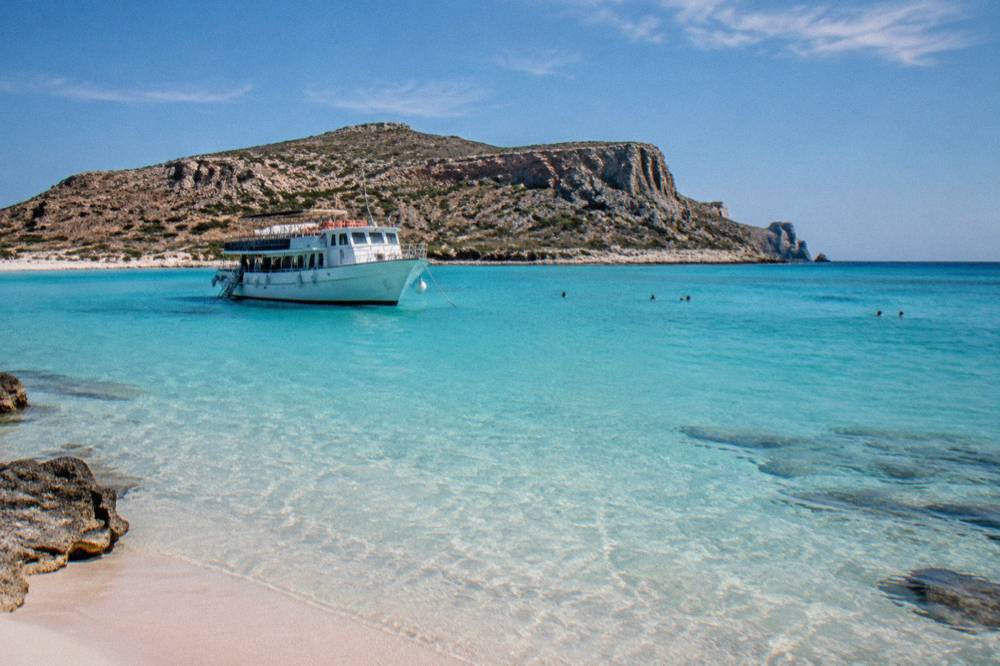
The three beaches that anchor any Crete shortlist are Balos lagoon and Gramvousa island, reached by boat from Kissamos port or by an unpaved road from Kaliviani, Elafonisi with its protected Natura 2000 shoreline on the south-west corner, and the long beach at Falassarna on the west coast, and all three sit inside a day trip from Chania. Balos carries only a EUR 1 Kissamos municipal fee collected on the boat ticket for over-13s. Elafonisi's entry is reported to be free, and taking sand, shells or plants from it is prohibited. Falassarna completes the set as the west-coast stretch between them.**
Balos needs the most planning. The cruise boats leave Kissamos port, and the operator's published season runs to 31 October 2026, with departures daily. Going by car means the unpaved road from Kaliviani to the parking area and then a walk down to the lagoon, a route the ferry-free option shares with the jeep safaris that run from Kissamos. A time-slot cap of about 1,200 visitors per three hours was proposed in August 2026, but it is not in force, so no limit applies to a plan today. The question Is It Difficult To Get To Balos Beach? works through the boat and road options in detail.
Elafonisi is simpler and stricter. It sits inside a Natura 2000 protected area, entry is reported to be free, and the prohibition on taking sand, shells or plants exists precisely because the beach's colour tempts people to carry a handful of it home. The protected status is the fact to plan around, and the deeper comparison lives at Is It Worth Going To Elafonisi Beach?.
To let someone else handle the drive, book a beach trip to Elafonisi here.
Samaria Gorge And The Walks Of The White Mountains
Samaria Gorge is the island's famous walk, a one-way route from Xyloskalo on the Omalos plateau down to Agia Roumeli on the south coast, with a EUR 10 individual ticket through the NECCA e-ticket portal, free for EU residents under 18 and over 65, entry for the full walk between 07:00 and 13:00, and everyone out of the park by 18:00, but the path is storm-damaged and its status must be checked with NECCA before any plan is made. The gorge normally runs 1 May to 31 October, and it closes or delays whenever storms damage the path. Boats leave Agia Roumeli for Sougia or Chora Sfakion at about 17:30, and a KTEL bus completes the loop back to Chania.**
The 2026 season is the cautionary case. Storms in late September and early October destroyed sections of the path, and staff describe a 2026 reopening as extremely difficult, with works aimed at readiness in May 2027 and no final decision on record. The gorge had also closed earlier in the same season for storms, which is the pattern to expect: the dates move with the weather, and the NECCA status page is the only authority. No swimming and no camping are allowed inside the park.
The alternative is Imbros Gorge, a shorter walk in the same White Mountains with its own guided day trips from Chania, and the comparison of the two is worked through at Is The Samaria Gorge Hike Difficult?. The rule that applies to both is the mountain rule: the White Mountains set the schedule, and the plan bends around them.
The Food And Wine Of The Island From A Chania Base
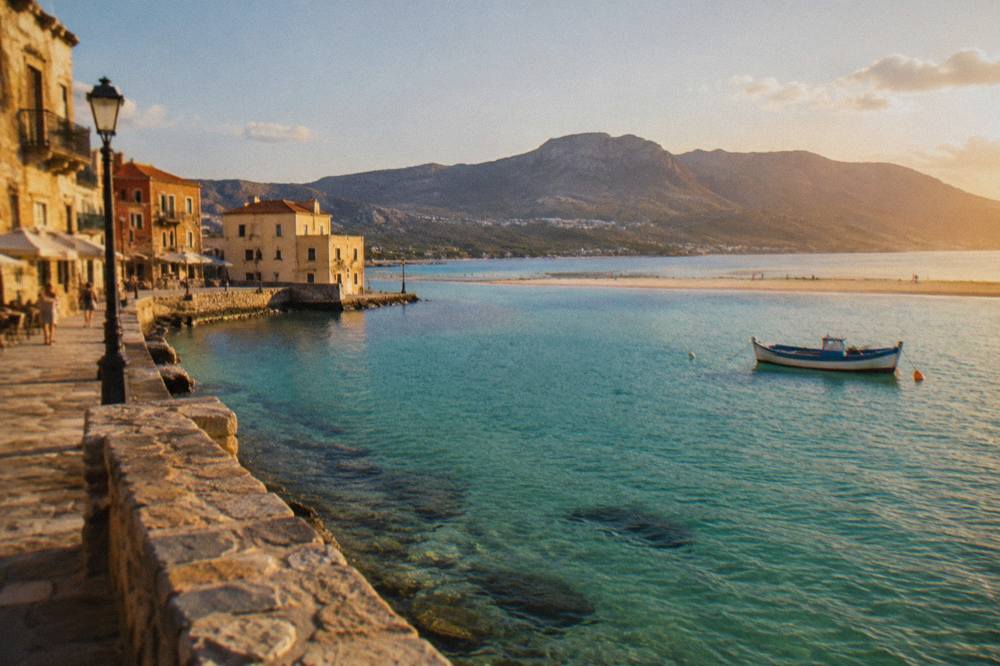
The food of Crete belongs on the not-miss list beside any beach or gorge: the island's olive oil, wine, cheese and honey are produced in the hills behind Chania and tasted in the Old Town, and the Archaeological Museum of Chania at 15 Skra Street in Halepa, at EUR 15 full ticket and EUR 8 concession, holds the deep history the table sits on. The museum's hours should be confirmed on its own visit page, since its published information carries contradictory entries, and visitors are asked to leave 20 minutes before closing. The tasting route and the museum make a natural pairing for a day the weather turns.**
The inland producers are the reason the island's table tastes the way it does. The villages behind the city, from Elos to the Apokoronas plateau, press oil and keep bees and pour wine in quantities no supermarket version matches, and the guided tasting tours from Chania collect them into one loop. The city end of the same story is the Old Town itself, where the food walks and the cooking classes run from the market lanes to village kitchens, and the round-up at What Food Is Chania Known For? names the dishes worth ordering first.
For a plan that combines sight lines with tasting stops, a combined sightseeing and tastings route covers both in a single afternoon, and the desk's shortlist below carries the three options that fit this kind of trip best.
Day Trips Beyond Chania: Knossos, Rethymno And The South Coast
The two day trips that complete an island shortlist from Chania are Knossos and Heraklion to the east, reached by KTEL bus or guided tour, and the south-coast villages of Loutro and Sfakia below the White Mountains, reached by road to Chora Sfakion and then boat, and both sit at the edge of what one day allows. The bus station on Kydonias street runs the Heraklion and Rethymno routes directly, and the south coast runs on a different clock entirely, the ferry-free, road-and-boat rhythm of the Libyan Sea side. Gavdos boats run from Paleochora and Sougia in season.**
Rethymno, between Chania and Heraklion, holds its own old town and fortress, and the honest comparison with Chania is laid out at Which Is Nicer, Chania Or Rethymnon?. Knossos is the island's archaeological headline, and the question of which city makes the better base for it, Chania or Heraklion, is answered at Is It Better To Stay In Chania Or Heraklion?. The south coast is the quieter item: Loutro, reachable only by boat or on foot, and the Sfakia coast below the gorges give the island its second, slower half.
The climate table below, from the HNMS Chania Souda station records for 1958 to 2010, is the planning spine for all of it. The dry window from May to September, with 13.5 mm of rain in May and 1.0 mm in July, is when the beaches, the gorges and the boat trips all run at once, and rain starts to matter from October, at 67.7 mm across the month.
| Month | Mean temperature (C) | Rainfall (mm) | Rain days |
|---|---|---|---|
| May | 20.2 | 13.5 | 4.2 |
| June | 24.7 | 3.4 | 1.2 |
| July | 26.7 | 1.0 | 0.4 |
| August | 26.3 | 1.4 | 0.6 |
| September | 23.2 | 15.4 | 3.2 |
| October | 19.4 | 67.7 | 9.3 |
Common Questions About What Not To Miss In Crete
What should I not miss in Crete?
The Venetian Harbour and Old Town of Chania, the lagoon at Balos and Gramvousa, the protected beach at Elafonisi, the gorge walks of the White Mountains, and the island's food and wine, from olive oil and honey to the cooked dishes of the Old Town. Every item is either in Chania or a day trip from it.
Can I see Balos and Elafonisi from Chania in one trip?
Yes, both are day trips from Chania, though usually on separate days. Balos boats leave Kissamos port, and the operator's season runs to 31 October 2026. Elafonisi sits on the south-west corner as a Natura 2000 area with reported free entry, and the KTEL summer route serves it directly.
Is Samaria Gorge safe to plan around?
Only with a status check. The gorge normally runs 1 May to 31 October, but storms in late September and early October 2026 destroyed sections of the path, and no reopening decision is on record. The NECCA status page is the authority to check before booking anything.
Do I need a car for the Crete shortlist?
Not for every item. KTEL buses run from the Chania station on Kydonias street to Heraklion, Rethymno, Kissamos, Paleochora, Omalos and, in summer, Elafonisi, and guided day trips cover Balos, Elafonisi and the gorges with transport included. A car helps for the unpaved Balos road and the small south-coast villages.
How many days does the Crete shortlist need?
The shortlist itself, harbour, one beach, one gorge and the food of the Old Town, fits inside four to five days from a Chania base, with each big item taking a full day. Adding Knossos, the south coast or a second beach pushes the plan toward a week, which the island rewards.
The shortlist holds, and the order of it matters less than the two checks that guard it: the NECCA status of Samaria Gorge before any booking, and the operator's own pages for boat seasons and the museum's visit page for hours. With those confirmed, the island's headline sights, from the harbour of 1320 to 1356 to the sand of Elafonisi, sit within reach of a single base in Chania.