Is It Better To Stay In Chania Or Heraklion?
A fact-based comparison of staying in Chania or Heraklion on Crete, covering beaches, day trips, museums, transport and atmosphere, with what each city suits best.
Chania, on the north-west coast of Crete in Greece, and Heraklion, on the island's north-central coast, are the two cities travellers weigh against each other when a Crete trip can only have one base. Both sit on the Aegean Sea, both have an airport, and both can fill a week. The honest answer is that they reward different itineraries: Chania is the natural base for the west-coast beaches and the gorges of the White Mountains, while Heraklion keeps you close to Knossos, the Heraklion Archaeological Museum and the routes east. The site's longer Chania versus Heraklion comparison unpacks the rivalry in detail; this page answers the one question that decides it.
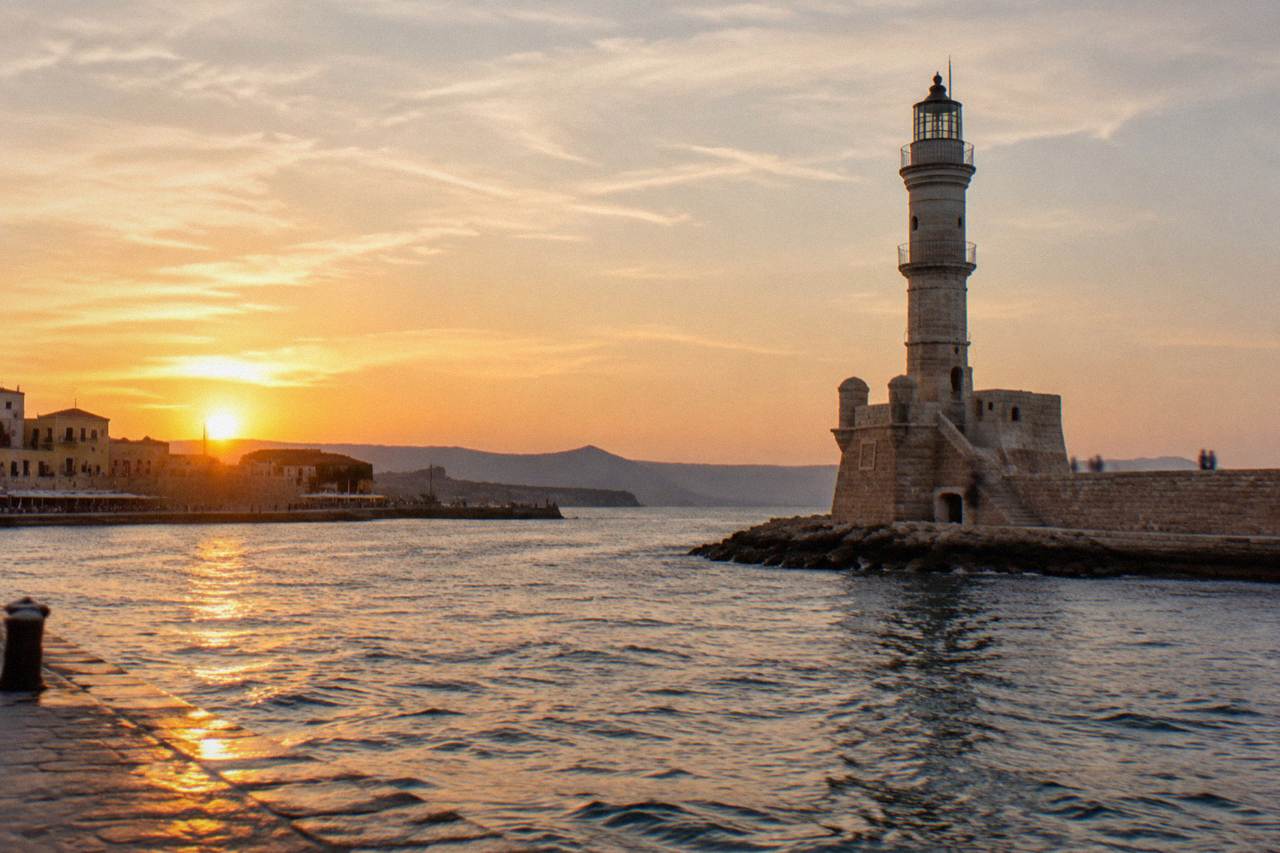
Is It Better To Stay In Chania Or Heraklion?
Stay in Chania if the trip is built around west-coast beaches, gorges and a walkable old harbour town, and stay in Heraklion if Knossos and the island's principal archaeology museum are the priority, because Chania sits roughly three hours by road from the Minoan sites that sit on Heraklion's doorstep while Heraklion sits far from Balos, Elafonisi and the Samaria area. Neither city wins outright. The decision follows the itinerary, and the itinerary should follow which half of Crete the trip is really about.
That split is not a matter of taste alone. The geography does the work. Chania sits on the north-west coast with the White Mountains to the south, and from it run the day trips that define western Crete: Balos and Gramvousa from Kissamos port, Elafonisi, Falassarna, the Samaria and Imbros gorges, and the south-coast villages reached through the mountains. The site's what not to miss in Chania answer lists the classics of that half of the island.
Heraklion, by contrast, is the island's administrative capital and its largest urban centre, and its draw is concentration: the Palace of Knossos lies just outside the city, the Heraklion Archaeological Museum holds the island's principal Minoan collection, and the east of Crete, which Chania cannot reach comfortably in a day, opens up from there. A dedicated Knossos Palace and Heraklion full-day tour from the Chania area exists precisely because the distance between the two cities is long enough that visitors based in Chania buy a full day to cover it.
A simple rule of thumb holds up: one week or less, one base, pick the half of the island the trip is about and sleep in that half's city. Ten days or more, and sleeping a few nights in each stops being a compromise.
What Kind Of Base Is Chania?
Chania is a compact coastal city of 111,375 permanent residents in its municipality, with its Old Town wrapped around a Venetian Harbour first built between 1320 and 1356, and its strength as a base is that every headline day trip of western Crete, Balos, Elafonisi, Samaria and the south coast, starts from its bus station, its port at Kissamos nearby, or its tour pick-ups. The city itself carries enough history to fill rest days without a car.
The Old Town is the reason a lot of travellers choose it as a bed for the week. The Venetian Harbour, the lighthouse standing on its mole on a Venetian base restored during the Egyptian years from 1830 to 1840, the seven surviving Neoria shipyards of an original seventeen, and Firka Fortress, built in 1620 with free grounds, are all within a short walk of each other. The Archaeological Museum of Chania sits a little out at 15 Skra Street in Halepa, with a full ticket at EUR 15 and a concession at EUR 8, and its visit page should be checked for current opening arrangements. The interior questions, from the lighthouse of Chania to Firka Fortress, each have their own pages on this site.
For evenings, the harbour and the back streets of Splantzia and Topanas carry the restaurant and bar weight, and a short guided sunset cruise from the harbour has become the signature wind-down of a Chania stay. The water side of the city is covered in the site's guide to Chania boat trips, which sorts the harbour cruises from the all-day sails.
The one honest caveat about Chania as a base is the drive to the east. Knossos and Heraklion sit roughly three hours away by road, so the Minoan highlights cost a full day from a Chania bed, usually on an organised coach day or an early self-drive. Trips that pair the two cities' strengths are covered in the is it better to fly into Chania or Heraklion answer, which treats the airport side of the same choice.
Want the Minoan sites without driving yourself? Book a Knossos and Heraklion day tour here.
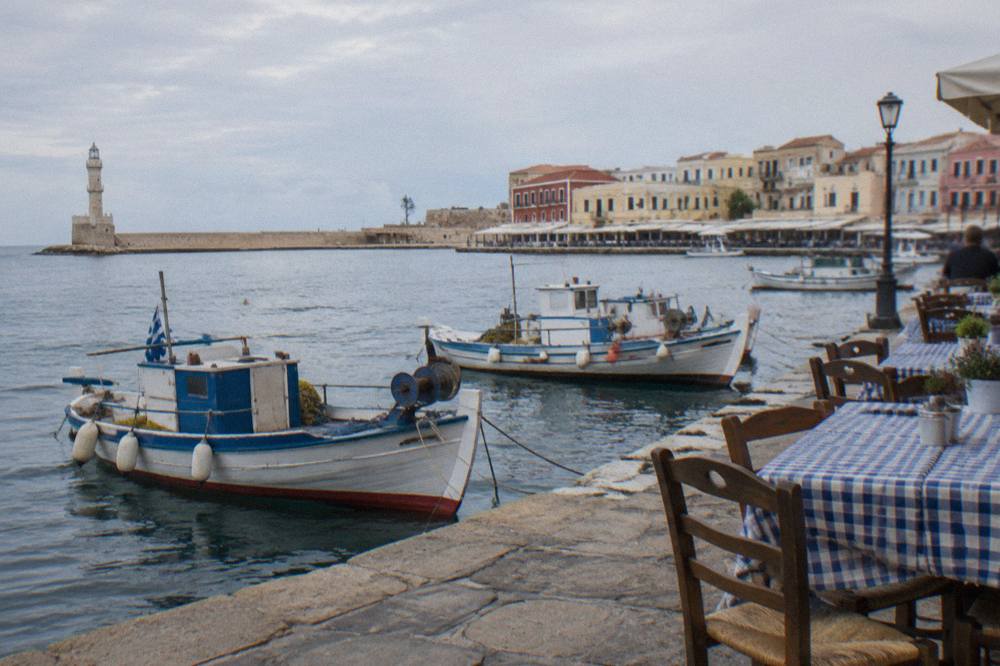
What Kind Of Base Is Heraklion?
Heraklion is Crete's capital and its largest city, and as a base its defining advantage is proximity to the Minoan sites, since the Palace of Knossos sits at the city's edge and the Heraklion Archaeological Museum is in the centre, while its defining weakness for a first-time visitor is the distance to the western beaches and gorges that fill the classic Chania postcards. It is a working city with a strong museum core rather than a harbour resort.
The case for sleeping there is straightforward. Knossos can be reached from the city without a long drive, and the museum that explains it is a short trip away in the centre, so a two-night stay can cover the Minoan story at depth instead of compressing it into the tail of a long day trip. From Heraklion, the routes east and south, to the Lasithi plateau area, to the archaeology of the east, to the south-coast sites, are all within reach.
What Heraklion does not give easy access to is the west. Balos, Elafonisi, Falassarna and the Samaria and Imbros gorges are all long journeys from the capital, effectively the mirror image of Chania's problem with Knossos. The climate difference is minor rather than decisive: the HNMS Chania Souda station table, covering 1958 to 2010, records July means of 26.7 C in Chania, and both cities share the same dry summer pattern, so weather alone should not make this decision.
| Question | Chania | Heraklion |
|---|---|---|
| Airport distance to centre | CHQ about 14 km, on the Akrotiri peninsula near Souda | City airport close to the urban area |
| Signature archaeology | Archaeological Museum of Chania, EUR 15 full, EUR 8 concession | Heraklion Archaeological Museum, Knossos at the city edge |
| Headline day trips | Balos, Elafonisi, Falassarna, Samaria, Imbros, south-coast villages | Knossos, eastern and southern Crete routes |
| Old-town character | Venetian Harbour core, first built 1320 to 1356 | Larger capital city with a walled old core |
| Distance to the other city | Roughly three hours by road | Roughly three hours by road |
| Long-distance buses | Chania station on Kydonias street, routes to Heraklion and Rethymno | Routes west to Chania and Rethymno, east across the island |
Thinking about the jeep route to Balos from the Chania side? The off-road option is covered below.
Which City Suits A Beach-Focused Trip Better?
Chania is the stronger base for a beach-focused holiday, because the west-coast names, Balos and Gramvousa reached by boat from Kissamos port, Elafonisi with its protected Natura 2000 shoreline, and Falassarna, all sit within day-trip range of the city, while Heraklion's nearby coast is a city waterfront and its standout beaches require drives east or west. The beaches around Chania are the reason the city anchors so many first Crete itineraries.
The access details matter more than the photographs. Balos is reached by boat from Kissamos port, with daily departures running to 31 October 2026 on the operator's reported schedule, or by an unpaved road from Kaliviani to a parking area followed by a walk down. The only confirmed charge is a EUR 1 Kissamos municipal fee collected on the boat ticket for over-13s; a proposed time-slot visitor cap from August 2026 is not in force. The site's guide to Balos Lagoon and Gramvousa carries the full picture.
Elafonisi is a Natura 2000 protected area where entry is reported to be free and taking sand, shells or plants is prohibited; no charge should be assumed beyond what is posted on the day. In summer the KTEL network runs a seasonal route to Elafonisi from the Chania long-distance station on Kydonias street, and the Elafonisi beach guide covers the access options.
From Heraklion, the famous pink-sand and lagoon beaches of the west are simply too far for a relaxed day trip, and the honest comparison is not between the two cities' own beaches but between west-coast geography and everything else.
How Different Are The Two Cities For A Short Break?
Chania works better as a short-break city in the conventional sense, because its Old Town, harbour, lighthouse and museum quarter sit inside a walkable core, while Heraklion rewards a longer, purposeful stay aimed at Knossos and the museums, and a two-night visit there built around the city alone tends to feel more like a city break with homework than a holiday. For a two- or three-night stop, the shapes of the stays differ sharply.
In Chania, a short stay fills itself. Morning at the harbour and the Neoria, an afternoon at Nea Chora beach, which the beaches near Chania Old Town guide confirms is walkable from the centre, and an evening in the harbour restaurants forms a complete day without transport. The city's walkability question is answered directly in is Chania Old Town walkable, and the answer is yes for the historic core.
In Heraklion, the short stay is usually planned around the two anchors, Knossos and the Archaeological Museum, plus the Venetian walls and the old centre. That is a full and worthwhile two days, but it is an itinerary rather than a wander, and travellers who arrive expecting a resort town atmosphere often reroute. The where-to-stay question for Chania itself is settled in where to stay in Chania.
The fairest framing for a short trip: Chania for atmosphere and coastline, Heraklion for archaeology and intensity, and neither for a beach-only week split between both.
What About Costs, Transport And Practicalities?
Costs between the two cities are close enough that transport and day-trip geography should decide the choice, because no verified nightly-rate comparison favours either city, both charge the same Greek climate crisis resilience fee collected by accommodation per room per night at seasonal rates confirmed at booking, and both sit on the same KTEL bus network and the same island road spine. Nothing in the verified price picture separates them decisively.
What can be stated, from the published sources: the ferry between Athens and Chania runs overnight from Souda port, about 7 km east of the Old Town, with Blue Star Ferries departures around 21:30 and a crossing of about 9 h 15 min on the operator's published timetable, to be confirmed before travel. Chania's Piraeus ferry does not leave from the Venetian Harbour, which serves excursion boats. Heraklion has its own larger ferry port with more mainland connections, an advantage for travellers arriving by sea with a car.
On the ground, there is no railway anywhere on Crete, so intercity movement is KTEL bus, organised coach tours, or a hire car. The Chania long-distance station on Kydonias street runs routes to Heraklion, Rethymno, Kissamos, Paleochora, Omalos and, in summer, Elafonisi. Fares for none of these should be assumed from third-hand figures; the operator's own pages carry them.
One practical pattern that keeps appearing: fly into one city and out of the other, sleeping three or four nights in each, which removes the transfer penalty entirely. The where is nicer, Chania or Heraklion answer handles the softer quality-of-life side of that split.
Which City Should A Family Or A First-Timer Choose?
A first trip to Crete that wants beaches, boat days and a photogenic old town should base itself in Chania, while a first trip that is really about Minoan archaeology, or a family that wants short travel days to one major site after another, is better served by Heraklion, because each city minimises travel time to its own half of the island and maximises it to the other's. Families with young children tend to lose more from long transfers than from any difference between the cities themselves.
The family case for Chania is the density of shallow, organised beach options at Agia Marina, Platanias, Kalathas and Marathi, each with its own page in this site's guides, plus short boat trips like the two-island cruise to Agioi Theodoroi and Lazaretta that returns within an afternoon. The site's Chania with kids guide is built on exactly that inventory.
The family case for Heraklion is a single unrepeatable morning at Knossos followed by the museum, with everything else within a city radius, and no gorge walks or long mountain roads to budget for. One gorge-specific note belongs here: the Samaria Gorge, the headline hike of the Chania side, normally opens 1 May to 31 October but closes or delays when storms damage the path, and sections were destroyed by storms in late September and early October 2026, so its status must be checked on the official NECCA information before any plan is built around it. The which gorge is better, Samaria or Imbros answer treats the alternatives.
For the evening wind-down in Chania itself, the short guided sunset cruise from the Venetian Harbour fits between the beach day and dinner without restructuring anything; it has its own page on this site at Chania: Sunset Boat Cruise with Guide, and Check availability on the operator's live listing for the dates in question.
Common Questions About Choosing Between Chania And Heraklion
Is it better to stay in Chania or Heraklion?
Stay in Chania for west-coast beaches, gorges and a walkable old harbour town; stay in Heraklion for Knossos and the principal archaeology museum. The two cities are roughly three hours apart by road, so one base cannot serve both halves of Crete comfortably.
Is Heraklion bigger than Chania?
Yes. Heraklion is Crete's capital and largest city, while the municipality of Chania counts 111,375 permanent residents in the 2021 census over 356.12 km2.
Can you visit Knossos from Chania?
Yes, but it is a full day, roughly three hours each way by road, usually done on an organised coach tour or an early self-drive. Sleeping in Heraklion removes the transfer entirely.
Can you visit Balos and Elafonisi from Heraklion?
Not comfortably. Both sit in the far west of Crete, beyond day-trip range of Heraklion for anything but a very long drive. They are natural day trips from Chania, with Balos boats leaving Kissamos port.
Which city has the better old town?
Chania's Old Town wraps around the Venetian Harbour, first built 1320 to 1356, with the lighthouse, the Neoria shipyards and Firka Fortress from 1620 close together. Heraklion's old core is larger and walled but sits inside a busy capital city rather than beside a working harbour.
Does the weather differ between the two cities?
Not enough to decide the trip. The HNMS Chania Souda station table for 1958 to 2010 records July means of 26.7 C and January means of 11.0 C, with July the driest month at 1 mm of rain, and both cities share the same Mediterranean pattern of dry summers and wet winters.
The choice, in the end, is a question about the itinerary: the west's lagoons and gorges point to a Chania bed, the Minoan sites point to Heraklion, and a trip long enough for both should simply sleep in both, as this Chania Crete Travel Guide lays out across its day-trip and itinerary pages.