What Is The Best Area To Stay In Chania, Crete?
Where to base yourself in Chania: Old Town, Nea Chora, Halepa, Splantzia and the outer beach suburbs compared, with distances, character and day-trip logistics.
Chania wraps itself around a Venetian Harbour on the north-west coast of Crete, with the White Mountains stacked along the horizon to the south, and the area you choose to sleep in decides how the whole trip feels. The municipality holds 111,375 permanent residents across 356.12 km2, but the visitor's Chania is far smaller: a walkable Old Town, a ribbon of seafront west of it, and a handful of calmer quarters a short ride out. This page compares the real bases, what each one offers, and how each connects to the beaches and gorges that bring people to western Crete.
What Is The Best Area To Stay In Chania, Crete?
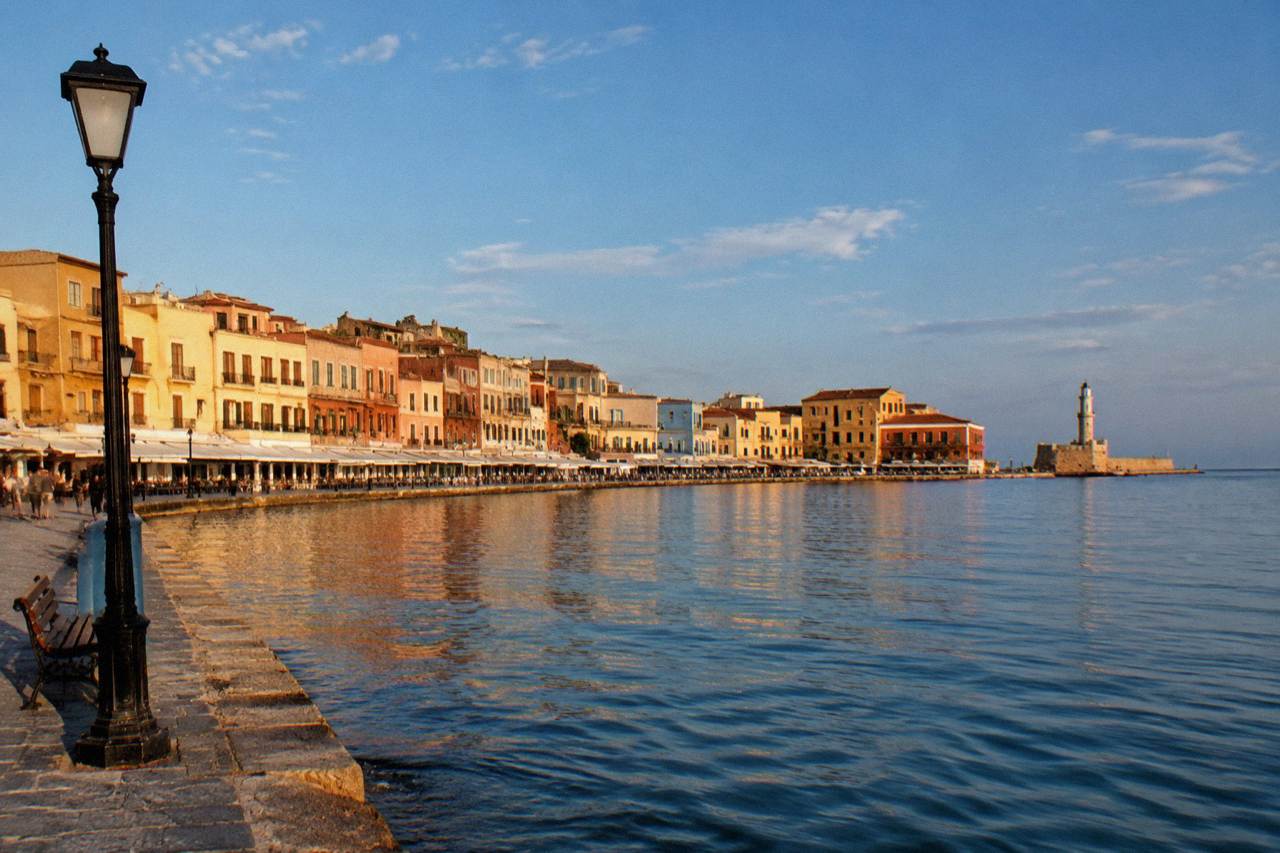
For a first visit of two to four nights, the Old Town around the Venetian Harbour is the best area to stay in Chania: the harbour, the lighthouse, the Neoria shipyards, the mosques and the restaurants are all on foot, and every day-trip departure point sits within a short transfer. For a quieter beach base with tavernas and a swimming beach, Nea Chora to the west wins, while Halepa and Splantzia trade harbour views for calm streets and lower footfall.
The Old Town is the part of Chania that photographs travel to sell. The harbour itself was first built between 1320 and 1356, the lighthouse at its mouth dates from about 1595 to 1601 with an Egyptian-era restoration between 1830 and 1840, and seven shipyard halls of an original seventeen still line the Neoria. Ottoman rule began with the 1645 conquest of the city and ended with Crete's union with Greece in 1913, and every layer is visible within a ten-minute radius on foot. Staying inside that circle means no driving at night, no parking anxiety and a short stroll to dinner.
To explore those lanes through their stories, book a mythological scavenger hunt here.
The trade-offs are real. Old Town buildings are old and dense, streets are cobbled, and hotel rates in the peak season are the highest in the city, although no specific nightly rate can be quoted here because accommodation prices move constantly and each property publishes its own. Confirm the total at booking, and remember that Greek accommodation collects a per-room, per-night climate crisis resilience fee with seasonal rates, an amount the booking confirms rather than any article. For a fuller treatment of each quarter, the Chania area-by-area guide breaks the city down street by street.
Which Chania Neighbourhood Fits Which Kind Of Trip?
Families and beach-first travellers fit Nea Chora or the Agia Marina strip west of the city, where sand and shallow water sit at the door. Culture and short-break visitors fit the Old Town or Splantzia, where the Archaeological Museum, the harbour and the food streets overlap on foot. Drivers and long-stay visitors fit Halepa or Kissamos-side bases, where parking is easier and the Balos and Falassarna ferries are closer.
The table below pairs each main base with its character and its practical strengths, using only what the destination facts support.
| Base | Character | Best for | Main trade-off |
|---|---|---|---|
| Old Town / Venetian Harbour | Historic core, harbour front, dense lanes | First visits, no-car stays, evenings out | Peak-season crowds, harder parking |
| Nea Chora | Fishing-village feel beside a sandy beach | Beach days plus city access | Fewer monument sights in the quarter itself |
| Splantzia | Old Town-adjacent, quieter lanes, local tavernas | Calmer stays walking distance of the harbour | Less waterfront than the harbour side |
| Halepa | Consular-era district east of the centre, near the Archaeological Museum | Museums, space, longer stays | A longer walk or short ride to the harbour |
| Agia Marina / Platanias | Beach-resort strip west of the city | Family beach holidays, resort pools | Dependent on buses or a car for the city |
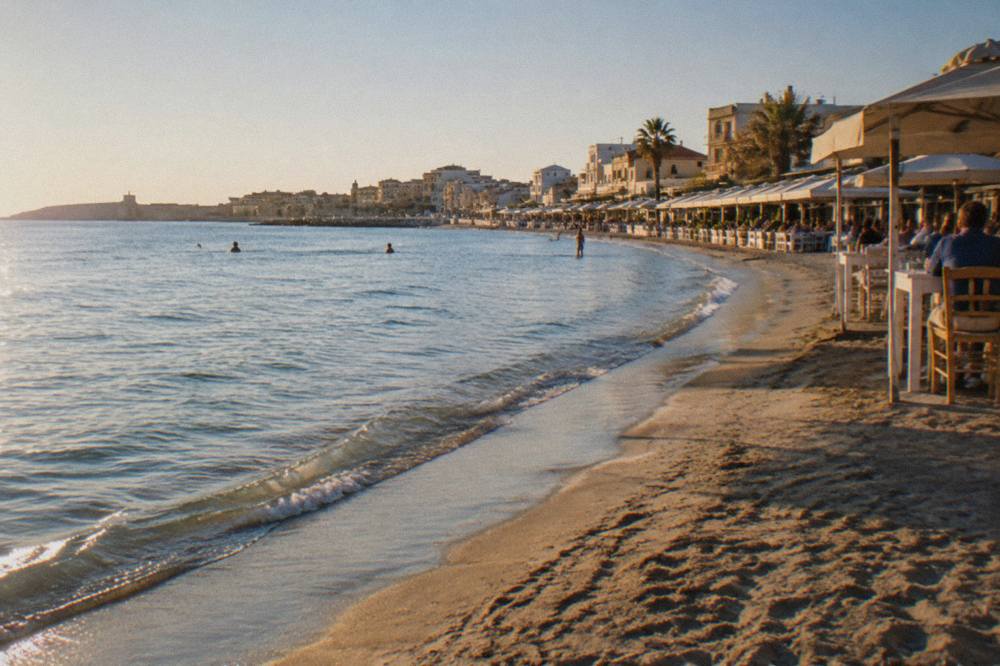
Nea Chora deserves its own word. It sits at the western edge of the Old Town, holds a working fishing harbour and a sandy beach, and its tavernas line the water rather than a plaza. The Nea Chora area page covers it in detail; the short version is that it delivers the only beach you can genuinely walk to from the city centre's hotel stock, a point the page on walking to a beach from the Old Town also answers directly.
Whichever base you pick, a morning on the water shows the coastline in a way no room can, and a guided trip with snorkeling and stand-up paddleboarding departs from the Chania waterfront itself, minutes on foot from Old Town and Nea Chora alike.
Is It Better To Stay In The Old Town Or Near The Beach?
Stay in the Old Town if the trip is short, the priority is atmosphere, and evenings matter, because the harbour, the lighthouse walk and the restaurant lanes are the reason the city is famous. Stay near the beach at Nea Chora or west of the city if the trip is a week or more, children are along, or swimming every day outranks sightseeing, since sand at the door beats a daily march to the water.
The honest dividing line is how you want to spend the hours between breakfast and dinner. An Old Town base puts the Maritime Museum district, the Mosque of the Janissaries and the Firka Fortress grounds, free to enter and built in 1620, within a flat walk, and the evening promenade outside the door. A beach base swaps that for immediate water: Nea Chora's sand starts where the Old Town ends, and the Agia Marina and Platanias strip stretches the sandy options further west, all covered in the Agia Marina and Platanias guide.
Weather should feed the choice too. The HNMS Chania Souda station table, covering station records from 1958 to 2010, shows a mean of 26.7 C in July and 26.3 C in August, and only 1.0 mm and 1.4 mm of rain in those months, so a July or August base with immediate swimming access earns its keep. May and October are different propositions: May averages 20.2 C with 13.5 mm of rain, October 19.4 C with 67.7 mm, and an October visitor loses little by choosing the Old Town over the sand. More of these guides are collected on Chania Crete Travel Guide.
| Month | Mean temperature (C) | Rainfall (mm) | What it means for a base |
|---|---|---|---|
| May | 20.2 | 13.5 | Dry and warm; either base works |
| July | 26.7 | 1.0 | Peak heat; beach access matters |
| August | 26.3 | 1.4 | Peak heat; beach access matters |
| October | 19.4 | 67.7 | Warm days, first real rain; Old Town shines |
The figures above come from the HNMS Chania Souda station table for 1958 to 2010, the records the service publishes, and they describe the station site at 148 m inland of Souda Bay rather than any single street in the city.
Where Should You Not Stay, And Which Day Trips Depend On Your Base?
The areas to treat with care are the loud nightclub strips if sleep matters, and any isolated rural address without a car, because Chania's headline excursions, Balos, Elafonisi and Samaria, all leave early and run from specific departure points, so a base an hour from them turns every trip into a dawn commute. A central base with KTEL bus access from the station on Kydonias street covers all of them without driving.
On the caution side, the question of where to avoid staying in Crete has its own page, and the short Chania answer is practical rather than dramatic: the busiest harbour-front rooms carry noise late into the night in season, and outlying villages without transport strand a visitor without a shop or a beach. Check a map for the street, not just the district.
On the excursion side, geography does the deciding. Balos and Gramvousa cruises leave from Kissamos port to the west, with a daily season running to 31 October 2026 on the operator's schedule, plus a EUR 1 Kissamos municipal fee collected on the boat ticket for over-13s. Elafonisi sits on the south-west corner, reachable by KTEL bus in summer or by car. Samaria Gorge is a one-way walk from Xyloskalo on the Omalos plateau down to Agia Roumeli, with a EUR 10 individual ticket through the NECCA e-ticket portal; it normally runs 1 May to 31 October, but storms in late September and early October 2026 destroyed sections of the path, staff describe any 2026 reopening as extremely difficult and works aim at readiness in May 2027, so check the NECCA status before planning around it. A jeep and beach combo tour absorbs the driving on the western routes for anyone who would rather not hire a car at all.
Buses cover the same ground cheaply in season, within the limits of published routes only: the KTEL Chanion long-distance station on Kydonias street runs to Heraklion, Rethymno, Kissamos, Paleochora, Omalos and, in summer, Elafonisi, with fares published at booking. Anyone weighing the city against a base further east can also read the comparisons of Chania versus Rethymno and Chania versus Heraklion before committing, or check whether Chania Old Town is walkable enough to skip a base with a car.
Common Questions About Where To Stay In Chania
What is the best area to stay in Chania, Crete?
The Old Town around the Venetian Harbour is the best base for a first visit, because the harbour, the lighthouse, Firka Fortress and the restaurant lanes are all on foot. Nea Chora suits a beach-first stay, Halepa a quieter, museum-side one, and Agia Marina or Platanias a family resort week.
Is it better to stay in Chania Old Town or by the beach?
Stay in the Old Town for short, atmosphere-driven trips and stay by the beach, at Nea Chora or west of the city, for week-long stays with children or daily swimming. Nea Chora is the only sandy beach within genuine walking distance of the centre's hotels.
Can you walk everywhere in Chania without a car?
Inside the city, yes for the Old Town, Splantzia, Nea Chora and the harbour. For Balos, Elafonisi, Samaria Gorge and the south coast, use the KTEL buses from the Kydonias street station, a day tour, or a hire car, since those destinations sit well outside the walkable core.
Is Nea Chora a good area to stay in?
Yes, for a quieter base with a sandy beach, a working fishing harbour and waterfront tavernas, all at the western edge of the Old Town and walking distance from the harbour itself.
How many days should you stay in Chania?
Two to three days covers the Old Town, the harbour and one boat trip; five or more allows the big day trips, Balos, Elafonisi and Samaria, each of which takes a full day from the city.
Does where you stay in Chania affect the day trips?
It affects the morning start time more than the trip itself. Balos cruises leave from Kissamos port to the west, gorge tours collect from central hotels, and the KTEL station on Kydonias street serves all the main routes, so a central base minimises transfer time on every excursion.
The base you pick shapes the days more than the room does: the Old Town hands you the harbour at night, Nea Chora hands you sand at dawn, and every gorge, lagoon and pink-sand beach in western Crete remains reachable from either.