Is It Safe To Travel To Crete Right Now As An American?
A factual briefing for American visitors on entry rules, local safety, weather risks and practical planning for Chania and the rest of Crete, drawn from official sources.
Chania is a coastal city of about 111,375 permanent residents on the north-west coast of Crete, Greece, and it is the base from which the island's famous day trips to Balos, Elafonisi and the gorges of the White Mountains run. For an American planning a trip, the questions that actually matter are practical ones: what documents the border expects, how the island works once you are through it, and which risks are real rather than rumoured. This page answers those questions using what official and operator sources publish, and it points to the pages on this site that cover each area in more depth. The short version is that nothing in the published record singles Crete out as a problem destination, and the risks that do exist are the ordinary ones of terrain, weather and holiday logistics.
Is It Safe To Travel To Crete Right Now As An American?
Nothing in the official record marks Crete, or Chania specifically, as unsafe for American visitors, and no entry restriction targets US passport holders. Greece is a full Schengen member with internal checks abolished since 26 March 2000, the country has used the euro since 1 January 2001, and Crete's tourism infrastructure, from Chania's airport to its ferry port at Souda, operates as part of that ordinary European system. What Americans should plan for are the same things every visitor plans for: entry procedures that changed in 2026, mountain terrain on gorge hikes, weather that closes paths, and the usual care with valuables that any busy tourist town asks for.
That answer is deliberately boring, and boring is what a safety question deserves. Chania's Old Town sits around a Venetian Harbour first built between 1320 and 1356, and the city's economy runs on visitors arriving through Chania International Airport "Ioannis Daskalogiannis" (CHQ), operated by Fraport Greece on the Akrotiri peninsula about 14 km from the centre. The airport handled 3,992,149 passengers from January to October 2025, which is the scale of a place that receives and returns visitors all year.
The risks worth reading about are specific and checkable rather than general. Storms in late September and early October 2026 destroyed sections of the Samaria Gorge path, which is exactly the kind of event that turns a planned hike into a cancelled one if a visitor does not check status before going. That story, and how to plan around it, is covered further down this page. For a fuller picture of the city itself, this site carries a dedicated safety guide at Is Chania Safe, and for the specific question of evenings out, Is It Safe To Walk Around Chania At Night answers it directly.
What Do Americans Need To Enter Greece?
American passport holders enter Greece under the visa-free arrangements of the Schengen area, and the border process now runs on the Entry/Exit System, fully deployed across Schengen on 10 April 2026. ETIAS, the planned electronic travel authorisation, is not in operation and collects no applications as of October 2026, so there is nothing to apply for and no fee to pay for it. Greece has been a Schengen member with internal checks abolished since 26 March 2000.
The single biggest change Americans will notice at the border is biometric recording. EES replaces manual passport stamping with fingerprints and facial images captured at crossing points. No special preparation is required beyond a valid passport, but travellers who last visited Europe before 2026 should expect the new procedure and allow a little extra time at the airport. On the return side, nothing changes for US citizens.
Two planning points sit around the entry process. First, there is no ETIAS start date to plan around: any website selling an "ETIAS application" before the system operates is selling something that cannot yet be processed, and the official position as of October 2026 is that no applications are collected. Second, the climate crisis resilience fee charged on accommodation is collected by the hotel or rental per room or apartment per night at seasonal rates, and the exact amount should be confirmed at booking rather than estimated from older articles.
| Entry topic | What applies to Americans | Source status |
|---|---|---|
| Passport and visa | Visa-free entry to Greece as a Schengen country | Schengen convention applied 26 March 2000 |
| Border system | EES, fully deployed across Schengen 10 April 2026 | Official deployment record |
| ETIAS | Not in operation, no applications collected as of October 2026 | Official position |
| Currency | Euro (EUR), in use since 1 January 2001 | Euro area record |
| Tourist levy | Collected by accommodation, seasonal rates, confirm at booking | Amount not printed here |
Arrival in Crete means either flying into CHQ, about 14 km from Chania's centre, or arriving by sea. The overnight Blue Star Ferries service from Piraeus departs Souda port, about 7 km east of the Old Town, at about 21:30 with a crossing of about 9 hours 15 minutes as the operator's published timetable gives it. Neither the airport nor the ferry port involves any procedure an American visitor has not met elsewhere in Europe. For flight options from the United States, Can You Fly Directly To Crete From The US covers the routing question in detail.
For travellers who prefer the water to the road once they have arrived, this site's featured no-license boat rental is one way to see the coast independently. Check availability if that idea suits your dates.
Is Chania Itself Safe To Walk Around?
Chania's Old Town, harbour front and beaches are ordinary, well-trodden visitor areas, and nothing in the published record identifies them as unusually risky, though no safety statistic for the city is verified in any source this desk reports from. The practical advice that can be given with confidence is procedural: keep an eye on belongings in crowded lanes around the Venetian Harbour, check posted prices on menus and receipts, and use the same judgement about poorly lit streets at night that applies anywhere. Beyond that, the honest answer is that safety claims beyond these commonsense measures are not backed by figures this site can print.
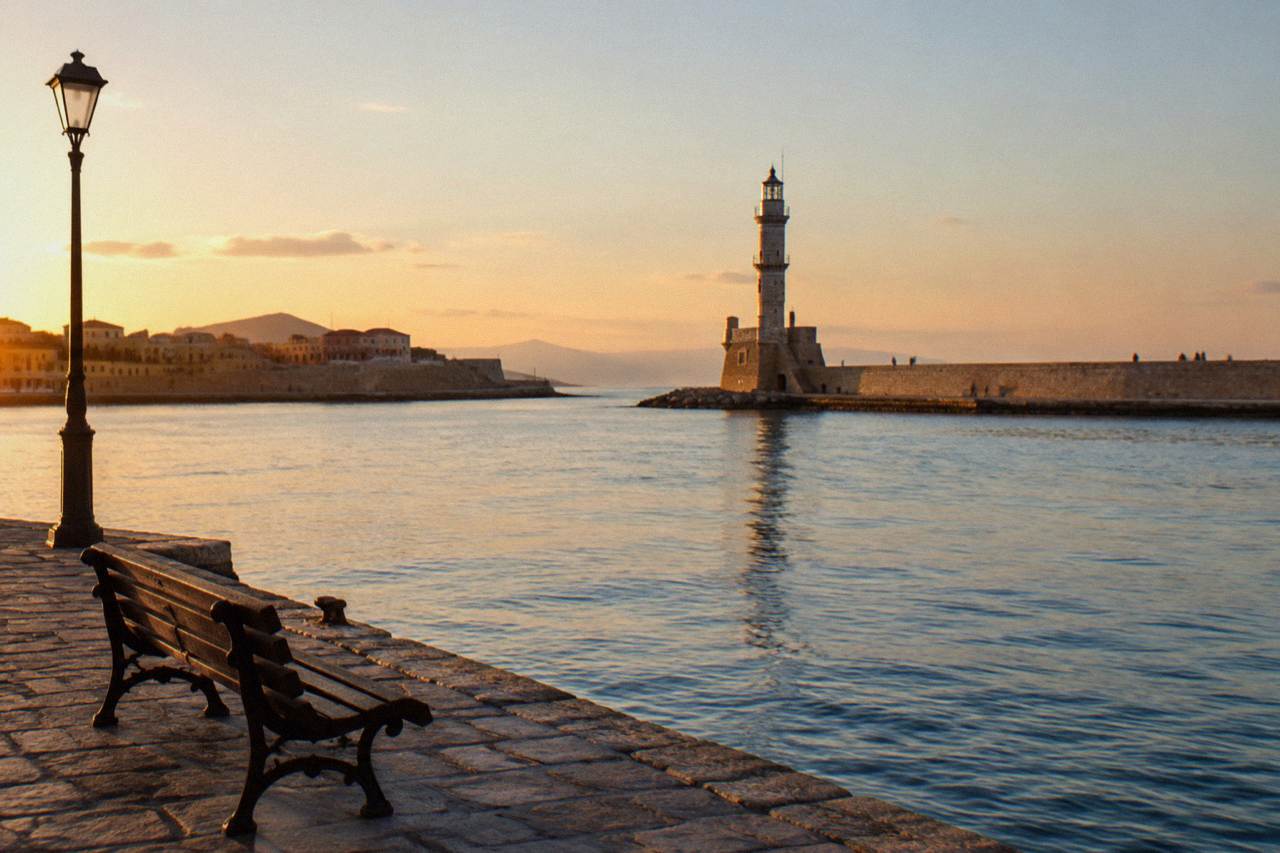
The Old Town's layout helps a visitor stay oriented. It wraps around the Venetian Harbour, whose lighthouse, built about 1595 to 1601 and restored during Egyptian rule between 1830 and 1840, marks the harbour mole. The Neoria, seven surviving shipyards of an original seventeen from the 15th to 16th century, run along the water's edge. Firka Fortress, built in 1620, guards the other side of the harbour mouth, and its grounds are free to walk. These are compact, open, public spaces, and the whole area is walkable, a point covered in detail at Is Chania Old Town Walkable.
The questions Americans tend to ask about friendliness and scams have their own pages. Is Crete Friendly To Americans addresses the welcome question directly, and Is Chania A Tourist Trap deals with pricing and crowds honestly, including the checks a visitor can run, such as reading posted prices and itemised bills, without pretending anyone has audited the tavernas. For the narrower question of evenings, Is It Safe To Walk Around Chania At Night is the dedicated answer.
What About Weather, Gorges And Natural Risks?
The verified natural risks in the Chania area are terrain and weather, not crime: storms in late September and early October 2026 destroyed sections of the Samaria Gorge path, and the gorge's management says works aim for readiness in May 2027, with no reopening decision on record. Gorges are one-way walks with boat exits, the sea is a real sea, and the HNMS Chania Souda station table shows the rainfall pattern that drives every closure. The rule that follows is simple: check official status for any gorge before committing a day to it.
Samaria Gorge illustrates how weather risk works on Crete. The park normally opens 1 May to 31 October, the individual ticket costs EUR 10 through the NECCA e-ticket portal, entry for the full walk runs 07:00 to 13:00 with everyone out by 18:00, and swimming and camping are prohibited inside the park. The route is one-way from Xyloskalo on the Omalos plateau down to Agia Roumeli, with boats at about 17:30 to Sougia or Chora Sfakion and a KTEL bus back. None of that structure protects a path from a storm, which is why the 2026 damage matters: the gorge had also closed earlier that season for the same reason. The dedicated page Why Is The Samaria Gorge Closed tracks the situation, and Which Gorge Is Better For Hiking, Samaria Or Imbros helps if a closed Samaria sends you looking at Imbros instead.
The climate record puts numbers on the seasons. The HNMS Chania Souda station table, covering the station's published records for 1958 to 2010, shows July rainfall averaging just 1.0 mm and January 129.5 mm, with rain days falling from 16.3 in January to 0.4 in July. Rain starts to matter again from October, at 67.7 mm across the month. The practical read is that May through September is the dry window in that record, while October onward is when path conditions and sea conditions need checking day by day.
| Month | Mean temperature, HNMS Chania Souda, 1958 to 2010 | Mean rainfall, mm | Rain days |
|---|---|---|---|
| January | 11.0 C | 129.5 | 16.3 |
| April | 15.9 C | 31.5 | 7.7 |
| July | 26.7 C | 1.0 | 0.4 |
| October | 19.4 C | 67.7 | 9.3 |
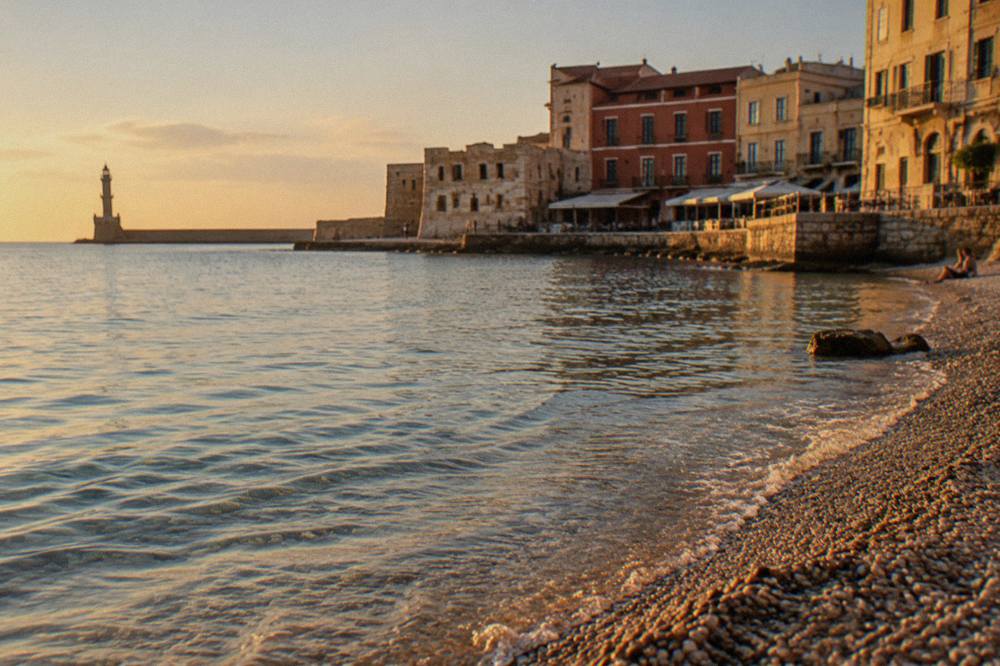
Beach and sea activities carry the same logic. The north coast has family beaches such as those covered in this site's beach guides, and organised boat trips run daily to Balos and Gramvousa from Kissamos port through 31 October 2026, per the operator's published season. On any beach, the sea conditions of the day decide the swim, not the calendar. Sea temperature has no official monthly normal published for Chania, so any figure quoted as one should be treated with suspicion; a live reading is a live reading and nothing more.
For visitors who want the water without the open sea, the calmer options near the city suit a careful day out.
Which Part Of Crete Should An American First-Time Visitor Base In?
Crete is large enough that the base matters more than the island-level question, and Chania, on the north-west coast, is the base that puts Balos, Elafonisi, the gorges, Falassarna and the south coast within day-trip range. The island's west has the beaches and the White Mountains, the east has Knossos and Heraklion reachable as a long day trip, and neither choice carries a safety difference in any published record. The decision is about interests and travel time, not risk.
For a stay measured in days rather than weeks, the comparison pages on this site do the work: Is It Better To Stay In Chania Or Heraklion and Which Is Nicer, Chania Or Rethymnon weigh the practical differences, while How Many Days In Chania Is Enough sizes the stay. Where to sleep inside the city has its own answer at What Is The Best Area To Stay In Chania, Crete, and for anyone weighing the island more widely, Where To Avoid Staying In Crete gives the honest counterweight without scaremongering.
Logistics from an American arrival point are straightforward. Chania's airport sits on the Akrotiri peninsula about 14 km from the centre, with public bus and taxi information published on the airport's own site, and the KTEL long-distance bus station on Kydonias street connects the city to Heraklion, Rethymno, Kissamos, Paleochora, Omalos and, in summer, Elafonisi. Bus and taxi fares are confirmed at the point of travel, since no official fare page is printed here. Renting a car opens the whole west of the island, a decision covered at What Is The Best Car Rental Company In Crete.
Once the base is set, the days fill themselves. The water-based options near the city are among the easiest to book with confidence, and the trio below covers independent boating and guided kayaking on the local coast.
The final word for an American traveller is a planning word, not a warning. This Chania Crete Travel Guide exists to put verified, checkable information in one place, and the safety it can honestly offer is the kind that comes from knowing the entry rules, the weather pattern, the state of the gorge paths and the layout of the city before arrival. Every claim on this page carries the source that publishes it, and every claim that no source supports has been left unsaid.
Common Questions About Travelling To Crete As An American
Is it safe to travel to Crete right now as an American?
Yes, in the sense that no official record, entry restriction or advisory mechanism this site reports from singles Crete or Chania out for American visitors. Greece is a Schengen member, the euro has been the currency since 2001, and entry runs on the EES system deployed across Schengen in April 2026. The real planning risks are terrain and weather, chiefly gorge closures after storms, and both are checkable before any trip.
Do Americans need a visa or ETIAS for Greece?
No. Americans enter Greece visa-free under Schengen arrangements. ETIAS is not in operation and collects no applications as of October 2026, so there is nothing to apply for and no fee to pay for one. The border now uses the Entry/Exit System, fully deployed across Schengen on 10 April 2026, which records biometrics instead of stamping passports.
Is Chania safe at night?
The published record holds no safety statistic for Chania, so this site claims none. The Old Town and harbour front are busy, walkable public spaces, and the standard care with belongings and poorly lit streets applies as it does in any tourist city. The dedicated page on walking around Chania at night covers the question in full.
Is the Samaria Gorge hike dangerous?
The gorge is a managed national park with a one-way route, timed entry from 07:00 to 13:00, everyone out by 18:00, and prohibitions on swimming and camping. The real risk is closure: storms in late September and early October 2026 destroyed sections of the path, and no reopening decision was on record at the time. Check the NECCA status before planning the walk.
What is the best time of year for an American to visit Crete?
The HNMS Chania Souda station table for 1958 to 2010 shows May through September as the dry window, with July rainfall averaging 1.0 mm, while October's 67.7 mm marks the return of weather that can close gorge paths. Beach trips to Balos run daily to 31 October 2026 per the operator's season. Choose spring through early autumn for the fullest range of activities.