Is Crete Friendly To Americans?
Greeks, entry rules, money and day-to-day ease for American visitors to Crete, reported from official sources, with Chania as the practical base.
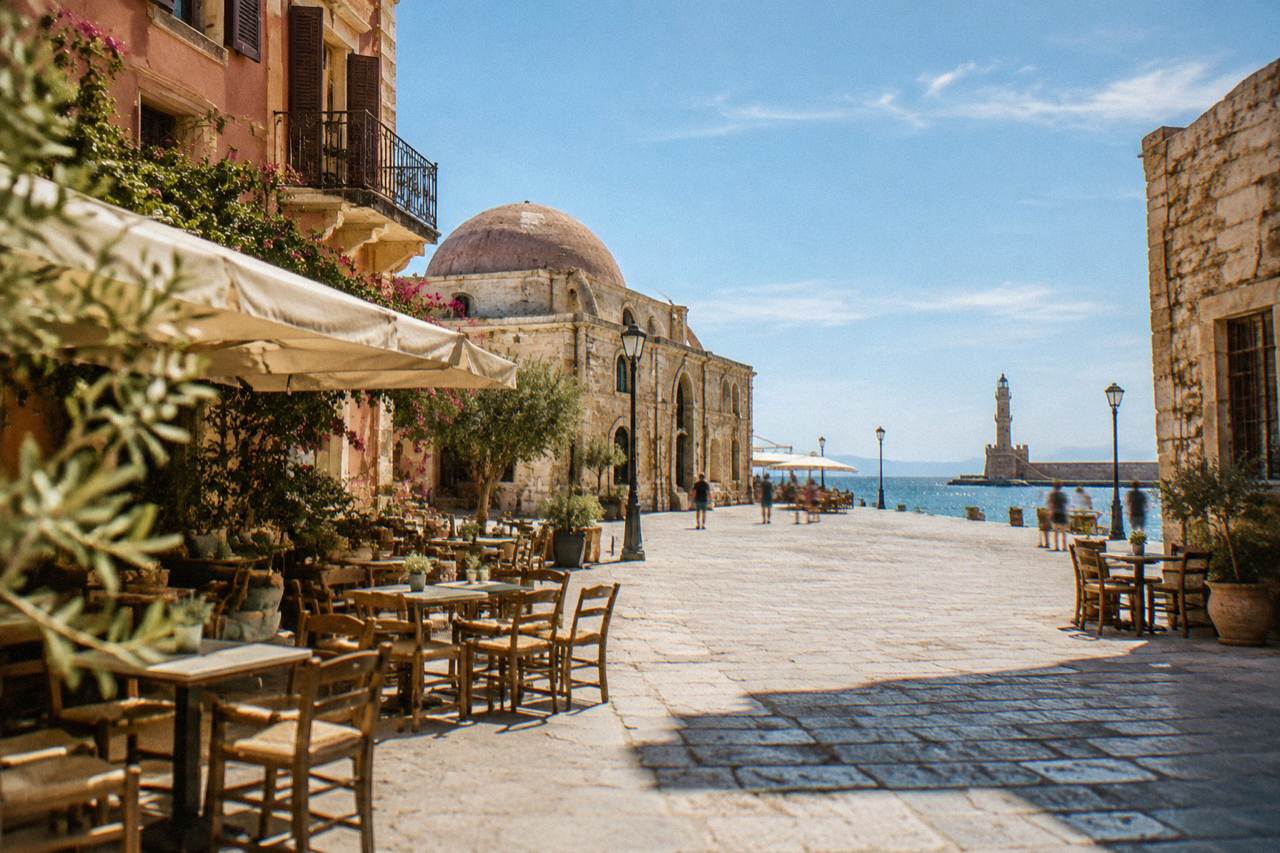
Crete, the largest Greek island and the southern edge of Europe toward the Libyan Sea, receives American travellers along the same tourist infrastructure that carries its European visitors: airports, ferry ports, excursion fleets and a coastal road network that strings the north-coast resorts together. Chania, on the island's north-west coast with its Old Town wrapped around a Venetian Harbour built between 1320 and 1356, is the base from which the famous west-crete day trips to Balos, Elafonisi and the gorges all start. The question Americans usually mean by "friendly" is broader than manners, so this page works through entry rules, money, language and the practical daily experience, using what official sources actually say rather than impressions.
Is Crete Friendly To Americans?
Yes, in the sense that matters to a trip: Crete is a Greek island whose economy runs on hospitality, its entry system treats Americans the same as any other non-EU nationality, and nothing in the island's official rules singles out United States citizens for extra difficulty. Greece has been a full Schengen member with internal checks abolished since 26 March 2000, and Americans enter as visa-exempt third-country nationals for short stays. The welcome itself is a matter of record rather than opinion: tourism is the island's dominant industry, and English is the working second language of every hotel desk, excursion boat and restaurant strip on the north coast.
Two entry facts changed recently and they matter to Americans specifically. The Entry/Exit System (EES) was fully deployed across all Schengen states on 10 April 2026, replacing the manual stamping of passports with digital registration at the border. ETIAS, the travel authorisation that Americans will eventually need to buy before flying, is not in operation and no applications are being collected as of October 2026. Anyone selling an "ETIAS approval" today is selling nothing a border will recognise, so treat any such pitch as a warning sign and check the current status with the official sources before travel.
Money is the other frequent surprise. Greece adopted the euro on 1 January 2001 and the island runs on it entirely. Cards are accepted across Chania's restaurants and shops, though small village tavernas and market stalls sometimes prefer cash, so carrying some euros is sensible.
What Should Americans Expect At The Border In Crete?
Americans need a valid passport and nothing more for a short stay: Greece applies the Schengen visa waiver to United States citizens, the EES now logs entry digitally at the airport, and ETIAS is not yet collecting applications, so no pre-trip authorisation exists to buy as of October 2026. The airport that serves Chania is Chania International Airport "Ioannis Daskalogiannis" (CHQ), operated by Fraport Greece on the Akrotiri peninsula about 14 km from the city centre, and its own page carries the public transport and taxi information for the transfer into town.
Flights from the United States to Crete do not run non-stop; the island is reached through a connection, usually through Athens or another European hub, a route covered in detail on can you fly directly to Crete from the US. Arrivals from Athens also land at Heraklion on the north coast, and the choice between the two airports has its own trade-offs laid out in is it better to fly into Chania or Heraklion.
To price the connection into the city's airport, book a flight to Chania here.
The border procedure itself is now EES-based. Fingerprints and a face image are taken at first entry to the Schengen area, a process that adds a few minutes at the booth. Nothing in the published rules treats Americans differently from Canadians, Australians or Britons: the standard Schengen short-stay allowance for visa-exempt nationals applies.
Is English Enough To Get Around Crete?
Yes along the tourist coast and in every booked activity: English is the standard service language of Chania's hotels, tour operators, excursion boats and restaurant strips, and a monolingual American visitor who books through the operator's live listing and carries a mapping app will manage the whole west of the island without a word of Greek. The further inland you go, into the villages of the White Mountains or the south-coast settlements like Paleochora and Chora Sfakion, the more Greek becomes the default, but even there a greeting and a little patience carry a transaction.
This is where a guided day trip earns its place for a first-time visitor. A guide handles the language, the driving on mountain roads and the timing, and the traveller gets the conversation that a rented car does not provide. The 7 Villages of Apokoronas tour with lunch is the kind of day that answers the friendliness question directly: villages, a shared table, food that arrives without a menu negotiation. It runs as a small-group day from Chania, and you can Check availability alongside the internal page.
A few Greek words change the tone of an interaction even when the other party speaks English, and locals respond to the attempt rather than the accuracy. "Kalimera" for good morning, "efharisto" for thank you, and "yamas" as the toast at a taverna table are the working core.
How Do Americans Handle Money In Crete?
Crete uses the euro, Greece's currency since 1 January 2001, and Americans should expect card acceptance nearly everywhere in Chania plus a cash buffer for small village tavernas, market stalls and the occasional municipal charge such as the EUR 1 Kissamos fee that is added to Balos boat tickets for visitors over 13. The island is not expensive by United States standards for everyday eating, though the full cost picture is covered in is Chania expensive.
One charge that confuses American arrivals is the climate crisis resilience fee, a per-room, per-night amount collected by accommodation with seasonal rates that vary by category. The exact figure is set in the tax authority's own documentation and visitors should simply confirm the amount at booking rather than rely on second-hand numbers. Airport transfers, taxis and buses all involve fares that are best checked on the airport's own site rather than guessed from a forum thread, a rule that holds across every transport question on this island.
Published charges that are safe to plan around, because the operator or authority states them, include the following:
| Item | Stated figure | Source of the figure |
|---|---|---|
| Archaeological Museum of Chania, full ticket | EUR 15 | The museum's visit information |
| Archaeological Museum of Chania, concession | EUR 8 | The museum's visit information |
| Samaria Gorge individual ticket | EUR 10 | The NECCA e-ticket portal |
| Kissamos municipal fee on Balos boats, over-13s | EUR 1 | Collected on the boat ticket |
| Firka Fortress grounds | Free | The fort's own listing |
Tipping is not covered by any verified source on this site, so no rule is stated here: watch what a posted bill includes and what locals at the next table leave, and let that settle it.
What Daily Rhythms Surprise American Visitors In Chania?
Three habits differ from the United States rhythm: the evening meal starts late and runs long, the afternoon pause is real in the villages outside the tourist strips, and the seasonal calendar is set by weather and ferry timetables rather than by year-round convenience, so Americans do best when they plan around siesta hours and check seasonal services before assuming they run. The HNMS Chania Souda station table, covering station records from 1958 to 2010, shows why the season is shaped the way it is: July averages 26.7 C with 1 mm of rain on 0.4 rain days, while January averages 11 C with 129.5 mm of rain across 16.3 rain days. The tourist machine scales up for the dry stretch and winds down for the wet one.
The practical version of this for an American visitor looks like:
| Month | Mean temperature | Rainfall | What it means for a visit |
|---|---|---|---|
| July | 26.7 C | 1.0 mm | Peak season: every boat and gorge service running, crowds at their fullest |
| September | 23.2 C | 15.4 mm | Sea still warm, rain returning only at the margins, services at full season schedules |
| October | 19.4 C | 67.7 mm | Rain starts to matter; Balos boats ran daily to 31 October 2026 per the operator |
| January | 11.0 C | 129.5 mm | The wettest month in the station table; a winter-city trip, not a beach one |
Two seasonal cautions carry real weight. The Samaria Gorge normally opens 1 May to 31 October, but storms in late September and early October 2026 destroyed sections of the path, staff describe a 2026 reopening as extremely difficult, and works are aimed at readiness in May 2027; the NECCA status page is the only source to trust before planning that hike, as why is the Samaria Gorge closed explains. At Balos, a proposed time-slot cap of about 1,200 visitors per three hours was announced in August 2026 but is not in force, so no visitor limit should be assumed either way; the only confirmed charge is the EUR 1 municipal fee on the boat ticket.
Which Parts Of Crete Are Easiest For A First American Visit?
Chania is the easiest first base on the island for an American visitor: the Old Town is compact and walkable, the airport transfer is a single 14 km hop, and the island's headline sights, Balos, Elafonisi, the gorges and the south-coast boat trips, all operate as organised day tours from the city, which removes every driving and language question from the first week. The question of which town suits which traveller is covered from several angles on this site, including which is the nicest part of Crete to stay in, which is nicer Chania or Rethymnon and where is nicer Chania or Heraklion.
For travellers who want the reassurance of a familiar booking flow, the day-trip market from Chania is deep and well reviewed across every category: gorge hikes, boat cruises, food tours and village excursions. The trio below collects the three that best fit a first visit, an inland village day, a calm-water paddle and a gorge-and-coast combination.
What Should Americans Be Careful About In Crete?
The honest caution list is short and practical: confirm the seasonal status of gorge and boat services before committing, check the resilience fee at booking, drive the mountain roads at their own pace rather than the locals', and treat any website selling ETIAS approvals or guaranteed skip-the-line access as unreliable, since ETIAS is not in operation and no free or tip-based walking tour product exists in Chania. None of these is hostility; they are the ordinary frictions of an island whose services are seasonal and whose roads were built for donkeys before cars.
The areas-and-stays side of the question has its own answer pages: where to avoid staying in Crete covers the mismatches between traveller type and resort strip, and is Chania a tourist trap deals with the Old Town pricing question directly. Safety itself is addressed in is it safe to travel to Crete right now as an American, which reports the same country-level facts: Greece is a Schengen member, the euro area, and a country whose entry system for Americans is the standard visa-waiver process now logged through EES.
One last planning note, and it is the one this Chania Crete Travel Guide exists to make: the island rewards a base-and-day-trip structure. Sleep in Chania, walk the harbour, and let the tours carry you to Balos, Elafonisi and the villages, and the friendliness question answers itself somewhere around the second shared table.
Common Questions About Americans Visiting Crete
Is Crete Friendly To Americans?
Yes. Crete is a Greek island whose tourist economy serves international visitors, Americans enter under the standard Schengen visa waiver, and English is the working second language across the north-coast resorts and every booked activity.
Do Americans need a visa for Crete?
No visa is needed for short stays. Greece is a full Schengen member, Americans enter visa-exempt under the standard Schengen short-stay allowance, and the EES registers entry digitally since 10 April 2026.
Is ETIAS required for Americans yet?
No. ETIAS is not in operation and no applications are being collected as of October 2026. Any site selling an ETIAS approval today is selling nothing a border will recognise.
What currency does Crete use?
The euro, Greece's currency since 1 January 2001. Cards are accepted widely in Chania, with a cash buffer sensible for village tavernas and small stalls.
Can Americans drink the water and use cards in Crete?
Card acceptance is broad along the tourist coast. Tap water is not covered by any verified source on this site, so confirm locally on arrival rather than relying on forum answers.