Is It Possible To Swim In Chania?
Yes, swimming in Chania is not only possible but easy: beaches sit within a short walk or drive of the Old Town, and the sea season runs from late spring into autumn. Here is what the records and the listings actually say.
Chania sits on the sea. The city is a coastal place on the north-west coast of Crete, Greece, with its Old Town wrapped around the Venetian Harbour, the White Mountains to the south and the Libyan Sea on the island's far side. Swimming is not an excursion you have to plan from a distance: sandy and mixed beaches sit at the edge of the city, more line the Akrotiri peninsula to the east, and the famous lagoons of the west, Balos and Elafonisi, are day trips that start from here. The short answer to the question is yes, with a few practical notes about where, when and how the sea behaves.
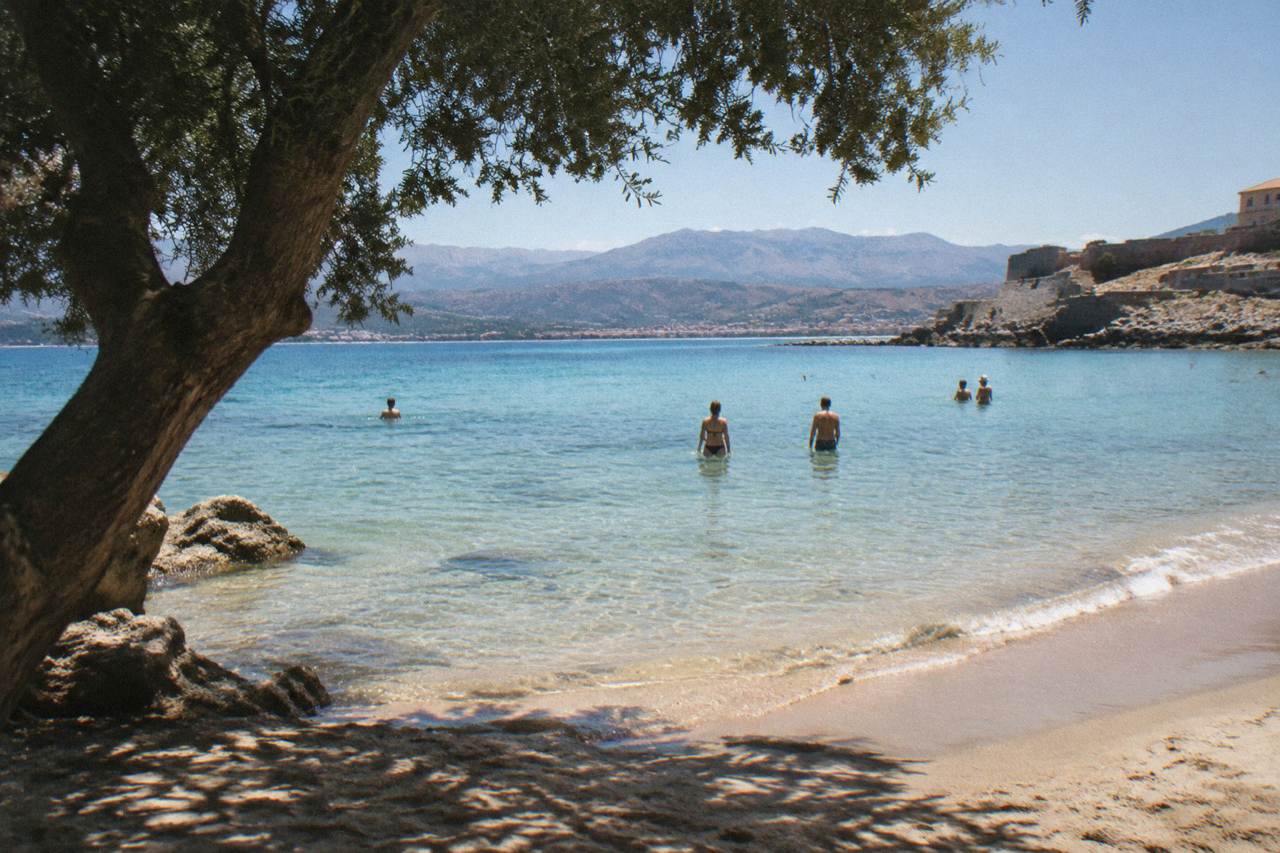
This page lays out what the published record says: which swimming spots sit closest to the centre, what the weather station's own table shows about the swimming season, how the harbour itself treats swimmers, and what a boat adds. The desk reports what sources say, and where something is not settled in print, it says so.
Is It Possible To Swim In Chania?
Yes, swimming in Chania is possible and straightforward, because the city is built directly on the coast of the Cretan Sea and has sandy beaches at its western edge, more beaches across the Akrotiri peninsula, and a dry, warm stretch from May into September when the sea is the natural focus of the day. The city's own geography does the work: the Old Town faces the water, the Nea Chora beach area lies to its west, and the municipal layout keeps the shore within easy reach of the centre. Nothing about swimming here requires a long transfer or specialist planning.
What varies is the kind of swimming. Inside the city the water is calm and shallow in places, suited to a morning dip or an evening swim after dinner. A short way out, the beaches of the Akrotiri peninsula, such as Marathi, Kalathas and Stavros, offer quieter bays, while Seitan Limania on the same peninsula is the steep, dramatic cove that draws the camera crews and the confident swimmers. Further afield, Balos lagoon and Elafonisi on the western and south-western coasts are the celebrated swimming destinations, reached by boat, by car or by organised day trip.
Fancy seeing that coast from the water instead? Book a sea kayak tour here.
The question of whether the Old Town itself is comfortable to base in for all of this is separate, and it has its own answer: Is Chania Old Town Walkable? covers the pedestrian reality of the centre, including the walk out toward the water. In short, a stay in the Old Town puts the sea within walking distance at one end and a bus or car ride at the other.
Which Beaches Sit Closest To The Old Town?
The beaches nearest the centre are Nea Chora to the west of the Old Town and the small coves reached along the same shoreline, with the Akrotiri peninsula beaches, Marathi, Kalathas and Stavros, a short drive or bus ride east, so a swim can be squeezed into a morning, a lunch break or an evening without rearranging the day. Nea Chora is the city's own beach quarter, a former fishing settlement grown into a neighbourhood with tavernas along the water, and it is the default answer for anyone staying in the centre who wants a swim without a vehicle.
The desk's summary of the main swimming bases, and what each is good for:
| Swimming area | Where it sits | What it suits |
|---|---|---|
| Nea Chora | Western edge of the city, at the end of the Old Town shoreline | Walking-distance swims, families, evening dips |
| Marathi and Kalathas | Akrotiri peninsula, east of the city | Calm bays, sheltered water, an easy half day |
| Stavros | Northern tip of the Akrotiri peninsula | A dramatic enclosed bay with a village behind it |
| Seitan Limania | Akrotiri peninsula cliffs | A steep descent to a wild cove for confident swimmers |
| Agia Marina and Platanias | West along the coastal road | Long sandy stretches with full beach facilities |
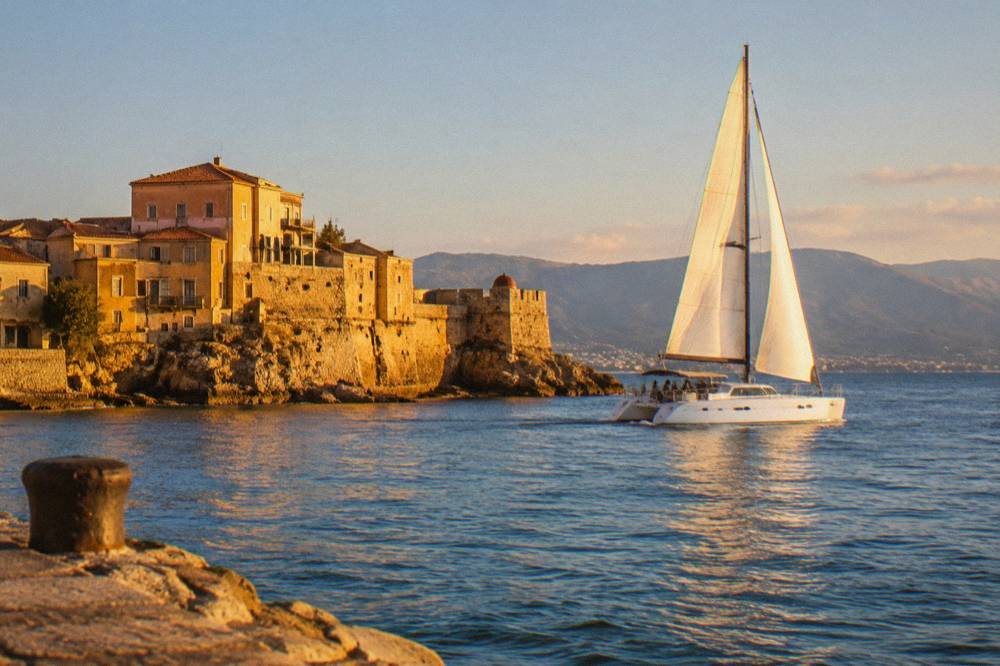
Each of these has a fuller page of its own on the site, including the guides to Marathi beach, Kalathas beach and Agia Marina beach, where the access details are set out at length. The one honest caveat for Seitan Limania is the path itself: the cove is reached by a steep, stepped descent, and anyone unsure on their feet should treat it as a viewpoint rather than a swim. Beyond the beaches, the sea around the city is also reachable by boat, which is where the small islands come in. Lazaretta island, just off the city's shoreline, is a recognised swim stop, and one of the shortest ways to reach it is a boat trip with a dedicated swim stop, covered by the Lazaretta island swim stop trip, with live dates and pricing on Check availability.
When Is The Sea Season In Chania?
The swimming season in Chania runs through the dry, warm stretch of the year that the HNMS Chania Souda station table shows clearly, from May, when the mean temperature reaches 20.2 C and rainfall falls to 13.5 mm, through to September, and the months outside that window, from October onward, bring rain that climbs back to 67.7 mm in October and 129.5 mm in January. The station records cover 1958 to 2010, and they are weather-station means rather than a sea-temperature series, so they describe the air and the rain rather than the water itself. No official monthly sea-temperature normal exists for Chania, and none is printed here.
| Month | Mean temperature (C) | Rain (mm) | Rain days |
|---|---|---|---|
| May | 20.2 | 13.5 | 4.2 |
| June | 24.7 | 3.4 | 1.2 |
| July | 26.7 | 1.0 | 0.4 |
| August | 26.3 | 1.4 | 0.6 |
| September | 23.2 | 15.4 | 3.2 |
| October | 19.4 | 67.7 | 9.3 |
Source: HNMS Chania Souda station, records 1958 to 2010. July and August are the warmest and driest months in this table, with a prevailing wind from the west that shifts north-west in those two months, a pattern known as the meltemi. The table says nothing about the sea's own temperature, and swimmers who want a current reading should check a live source on the day rather than a monthly figure.
What the table does license, plainly: May to September is the dry core of the year, June and July are nearly rainless on these records, and by October the rain returns at 67.7 mm across 9.3 rain days. Locals swim outside that window, and the sea is often mild well into autumn, but the climate record itself stops at the rainfall line, and this desk does not extend it. If timing a trip around the water, the safest reading of the station table is a season from late May to early October, with shoulder weeks either side that reward whoever checks the forecast.
Can You Swim From The Venetian Harbour Itself?
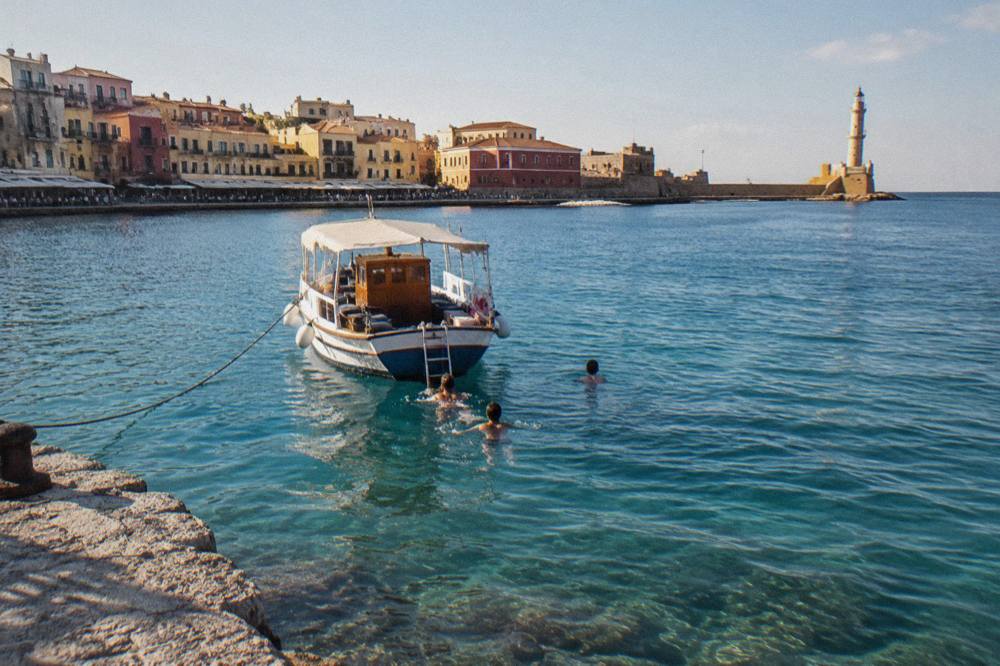
The Venetian Harbour is a working historic harbour, first built between 1320 and 1356, used by excursion boats rather than swimmers, so the swim happens at the beaches and coves a short way along the shore, not off the harbour walls themselves, and the harbour's own role in a swimming day is as the departure point for boat trips. The harbour's history is printed in the record: Venetian works from 1320 to 1356, dredging and a wall recorded in 1515, a lighthouse on the mole built about 1595 to 1601 and restored on its Venetian base during the period of Egyptian rule from 1830 to 1840. Swimmers share none of that. The water in the basin serves boats.
That said, the harbour is where several swimming days begin. Excursion boats leave from the quay for the nearby islands, including Agioi Theodoroi and Lazaretta, and the sunset cruises that run along this coast start there too. Anyone whose swimming plan is "jump off a boat into deep water" will find the harbour is the address, not the pool. Anyone whose plan is a beach towel should walk west toward Nea Chora instead.
A practical note on what a boat adds. The shore around Chania is sheltered by its north-facing position and by the bulge of the Akrotiri peninsula, but the wind is a west or north-west pattern in the height of summer, and a boat puts the swim on whichever side of a headland is calm that day. Operators decide on the day, and the listing for each trip states its route and its swim stops.
What About Swimming At Balos, Elafonisi And The Gorges?
Balos and Elafonisi are the two famous swimming destinations of western Crete, both reached from Chania as day trips, and each carries its own access notes: Balos involves a boat from Kissamos port or an unpaved road from Kaliviani to a parking area and then a walk down, while Elafonisi is a Natura 2000 protected area with free entry and a strict prohibition on taking sand, shells or plants. Neither is a city beach. Both are commitments of a day, and both reward the planning.
At Balos, the only confirmed charge is a EUR 1 municipal fee from Kissamos, collected on the boat ticket for visitors over 13. A proposed time-slot visitor cap was reported in August 2026 but is not in force, so treat any claim of a booking system for the lagoon with caution and confirm the current arrangement with the operator before travelling. Boat departures run daily to 31 October 2026 on the operator's own season statement. At Elafonisi, entry is reported free, parking is reported at around EUR 5 a day, and the rule that matters most is the protected-area rule: the pink sand stays on the beach. The desk's comparison page on whether Elafonisi is worth the trip and the guide on how hard Balos is to reach cover both in depth.
The gorges are a different category. Samaria Gorge is a national park where swimming is prohibited in the park itself, and its status after the storms of late September and early October 2026 must be checked with the park's managing body before any plan is made: the gorge normally operates 1 May to 31 October, but it closes or delays when storms damage the path, and the current season's condition is a live question, not a settled fact. Imbros Gorge, the shorter alternative, is covered in its own guide. The honest framing for a swimming-focused trip is beaches and boats first, gorges as the walking day that the sea day balances.
One more option deserves its own line. The trips that combine swimming with something else, a snorkel stop, a meal, or a cooking class in the White Mountains after a morning on the water, are the shape that suits a stay of only a few days, because they stack two experiences into one block of time. The Menies and Chironisia bay cruise, for example, pairs a remote beach on the Rodopou peninsula with snorkeling, and the mountain cooking class turns the drive inland into the day's second half. The full range is in the site's overview of the best tours from Chania.
For readers planning the whole trip around the water, two neighbouring answers help: what not to miss in Chania for the wider picture, and the site's own Chania Crete Travel Guide homepage for the full index of beaches, gorges and day trips.
Common Questions About Swimming In Chania
Is it possible to swim in Chania?
Yes. Chania is a coastal city on the Cretan Sea with beaches at its western edge, more across the Akrotiri peninsula, and a dry warm season from May into September. The Venetian Harbour itself is for boats, not swimmers, but the sea is within walking or short driving distance of the centre.
Can you swim at Balos and Elafonisi on a day trip from Chania?
Yes, both are day trips. Balos is reached by boat from Kissamos port or by an unpaved road from Kaliviani followed by a walk down, with a EUR 1 municipal fee collected on the boat ticket for over-13s. Elafonisi is a Natura 2000 area with reported free entry, and taking sand, shells or plants is prohibited.
How warm is the sea in Chania?
No official monthly sea-temperature normal exists for Chania, so no figure is printed. The air record from the HNMS Chania Souda station, covering 1958 to 2010, shows the dry warm season from May to September, with July the warmest month at a 26.7 C mean. For the water itself, check a live reading on the day.
Is swimming allowed in Samaria Gorge?
No. Swimming is prohibited inside Samaria National Park, as is camping. The gorge normally operates 1 May to 31 October, but it closes or is delayed when storms damage the path, and the park's status must be checked with its managing body before any visit.
Which beach is closest to Chania Old Town?
Nea Chora sits at the western edge of the city, at the end of the Old Town shoreline, and is the nearest sandy swimming beach for anyone staying in the centre. The Akrotiri peninsula beaches, including Marathi, Kalathas and Stavros, are a short drive or bus ride east.
Before you go, the pick for this guide:
Short Lazaretta Trip, Swim Stop
★ 4.9 741 reviews · From $21
Check availability →