Why Is Chania Venetian?
Chania looks Venetian because Venice built its harbour, walls, shipyards and lighthouse over four centuries of rule. This guide explains the dated works you can still see.
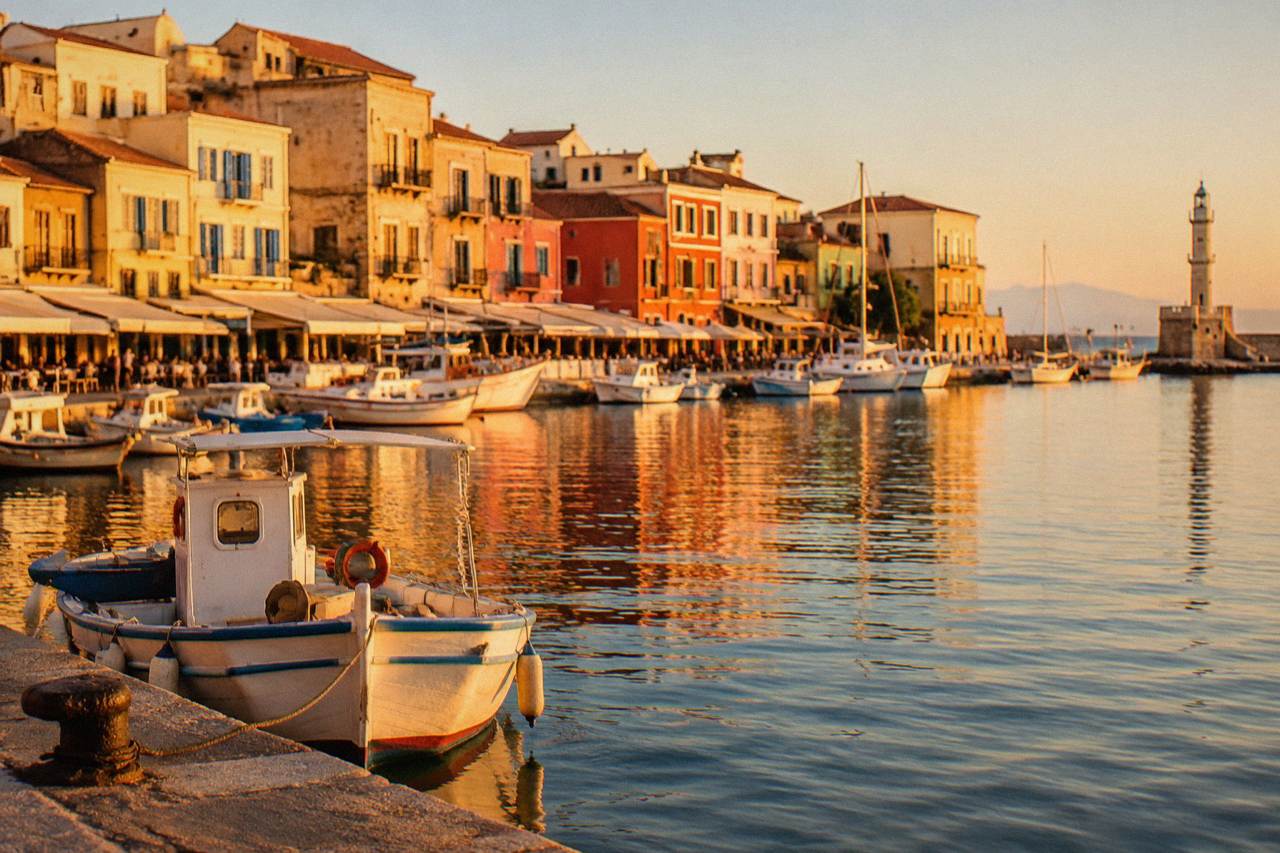
Chania, a coastal city on the north-west coast of Crete in Greece, looks Italian at first glance: a stone harbour curved around quiet water, long arsenals with open arches, a lighthouse standing at the end of a mole. The reason is straightforward. Venice ruled Chania and built its port infrastructure across centuries, and the city kept using those same structures long after the Venetians left, so what a visitor photographs today is, in large part, a working Venetian port that survived. The Ottoman conquest of Chania in 1645 ended Venetian rule but not Venetian construction, and the union of Crete with Greece in 1913 folded the city into the modern Greek state with its harbour core still recognisably the one Venice made.
Why Is Chania Venetian?
Chania is Venetian because Venice held the city for roughly four hundred years and spent that time building it into a fortified trading port: the harbour was first constructed between 1320 and 1356, the city walls went up in two campaigns from 1336 and again from 1536, and the lighthouse, shipyards and fortress followed, with the largest of these works still standing in the Old Town today. That is the short answer, and every date in it comes from the recorded history of the works themselves rather than from guidebook shorthand.
The longer answer is about function. Chania sat on a natural bay on the island's north-west coast, a useful stopping point on the sea routes Venice depended on. A port needed protection from the sea and from attack, so the Venetian centuries produced a breakwater and mole, a chain of shipyards for galley repair, walls around the growing town, and a fortress at the harbour mouth. None of this was decorative. It was port infrastructure, and port infrastructure is built to last, which is why so much of it did.
What sometimes confuses visitors is that the city is also visibly something else. Minarets, domes and Ottoman-era house types appear across the Old Town because the Ottoman period after 1645 added its own layer. The Venetian layer is simply the bigger and more public one: it owns the waterfront. For a fuller picture of that waterfront, the Venetian Harbour guide walks the harbour itself structure by structure.
What Did The Venetians Build In Chania?
The recorded Venetian works in Chania are the harbour, first built from 1320 to 1356 with dredging and a wall recorded in 1515; the first city walls from 1336 to about 1356; the second, larger walls from 1536 to a design by Michele Sanmicheli; the lighthouse begun about 1595 and finished about 1601; the Firka Fortress at the harbour mouth, built in 1620; and the Neoria shipyards, of which seven survive from an original seventeen. Each of those dates is tied to the specific structure, and together they show a port built in stages over three centuries rather than in one campaign.
The harbour came first, because without a sheltered basin nothing else mattered. Once the mole existed, the shipyards followed: the Neoria, long vaulted halls opening directly onto the water, where galleys could be hauled out and repaired. Seven of an original seventeen survive, from the Venetian period, and they still define the eastern side of the harbour. The lighthouse at the end of the mole was built about 1595 to 1601 on a Venetian base, and it was later restored during the Egyptian administration of 1830 to 1840, operating again from 1839. So the lighthouse a visitor photographs is partly Venetian and partly the restoration carried out between 1830 and 1840, a detail worth knowing before anyone calls it purely one thing.
| Structure | Period on record | What survives |
|---|---|---|
| Venetian Harbour | First built 1320 to 1356; dredging and a wall recorded 1515 | The harbour basin and mole in daily use |
| First city walls | 1336 to about 1356 | Traces only, overtaken by the second walls |
| Second city walls | From 1536, to Michele Sanmicheli's design | Substantial stretches around the Old Town |
| Neoria shipyards | Venetian period | Seven halls of an original seventeen |
| Lighthouse (Faros) | About 1595 to 1601 | Standing, restored 1830 to 1840, operating 1839 |
| Firka Fortress | 1620 | Standing at the harbour mouth, grounds free to enter |
The last entry matters for anyone planning a walk. Firka Fortress, built by the Venetians in 1620, guards the harbour entrance opposite the lighthouse, and its grounds are free to enter. The fortress sits at the edge of the Topanas quarter, one of the Old Town's distinct neighbourhoods, and a walk from there along the water to the Neoria covers nearly every Venetian structure in the table above in under a kilometre of flat harbour front.
Tours that follow this same fabric exist, and the most direct one pairs the streets with the food sold in them:
What Came After The Venetians In Chania?
Venetian rule in Chania ended with the Ottoman conquest of the city in 1645, and the island's union with Greece came in 1913, so the Venetian structures Chania shows off today passed through more than two and a half centuries of Ottoman administration and a period of Egyptian involvement before becoming part of the Greek state. The Venetian face of the city is therefore not the only face, but it is the frame: the Ottomans and the Egyptians rebuilt and restored within a Venetian skeleton.
The Egyptian role is easy to miss and worth naming. The lighthouse restoration of 1830 to 1840, with the light operating again in 1839, belongs to the years of Egyptian administration in Crete, and it is why the tower as it stands does not look like a plain Venetian beacon. The Ottoman centuries left the harbour working as a port and added the city's own later layers, including wooden-balconied houses and the Mosque of the Janissaries by the harbour, for which no construction date is on record in the sources this guide uses. Other pages covering the same trip are gathered on Chania Crete Travel Guide.
Understanding the sequence, Venetian first, Ottoman from 1645, Egyptian restoration between 1830 and 1840, Greek from 1913, makes the Old Town legible. A visitor who knows the order can read the buildings: the great masonry harbour works are Venetian, the mosque at the harbour edge is Ottoman, and the restored lighthouse is both Venetian at the base and the restored tower of 1830 to 1840 above it. The question of whether that heritage feels crowded or authentic is a fair one, and this site covers it directly in is Chania a tourist trap?.
Where To See Venetian Chania Today?
The Venetian core of Chania is visible in five places: the harbour basin and mole from 1320 to 1356, the seven surviving Neoria shipyards, the lighthouse of about 1595 to 1601 at the end of the mole, Firka Fortress of 1620 at the harbour mouth, and the stretches of the 1536 walls that still enclose parts of the Old Town. All five sit within walking distance of one another, and the Old Town as a whole is compact enough to cover on foot.
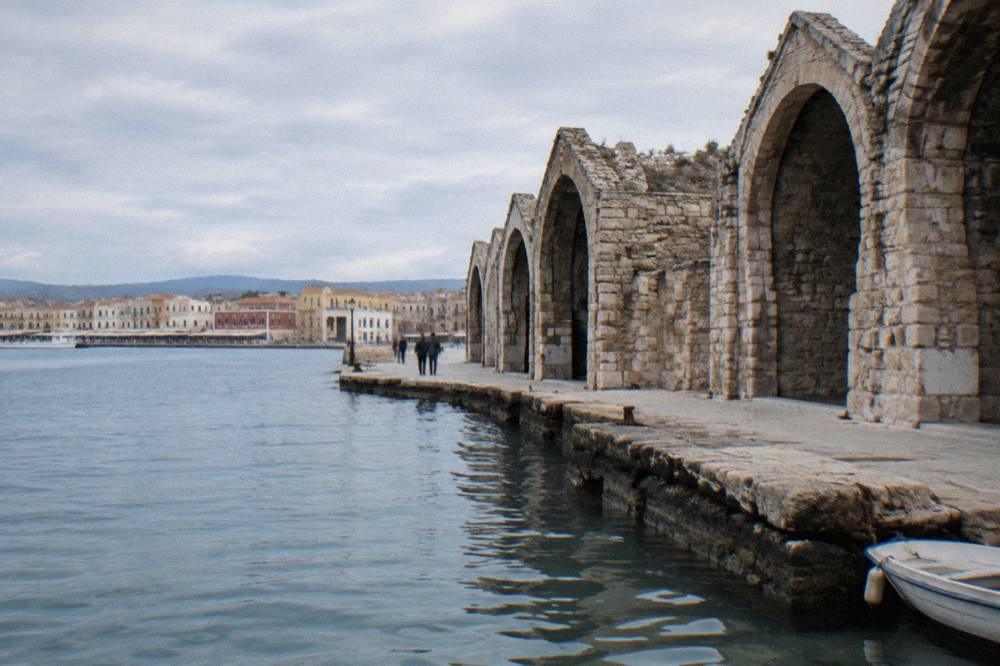
Start where the Venetians did, at the water. The walk along the mole to the lighthouse gives the clearest sense of what the harbour works were for: the mole shelters the basin, and the lighthouse marks its end. Back on shore, the Neoria run along the eastern harbour edge, their repeated arches the most unmistakably industrial of the Venetian survivals. Firka Fortress closes the circuit at the western mouth, free to enter and close to the Maritime Museum of Crete, for which no price or hours are stated here and visitors should check locally.
A second way to see the harbour is from the water, which is the viewpoint the Venetians themselves would have used. Small-boat trips run from the Venetian Harbour out along the coast, and the sailing options among the picks above include a small-group trip to the Agioi Theodoroi islands with a meal served on board. Seen from a boat, the mole, the Neoria and Firka line up as a single defensive system, which is exactly how they were designed.
For depth beyond the walk, the Archaeological Museum of Chania at 15 Skra Street in Halepa holds the older layers beneath the Venetian city, with a full ticket at EUR 15 and a concession at EUR 8; the museum's own visit page is the place to confirm opening hours before travelling out there. A second museum day can be paired with the Chania Old Town walkability answer, which covers the practical side of covering this ground without a car.
Which Chania Tours Suit The Venetian Story Best?
The tours that fit the Venetian story are the ones that work inside the Old Town fabric or approach the harbour from the sea: a guided Old Town walk with street food tastings moves through the streets the Venetians laid out, while sailing trips and harbour cruises show the mole, shipyards and fortress from the water, the angle they were built to be seen from. Beach day trips to Balos or Falassarna make sense as a second day rather than a substitute, since they leave the Venetian core behind entirely.
The featured option on this page is the Old Town highlights walk with street food. It exists squarely in the territory this article describes: the lanes, the harbour front and the food stalls of a city whose street plan still follows Venetian lines. Its price, rating and schedule render on its own page rather than being typed here, and the listing carries the current details.
If the plan is one day in the city and one day on the water, the pairing works naturally. The walk covers the ground; the boat gives the counter-view. Deciding what deserves the limited days is its own question, covered in what not to miss in Chania, and for travellers weighing the island more broadly, the wider Crete priorities sit in what should I not miss in Crete. The trio below collects the three tours this site pairs most often with a Venetian-harbour visit:
Common Questions About Venetian Chania
Why is Chania Venetian?
Venice ruled Chania for roughly four centuries and built the city's port infrastructure in that time: the harbour from 1320 to 1356, walls from 1336 and again from 1536, the lighthouse about 1595 to 1601, the Neoria shipyards and Firka Fortress in 1620. The works survived, so the city kept its Venetian face.
Is the Chania lighthouse Venetian?
Its base and original construction are Venetian, built about 1595 to 1601. The tower was restored during the Egyptian administration of 1830 to 1840 and was operating again in 1839, so the lighthouse as it stands is a Venetian structure with the restoration carried out between 1830 and 1840.
When did Venetian rule in Chania end?
Venetian rule ended with the Ottoman conquest of Chania in 1645. Crete's union with Greece followed in 1913.
Are the Venetian shipyards in Chania original?
Seven shipyard halls survive of an original seventeen, from the Venetian period. They stand on the eastern side of the Venetian Harbour and are among the most complete Venetian industrial structures in the city.
Can you see Venetian Chania without a tour?
Yes. The harbour, the Neoria, Firka Fortress and the surviving wall stretches are all visible on a self-guided walk of the Old Town, and Firka's grounds are free to enter. A guided walk adds context and tastings, but the structures themselves are public.
Chania's Venetian character is not a theme applied to the city, it is the record of four centuries of building that the following centuries chose to keep and reuse. Walk the mole, stand under the Neoria arches, look up at Firka, and the answer to the question becomes physical: Venice built here, thoroughly, and the city never needed to build over it.