Why Is Elafonissi Beach Pink?
The pink sand at Elafonisi, the beach west of Chania in Crete, comes from crushed red shells of tiny sea organisms mixed into white sand. Here is how it forms and why you cannot take any home.
The sand at Elafonisi, the island-backed beach on the south-west corner of Crete that every Chania visitor hears about within a day of arriving, is white sand with something extra scattered through it. That something extra is shell. Tiny sea organisms with red and pink shells live on the rocks and seagrass around the islet, and when they die their shells break down into fragments that wash ashore, dry in the sun and blend with the quartz-white sand. Where the fragments concentrate, the beach reads pink.
That is the whole mechanism, and it is worth understanding before you go, because it explains three things at once: why the pink comes and goes rather than sitting there like paint, why wet sand at the waterline often looks pinker than the dry sand higher up the beach, and why removing even a small bag of sand is prohibited rather than merely frowned upon. This page, from the Chania Crete Travel Guide desk, lays out the science in plain language, then the protected-status rules, then how the beach fits into a day trip from Chania.
Why Is Elafonissi Beach Pink?
Elafonisi beach is pink because the shells of tiny red-shelled sea organisms, chiefly a type of foraminiferon that grows on seagrass and rocky seabed nearby, are constantly broken down into fragments and mixed into the white sand, and the strongest colour sits where waves and wind concentrate those fragments, along the waterline and in the dune hollows. The pink is therefore a living, renewing effect rather than a permanent feature of the ground itself.
The organisms in question are foraminifera, single-celled creatures that build shells, and the red-pigmented varieties that live in this part of the Mediterranean leave behind shells in shades from deep red to pale rose. Waves grind the empty shells against sand and rock until the fragments are small enough to travel with the beach sediment. Sunlight bleaches white sand but leaves the red pigment of the shell fragments largely intact, so the contrast holds.
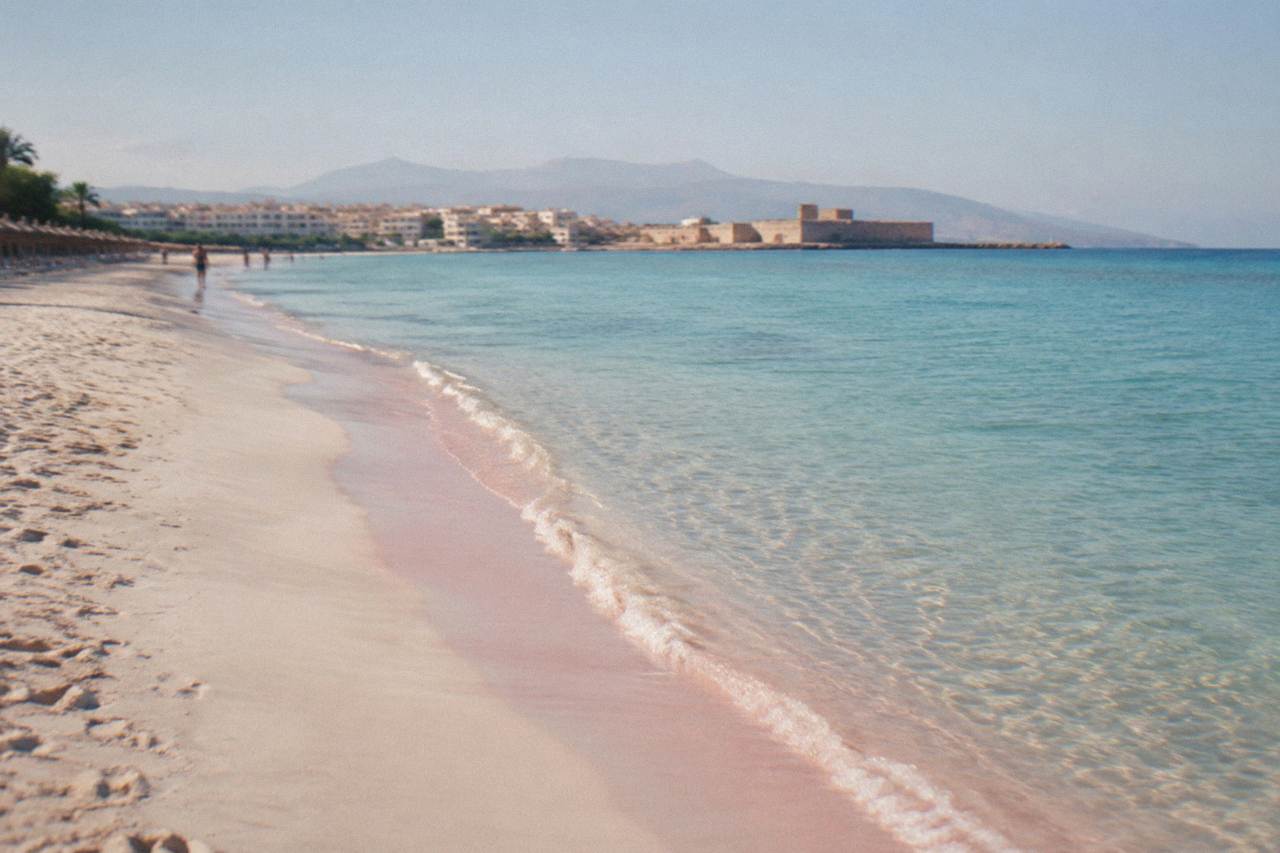
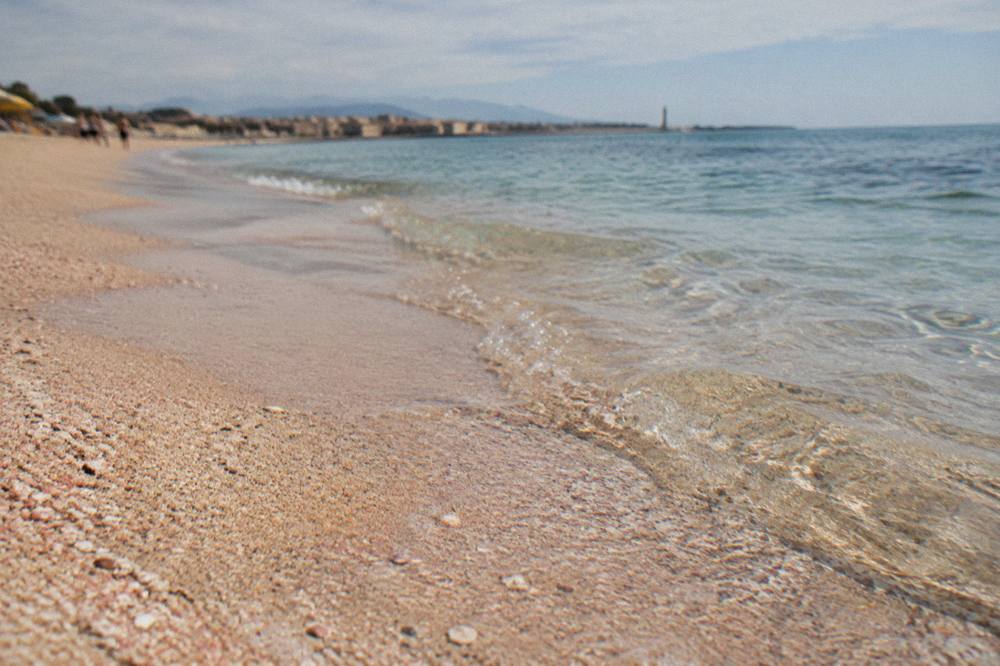
This is also why photographs and reality can disagree. The pink is most visible where the shell fraction is highest, typically at the damp waterline, in the low troughs between ripples, and on the lagoon side of the sandbar that joins the islet to the mainland at low water. A wide shot taken at midday with dry sand all around will show far less colour than a close-up taken at the wet edge in the same hour. Neither image is fake; they are simply sampling different parts of the beach.
The colour also varies across the year and after storms, because the shell fragments are mobile like any other sediment. A storm that reworks the sandbar can bury a pink patch under clean white sand, and weeks of calm weather can concentrate it again. Visitors who arrive expecting a uniformly rose-coloured shore are reading the wrong expectation into the name; the accurate mental image is a white beach shot through with pink, strongest in bands and patches.
What the sand is actually made of can be summarised component by component, and it helps to see it laid out before the rules that attach to each part:
| Component of the sand | What it is | Where you notice it |
|---|---|---|
| Quartz and limestone grains | The white base sand, worn from the local rock | Everywhere, the dominant colour |
| Red foraminifera shell fragments | Broken shells of tiny red-shelled sea organisms | Waterline, ripple troughs, dune hollows |
| Whole small shells and fragments | Larger shells and shell pieces from the lagoon | Along the high-tide line |
| Dune vegetation and its roots | Protected plants holding the sandbar in place | The low dunes behind the beach |
None of those components is separable from the others by hand without damage, which is the point of the rules in the next section.
Where Is Elafonisi And How Does A Day From Chania Work?
Elafonisi sits at the south-west corner of Crete, roughly a long drive from Chania through the villages of the west, and it is handled either as a self-drive day, a KTEL bus ride in summer, or a guided day trip that bundles the beach with stops in the mountain villages on the route, which is how the majority of Chania-based visitors reach it without a car. The journey is part of the day, not a preamble to it.
If you would rather drive yourself, book a rental car here.
The drive crosses the western edge of the island, past olive groves and then the villages of the Selino and Kissamos hill country, and the final stretch runs through scenery that changes character repeatedly before the land opens out at the coast. The route is described in detail, with the practicalities of the road and the reported parking charge, on the site's Elafonisi beach day trip page. In summer the KTEL network runs a seasonal Elafonisi service from the Chania long-distance bus station on Kydonias street, as the KTEL route list shows, and that bus is the car-free option.
For visitors who would rather not plan the drive, the guided option from Chania pairs the beach with the inland west. The featured trip on this site combines the pink beach with stops at Elos and tastings of honey and wine on the way, turning the transfer into part of the day, and it sits alongside two other popular Chania departures in the selection below.
The choice between self-drive and a guided day comes down to appetite for mountain roads. The route is paved but winding in its final sections, and a guided day removes both the driving and the parking question. Whether the beach itself rewards the effort is a fair question with a longer answer, which the site covers separately in is it worth going to Elafonisi beach.
Can You Take The Pink Sand Home From Elafonisi?
No. Elafonisi is a Natura 2000 protected area, entry to the beach is reported to be free, and taking sand, shells or plants from it is prohibited, a rule that applies to a souvenir handful exactly as it applies to a bucket, because the pink colour exists only while the shell fragments stay on the beach and the dune plants stay rooted in it. The prohibition is posted and enforced, not advisory.
The logic is straightforward once the mechanism from the first section is clear. The pink is a finite stock of shell fragments in a living system. Every handful removed is a fraction of that stock that took the sea years to grind and deposit, and the dunes behind the beach are held together by protected vegetation whose roots are damaged by foot traffic and digging. Natura 2000 status is the European framework that covers the site, and it is the reason the beach remains as open and unspoiled as it is rather than being built over.
The rules in practice are easy to follow and worth listing plainly:
| Rule at Elafonisi | What it means for you |
|---|---|
| Sand removal prohibited | No bags, bottles or jars of pink sand, however small |
| Shell and plant removal prohibited | Leave shells and dune plants where they sit |
| Natura 2000 protected area | Stay on marked paths through the dunes |
| Entry reported to be free | Confirm locally for any seasonal change |
| Parking reported around EUR 5 a day | A reported figure, verify at the gate |
Photographs are the sanctioned souvenir. A close-up of the waterline sand in morning light carries the actual colour home better than any quantity of the sand itself could, and it weighs nothing at the airport.
When And Where Does The Colour Show Best?
The pink at Elafonisi shows best where the shell fragments are concentrated, which means the damp sand at the waterline, the shallow lagoon side of the sandbar and the ripple troughs, and it reads strongest in the angled light of morning or late afternoon when the red fragments catch the sun against the white grains. Midday overhead light flattens the contrast, and dry sand up the beach shows the least colour.
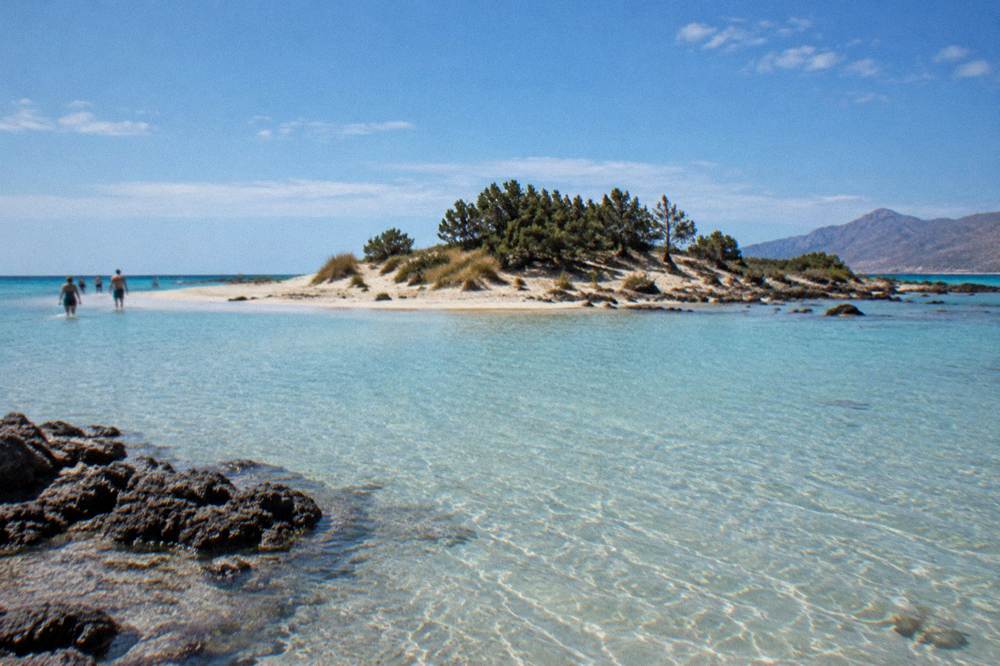
The sandbar that links the islet to the shore is the single most rewarding spot to look, because it is where fine sediment accumulates on both sides and the wet edge stays wet. The lagoon shallows also hold shell debris along their floor, which is part of why the water itself can carry a faint rose tint in places at certain angles. The islet side, a short wade at low water, holds the protected dune area, so the paths there deserve the same care as the main beach.
Timing the day around the colour is one consideration among several. The beach is exposed and offers limited natural shade, so the middle hours of a summer day demand more preparation than the shoulders of the day, and the tide of arriving groups from Chania and Kissamos builds through the morning. An early arrival does double duty: better light on the sand and more of the beach to yourself.
How Does Elafonisi Compare With The Other Big Beach Days From Chania?
Elafonisi, Balos and Falassarna are the three headline beach days out of Chania, and they differ sharply in how you reach them: Elafonisi is a road day or guided bus day to a protected south-west shore, Balos is a boat cruise from Kissamos port to a lagoon under a Venetian island fortress, and Falassarna is a long open sandy beach reached by road and often paired with one of the other two in a single combined trip. The colour question only follows you to one of them.
Balos has its own famous sand and shallow lagoon water, and its access rules are different: the cruise departs from Kissamos, and the only confirmed charge is a EUR 1 Kissamos municipal fee collected on the boat ticket for over-13s. The road option to Balos runs over an unpaved stretch from Kaliviani to a parking area, then a walk down, which is a different kind of day again. The site's guide to getting to Balos beach covers that route in detail.
Falassarna, a short drive north of Elafonisi along the west coast, is the broad sandy option with room to spread out, and the two beaches combine naturally into one long day by car or on a combined guided trip. The comparison matters for planners with limited days, and the pairing question, including whether Elafonisi alone justifies the drive, is covered from a Chania base in what not to miss in Chania and the broader things to do in Chania overview.
Common Questions About The Pink Beach At Elafonisi
Why is Elafonisi beach pink?
The pink comes from broken shells of tiny red-shelled sea organisms, chiefly red-pigmented foraminifera, ground into fragments and mixed with the white sand. The colour is strongest where waves and wind concentrate the fragments, at the waterline and in hollows on the sandbar.
Is the pink sand at Elafonisi natural?
Yes. Nothing is added to the beach. The colour is entirely shell fragment sitting in white quartz and limestone sand, renewed continuously by the sea. It fades and returns as sediment moves, which is natural behaviour rather than a sign of change.
Can I take a small amount of pink sand home?
No. Elafonisi is a Natura 2000 protected area and taking sand, shells or plants is prohibited. The rule applies to souvenir-sized amounts. Photographs are the practical alternative.
Does Elafonisi charge an entry fee?
Entry is reported to be free. Parking is reported at around EUR 5 a day. Confirm both locally on the day, as seasonal arrangements can change.
Is Elafonisi pink all year round?
The shell fragments are present year round, but their concentration moves with the sediment. Storms can bury pink patches under white sand, and calm periods concentrate them again, so the intensity of the colour varies through the seasons and even week to week.
Understanding the mechanism changes how the beach looks when you arrive. Instead of hunting for a postcard-pink shore, you look down at the wet edge, at the ripple lines and the lagoon shallows, and the colour is there, fragment by fragment, doing exactly what the sea has been doing with those shells for a very long time.