Is Crete Worth Visiting With Kids?
Yes, Crete works well with kids, and Chania is the family-friendly base: shallow beaches, short boat trips, a walkable Old Town and warm, dry summers.
Chania is a coastal city of 111,375 permanent residents on the north-west coast of Crete, Greece, and the combination it offers families is unusual: a compact, walkable Old Town around the Venetian Harbour, shallow swimming beaches a short hop from the centre, and a whole island of gorges, lagoons and boat trips starting from its ports. The island question, "Is Crete worth visiting with kids?", is really two questions: whether Crete as a whole suits children, and which base makes it easy. The short answer to both is yes, and the sources below explain why Chania in particular keeps the driving short and the swimming close.
This page reports what the operators, the HNMS weather service and the site's own guides say. It avoids inventing prices and does not promise that any gorge or beach is open on a given day, because the 2026 storm season showed how quickly that can change. The wider question of whether the island as a whole deserves the flight is covered in what not to miss in Crete, and the practical doubts about tourist crowds in is Chania a tourist trap?.
Is Crete Worth Visiting With Kids?
Yes, Crete earns its place on a family itinerary: it combines shallow, sheltered beaches, short boat trips, easy walks through historic towns and a dry, warm summer season, and Chania on the north-west coast is the base that keeps all of it within reach. The island's scale means a car helps, but the beaches nearest Chania are close enough that a family can swim before lunch and still spend the afternoon in the Old Town. Crete has no railway, so travel is by road, ferry and boat, and the main sights from Chania are reachable as organised day trips with pickup included.
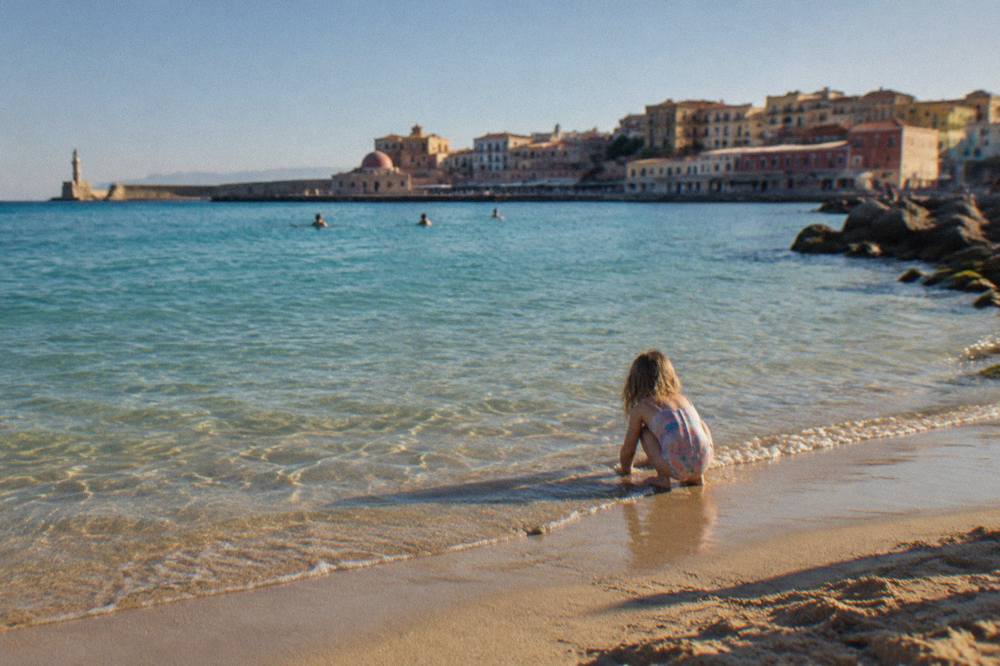
The beaches settle the argument first. Nea Chora, west of the Old Town, has a sandy, shallow shoreline inside a small bay, and Agia Marina and Platanias stretch sandy beach along the bay further west, all served by the coast road. On the Akrotiri peninsula, Kalathas, Marathi and Stavros are small, sheltered bays with sand rather than pebbles, and Stavros sits under the cliffs where a famous Greek film was shot. None of this needs a gorge hike or a long ferry: these are town and peninsula beaches a family can reach with towels and a bus or a short drive.
Then come the boats. The Venetian Harbour is the departure point for excursion boats, including short cruises to Lazaretta Island with a swim stop, sunset cruises, and small-group sailing to the island of Agioi Theodoroi with a meal on board. For children, the value is that the trip starts and ends in the Old Town, so the day doubles as harbour sightseeing. Kissamos port, west of the city, is the departure point for the Balos lagoon and Gramvousa cruises, a bigger day out that suits families with children who handle a long day at sea.
Which Chania Beaches And Boats Work Best With Children?
For beaches, the sheltered bays of Nea Chora, Kalathas, Marathi and Stavros are the practical choices: sandy, shallow and close to Chania, they suit younger children who want calm water. For boats, the short Lazaretta swim-stop trips and the small-group sail to Agioi Theodoroi with a meal, departing the Venetian Harbour, fit a family morning or afternoon and return to the Old Town. For boats, the short departures from the Venetian Harbour, such as the Lazaretta swim-stop trips and the small-group sail to Agioi Theodoroi with a meal, are the formats that fit a family morning or afternoon, because they return to the Old Town rather than committing a full day.
The distinction that matters with small children is trip length. A short Lazaretta trip is a couple of hours on the water with a swim stop, while the Balos and Gramvousa cruises from Kissamos are full-day commitments with a lagoon and an island fortress at the end of them. The desk suggests matching the trip to the child rather than to the postcard: toddlers do better with the harbour departures, teenagers with the lagoon days. Balos access carries caveats worth knowing, since a EUR 1 Kissamos municipal fee is collected on the boat ticket for over-13s, and the road approach from Kaliviani is unpaved to a parking area, followed by a walk down to the lagoon.
Families planning the beach days around the calendar should read the Chania with kids itinerary, which sequences the beaches, harbour and day trips into days that do not fight each other. The longer question of how much time the city itself needs is answered in how many days in Chania is enough?, and for most family trips the answer is three days in the city plus day trips, or five days if Balos and Elafonisi are both on the list.
A pattern that works well with older children is to combine the harbour walk with food. The Old Town highlights walk with street food covers the lanes and the harbour with tastings along the way, a format children tend to tolerate far better than a pure sightseeing walk, and its figures and availability sit on the operator's live listing.
Which Day Trips From Chania Suit Families Best?
The family day trips from Chania are the boat days and the easy beach days: Balos and Gramvousa by boat from Kissamos, Elafonisi with its protected shallow lagoon, Falassarna's wide sand, and Lake Kournas, while the Samaria Gorge walk is a different category and suits teenagers with hiking legs rather than small children. Elafonisi is a Natura 2000 protected area with reported free entry, and taking sand, shells or plants from it is prohibited, a rule worth stating to children before arrival. Samaria normally runs 1 May to 31 October, but storms damaged sections of the path in late September and early October 2026, and the gorge closes or delays reopening whenever the path is damaged, so the NECCA status has to be checked before any plan is made.
The table below matches the headline day trips to what they ask of a family:
| Day trip | What it involves | Family notes |
|---|---|---|
| Balos and Gramvousa | Boat from Kissamos port; daily departures through 31 October 2026, operator-reported | Full day; EUR 1 municipal fee on the boat ticket for over-13s; unpaved access road if driven |
| Elafonisi | Protected Natura 2000 beach and lagoon; reported free entry | Shallow lagoon water; no sand, shells or plants may be taken |
| Falassarna | Wide sandy beach on the west coast | Pairs with Balos on combined tours with pickup |
| Lake Kournas and Argiroupoli | Freshwater lake and spring village tour | Gentle day; suits all ages |
| Imbros Gorge | Guided hike and village visit from Chania | Shorter and easier than Samaria; check current conditions |
| Samaria Gorge | One-way walk from Xyloskalo to Agia Roumeli, then boat and bus back | EUR 10 entrance via the NECCA portal; closed or delayed after storm damage, check status first |
For the Balos day, tours that include pickup and the boat ticket remove the two planning frictions, the transfer to Kissamos and the ticket queue, and the family version with a Falassarna stop turns a long day into two beaches. The trio above shows the options side by side, with prices and ratings rendered from live listing data.
Families who would rather not commit to a boat day at all can stay on the peninsula: the Akrotiri beaches, the monasteries of Agia Triada and Gouverneto, and Seitan Limania for its dramatic cove, though that last descent is steep and better saved for children who are confident on their feet. The general trip-planning questions, from where not to base a family to whether the island suits American visitors, are covered in where to avoid staying in Crete.
To add water time without a full boat day, book a kayak safari here.
What Does A Chania Old Town Day With Kids Look Like?
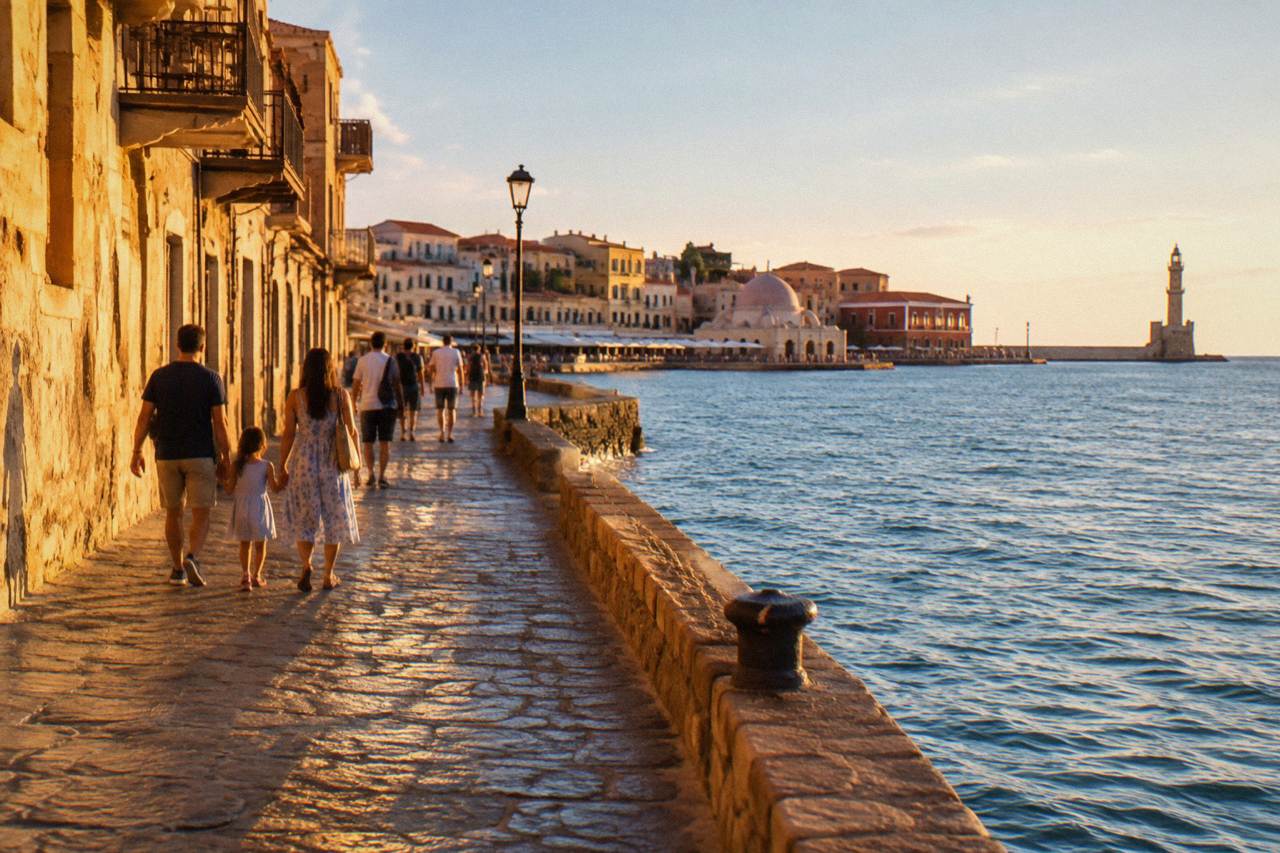
An Old Town day with children works because the district is compact and walkable: the Venetian Harbour, the lighthouse, Firka Fortress with its free grounds, the covered Municipal Market and the lanes of Splantzia and Topanas sit within a stroll of each other, and the whole circuit can be broken with bakeries and swims at Nea Chora. The harbour itself was first built between 1320 and 1356, the lighthouse on its mole dates from about 1595 to 1601 on a Venetian base with Egyptian-era restoration, and Firka Fortress was built in 1620, so the history is physically all around without a single ticket needed for the outdoor parts.
Two indoor stops carry real figures. The Archaeological Museum of Chania at 15 Skra Street in Halepa charges EUR 15 full and EUR 8 concession, and its own visit page is the place to check current days and hours, with visitors asked to leave 20 minutes before closing. The Maritime Museum of Crete sits at the harbour by Firka, and its price and hours should be confirmed on its own page. The Neoria, the Venetian shipyards, survive as seven of an original seventeen from the 15th to 16th century and frame the eastern harbour side, another free sight children can run past while the adults read.
The food stops are the reward system. Bougatsa in the morning, the sweet and savoury custard pastries the city is known for, then a bakery stop mid-morning and a late taverna lunch by the sea at Nea Chora. The Old Town walk with street food folds these into a guided circuit, and its listing carries the current price and availability.
When Is The Best Time To Take Children To Chania?
The HNMS Chania Souda station table, covering 1958 to 2010, shows the family sweet spot is late May to June and September, when mean temperatures run from 20.2 C in May to 24.7 C in June and back to 23.2 C in September, with rainfall of 13.5 mm, 3.4 mm and 15.4 mm respectively. July and August are the warm months, with means of 26.7 C and 26.3 C and means maximum of 30.7 C and 30.4 C, workable for beach-centred days but harder for walking tours with children. October cools to a mean of 19.4 C and rain rises to 67.7 mm, so autumn trips need a rain plan, which the Chania rainy day guide covers.
| Month (HNMS Chania Souda, 1958 to 2010) | Mean C | Mean max C | Rain mm | Rain days |
|---|---|---|---|---|
| May | 20.2 | 24.5 | 13.5 | 4.2 |
| June | 24.7 | 28.9 | 3.4 | 1.2 |
| July | 26.7 | 30.7 | 1.0 | 0.4 |
| August | 26.3 | 30.4 | 1.4 | 0.6 |
| September | 23.2 | 27.4 | 15.4 | 3.2 |
| October | 19.4 | 23.5 | 67.7 | 9.3 |
The same table argues against the shoulder edge for beach-focused families: the sea has warmed through the summer, September rain days sit at just 3.2 for the month, and the July and August humidity figure of 50 percent is the year's lowest. The prevailing wind is west, turning north-west in July and August, a pattern that matters for which side of a bay feels calm on a given day, and a good reason the sheltered peninsula beaches are a reliable fallback. No monthly sea-temperature normal exists in the official records, so a live reading is the only honest water figure.
Common Questions About Visiting Crete With Kids
Is Crete worth visiting with kids?
Yes. Crete pairs shallow family beaches with short boat trips, walkable historic towns and dry summers, and Chania on the north-west coast is the base that keeps the beaches, the Old Town and the day-trip ports close together.
Is the Samaria Gorge walk suitable for children?
It is a full one-way mountain walk from Xyloskalo to Agia Roumeli, with entry between 07:00 and 13:00 and everyone out by 18:00, so it suits teenagers with hiking fitness rather than small children. Storms in late 2026 damaged the path, and the NECCA status must be checked before any plan. The Imbros Gorge is the shorter family alternative.
Can children swim near Chania Old Town?
Yes. Nea Chora, west of the Old Town, has a sandy, shallow bay, and the Akrotiri beaches at Kalathas, Marathi and Stavros are small, sheltered bays a short drive away. The short Lazaretta boat trips from the Venetian Harbour add a swim stop at an island beach.
How many days should a family spend in Chania?
Three days covers the Old Town, the harbour and the nearest beaches, with day trips layered on top. Five days allows the Balos boat day and the Elafonisi beach day without rushing, and a week opens up the south coast and Rethymno.
Is Elafonisi good for young children?
Its protected lagoon is shallow and the entry is reported to be free, which is why families choose it, but it is a Natura 2000 area and taking sand, shells or plants is prohibited. Confirm any parking or sunbed charges on arrival, as no fee figures are verified here.
The honest summary is that Crete rewards families who base themselves well, and Chania is the base the island's own geography recommends. More of the reasoning, including how the city compares with Rethymno and Heraklion for a family stay, is on the Chania Crete Travel Guide homepage, and the beach, gorge and day-trip pages carry the detail for each plan.