Which Side Of Crete Is Nicer?
Crete has four sides and they suit different trips. This guide compares west, east, north and south from a Chania base, with climate data and day-trip logistics.
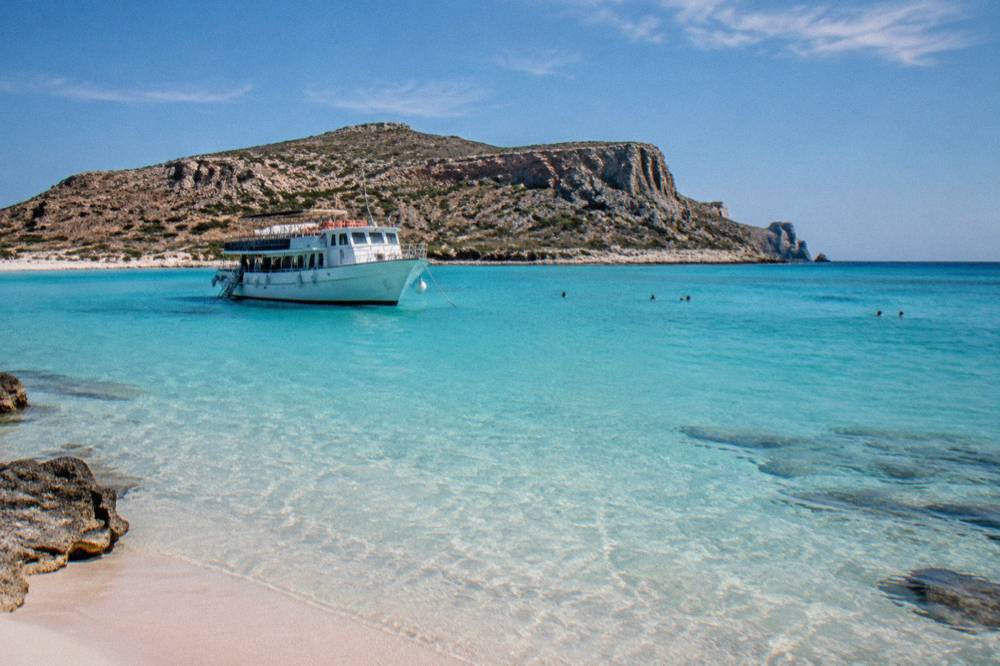
Crete is a large island with four distinct sides, and Chania, on the north-west coast of the island in Greece, sits on the side that holds the beaches and gorges the island is famous for: Balos, Elafonisi, Falassarna, Samaria and Imbros are all west-crete day trips from the city. That does not make the west objectively nicer, it makes it nicer for a first trip built around sand, water and walking. The east around Heraklion and Knossos answers a different question, one about ruins and museums, and the south coast answers a quieter one. This guide compares the sides honestly, using what the official sources and the ferry, bus and climate tables actually say, and it points out where the trade-offs sit for a visitor staying in Chania.
Which Side Of Crete Is Nicer?
For beaches, walking and a harbour town to come home to, the north-west side of Crete around Chania is the stronger choice, because Balos, Elafonisi, Falassarna and the gorges of the White Mountains all sit inside its day-trip range. For archaeology, the east around Heraklion and Knossos wins, and no amount of coastal beauty replaces the palace. The south coast is the quiet side, with small boat-accessed villages on the Libyan Sea.
The comparison is really three comparisons. West against east is the classic argument, and it maps onto the two big airports: Chania (CHQ) in the north-west and Heraklion in the centre-north. North against south is the quieter one, and it is about sea, wind and crowds rather than sights. A visitor based in Chania can reach both arguments without moving hotel, because the KTEL bus station on Kydonias street runs long-distance routes to Heraklion and Rethymno, and the south-coast villages of Paleochora and Chora Sfakion connect by road and boat.
One structural fact shapes everything: the White Mountains (Lefka Ori) run down the west of the island and drop toward the Libyan Sea, which is why the west has gorges and the south-west has boat-and-road access villages like Loutro that cars cannot reach directly. The north coast carries the main road, the cities and the ferry ports, including Souda, about 7 km east of Chania's Old Town, where the overnight Blue Star Ferries service to Piraeus departs at about 21:30 with a crossing of about 9 h 15 min per the operator's published timetable.
Why The West Of Crete Suits A First Trip?
The west concentrates the island's best-known beaches and gorges close to Chania, so one base covers Balos and Gramvousa, Elafonisi, Falassarna, Samaria Gorge and Imbros Gorge without changing accommodation. It also holds the Venetian Harbour Old Town of Chania itself, built between 1320 and 1356, which is the strongest single town base on the island for atmosphere.
Elafonisi is a Natura 2000 protected area where entry is reported to be free and taking sand, shells or plants is prohibited. Balos is reached by boat from Kissamos port, with daily departures to 31 October 2026 per the operator, and the only confirmed charge is a EUR 1 Kissamos municipal fee collected on the boat ticket for over-13s; a proposed time-slot visitor cap from August 2026 is not in force. The road alternative to Balos is an unpaved stretch from Kaliviani to a parking area followed by a walk down.
The gorges need honesty. Samaria runs one-way from Xyloskalo on the Omalos plateau down to Agia Roumeli, with boats from there to Sougia or Chora Sfakion at about 17:30 and a KTEL bus back, per the reported arrangements. The normal season is 1 May to 31 October, but storms in late September and early October 2026 destroyed sections of the path, staff have called a 2026 reopening extremely difficult, and works are aimed at readiness in May 2027, so the NECCA status must be checked before any plan is made. The individual ticket is EUR 10 through the NECCA e-ticket portal. Imbros Gorge is the shorter, lower-commitment alternative, and a guided option with a village visit can be checked at Check availability; the tour's own page at Imbros Gorge guided hike and village visit covers what is included, and tour prices exclude the separate entrance and ferry fees that apply to gorges.
For a like-for-like town comparison against the west, see which is nicer, Chania or Rethymnon and where is nicer, Chania or Heraklion.
What Does The East Of Crete Offer Instead?
The east of Crete, anchored by Heraklion and the palace of Knossos, offers the island's archaeology and its biggest museum, which the west simply cannot match: if Minoan ruins are the purpose of the trip, the east is nicer by definition, and Heraklion is the base. For a visitor staying in Chania, Knossos and Heraklion work as a long day trip by KTEL bus or tour.
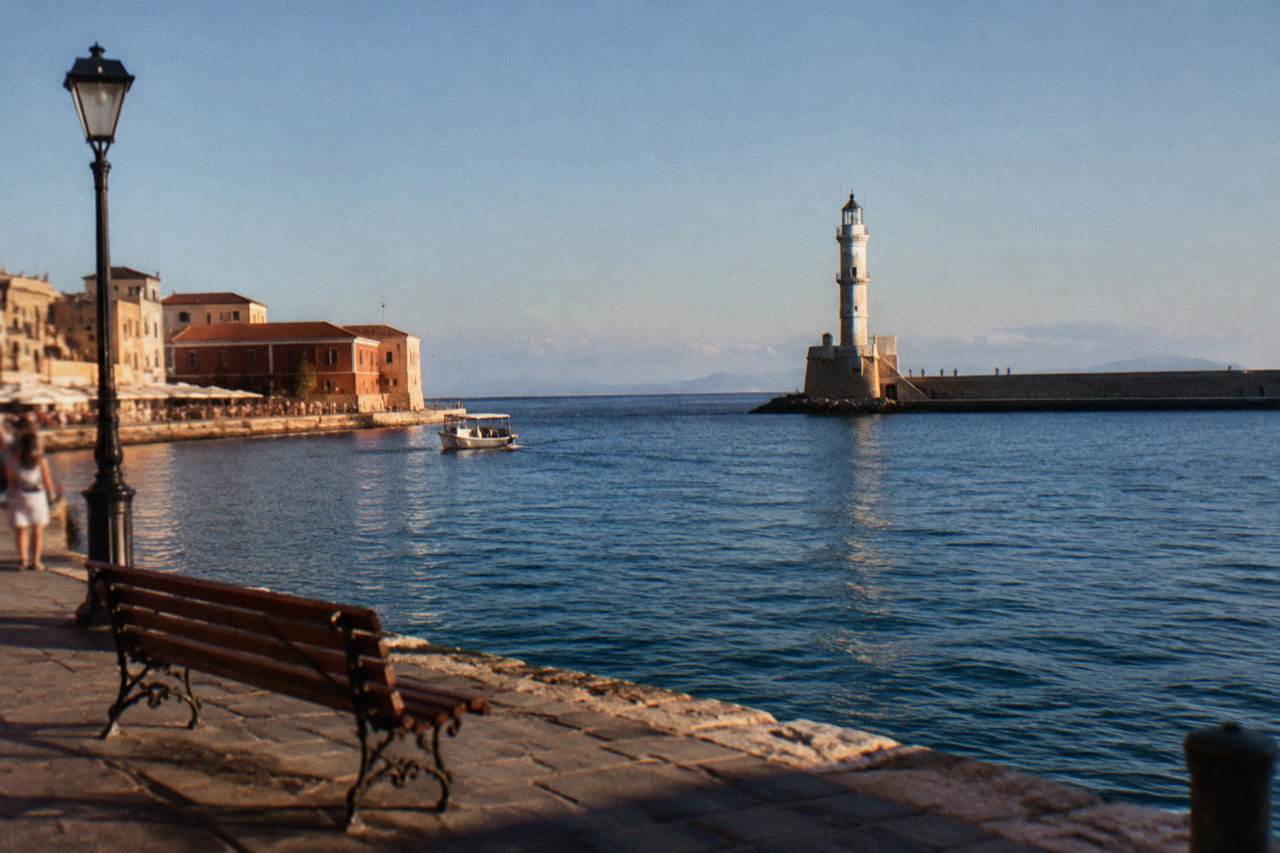
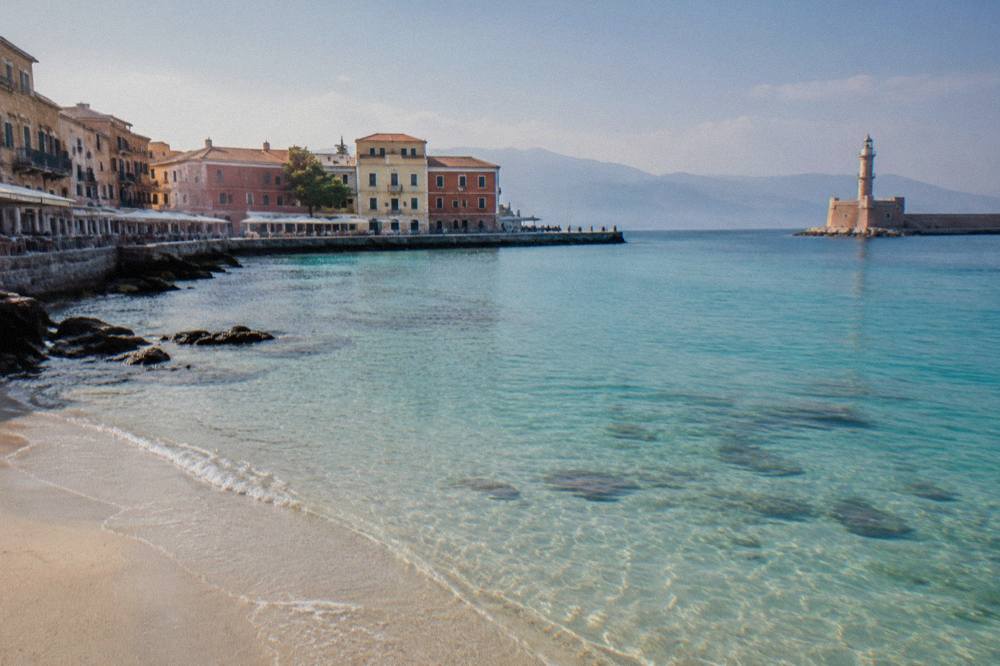
The trade is sharp. Heraklion is a big city with the ruins; Chania is a smaller city with the harbour, the lighthouse on its mole, first lit in a form operating by 1839 after its Venetian build of about 1595 to 1601 and its restoration during Egyptian rule from 1830 to 1840, and the Neoria shipyards, seven survivors of an original seventeen from the 15th to 16th century. Neither side substitutes for the other, which is why the question is it better to stay in Chania or Heraklion exists as its own decision.
A Knossos day from the Chania area removes the bus-timetable thinking entirely, and the tour listing shows what the day covers, with transport from the Chania area and time at both the palace site and Heraklion itself. The trade-off is pace rather than price: a guided day is fixed, an independent KTEL day is flexible.
Is The South Coast Of Crete The Quieter Side?
Yes, the south coast on the Libyan Sea is the quiet side, with small villages like Loutro and Chora Sfakion reached by road and boat, beaches such as Preveli and Paleochora, and far less of the north-coast resort strip. It is a side for a second trip or for a base swap, because from Chania it is reached by crossing the White Mountains rather than by a coastal drive.
Loutro is the extreme case, a village with no through road, reached by boat from Chora Sfakion or on foot along the coastal path. A guided day with boat tickets included runs from Chania; the listing says what is covered. Paleochora, further west on the south coast, is also the summer departure point for boats to Gavdos, along with Sougia, in season. The gorges of the west all effectively drain to the south coast too, which is why every Samaria walk ends with a boat from Agia Roumeli. The full index of guides sits on Chania Crete Travel Guide.
How Does The Weather Differ Between The Sides?
The honest weather comparison cannot be made side against side from official tables, because the published station data covers Chania: the HNMS Chania Souda station table, means for 1958 to 2010, shows July at a mean of 26.7 C with 1.0 mm of rain and January at 11.0 C with 129.5 mm, so the north-west has a hot, dry summer and a mild, wet winter. No comparable official table for the south or east is published in this site's data.
What can be said from the Chania Souda table is the shape of the year, and it is the single most useful planning table for a Chania base. The dry run is May through September, rainfall returns in October, and January is the wettest month at 129.5 mm while July is the driest at 1.0 mm, statements the table itself supports.
| Month | Mean temp C | Rain mm | Rain days |
|---|---|---|---|
| Jan | 11.0 | 129.5 | 16.3 |
| Feb | 11.0 | 104.0 | 14.5 |
| Mar | 12.7 | 76.0 | 11.5 |
| Apr | 15.9 | 31.5 | 7.7 |
| May | 20.2 | 13.5 | 4.2 |
| Jun | 24.7 | 3.4 | 1.2 |
| Jul | 26.7 | 1.0 | 0.4 |
| Aug | 26.3 | 1.4 | 0.6 |
| Sep | 23.2 | 15.4 | 3.2 |
| Oct | 19.4 | 67.7 | 9.3 |
| Nov | 15.8 | 77.0 | 11.2 |
| Dec | 12.7 | 101.9 | 16.1 |
Source: HNMS Chania Souda station, monthly means for the period 1958 to 2010, the records the service publishes. The prevailing wind at the station is west, north-west in July and August, which is the general summer pattern known as the meltemi; no speeds are published here. That wind pattern matters for beach days on the north coast and is one reason boat operators plan their departures early.
Which Side Of Crete Is Nicer For A Base In Chania?
For a visitor already based in Chania, the question dissolves into which day trips to take, because the west is already won and the east and south are reachable: Balos, Elafonisi, Falassarna, Imbros and the Apokoronas villages sit inside a comfortable radius, Knossos and Heraklion are a long but single-day trip, and the south coast works as a full-day outing.
To see Elafonisi with the travel sorted, book an Elafonisi day trip here.
The practical split looks like this, using only journeys this site's data covers.
| Direction | What it holds | Access from Chania |
|---|---|---|
| North-west | Balos, Gramvousa, Falassarna, Elafonisi, Kissamos | KTEL bus to Kissamos, tours, or car |
| West mountains | Samaria Gorge, Imbros Gorge, Omalos plateau | KTEL bus to Omalos, tours |
| South coast | Chora Sfakion, Loutro, Sougia, Paleochora, Preveli | KTEL bus, tours, boat connections |
| Centre-east | Rethymno, Heraklion, Knossos | KTEL long-distance routes from Kydonias street |
| Offshore south | Gavdos | Boats from Paleochora and Sougia in season |
Two cautions carry over from the fact tables. First, Samaria's status must be confirmed with NECCA before any booking or plan, given the 2026 storm damage. Second, the climate crisis resilience fee is collected by accommodation per room or apartment per night with seasonal rates, and the amount is confirmed at booking; no figure belongs on this page.
Common Questions About Which Side Of Crete Is Nicer
Which side of Crete is nicer?
For beaches, gorges and a harbour town, the north-west around Chania. For archaeology, the east around Heraklion and Knossos. For quiet, the south coast on the Libyan Sea. The sides are not substitutes; they answer different trip purposes.
Is west Crete better than east Crete?
West Crete is better for a first trip built around Balos, Elafonisi, Falassarna and the gorges, all within day-trip range of Chania. East Crete is better when Knossos and the Heraklion museum are the goal. The Chania versus Rethymnon and Chania versus Heraklion comparisons break this down town by town.
Is the south coast of Crete worth it from Chania?
Yes, as a day trip or a base swap. Chora Sfakion, Loutro, Sougia and Paleochora are reachable by KTEL bus, tour or boat, and Loutro in particular has no through road. Gavdos boats run from Paleochora and Sougia in season.
Which side of Crete has the best beaches?
The west. Balos, Elafonisi and Falassarna are all west-crete day trips from Chania, and Elafonisi is a Natura 2000 area where taking sand, shells or plants is prohibited. Entry to Elafonisi is reported to be free, and no charge beyond the EUR 1 Kissamos municipal fee is confirmed for Balos.
Can you see both sides of Crete from one base?
From Chania, yes in a long-trip sense: the KTEL station on Kydonias street runs routes to Rethymno, Heraklion, Kissamos, Paleochora and Omalos, and summer routes to Elafonisi. Give the island enough days, and see how many days in Chania is enough for the arithmetic.
The verdict this desk would file is simple: the west is nicer for the trip this site's readers are usually planning, the east is nicer for ruins, and the south is nicer the second time around, and Chania is the one base that reaches all three.