Where To Avoid In Chania?
An honest look at the parts of Chania in Crete that disappoint some travellers, which corners get crowded, and the checks to make before booking a hotel, a restaurant or a day trip.
Chania, on the north-west coast of Crete in Greece, is a small coastal city of 111,375 permanent residents in its municipality (2021 census), and its reputation rests on the Venetian Harbour, the Old Town lanes behind it and the beach and gorge day trips that fan out west and south. The question "where to avoid" is really three questions: which corners jam up, which rows of shops and tables cater only to passers-through, and which times of year stretch the city thin. The short answer is that no district of Chania is unsafe or run down in any way a visitor needs to steer around, and the places worth treating with care are specific streets, specific sellers and specific seasons rather than whole neighbourhoods. This page from the Chania Crete Travel Guide editorial desk reports what official and operator sources say, and gives the checks to run before committing money.
Where To Avoid In Chania?
No part of Chania needs to be avoided for safety, and the honest answer is about crowds and value rather than danger: the harbour-front restaurant rows at peak dinner time, the lanes directly behind them that sell the same souvenirs on repeat, and any seller who quotes a price only after the meal or the ride. The city itself is compact and walkable, the municipality publishes no warnings about any district, and the frustrations visitors report are concentrated in a handful of busy lanes rather than spread across the city. Treat "avoid" as "arrive early, book ahead, or check the price first" and the list of places to sidestep shrinks to almost nothing. The sections below name the specific spots and the specific checks.
That framing matters, because a search for places to avoid often turns up two unhelpful extremes: pages that declare whole neighbourhoods hopeless, and pages that insist there is nothing to complain about at all. Neither is true of Chania. The Old Town is small enough that a lane that feels packed at 21:00 in August is quiet at 09:00 the same week, and a restaurant row that churns through tour groups in July serves locals calmly in October. Timing solves what geography cannot.
The deeper answer is seasonal. Chania's airport, Chania International Airport "Ioannis Daskalogiannis" (CHQ), handled 3,992,149 passengers from January to October 2025, and the city bears the summer share of that. The same streets feel different in a month with 129.5 mm of rain, which the HNMS Chania Souda station table records for January against 1.0 mm for July. Anyone who can travel outside the peak weeks inherits a calmer city without changing a single booking.
Which Streets And Corners Of The Old Town Get Overcrowded?
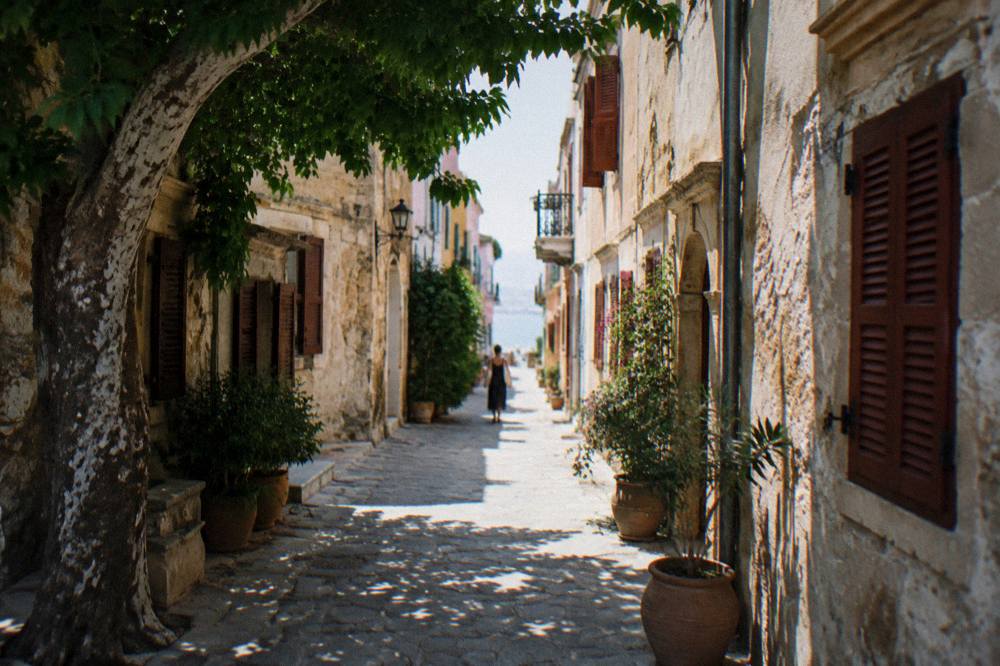
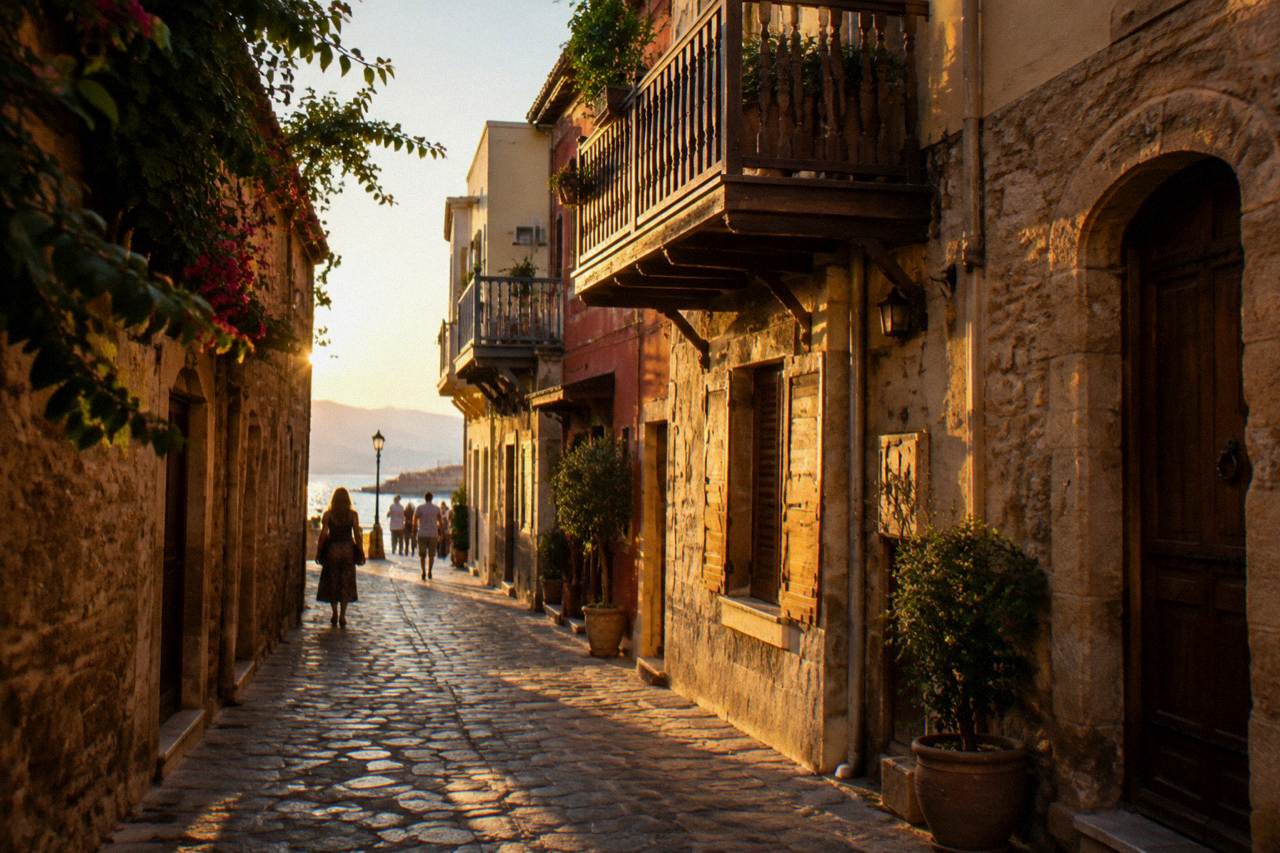
The crowded zones are the inner harbour front, where restaurant tables stand wall to wall along the water, the shopping lanes running back from the harbour into the Old Town, and the choke points at the harbour mouth where the lighthouse mole begins, all of which thicken badly in the evenings of the peak summer weeks. None of these is a place to avoid outright, because each is also the reason the Old Town is famous. The practical move is to see them early, when the light is low and the lanes are half empty, and to eat a street or two inland, where kitchens that rely less on passing trade keep their prices posted.
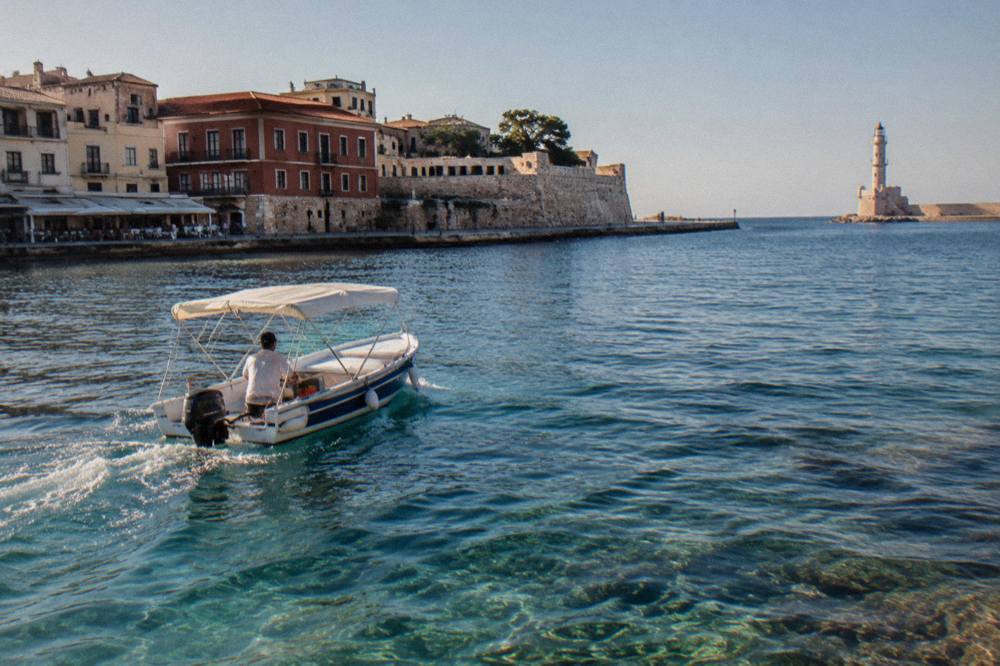
The geography is simple. The Venetian Harbour, first built between 1320 and 1356, holds the lighthouse, the Firka Fortress of 1620 and the Neoria shipyards, seven survivors of an original seventeen from the 15th to 16th century. Every visitor walks this loop, and the restaurant rows facing the water price their position accordingly. A menu with no printed prices, or a waiter quoting covers and extras verbally, is a signal anyone can read without a guide: the bill should be itemised, and if it is not, that is the row to walk past. The lanes uphill from the harbour, around Splantzia and Topanas, hold quieter tables the same evening.
None of this means the harbour front is a trap to be avoided at all costs. The evening walk from Firka along the mole towards the lighthouse is free, and the view back across the harbour at sunset is what brings people here in the first place. The distinction is between the walk, which costs nothing and is worth the time, and the front-row tables, which charge for the position rather than the plate. Eating one street back and walking the front is the compromise the city's own layout invites.
There is another way out of the crowd entirely: the water. The harbour is a working port for excursion boats, and a boat or kayak puts the whole packed waterfront into perspective from a few hundred metres offshore. The Venetian coastline kayak tour and the Kera Beach kayak safari both leave the bustle behind within minutes, and renting a small boat with no licence required turns the same afternoon into a self-guided trip along the coast. The city looks entirely different from the sea, and the lanes that felt dense at midday are a thin line of stone by the time the boat rounds the headland.
Which Areas Around Chania Are Worth A Second Look Before Booking?
The areas to examine before booking are the strip developments along the northern beach road towards Agia Marina and Platanias, where a room's distance from the sand decides its value, and any address whose listing does not say how far it sits from the Old Town, since Chania's own suburbs range from a short walk to a long drive from the harbour. This is not a warning against those areas: Agia Marina and Platanias are established beach resorts with their own followings, and the Akrotiri peninsula holds quieter coves. It is a warning against booking blind, because "Chania" on a listing can mean the Old Town, Souda, Nea Chora or a resort strip well outside the city.
To compare rooms by area and travel dates, book a hotel in Chania here.
The checks are mechanical. The listing should state the distance to the Old Town or the nearest beach in metres, not in vague adjectives. The airport, about 14 km from the city centre on the Akrotiri peninsula, sets the regional scale: anything labelled Chania but sitting far beyond that radius is a car-hire decision, not a walking holiday. Nea Chora, west of the Old Town, puts a sand beach within reach on foot, while Souda, east, sits closer to the ferry port than to the harbour restaurants. Each suits a different trip, and the mistake is buying one while expecting the other.
Accommodation also collects the climate crisis resilience fee, per room or apartment per night at seasonal rates set by category. The amount is not printed here because it changes by category and season; the booking confirmation should show it as a separate line, and asking for it in writing before arrival is a fair test of how the property does business generally. A host who answers that question cleanly tends to answer the others cleanly too.
What Should You Watch For On Trips To Balos And Elafonisi?
The day trips to watch are the ones whose price is quoted without stating what it excludes, because the big-name destinations each carry separate charges: Samaria Gorge has its own entrance ticket through the NECCA e-ticket portal, and the Balos boats collect a EUR 1 Kissamos municipal fee for over-13s on top of the fare, so a headline price that omits these is the number to distrust, not the destination itself. The destinations are not the problem. Balos and Gramvousa cruises run daily from Kissamos port to 31 October 2026 on the operator's published schedule, and Elafonisi, a Natura 2000 protected area, is reported to have free entry with sand, shells and plants protected from removal.
The Samaria question deserves its own care. The gorge normally runs 1 May to 31 October, but storms in late September and early October 2026 destroyed sections of the path, and no final decision on a reopening has been recorded, with works aimed at readiness in May 2027. The rule for any reader planning the hike: check the NECCA status before committing anything, and expect the individual EUR 10 entrance ticket and the ferry out of Agia Roumeli to sit outside the tour price. The reported park rules are entry for the full walk between 07:00 and 13:00, everyone out by 18:00, and no swimming or camping inside the park.
Elafonisi raises a different check. The protected status means the beach's pink-tinged sand is exactly what visitors may not take away, and the Natura 2000 rules are posted at the site. A tour that treats the place as a photo stop and gives the day no time on the sand is a scheduling question to ask before booking, and the operator's live listing states the itinerary. For the road, Elafonisi is reachable by KTEL bus in summer from the Chania station on Kydonias street, or by car, and either way the long drive is the day's real cost.
The table below sets out the station record month by month, because the quietest streets and the emptiest boats tend to follow the weather and the school calendar together.
| Month | Mean temp (C) | Rain (mm) | Rain days |
|---|---|---|---|
| Jan | 11.0 | 129.5 | 16.3 |
| Feb | 11.0 | 104.0 | 14.5 |
| Mar | 12.7 | 76.0 | 11.5 |
| Apr | 15.9 | 31.5 | 7.7 |
| May | 20.2 | 13.5 | 4.2 |
| Jun | 24.7 | 3.4 | 1.2 |
| Jul | 26.7 | 1.0 | 0.4 |
| Aug | 26.3 | 1.4 | 0.6 |
| Sep | 23.2 | 15.4 | 3.2 |
| Oct | 19.4 | 67.7 | 9.3 |
| Nov | 15.8 | 77.0 | 11.2 |
| Dec | 12.7 | 101.9 | 16.1 |
Read as a planning tool, the table says the crowd question and the rain question have the same answer: June and September sit on either side of the peak with low rainfall and warm means, and the wettest months, January at 129.5 mm and December at 101.9 mm, are also the months when the city empties of visitors and half the seasonal businesses shut. Travellers who want the harbour to themselves accept the rain days. Travellers who want every boat and every kitchen open accept July and August.
How Do You Check A Place Before You Commit Money?
The checks that work in Chania are the same ones that work anywhere: printed prices on the menu, an itemised bill, a stated distance on the room listing, a named cancellation term on the tour booking, and a live status check with the operator or the park authority before any gorge or boat day is locked in. None of this requires local knowledge or inside information. It requires reading what is posted and asking for what is not. The city has no district where these checks fail systematically; it has individual businesses, on the busiest streets and off them, where the answers arrive late or not at all.
For day trips the listing itself is the document. The operator's live listing shows the itinerary, what is included and what is excluded, and the cancellation terms, and anything the listing does not promise is something to confirm in writing before booking. For the gorges the status check sits with NECCA, whose e-ticket portal also handles the Samaria entrance ticket. For rooms, the resilience fee question above is a fair probe. None of these takes more than a few minutes and each one filters out the handful of sellers whose business model depends on the questions never being asked.
Common Questions About Avoiding The Wrong Spots In Chania
Is Chania a tourist trap?
The harbour front and the lanes behind it cater heavily to visitors in the peak weeks, but the city is a living municipal centre of 111,375 residents, and a street or two inland from the water the prices and the pace change. The full answer on whether Chania is a tourist trap works through the evidence.
Which areas are best avoided for a hotel in Chania?
No area needs avoiding outright; the risk is booking a listing whose distance from the Old Town is vague. The strip resorts towards Agia Marina and Platanias suit beach-first trips, while the Old Town, Nea Chora and Splantzia suit walking trips. The best-area guide compares them properly.
Is the Old Town walkable enough to escape the crowds on foot?
Yes: the Old Town is compact and flat around the harbour, and walking two lanes inland from the water reaches quieter tables within minutes. The walkability answer covers the details.
Are the big day trips worth the crowds?
Balos, Elafonisi and the gorges are busy in peak season for a reason, and each carries its own access rules, from the EUR 1 municipal fee at Balos to the Natura 2000 protections at Elafonisi. The checks to run before booking each one are set out above, and the island-wide guide to areas to avoid adds the wider context.
When is Chania least crowded?
The HNMS Chania Souda station table for 1958 to 2010 shows the wettest months, January with 129.5 mm and December with 101.9 mm, are also the quiet season, while May and September combine low rainfall with thinner crowds than July and August.
The pattern across every answer on this page is the same: Chania rewards travellers who check the posted price, the stated distance and the live status, and it punishes only the ones who hand over money without asking. The city's crowded corners are its famous corners, its seasonal crush is measurable in the station record, and its day trips are protected places worth treating carefully rather than avoiding. Bring the questions and there is very little left to steer around.